
Chemical Exposure First Aid: Essential Workplace Response, Prevention, and Compliance

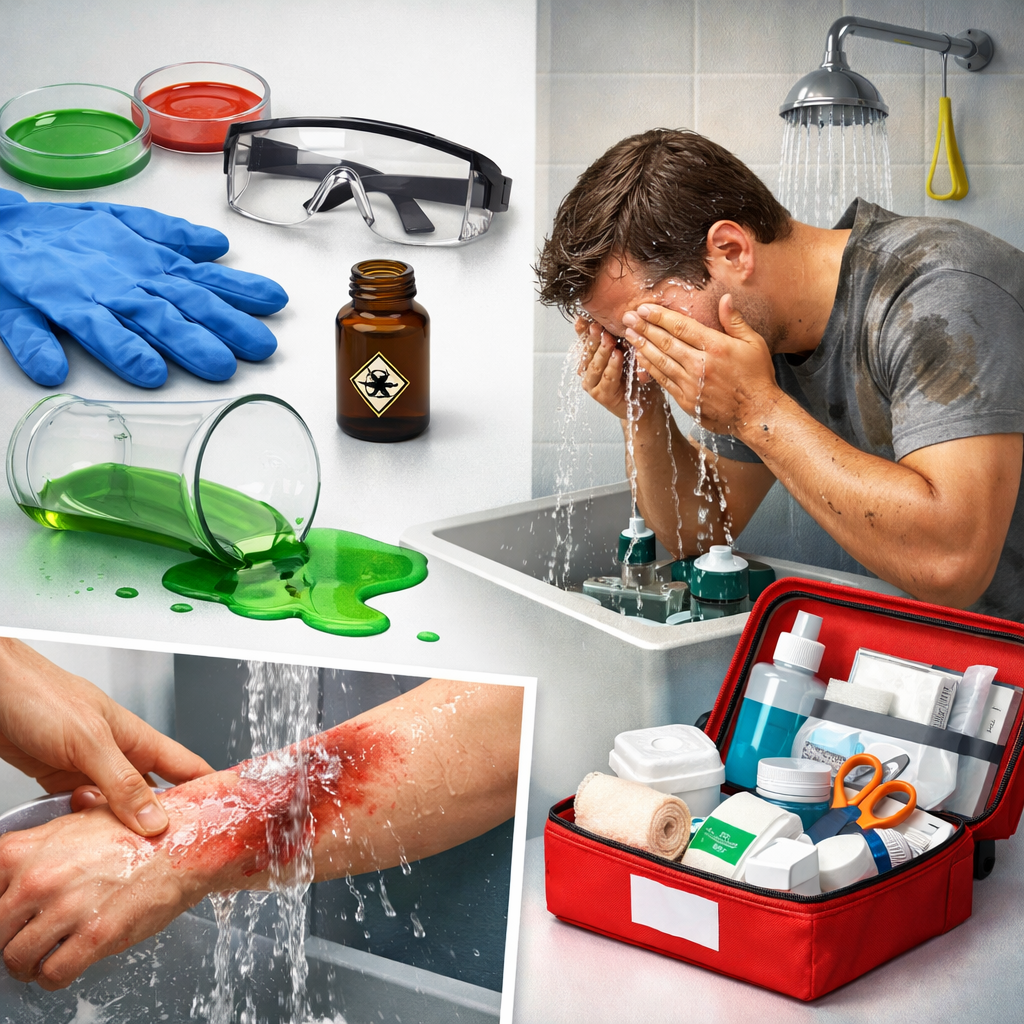
Chemical exposure first aid is a critical part of workplace health and safety because fast, correct action can reduce injury severity, prevent long-term health effects, and even save lives.
In many workplaces, from laboratories and manufacturing plants to cleaning operations and warehouses, workers may come into contact with hazardous substances through splashes, spills, inhalation, or accidental ingestion.
An effective response depends on preparation, training, clear procedures, and immediate access to safety equipment. It also depends on understanding the specific chemical involved, since acids, alkalis, solvents, gases, and toxic powders can affect the body in very different ways.
This article explains the key risks, practical response steps, prevention strategies, personal protective equipment, and compliance considerations that support strong chemical exposure first aid practices in OHSE programs.
Chemical Exposure First Aid in Real Workplaces
Workplace chemical exposure can happen suddenly or build over time. A maintenance technician may be splashed with a corrosive cleaner while changing drums. A lab worker may inhale fumes from an incompatible chemical mix. A cleaner may absorb solvent through the skin after using the wrong gloves for the task.
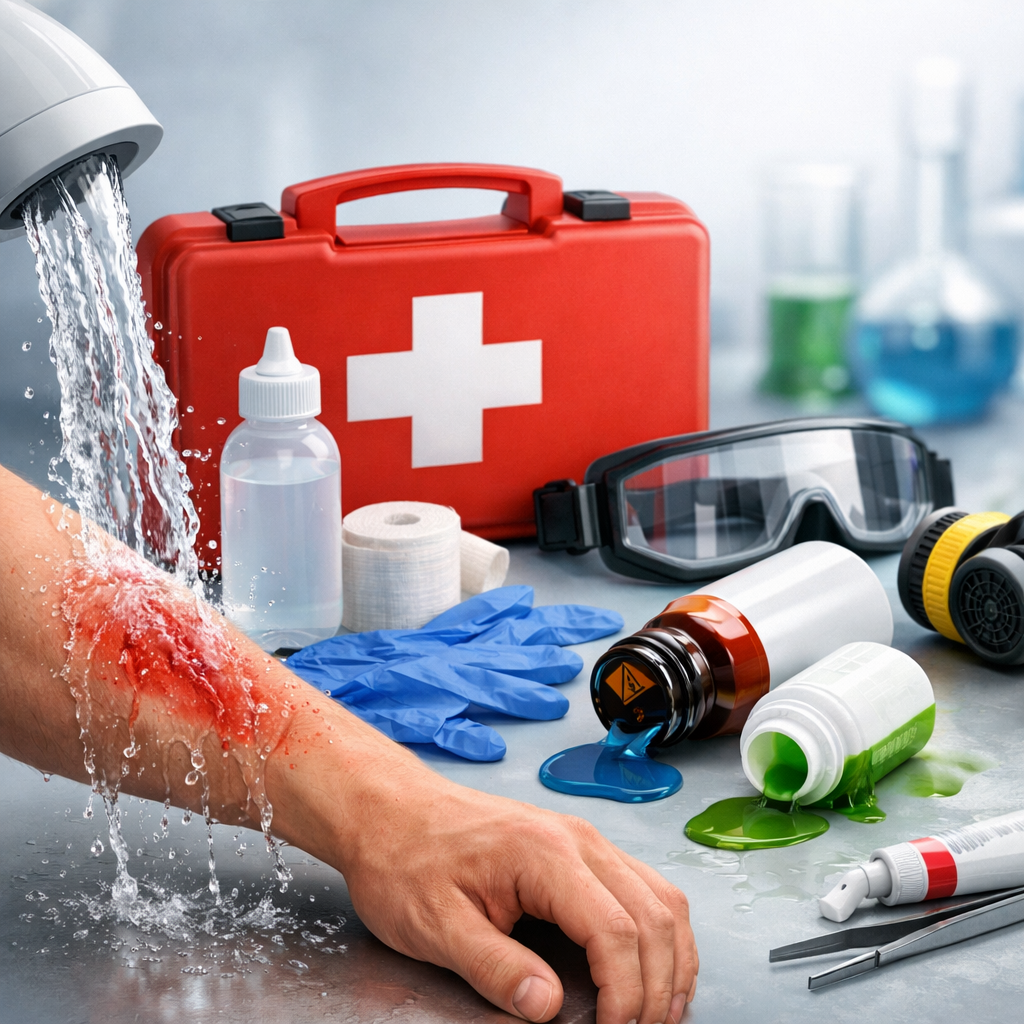
These incidents are not limited to high-risk industrial sites. Offices, schools, healthcare facilities, food processing plants, and construction projects also use chemicals that require proper controls and emergency response planning.
Common exposure routes
- Skin contact: burns, irritation, absorption through the skin
- Eye contact: redness, pain, chemical burns, vision damage
- Inhalation: coughing, dizziness, breathing difficulty, poisoning
- Ingestion: nausea, internal burns, poisoning
- Injection: puncture wounds involving contaminated sharps or high-pressure systems
Why immediate action matters
The first few minutes after exposure are often the most important. For example, flushing the eyes immediately after a splash can significantly reduce injury, while delaying irrigation may increase tissue damage.
Similarly, moving a worker from a contaminated atmosphere to fresh air can reduce further inhalation. However, responders must never put themselves at risk. If the area is unsafe, emergency services and trained internal responders should manage the scene.
Risks, Symptoms, and Practical Chemical Exposure First Aid Steps
The right first aid response depends on the substance, concentration, route of exposure, and duration. Safety Data Sheets should always be available and reviewed as part of the response. Resources from CCOHS and OSHA also provide helpful guidance on chemical hazards and emergency planning.
Recognizing warning signs
Symptoms can appear immediately or develop later. Workers and supervisors should watch for burning sensations, difficulty breathing, unusual odors, headaches, skin discoloration, blistering, watering eyes, confusion, or vomiting.
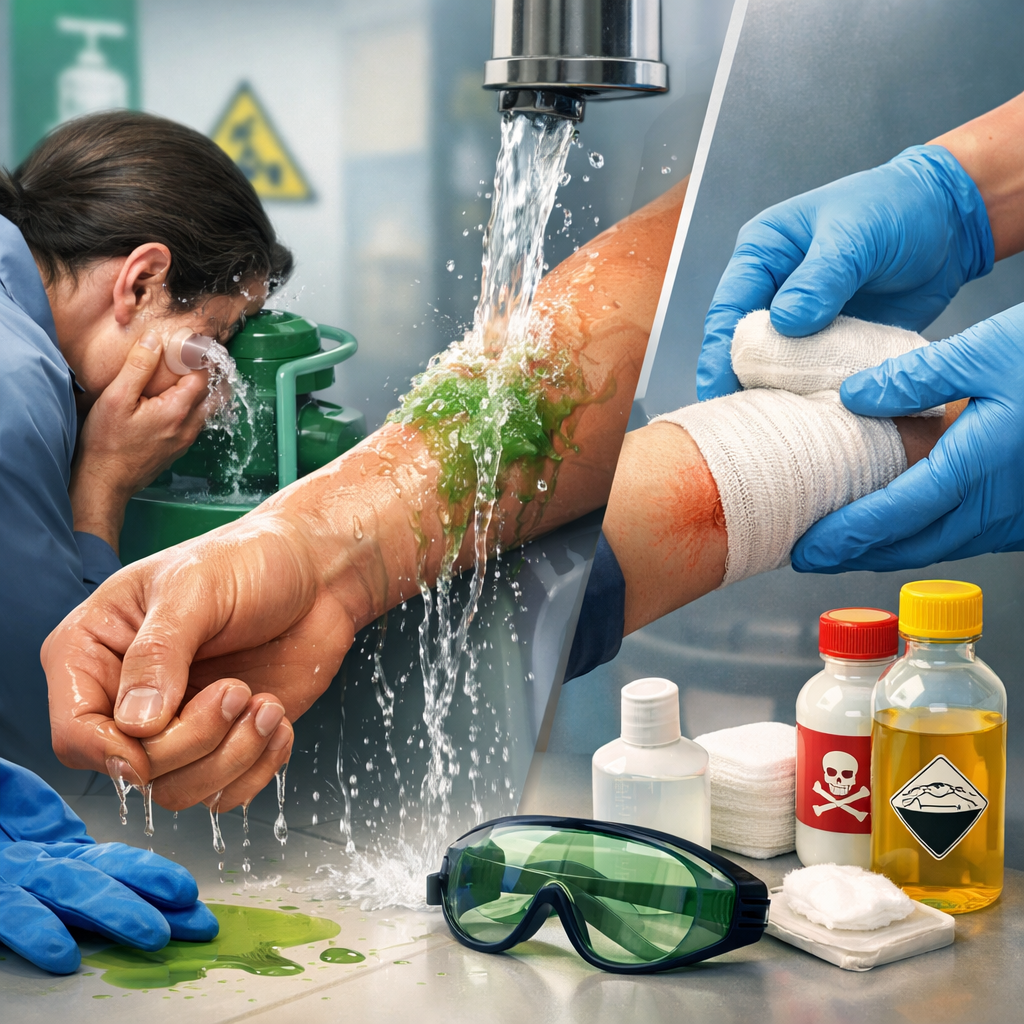
Even if symptoms seem minor, all exposures should be reported and assessed. Some chemicals cause delayed effects, especially after inhalation or skin absorption.
Basic response by exposure type
| Exposure Type | Immediate First Aid Action | Key Consideration |
|---|---|---|
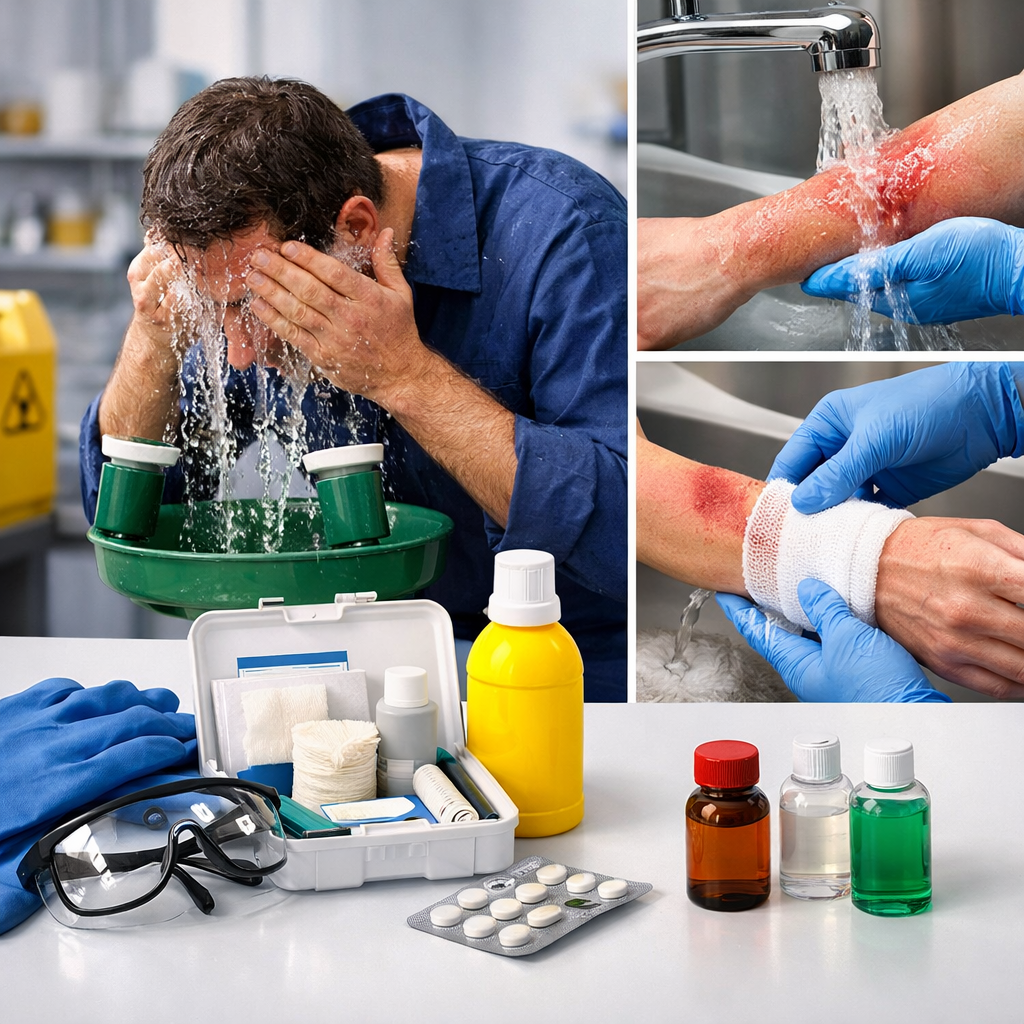
| Eye contact | Flush eyes with clean water for at least 15 minutes | Remove contact lenses if easy to do and continue flushing |
| Skin contact | Remove contaminated clothing and rinse skin thoroughly | Do not use neutralizers unless directed by SDS or medical professionals |
| Inhalation | Move person to fresh air immediately | Do not enter hazardous atmospheres without proper respiratory protection |
| Ingestion | Rinse mouth and seek urgent medical advice | Do not induce vomiting unless specifically instructed |
Practical workplace examples
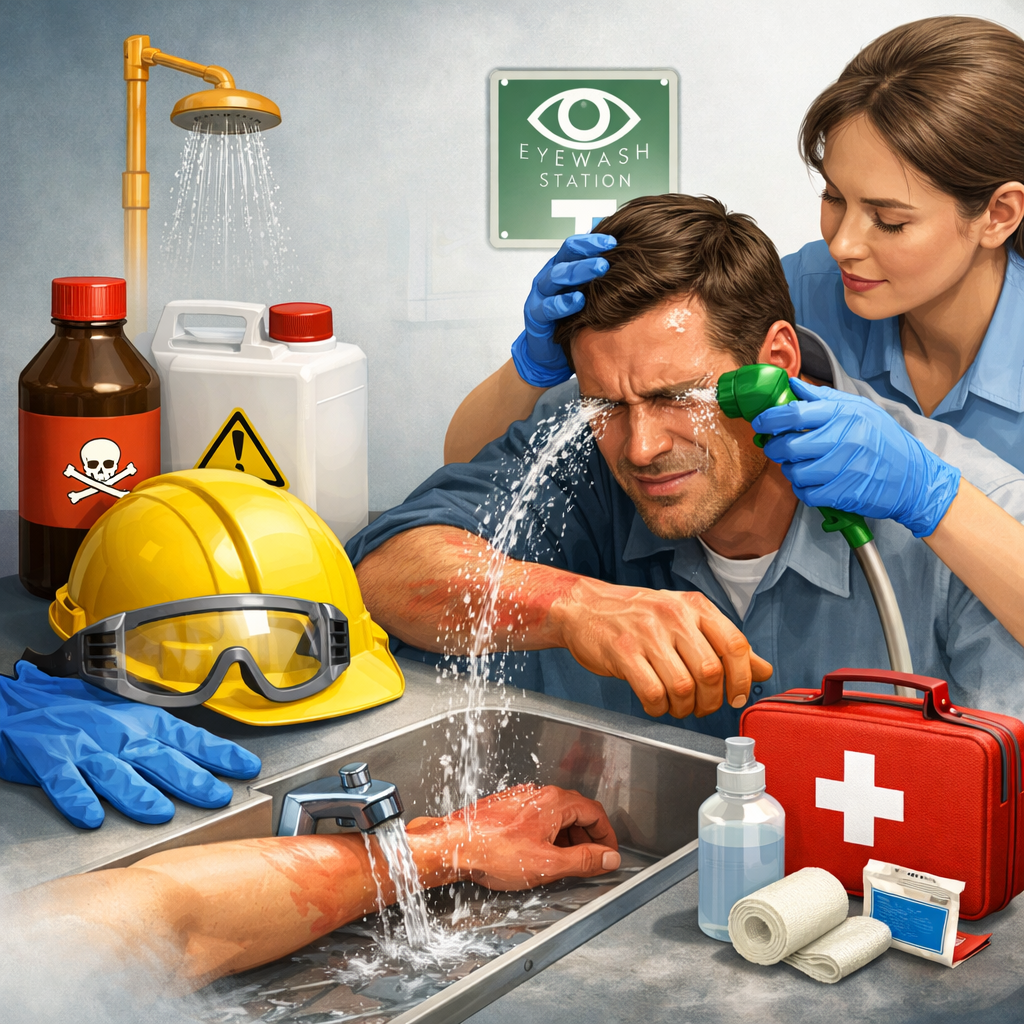
A warehouse worker splashed a degreaser into their eyes while opening a damaged container. Because an eyewash station was nearby and coworkers had been trained, flushing began within seconds and the worker was taken for medical evaluation with the product SDS. The injury was contained, and the incident review led to better container inspection procedures.
In another case, a cleaner mixed incompatible products in a poorly ventilated washroom, creating irritating fumes. The worker developed coughing and dizziness. After being moved to fresh air, emergency support was called, the area was isolated, and the employer updated training to emphasize chemical compatibility and ventilation checks.
For more guidance on incident readiness, see our workplace emergency response plan and safety data sheet management resources.
Prevention, PPE, and the Hierarchy of Controls
The best chemical exposure first aid program is one that supports prevention first. First aid is essential, but it should be backed by a wider OHSE system designed to reduce the chance of exposure happening at all.
Apply the Hierarchy of Controls
The Hierarchy of Controls provides a practical way to reduce risk before relying on workers to respond after the fact.
- Elimination: remove unnecessary hazardous chemicals from the process
- Substitution: replace highly hazardous substances with safer alternatives where feasible
- Engineering controls: use local exhaust ventilation, closed transfer systems, splash guards, and eyewash stations
- Administrative controls: training, labeling, restricted access, safe work procedures, and spill response planning
- PPE: gloves, goggles, face shields, aprons, protective clothing, and respirators as needed
Choosing the right PPE
PPE must match the chemical and task. Not all gloves protect against all substances, and standard safety glasses may not provide enough splash protection for corrosive liquids.
Employers should base PPE selection on the SDS, hazard assessment, and manufacturer recommendations. Proper fit, inspection, cleaning, storage, and replacement are also important. Respiratory protection should never be treated casually and usually requires formal program management, fit testing, and training.
Typical PPE for chemical handling may include:
- Chemical-resistant gloves appropriate to the substance
- Indirect-vent goggles or full face shields
- Chemical aprons or suits
- Protective footwear
- Respiratory protection where airborne hazards exist
Compliance, Training, and Building a Strong Response Program
Compliance plays a major role in chemical safety. Employers are typically required to identify hazardous products, maintain labels and Safety Data Sheets, train workers, provide first aid resources, and assess workplace risks.
Regulatory expectations vary by jurisdiction, but the principles are consistent: know the hazards, control exposures, prepare for emergencies, and document your processes. Guidance from OSHA, CCOHS, and local regulators can help employers align their programs with legal duties and recognized best practices.
What a compliant program should include
- Current chemical inventory and accessible SDS records
- Hazard assessments for tasks involving chemical use or storage
- Eyewash stations and safety showers where required
- Documented first aid and spill response procedures
- Worker training on labels, SDS interpretation, PPE, and exposure reporting
- Incident investigation and corrective action processes
- Routine inspections of storage areas, ventilation, and emergency equipment
Training for practical readiness
Training should go beyond theory. Workers should practice where to find eyewash stations, how to remove contaminated clothing safely, how to call for help, and how to isolate an area after a release.
Supervisors should know when first aid is enough and when urgent medical assessment is needed. Drill scenarios can include acid splashes, solvent inhalation, or accidental mixing events. These exercises make chemical exposure first aid more effective because workers are less likely to panic and more likely to follow the correct steps.
Medical follow-up is also part of the process. Documentation of the chemical, exposure route, duration, symptoms, and first aid measures taken can support better treatment and stronger incident investigations.
Conclusion: Making Chemical Exposure First Aid Part of Everyday Safety
Chemical exposure first aid is not just an emergency topic. It is a daily workplace safety priority that connects hazard identification, prevention, PPE, compliance, and fast response.
When employers maintain accurate SDS records, install the right emergency equipment, apply the Hierarchy of Controls, and train workers with realistic examples, they create a safer environment and improve outcomes when incidents occur.
The goal is simple: prevent exposure whenever possible, respond immediately when it happens, and learn from every event. A well-planned chemical exposure first aid program protects workers, supports legal compliance, and strengthens the overall OHSE culture of the organization.
No comments yet