
Laboratory Fire Safety Measures: Essential Steps to Prevent Fires and Protect Staff
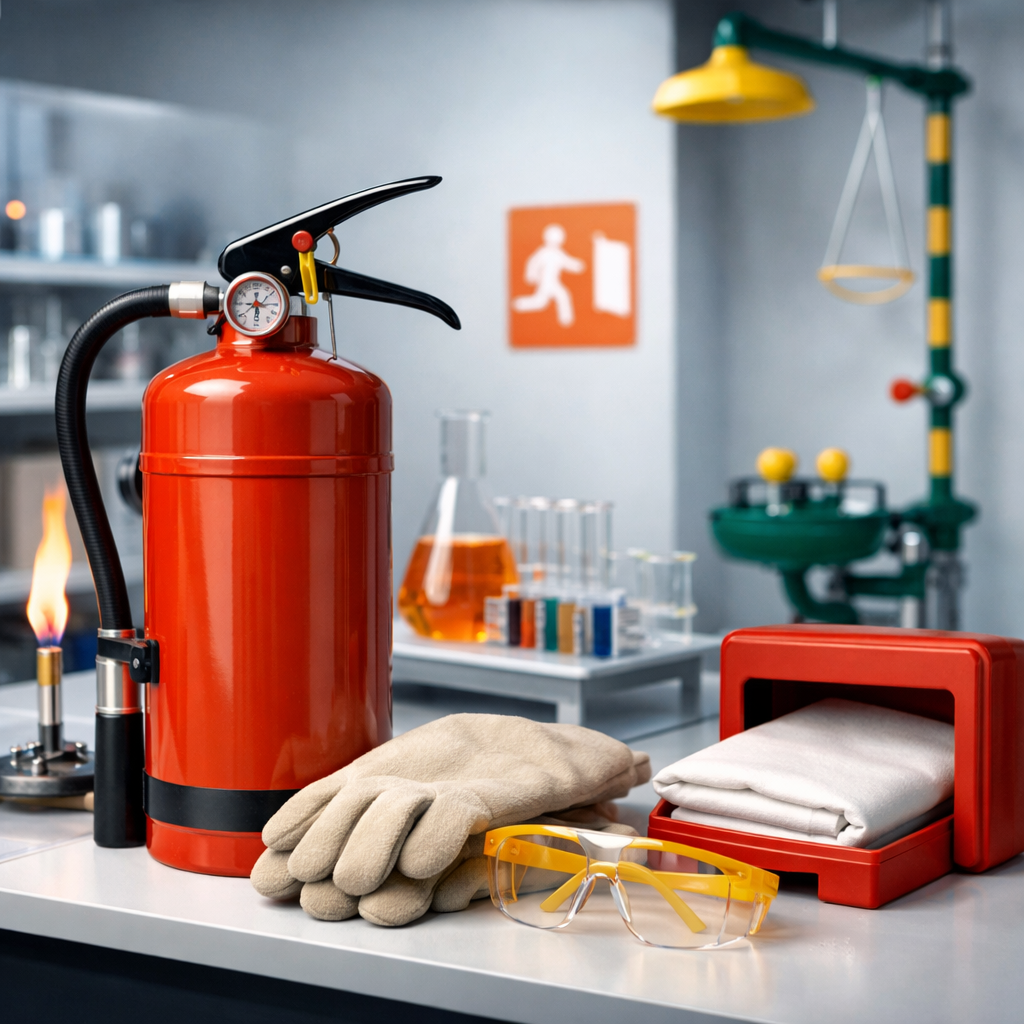

laboratory fire safety measures are a critical part of occupational health, safety, and environmental management in any research, medical, academic, or industrial facility.
Laboratories contain flammable chemicals, heat sources, electrical equipment, compressed gases, and reactive substances, all of which can turn a small mistake into a serious fire emergency.
Strong fire prevention practices protect workers, reduce property damage, support business continuity, and help organizations meet legal and regulatory obligations.
Whether the lab handles solvents, biological samples, or high-temperature testing, fire safety must be built into daily operations rather than treated as a once-a-year training topic.
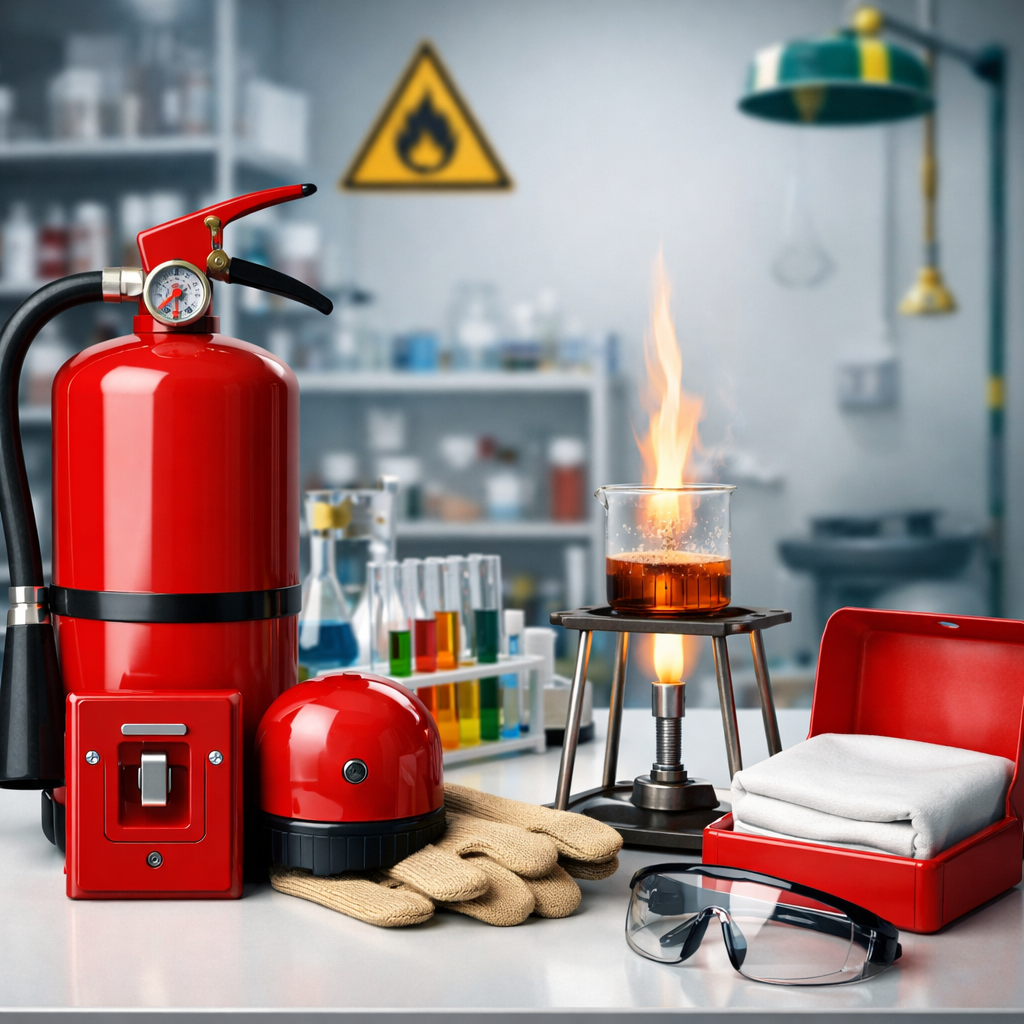
This article explains practical laboratory fire safety measures, common risks, prevention strategies, personal protective equipment, compliance duties, and real workplace examples that support safer laboratory environments.
Common Fire Risks in Laboratory Environments
Effective laboratory fire safety measures begin with understanding how fires start in the first place.
Most laboratory fire incidents involve a combination of fuel, ignition, and oxygen, often made worse by poor storage, inadequate supervision, or a lack of hazard awareness.
In many labs, flammable liquids such as ethanol, methanol, acetone, xylene, and other solvents are used near hot plates, open flames, heating mantles, ovens, or electrical devices.
Even a small vapor release can ignite if ventilation is poor or if incompatible tasks are carried out too close together.
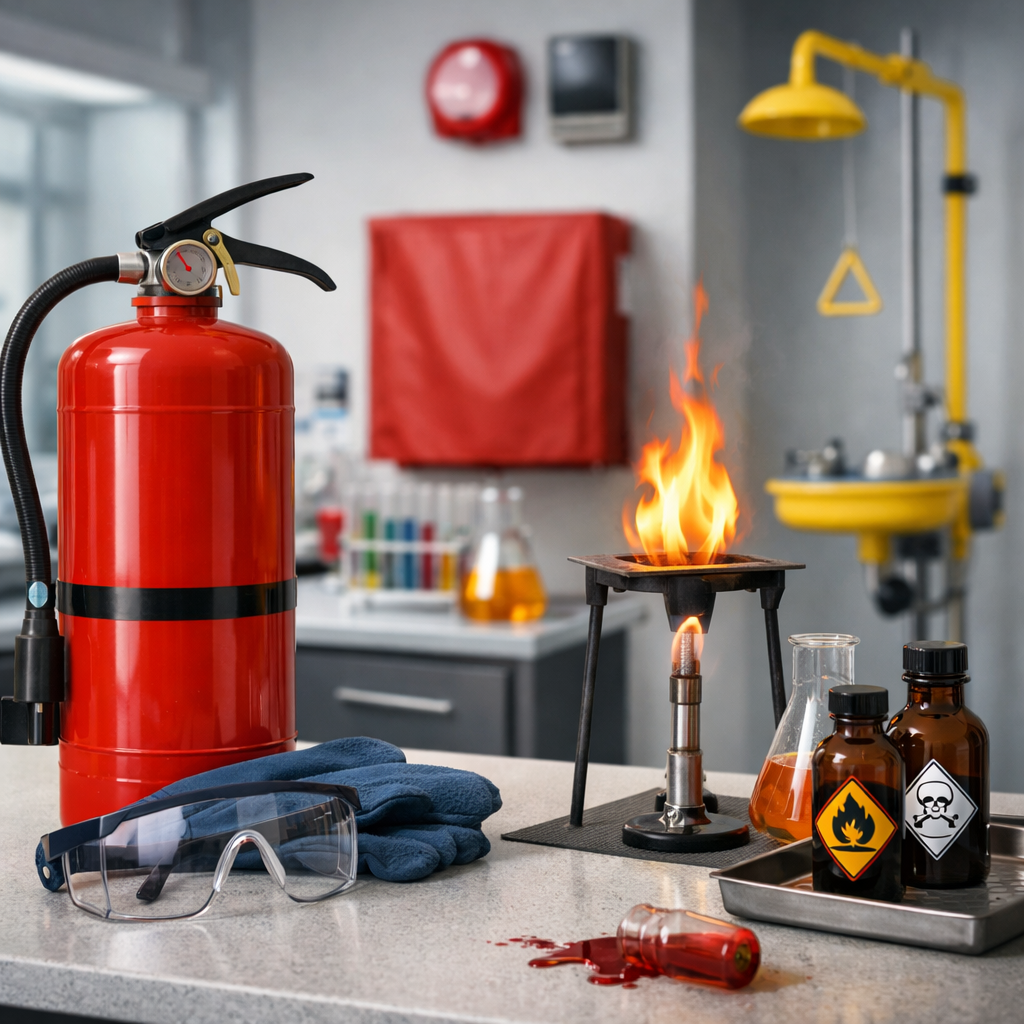
Typical laboratory fire hazards
- Flammable and combustible liquids stored improperly or used in open areas
- Open flames from Bunsen burners, spirit lamps, or ignition sources during testing
- Electrical faults such as overloaded outlets, damaged cords, or poorly maintained instruments
- Reactive chemicals that ignite when mixed, exposed to air, or contaminated
- Compressed gases that increase fire intensity or create explosion hazards
- Poor housekeeping including cluttered benches, waste buildup, and blocked exits
- Human error such as unattended experiments, incorrect labeling, or lack of training
Practical examples are easy to find in real workplaces.
A solvent container left open beside a hot plate can create flammable vapor buildup.
A frayed power cord under a benchtop can spark near chemical storage.
A researcher transferring ethanol outside a fume hood may unintentionally create an ignition hazard if static, heat, or electrical equipment is nearby.
These examples show why laboratory fire safety measures must address both physical conditions and worker behavior.
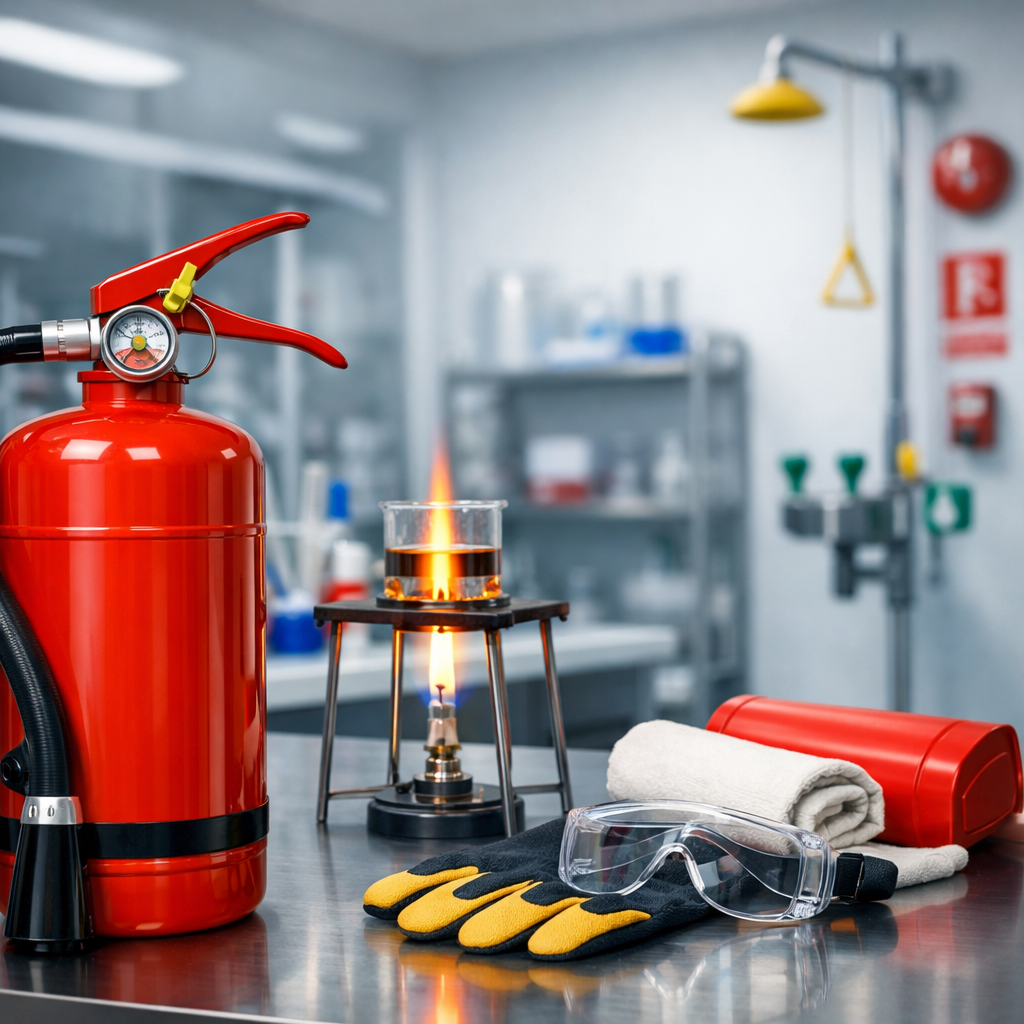
Laboratory Fire Safety Measures for Prevention and Control
The most effective laboratory fire safety measures focus on prevention first.
In OHSE practice, the Hierarchy of Controls is a useful framework for reducing fire risk in a structured way.
Rather than relying only on workers to be careful, laboratories should eliminate hazards where possible and strengthen engineering and administrative controls.
Applying the Hierarchy of Controls
- Elimination: Remove unnecessary ignition sources or discontinue high-risk procedures where possible.
- Substitution: Replace highly flammable materials with less hazardous alternatives when technically feasible.
- Engineering controls: Use fume hoods, fire-rated cabinets, local exhaust ventilation, spark-proof equipment, and automatic suppression systems.
- Administrative controls: Develop SOPs, training programs, permit systems, inspections, and emergency drills.
- PPE: Provide flame-resistant lab coats, eye protection, gloves, and suitable footwear as the last line of defense.
Core prevention practices
Safe chemical storage is one of the most important laboratory fire safety measures.
Flammable liquids should be kept in approved flammable storage cabinets, with quantities limited at the point of use.
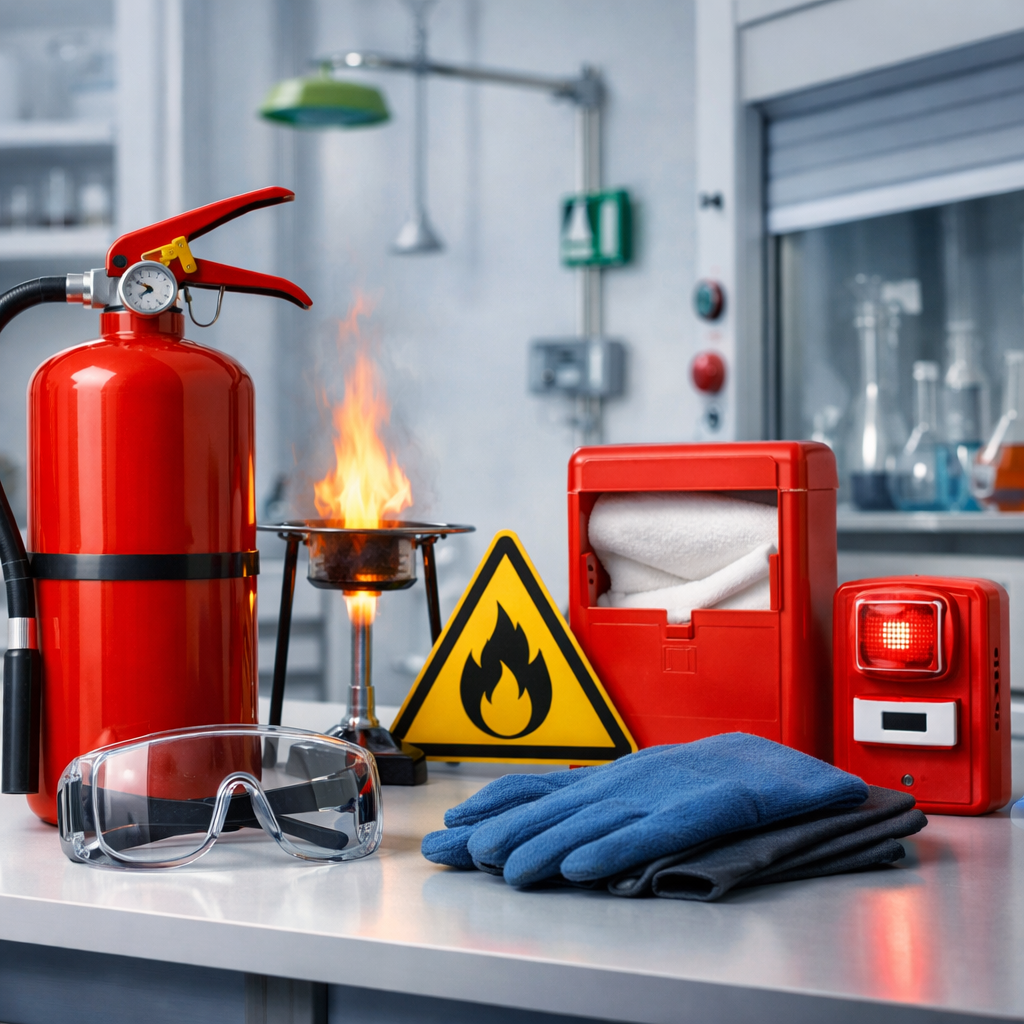
Incompatible materials must be segregated, and all containers should be clearly labeled.
Good ventilation is equally important, especially when handling volatile substances that release ignitable vapors.
Many organizations follow guidance from OSHA laboratory safety resources and the CCOHS fire prevention guidance to strengthen these controls.
Routine inspection and maintenance also reduce risk.
Fire extinguishers, alarms, emergency shutoffs, eyewash stations, and ventilation systems should be checked on schedule.
Electrical equipment should be tested, and damaged items removed from service immediately.
Housekeeping matters more than many teams realize.
Clear aisles, clean benches, proper waste disposal, and unobstructed exits make it easier to prevent a fire and safer to evacuate if one occurs.
For additional workplace control planning, many organizations also use internal procedures such as safe chemical storage guidelines and emergency evacuation procedures.
PPE, Emergency Response, and Practical Workplace Examples
While PPE does not prevent all fires, it remains a necessary part of laboratory fire safety measures.
Workers should wear clothing and equipment suited to the materials and processes in the lab.
Loose sleeves, synthetic fabrics that melt easily, and open footwear can increase injury severity during a flash fire or spill ignition.
Essential PPE for fire-related laboratory hazards
- Flame-resistant lab coats for work involving flammable liquids or ignition sources
- Safety goggles or face shields to protect against heat and splashes
- Chemical-resistant gloves selected for the specific substances handled
- Closed-toe, non-slip footwear to reduce injury during spills or evacuation
- Respiratory protection only where required through a formal hazard assessment and program
Emergency preparedness is another key element of laboratory fire safety measures.
Workers should know how to raise the alarm, shut down equipment if safe to do so, use an extinguisher only when trained, and evacuate without delay when conditions are unsafe.
Fire blankets, emergency showers, spill kits, and extinguishers must be easy to access and suitable for the hazard class involved.
Teams should also understand that not every fire should be fought.
If a fire grows beyond an incipient stage, evacuation is the correct response.
Practical workplace examples
In a university chemistry lab, a technician heating a flammable solvent on an open bench may create unnecessary risk.
A safer approach is to use a fume hood, eliminate nearby ignition sources, reduce the volume in use, and ensure a Class B fire extinguisher is available.
In a medical laboratory, overloaded power strips used for multiple analyzers can overheat and ignite nearby combustible materials.
Corrective action includes dedicated circuits, equipment inspection, and strict housekeeping around electrical installations.
In an industrial testing lab, gas cylinders stored unsecured near heat-producing equipment can intensify fire events.
Proper cylinder restraint, separation, signage, and ventilation are essential laboratory fire safety measures in that setting.
Training, Compliance, and Continuous Improvement
Laboratory fire safety measures are only effective when they are supported by training, supervision, and compliance monitoring.
Staff, students, contractors, and visitors should receive orientation that covers fire hazards, emergency procedures, chemical handling, equipment shutdown, and reporting requirements.
Refresher training should be scheduled regularly, especially when processes, layouts, or substances change.
Compliance should align with local regulations, fire codes, and recognized standards.
Depending on the jurisdiction, employers may need to comply with OSHA requirements, local fire authority expectations, building codes, and chemical safety regulations.
Reference materials from the National Fire Protection Association, OSHA, and CCOHS can help organizations develop robust fire safety programs.
Simple fire safety checklist for laboratories
| Control Area | What to Check | Frequency |
|---|---|---|
| Chemical Storage | Flammables stored in approved cabinets, containers labeled, incompatibles separated | Weekly |
| Electrical Safety | Cords intact, outlets not overloaded, faulty equipment removed | Monthly |
| Emergency Equipment | Extinguishers, alarms, showers, and exits accessible and inspected | Monthly |
| Housekeeping | Waste removed, benches clear, aisles and exits unobstructed | Daily |
| Training and Drills | Staff trained, drills completed, records up to date | Quarterly or as required |
Incident reporting and near-miss review are also valuable.
If a small solvent flash occurs and no one is hurt, that event should still trigger an investigation.
Organizations should examine root causes such as inadequate supervision, unsuitable equipment, poor layout, or weak SOPs.
Lessons learned should then be shared across teams to prevent recurrence.
In conclusion, laboratory fire safety measures must combine hazard identification, prevention, PPE, emergency readiness, and regulatory compliance to be effective.
When laboratories apply the Hierarchy of Controls, maintain equipment, train staff, and review real-world risks regularly, they create safer workplaces for everyone.
Strong laboratory fire safety measures are not just about passing inspections; they are essential for protecting people, research, assets, and operational continuity every day.
No comments yet