
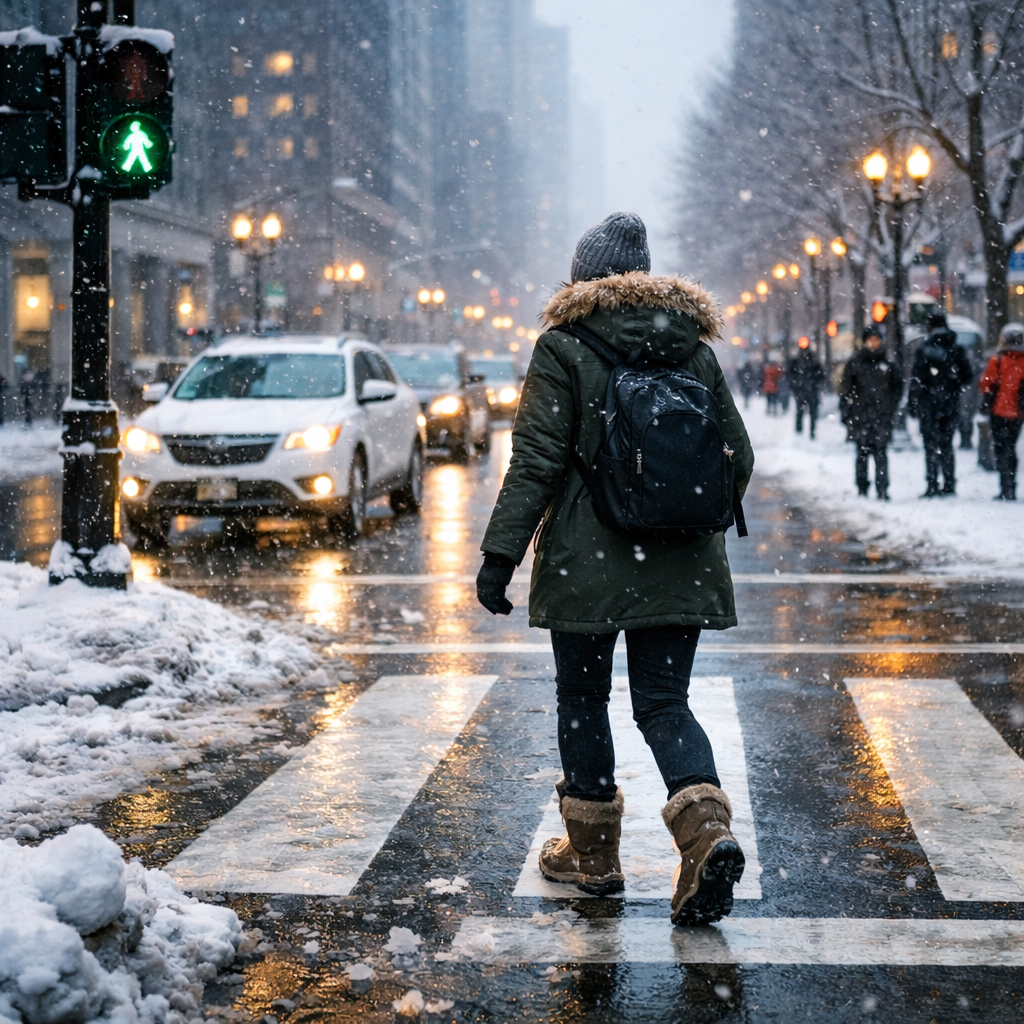

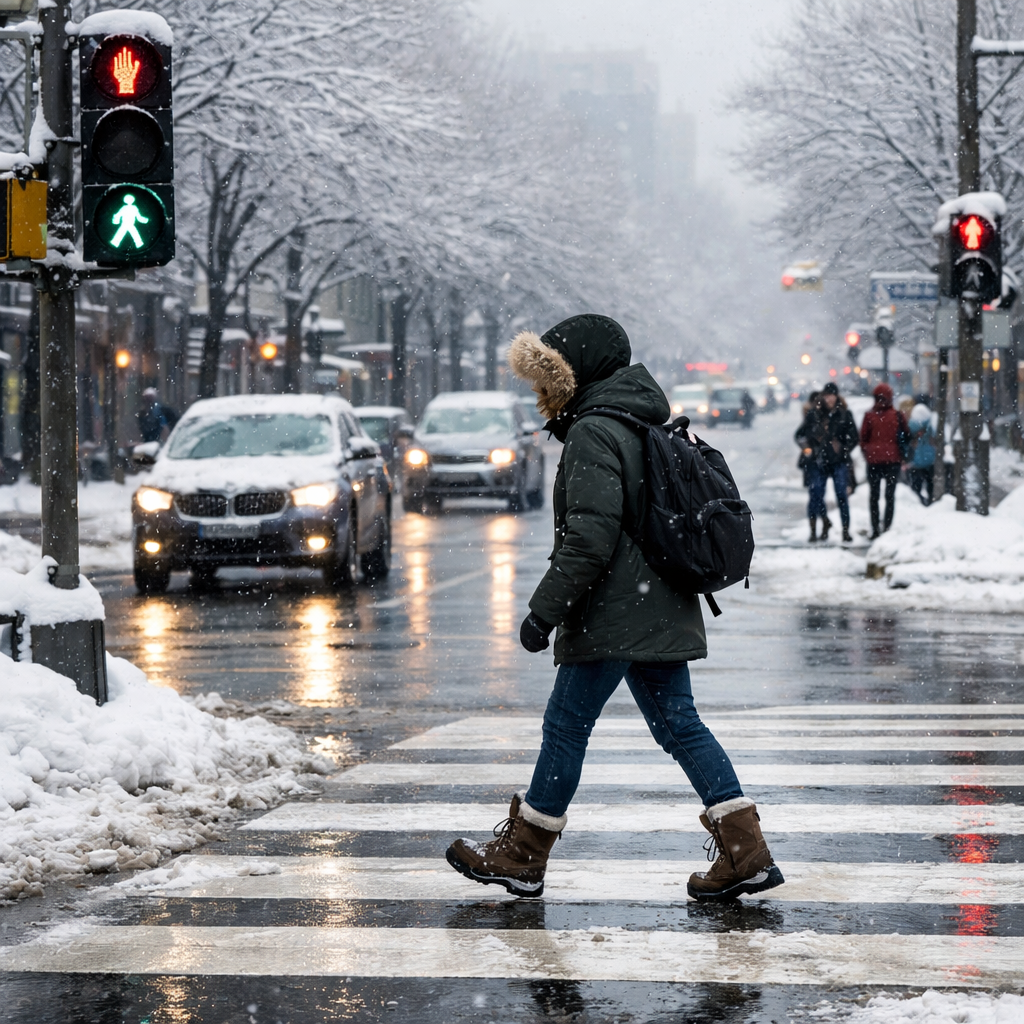
Crossing the street in winter can be more dangerous than many students realize. Snowbanks, icy sidewalks, shorter daylight hours, and reduced visibility can turn an ordinary walk to school, work, or the bus stop into a higher-risk situation if students are not paying close attention.
For Canadian families, schools, and young workers, winter road safety is about prevention, routine, and good judgment. Whether a student is in elementary school, high school, or walking to a part-time job, the same core habits matter: stop fully, look carefully, stay visible, and never assume drivers can stop quickly on snow or ice.
This practical guide explains the most important rules for crossing safely in winter, with age-appropriate advice and simple steps that students, parents, and schools can reinforce every day. For more prevention-focused safety resources, visit OHSE.ca.
Why crossing the street in winter needs extra caution
Winter changes the road environment for everyone. Drivers may need more distance to stop, sidewalks may be slippery, intersections can be slushy, and snowbanks can block sightlines for both pedestrians and motorists.
Students are especially at risk when they are in a hurry, distracted by phones, carrying sports gear, or walking in dim morning or afternoon light. A student may be following the rules and still face danger if a vehicle slides through a turn or if the driver cannot see around piled snow.
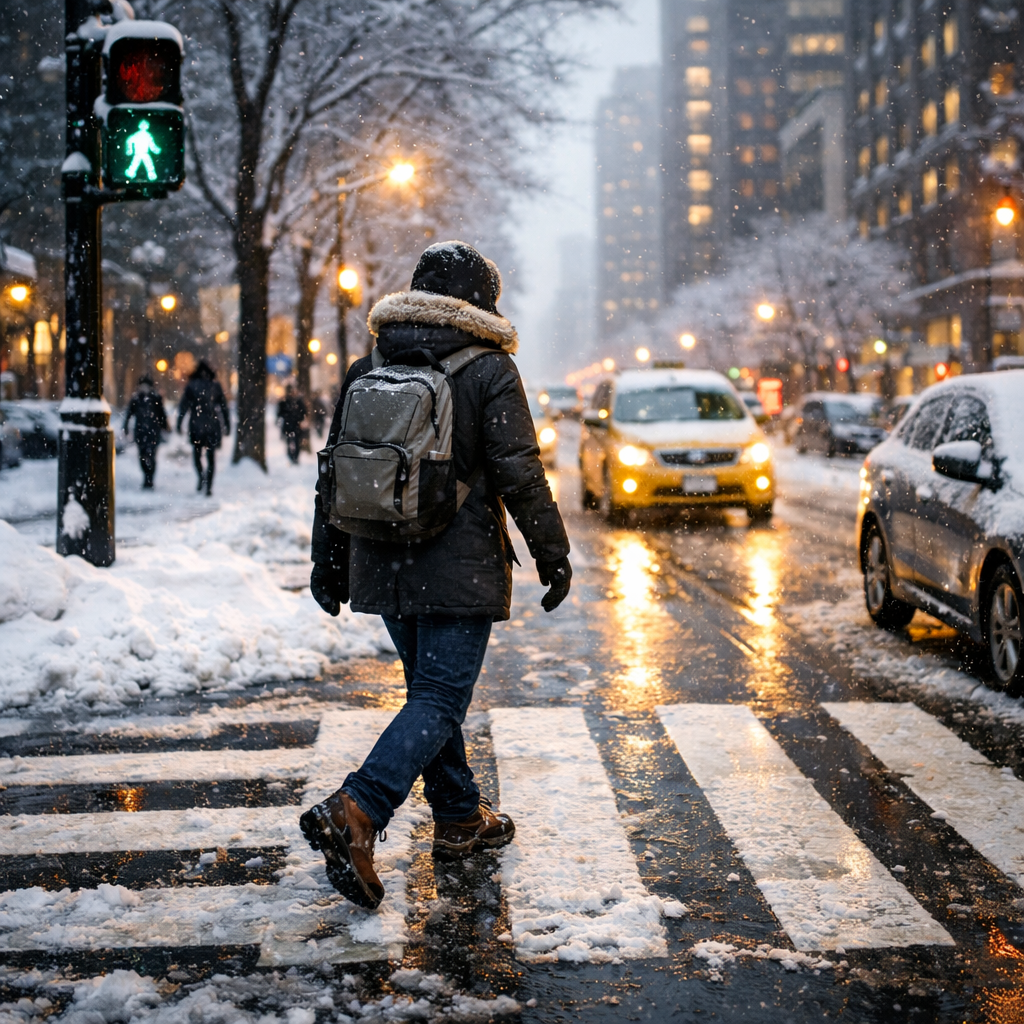
That is why crossing the street in winter requires more than the usual “look both ways” reminder. Students need to slow down, check conditions, and make sure they are seen before stepping off the curb.
Common winter hazards near schools and neighbourhoods
- Ice at curb edges: The road may be clearer than the sidewalk, but the step down at the curb is often where slips happen.
- Snowbanks blocking views: Parked cars and plowed snow can make it hard to see oncoming traffic.
- Dark clothing in low light: Many winter coats are dark, which can make pedestrians harder to notice.
- Vehicles needing longer stopping distance: Even careful drivers may slide on snowy or icy roads.
- Rushing for buses or rides: Students may cross mid-block or before checking traffic properly.
- Distracted walking: Earbuds, phones, and conversations reduce attention at the exact moment focus is needed most.
Crossing the street in winter: the safest habits for students
The safest approach is simple and consistent. Students should use designated crosswalks, traffic lights, school crossings, or corners wherever possible. Crossing between parked cars or at unmarked mid-block locations becomes even riskier in winter because visibility is reduced.
Before stepping onto the road, students should stop well back from the curb, look left, right, and left again, and continue scanning while crossing. It is also important to make eye contact with drivers when possible. If a driver has not clearly slowed or stopped, the student should wait.
Students should walk, not run, across the road. Running increases the chance of slipping on ice and reduces time to react. If boots have poor traction or the surface looks slick, shorter steps can help maintain balance.
Essential rules to teach and repeat
- Cross only at marked crossings, intersections, or where a crossing guard is present.
- Never assume a driver can stop just because they see you.
- Keep phones in pockets and remove distractions before crossing.
- Take out one or both earbuds so you can hear traffic.
- Stay back from the curb until it is clearly safe to cross.
- Watch for turning vehicles, especially at intersections and driveways.
- Walk carefully across snow, slush, and black ice.
- If visibility is poor, wait for a larger gap in traffic than usual.
These habits also matter for teens walking to co-op placements, transit stops, or part-time jobs. In Ontario and across Canada, winter conditions affect both school travel and young worker travel, so families and supervisors should reinforce the same expectations.
Visibility, clothing, and planning ahead
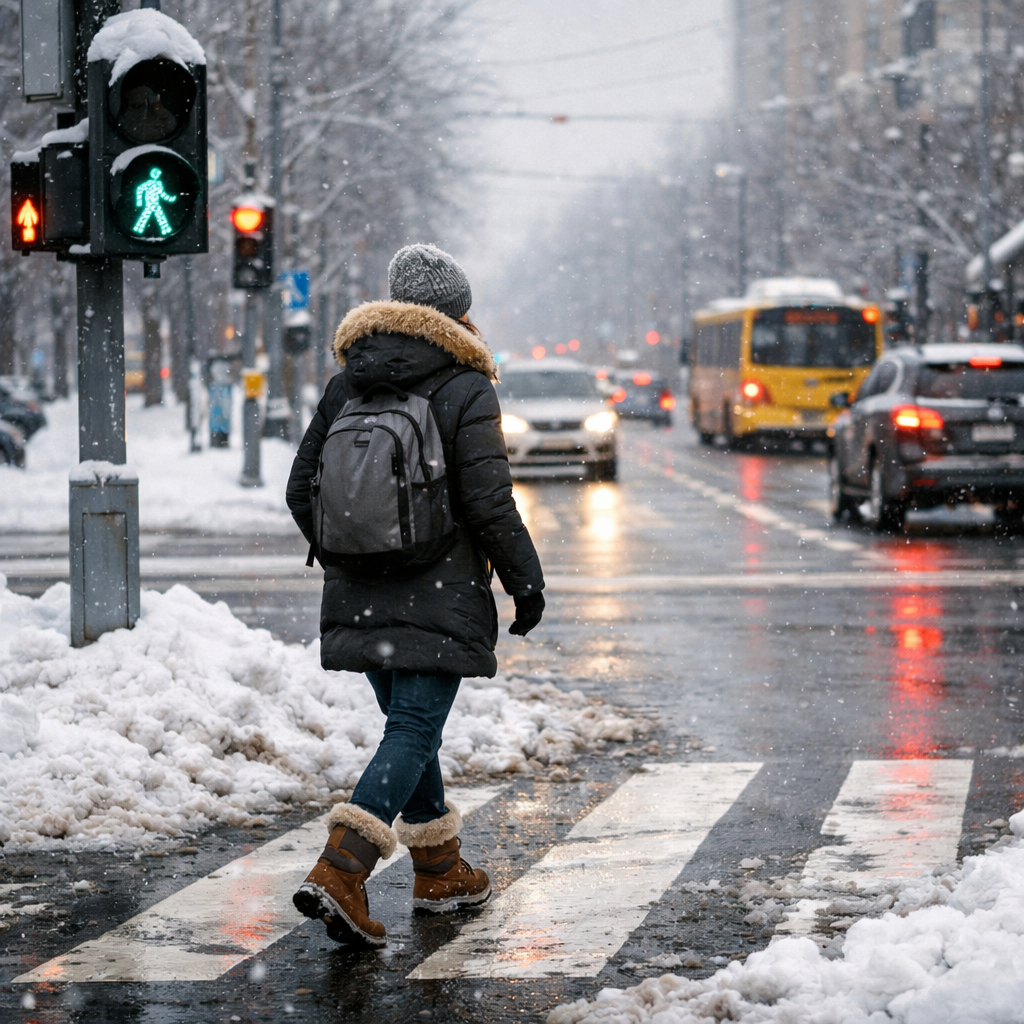
One of the most effective ways to reduce risk when crossing the street in winter is to be more visible. Bright outerwear, reflective strips, and small lights can help drivers notice students earlier in the day and in the late afternoon.
Parents can look for winter jackets, backpacks, or boots with reflective details. Schools can also encourage visibility through reminders, student campaigns, or seasonal safety messaging. The goal is not fashion perfection. The goal is being seen sooner.
What students should wear or carry
- A bright or reflective winter coat
- A backpack with reflective material
- Boots with good traction
- Gloves that allow a secure grip when using railings
- A small flashlight or clip-on light if walking in low light
Planning the route matters too. If one corner has high snowbanks, poor lighting, or frequent vehicle congestion, a different crossing point may be safer even if it takes a little longer. Parents and students can walk the route together and identify better choices in advance.
Trusted organizations such as CCOHS, Parachute, and the Government of Ontario offer broader safety information that can support school and family discussions about seasonal hazards.
Practical winter controls for schools, families, and young workers
Pedestrian safety is not only the student’s responsibility. Adults and organizations also play a role in reducing risk. A simple way to think about prevention is through the hierarchy of controls: first reduce the hazard where possible, then support safe behaviour with clear systems, supervision, and equipment.
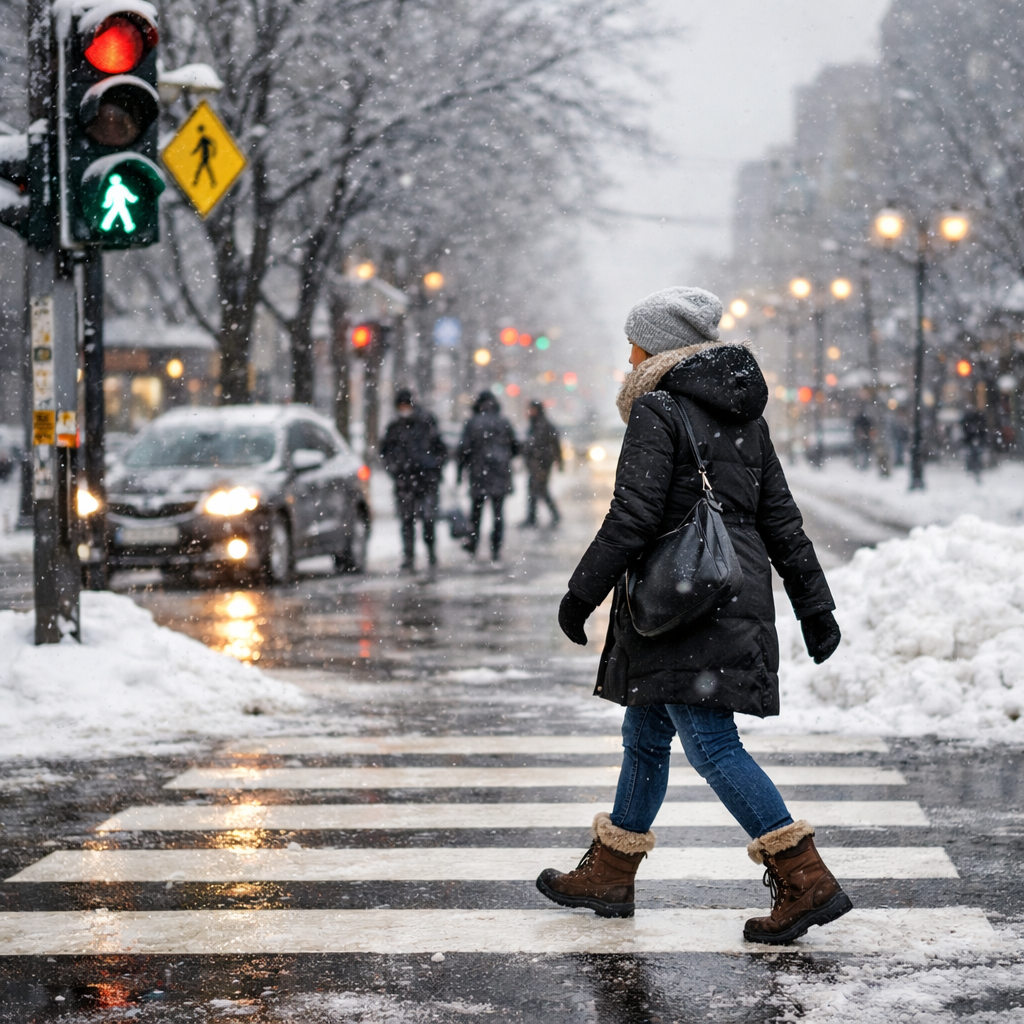
For example, schools can request snow clearing near entrances and crossings, improve supervision at busy pickup areas, and remind families not to stop in unsafe places. Parents can build in extra travel time so children are not rushing. Employers of young workers can discuss safe winter commuting during orientation, especially for early morning or evening shifts.
Simple control measures that help
| Risk | Practical control | Who can help |
|---|---|---|
| Blocked sightlines from snowbanks | Use crossings with better visibility and keep snow cleared where possible | Schools, municipalities, property managers, families |
| Slippery sidewalks and curbs | Wear proper boots, slow down, use salted and maintained routes | Students, families, schools, employers |
| Low visibility in morning or evening | Wear reflective items and carry a light if needed | Students, parents, schools |
| Rushing to school, transit, or work | Leave earlier and avoid unsafe shortcuts | Students, families, supervisors |
When training is part of a school, workplace, or student safety program, practical seasonal refreshers can help reinforce these routines. Additional learning resources may be found at learn.ohse.ca.
A short checklist for crossing the street in winter
Students can use this quick checklist every day before they cross:
- Am I at a safe crossing point?
- Can I see clearly past snowbanks, parked cars, and slush spray?
- Can drivers see me?
- Have I put away my phone and reduced distractions?
- Have vehicles fully stopped, or is there enough time and space to cross safely?
- Is the surface icy, uneven, or slippery?
- Am I walking carefully instead of rushing?
For younger children, adults should practise this routine often and keep instructions simple. For teens, the message should emphasize judgment, visibility, and resisting the urge to take shortcuts. If local school, workplace, manufacturer, or emergency guidance applies, students and families should follow that direction first.
Crossing the street in winter is safest when students expect conditions to be worse than they look and make careful choices every time. A few extra seconds at the curb, better visibility, safer footwear, and a planned route can prevent a serious incident. For Canadian schools, parents, and young workers, the key lesson is clear: when it comes to crossing the street in winter, slow down, stay alert, and never assume traffic can stop on demand.
No comments yet