
Long Commutes After Overtime Shifts can turn a normal drive into a high-risk task—because the most dangerous part of the workday often begins when the job is “done.”
After extended hours, your brain is slower, your eyes are heavier, and your decision-making is less sharp. Yet the commute still demands constant attention, quick reactions, and good judgment, especially in winter, at night, or on long, monotonous routes.
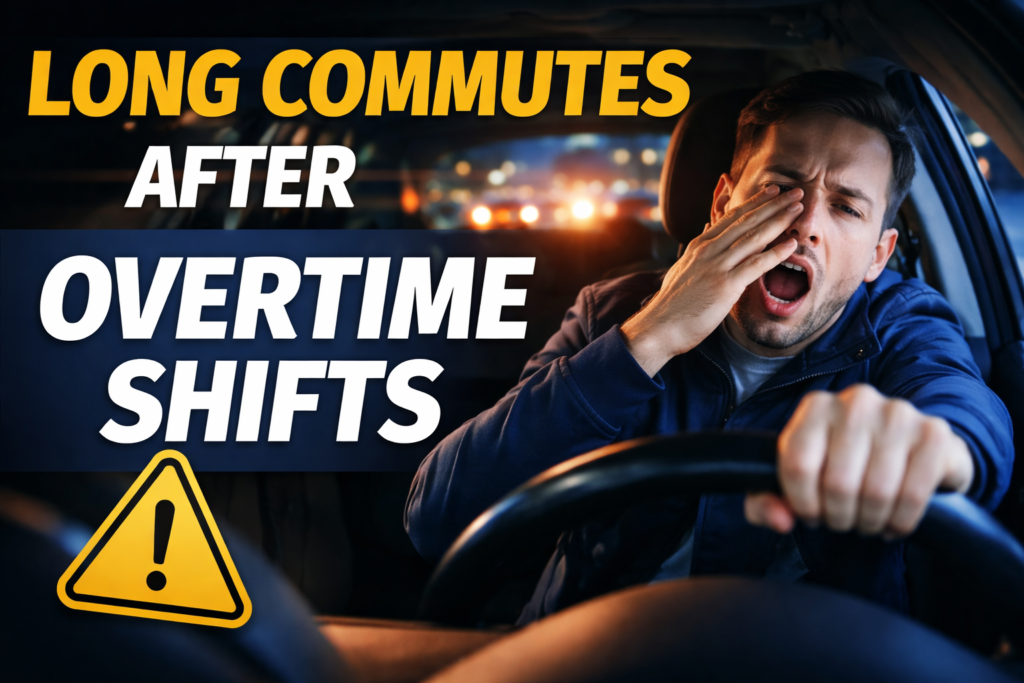
Many workplaces manage hazards inside the building but treat the trip home as someone else’s problem. In reality, overtime schedules, short rest periods, and late finishes can create predictable fatigue risk.
When that fatigue meets highway speeds, darkness, or stop-and-go traffic, small mistakes can become severe outcomes.
This article breaks down why the risk is hidden, what warning signs matter, and how to control it in a practical OHSE way.
- Why Long Commutes After Overtime Shifts quietly increase crash risk
- What fatigue does behind the wheel
- Common “risk multipliers” that make the commute worse
- Warning signs that the commute is no longer safe
- Employer controls for Long Commutes After Overtime Shifts
- Worker strategies that actually reduce risk (not just motivation)
- Supervisor checklist to prevent a “drive-home incident”
- How to turn this into a simple workplace program
- Final takeaway
Why Long Commutes After Overtime Shifts quietly increase crash risk
Long Commutes After Overtime Shifts are risky because they stack multiple fatigue drivers at once. First, overtime extends time-on-task, which increases mental and physical depletion.
Second, it often reduces recovery time, especially when the next shift starts early or the worker has responsibilities at home. Third, overtime frequently pushes the commute into late evening or early morning—times when alertness naturally drops.

Fatigue isn’t always loud. People can feel “fine” but still be impaired in the ways that matter most for driving: vigilance, reaction time, lane tracking, hazard perception, and patience.
That’s why a worker may insist they’re okay to drive while their performance is already compromised. If your blog already covers fatigue basics, link readers to your internal resource like a fatigue management guide (for example: fatigue management guide) so they understand this is a workplace hazard, not a personal weakness.
What fatigue does behind the wheel
Long Commutes After Overtime Shifts can trigger three dangerous patterns that many drivers misinterpret as “just being tired.”
First is attention tunneling—your brain starts focusing on only one thing at a time, which means you miss mirror checks, signage, and subtle movements from other vehicles. Second is slower reaction time, which turns a near-miss into a collision when braking distance and decision speed matter.
Third is the most severe: microsleeps, brief episodes where the brain slips into sleep for seconds. A few seconds at highway speed is enough to leave your lane, miss a curve, or fail to respond to sudden traffic changes.
If you want an authoritative external explainer for readers, a simple “learn more” link can help without overwhelming them: NIOSH fatigue overview. (Most blogging platforms treat standard links as dofollow unless you set otherwise.)
Common “risk multipliers” that make the commute worse
Long Commutes After Overtime Shifts become even more hazardous when specific conditions pile on. The issue is rarely one factor—it’s the combination that creates the perfect storm.
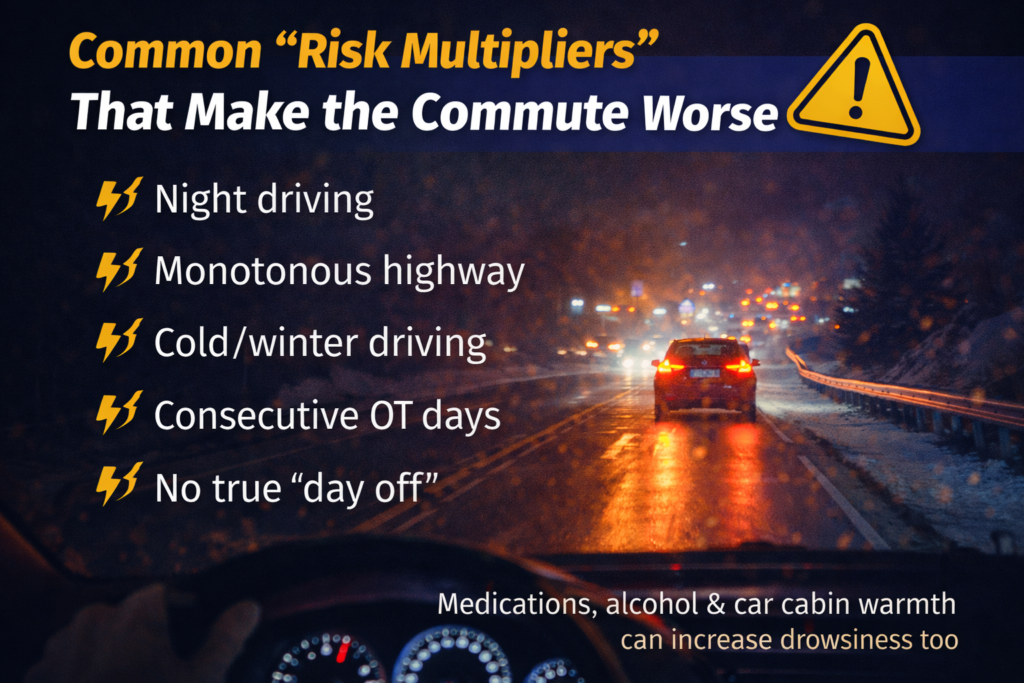
Night driving is a major multiplier. Darkness, reduced visual cues, and quieter roads make it easier to drift into autopilot. Monotonous highways add another layer because the brain receives fewer stimulating inputs, which encourages drowsiness.
Cold weather is also a multiplier because it adds glare, traction changes, reduced visibility, and longer stopping distances. If you publish seasonal content, connect this topic to your internal winter driving safety page to keep readers moving from awareness to action.
Other multipliers include:
- Short turnaround between shifts (late finish, early start)
- Consecutive overtime days without a true recovery day
- Sedentary, high-focus work (screen work, monitoring, repetitive tasks) that drains attention
- Heavy meals or dehydration at shift end
- Medication or alcohol interactions that increase drowsiness
- Car cabin warmth and low airflow, which can amplify sleepiness
For Canadian audiences, you can also direct readers to general fatigue guidance from CCOHS, which is a solid plain-language resource.
Warning signs that the commute is no longer safe
Long Commutes After Overtime Shifts often look “manageable” until a driver crosses a line and doesn’t remember doing it. The key is to treat warning signs as a stop signal, not a challenge to overcome.

If a person notices frequent yawning, heavy eyelids, difficulty keeping speed consistent, or missing turns, they are already in a danger zone. Lane drift, tailgating, and “zoning out” are especially concerning because they show degraded attention control. Another red flag is when someone can’t remember the last few minutes of driving—this suggests microsleep-like lapses or severe attention loss.
A simple safety rule for workers: If you’re fighting sleep, you’ve already waited too long. The safest action is to stop somewhere safe and reset before continuing.
Employer controls for Long Commutes After Overtime Shifts
Long Commutes After Overtime Shifts are best managed using the same logic you’d apply to any high-risk task: identify the hazard, assess who is exposed, and apply controls that don’t rely on “toughing it out.” A strong approach focuses on scheduling, recovery time, and creating a culture where speaking up about fatigue is accepted.
Start with work design and scheduling controls. Avoid stacking overtime on consecutive days when possible, and limit late finishes that create short rest periods. Encourage supervisors to look at commuting distance when approving overtime—without turning it into discrimination or policing.
You’re not judging someone’s home location; you’re assessing commute exposure just like any other exposure.
Next, build fatigue-friendly procedures:
- Provide a “stop-work” option for severe fatigue without punishment.
- Offer taxi vouchers, rideshare reimbursement, or a safe ride program for extreme situations.
- Arrange access to a quiet rest area for a short recovery before driving.
- Encourage carpooling or buddy systems after heavy overtime periods.
For high-risk roles or frequent overtime, consider integrating commute risk into your existing fit-for-duty program so it becomes a normal part of safety planning rather than an awkward exception.
Worker strategies that actually reduce risk (not just motivation)
Long Commutes After Overtime Shifts require practical strategies that work in real life, not perfect-world advice. The goal is to reduce sleepiness before the engine starts and to create a backup plan for the drive.
A reliable pre-drive routine is a 10–15 minute reset. Drink water, use the washroom, and take a brief walk outside to change your stimulation level. \
If you’re truly drowsy, a short nap (around 15–20 minutes) is often more effective than forcing yourself to drive. Caffeine can help, but it isn’t a cure—use it strategically, not as a license to push through.
During the drive, use controls that reduce monotony:
- Keep the cabin slightly cool and ventilated.
- Avoid “comfort mode” driving—sit upright and stay engaged.
- Plan a stop point (gas station or rest area) before you start.
- If you feel the first warning signs, pull over safely and reset.
It’s also worth being honest about what does not solve fatigue.
Loud music, open windows, or phone calls can create short bursts of alertness, but they don’t restore cognitive performance the way sleep does. If you need a simple external explainer your readers will trust, link to Transport Canada road safety information as a general education resource.
Supervisor checklist to prevent a “drive-home incident”
Long Commutes After Overtime Shifts are often predictable, especially during peak operations. Supervisors don’t need to diagnose fatigue medically; they just need a consistent process to recognize risk and act early.
Before approving or extending overtime, supervisors can ask:
- How many hours has the person already worked today and this week?
- When did they last have a true rest day?
- What time will they finish, and what time do they start next shift?
- Do they have a long commute or high-risk driving conditions tonight?
At shift end, supervisors should watch for practical signs: slowed speech, irritability, mistakes, glassy eyes, or “I’m fine” when the person is clearly struggling to stay focused.
When in doubt, apply a control—ride support, rest time, or an adjusted end-of-shift plan.
How to turn this into a simple workplace program
Long Commutes After Overtime Shifts don’t require a complicated system to manage. Even small organizations can implement a few consistent steps that reduce risk dramatically.

Start by documenting commute fatigue risk in your hazard assessment, especially for roles that regularly work late or respond to after-hours calls. Add a short fatigue discussion into toolbox talks and onboarding, and include a one-page “drive home safe” protocol that emphasizes stopping when warning signs show up.
Finally, track patterns: if the same departments or periods create repeated fatigue concerns, that’s a scheduling and staffing signal—not an individual failure.
If your site includes occupational health content on OHSE.ca, you can naturally connect readers to broader learning topics like ergonomics, shift work, and fatigue using internal links across related posts (for example: shift work health risks).
Final takeaway
Long Commutes After Overtime Shifts are hidden because they happen offsite, but the risk is built onsite—through extended hours, reduced recovery, and late finishes that collide with human biology.
When employers treat fatigue like a controllable hazard and workers use practical reset strategies instead of willpower, the drive home becomes safer, calmer, and far less likely to end in tragedy.
The safest shift is the one that ends with everyone arriving home alive—especially after Long Commutes After Overtime Shifts
No comments yet