
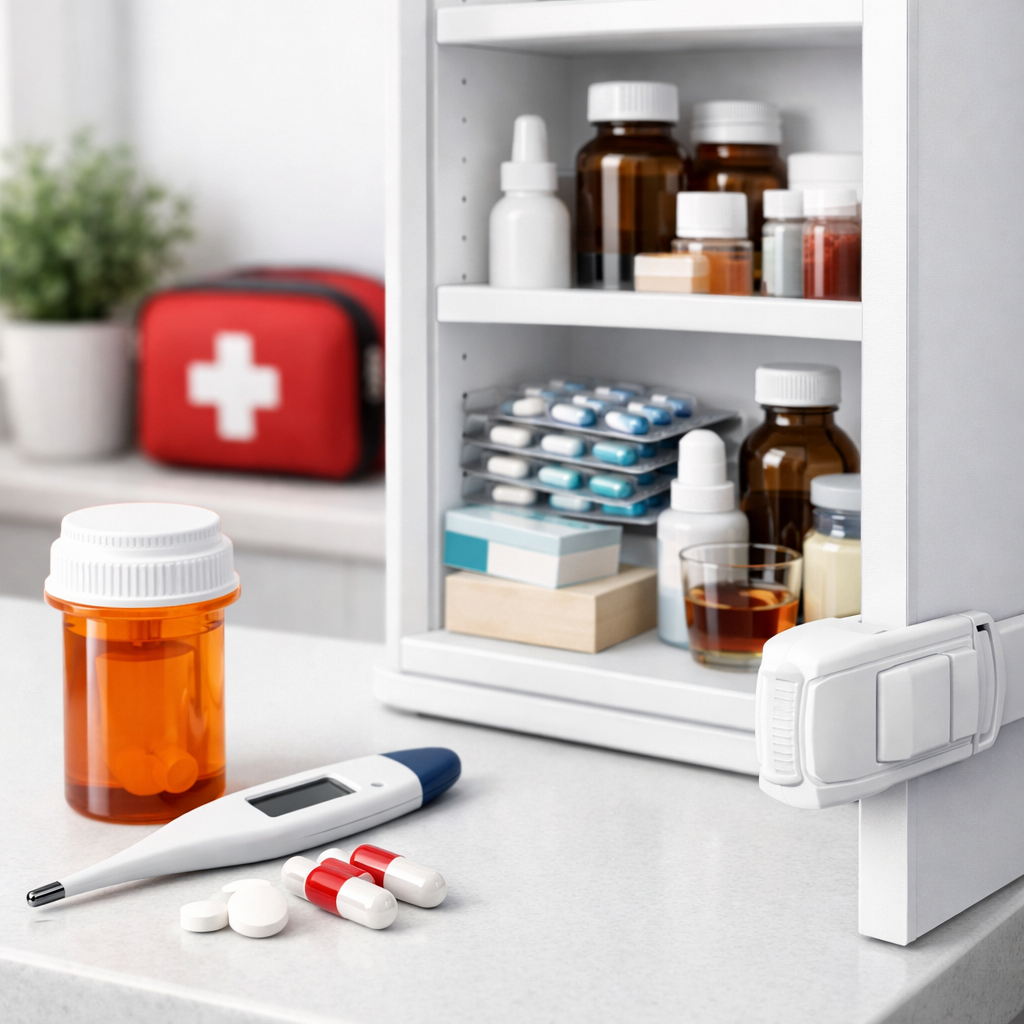

Medicine storage safety starts with one simple goal: make sure children cannot see, reach, open, or mistake medicines for something safe to eat or drink.
In family homes, backpacks, kitchen counters, bathroom cabinets, purses, and bedside tables can all become risk areas when medicines are left out, moved, or stored carelessly. For Canadian families, students, caregivers, and even young workers helping at home, safe storage is a practical prevention step that supports a safer daily routine.
Whether you are storing prescription medicine, over-the-counter products, vitamins, cough syrup, or topical creams, the same rule applies: keep every product in its original container, follow label instructions, and store it in a secure place. For more general home and workplace safety guidance, families can also explore OHSE.ca.
- Why medicine storage safety matters in everyday family life
- Medicine storage safety at home: where and how to store medicines
- Practical prevention steps for families, students, and caregivers
- Medicine storage safety during travel, school activities, and shared care
- A short medicine storage safety checklist for families
Why medicine storage safety matters in everyday family life
Children are naturally curious. They may copy adults, explore drawers, climb onto counters, or open containers that look colourful or familiar. Even products that seem harmless to adults can be dangerous if used the wrong way, in the wrong amount, or by the wrong person.
Medicine storage safety also matters because many homes are busy environments. A parent may set medicine down while answering the door. A grandparent may carry pills in a coat pocket. A student may leave pain relievers in a school bag or sports bag. These everyday situations can create preventable access risks.
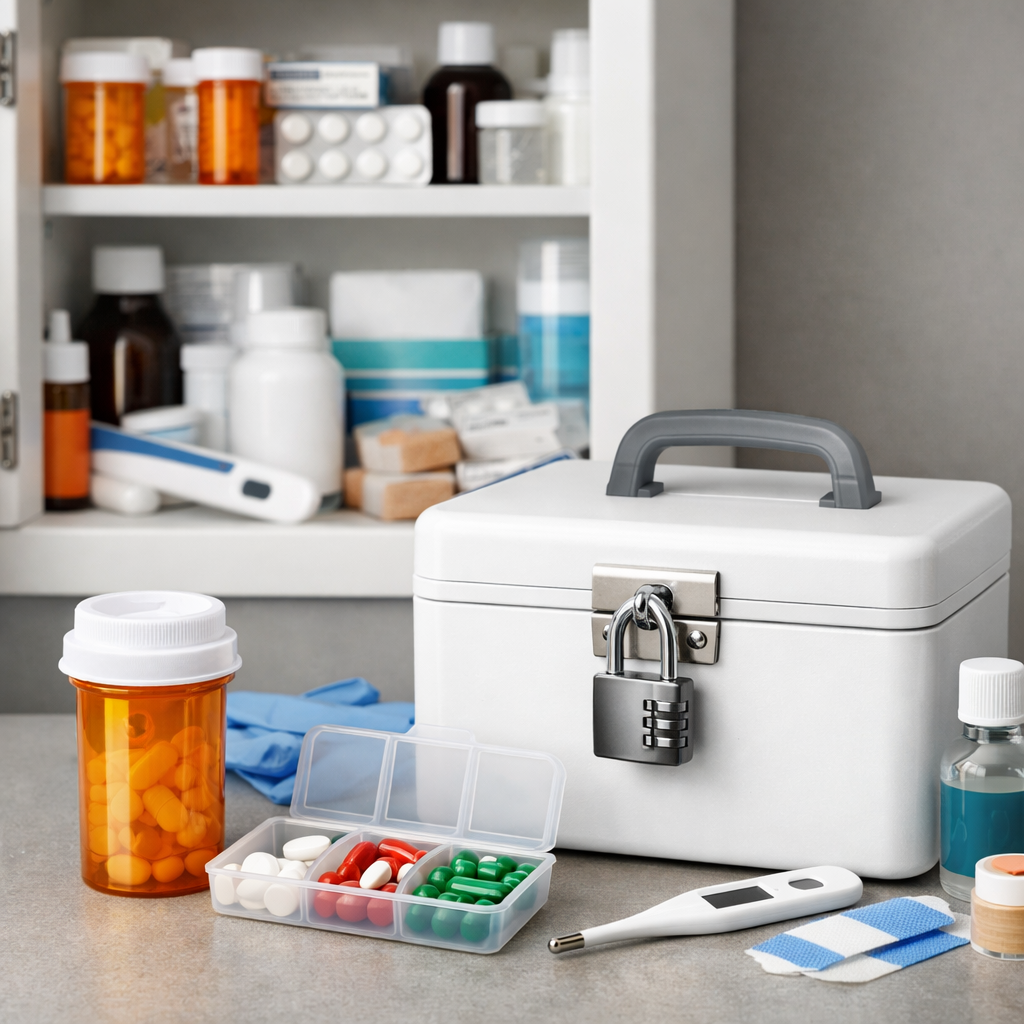
In Ontario and across Canada, families should also remember that storage instructions can vary by product. Some medicines need protection from heat, light, or moisture. Bathrooms are often convenient, but they are not always the best place because humidity can affect certain products. Health Canada offers reliable public health information at Health Canada, and broader safety information is available from the CCOHS.
Medicine storage safety at home: where and how to store medicines
Choose a secure location
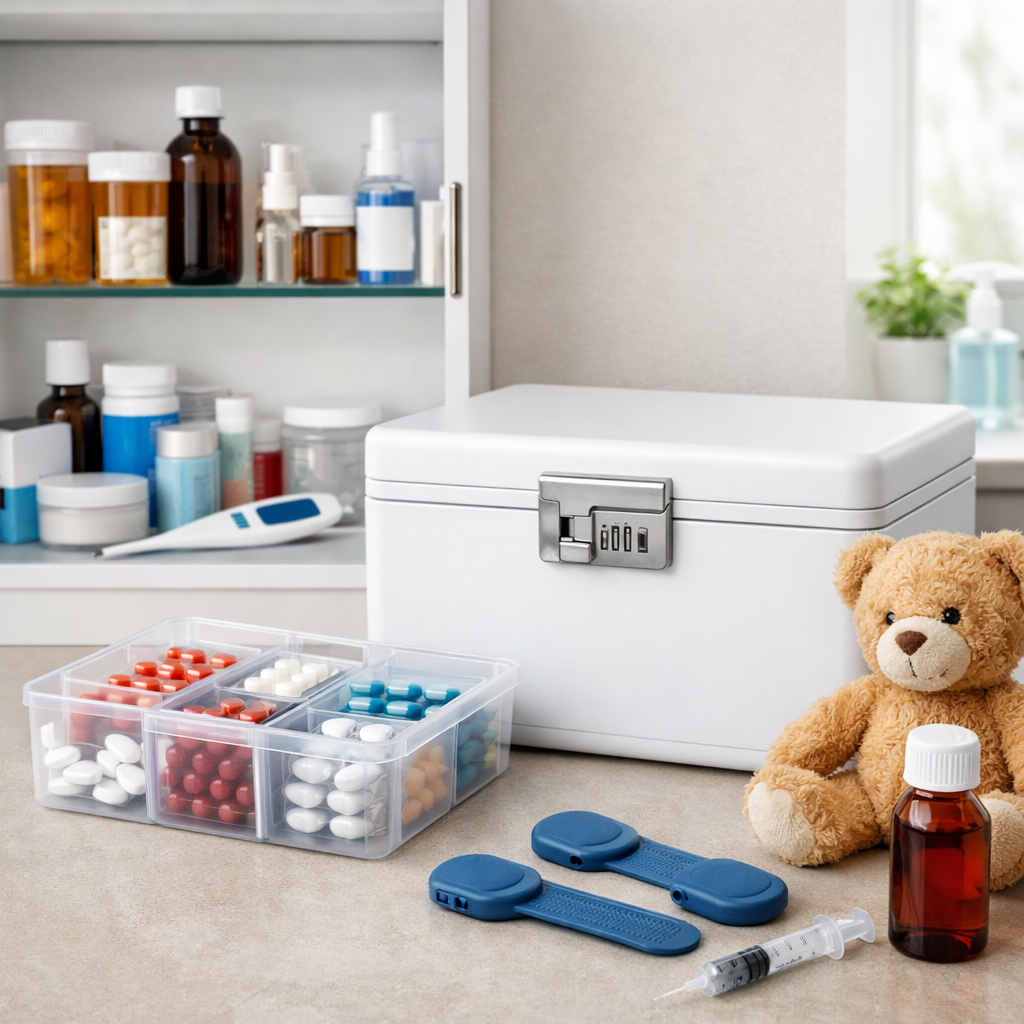
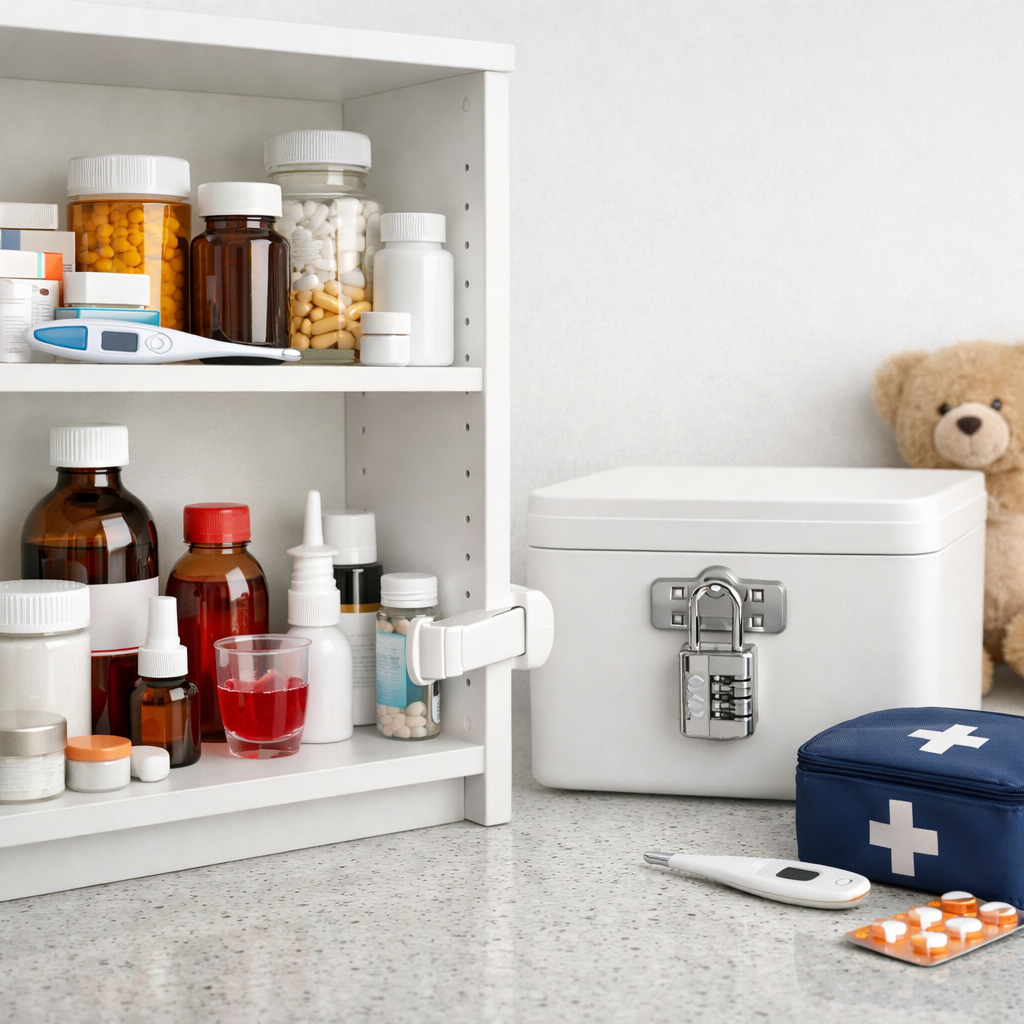
The safest storage areas are high, locked, and out of sight. A locked cabinet is better than an unlocked shelf, and a shelf is better than a counter or table. Avoid storing medicines in places children can climb to reach.
Good storage locations may include a locked hallway cabinet, a secured bedroom cabinet, or another dry area that matches the manufacturer’s instructions. Avoid leaving medicines in vehicles for long periods, especially during hot or cold Canadian weather.
Keep medicines in original containers
Original packaging helps reduce confusion. It keeps the label, dosage information, warnings, and storage instructions attached to the product. Moving medicine into food containers, plastic bags, or unlabelled organizers can increase the chance of misuse.
If a weekly pill organizer is needed for an adult, it should still be stored securely and out of children’s reach. Convenience should never reduce access control.
Watch common high-risk locations
- Kitchen counters and tables
- Bathroom sinks and medicine cabinets without locks
- Nightstands and bedside drawers
- Purses, backpacks, lunch bags, and gym bags
- Coat pockets, vehicles, and travel kits
- Visitor bags, especially when grandparents or guests visit
Medicine storage safety improves when every adult in the home follows the same routine. If one person stores medicine carefully but another leaves it in a bag by the door, the home still has a preventable hazard.
Practical prevention steps for families, students, and caregivers
Use a simple safety routine
Safe storage works best when it becomes a habit. After every use, put the medicine away immediately. Do not leave it out “just for a minute.” Children can move quickly, and interruptions are common.
It also helps to do a quick visual scan before leaving a room. Look for tablets, blister packs, liquid cups, droppers, and loose lids. If medication is given before school, before bed, or during illness, these are especially important times to double-check.
Teach children without creating fear
Children should learn that medicine is not candy, food, or a drink. Use calm, clear language and keep the message consistent. Older children and teens should also understand that sharing medicine with friends, classmates, or teammates is not safe.
Families with school-aged children can connect these lessons to broader health and safety habits. Schools, after-school programs, and camps may have their own medication rules, so parents should follow local guidance and check storage expectations carefully.
Apply a basic hierarchy of controls mindset
For households and small care settings, a simple version of the hierarchy of controls can help:
| Control approach | How it applies to medicine storage safety |
|---|---|
| Elimination | Remove expired, unused, or unneeded medicines from the home when possible. |
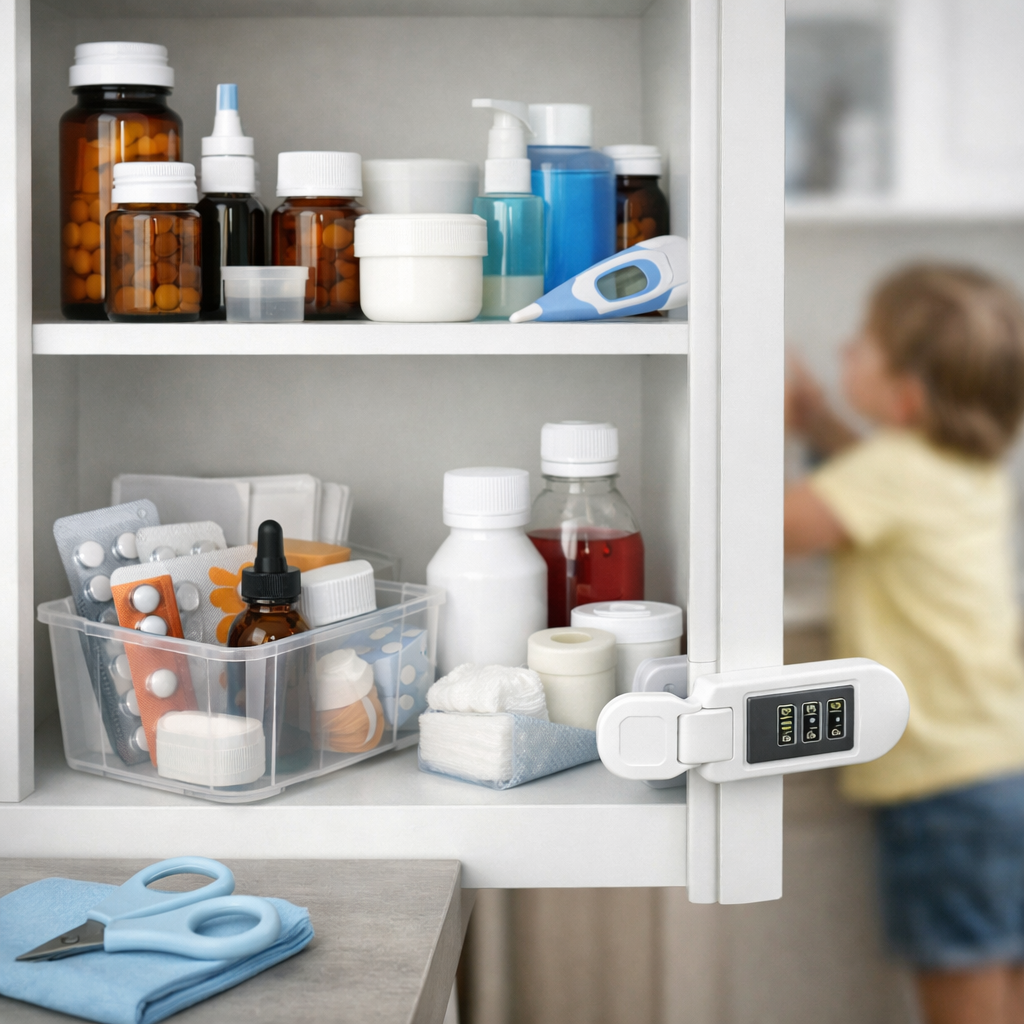
| Engineering controls | Use locked cabinets, child-resistant containers, and secure storage areas. |
| Administrative controls | Create family rules, storage routines, and clear responsibilities for caregivers. |
| Personal practice | Put medicine away immediately after use and supervise children closely. |
This approach is familiar in occupational health and safety and can be useful at home as well. Families interested in broader prevention learning can visit OHSE training resources for safety education topics.
Medicine storage safety during travel, school activities, and shared care
Plan for changing routines
Medicine storage safety can become harder when routines change. Travel, custody transitions, sleepovers, field trips, sports, and visits with relatives all create more movement and more chances for medicine to be left out.
Before leaving home, decide who is carrying the medicine, where it will be stored, and who is responsible for putting it away. In shared households, do not assume another adult has already checked. Confirm it.
Think about bags and temporary spaces
Bags are one of the most overlooked hazards. A purse on a chair, a backpack on the floor, or a gym bag in a hallway can place medicine directly within a child’s reach. Temporary settings need the same level of care as permanent storage areas.
If a child needs medicine at school or camp, parents should follow the organization’s procedures and manufacturer directions. Storage, administration, and supervision rules may vary, and local school or program guidance should always be respected. Ontario families can also review general government resources at Ontario.ca.
Dispose of expired or unneeded products safely
Safe storage includes safe cleanout. Expired or unneeded medicines should not stay in drawers “just in case” if they are no longer meant to be used. Review supplies regularly and remove what is no longer needed according to local guidance, pharmacy advice, and product instructions.
This helps reduce clutter, confusion, and the risk of giving the wrong medicine or using an outdated product.
A short medicine storage safety checklist for families
Use this quick checklist to strengthen daily habits:
- Store all medicines high, locked, and out of sight.
- Keep products in original containers with labels attached.
- Put medicines away immediately after every use.
- Check purses, backpacks, coat pockets, and visitor bags.
- Avoid heat, moisture, and unsuitable storage areas unless the label allows it.
- Teach children that medicine is not candy and should only be handled by a trusted adult.
- Review expiry dates and remove unneeded products regularly.
- Follow manufacturer instructions and local school, workplace, or emergency guidance where applicable.
Medicine storage safety is one of the simplest and most effective ways to protect children at home. A secure location, consistent family habits, and regular checks can prevent avoidable harm. By treating medicines with the same care you would give any household hazard, families can create a safer home environment for children, students, caregivers, and guests.
No comments yet