 Skip to content

Public Transportation Safety Tips for Kids start with one simple idea: your child should feel confident, not nervous, when using buses, subways, streetcars, or trains.
Public transit can be a great step toward independence—getting to school, activities, tutoring, or a friend’s house—especially in busy cities. But it also comes with real risks like traffic near stops, crowding, distraction, and getting separated.
- Build “Transit Readiness” Before the First Solo Ride
- Stop and Station Safety: Where Most Risk Happens
- Boarding Safely and Riding Like a Pro
- Getting Off the Right Way (And Crossing Streets Safely)
- Stranger Awareness Without Scaring Your Child
- Phone Safety: Use It Smart, Not Risky
- Create a Simple “If Something Goes Wrong” Plan
- Winter and Night Travel: Extra Safety Habits That Matter
- Parent Tips: Train Skills in Small Steps
- Final Takeaway: Confidence Comes From Consistent Habits
Public Transportation Safety Tips for Kids
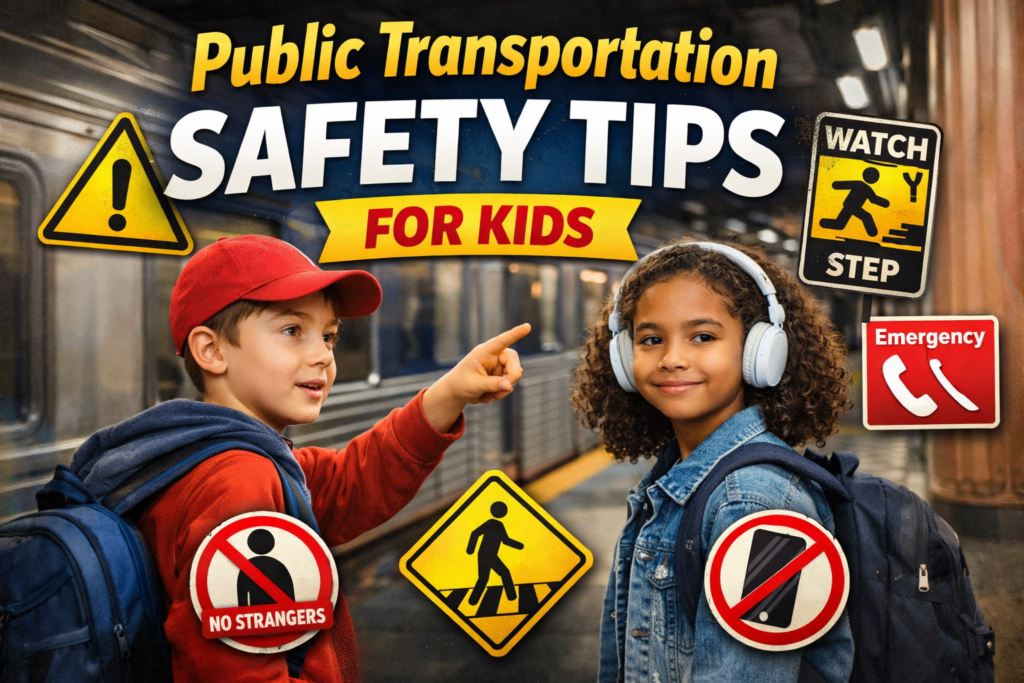
This guide shares practical habits kids can actually remember, plus parent-friendly routines to build safer travel skills over time.
Build “Transit Readiness” Before the First Solo Ride
Before your child rides alone, focus on skills—not just age. A “ready” rider knows the route, can handle small surprises, and understands basic street and station safety. The goal is not perfection; it’s calm decision-making when things don’t go exactly as planned.
Start with two or three practice trips together. Let your child tap the fare card, check the stop name, and listen for announcements. If you’re in Toronto, TTC’s student safety reminders are a helpful starting point, including waiting safely and crossing properly around streetcars and buses.
A simple readiness checklist to teach:
- They know their full name, your phone number, and one backup contact.
- They can explain the route in plain words (where to get on/off).
- They know what to do if they miss their stop.
- They can stay calm and ask for help in the right way.
Stop and Station Safety: Where Most Risk Happens
Most transit injuries don’t happen while sitting on the bus—they happen near traffic, curbs, and platforms. Kids should treat the stop like a “no-messing-around zone,” especially during rush hour or winter when visibility and footing can be worse.
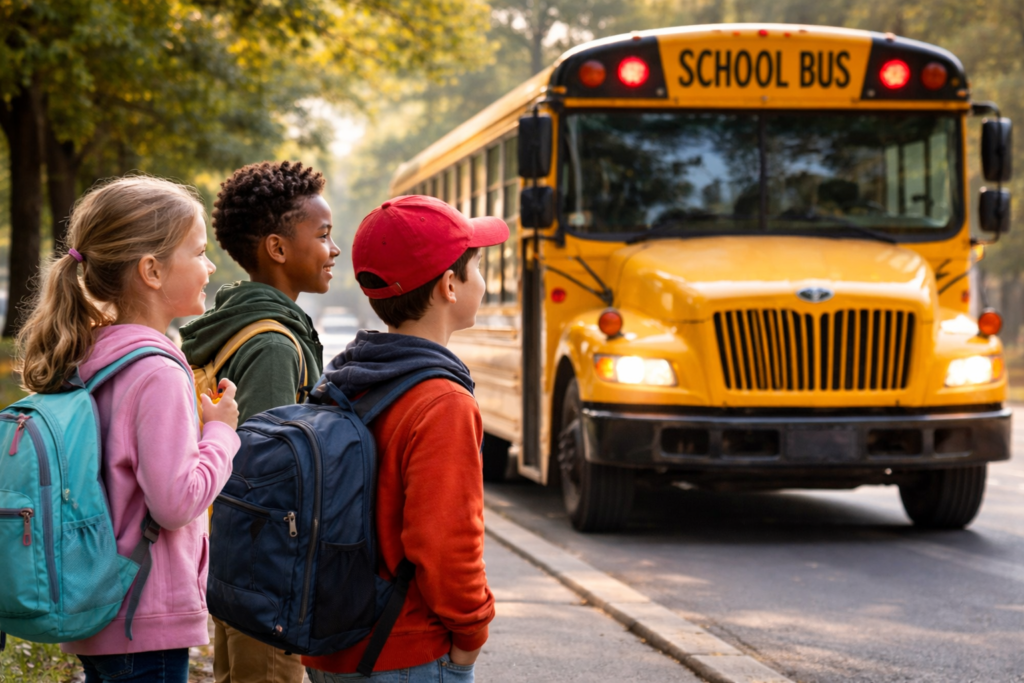
Teach your child to stay behind the curb and avoid running to catch a vehicle. TTC specifically advises staying behind the curb at stops and waiting for the next vehicle instead of running near a bus or streetcar.
At subway platforms and station edges, your child should stand back, avoid horseplay, and keep hands to themselves. Crowding makes it easier to get bumped, and distractions increase mistakes.
Helpful habits that stick:
- Stand still while waiting (no pushing, no games).
- Keep a “bubble space” from the curb/platform edge.
- If something drops (phone, hat), do not jump for it—ask an adult or staff.
Boarding Safely and Riding Like a Pro
Once your child boards, the risks shift from traffic to movement, doors, and crowd behavior. Kids should know that buses and trains stop suddenly, and doors close quickly. TTC also reminds riders not to rush doors when they’re closing and to wait for the next train.
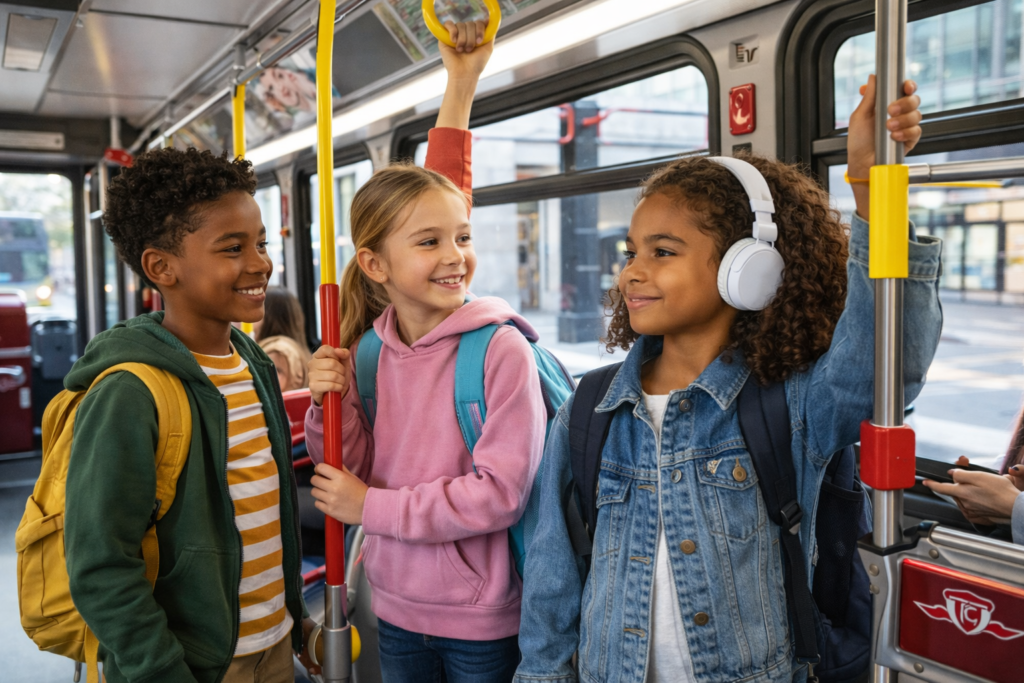
A smart rule is: “Hold on, sit when possible, and keep your space small.” That means using poles/handrails, choosing a stable spot, and not blocking aisles.
Make these Public Transportation Safety Tips for Kids part of their routine:
- Hold a pole/strap if standing (vehicles can jerk or brake suddenly).
- Remove big backpacks in crowded spaces so you don’t hit someone or get snagged in doors.
- Keep bags at feet or on lap, not in doorways or aisles.
- Stay away from doors until it’s time to exit.
Transit etiquette is also safety. The Canadian Urban Transit Association’s “Transit Code” includes practical guidance like letting people exit first and not blocking doorways.
Getting Off the Right Way (And Crossing Streets Safely)
Exiting is a big moment—kids are excited, moving fast, and sometimes focused on their destination instead of traffic. The safest habit is to exit slowly, look around, and move away from the vehicle before doing anything else.
If your child rides streetcars or buses that stop on the road, the crossing rules matter even more. TTC advises crossing only at intersections or pedestrian crossings and checking that traffic has stopped before exiting a streetcar.
For walking safety, teach the classic routine: look left, right, and left again—and keep looking as you cross.
Make it kid-simple:
- Get off → step away → look for traffic → cross only at safe crossings.
- Never dart between parked cars or around a stopped bus.
- If unsure, wait. Waiting is always safer than guessing.
Stranger Awareness Without Scaring Your Child
A big part of Public Transportation Safety Tips for Kids is teaching personal boundaries in public spaces. This doesn’t mean making kids afraid of everyone—it means giving them clear rules to recognize weird situations and exit them safely.
Toronto Police “streetproofing” advice includes avoiding shortcuts through isolated areas and choosing safer, well-lit routes—especially if walking to or from a stop. Toronto Police Streetproofing
Give your child simple, repeatable guidelines:
- Don’t share personal info with strangers (school, address, schedules).
- Keep distance from anyone acting aggressive or intoxicated.
- If someone makes them uncomfortable, move closer to other families, couples, or the driver/operator area.
- Trust feelings: “If it feels wrong, it’s okay to leave.”
Parents can role-play exact sentences like:
- “No thanks, I’m meeting my parent.”
- “I can’t help, sorry.”
- “Please stop. I don’t like that.”
Phone Safety: Use It Smart, Not Risky
Phones are helpful for maps and check-ins, but they can also cause distraction and theft risk. The goal is “heads up travel,” especially near roads and doors.
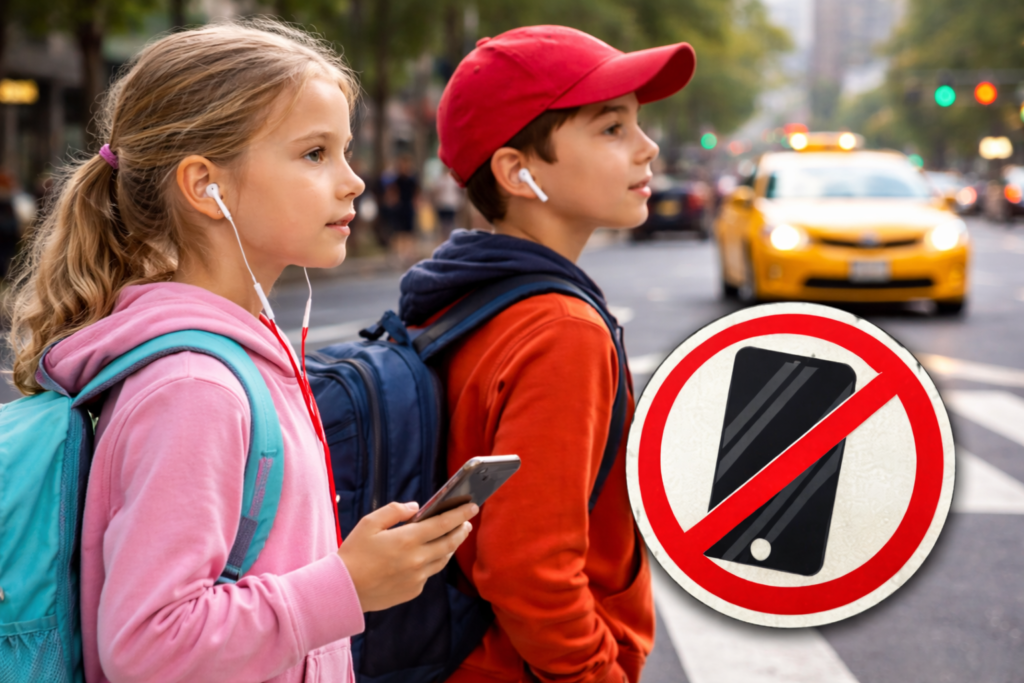
Teach two powerful rules:
- No scrolling when crossing streets or stepping on/off transit.
- One ear free if using headphones, or keep volume low.
Safe Kids highlights putting devices down while crossing, especially for teens who are more likely to walk distracted.
Smart phone setup for kids who ride frequently:
- Share location with parents during commute times.
- Teach them to screenshot the route and stops (battery-safe).
- Keep emergency contacts on the lock screen.
- Use a simple PIN and avoid flashing expensive devices.
Create a Simple “If Something Goes Wrong” Plan
Confidence comes from having a plan. Kids don’t need a long lecture—they need a short decision tree they can remember under stress.
Teach these “3 Calm Steps”:
- Stop and take a breath.
- Stay in public, bright, busy areas.
- Ask the right person for help (driver, station staff, uniformed staff, or a parent with kids).
If they miss a stop:
- Stay on until the next stop.
- Get off in a busy area.
- Call/text you and wait.
If they get separated from friends:
- Do not chase through doors or run.
- Pick one safe meeting point (a store entrance, a help phone area, a station booth).
TTC also provides general safety and security guidance for riders, including tips for stations and vehicles.
Winter and Night Travel: Extra Safety Habits That Matter
Cold weather changes everything—slippery sidewalks, bulky clothing, fogged glasses, and earlier darkness. Kids should plan extra time so they never feel pressured to run or rush doors.
Winter add-ons for safer commuting:
- Wear boots with grip and keep hands free (gloves + backpack, not phone-in-hand).
- Use brighter clothing or reflective details on bags.
- Stay in well-lit areas and avoid isolated shortcuts.
If you want winter safety ideas that apply to commuting, you can link these routines into your family safety habits using resources like OHSE.ca Winter Safety.
Parent Tips: Train Skills in Small Steps
The fastest way to make Public Transportation Safety Tips for Kids stick is practice, repetition, and check-ins that don’t feel like an interrogation. Kids do better when they know you trust them—but also have clear expectations.
Try this step-by-step approach:
- Week 1: Ride together and let them lead (you observe).
- Week 2: Follow one stop behind (if practical), or have them ride with a buddy.
- Week 3: Short solo rides with check-in texts at key points (“boarded / transferred / arrived”).
A few helpful parent routines:
- Keep a backup plan for service delays (alternate route or pickup point).
- Teach what to do if their phone dies.
- Review safer walking routes to and from stops (well-lit, busier streets).
For broader transit-related safety planning, you may also find workplace-style emergency thinking useful, even at home—this OHSE article on Transit Driver Safety highlights why clear response steps matter during unexpected situations.
Final Takeaway: Confidence Comes From Consistent Habits
Public transit can be an amazing life skill for kids—more freedom, more responsibility, and real-world awareness. The secret isn’t fear; it’s routine. Practice the route, repeat the rules, keep phone use smart, and make “wait instead of rush” the family standard.
When your child knows what to do at stops, on platforms, inside crowded vehicles, and during unexpected situations, you’ll see their confidence grow trip by trip—and that’s exactly the goal of Public Transportation Safety Tips for Kids.
No comments yet