
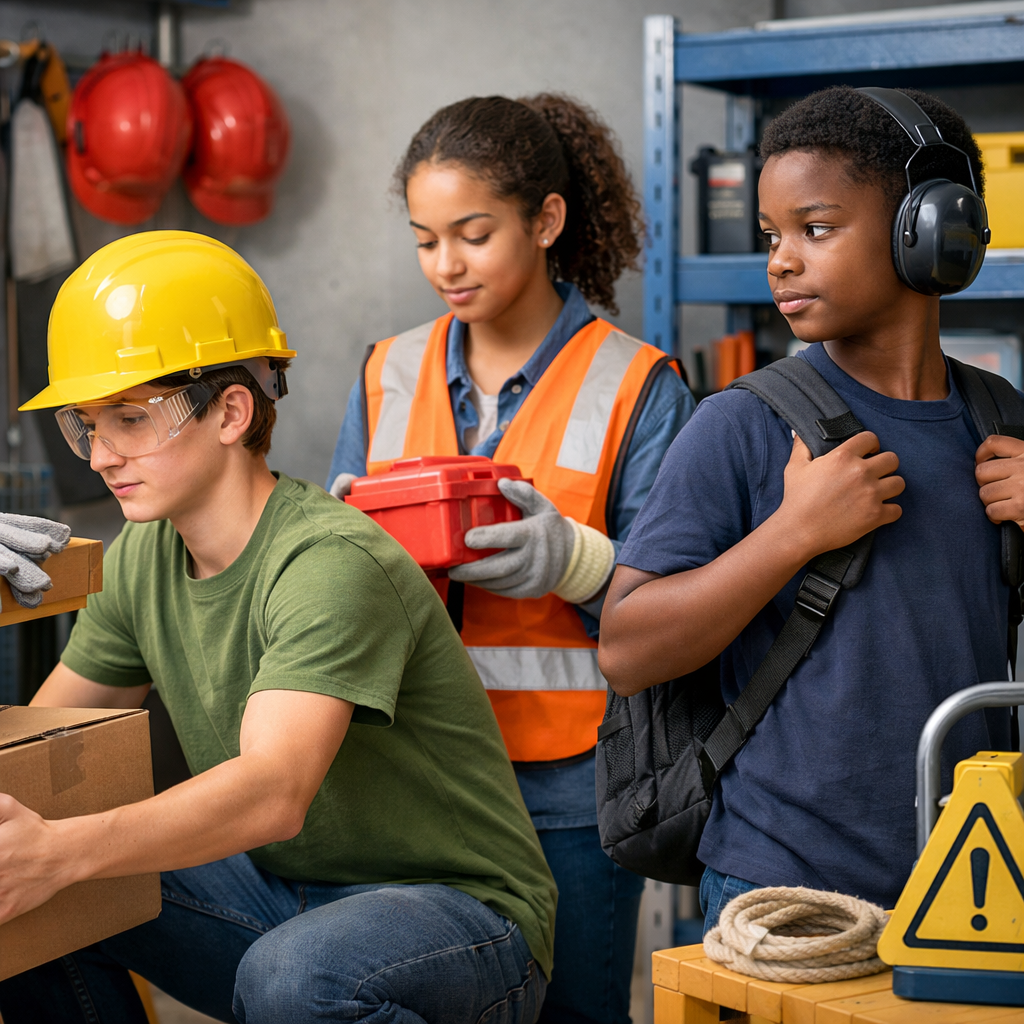

Safe material handling for students starts with simple habits that reduce strain, prevent falls, and make everyday school tasks easier. Whether a student is carrying a backpack, moving classroom supplies, lifting sports equipment, or helping with materials in a co-op placement or part-time job, the way they lift, carry, push, and pull matters.
In Canadian schools and youth workplaces, material handling injuries can happen when loads are too heavy, awkward, or moved too quickly. Many of these incidents are preventable with planning, good technique, and supervision. For students, the goal is not to lift like an adult worker. The goal is to recognize limits, use available equipment, and ask for help before a small task turns into a strain or sprain.
Why safe material handling for students matters
Students handle materials in more situations than many people realize. They may move textbooks, musical instruments, lunch bins, art supplies, science materials, gym equipment, shop tools, storage boxes, or packages at a first job. Even a routine task can become risky if the student twists while lifting, carries a load that blocks their view, or pushes a cart that is overloaded.
Common hazards include slippery floors, uneven hallways, cluttered routes, sharp edges, unstable stacks, and loads that shift during movement. Fatigue, rushing between classes, poor footwear, and inexperience can add to the risk. In Ontario and across Canada, schools and employers are expected to support safer learning and working environments, and students should follow local rules, teacher instructions, and manufacturer guidance where applicable.
Good material handling is also part of a broader prevention mindset. It fits with the hierarchy of controls: remove the need to lift when possible, reduce the weight of the load, use carts or dollies, organize the route, and train students to move materials safely. Resources from CCOHS, Ontario, and OHSE.ca can support schools, families, and young workers who want practical safety guidance.
How to lift and carry safely
Before lifting
The safest lift often starts with a pause. Students should size up the load before touching it. If it looks too heavy, too bulky, or hard to grip, they should not guess. They should ask a teacher, supervisor, coach, or co-worker for help.
- Check the weight and shape of the item.
- Test whether it is stable or likely to shift.
- Make sure the path is clear and the destination is ready.
- Wear closed-toe, supportive footwear where required.
- Use gloves or other protective equipment if the task calls for it.
Lifting technique
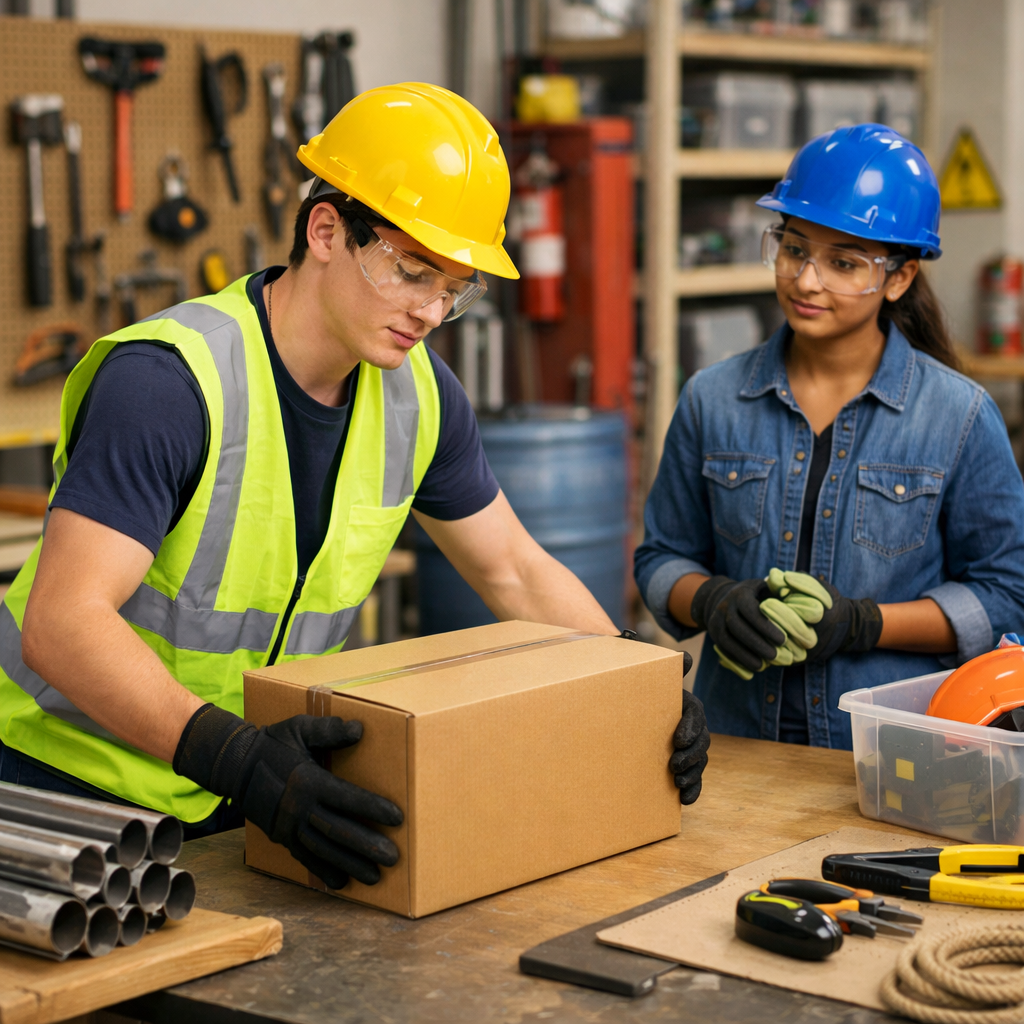
For safe material handling for students, lifting should be smooth and controlled. Stand close to the object with feet about shoulder-width apart. Bend at the hips and knees rather than rounding the back. Keep the back in a neutral position, grip the load securely, and lift with the legs while keeping the item close to the body.
Avoid sudden jerking movements. Do not twist while lifting or lowering. If a student needs to turn, they should move their feet instead of twisting their spine. Once the load is lifted, they should keep it at about waist height when possible and carry it close to the torso.
Carrying technique
When carrying, students should look forward and make sure the load does not block their vision. If they cannot see over or around it, the load is too large for one person or needs a different method. They should take smaller, steady steps and avoid carrying too much at once just to save time.
Backpacks are also part of safe handling. A backpack should be worn with both straps, adjusted to fit snugly, and packed so heavier items sit close to the back. Students should clean out unnecessary items regularly to reduce weight.
Safe material handling for students when pushing and pulling
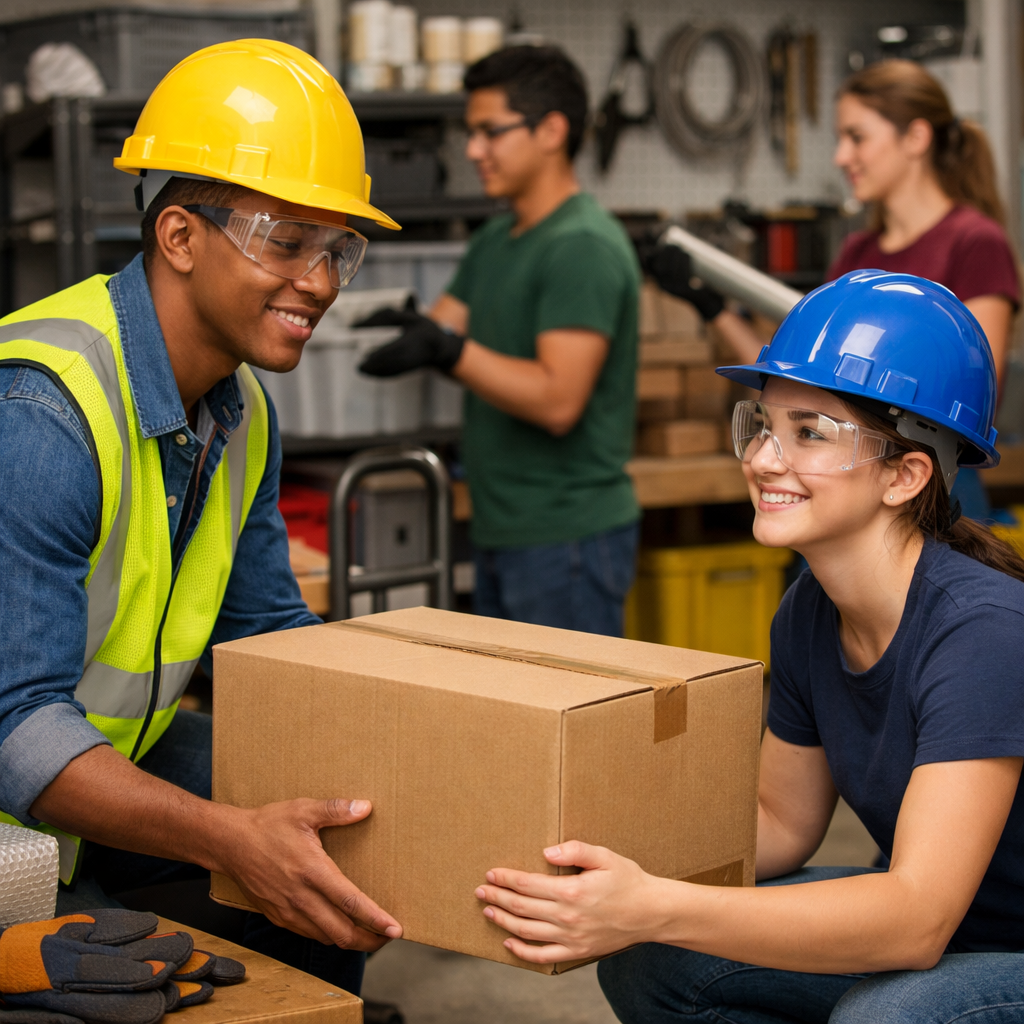
Pushing and pulling can feel easier than lifting, but poor technique can still lead to strains, collisions, or loss of control. In many cases, pushing is safer than pulling because it allows better body position and visibility. Still, the safest option depends on the space, the equipment, and the load.
Best practices for carts, bins, and trolleys
Before moving a cart or bin, students should check the wheels, handles, and load stability. The route should be clear of cords, mats, wet spots, and door thresholds where possible. If a cart is hard to start or steer, it may be overloaded or poorly maintained.
- Push rather than pull when practical.
- Keep hands on the designated handle.
- Use body weight to start the movement gradually.
- Keep the load stable and centred.
- Slow down at corners, ramps, and doorways.
- Get help for stairs, tight spaces, or heavy loads.
Students should never ride on carts, stand on rolling equipment, or use damaged handling devices. In school shops, kitchens, custodial areas, libraries, and receiving areas, supervision is especially important. Young workers in co-op or part-time roles may also need job-specific instruction, which can be supported through OHSE training resources.
Practical examples, common mistakes, and a student checklist
Everyday school examples
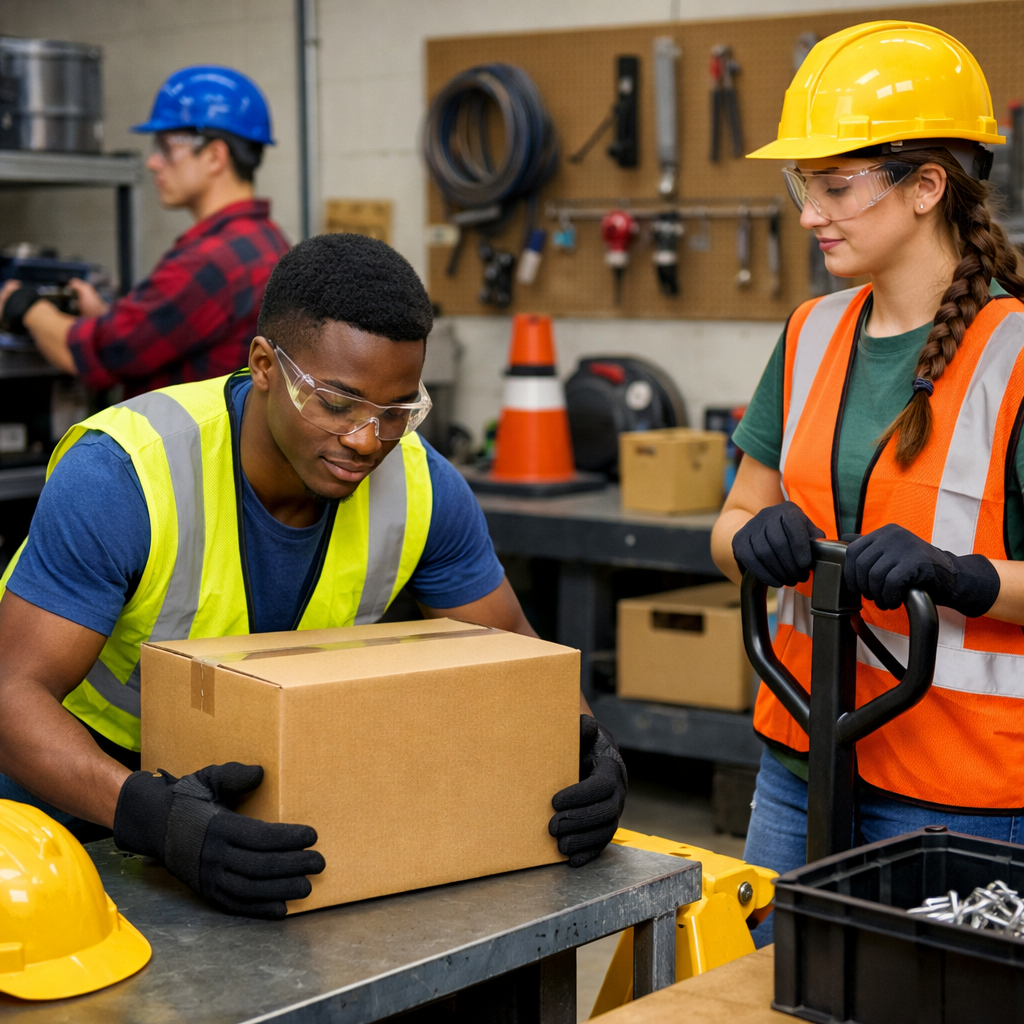
A student moving a box of fundraiser supplies should first check whether the box has handles, whether the contents shift, and whether the hallway is clear. If the load is awkward, using a cart is better than carrying it alone. A student helping in the gym should move lighter stacks in more trips rather than trying to carry too many cones, mats, or weights at once.
In a part-time retail or food service job, a young worker may need to stock shelves or move deliveries. This is where safe material handling for students becomes directly connected to workplace safety. The same principles apply: assess the load, reduce the distance, use equipment, avoid twisting, and ask for help when needed.
Common mistakes to avoid
| Unsafe habit | Why it increases risk | Safer choice |
|---|---|---|
| Lifting with a rounded back | Can increase strain on the back and shoulders | Bend at hips and knees, keep load close |
| Twisting while carrying | Can lead to loss of balance or muscle strain | Turn with the feet, not the torso |
| Carrying too much at once | Blocks vision and reduces control | Take smaller loads or use a cart |
| Pulling a heavy cart quickly | May cause sudden strain or collision | Push slowly with a clear route |
| Ignoring discomfort | Can turn a minor issue into an injury | Stop, report concerns, and ask for help |
Short actionable checklist
- Plan the move before lifting or pushing.
- Check the load, path, and destination.
- Keep the item close to your body.
- Avoid twisting; move your feet to turn.
- Use carts, dollies, or team lifting when needed.
- Do not carry a load that blocks your view.
- Stop if something feels too heavy, unstable, or unsafe.
- Follow school, workplace, and emergency procedures at all times.
Parents, schools, and employers can reinforce these habits by keeping storage organized, reducing manual lifting where possible, and teaching students to speak up early. For broader injury prevention information, Parachute and Health Canada may also be useful starting points.
Safe material handling for students is not about doing more on your own. It is about making smart choices, using the right tools, and recognizing when help is needed. By lifting carefully, carrying only what can be controlled, and pushing or pulling with proper technique, students can reduce preventable injuries at school, at home, and on the job. The most effective approach is calm, practical, and consistent: plan the task, protect the body, and follow local school, workplace, manufacturer, or emergency guidance where applicable.
No comments yet