
Safety Audit Planning: Practical Steps for Continuous Improvement

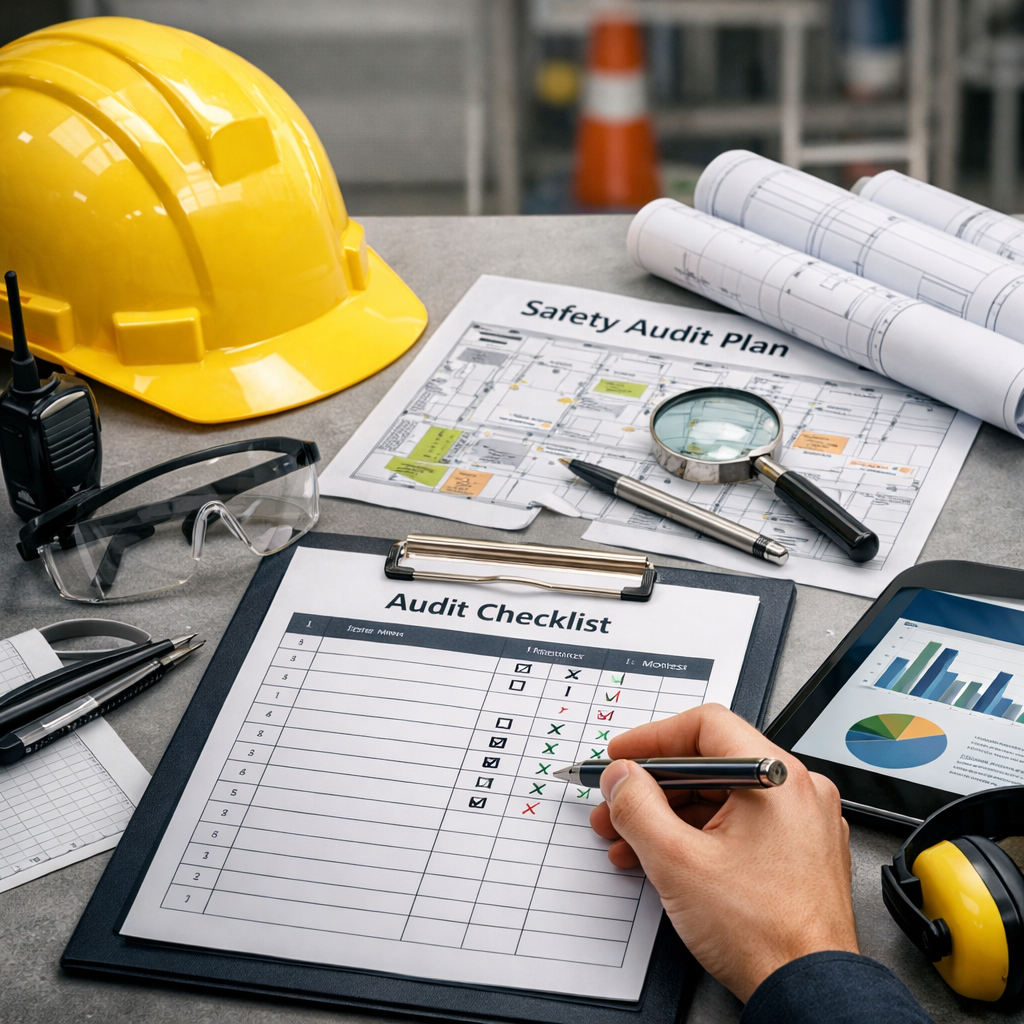
Safety audit planning is the foundation of a strong health and safety program because it turns inspections, conversations, and corrective actions into a structured process for continuous improvement.
When audits are planned well, they do more than identify non-compliance. They help employers verify controls, uncover hidden risks, and strengthen accountability across operations, whether the setting is a warehouse, office, construction site, laboratory, or manufacturing plant.
A practical audit approach should cover pre-audit preparation, worker and supervisor interviews, field observations, and a clear system for corrective actions. It should also reflect recognized guidance from organizations such as OSHA and CCOHS, while fitting the actual hazards, pace, and culture of the workplace.
Safety Audit Planning Starts With Clear Scope and Preparation
Good safety audit planning begins long before anyone walks the floor with a checklist. The first step is to define the purpose and scope of the audit. Are you reviewing legal compliance, management system performance, critical risk controls, or incident trends? A focused scope keeps the audit efficient and makes findings more useful.
Start by identifying the areas, departments, tasks, and time period to be covered. Include high-risk activities such as lockout/tagout, machine guarding, mobile equipment operation, chemical handling, confined spaces, and work at height where relevant. If recent incidents or near misses point to a specific concern, build that into the audit plan.
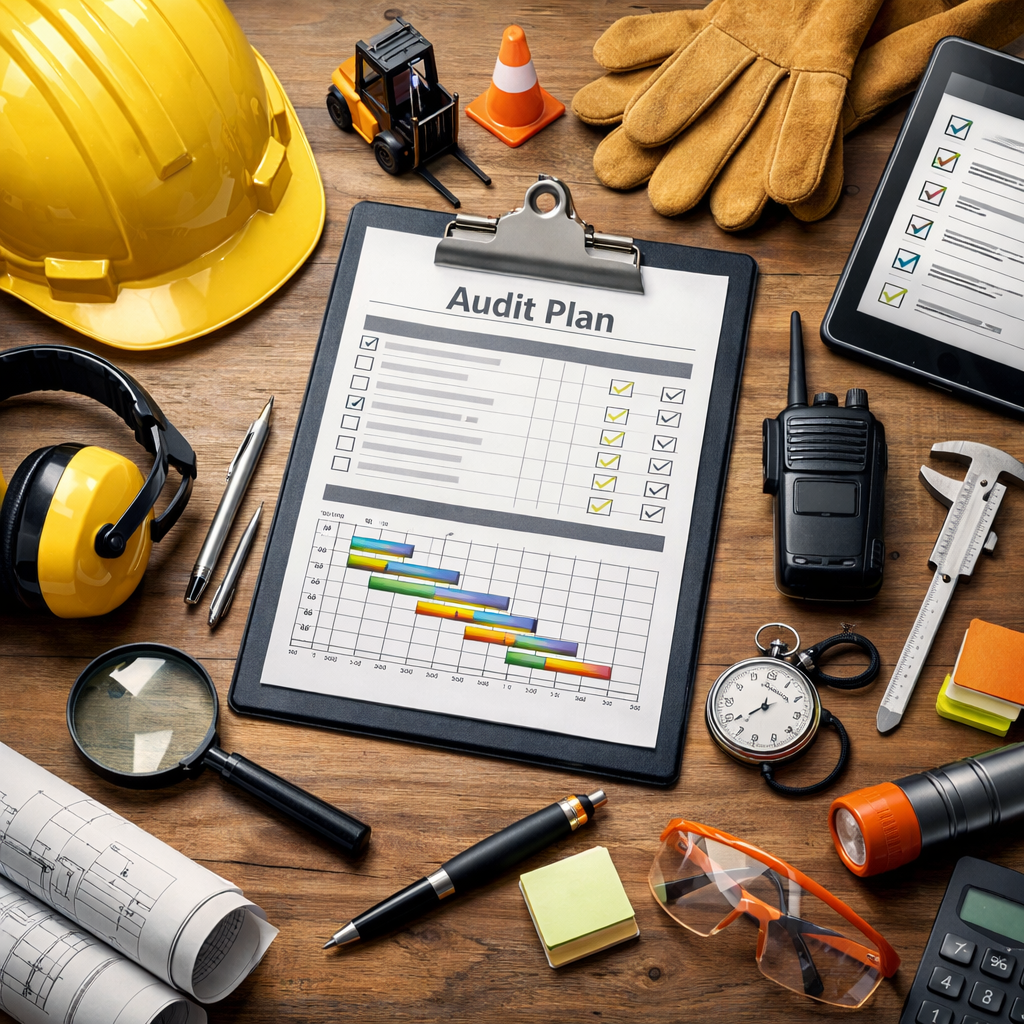
Key pre-audit preparation steps
- Review previous audit reports, inspection records, and open corrective actions.
- Analyze incident, injury, and near-miss data for patterns.
- Check legal and standard requirements that apply to the site.
- Gather procedures, permits, training records, and maintenance logs.
- Select auditors with enough technical knowledge and independence.
- Schedule the audit when normal work is happening, not during an unusually quiet period.
- Notify leaders in advance, but avoid over-staging the workplace.
This preparation phase is also where audit criteria should be set. Use a combination of legal requirements, internal procedures, and recognized guidance, such as hazard control principles outlined by the Hierarchy of Controls. That means auditors should look beyond PPE and ask whether hazards have been eliminated, substituted, engineered out, or controlled administratively wherever possible.
If you already run routine inspections, connect them to the audit process instead of treating them as separate systems. A useful approach is to compare audit findings with trends from your safety inspection checklist and your incident investigation process. This helps confirm whether recurring issues are isolated or systemic.
Use Safety Audit Planning to Guide Effective Interviews
Interviews are often the most revealing part of an audit because documents may show what should happen, while workers explain what actually happens. Strong safety audit planning includes deciding who should be interviewed, what questions matter most, and how to create an environment where people will speak honestly.
Speak with a mix of frontline workers, supervisors, maintenance personnel, contractors, and managers. Each group sees different parts of the risk picture. A supervisor may understand production pressures, while a worker may identify a shortcut that has quietly become standard practice.
What to ask during interviews
Interview questions should be simple, practical, and tied to work reality. Instead of asking whether someone understands policy, ask how they perform a task safely, what could go wrong, and what they would do if a control failed. This reveals both knowledge and confidence.

| Interview focus | Example question | What it helps verify |
|---|---|---|
| Hazard awareness | What are the main risks in this task? | Worker understanding of real exposures |
| Controls | What safeguards or barriers do you rely on? | Whether controls are known and used |
| Training | When were you trained or refreshed on this job? | Training quality and retention |
| Reporting culture | How do you report a hazard or near miss? | Confidence in communication systems |
| Emergency readiness | What would you do if this equipment failed or a spill occurred? | Preparedness for abnormal situations |
Auditors should listen for gaps between procedure and practice. For example, a written rule may require pre-use checks on forklifts, but interviews may reveal that production pressure causes checks to be rushed or skipped. That is not just a worker behavior issue. It may point to weak supervision, unrealistic scheduling, or poor accountability.
It is also important to avoid turning interviews into blame sessions. The goal is to understand system performance. If workers fear punishment, they may hide the very information the audit needs to improve safety.
Observations Should Focus on Work as Done, Not Just Work as Written
Site observations give the audit its real-world value. During this stage, auditors confirm whether controls are present, functioning, and practical under normal operating conditions. Effective safety audit planning sets aside enough time to observe tasks during start-up, routine production, maintenance, cleaning, shift change, and other conditions where risk can increase.
Look at the physical environment first. Housekeeping, access routes, lighting, ventilation, signage, storage practices, and emergency equipment condition all tell an immediate story about operational discipline. Then move to task-level observations: body positioning, guarding, energy isolation, chemical labeling, ergonomics, line of fire hazards, and use of permits or authorizations.
What auditors should watch closely
- Whether machine guards and interlocks are in place and used.
- How mobile equipment and pedestrians are separated.
- Whether lockout/tagout is applied during servicing.
- If hazardous substances are labeled, stored, and handled properly.
- Whether workers improvise tools, access equipment, or work methods.
- How contractors follow site-specific safety rules.
- Whether PPE is the final layer of defense rather than the only control.
Practical examples matter here. In a warehouse, an observation may show pallets stacked safely in one aisle but overhanging in another near a pedestrian path. In a fabrication shop, hearing protection may be worn consistently, but local exhaust ventilation may be weak at a grinding station. In an office, the main issue may be less dramatic but still important, such as blocked exits, poor workstation ergonomics, or overloaded electrical power bars.
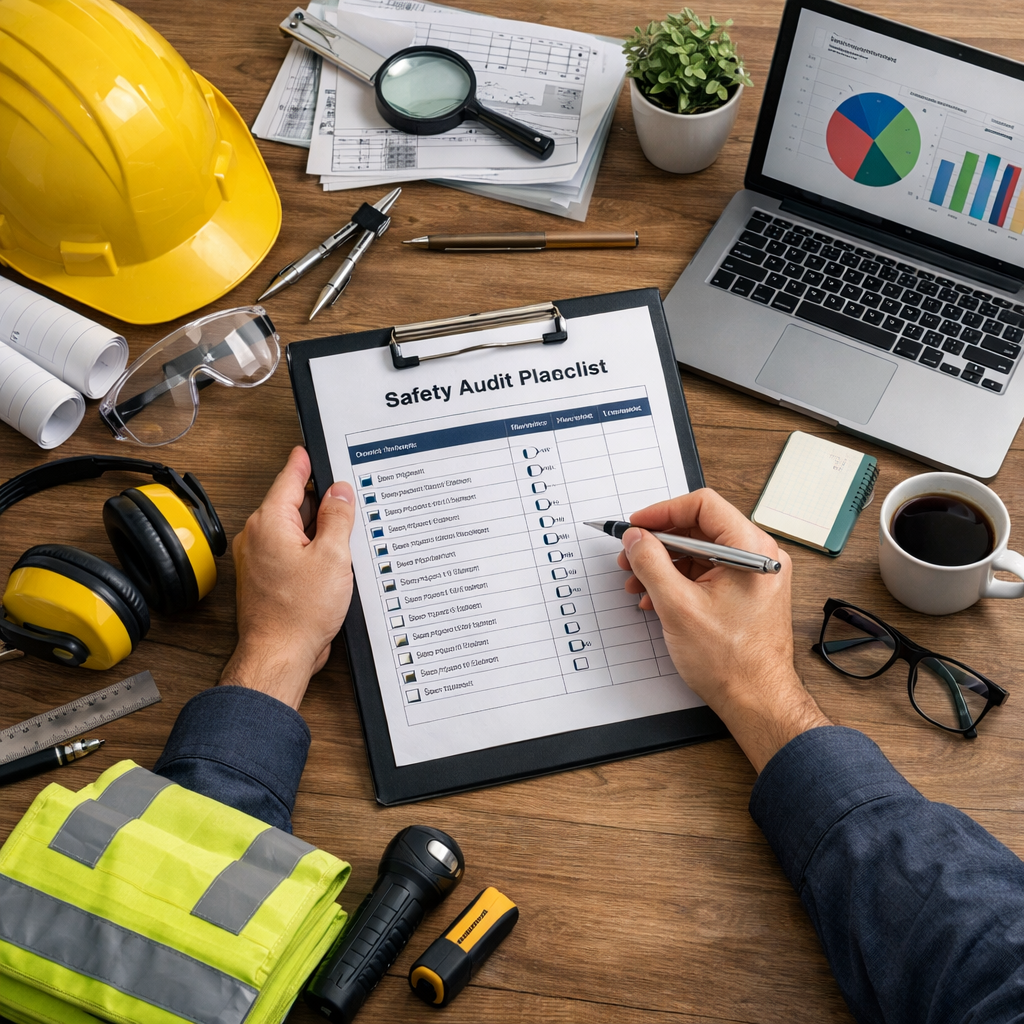
Whenever a hazard is observed, assess the existing controls using the Hierarchy of Controls. If workers are manually lifting heavy materials, can the load be reduced, the task redesigned, or a lifting aid introduced? If exposure to a chemical depends mainly on gloves and respirators, could substitution or enclosure provide stronger protection? Observations become more valuable when they drive better control decisions, not just compliance notes.
Turn Findings Into Corrective Actions That Drive Continuous Improvement
The final and most important stage of safety audit planning is deciding how findings will be ranked, assigned, tracked, and verified. Many audits fail not because issues are missed, but because actions are vague, delayed, or never checked for effectiveness.
Write findings clearly and connect each one to evidence. State what was found, why it matters, the risk involved, and what requirement or standard applies. Then assign a corrective action owner and a due date that matches the seriousness of the hazard. Immediate dangers should trigger immediate controls, such as stopping work, barricading an area, or removing defective equipment from service.
How to make corrective actions effective
Use root cause thinking instead of surface fixes. If a worker bypasses a guard, replacing the guard may not solve the problem if the real issue is frequent jamming, poor equipment design, or pressure to keep production moving. Corrective action should target the system weakness as well as the visible symptom.
Follow-up is essential. A completed action is not necessarily an effective action. Verify that the control was implemented, understood, and sustained in practice. This may involve a revisit, supervisor check, worker feedback, or a review of related incident trends. Where useful, measure improvement with simple indicators such as percentage of actions closed on time, repeat findings, permit compliance, or participation in hazard reporting.

Leaders should also share audit results in a way that supports learning across the organization. If one site solved a recurring manual handling issue with a lift-assist device, that lesson may help another department facing the same risk. Over time, this creates a cycle where each audit strengthens planning, training, supervision, and hazard control.
In the end, safety audit planning is not a paperwork exercise. It is a disciplined way to prepare thoroughly, ask better questions, observe real work, and follow through on corrective actions that reduce risk. When organizations treat audits as part of continuous improvement rather than a one-time event, they build safer workplaces, stronger compliance, and more reliable operations.
No comments yet