

Occupational Health and Safety (OHS) is a critical consideration in warehouse environments, where employees regularly face hazards related to forklift operation, material handling, and heavy equipment.

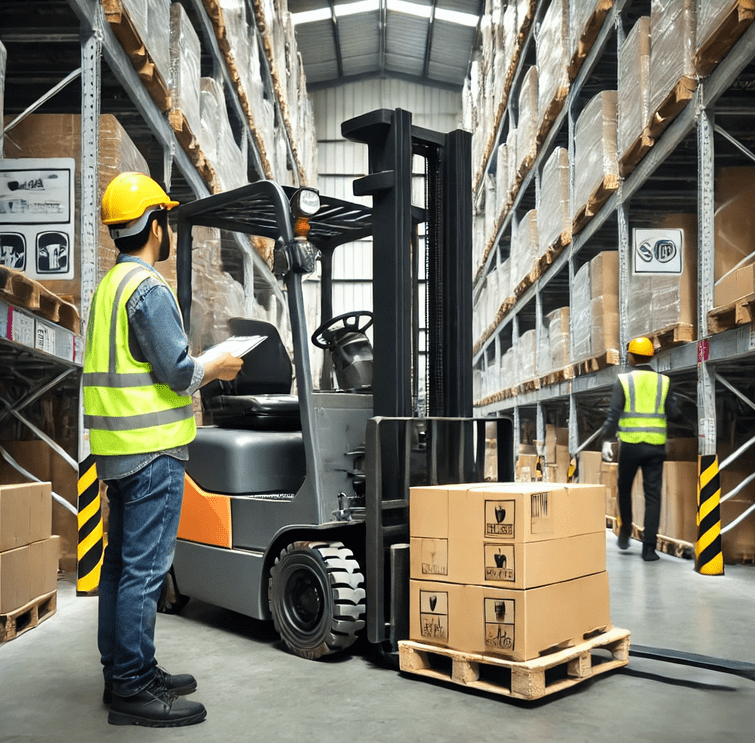
Warehouses are bustling hubs of activity, and without proper safety measures, the risks of injury or accidents can increase significantly. This article focuses on OHS in warehouse settings, with particular emphasis on safe forklift operation and best practices for material handling.
1. The Importance of OHS in Warehousing
Warehouses are home to a range of activities, from receiving and shipping goods to storing materials and operating heavy machinery. Due to the fast-paced nature of these environments, workers are exposed to a variety of hazards, including slips, trips, falls, forklift accidents, and injuries from improper lifting techniques.
Ensuring that workers understand and follow proper OHS protocols is key to preventing injuries and accidents. Effective OHS measures can also boost productivity, as a safe work environment contributes to smoother operations.
Common Warehouse Hazards
- Forklift accidents and collisions
- Improper lifting and material handling
- Falls from elevated platforms or ladders
- Slips, trips, and falls due to cluttered walkways or wet floors
- Exposure to hazardous substances or chemicals
- Injuries from heavy or unstable loads
2. Forklift Operation: Safety Protocols
Forklifts are indispensable in warehouses, used for lifting, moving, and stacking heavy loads. However, improper operation can lead to serious accidents, including rollovers, collisions, and injuries to pedestrians. Adhering to strict safety protocols is essential for preventing such incidents.
a. Forklift Operator Training
One of the most important aspects of forklift safety is ensuring that operators are properly trained and certified. Training programs must cover the basics of forklift operation, including:
- Understanding the controls and functions of the forklift
- Maneuvering the forklift safely, especially in tight or crowded spaces
- Recognizing load capacity limits and ensuring the forklift is not overloaded
- Performing pre-operation checks to identify potential mechanical issues
- Understanding how to avoid hazards, such as blind spots and sharp turns
b. Pre-Operational Inspections
Before using a forklift, operators should perform a thorough inspection to ensure it is in good working condition. Regular checks help prevent mechanical failures that could lead to accidents.
Pre-operational checks should include:
- Examining tires for wear and proper inflation
- Checking the brakes, steering, and horn
- Ensuring the lift mechanism works smoothly
- Verifying that all safety devices, such as seat belts and alarms, are functional
- Inspecting the forks for damage or wear
c. Safe Driving Practices
When operating a forklift in a warehouse, drivers must follow certain safety practices to minimize the risk of accidents.
Key safety driving practices include:
- Speed limits: Operate the forklift at a safe speed, particularly in areas with high pedestrian traffic.
- Avoiding sharp turns: Make turns slowly to prevent tip-overs or losing control of the forklift.
- Securing loads: Ensure the load is properly balanced and securely placed on the forks before moving it.
- Clear visibility: Always ensure the driver has a clear line of sight. If visibility is obstructed, use a spotter to guide the operator.
- Horn usage: Sound the horn when approaching intersections, doorways, or blind corners to alert others of the forklift’s presence.
d. Pedestrian Safety
In a busy warehouse, it’s essential to maintain a safe distance between forklifts and pedestrians. Operators and workers on foot should adhere to the following safety guidelines:
- Designate pedestrian zones: Establish designated walkways for pedestrians and ensure they are clearly marked.
- Avoid distractions: Pedestrians should remain alert, avoid using phones or other distractions, and make eye contact with forklift operators before crossing paths.
- Warning signals: Operators should always sound the horn when approaching pedestrian areas or crossing points.
3. Material Handling: Best Practices for Safety
Material handling is another critical area of focus for warehouse safety. Improper handling of heavy or unstable loads can result in musculoskeletal injuries, falls, and damage to goods. Implementing best practices for manual handling and mechanical lifting is essential to prevent these incidents.
a. Proper Lifting Techniques for Manual Handling
Many warehouse workers perform manual lifting and carrying tasks daily. Using improper lifting techniques can lead to injuries such as back strain, muscle pulls, and herniated discs.
To avoid injuries, workers should follow these guidelines:
- Assess the load: Before lifting, ensure the load is stable and not too heavy. If it’s too heavy, ask for assistance or use lifting equipment.
- Proper body positioning: Stand with your feet shoulder-width apart, bend at the knees (not the waist), and keep your back straight when lifting.
- Hold the load close to the body: Keeping the load close reduces the strain on your back and makes it easier to maintain balance.
- Use your legs, not your back: Lift using your leg muscles, and avoid twisting your body while carrying the load.
b. Mechanical Lifting Aids
In many cases, using mechanical lifting aids is the safest way to handle heavy or awkward loads. Warehouses should provide and encourage the use of equipment such as:
- Pallet jacks: Ideal for moving heavy pallets over short distances without the need for manual lifting.
- Conveyor systems: Useful for transporting goods along the production line without manual handling.
- Hoists or cranes: Used for lifting and lowering heavy materials in areas where forklifts may not be practical.
c. Load Stability and Stacking
Improper stacking or unbalanced loads can result in accidents, such as items falling from shelves or loads shifting during transport.
Best practices for load stability include:
- Stack evenly: Ensure that loads are stacked evenly on pallets or shelves, with heavier items on the bottom and lighter items on top.
- Secure the load: Use shrink wrap, straps, or other securing methods to stabilize loads before transporting or storing them.
- Avoid overloading: Never exceed the weight limit of shelving units, pallets, or forklifts to prevent structural failures and tipping.
4. Warehouse Safety Best Practices
In addition to forklift operation and material handling, several other general safety measures should be followed to maintain a safe warehouse environment.
a. Housekeeping and Clear Pathways
Maintaining a clean and organized warehouse reduces the risk of slips, trips, and falls. Clear pathways allow workers to move freely without obstruction, improving overall safety.
- Remove clutter: Keep aisles, stairways, and doorways free from boxes, tools, or equipment that could cause trips.
- Spill cleanup: Immediately clean up any spills to prevent slips. Use appropriate signage to warn others if the floor is wet.
- Proper lighting: Ensure that all areas of the warehouse are well-lit, particularly in work zones and high-traffic areas.
b. Safety Signage and Labels


Clearly marked signs and labels play a critical role in maintaining safety in a warehouse. They inform workers of potential hazards, restricted zones, and the proper use of equipment.
- Forklift traffic: Use signs to indicate areas where forklifts are frequently in use.
- Load capacity: Clearly label shelving units and storage racks with their maximum load capacity.
- Personal protective equipment (PPE): Display signs that remind workers to wear PPE, such as helmets, gloves, or steel-toed boots, in high-risk areas.
c. Emergency Preparedness
Every warehouse should have a comprehensive emergency plan that includes evacuation procedures, fire safety protocols, and first-aid measures. Regular safety drills ensure that employees are familiar with the procedures in case of an emergency.
- First-aid stations: Ensure that first-aid kits are easily accessible and that employees know their location.
- Evacuation routes: Clearly mark evacuation routes and exits in case of fire or other emergencies.
- Fire safety: Install fire extinguishers and ensure that all employees are trained on their proper use.
5. The Role of Employees and Employers in Warehouse Safety
Both employees and employers play a crucial role in maintaining a safe warehouse environment. A proactive approach to safety—where both parties collaborate and communicate openly—leads to better prevention of accidents and injuries.
For Employers:
- Provide training: Employers must provide ongoing safety training for all employees, including new hires and seasoned workers.
- Supply PPE: Ensure that workers have access to appropriate personal protective equipment, such as helmets, gloves, and safety boots.
- Monitor compliance: Regularly inspect the workplace to ensure that safety protocols are being followed and that equipment is in good working order.
For Employees:
- Follow safety procedures: Employees should adhere to all safety protocols and report hazards or unsafe conditions to supervisors.
- Use PPE: Always wear the required personal protective equipment when operating forklifts or handling materials.
- Stay alert: Remain aware of your surroundings, especially in areas with forklift traffic or moving equipment.
Safety in the warehouse relies on strict adherence to OHS protocols, particularly when it comes to forklift operation and material handling.
Employers must ensure that workers are properly trained and equipped to handle these tasks safely, while employees must take responsibility for following safety procedures. By fostering a culture of safety and cooperation, warehouse environments can minimize accidents, protect workers, and improve operational efficiency.