
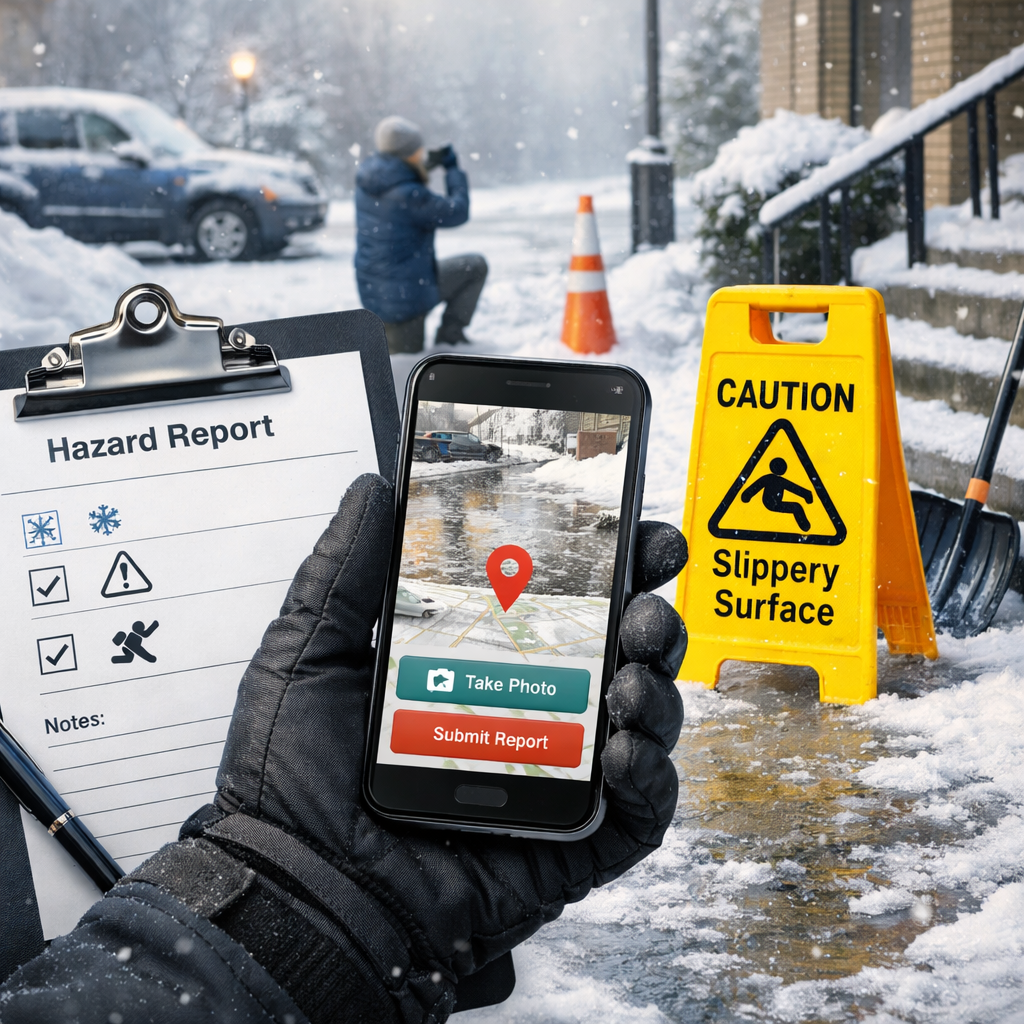

Snow and ice hazard reporting is one of the simplest ways schools can reduce slips, falls, and preventable winter injuries. When students, parents, staff, and visitors know how to report a slippery entrance, an icy sidewalk, or poor drainage that refreezes overnight, the school can respond faster and make the area safer for everyone.
In Canadian winters, conditions can change quickly. A walkway that was clear during morning arrival can become hazardous by lunch or dismissal. That is why a practical reporting process matters. It helps schools identify hazards early, assign action, document follow-up, and remind the whole school community that winter safety is a shared responsibility.
Why snow and ice hazard reporting matters at school
Schools have many outdoor areas that can become slippery: sidewalks, bus zones, parking lots, portable entrances, ramps, stairs, and accessible routes. Even small patches of ice can create a serious risk when large groups are moving at once, especially during arrival, recess, and pickup times.
A good snow and ice hazard reporting process supports prevention instead of waiting for someone to get hurt. It also helps schools track patterns, such as repeated icing near downspouts, blocked drainage, drifting snow at a side entrance, or a path that does not get treated soon enough after weather changes.
For Ontario and Canadian school communities, winter safety planning should align with local board procedures and site-specific conditions. General workplace and safety guidance from organizations such as CCOHS and public information from the Government of Ontario can support a prevention-focused approach. Schools may also use practical safety resources from OHSE.ca and winter awareness training where relevant through OHSE training.
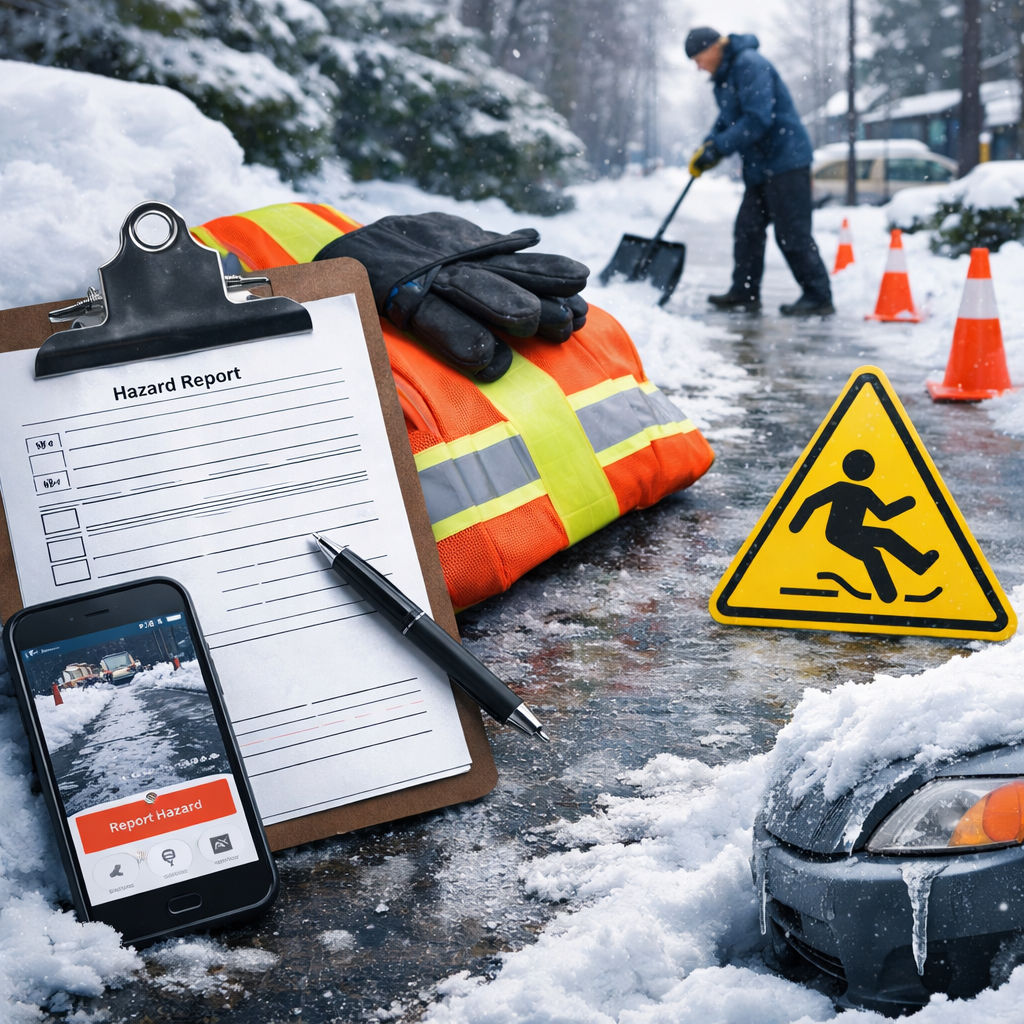
Build a simple snow and ice hazard reporting process
The best systems are easy to understand and easy to use. If reporting takes too long, people may ignore the hazard or assume someone else will handle it. A clear process should answer four basic questions: what to report, who to tell, how to report it, and what happens next.
What should be reported
- Icy sidewalks, stairs, ramps, and school entrances
- Snow build-up that narrows walking space or blocks visibility
- Refreezing caused by melting snow, roof runoff, or drainage problems
- Slippery portable steps or temporary pathways
- Poorly lit winter hazards during dark morning or evening periods
- Areas where salt, sand, or snow clearing appears delayed or incomplete
Who can report a hazard
Anyone on school property should be encouraged to report a concern. That includes students, families, educators, support staff, custodial staff, bus drivers, and visitors. For younger students, the age-appropriate message is simple: tell a trusted adult right away if you see a slippery area.
How to report it
Schools should choose methods that fit their size and routines. Common options include a front office report, an online form, a maintenance request system, a radio call, or a direct report to a designated staff member. The important part is consistency. Everyone should know the preferred method and the backup method if the first option is unavailable.
What happens next
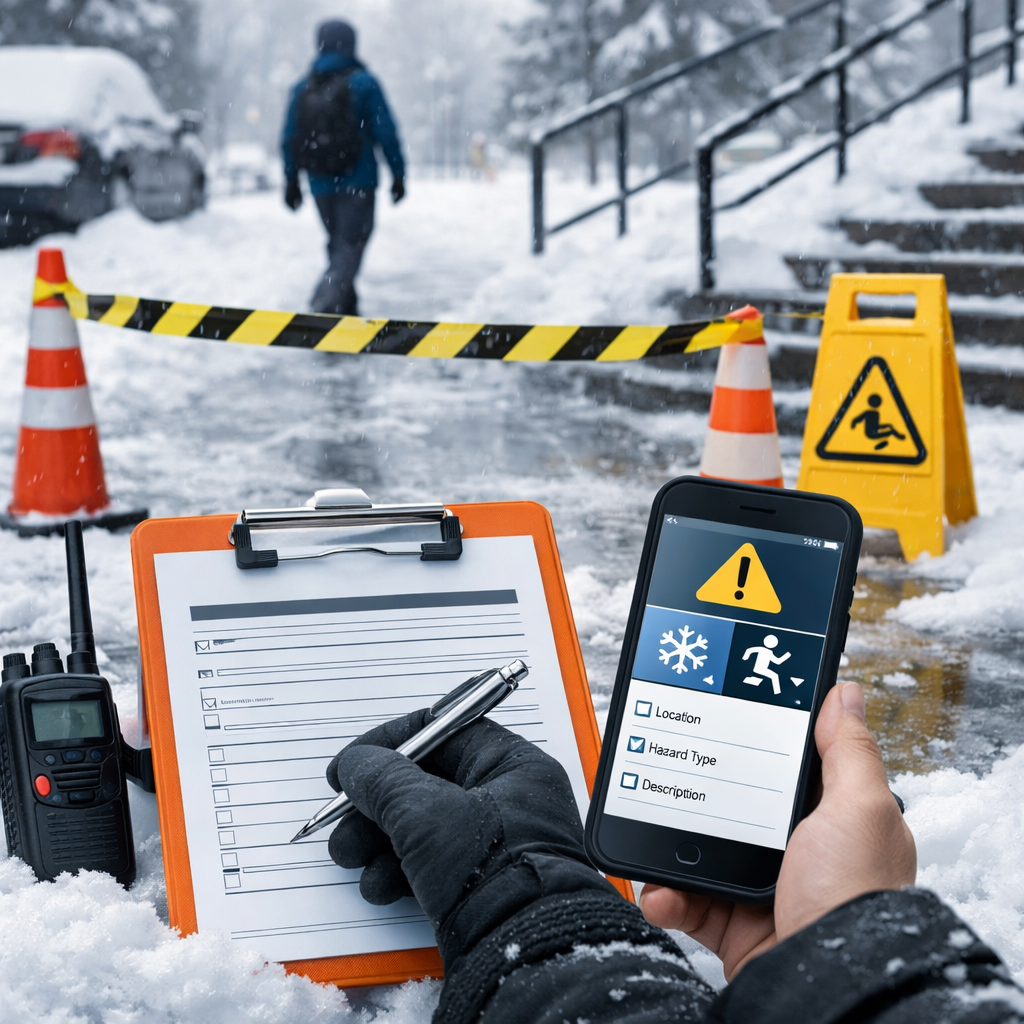
Every snow and ice hazard reporting process should include review, action, and confirmation. If a hazard is urgent, the area may need temporary controls right away, such as cones, barriers, or redirecting foot traffic until snow removal or treatment is complete. After the hazard is addressed, the school should confirm that the control worked and note any follow-up needs.
| Step | What to Do | Example |
|---|---|---|
| Identify | Notice snow or ice that could cause a slip or fall | Ice at the main entrance after freezing rain |
| Report | Tell the office or designated contact using the school process | Staff member submits a maintenance request |
| Control | Apply immediate temporary and permanent measures | Place cones, salt the surface, clear snow |
| Verify | Check the area again after treatment | Confirm the walkway is no longer slippery |
| Record | Document the issue and response for future prevention | Note repeated icing near a downspout |
Use practical controls, not just warnings
Warning people about a hazard is helpful, but it should not be the only control. Schools can improve winter safety by using the hierarchy of controls in a practical way. While outdoor winter hazards cannot always be eliminated entirely, many risks can be reduced through planning, maintenance, and safer routes.
Examples using the hierarchy of controls
Elimination or reduction at the source: repair drainage problems, redirect downspouts, and remove snow before it is packed down into ice.
Engineering or physical measures: install mats at entrances, improve lighting, add handrails where needed, and maintain surfaces so water does not pool and freeze.
Administrative controls: inspect priority routes, assign winter response roles, communicate closures, and use a reliable snow and ice hazard reporting procedure.
Personal protective measures: remind staff and older students to wear footwear suitable for winter conditions and to slow down on slippery surfaces.
These controls work best together. For example, if a ramp tends to freeze, the school may need better drainage, regular monitoring, earlier treatment, and a temporary alternate route during severe conditions.
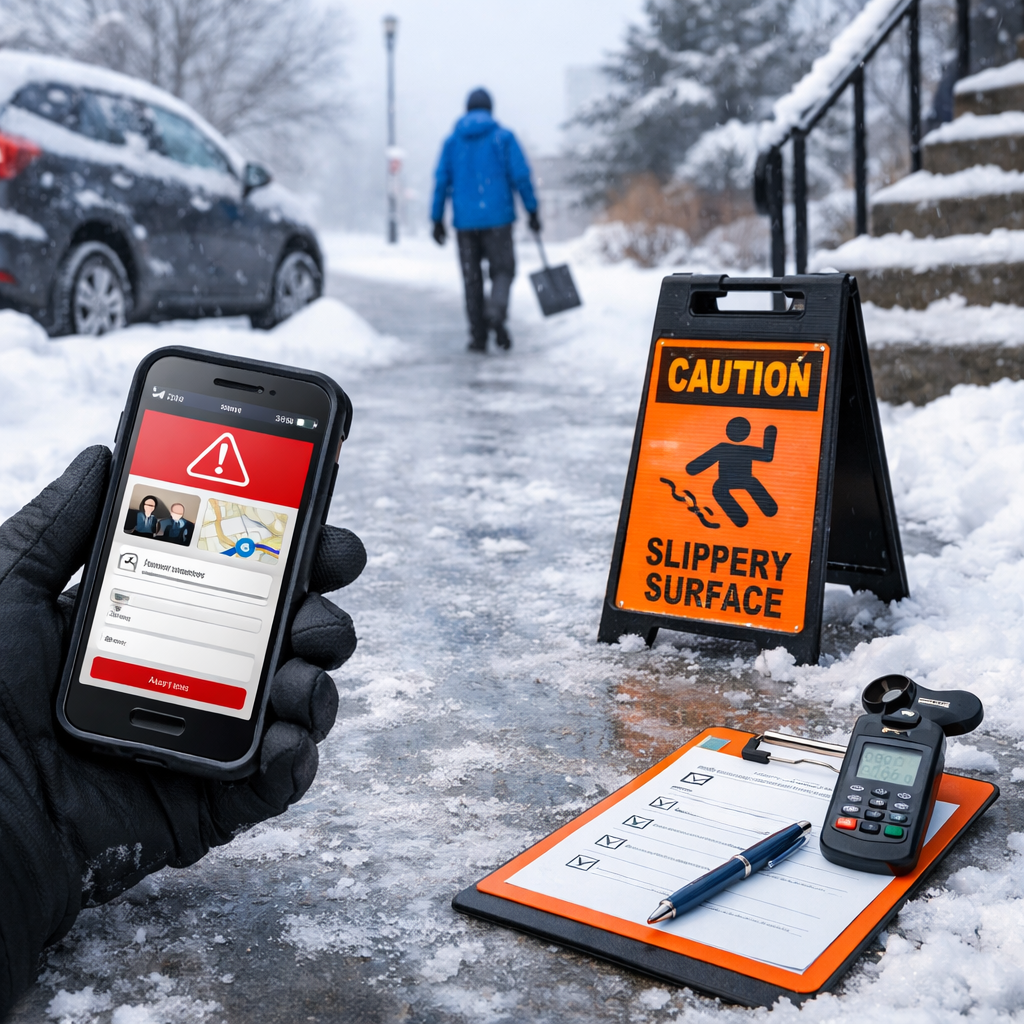
Roles for students, families, and school staff
A calm, prevention-focused message helps the process work. Students should not be expected to fix hazards themselves, and younger children should not be sent back outside to investigate. Their role is to recognize obvious risks and tell an adult promptly.
Parents and caregivers can support snow and ice hazard reporting by reporting slippery conditions they see during drop-off or pickup, using designated walkways, and reinforcing safe winter habits. That includes leaving extra time, wearing proper footwear, and avoiding shortcuts across untreated surfaces.
School staff, supervisors, and maintenance teams need clear responsibilities. Who checks entrances before arrival? Who responds first to an urgent report? Who communicates if a walkway must be closed? Who documents repeat problems for longer-term correction? These small details make the process more dependable on busy winter days.
Short actionable checklist
- Know the school’s reporting method for winter hazards.
- Report ice, packed snow, poor drainage, or blocked walkways right away.
- Use cones, barriers, or alternate routes until the area is treated.
- Prioritize entrances, stairs, ramps, and accessible paths.
- Recheck known problem spots after weather changes.
- Record repeated hazards so permanent fixes can be planned.
Make snow and ice hazard reporting part of everyday school safety
The most effective systems are routine, not reactive. Schools can include winter reporting reminders in newsletters, staff meetings, student announcements, and seasonal safety orientation. A brief reminder before the first major snowfall can improve awareness across the school community.
It also helps to review the process after storms or near misses. If reports are coming in late, if the wrong person is being contacted, or if treatment is not reaching high-risk areas quickly enough, the system can be adjusted. Continuous improvement is especially useful for schools with multiple entrances, shared community use, or changing winter access routes.
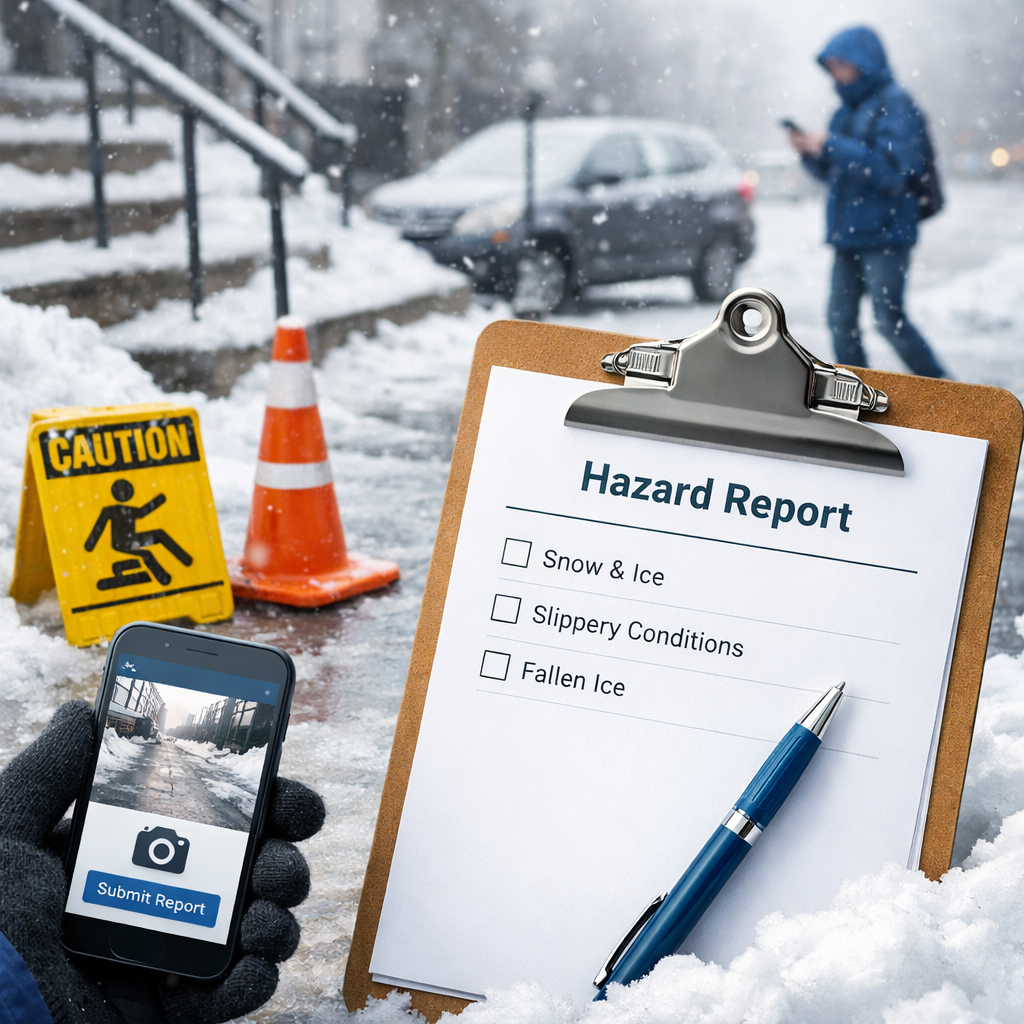
Snow and ice hazard reporting should be simple, visible, and easy to act on. When schools encourage prompt reporting, assign clear responsibilities, and follow through with practical controls, they create safer winter conditions for students, staff, families, and visitors. In a Canadian school setting, a consistent snow and ice hazard reporting process is not complicated, but it can make a meaningful difference in preventing slips and falls all season long.
No comments yet