 Skip to content

Spring to Summer OHSE Hazards can change a workplace faster than many employers expect. As temperatures rise and work patterns shift, employers often move from managing cold stress, slippery conditions, and winter fatigue to controlling heat stress, ultraviolet exposure, wildfire smoke, ticks, allergens, and sudden severe weather.
The Public Health Agency of Canada notes that climate change is expected to bring shorter and milder winters, longer and hotter summers, and more frequent or intense events such as thunderstorms, wildfires, floods, and droughts, which makes seasonal OHSE planning more important than ever.
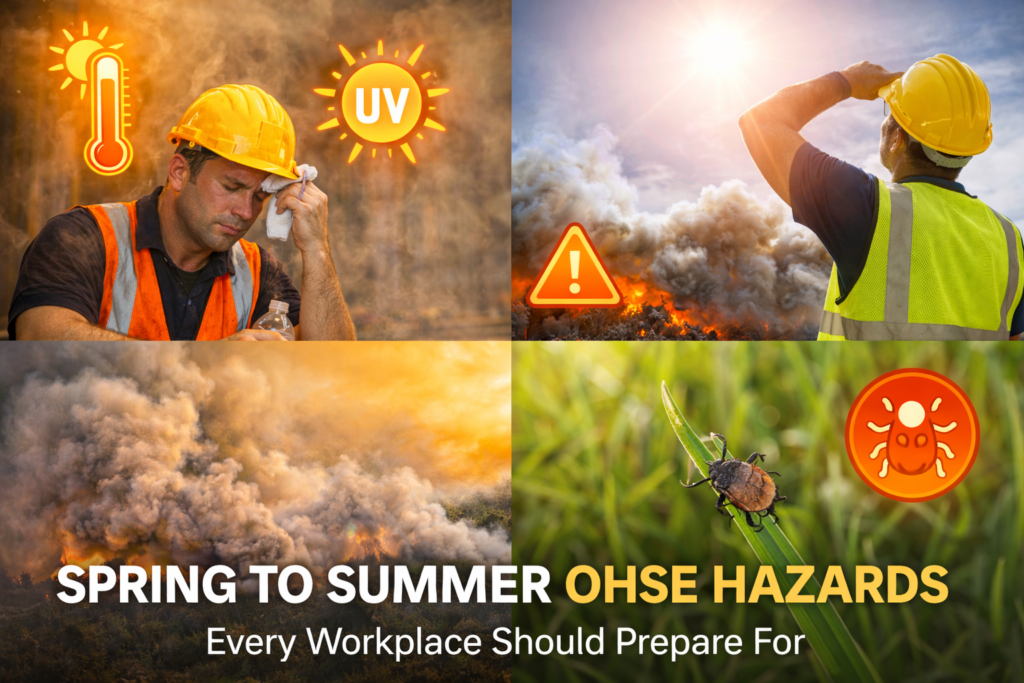
The transition from spring to summer is not just a weather change. It is an exposure change. Outdoor workers spend more time in direct sun, indoor workers can face rising temperatures in poorly ventilated areas, and organizations often bring in seasonal staff who may be less familiar with hazards and emergency procedures.
CCOHS says workers exposed to extreme heat, indoors or outdoors, may be at increased risk of heat stress, while NIOSH also highlights hazards such as pollen-triggered allergies, mold-related asthma, poisonous plants, and vector-borne disease risks for outdoor workers.
- Spring to Summer OHSE Hazards Begin with Heat Exposure
- Spring to Summer OHSE Hazards Also Include UV Radiation and Sun Exposure
- Air Quality, Wildfire Smoke, and Allergens Are Growing Seasonal Concerns
- Spring to Summer OHSE Hazards Increase Tick and Insect Exposure
- Severe Weather Can Disrupt Work Without Warning
- How Workplaces Should Prepare Before Summer Fully Arrives
Spring to Summer OHSE Hazards Begin with Heat Exposure
Heat is usually the first risk people think about, and for good reason. CCOHS explains that work in hot indoor environments and outdoor summer conditions can both become dangerous, especially when humidity, radiant heat, physical workload, and PPE increase body temperature faster than workers can cool themselves.
Heat exhaustion can include heavy sweating, weakness, dizziness, intense thirst, headache, nausea, muscle cramps, and pale, cool, moist skin. If not managed quickly, it can progress to heat stroke, which is a medical emergency.
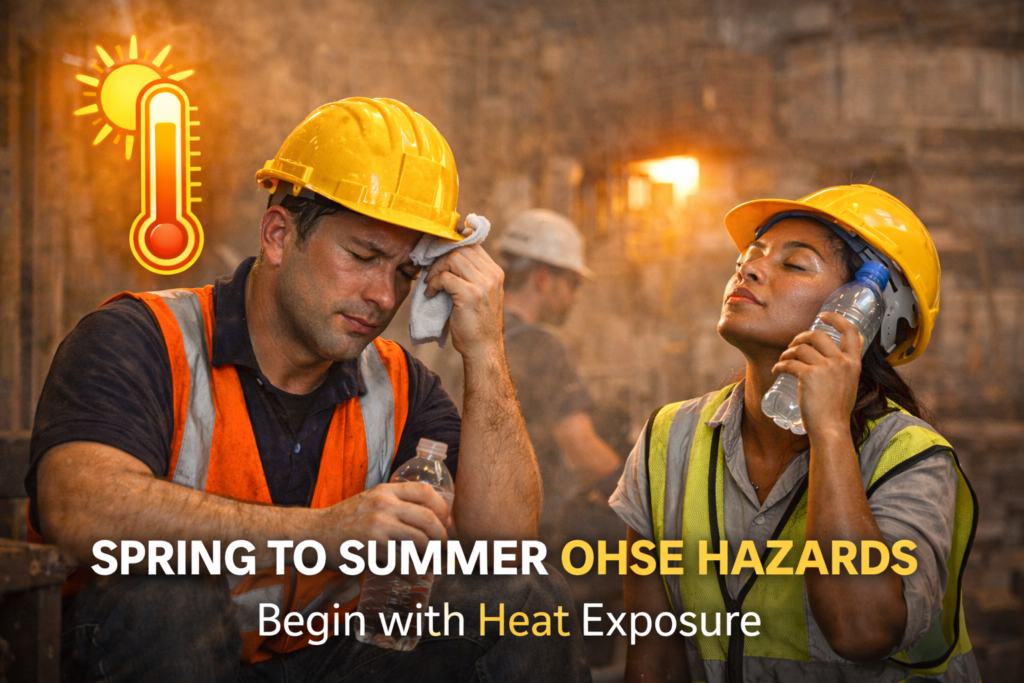
That is why employers should not wait for the hottest day of the year before acting. Acclimatization, hydration, work-rest schedules, shade, and supervision need to be built into the job before high temperatures arrive.
CCOHS recommends drinking water regularly, using shade, and allowing time for acclimatization, while OSHA-style heat programs continue to reinforce the same basic prevention principle: plan ahead before workers feel unwell. You can also support this article with an internal link to your heat stress prevention guide so readers can move directly from seasonal awareness into detailed control measures.
Spring to Summer OHSE Hazards Also Include UV Radiation and Sun Exposure
A second major risk is ultraviolet radiation. Many workplaces still treat sun exposure as a comfort issue rather than an OHSE issue, but CCOHS makes it clear that outdoor workers are vulnerable to the sun’s rays and that UV exposure can cause sunburn, eye damage, premature skin aging, and skin cancer. CCOHS also advises reducing unnecessary exposure during the strongest sun hours, especially from 11 a.m. to 3 p.m., and using protection when the UV Index is 3 or higher.
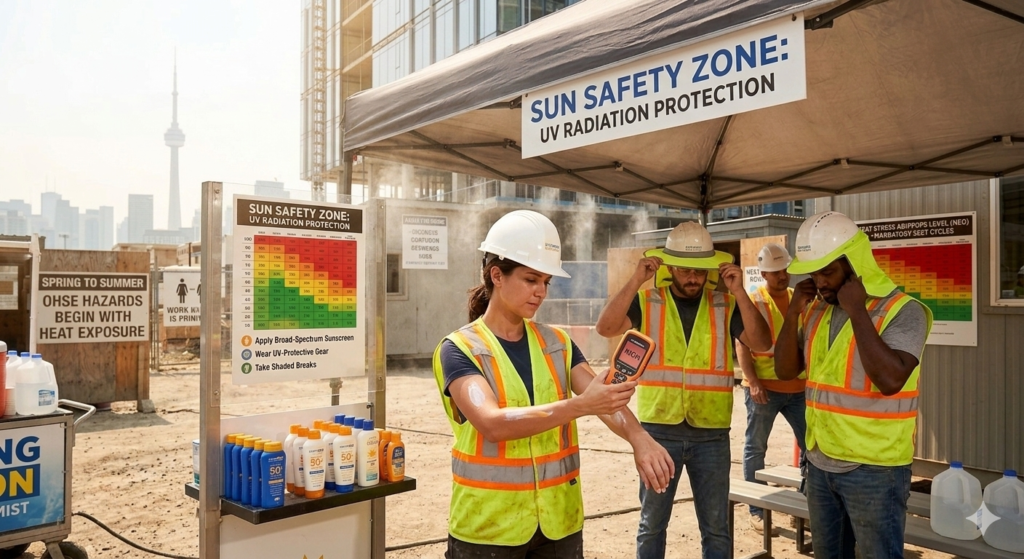
In practical terms, this means sun safety should be written into work planning. Employers can shift strenuous work earlier in the day, provide shaded recovery areas, encourage cooling breaks, and supply sunscreen, UV-rated eyewear, and appropriate clothing.
CCOHS also notes that protective clothing and PPE can increase heat-related illness risk, which means heat and sun controls have to be planned together rather than separately. A good related internal link here would be your PPE program review, especially if you want readers to understand how clothing can both protect and increase heat burden.
Air Quality, Wildfire Smoke, and Allergens Are Growing Seasonal Concerns
Spring and summer are also the months when air quality can change quickly. Health Canada says wildfire season in Canada typically runs from early April to late October, and it warns that during heavy smoke conditions everyone is at risk, regardless of age or health.
Workers who need to be outdoors during smoke events should check local guidance, and employers should pay attention to the Air Quality Health Index when deciding whether to modify work, reduce strenuous tasks, or move activities indoors.
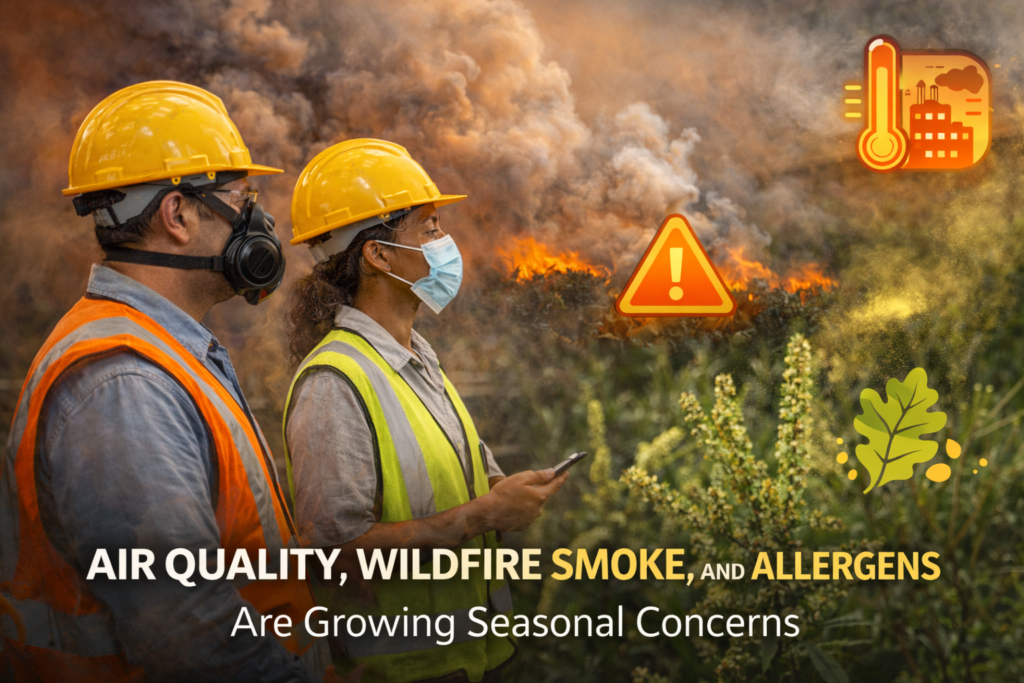
This issue becomes even more serious when wildfire smoke and heat happen together. Health Canada advises reducing or rescheduling outdoor activities during combined smoke and heat events, and CCOHS has noted that workers may be exposed to both smoke and extreme heat at the same time. That combination can challenge hydration, breathing comfort, work pace, and emergency response decisions.
Employers should have a clear procedure for monitoring forecasts, adjusting workload, and protecting indoor air when smoke enters buildings. Linking this paragraph to an internal emergency response plan gives readers a practical next step.
Allergens also deserve attention during this seasonal shift. NIOSH lists asthma and allergies triggered by pollen among the biological hazards faced by outdoor workers, and CDC climate guidance says climate change may increase pollen concentrations and extend pollen seasons.
That means spring-to-summer planning should also consider workers with asthma, seasonal allergies, or sensitivity to mold, grasses, and airborne irritants, especially where mowing, landscaping, groundskeeping, or agricultural tasks are involved.
Spring to Summer OHSE Hazards Increase Tick and Insect Exposure
As vegetation thickens and outdoor activity increases, tick and insect risks become more relevant. NIOSH states that worksites with woods, bushes, high grass, or leaf litter are likely to have ticks, and that ticks are most active in the spring, summer, and fall in the United States, while in some warmer regions they may be active year-round.
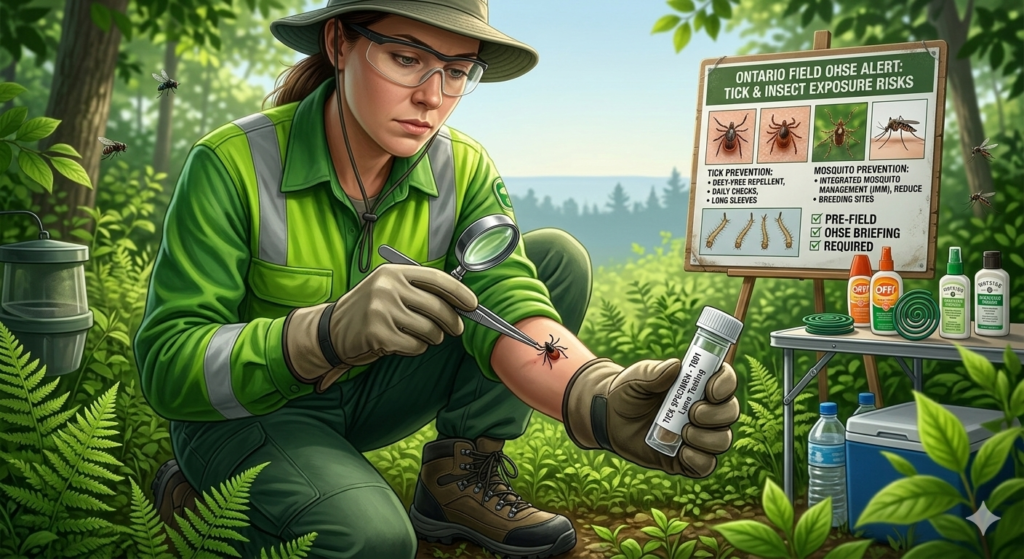
Outdoor workers in landscaping, utilities, parks, construction, forestry, and field inspection roles should be trained to recognize where exposure is most likely and how to check for ticks after work.
Insect sting risk can also affect seasonal work. CCOHS has advised that workers with sting allergies should inform their employer, carry prescribed emergency medication where applicable, and ensure co-workers understand the signs of a severe reaction and know how to respond.
For OHSE leaders, this means seasonal hazard assessments should include insects, vegetation, and medical response readiness, not only temperature and weather.
Severe Weather Can Disrupt Work Without Warning
The move into summer also brings thunderstorms, lightning, and in some regions tornado risk. CCOHS states that there is no safe place to be outdoors during a thunderstorm except in an appropriate shelter, and that if workers can hear thunder, they are within striking distance.
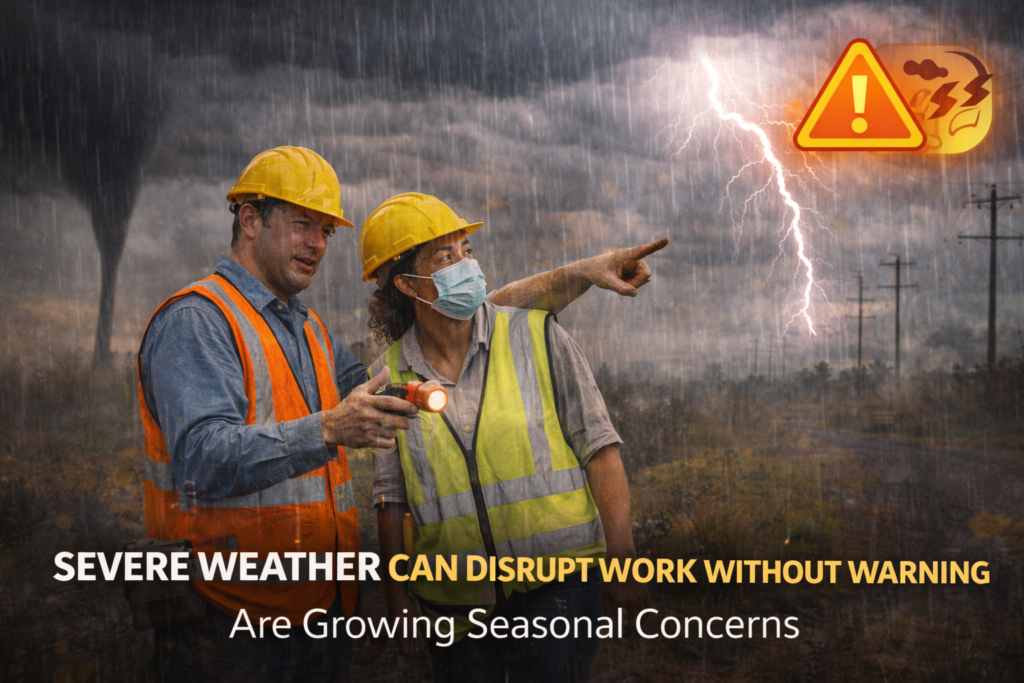
The organization also notes that tornadoes can be a significant workplace hazard in the spring and summer and recommends including them in emergency preparedness plans, identifying safe shelter areas, and checking weather conditions before and during the shift.
These hazards are often underestimated because they develop quickly. A workplace may begin the day under normal conditions and face lightning, high winds, airborne debris, or sudden shutdowns by the afternoon.
Supervisors should monitor forecasts, know shelter locations, and stop outdoor work early enough to move crews safely. This is where a strong safety culture matters most: workers need to know that reporting changing conditions is expected, not seen as overreacting.
How Workplaces Should Prepare Before Summer Fully Arrives
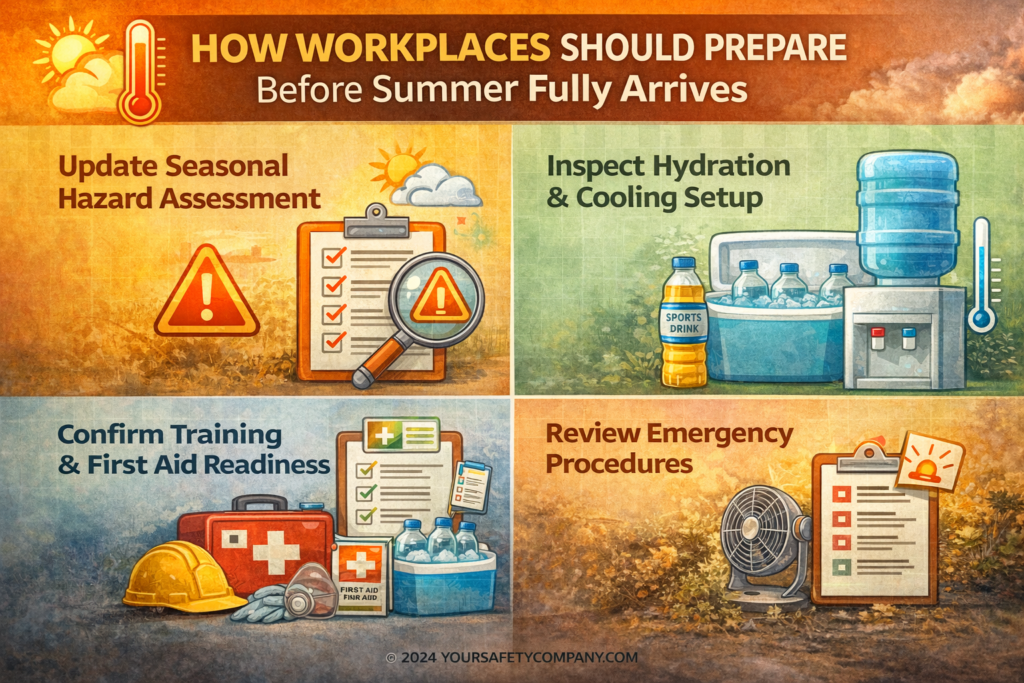
The most effective response to seasonal change is early preparation. Employers should review hazard assessments, update training, inspect hydration and cooling arrangements, confirm first aid readiness, and make sure emergency procedures cover heat illness, smoke events, severe weather, and allergic reactions.
Seasonal orientation is especially important for new and returning workers, since unfamiliarity with hazards often increases risk during the first warm weeks of the season. CCOHS and NIOSH guidance consistently point to planning, communication, supervision, and worker education as the foundation of prevention.
A smart seasonal OHSE strategy also connects related topics instead of handling them one by one. Heat, UV, smoke, allergens, insects, and storms all interact with workload, staffing, PPE, scheduling, and emergency response.
Employers that plan for the full seasonal picture will respond faster, reduce incidents, and support healthier workers. For readers who want deeper reference material, the best external resources are the CCOHS heat and summer safety resources, Health Canada wildfire smoke guidance, and NIOSH outdoor worker information.
Seasonal transitions are no longer minor planning details. They are part of modern risk management. When employers prepare for rising temperatures, stronger sun, changing air quality, biological hazards, and fast-moving weather, they protect both people and operations.
That is why every safety leader should treat this time of year as a serious OHSE planning window for Spring to Summer OHSE Hazards.
No comments yet