
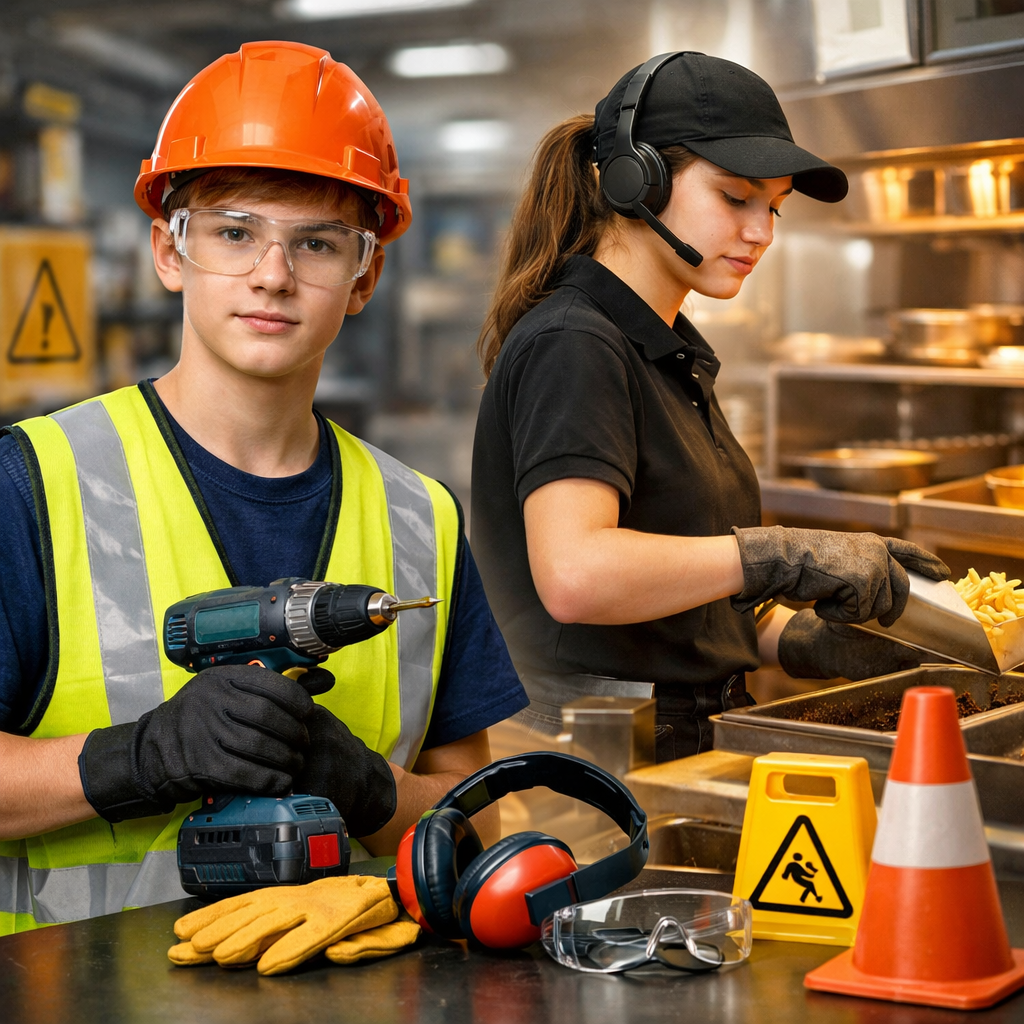

Teen workplace safety matters from the moment a young worker clocks in for a first shift. Whether the job is in retail, food service, landscaping, recreation, warehousing, or an office, new workers often face hazards before they fully understand the pace, equipment, or expectations of the workplace.
For Canadian students, parents, and employers, the goal is simple: prevent injuries before they happen. A first job can build confidence and useful skills, but it should also begin with clear training, supervision, and a basic understanding of common risks. Trusted guidance from CCOHS, Ontario resources, and practical workplace training from OHSE learning resources can help young workers prepare.
Why teen workplace safety deserves extra attention
Teen workers are often new to job tasks, unfamiliar with hazards, and eager to do well. That combination can lead to rushed decisions, skipped questions, or accepting tasks they do not fully understand. In Ontario and across Canada, employers have duties to provide information, instruction, and supervision, while workers also have a responsibility to follow safe procedures and report hazards.
Good teen workplace safety starts with speaking up early. A young worker should know who their supervisor is, where first aid supplies are kept, what to do in an emergency, and which tasks require special instruction. If something feels unsafe, unclear, or outside their training, they should stop and ask.
Before starting, every young worker should know
- What hazards are present in the work area
- How to do assigned tasks safely
- What personal protective equipment is required
- How to report an injury, spill, broken tool, or near miss
- What to do in a fire, evacuation, weather event, or violent incident
- Which jobs or equipment they are not allowed to use
Teen workplace safety hazards that often appear on a first shift
Many first-shift injuries are linked to routine hazards rather than dramatic events. Slippery floors, hot surfaces, sharp blades, lifting mistakes, and distracted work can all cause harm. Young workers should expect these hazards to exist and learn the controls before beginning the task.
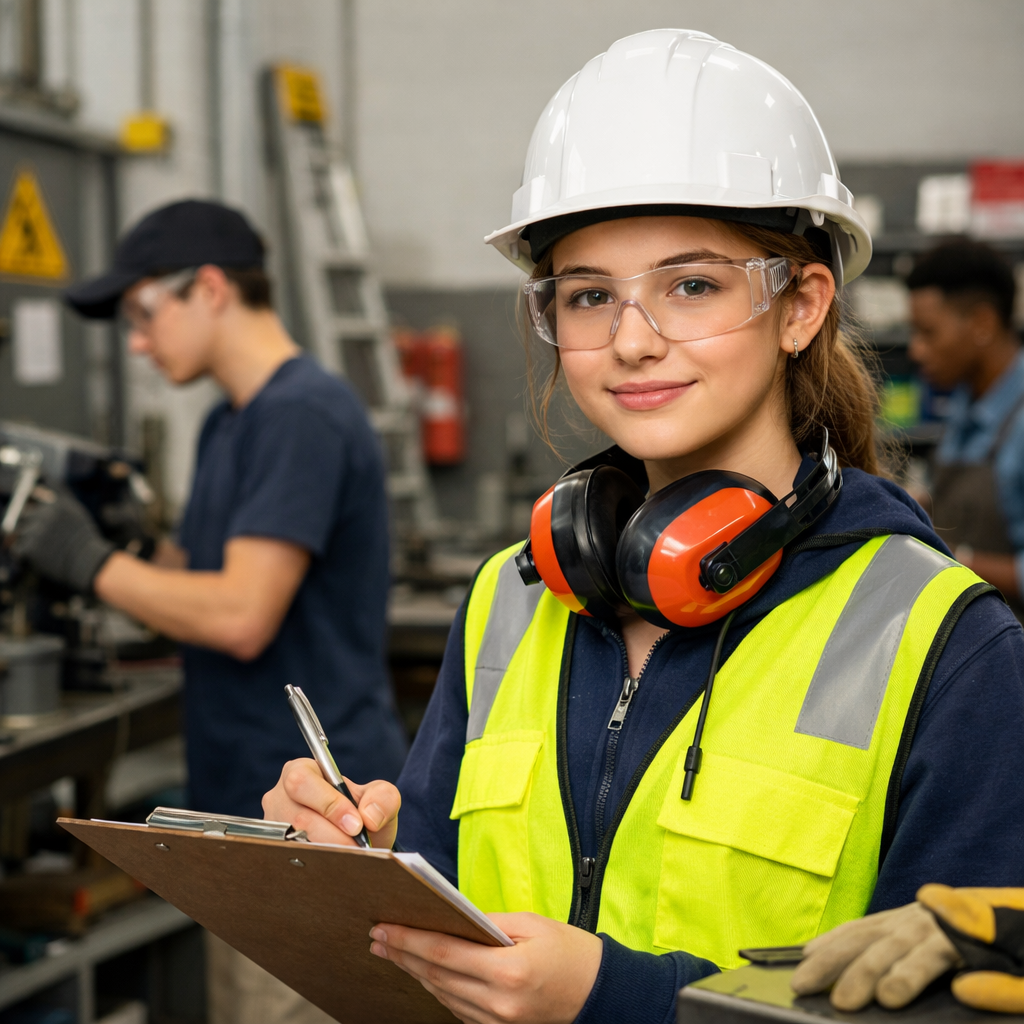
Slips, trips, and falls
Wet entryways, cluttered stockrooms, uneven surfaces, loose cords, and rushed movement are common causes of injury. Proper footwear, housekeeping, and keeping walkways clear are basic but essential controls. If a spill appears, report it and follow local cleanup procedures rather than stepping around it all shift.
Cuts, burns, and contact injuries
Food service, maintenance, and retail back rooms often include knives, box cutters, hot oil, ovens, steam, or sharp packaging materials. These hazards are serious even during simple tasks. New workers should never use tools or equipment without hands-on instruction, and they should always use guards, mitts, or other required protective equipment.
Lifting, pushing, and repetitive strain
Boxes, supply bins, carts, and awkward stock can strain the back, shoulders, wrists, or knees. Teen workers sometimes try to prove themselves by lifting too much or moving too quickly. A safer approach is to size up the load, ask for help, use carts or dollies, and keep the load close to the body. Repetitive motions such as scanning, stocking, or cleaning can also cause discomfort over time.
Chemicals and air quality
Cleaning products, solvents, pool chemicals, fuels, and dust can create risks for skin, eyes, or breathing. Workers should know how products are labeled, where protective equipment is stored, and what to do if a splash or spill occurs. Never mix chemicals unless trained and authorized to do so, and always follow workplace and manufacturer instructions.
Using the hierarchy of controls for teen workplace safety
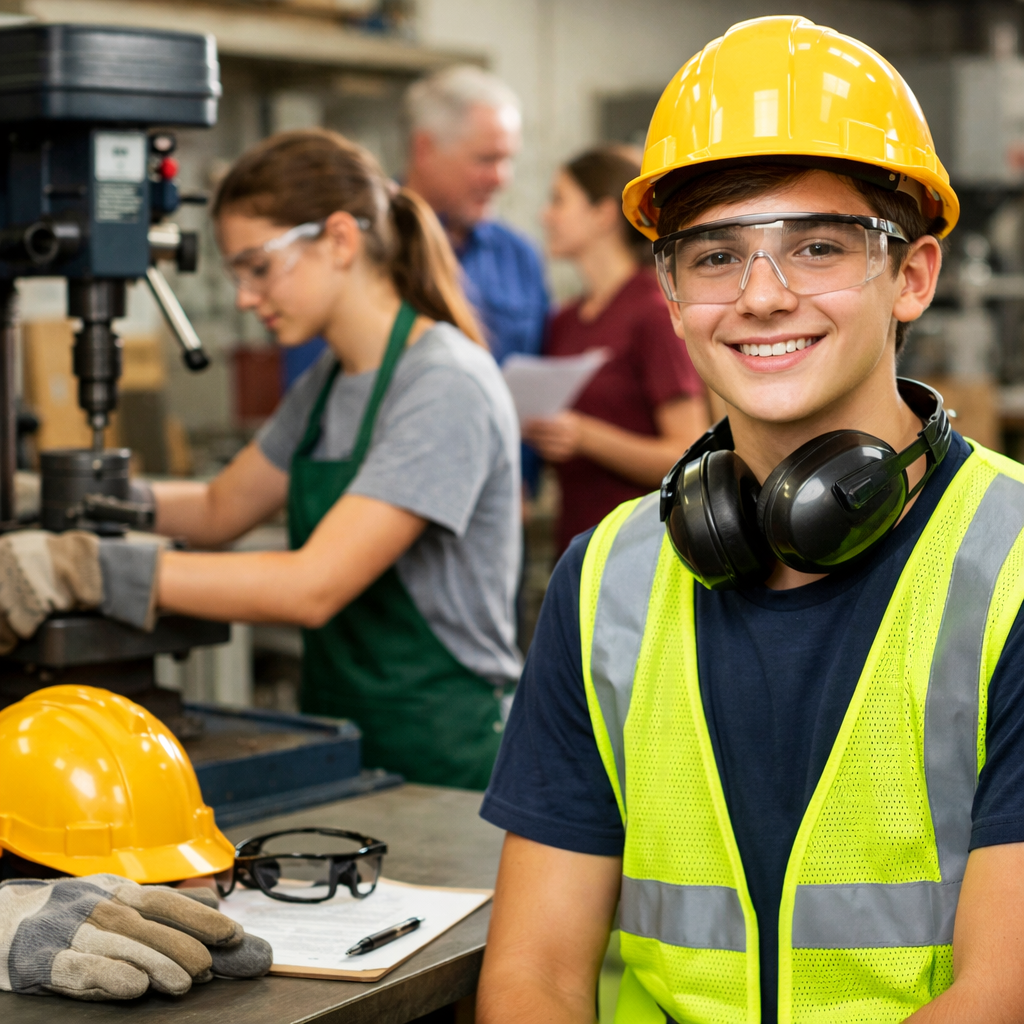
One of the most useful safety concepts for new workers is the hierarchy of controls. It helps explain that the best protection usually comes from removing or reducing the hazard first, not just relying on personal protective equipment. This is a practical way to think about teen workplace safety in any setting.
| Control level | What it means | Example for a teen worker |
|---|---|---|
| Elimination | Remove the hazard completely | Have a supervisor handle a task the young worker is not trained or permitted to do |
| Substitution | Use a safer option | Choose a less hazardous cleaning product where appropriate |
| Engineering controls | Separate people from the hazard | Use machine guards, ventilation, or anti-slip flooring |
| Administrative controls | Change the way work is done | Provide orientation, safe work procedures, supervision, and scheduled breaks |
| PPE | Wear protective equipment | Gloves, eye protection, hearing protection, or slip-resistant footwear |
For example, if a teen is asked to clean a greasy floor in a restaurant, safer controls could include using the right cleaner, placing wet-floor warnings, restricting foot traffic, and wearing slip-resistant footwear. PPE matters, but it should not be the only safety step in place.
Rights, responsibilities, and smart questions to ask
In Ontario, young workers should understand that safety is not a favour from the employer; it is part of how work must be organized. A teen should receive orientation, job-specific instruction, and supervision that matches the task. Parents and schools can reinforce this by encouraging teens to ask direct, practical questions before accepting new duties.
Useful questions before or during a first shift
- What are the main hazards in this job?
- What training do I need before doing this task?
- What PPE am I expected to wear, and how do I use it properly?
- Who do I report to if something seems unsafe?
- What should I do if I get hurt or see someone else get hurt?
- Am I allowed to use this machine, ladder, chemical, or vehicle?
These questions are not a sign of weakness. They are a sign of safe work habits. Employers should welcome them, and supervisors should answer clearly. More workplace guidance is also available through OHSE.ca and public Canadian safety resources such as Health Canada.
A practical teen workplace safety checklist for day one
A short checklist can make a first shift safer and less stressful. Young workers do not need to memorize every rule on day one, but they do need a simple routine for recognizing problems and responding calmly.
- Arrive with the required clothing and footwear
- Learn the layout, exits, and emergency procedures
- Meet the supervisor and confirm who to ask for help
- Review hazards for each assigned task before starting
- Use tools and equipment only after training
- Keep work areas tidy and report spills or damage right away
- Take breaks, stay hydrated, and avoid rushing
- Report pain, near misses, or unsafe conditions early
Parents can support teen workplace safety by asking how the shift went, whether training was provided, and whether the teen felt comfortable asking questions. Schools and families can also remind young workers that saying “I have not been trained for that yet” is a responsible response, not a refusal to help.
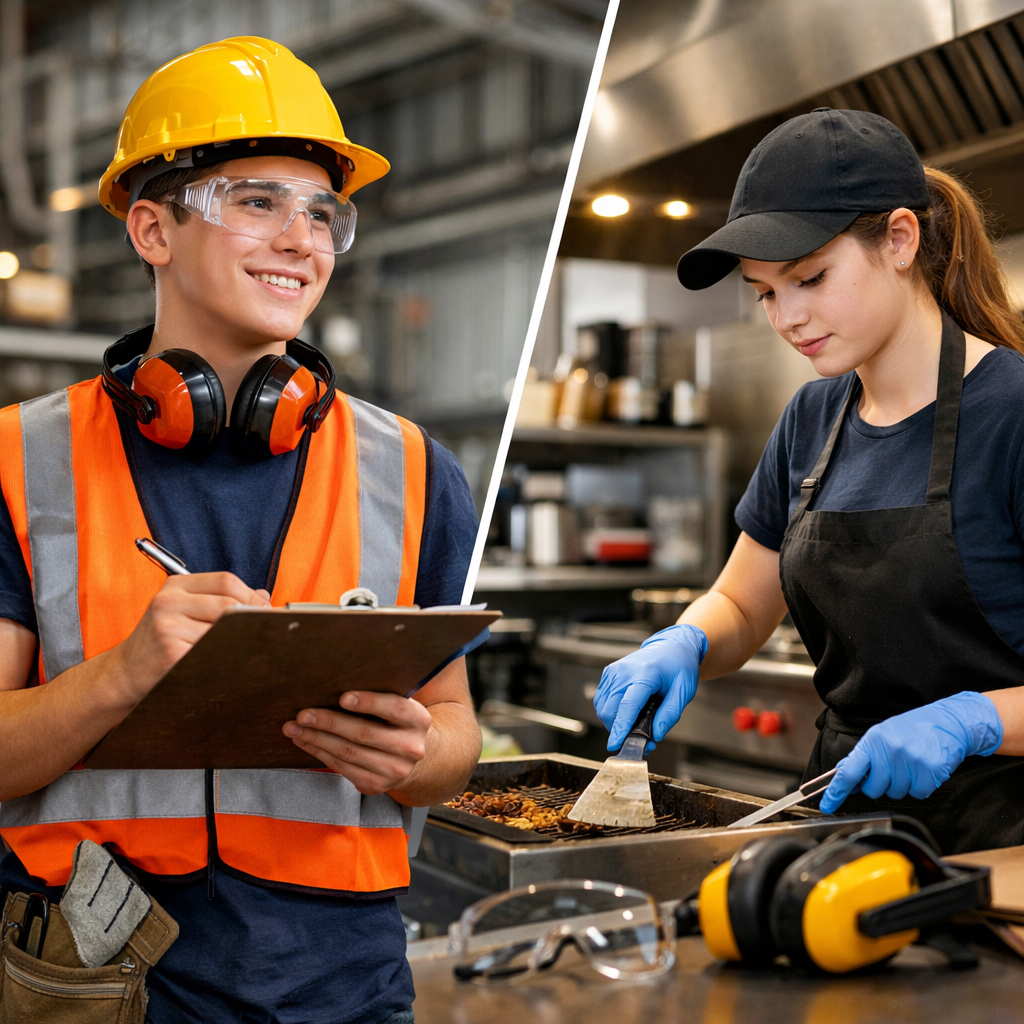
In the end, teen workplace safety is about preparation, communication, and prevention. A first shift should never depend on guesswork. When young workers understand common hazards, know their limits, follow instructions, and speak up early, they are far more likely to stay safe and build confidence at work. Follow local workplace, school, manufacturer, and emergency guidance where applicable, and make teen workplace safety part of every shift from the very beginning.

No comments yet