
Food Processing Machine Safety: Essential OHSE Practices for Safer Workplaces
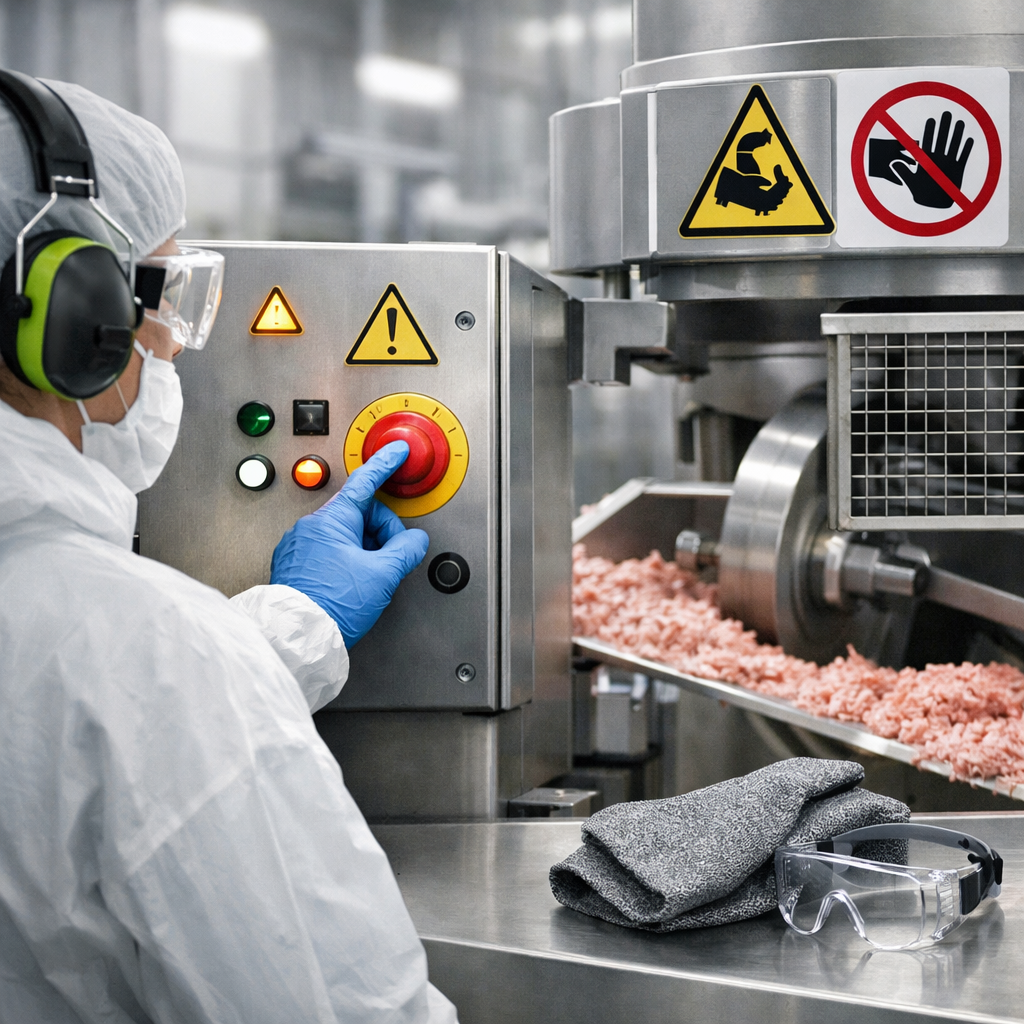
food processing machine safety is a critical part of occupational health, safety, and environmental management in any manufacturing facility. From mixers and slicers to conveyors, fillers, packaging units, and cleaning systems, food production equipment can improve output and consistency, but it also introduces serious workplace hazards if it is not properly designed, operated, maintained, and supervised.
In food plants, machine-related incidents can lead to cuts, amputations, crush injuries, burns, electrical shock, chemical exposure, and musculoskeletal disorders. These risks affect operators, maintenance teams, sanitation crews, supervisors, and even contractors. A strong safety program does more than prevent injuries. It supports compliance, protects productivity, reduces downtime, and helps maintain food quality standards.
Effective food processing machine safety depends on a combination of engineering controls, safe work procedures, training, personal protective equipment, and legal compliance. It also requires attention to everyday realities on the production floor, such as rushed changeovers, wet surfaces, repetitive tasks, line jams, and cleaning around moving parts. When employers build safety into each stage of operation, they create a workplace where efficiency and worker protection can coexist.
Understanding Food Processing Machine Safety Hazards
Food processing machine safety starts with identifying the hazards associated with each machine and each task. A slicer may expose workers to sharp blades, while a conveyor can create in-running nip points. Mixers, grinders, and augers may entangle clothing, gloves, jewelry, or hair. Packaging lines can pinch fingers, while thermal processing systems can expose workers to steam, heat, or pressurized components.
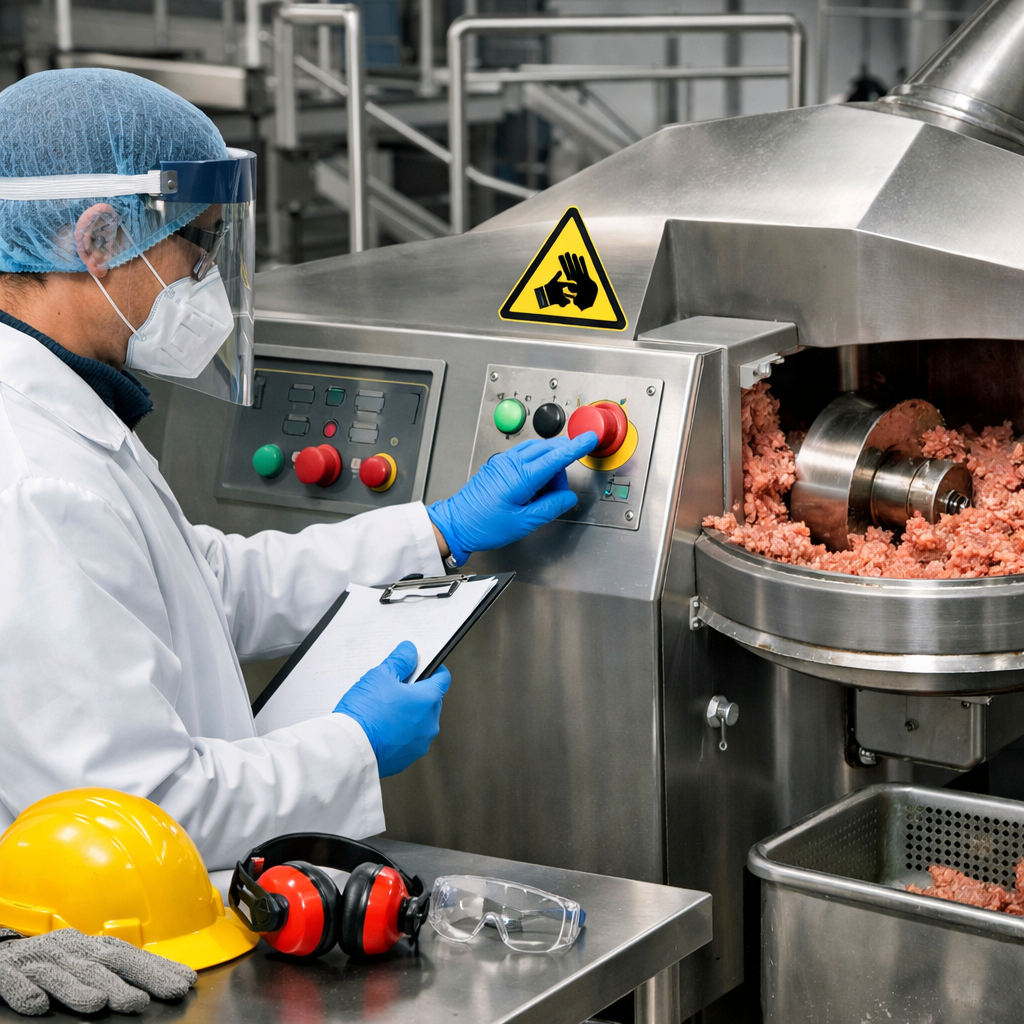
Common hazards in food processing equipment include:
- Mechanical hazards such as cutting, crushing, shearing, drawing-in, and entanglement
- Electrical hazards from damaged cords, poor isolation, or unauthorized repairs
- Thermal hazards involving hot surfaces, steam lines, and heated liquids
- Chemical hazards from cleaning chemicals, lubricants, and sanitation agents
- Ergonomic hazards caused by repetitive motions, awkward reaches, and manual handling
- Slip and fall hazards from water, oils, food waste, or washdown activities
- Noise hazards from high-speed production lines and pneumatic systems
One practical example is a worker clearing a blocked conveyor without fully isolating the energy source. If the line restarts unexpectedly, the worker may suffer a crush injury or hand entanglement. Another example is a sanitation employee washing down a machine before all rotating components have come to a complete stop. In wet conditions, visibility, footing, and reaction time are often reduced, increasing the likelihood of an incident.
Risk assessment should consider not only normal operation but also startup, shutdown, blade changes, sanitation, inspections, maintenance, and emergency response. Many serious injuries occur during non-routine tasks rather than regular production. For that reason, employers should review machine hazards using task-based assessments and update them whenever equipment, layout, staffing, or processes change.
Preventing Incidents Through Controls and Safe Work Practices
Applying the Hierarchy of Controls
The most effective food processing machine safety programs use the Hierarchy of Controls. This approach prioritizes controls that remove or reduce the hazard at its source before relying on worker behavior alone.
In food plants, the hierarchy can be applied as follows:
- Elimination: Remove unnecessary hazardous steps, such as manual reaching into machinery to clear product buildup
- Substitution: Replace older, higher-risk equipment with newer machines that include better guarding and interlocks
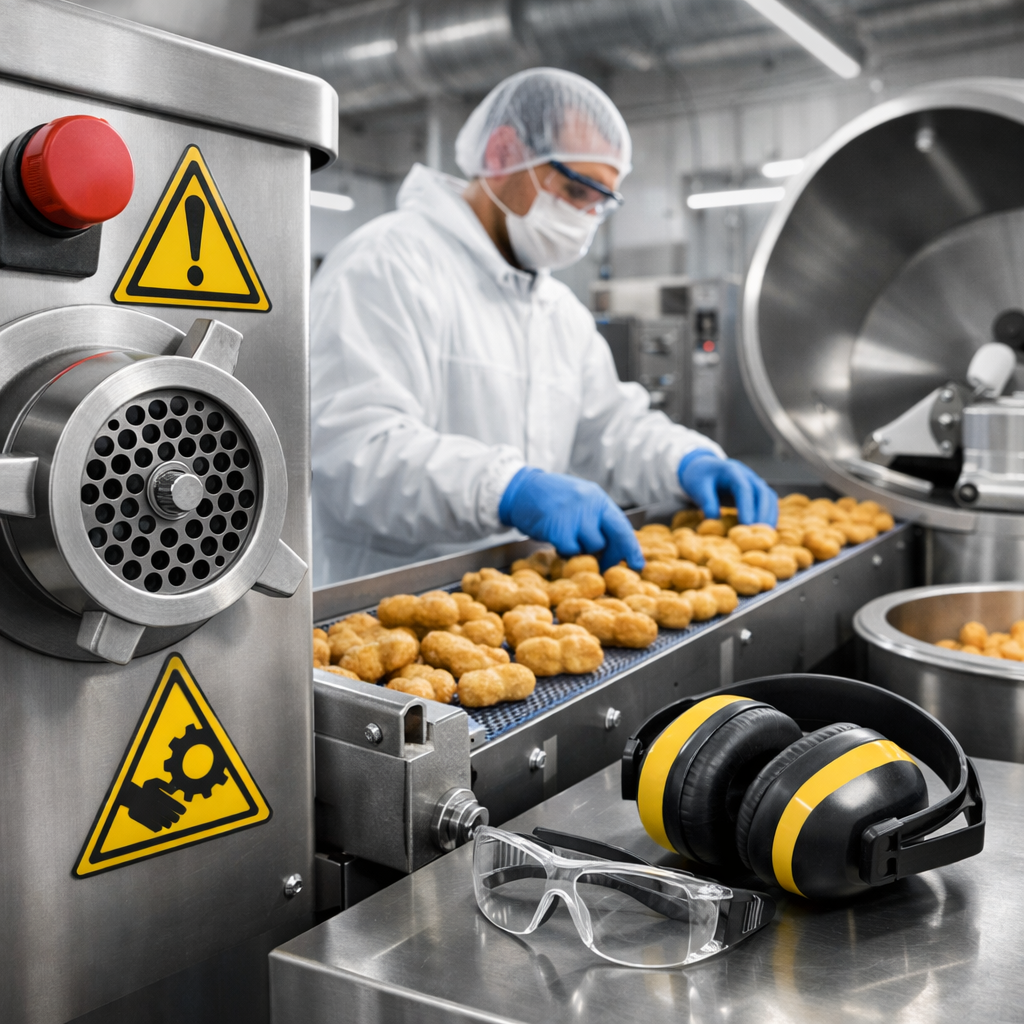
- Engineering controls: Install fixed guards, interlocked doors, emergency stops, light curtains, braking systems, and anti-slip flooring
- Administrative controls: Use training, permits, signage, supervision, preventive maintenance, and lockout/tagout procedures
- PPE: Provide gloves, hearing protection, eye protection, aprons, footwear, and task-specific protective clothing
Engineering controls should always be the foundation. Guards must prevent access to moving parts without creating new hazards or interfering with cleaning and maintenance. Interlocks should stop machine motion when access doors are opened. Emergency stop devices must be clearly marked, easy to reach, and tested routinely.
Safe Work Procedures That Matter
Administrative controls are essential in reinforcing food processing machine safety across shifts and departments. Written procedures should explain how to start, operate, clean, inspect, isolate, and restart each machine. They should be practical, easy to understand, and reviewed with workers regularly.
Strong safe work practices include:
- Never removing or bypassing machine guards
- Using lockout/tagout before maintenance, cleaning, or jam clearing
- Keeping hands clear of feed points and moving assemblies
- Securing loose clothing, hair, and jewelry
- Reporting unusual noises, vibration, leaks, or guard damage immediately
- Following sanitation procedures that account for residual energy and moving parts
- Restricting machine adjustments to trained and authorized personnel
For guidance on lockout and hazardous energy control, employers often refer to OSHA lockout/tagout requirements. Canadian workplaces may also consult CCOHS for practical machine safety resources. Internal programs such as safety training and lockout/tagout procedures should support these external standards with site-specific instructions.
PPE and Worker Training for Food Processing Machine Safety
PPE is an important line of defense, but it should never be treated as the primary control for machine hazards. In food processing machine safety, PPE must match the task, the equipment, and the environment. The right gear can reduce exposure to cuts, splashes, noise, and slips, but inappropriate PPE can also create entanglement risks if it is not carefully selected.
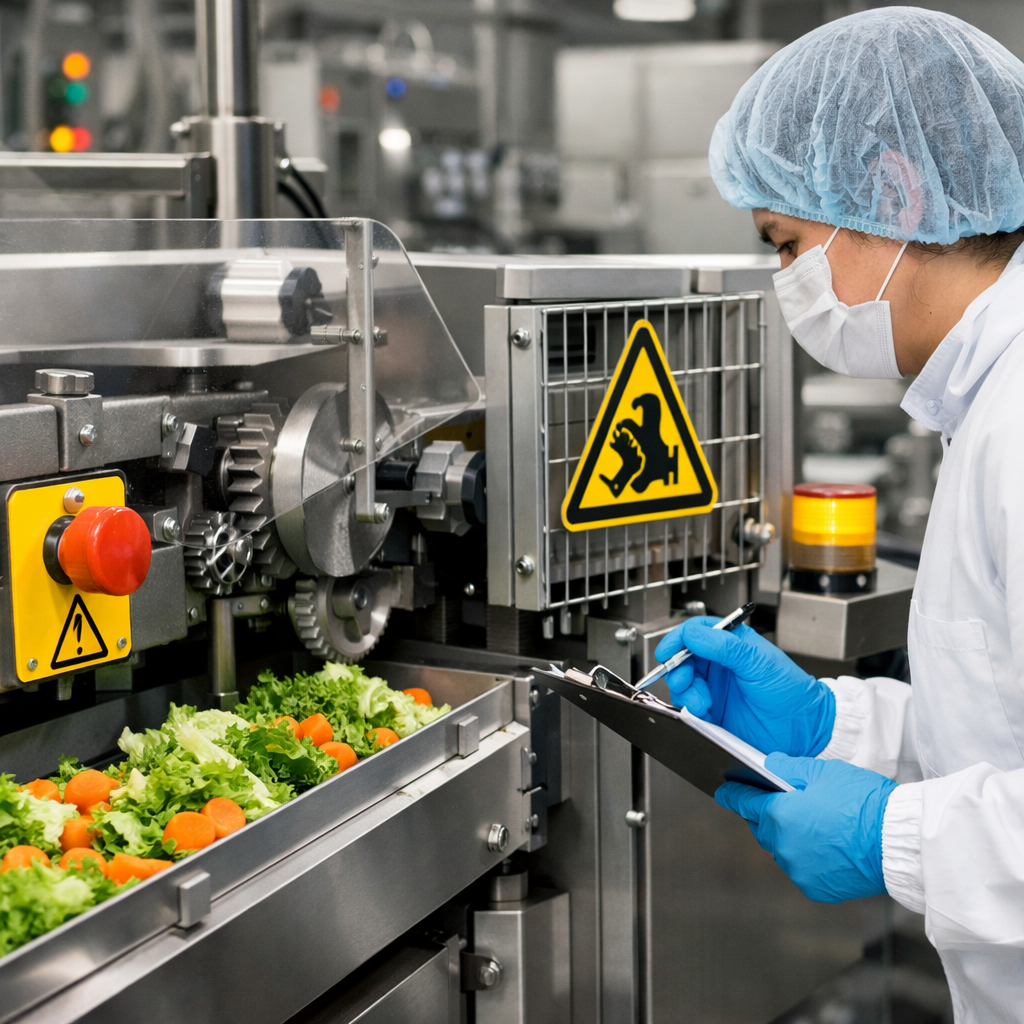
Typical PPE in food production environments may include safety glasses, face shields, hearing protection, cut-resistant gloves, chemical-resistant gloves for sanitation tasks, waterproof aprons, sleeve protectors, hair restraints, and slip-resistant footwear. However, glove use near rotating equipment requires careful assessment. A glove that protects from sharp edges during blade handling may be unsafe near exposed rotating shafts or rollers.
The table below shows simple examples of matching tasks with common controls and PPE:
| Task | Main Risk | Key Control | Typical PPE |
|---|---|---|---|
| Operating slicers | Blade contact | Fixed guards and push tools | Eye protection, cut-resistant gloves for blade changes only |
| Clearing conveyor jams | Crush and entanglement | Lockout/tagout | Safety footwear, close-fitting clothing |
| Washdown and sanitation | Chemical splash and slips | Isolation and drainage control | Face shield, chemical gloves, apron, slip-resistant boots |
| Maintenance work | Unexpected startup | Energy isolation verification | Task-specific PPE based on risk assessment |
Training is just as important as equipment. Workers should understand machine hazards, emergency stop locations, startup and shutdown procedures, cleaning steps, and what to do when something goes wrong. Supervisors should verify competency rather than assuming that experience alone is enough. Refresher training is especially important after incidents, near misses, equipment changes, or procedural updates.
Practical examples improve retention. For instance, instead of simply telling workers not to clear jams by hand, demonstrate the correct isolation sequence, show where stored energy may remain, and explain how a previous near miss could have become a severe injury. This makes food processing machine safety more real and more actionable on the shop floor.
Compliance, Inspection, and Continuous Improvement
Meeting OHSE and Regulatory Expectations
Food processing machine safety is closely tied to legal compliance. Employers are generally required to provide safe equipment, proper guarding, worker information and training, hazard assessments, and safe maintenance procedures. Depending on location, applicable requirements may come from OSHA, provincial or state occupational safety laws, machine guarding standards, electrical codes, and food industry regulations.
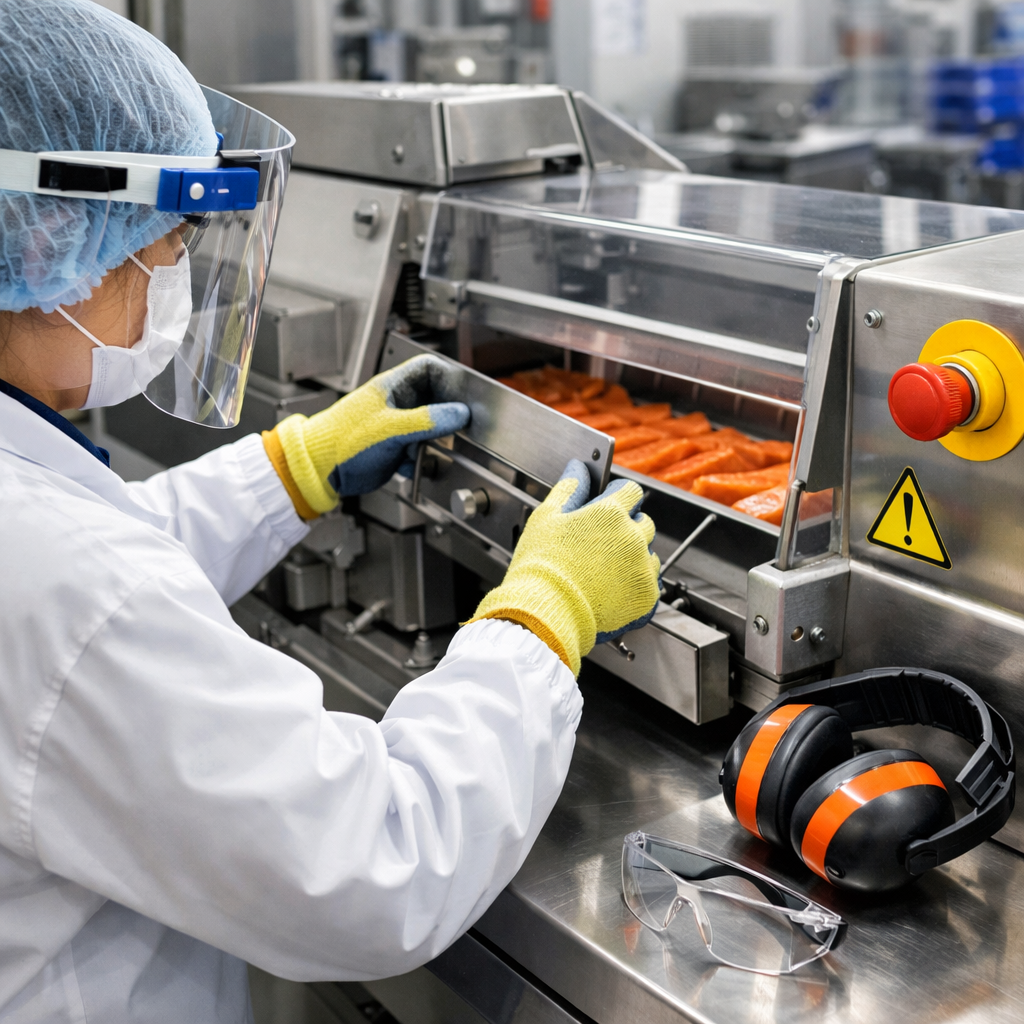
Employers should also review broader safety management expectations through sources such as OSHA machine guarding guidance. In practice, compliance is not just about avoiding penalties. It is about creating documented, repeatable systems that protect people every day.
A strong compliance program often includes:
- Machine-specific risk assessments
- Documented guarding inspections
- Preventive maintenance schedules
- Lockout/tagout audits
- Incident and near-miss investigations
- Contractor safety controls
- Training records and competency checks
Using Practical Examples to Improve Safety Performance
Continuous improvement is essential because production demands, staffing, and equipment conditions change over time. A facility may install a faster packaging machine, add temporary workers during peak demand, or modify a line layout to improve efficiency. Each change can alter the risk profile and should trigger a review.
Consider a practical example from a prepared foods facility. Workers repeatedly bypassed a guard to speed up product adjustments on a depositor. Management responded by disciplining employees, but the behavior continued. A deeper review found that the adjustment point was poorly designed and difficult to access during normal operation. The better solution was to redesign the adjustment method, improve guarding, and retrain operators. This reflects a core OHSE principle: if unsafe behavior is repeated, the system itself may be contributing to the problem.
Routine inspections should focus on real conditions, not paperwork alone. Are guards secure and intact? Are emergency stops functioning? Are lockout devices available where needed? Are floors slippery near machines after washdown? Are operators using tools correctly? Are temporary fixes being used in place of permanent repairs? These observations provide valuable insight into whether food processing machine safety controls are truly working.
Worker involvement also improves outcomes. Operators and sanitation staff often know where product jams happen, where visibility is poor, or where access is awkward. Including them in hazard reviews helps identify practical solutions that management may otherwise miss. A reporting culture where workers can raise concerns without fear is one of the strongest indicators of a mature safety program.
In conclusion, food processing machine safety requires more than guards and warning signs. It demands a full OHSE approach that addresses risks, prevention, PPE, compliance, training, and continuous improvement. By applying the Hierarchy of Controls, enforcing isolation procedures, selecting proper PPE, and learning from real workplace conditions, employers can reduce serious injuries and build safer, more reliable production environments. When food processing machine safety is treated as a daily operational priority, both workers and businesses benefit.
No comments yet