
Preventing Food Contamination Risks: Essential OHSE Controls for Safer Food Workplaces

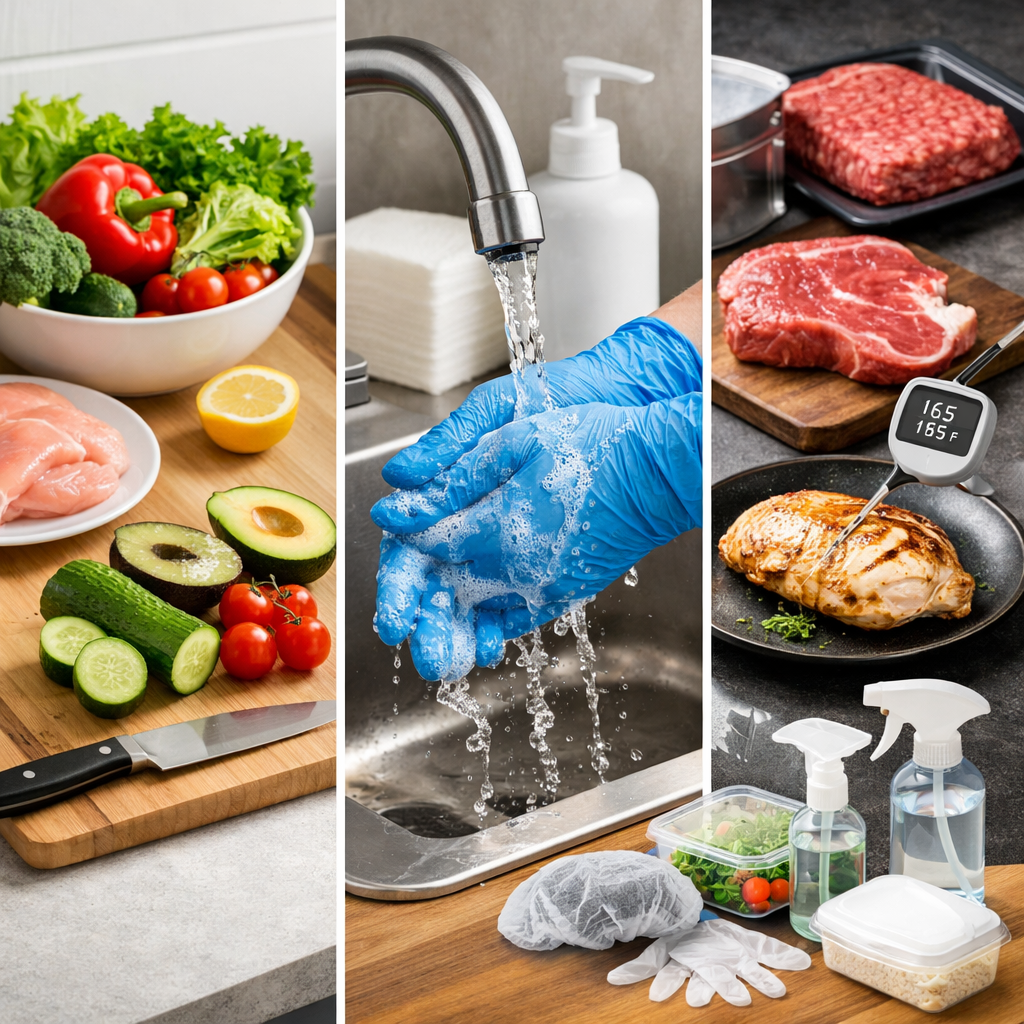
Preventing food contamination risks is a core OHSE priority in every workplace that handles, stores, prepares, transports, or serves food.
From commercial kitchens and food processing plants to aged care facilities, supermarkets, and catering businesses, contamination can harm workers, consumers, and business operations in a matter of hours.
Strong controls reduce the chance of biological, chemical, physical, and allergen contamination.
They also support legal compliance, protect brand reputation, and help create a safer, healthier work environment.
Understanding preventing food contamination risks in the workplace
Preventing food contamination risks starts with understanding how contamination happens.
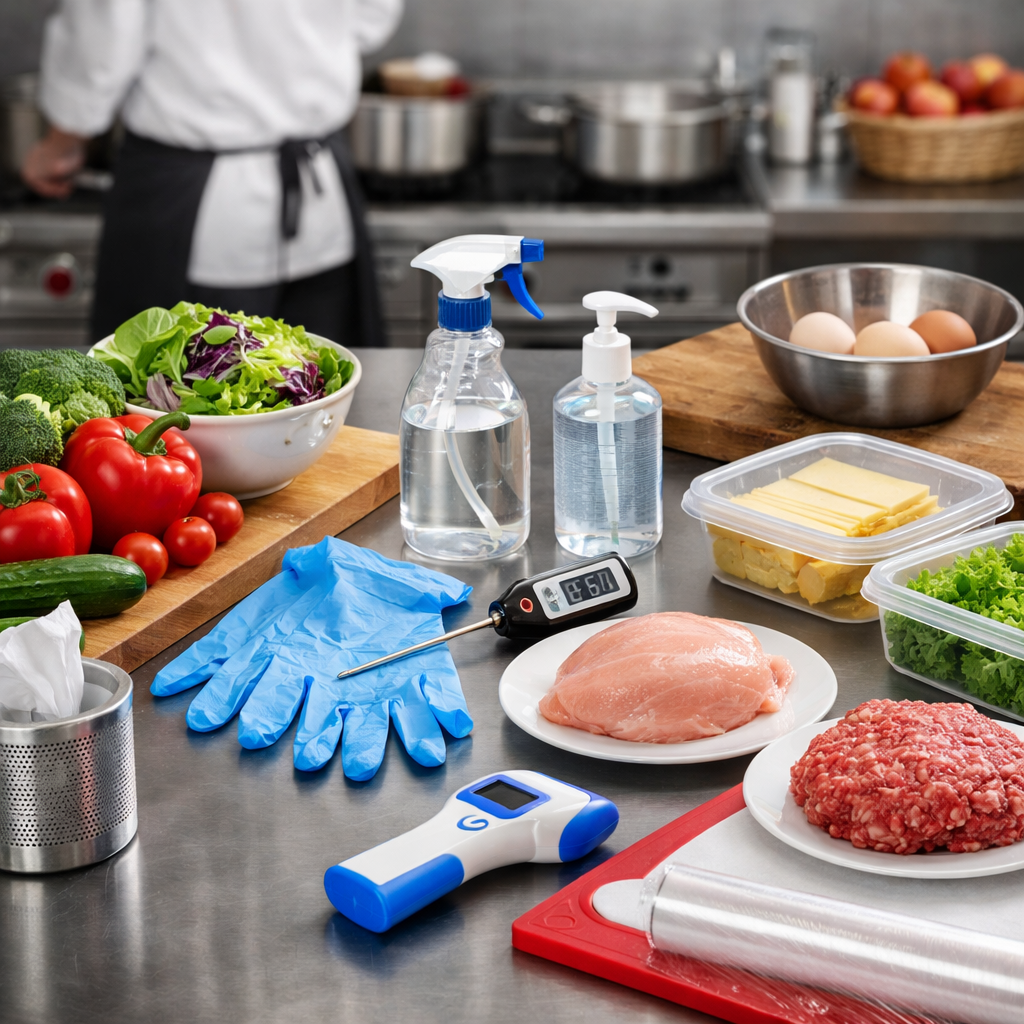
In OHSE terms, contamination is a workplace hazard because it can lead to foodborne illness, injury, product recalls, lost productivity, and enforcement action.
Main types of contamination
Food contamination usually falls into four main categories.
- Biological contamination: bacteria, viruses, parasites, mould, and fungi such as Salmonella, Listeria, E. coli, and norovirus.
- Chemical contamination: cleaning chemicals, pest control products, lubricants, packaging residues, and unsafe levels of food additives.
- Physical contamination: glass, metal fragments, plastic, wood splinters, hair, jewellery, and broken equipment parts.
- Allergen contamination: cross-contact involving milk, eggs, peanuts, tree nuts, wheat, soy, fish, shellfish, and other declared allergens.
These hazards can enter food at any stage of the supply chain.
Receiving goods, storing ingredients, preparing food, cooking, cooling, packing, transporting, and serving all present opportunities for contamination if controls are weak.
Common workplace risk factors
Many incidents happen because of routine failures rather than dramatic mistakes.
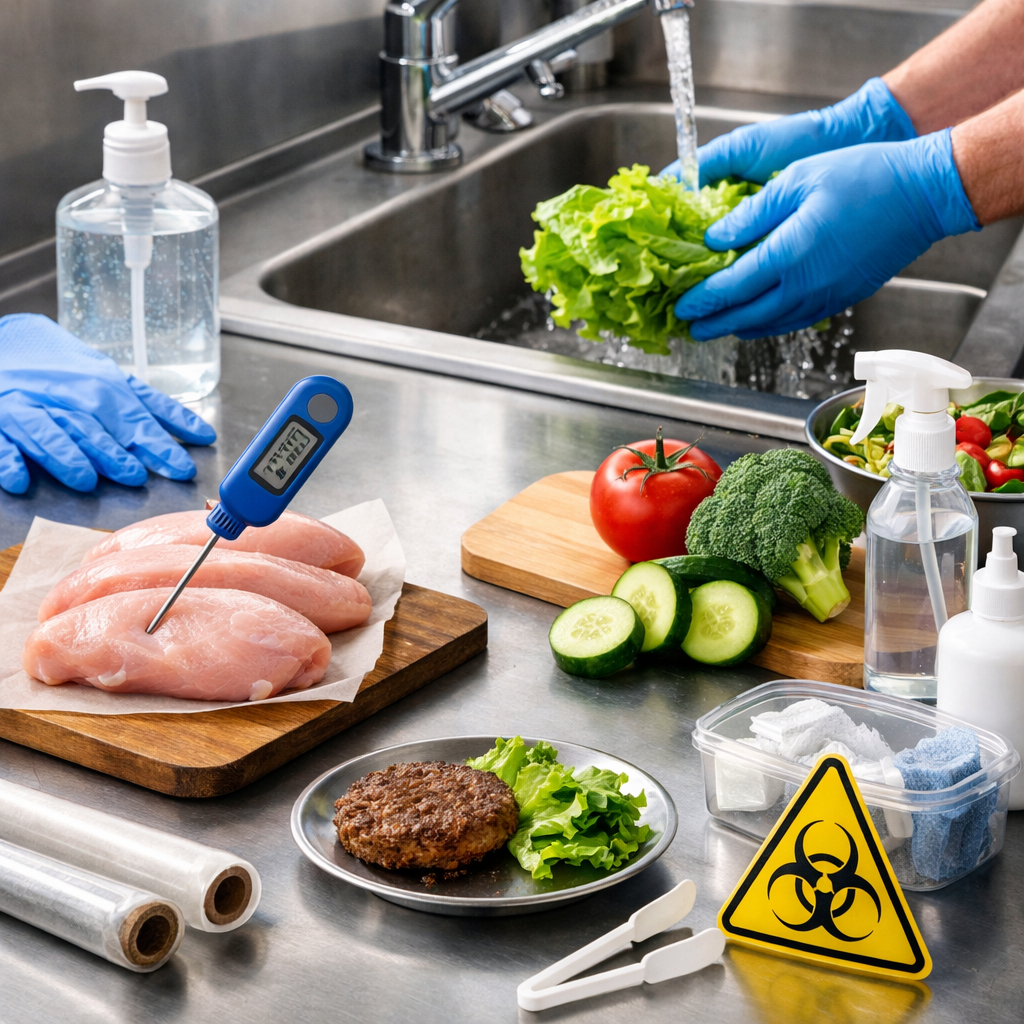
Poor hand hygiene, unclean surfaces, improper temperature control, damaged packaging, pest activity, and inadequate staff training are some of the most common causes.
Cross-contamination is especially serious in busy workplaces.
For example, using the same cutting board for raw chicken and salad ingredients without proper cleaning can transfer harmful bacteria directly into ready-to-eat food.
Similarly, storing allergens beside non-allergen ingredients without clear separation can expose sensitive consumers to severe reactions.
Key risks, consequences, and practical examples of preventing food contamination risks
Preventing food contamination risks is not just about food safety for the public.
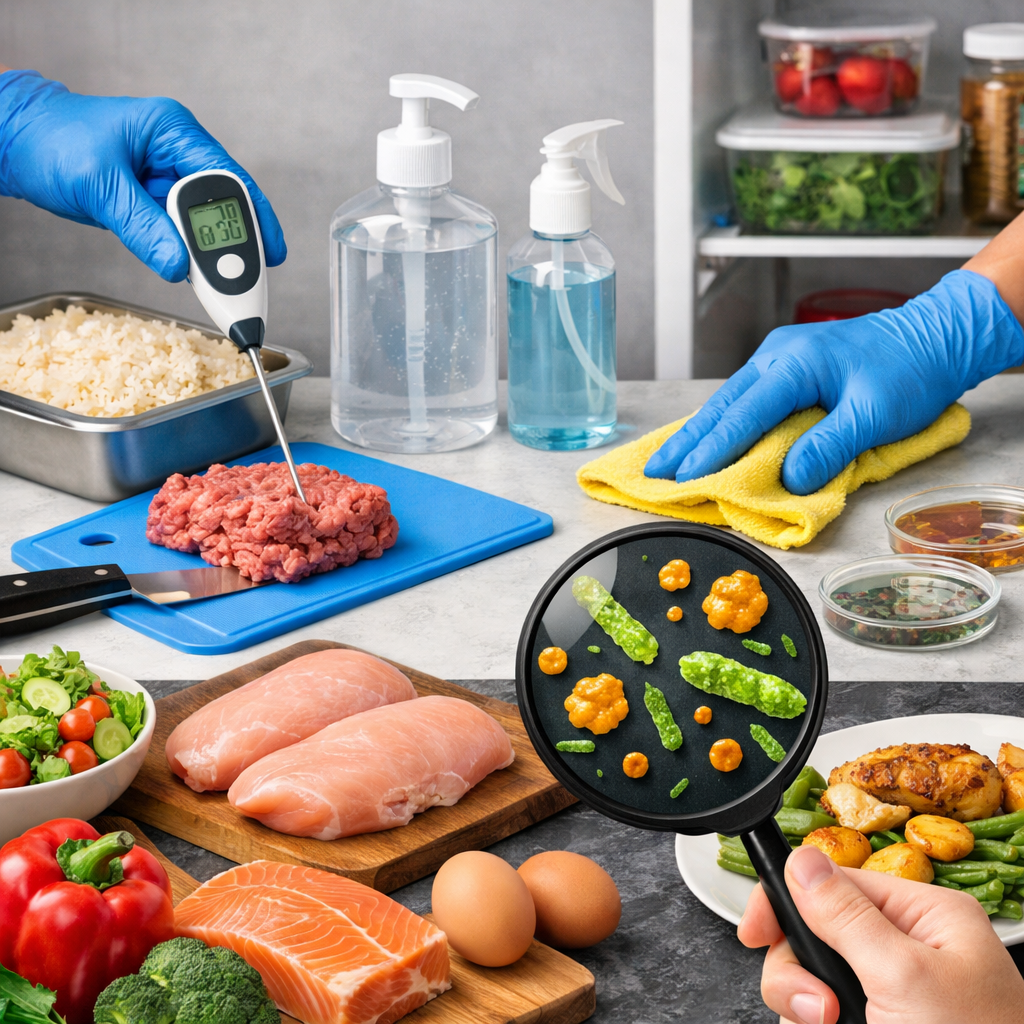
It is also about worker safety, incident prevention, and operational continuity.
Health and business consequences
The direct health effects can include vomiting, diarrhoea, fever, dehydration, allergic reactions, hospitalization, and in severe cases, death.
Workers may also be exposed to hazardous substances during cleaning and sanitizing if controls are poor.
That means food safety and occupational safety often overlap.
The business consequences can be equally serious.
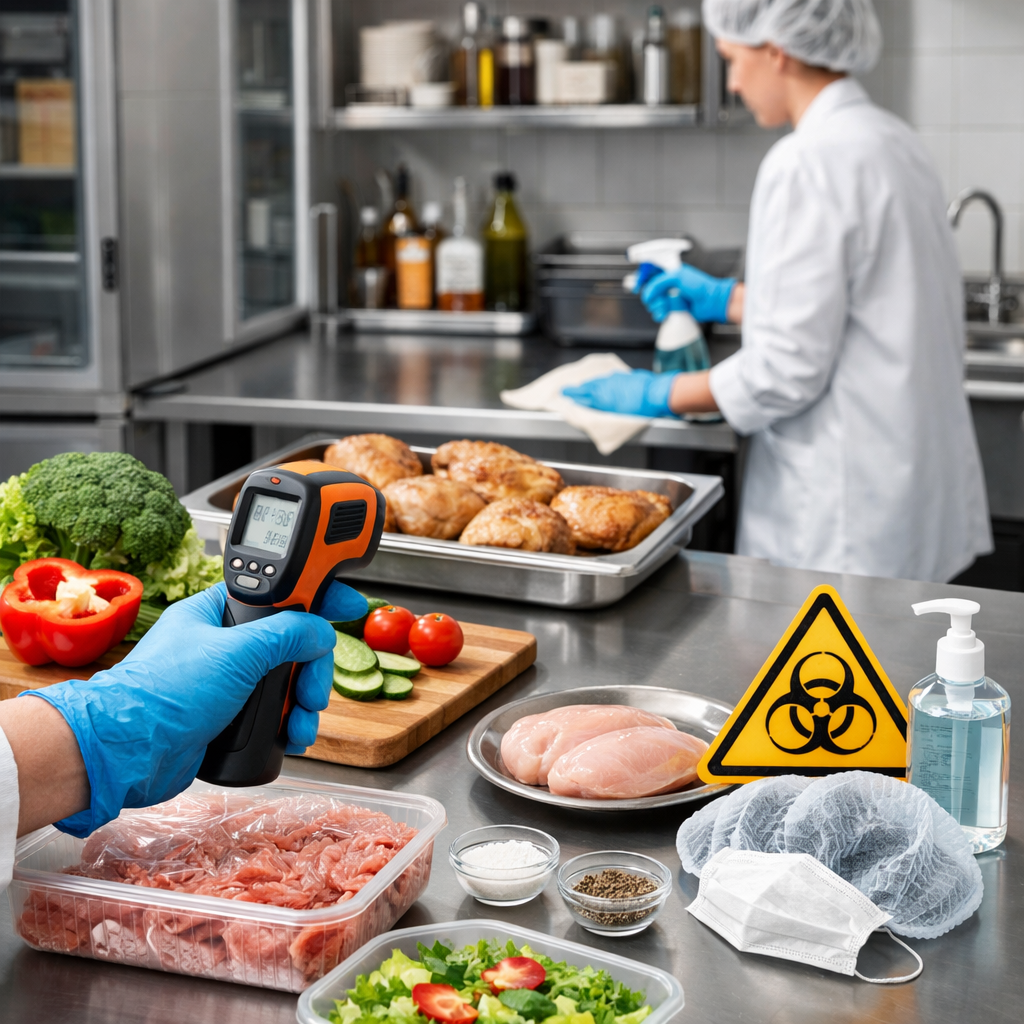
They may include product disposal, shutdowns, workers compensation issues, internal investigations, damaged customer trust, and penalties under food safety and WHS legislation.
Guidance from CCOHS and OSHA supports the need for hazard identification, worker training, sanitation, PPE, and safe systems of work in food-related environments.
Practical examples from real workplaces
In a restaurant kitchen, a food handler may touch raw meat, then a fridge handle, then prepared garnishes.
Without handwashing and surface sanitizing, contamination can spread quickly across multiple touchpoints.
In a food manufacturing site, condensation dripping from overhead equipment can contaminate open product lines.
If the source is not controlled, entire batches may be rejected.
In an aged care facility, reheated meals that do not reach safe temperatures can expose vulnerable residents to major health risks.
In a delivery operation, refrigerated foods transported above safe temperatures may become unsafe before arrival, even if they look normal.
These examples show why preventing food contamination risks depends on both visible hygiene and disciplined process control.
Prevention measures, PPE, and the Hierarchy of Controls
The most effective approach to preventing food contamination risks is to apply the Hierarchy of Controls.
This OHSE framework helps businesses choose stronger, more reliable control measures instead of relying only on individual behaviour.
Applying the Hierarchy of Controls
- Elimination: remove contamination sources where possible, such as excluding sick workers from food handling duties or removing damaged utensils from use.
- Substitution: replace hazardous cleaning agents with safer alternatives where suitable for the task and compliant with hygiene standards.
- Engineering controls: install handwashing stations, physical barriers, temperature monitoring systems, enclosed storage, ventilation, and pest-proofing measures.
- Administrative controls: develop hygiene procedures, cleaning schedules, allergen management plans, supplier checks, temperature logs, and training programs.
- PPE: use gloves, aprons, hairnets, beard covers, sleeve covers, masks where needed, and non-slip footwear as the final layer of protection.
PPE matters, but it should never be the only control.
For example, gloves can create a false sense of security if workers do not change them between tasks or wash hands properly before putting them on.
PPE and hygiene expectations
Suitable PPE must be task-specific, clean, well-maintained, and easy to replace.
Hair restraints reduce the risk of physical contamination, while aprons and coats help prevent contamination from clothing.
Disposable gloves may be useful during ready-to-eat food handling, but they must be changed frequently and used correctly.
Workers should also remove jewellery, cover cuts with visible waterproof dressings, and report symptoms of illness immediately.
Good hygiene practices remain essential.
That includes correct handwashing, safe waste disposal, cleaning and sanitizing food contact surfaces, separating raw and cooked foods, and maintaining strict time and temperature control.
| Hazard | Typical Source | Control Measure |
|---|---|---|
| Biological contamination | Raw meat, sick workers, poor temperature control | Handwashing, exclusion of ill staff, cooking and storage temperature checks |
| Chemical contamination | Cleaning agents, pest chemicals, mislabeled containers | Correct storage, labeling, training, and controlled chemical use |
| Physical contamination | Broken tools, packaging debris, jewellery | Equipment inspections, foreign matter controls, dress standards |
| Allergen contamination | Shared utensils, poor labeling, ingredient mix-ups | Segregation, dedicated tools, clear identification, staff awareness |
Compliance, training, and monitoring for preventing food contamination risks
Preventing food contamination risks requires more than a written procedure sitting in a folder.
Compliance depends on active supervision, documentation, refresher training, and regular review.
Legal and standard-based compliance
Food businesses must follow applicable food safety laws, workplace health and safety duties, and local public health requirements.
Depending on the workplace, this may include HACCP-based systems, sanitation programs, allergen controls, and traceability processes.
Useful guidance can also be found through food regulators and health authorities such as the U.S. food safety guidance portal.
For many organizations, compliance also connects with broader OHSE systems covering incident reporting, risk assessments, contractor management, and emergency response.
Businesses can strengthen performance by reviewing their safety training programs and updating their workplace risk assessment process to include food contamination hazards.
Training and verification
Training should be practical, role-specific, and repeated often enough to stay effective.
Workers need to know not only what to do, but why each step matters.
A new employee in a café, for example, should be trained on hand hygiene, allergen requests, cleaning chemicals, fridge temperatures, and when to report illness before they start unsupervised work.
Supervisors should verify that controls are working through inspections, audits, temperature records, cleaning sign-offs, and direct observation.
If non-conformances appear, they should be corrected quickly and used as learning opportunities.
Near misses matter too.
A cracked container lid found above open ingredients may not have caused contamination yet, but it still signals a failure that should be fixed before it becomes an incident.
Preventing food contamination risks is a continuous OHSE responsibility that depends on hazard awareness, practical controls, proper PPE, and consistent compliance.
When workplaces combine hygiene, training, supervision, and the Hierarchy of Controls, they reduce illness, protect workers and consumers, and strengthen day-to-day operations.
Whether the setting is a school canteen, hospital kitchen, food truck, warehouse, or processing plant, preventing food contamination risks should remain a visible part of every safety culture and every shift.
No comments yet