


Emergency Power Failure Response: A Practical OHSE Guide for Safer Workplaces


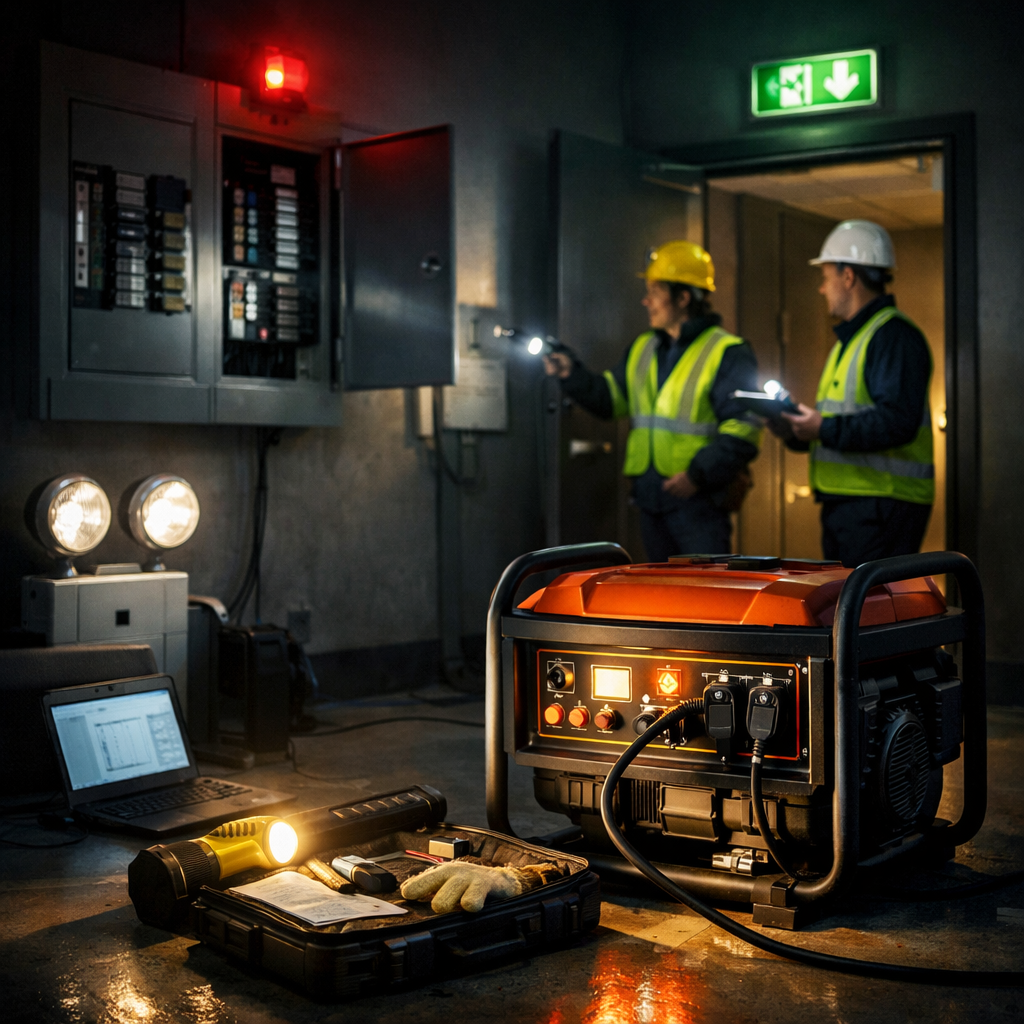
emergency power failure response is a critical part of occupational health, safety, and environmental planning in any workplace that depends on electricity for lighting, equipment, ventilation, communications, or security.
When the power goes out, the risks can escalate quickly. Employees may be exposed to slips, trips, equipment hazards, panic, heat stress, confined space dangers, or loss of emergency systems if the workplace is not prepared.
A strong emergency power failure response plan helps protect people first, then property, operations, and compliance obligations. It also supports a calm, organized reaction during an event that can otherwise become chaotic within minutes.
From offices and warehouses to construction sites, hospitals, and manufacturing plants, every workplace needs clear procedures. The right response includes hazard identification, training, PPE, backup systems, communication protocols, and legal compliance.
Why emergency power failure response matters in OHSE
Power failure is not just an inconvenience. In OHSE terms, it is a high-risk event that can trigger multiple secondary hazards at once.
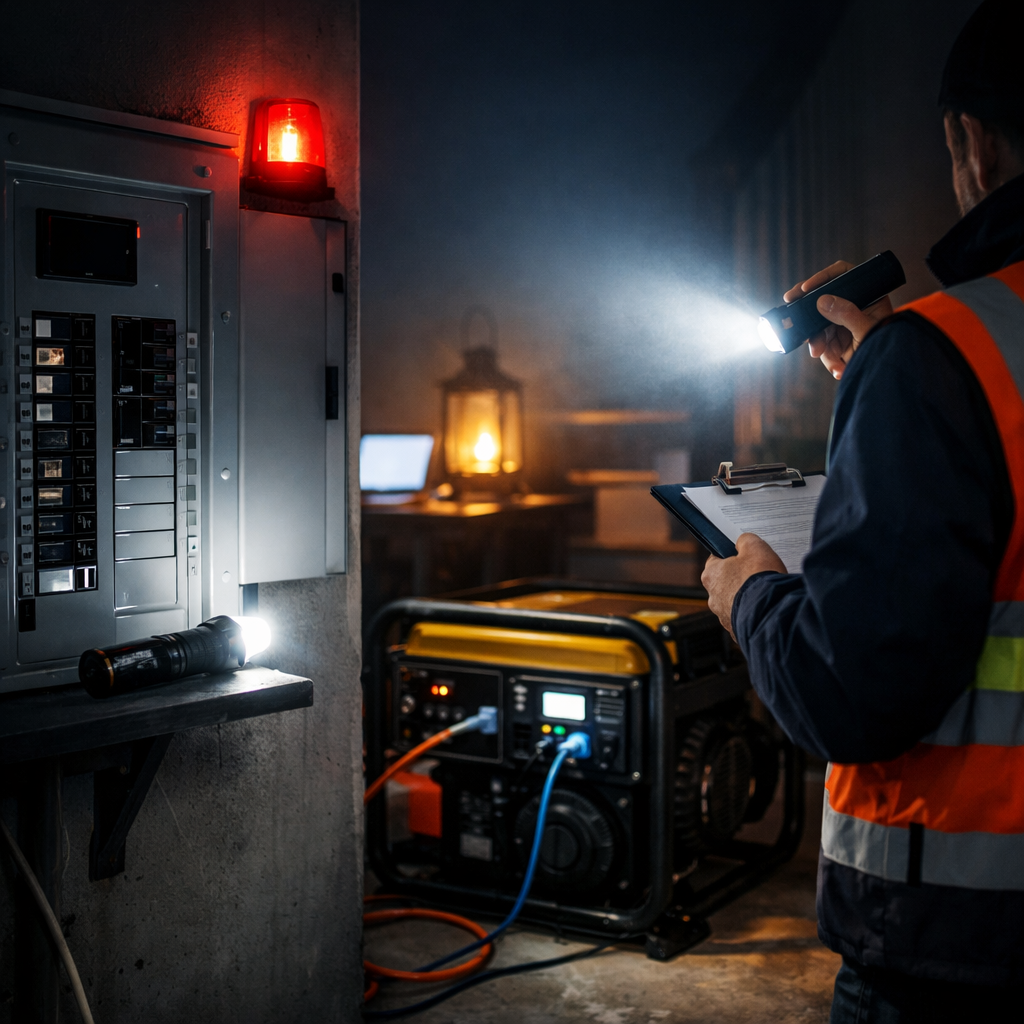
For example, a sudden blackout in a warehouse may shut down conveyor systems, disable dock controls, reduce visibility, and interrupt alarm systems. In a laboratory, it may affect refrigeration, fume extraction, and monitoring equipment. On a construction site, it can stop hoists, tools, pumps, and temporary lighting.
The consequences depend on the setting, but common risks include:
- Falls due to poor lighting or blocked exits
- Injury from machinery stopping or restarting unexpectedly
- Electrical hazards during restoration or generator connection
- Fire safety issues if suppression or alarm systems are affected
- Heat or cold stress when HVAC systems fail
- Exposure to hazardous substances if ventilation stops
- Communication breakdowns during evacuation or shutdown
- Security risks from disabled access control systems
These risks make emergency power failure response a core safety issue rather than only a maintenance concern. A workplace that plans for outages is far better positioned to reduce harm and recover quickly.
Guidance from organizations such as OSHA and CCOHS supports the need for emergency preparedness, hazard assessment, and worker training. Employers should also align outage procedures with local electrical safety rules, fire codes, and emergency planning requirements.
Emergency power failure response risks and practical workplace examples
Common risk scenarios
An effective emergency power failure response starts with understanding how a blackout affects actual tasks and areas. Risk assessments should focus on what fails, who is exposed, and what controls remain available.
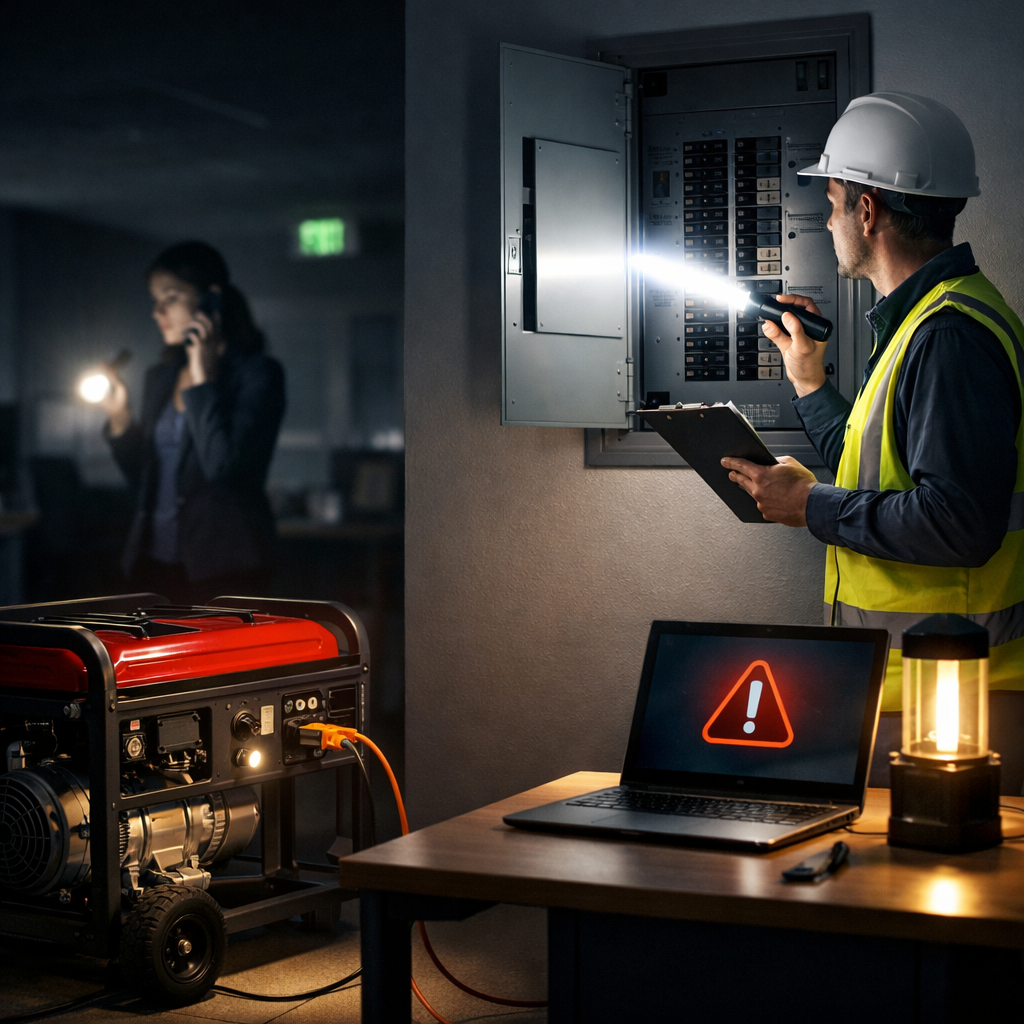
In a manufacturing plant, power loss during machine operation can leave moving parts coasting to a stop, create product jams, or trap material in unsafe positions. Workers may be tempted to intervene too early, increasing the chance of entanglement or crush injuries.
In an office building, emergency lighting may function only for a limited time. Stairwells can become congested, and employees unfamiliar with evacuation routes may panic or use elevators unsafely.
In healthcare or aged care settings, the emergency power failure response must protect patients, life-support systems, medication storage, and essential communications. Backup power must be tested, and manual contingency procedures must be clear.
In outdoor or remote work environments, outages may affect pumps, mobile plant charging, perimeter lighting, and radio systems. This can create serious delays in calling for help or securing hazardous areas.
Practical examples of response actions
A warehouse blackout may require supervisors to stop forklift movement immediately, isolate powered dock equipment, account for staff, and direct workers to safe assembly points until lighting and systems are verified.
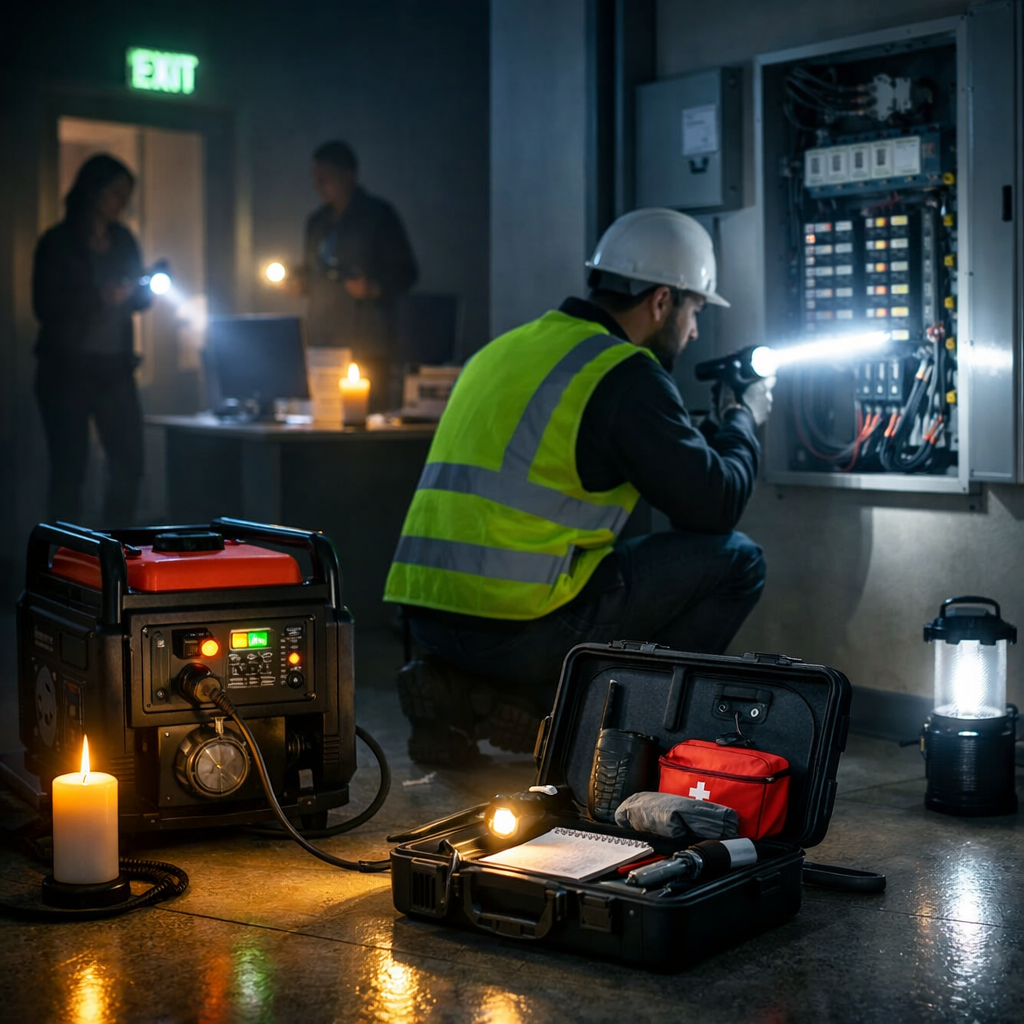
In a laboratory, personnel may need to secure chemicals, close sash windows where safe to do so, avoid opening temperature-controlled storage, and report any failed ventilation systems without delay.
At a construction site, the emergency power failure response may include suspending high-risk work, locking out temporary power boards, checking suspended loads, and preventing re-energization until a competent person approves it.
Many workplaces also benefit from simple internal resources such as a workplace emergency plan and a electrical safety checklist that employees can access quickly during an outage.
Prevention and control measures using the hierarchy of controls
The best emergency power failure response begins before an incident happens. Prevention and mitigation should follow the hierarchy of controls, with stronger controls prioritized over weaker ones.
Applying the hierarchy of controls
| Control level | How it applies to power failure risk | Example |
|---|---|---|
| Elimination | Remove dependency on vulnerable systems where possible | Redesign processes so critical safety functions are not fully power-dependent |
| Substitution | Use safer alternatives for critical operations | Replace electrically dependent access systems with fail-safe manual release options |
| Engineering controls | Install physical systems that reduce outage impacts | Emergency lighting, UPS units, backup generators, surge protection, automatic shutdown systems |
| Administrative controls | Use procedures, training, signage, and drills | Written shutdown steps, communication trees, accountability procedures, testing schedules |
| PPE | Protect workers during response and restoration | Headlamps, high-visibility clothing, arc-rated PPE for electrical workers, safety boots, gloves |
Engineering controls are especially important in emergency power failure response. Battery-backed lighting, generator capacity, automatic transfer switches, and fail-safe shutdown systems can dramatically reduce the severity of an outage.
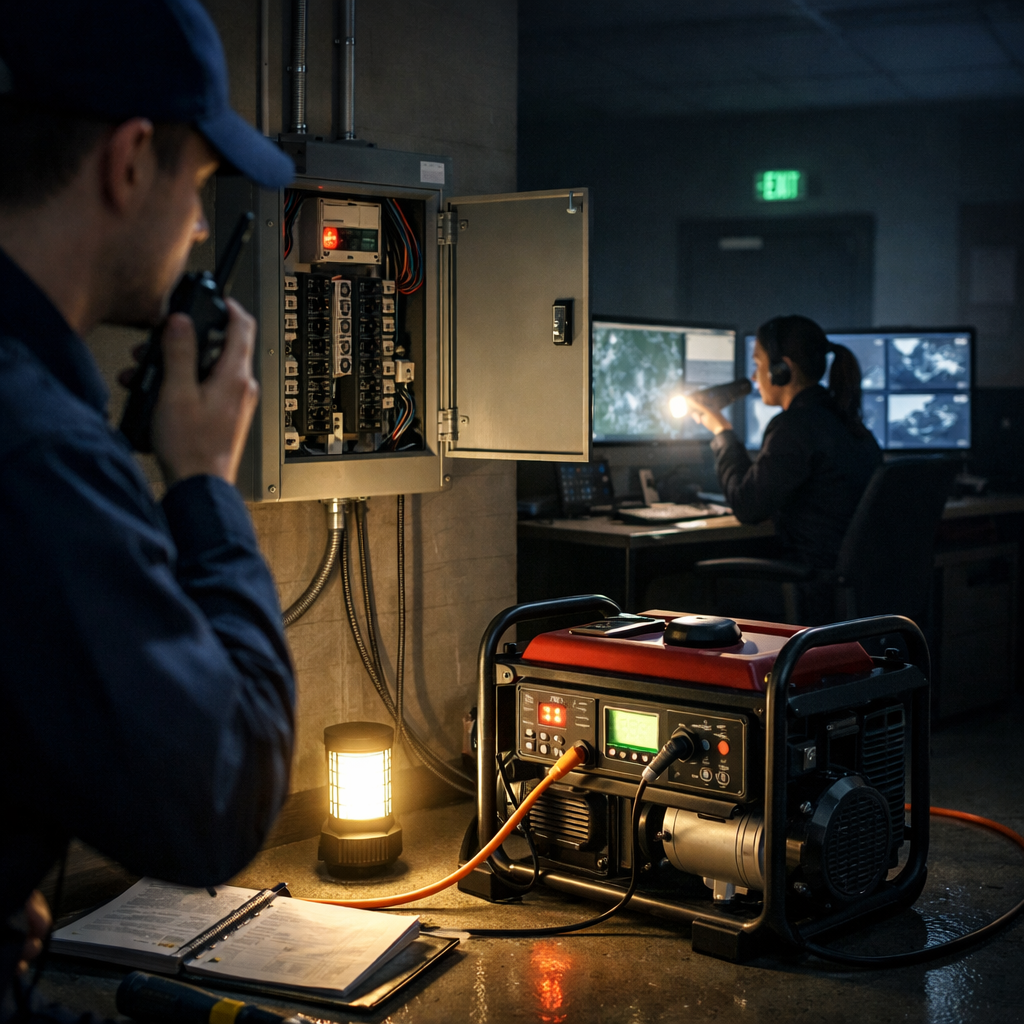
Administrative controls are equally vital. Every site should have a clear reporting chain, emergency contact list, area wardens where needed, and documented restart procedures. Workers must know not only how to stop work, but also how to wait safely for authorization before restarting equipment.
Preventive maintenance also matters. Backup generators, batteries, emergency lighting, switchgear, and alarm systems should be inspected and tested regularly. Fuel quality, load capacity, and run-time limits should be verified as part of planned maintenance.
PPE, compliance, and how to build an effective emergency power failure response plan
PPE for outage response
PPE does not replace better controls, but it has an important role during emergency power failure response, especially for supervisors, maintenance teams, electricians, emergency wardens, and shutdown crews.
Depending on the workplace, suitable PPE may include:
- Safety helmets in low-visibility industrial areas
- High-visibility clothing for movement control and evacuation support
- Safety footwear for uneven surfaces and debris hazards
- Hand protection for handling equipment or barriers
- Portable intrinsically safe lighting in hazardous atmospheres
- Arc-rated clothing and electrical PPE for qualified electrical workers
- Hearing protection if generators or emergency plant are operating nearby
PPE selection should be task-specific and based on the risk assessment. Workers who are not electrically qualified should never attempt electrical repairs or restoration activities.
Compliance and training requirements
Compliance expectations vary by jurisdiction, but employers generally have a duty to identify hazards, implement controls, provide training, maintain emergency procedures, and protect workers during abnormal events such as blackouts.
That means an emergency power failure response plan should be integrated into broader OHSE systems, including evacuation, fire safety, lockout/tagout, incident reporting, contractor management, and business continuity.
Good practice includes reviewing guidance from NFPA where relevant, along with local regulations and industry standards. Workplaces should document drills, inspections, and corrective actions to demonstrate due diligence.
What a strong response plan should include
A practical emergency power failure response plan should define exactly what happens in the first minute, first ten minutes, and recovery phase.
- How to report the outage and who takes control
- Which tasks must stop immediately
- How workers will evacuate or shelter safely
- How critical equipment will be isolated or secured
- How to account for personnel, visitors, and contractors
- When backup power should activate and who verifies it
- How communications will continue if phones or networks fail
- What conditions must be met before restarting operations
Training should include practical drills, not just written instructions. Staff should practice low-light evacuation, manual shutdown steps, emergency communication methods, and post-outage inspections.
After any real event, the workplace should hold a short review. What worked, what failed, and what confused people should be captured and turned into improvements.
In conclusion, emergency power failure response is an essential OHSE process that protects workers from immediate danger and helps organizations recover safely. By assessing risks, applying the hierarchy of controls, using suitable PPE, meeting compliance duties, and practicing realistic response actions, employers can turn a power outage from a crisis into a controlled event. A well-tested emergency power failure response plan is one of the clearest signs of a safe, prepared, and responsible workplace.