
Fuel Handling Safety for Drivers: Essential OHSE Practices to Reduce Risk

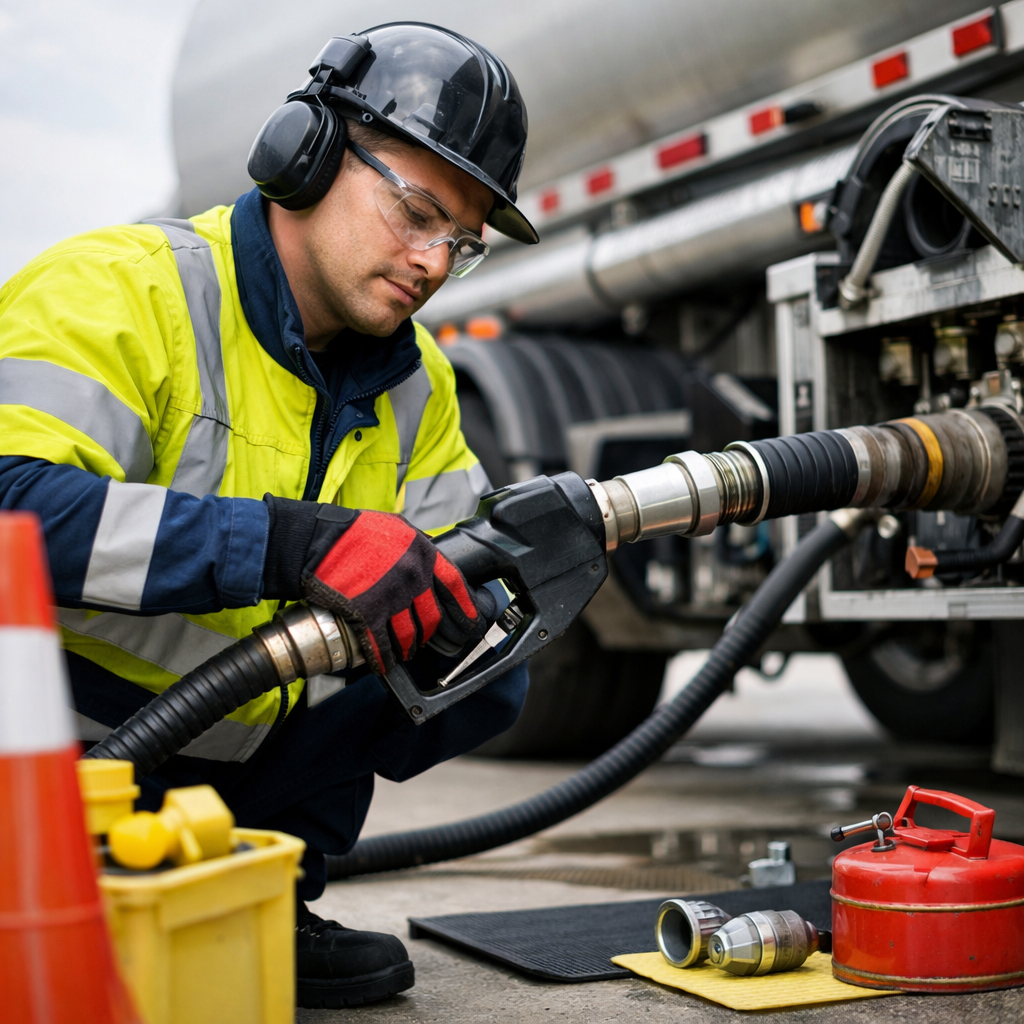
fuel handling safety for drivers is a critical part of occupational health, safety, and environmental performance in transport, logistics, construction, mining, agriculture, and service fleets.
Whether a driver is refueling a delivery van, transferring diesel into equipment, or handling portable fuel containers on a remote job site, the hazards are real and potentially severe.
Fuel is highly flammable, its vapors can ignite quickly, and poor handling can lead to burns, explosions, environmental contamination, and long-term health effects from repeated exposure.
For employers and workers alike, safe fuel handling is not just about preventing accidents at the pump. It also involves training, planning, equipment maintenance, personal protective equipment, and compliance with workplace safety requirements.
Strong procedures help protect people, vehicles, property, and the environment while keeping operations efficient and legally compliant.
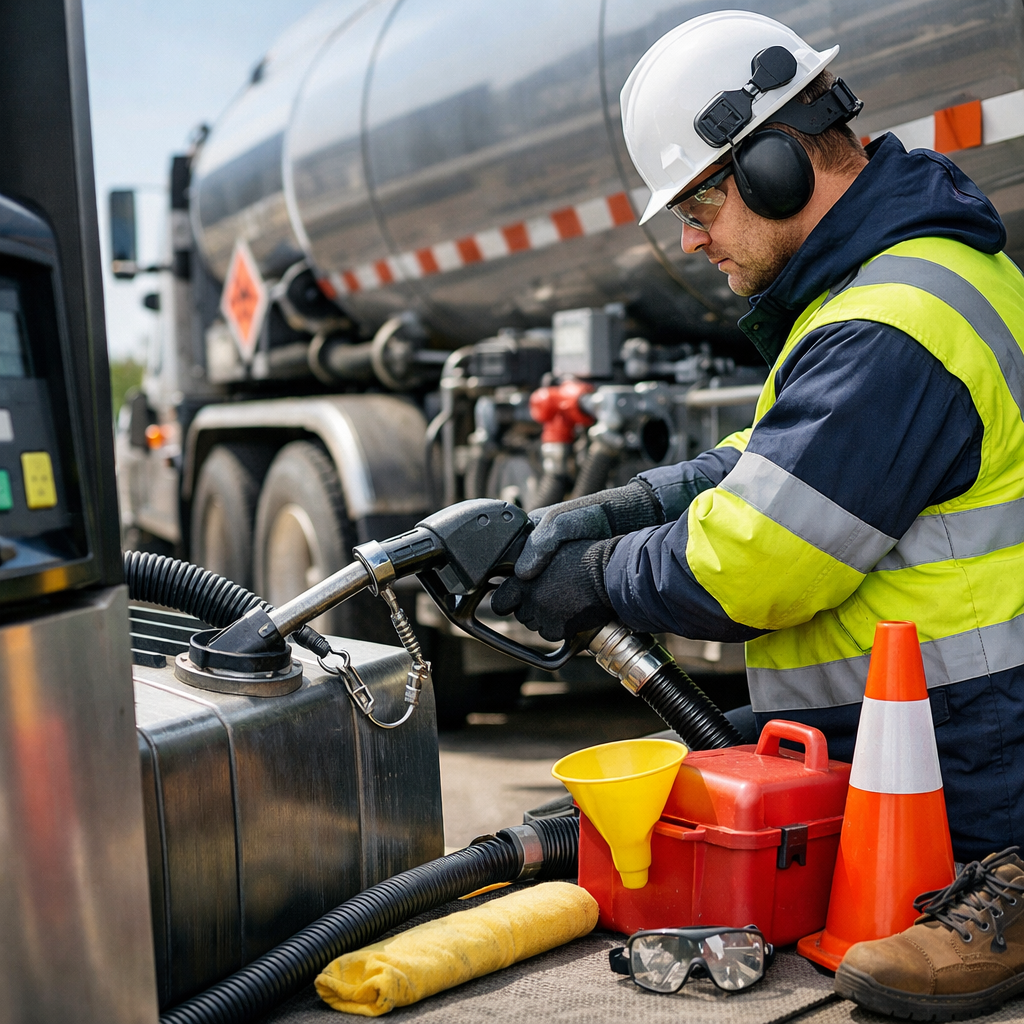
This article explains the main risks, practical control measures, PPE expectations, and compliance steps that support effective fuel handling safety for drivers in real workplaces.
Why Fuel Handling Safety for Drivers Matters on the Job
Drivers often work alone, under time pressure, and across changing environments. That combination increases the chance of shortcuts, distraction, and exposure to uncontrolled hazards.
A routine refueling task can become dangerous if fuel is spilled on clothing, vapors collect in a confined area, or ignition sources are nearby.
Common fuels such as gasoline and diesel present different risks. Gasoline is more volatile and produces flammable vapors that can travel and ignite at a distance.
Diesel is less volatile but still combustible, can create slip hazards, and may cause skin irritation after repeated contact.
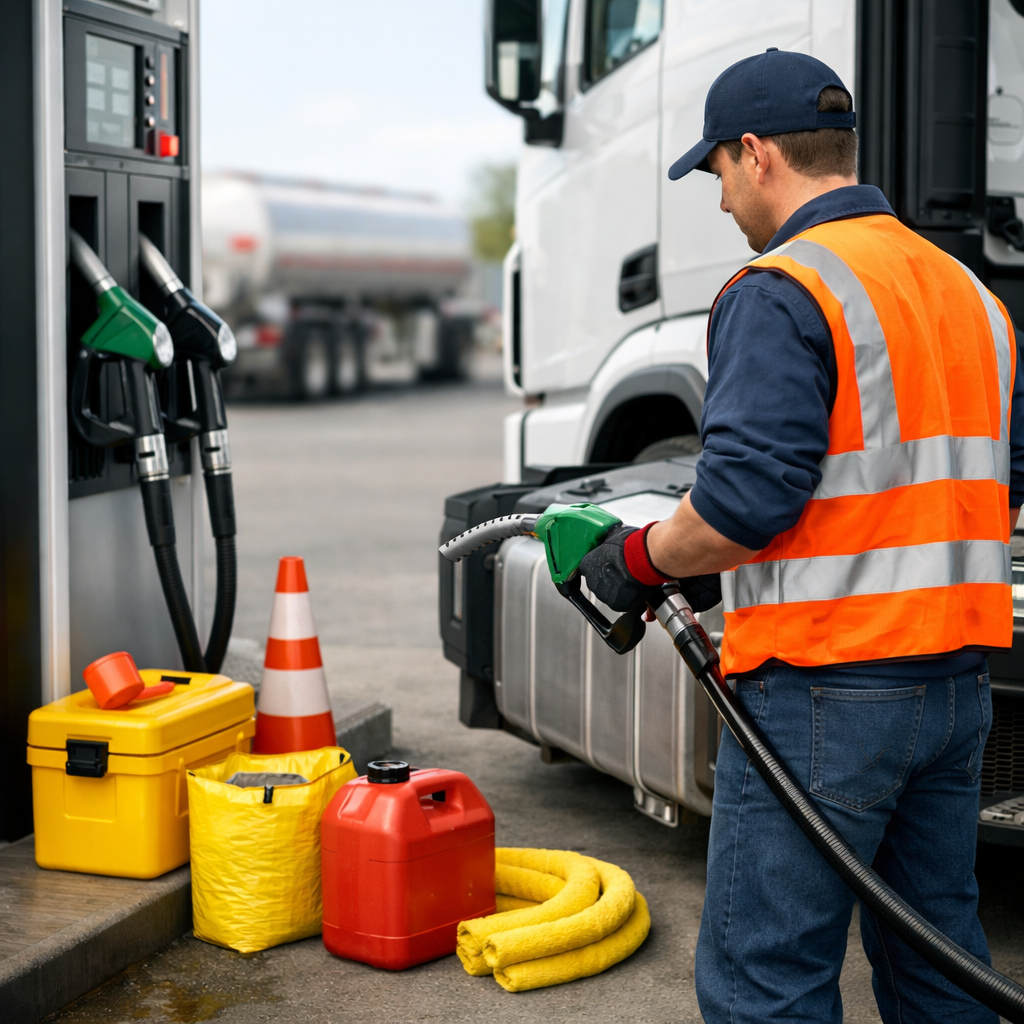
In fleet operations, fuel handling safety for drivers usually applies to several routine tasks:
- Refueling vehicles at public or private fueling stations
- Using mobile fuel tanks or bowsers on work sites
- Filling generators, pumps, forklifts, or small plant equipment
- Transporting approved fuel containers in service vehicles
- Cleaning up minor spills and reporting fuel-related incidents
Real workplace incidents often involve simple failures such as smoking near fuel, leaving engines running during refueling, overfilling tanks, using damaged containers, or failing to ground equipment during transfer.
These are preventable events, which is why fuel handling safety for drivers should be addressed in driver induction, toolbox talks, and safe work procedures.
Key Risks Drivers Need to Recognize
The first step in prevention is hazard awareness. Drivers should understand both immediate and longer-term dangers associated with fuel.
- Fire and explosion: Fuel vapors can ignite from static electricity, hot surfaces, sparks, cigarettes, or electrical equipment.
- Health exposure: Inhalation of vapors may cause dizziness, headaches, nausea, and irritation. Long-term or repeated exposure may create more serious health concerns.
- Skin and eye contact: Splashes can irritate the skin and eyes, while fuel-soaked gloves or clothing can prolong exposure.
- Slips and falls: Small spills on concrete, trays, or vehicle steps can quickly create slip hazards.
- Environmental harm: Fuel entering drains, soil, or waterways can trigger serious environmental consequences and cleanup costs.
- Manual handling injuries: Carrying heavy jerry cans or awkward portable tanks can strain the back, shoulders, and wrists.
Fuel Handling Safety for Drivers: Prevention Through the Hierarchy of Controls
In OHSE practice, the best approach is to control risk using the Hierarchy of Controls. This means focusing on the most effective control measures first, rather than relying only on PPE.
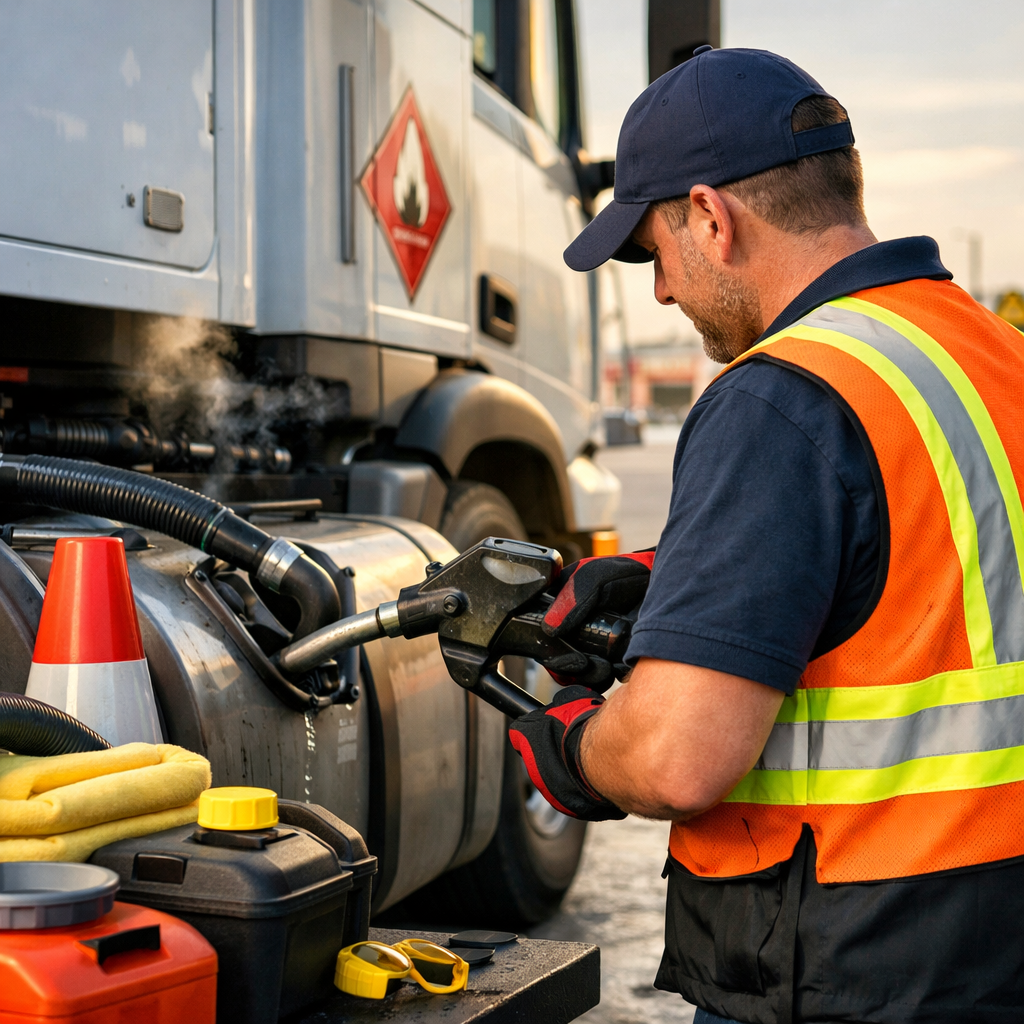
For fuel handling safety for drivers, this framework is practical and easy to apply.
Elimination and Substitution
Where possible, remove the need for manual fuel handling altogether. On some sites, fixed fueling systems or contractor-managed refueling services can eliminate the need for drivers to transfer fuel by hand.
In some applications, switching to battery-powered equipment can also reduce fuel handling exposure.
Engineering Controls
Engineering controls physically reduce the hazard. Examples include automatic shut-off nozzles, bunded storage areas, spill containment pallets, flame-arresting containers, ventilation in enclosed fueling areas, and bonding or grounding systems to manage static discharge.
Vehicles used for carrying fuel should have secure storage, separation from ignition sources, and suitable ventilation where required.
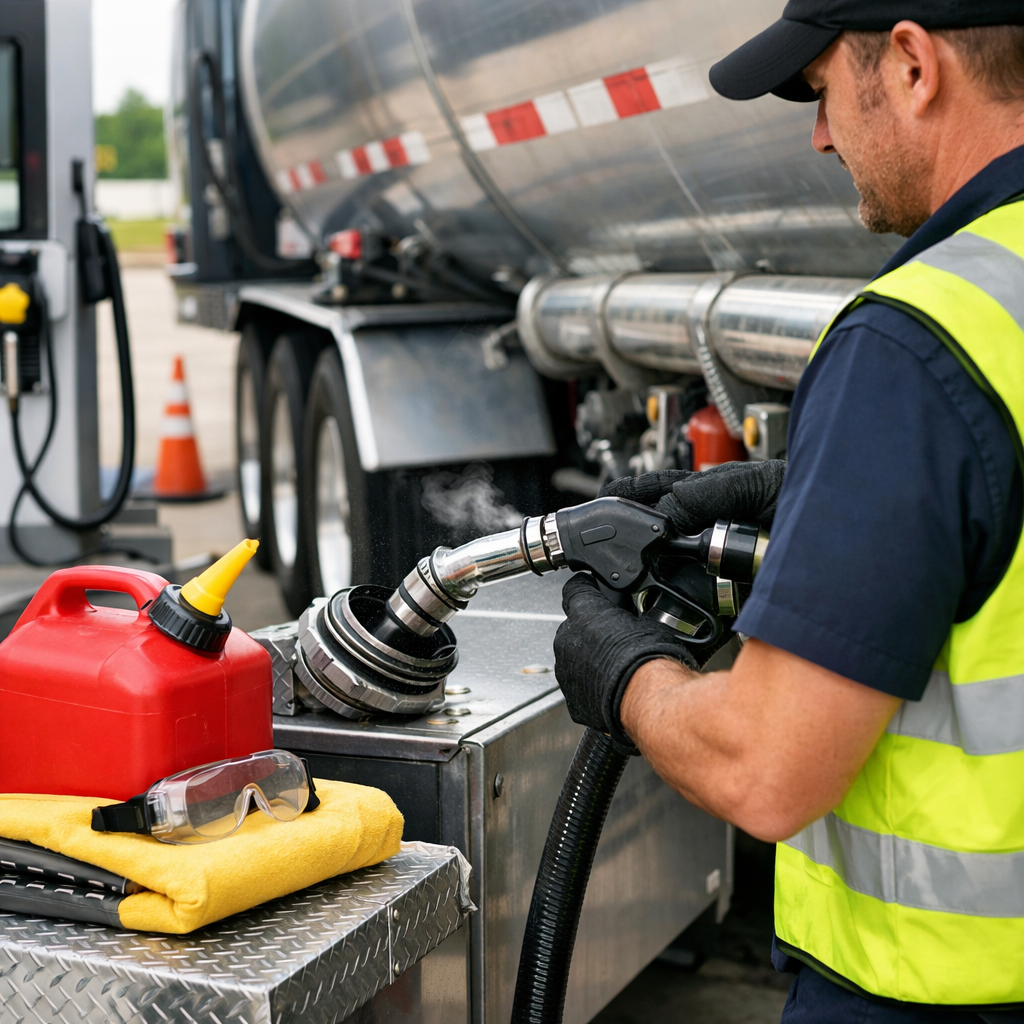
Administrative Controls
Administrative controls are essential for day-to-day fuel handling safety for drivers. These include written procedures, training, supervision, inspections, maintenance schedules, and incident reporting.
Employers should establish clear rules such as:
- Turn off the engine before refueling
- Do not smoke or use phones near fueling points where prohibited
- Never overfill tanks or containers
- Use only approved, labeled fuel containers
- Clean spills immediately using the correct spill kit materials
- Report damaged hoses, nozzles, caps, and containers without delay
- Store fuel away from heat, sparks, and incompatible substances
Useful guidance is available from CCOHS and OSHA, both of which provide practical workplace health and safety resources relevant to flammable liquids and worker exposure.
PPE as the Last Line of Defense
PPE does not replace safe systems of work, but it remains important when exposure cannot be fully controlled.
Drivers may need PPE based on the task, fuel type, and site conditions.
PPE and Safe Work Practices for Everyday Fuel Handling
Appropriate PPE for fuel handling safety for drivers should be selected through a risk assessment and matched to manufacturer safety data sheet recommendations.
At a minimum, many tasks call for protective gloves resistant to petroleum products, safety glasses or goggles, and sturdy footwear with slip-resistant soles.
In higher-risk environments, flame-resistant clothing may also be required.
Typical PPE for Fuel Handling Tasks
| Task | Main Hazard | Recommended PPE |
|---|---|---|
| Refueling at a pump | Splash, vapor, slip | Gloves, safety glasses, slip-resistant footwear |
| Transferring fuel from a portable container | Spill, splash, manual strain | Gloves, eye protection, suitable workwear |
| Cleaning a minor fuel spill | Skin contact, vapor exposure | Gloves, eye protection, protective footwear |
| Site fueling in high-risk areas | Ignition, contamination | Flame-resistant clothing where required, gloves, eye protection |
Safe work practices are just as important as PPE. Drivers should inspect fueling equipment before use, keep the nozzle in contact with the tank opening where appropriate, avoid kneeling in contaminated areas, and wash hands after handling fuel.
Fuel-soaked clothing should be removed as soon as possible and replaced before continuing work.
Drivers should also know where spill kits, eyewash facilities, extinguishers, and emergency contacts are located. Internal resources such as safety training and incident reporting procedures can reinforce these expectations.
Compliance, Training, and Practical Examples of Fuel Handling Safety for Drivers
Compliance is a major part of fuel handling safety for drivers. Employers must identify applicable legal duties under occupational health and safety laws, dangerous goods requirements where relevant, environmental regulations, and site-specific rules.
Workers also have responsibilities to follow procedures, use PPE correctly, and report hazards and incidents.
Labels, safety data sheets, and manufacturer instructions should always be available and understood. Storage and transfer methods must align with local regulatory requirements and recognized good practice.
Additional technical guidance can also be found through the NFPA for fire-related standards and best practices.
Training Topics That Should Be Covered
- Properties and hazards of gasoline, diesel, and other fuels in use
- Safe refueling and transfer procedures
- Use, inspection, and storage of approved fuel containers
- Spill response and environmental protection measures
- Emergency actions for fire, exposure, or major leakage
- PPE selection, use, limitations, and replacement
- Site traffic management and safe positioning during fueling
Practical Workplace Examples
Example 1: A delivery driver stops at a depot fuel bay at the end of a shift. Instead of topping off quickly with the engine running, the driver follows procedure, turns the vehicle off, checks for leaks, places absorbent near a visibly worn connection point, and reports the defect after fueling. This prevents both ignition risk and a larger equipment failure.
Example 2: A maintenance driver transports fuel for a remote generator. The fuel is carried in an approved labeled container secured upright in a ventilated compartment. The driver uses gloves and eye protection during transfer, places the container on stable ground, uses a funnel designed for the task, and cleans a small drip immediately with spill kit absorbent.
Example 3: A construction site introduces a rule that only trained operators can perform mobile refueling. Combined with better containers, spill trays, and refresher training, the site reduces small fuel spills and near misses over the following quarter.
These examples show that fuel handling safety for drivers improves when organizations combine equipment, training, supervision, and simple habits that workers can apply consistently.
In conclusion, fuel handling safety for drivers should be treated as a core OHSE priority rather than a routine low-risk task. The hazards include fire, explosion, exposure, slips, manual handling strain, and environmental damage, but these risks can be controlled through the Hierarchy of Controls, proper PPE, sound procedures, and legal compliance. When drivers are trained, equipped, and supported to follow safe fueling practices every time, workplaces become safer, cleaner, and more efficient. Strong fuel handling safety for drivers protects not only the individual worker, but also the wider team, the public, and the environment.
No comments yet