
Lockout Procedures for Robotics: Essential OHSE Steps for Safer Automated Workplaces

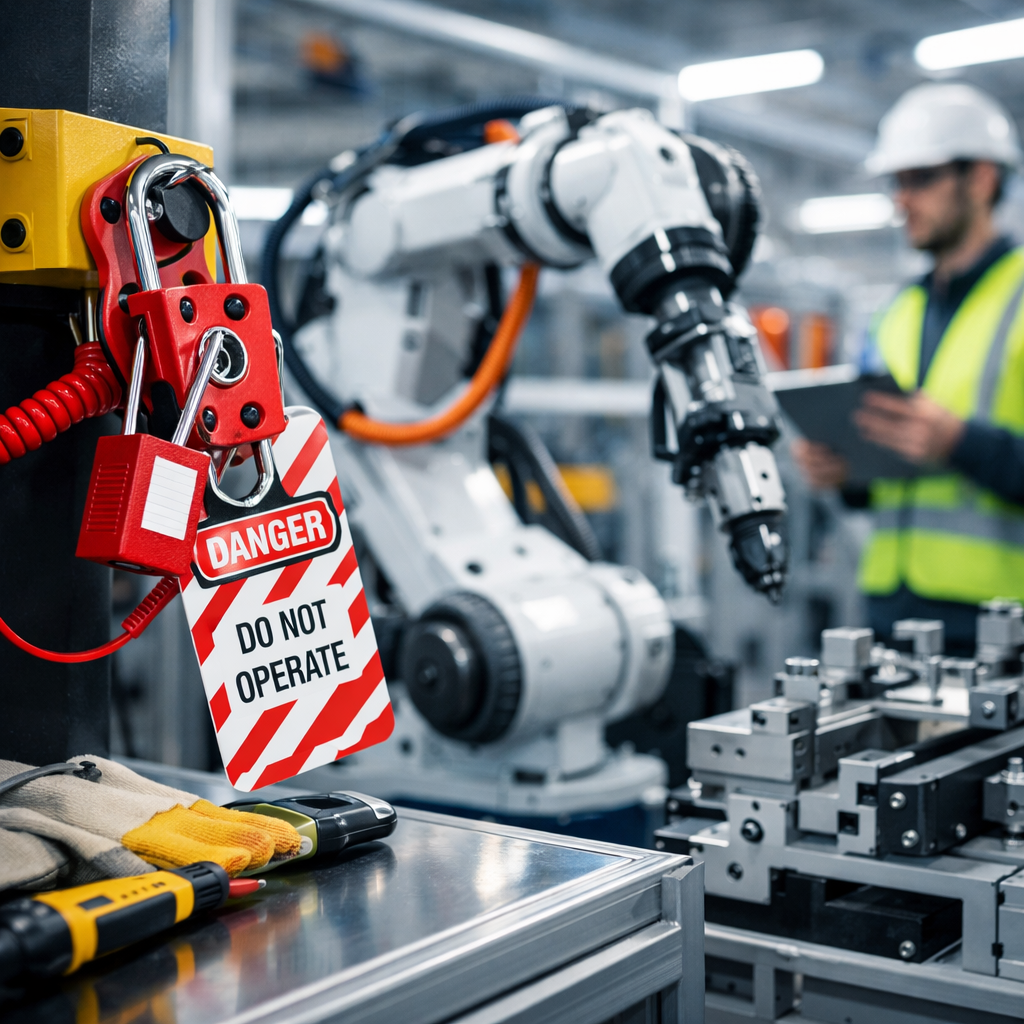
lockout procedures for robotics are a critical part of occupational health, safety, and environmental management in modern automated facilities.
As robots take on more manufacturing, packaging, welding, and material-handling tasks, employers must control the hazardous energy that can cause serious injury during servicing, maintenance, cleaning, programming, and troubleshooting.
Unlike many conventional machines, robotic systems often involve multiple energy sources, complex motion paths, stored energy, and integrated equipment such as conveyors, sensors, end effectors, guarding, and control panels.
That complexity means a simple power-off step is rarely enough.
Effective lockout procedures protect maintenance staff, operators, contractors, and anyone entering the robot’s working envelope.
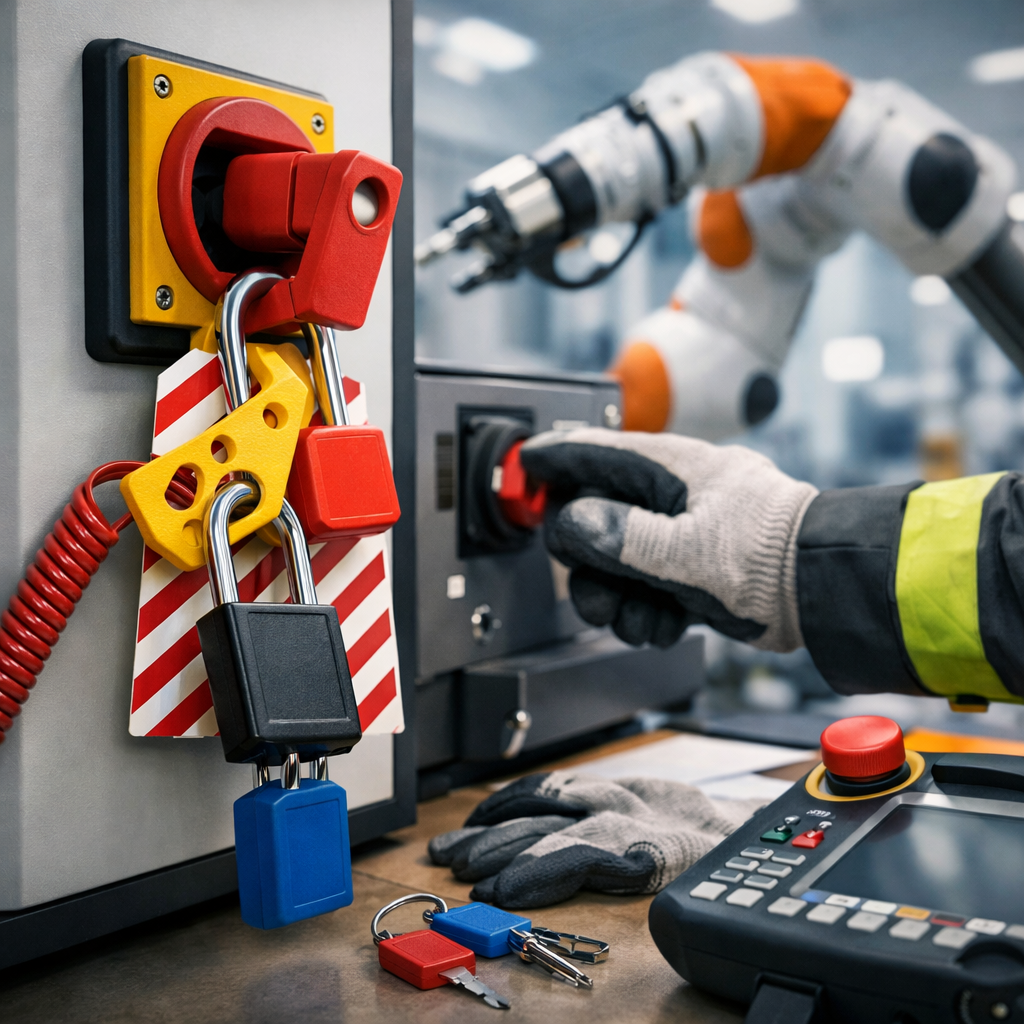
They also support compliance with recognized safety guidance from OSHA and Canadian workplace resources such as CCOHS.
When developed properly and followed consistently, these procedures reduce injuries, minimize downtime, and create a more reliable safety culture across the workplace.
Why Lockout Procedures for Robotics Matter in OHSE Programs
Robotics introduce hazards that are often faster, less predictable, and more forceful than manual equipment.
A robotic arm can start unexpectedly after a control signal, automatic cycle restart, software command, sensor trigger, or release of stored pressure.
In many systems, hazardous energy is not limited to electricity.
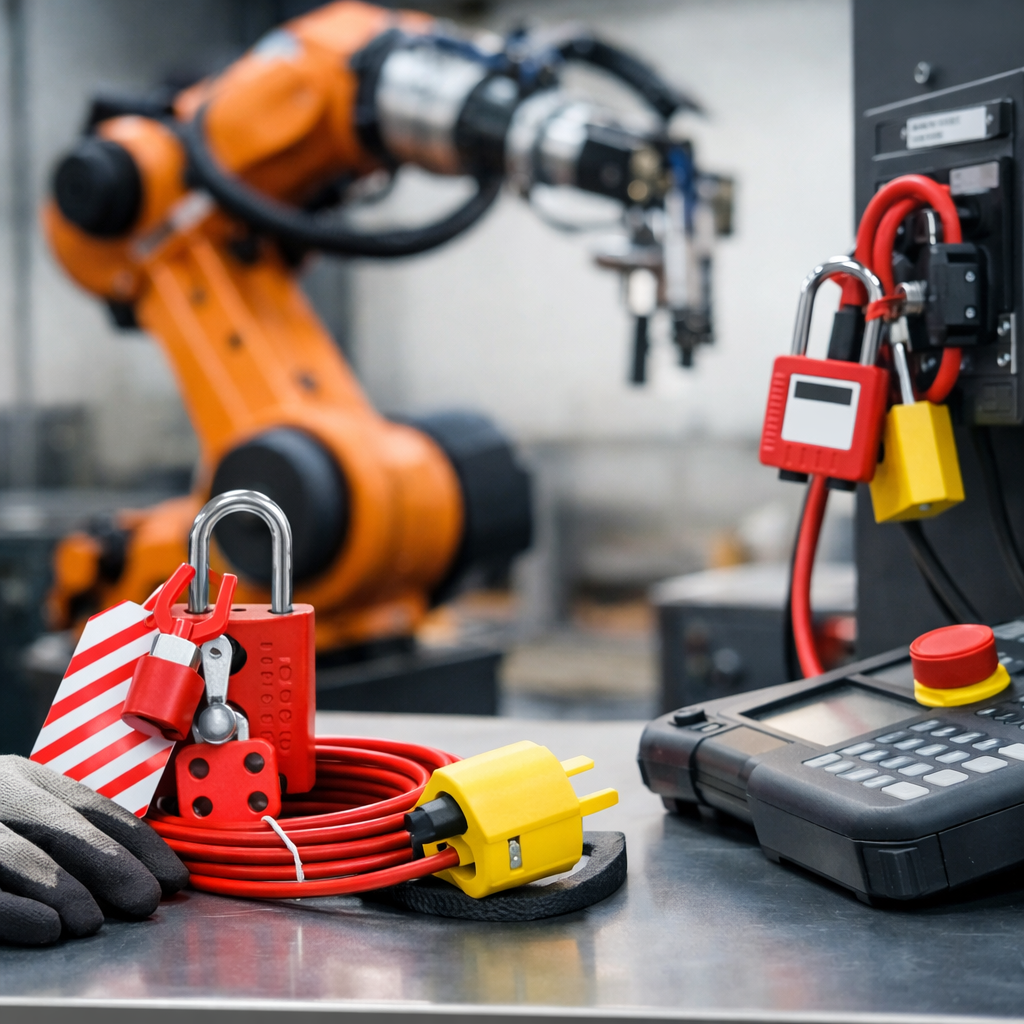
It may also include pneumatic pressure, hydraulic pressure, gravity, spring tension, thermal energy, and residual motion inside servo-driven components.
The main OHSE concern is unexpected energization or movement while a worker is exposed.
If an employee enters a cell to clear a jam, replace a tool, inspect a gripper, or adjust a sensor without proper isolation, the result can be crushing, pinching, impact, burns, or amputation.
Lockout procedures for robotics are designed to prevent those events by ensuring every hazardous energy source is identified, isolated, locked, and verified before work begins.
Common risks in robotic work cells
- Unexpected startup during maintenance or inspection
- Stored pneumatic or hydraulic energy releasing suddenly
- Robot arm drift or movement from residual energy
- Conveyor or feeder activation linked to the robotic system
- Electrical shock from control panels or power supplies
- Contact with hot tools, weld heads, or cutting devices
- Falling loads or gravity-driven movement of components
- Software or remote restart by another worker or control room
These risks become more serious when employers rely only on emergency stops.
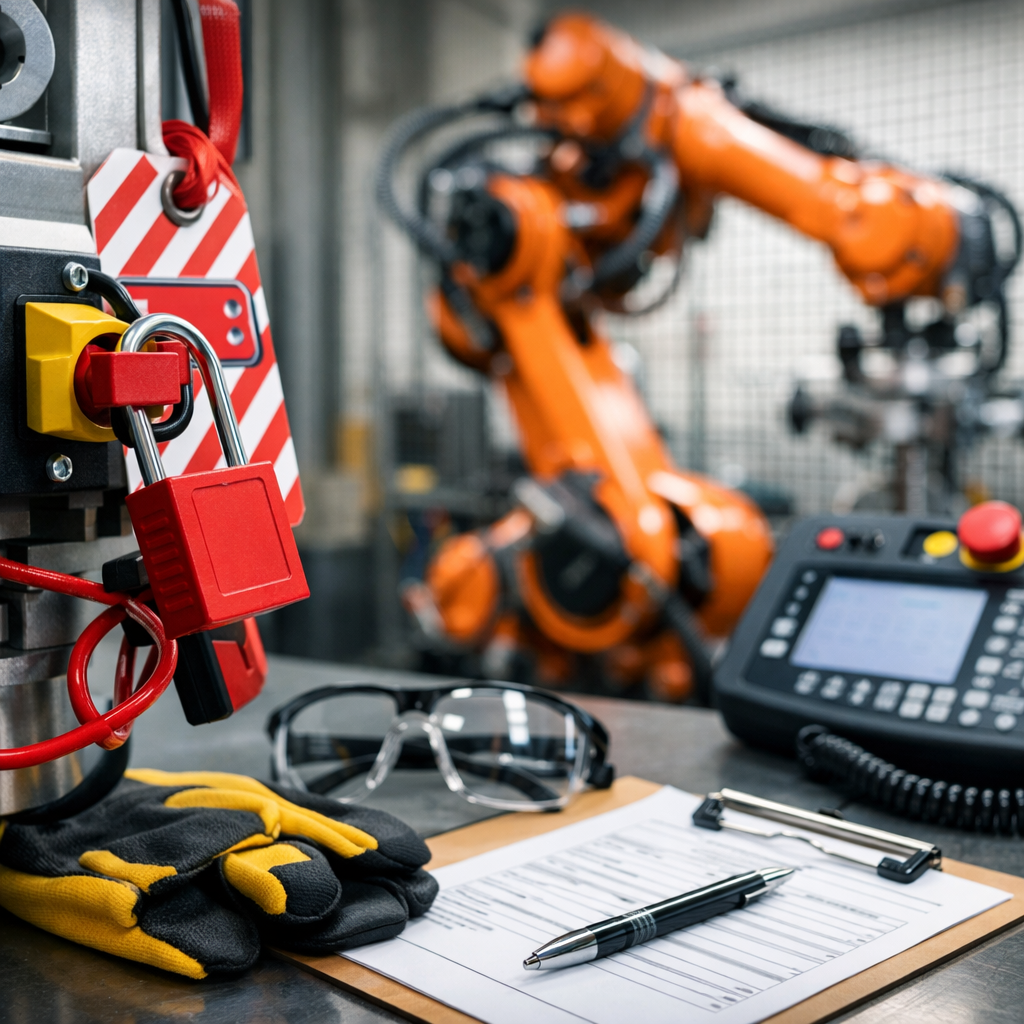
An emergency stop is important, but it is not a substitute for isolation and lockout.
E-stops stop motion, yet they may not remove all stored or incoming energy.
That distinction is central to effective lockout procedures for robotics.
Key Steps in Lockout Procedures for Robotics
A strong procedure should be written, task-specific, and easy for workers to follow.
Generic instructions are often inadequate because each robotic cell may have different hazards, interlocks, energy points, and reset steps.
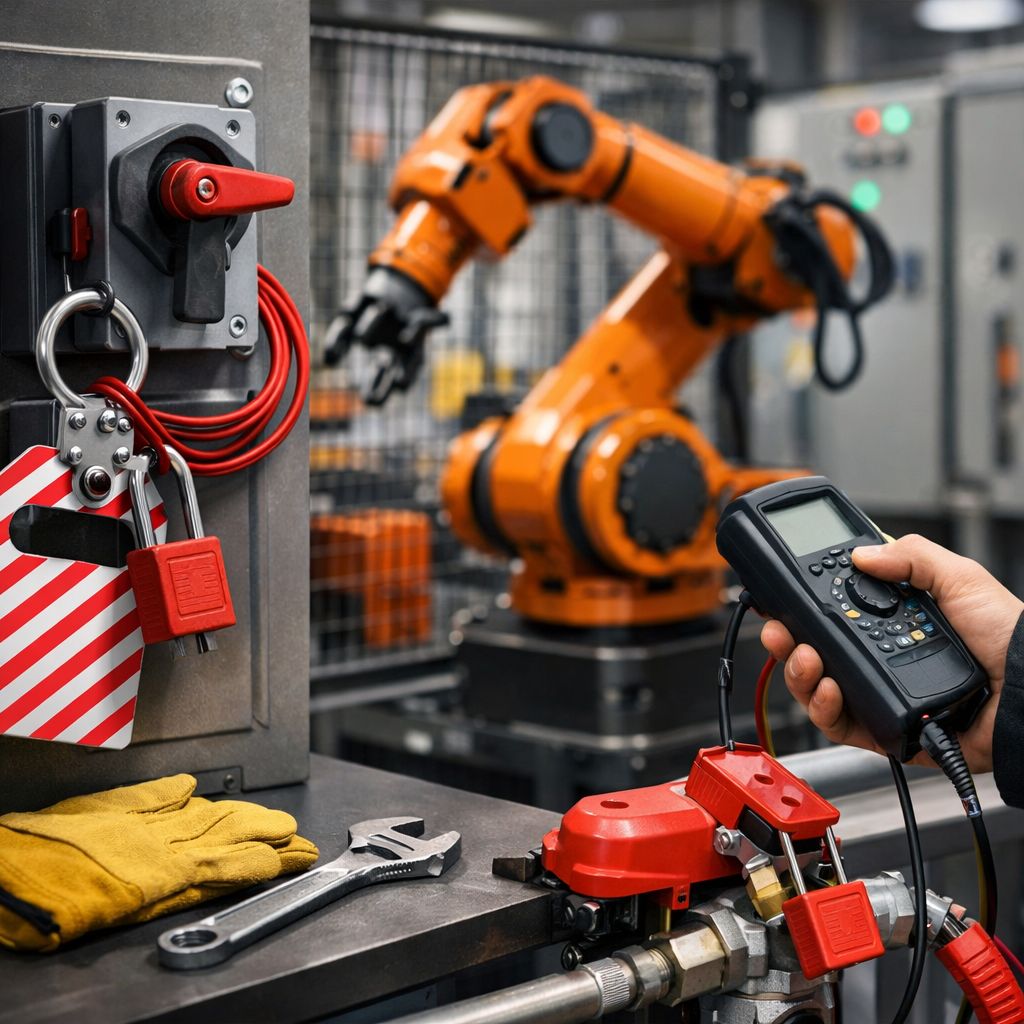
Employers should create equipment-specific procedures and make them available at the point of use.
Core lockout sequence
- Prepare for shutdown by reviewing the task, hazards, and energy sources
- Notify affected employees that lockout will occur
- Shut down the robot and associated equipment using normal stopping procedures
- Isolate all energy sources, including electrical, pneumatic, hydraulic, and mechanical
- Apply personal locks and tags to each isolation point
- Release, block, or restrain stored energy
- Verify zero-energy state before entering the hazard zone
- Perform the work safely
- Inspect the area before re-energization
- Remove locks according to procedure and notify affected workers before restart
Verification is one of the most important steps.
Workers should test the controls, attempt a start, and confirm that all motion and hazardous energy are neutralized.
For robotics, that may also include checking that suspended loads are secured, pressure has been bled, capacitors are discharged, and servo systems cannot move unexpectedly.
Many workplaces support these steps with detailed signage, permit systems, and maintenance checklists.
For more general machine safety planning, an internal resource such as machine safety checklist can help standardize field inspections.
Practical workplace examples
In an automotive welding cell, a technician may need to replace a robotic end effector.
Proper lockout procedures for robotics would require isolating the main electrical disconnect, shutting off compressed air, bleeding the lines, securing the arm against movement if required, and verifying zero energy before entering the cell.
In a food packaging line, a maintenance worker clearing a jam may need to lock out not only the robot, but also upstream conveyors, palletizers, and sensor-triggered equipment connected through the same control sequence.
These examples show why system boundaries must be clearly defined.
Prevention Measures, PPE, and the Hierarchy of Controls
Lockout is an administrative and engineering-based control, but it works best when supported by the full Hierarchy of Controls.
In robotic environments, employers should not rely on worker behavior alone.
They should reduce exposure through design, safeguarding, and clear maintenance planning.
Applying the Hierarchy of Controls
| Control level | How it applies to robotics |
|---|---|
| Elimination | Design out the need for entry into the cell where possible through remote diagnostics or automated cleaning |
| Substitution | Use safer tooling or lower-force systems where feasible |
| Engineering controls | Install interlocked guards, trapped-key systems, bleed valves, blocking devices, and visible isolators |
| Administrative controls | Use written lockout procedures, permits, training, supervision, and authorized worker lists |
| PPE | Provide task-appropriate protection such as gloves, eye protection, hearing protection, and arc-rated gear where required |
PPE is important, but it is the last line of defense.
For robotics, the required PPE depends on the task and energy involved.
Electrical isolation work may require arc-rated clothing, voltage-rated gloves, and face protection where an electrical hazard assessment identifies that need.
Mechanical servicing may require safety glasses, cut-resistant gloves, protective footwear, and hearing protection in noisy production areas.
Welding robots may add respiratory, eye, and heat-related protection depending on exposure.
Employers should make sure PPE selection aligns with the hazard assessment and does not create new risks, such as gloves catching on moving parts during tasks that are not fully locked out.
Prevention also depends on competency.
Authorized employees need training on hazardous energy sources, lockout devices, verification methods, and restart procedures.
Affected employees, such as operators working nearby, should understand why the equipment is unavailable and why locks and tags must never be removed by unauthorized persons.
An internal guide such as working around automated equipment can reinforce these expectations across departments.
Compliance, Documentation, and Continuous Improvement
Compliance is a major part of lockout procedures for robotics.
Regulators expect employers to identify hazards, establish safe work procedures, train workers, and verify that controls are effective.
In the United States, OSHA’s control of hazardous energy requirements are a key reference point.
Canadian employers often use provincial OHS requirements together with practical guidance from CCOHS.
For robotics-specific design and safeguarding concepts, standards and technical guidance from organizations such as ISO are also commonly considered during system planning.
A compliant program should include documented equipment-specific procedures, periodic inspections, training records, incident investigations, and clear rules for shift changes, group lockout, and contractor coordination.
Group lockout is especially relevant in larger robotic cells where electricians, millwrights, controls technicians, and external service providers may work on the same system at the same time.
In these cases, a lock box or equivalent process can help ensure each worker maintains personal control over their own protection.
Elements of a strong robotics lockout program
- Inventory of all robotic cells and associated energy sources
- Equipment-specific lockout procedures with photos or diagrams
- Clearly labeled isolation points and stored-energy release points
- Rules for testing, troubleshooting, and temporary energization
- Contractor management and permit-to-work coordination
- Routine audits and observation of field practices
- Incident and near-miss review to improve procedures
Periodic review matters because robotic systems change over time.
Software updates, new end effectors, revised guarding, added conveyors, or altered production sequences can all affect hazardous energy control.
If procedures are not updated, workers may follow steps that no longer match the actual system.
That is why supervisors, engineers, and frontline maintenance staff should review lockout procedures for robotics whenever modifications occur.
In conclusion, lockout procedures for robotics are essential for preventing serious injuries in automated workplaces.
They address the real risks of electrical, pneumatic, hydraulic, mechanical, and stored energy hazards that can remain present even after equipment appears to be shut down.
By combining clear procedures, practical training, suitable PPE, strong documentation, and the Hierarchy of Controls, employers can protect workers and meet OHSE expectations more effectively.
Most importantly, lockout procedures for robotics turn safety from a policy on paper into a reliable daily practice that keeps people safe whenever they enter, service, or maintain robotic systems.
No comments yet