
mining workplace hazard awareness: Building Safer Habits in High-Risk Mining Environments

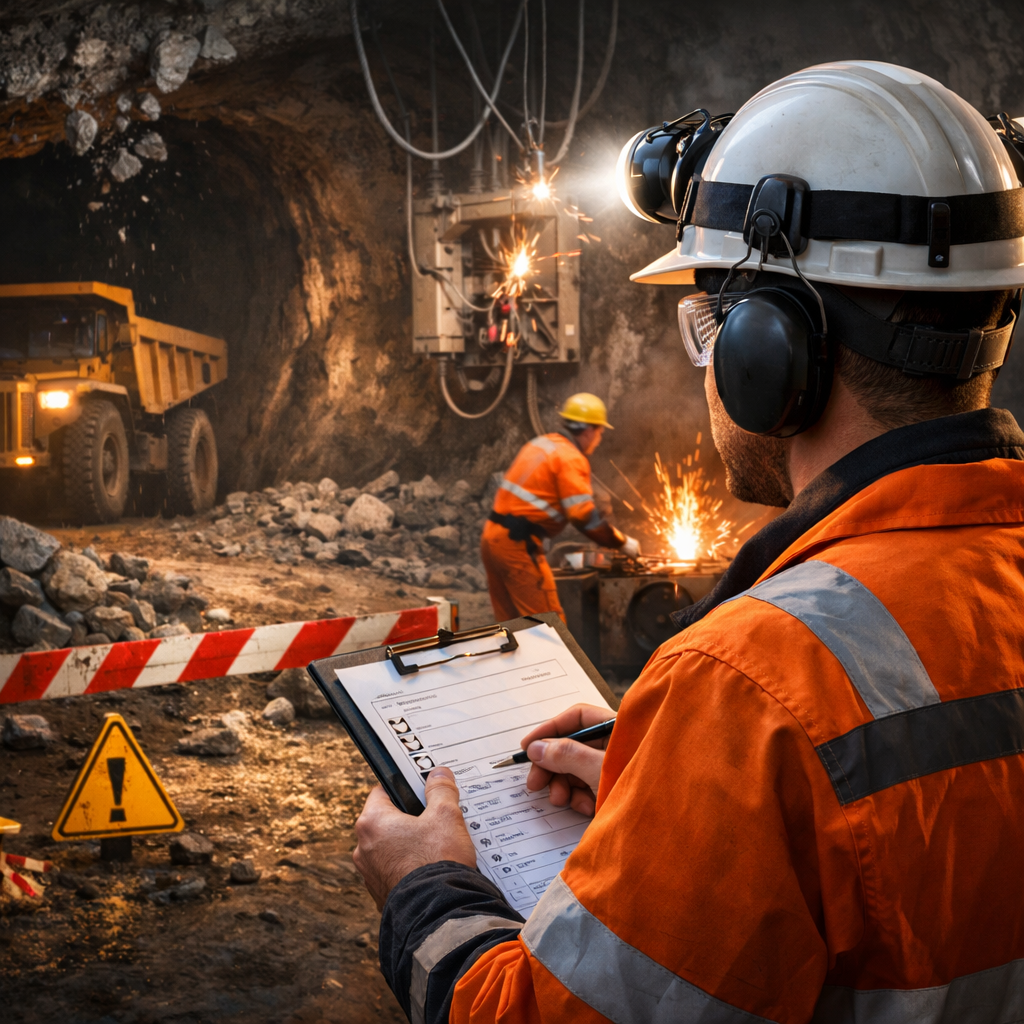
Mining workplace hazard awareness is one of the most important foundations of a safe and productive mine site. In surface and underground operations alike, workers face changing ground conditions, heavy mobile equipment, airborne contaminants, noise, vibration, confined spaces, and the constant potential for serious injury if hazards are not identified and controlled early.
A strong hazard awareness program helps employers, supervisors, contractors, and workers recognize what can go wrong before an incident occurs. It also supports compliance, better decision-making, and a stronger safety culture. In mining, where one small oversight can lead to major consequences, awareness is not just a training topic. It is a daily operational discipline.
Why mining workplace hazard awareness matters
Mining environments are dynamic by nature. A haul road can change after rain, a bench can become unstable, ventilation can be affected by production changes, and maintenance work can introduce new energy hazards. Because conditions shift quickly, yesterday’s safe task may not be safe today.
This is why mining workplace hazard awareness must go beyond general induction. Workers need task-specific, site-specific, and shift-specific awareness. They should understand not only the obvious risks, but also the less visible ones such as fatigue, silica exposure, diesel particulate matter, heat stress, poor communication, and complacency during routine jobs.
Effective awareness improves incident reporting, near-miss identification, and hazard correction. It also makes toolbox talks, inspections, and pre-start checks more meaningful. Organizations such as OSHA and CCOHS consistently emphasize hazard identification, worker participation, and control measures as core elements of occupational health and safety systems.
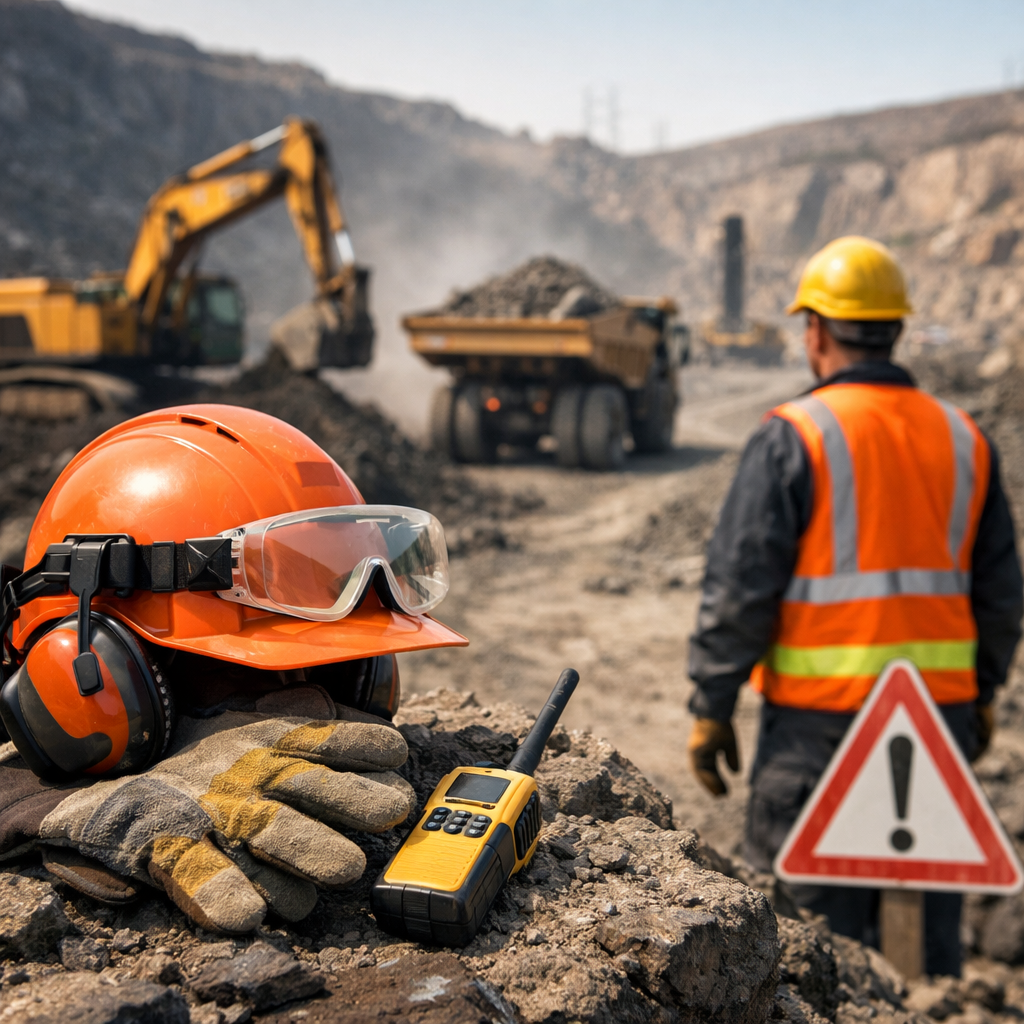
For mining companies aiming to strengthen their programs, practical guidance can also be supported by related resources such as safety training for high-risk industries and workplace PPE best practices. These internal resources help connect hazard awareness to day-to-day site controls.
Common risks that mining workplace hazard awareness should address
A mine site contains multiple hazard categories that often overlap. Physical, chemical, mechanical, environmental, and human-factor risks can combine during one task. A worker inspecting a crusher, for example, may be exposed to stored energy, moving parts, noise, dust, slips, and poor visibility at the same time.
Frequent mining hazards
- Ground instability: rock falls, wall failures, subsidence, and loose material in pits, stopes, and tunnels
- Mobile equipment interactions: collisions involving haul trucks, loaders, dozers, light vehicles, and pedestrians
- Air quality hazards: respirable dust, silica, diesel exhaust, fumes, and oxygen-deficient atmospheres
- Noise and vibration: hearing damage, hand-arm vibration syndrome, and reduced concentration
- Energy isolation failures: electrical, hydraulic, pneumatic, and mechanical stored energy during maintenance
- Explosives and blasting risks: flyrock, misfires, vibration, and exclusion zone breaches
- Confined spaces: tanks, sumps, shafts, and enclosed process areas with limited entry and exit
- Manual handling and ergonomics: strains, sprains, and overexertion from repetitive or awkward tasks
- Heat, cold, and fatigue: reduced alertness, dehydration, slower reactions, and poor judgment
- Slips, trips, and falls: uneven ground, muddy accessways, ladders, platforms, and poor housekeeping
Practical examples make these hazards easier to understand. A driller working near a highwall may notice small rock fragments on the ground before a larger fall occurs. A haul truck operator may identify blind spots made worse by dust and low morning light. A maintenance fitter may spot missing lockout tags before a conveyor restart. These moments show how mining workplace hazard awareness directly prevents harm when workers are trained to pause, assess, and act.
Prevention strategies using the Hierarchy of Controls
The best hazard awareness programs do more than tell people to “be careful.” They connect each hazard to a practical control strategy. In occupational health and safety, the Hierarchy of Controls remains the most effective framework for selecting and prioritizing risk reduction measures.
Applying the Hierarchy of Controls in mining
| Control Level | Mining Example | Safety Benefit |
|---|---|---|
| Elimination | Removing the need for workers to enter an unstable area | Removes exposure completely |
| Substitution | Using less hazardous chemicals in processing or maintenance | Reduces harm potential |
| Engineering Controls | Guarding, ventilation, proximity detection, berms, and enclosed cabs | Separates workers from hazards |
| Administrative Controls | Permits, traffic plans, inspections, training, and fatigue management | Improves work practices and supervision |
| PPE | Respirators, hard hats, gloves, hearing protection, and high-vis clothing | Provides last-line personal protection |
On a mine site, engineering and administrative controls often work together. For example, a dust suppression system reduces airborne particles, while exposure monitoring and work scheduling further limit risk. In vehicle interaction zones, physical separation barriers, one-way traffic systems, radios, spotters, and designated pedestrian routes provide layered protection.
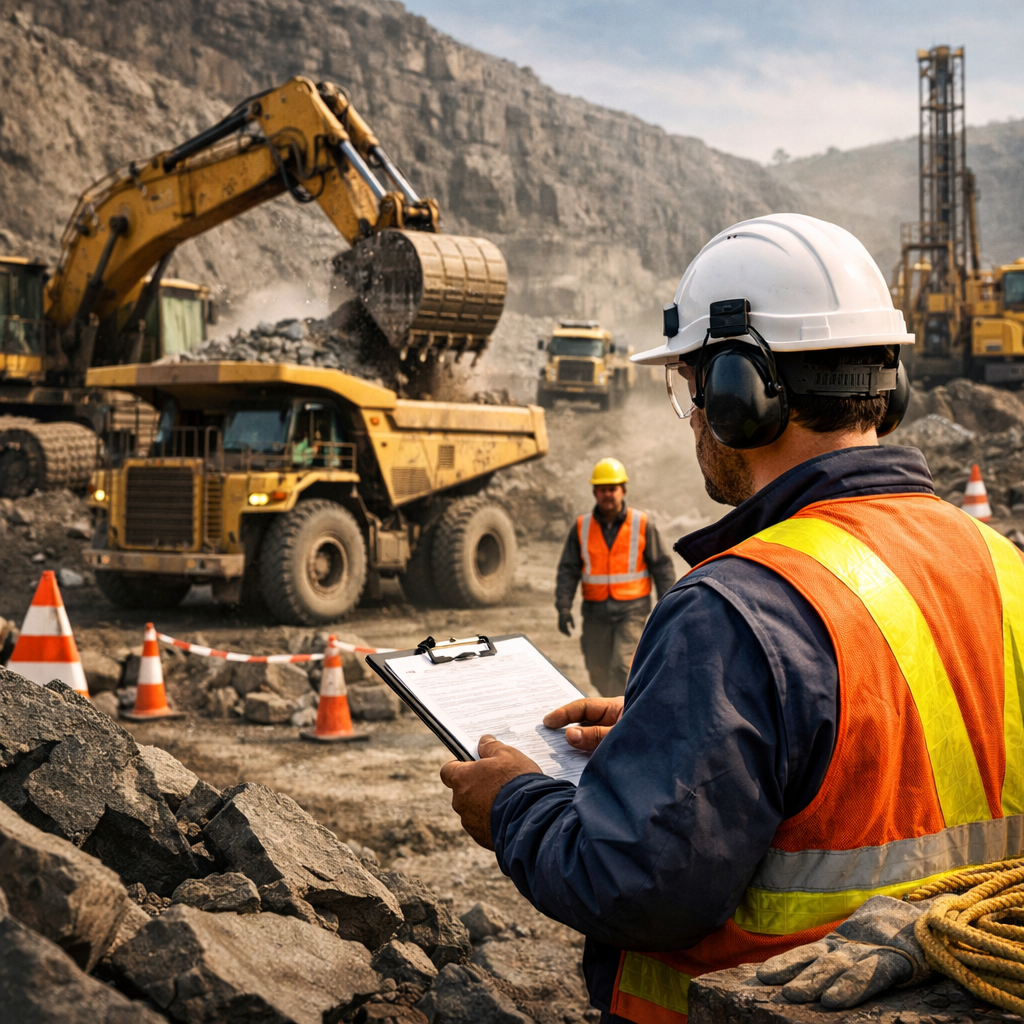
Prevention also depends on consistent field practices. Pre-start inspections, job hazard analyses, take-5 assessments, gas testing, geotechnical monitoring, and clear isolation procedures should be part of routine work. Awareness training is most effective when these tools are actively used rather than treated as paperwork.
PPE, training, and compliance in mining workplace hazard awareness
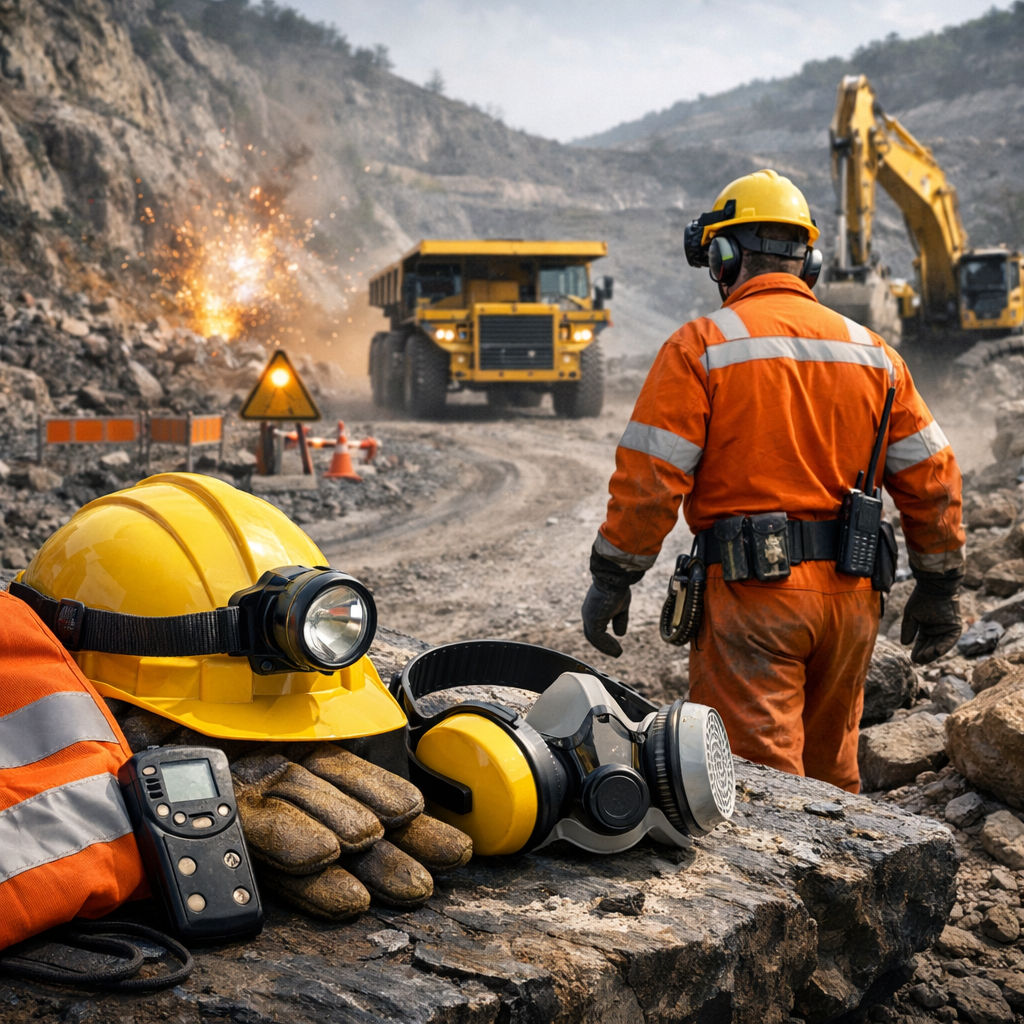
Mining workplace hazard awareness also relies on proper personal protective equipment, but PPE should never be the only safeguard. It is the final barrier after stronger controls have been considered. Still, when selected correctly and used consistently, PPE plays a critical role in reducing injury severity and exposure.
Essential PPE for common mining tasks
- Hard hats for head protection from falling or swinging objects
- Safety glasses or goggles for dust, particles, and chemical splashes
- Hearing protection in drilling, crushing, blasting, and processing areas
- Respiratory protection where dust, silica, or fumes are present
- High-visibility clothing for traffic management and low-light conditions
- Steel-toe boots with slip-resistant soles for rough terrain
- Gloves suited to the task, such as cut-resistant or chemical-resistant types
- Fall protection equipment for elevated work and maintenance platforms
PPE programs should include fit testing, inspection, maintenance, replacement schedules, and worker training. A respirator, for instance, only works when it fits properly and matches the contaminant risk. The same principle applies to hearing protection, eye protection, and fall arrest systems.
Compliance is another key part of mining safety. Employers are expected to identify hazards, assess risks, train workers, investigate incidents, and maintain safe systems of work. Regulatory requirements vary by jurisdiction, but the fundamentals are consistent. Sites should align policies with applicable legislation, internal standards, and guidance from bodies such as MSHA, OSHA, and CCOHS.
Good compliance is not just about passing an audit. It means supervisors verify controls in the field, workers feel confident stopping unsafe work, and contractors understand site expectations before starting the job. Recordkeeping, refresher training, competency checks, and emergency drills all support this process.
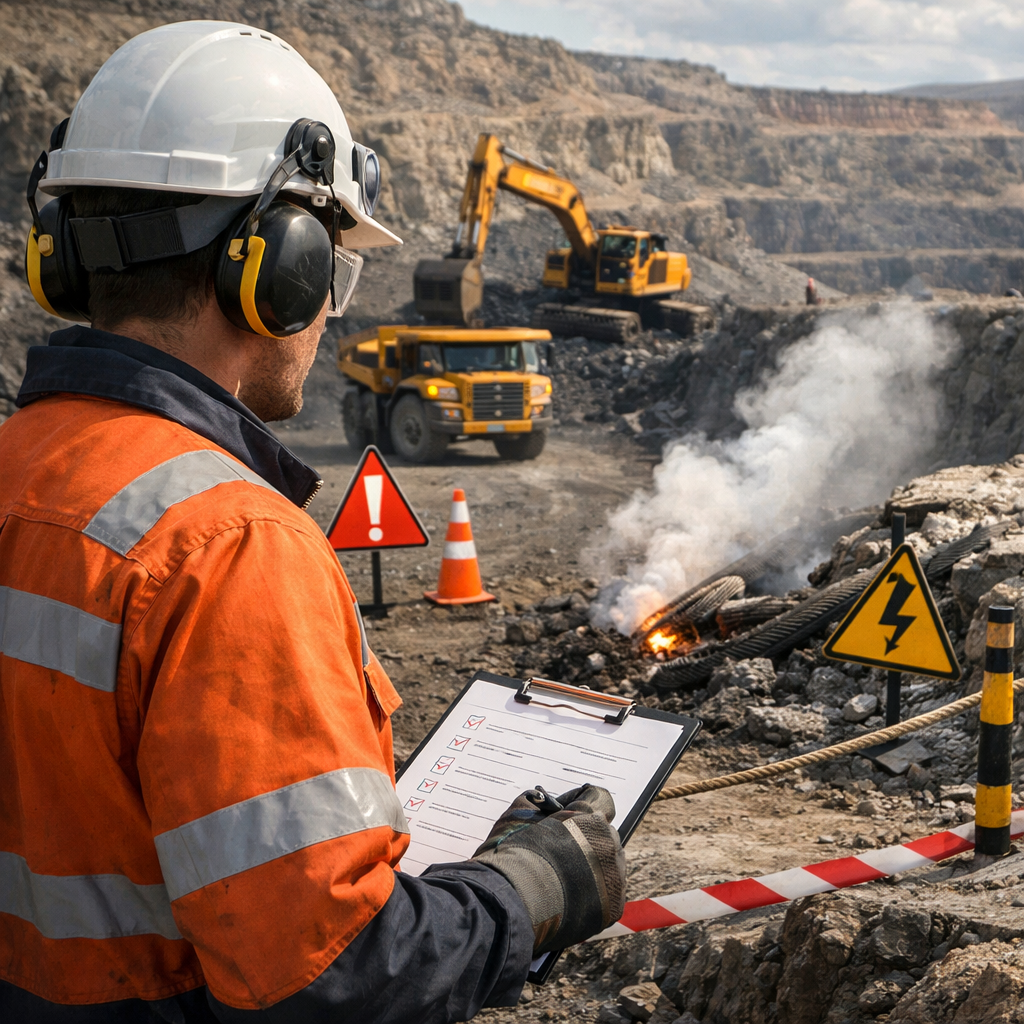
Practical examples of hazard awareness on site
Real safety improvement happens when awareness becomes part of routine decisions. Consider a loader operator who notices a berm damaged after heavy rainfall and reports it before the next shift begins. That simple action may prevent a vehicle rollover. In another case, a process plant worker detects an unusual smell near a reagent area, isolates the space, and alerts the supervisor before exposure occurs.
Underground, a team entering a heading may identify inadequate ventilation readings and suspend work until air quality is restored. On the maintenance side, a fitter preparing to service a conveyor confirms lockout, tests for zero energy, and questions an untagged secondary feed. These are not dramatic actions, but they are exactly what strong mining workplace hazard awareness looks like in practice.
Supervisors can reinforce these behaviors by discussing recent near misses, reviewing critical controls during pre-shift meetings, and praising workers who identify hazards early. When crews see that reporting leads to action instead of blame, participation increases. That is how hazard awareness becomes culture rather than compliance alone.
In conclusion, mining workplace hazard awareness is essential for reducing injuries, improving compliance, and creating a safer mining operation from the pit to the plant. By identifying common risks, applying the Hierarchy of Controls, using PPE correctly, and reinforcing practical field behaviors, mining companies can prevent incidents before they escalate. A workplace that prioritizes mining workplace hazard awareness every day is better prepared to protect people, equipment, and production.
No comments yet