
oil spill prevention in factories: Practical OHSE Strategies for Safer, Cleaner Operations
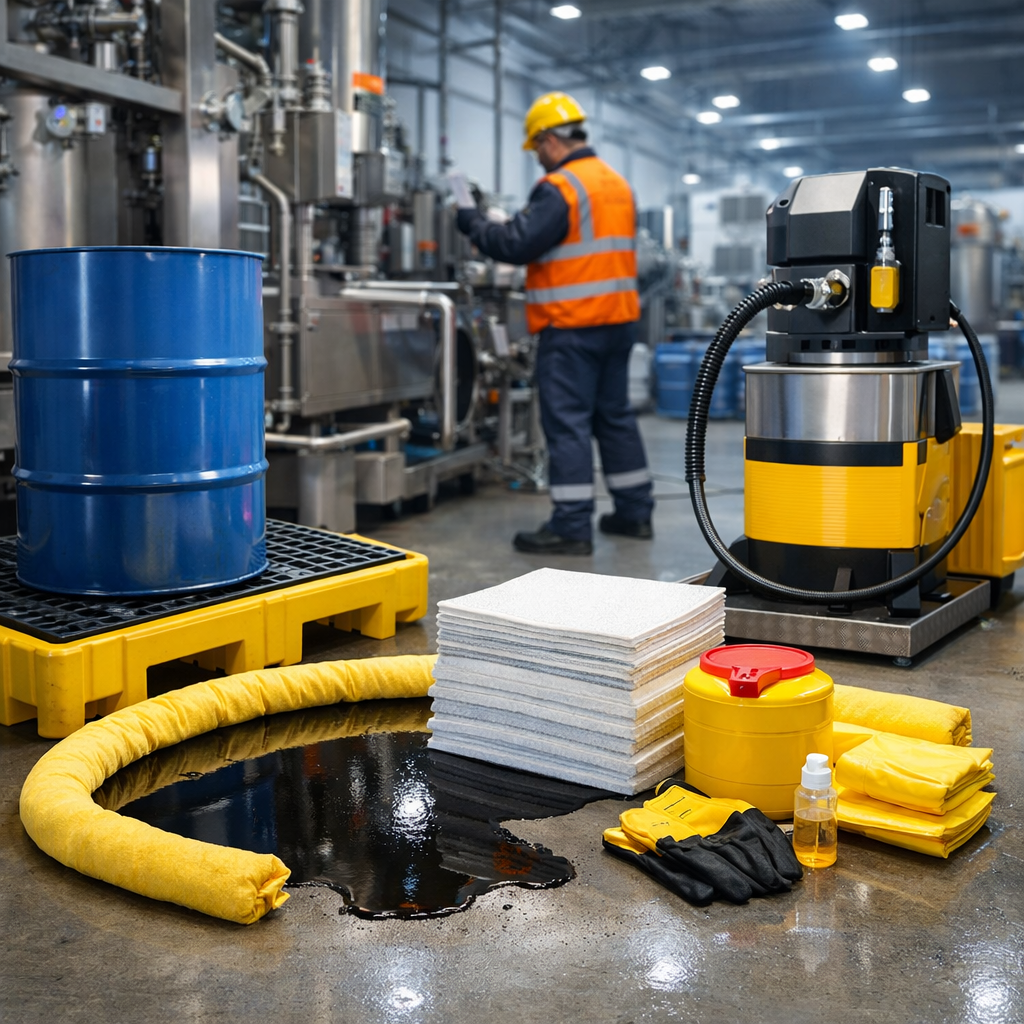

oil spill prevention in factories is a critical part of occupational health, safety, and environmental protection. Even a small leak from a drum, hydraulic line, storage tank, or transfer hose can create slip hazards, fire risks, equipment damage, and costly environmental incidents.
Factories that handle oils, fuels, lubricants, and hydraulic fluids need more than a basic cleanup plan. They need a structured prevention program that combines risk assessment, engineering controls, safe work procedures, training, personal protective equipment, and legal compliance.
Strong spill prevention practices also protect production continuity. A single oil release can stop a line, contaminate products, damage drains, and trigger reporting requirements. When businesses invest in practical controls early, they reduce injuries, avoid unnecessary waste, and build a stronger safety culture across the site.
Why oil spill prevention in factories matters
Oil is widely used in manufacturing for lubrication, machinery operation, heat transfer, transport equipment, and maintenance tasks. Because it is so common, the risks can become normalized, which is exactly why many incidents happen during routine work.
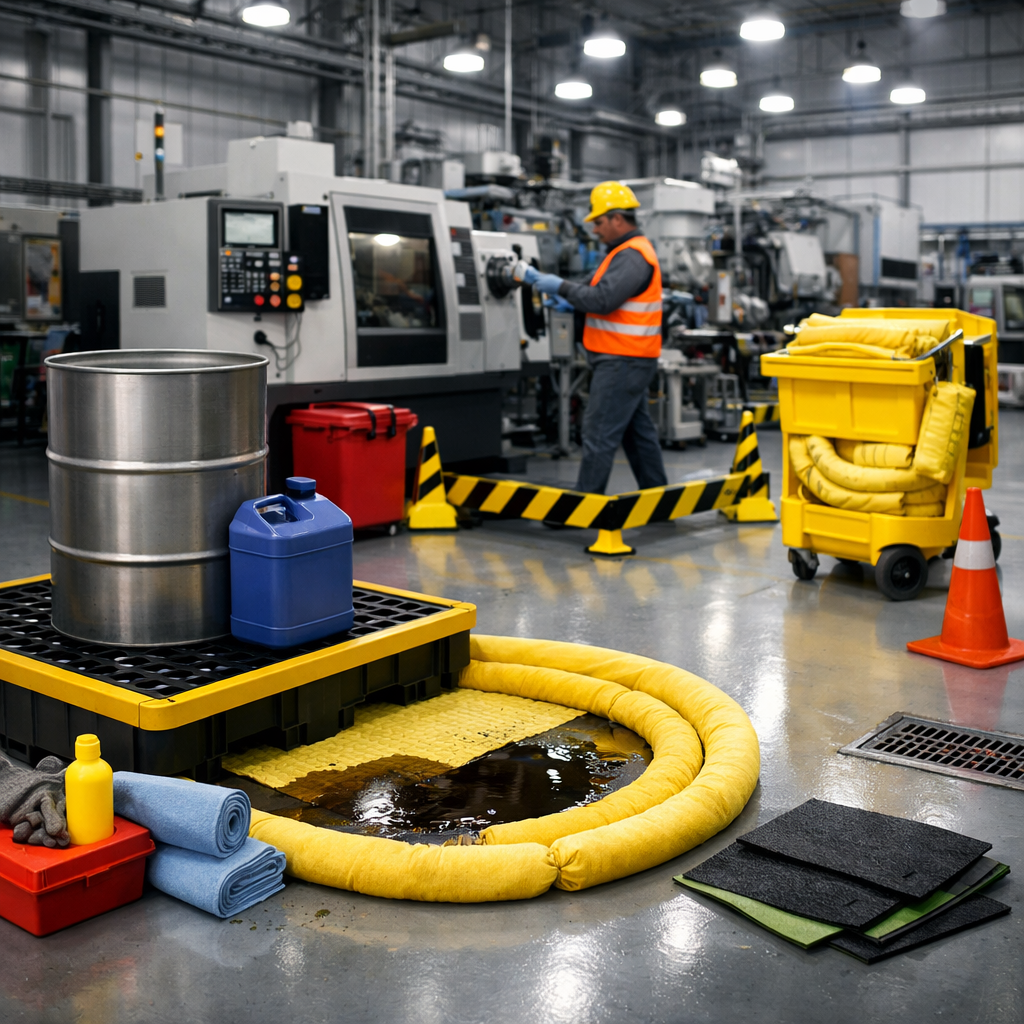
The most immediate danger is often a slip and fall. Oil on concrete, metal walkways, ladders, or loading zones can quickly lead to serious injuries. In areas with moving vehicles or forklifts, spills can also reduce tire traction and increase collision risks.
There are wider OHSE concerns as well. Some oils are flammable, especially if they are stored near ignition sources such as welding stations, hot surfaces, or electrical faults. Spills may also affect skin health through repeated contact, and used oil can contain contaminants that present added exposure risks.
Environmental consequences are another major issue. If oil reaches stormwater drains, soil, or nearby watercourses, cleanup costs and reputational damage can rise quickly. Guidance from OSHA and CCOHS consistently supports proactive hazard control, worker training, and proper storage and handling of hazardous substances.
For many facilities, oil spill prevention in factories is not just a housekeeping issue. It is a core compliance, safety, and business continuity requirement.
Common causes and risk areas
High-risk activities and locations
Most oil spills in factories come from predictable sources. These include leaking pumps, damaged seals, overfilled containers, worn hydraulic hoses, poor decanting methods, and unattended transfer operations.
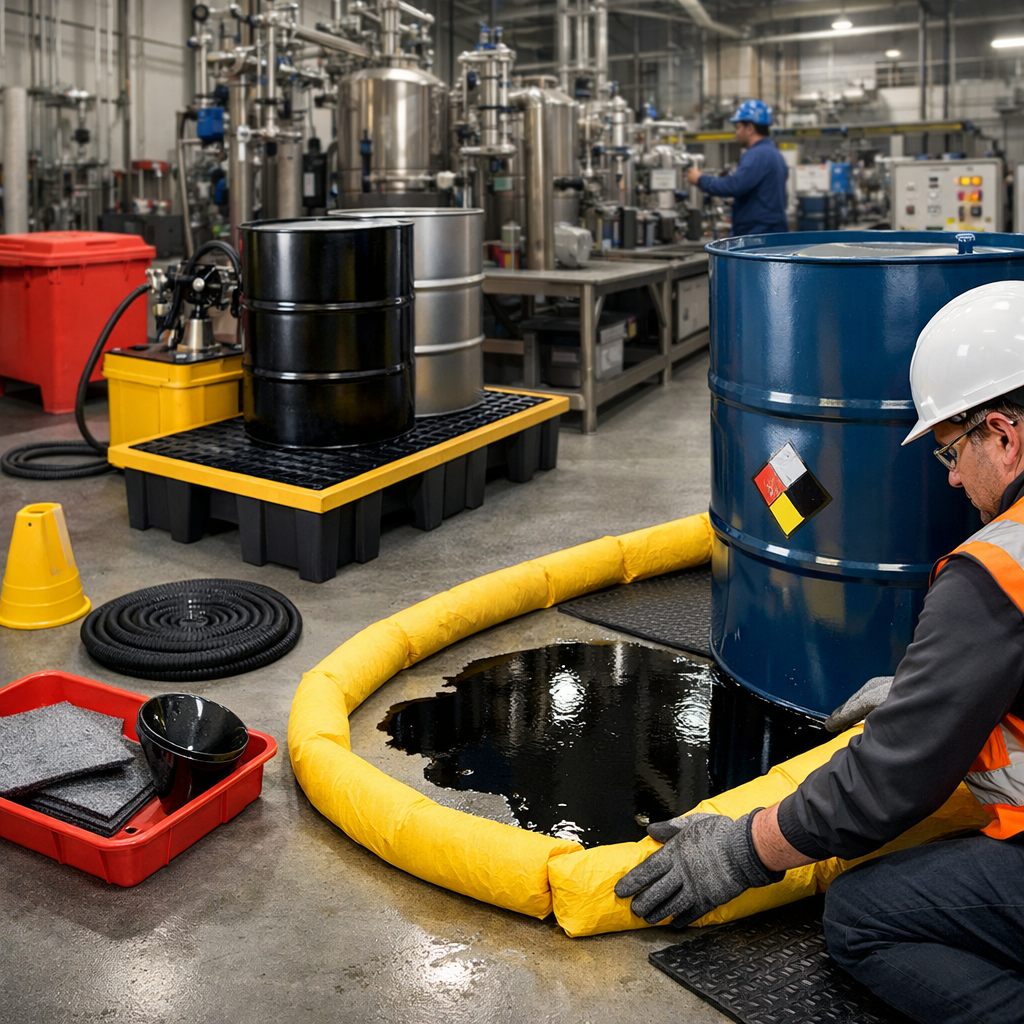
High-risk locations often include:
- Bulk oil storage areas
- Loading and unloading bays
- Machine maintenance zones
- Generator and compressor rooms
- Waste oil collection points
- Forklift refueling or service areas
- Outdoor drum storage near drains
Human and system failures
Human factors contribute to many incidents. Workers may use the wrong container, leave valves open, rush a transfer task, or fail to report a small leak. In some cases, spill kits are present but blocked, incomplete, or unfamiliar to staff.
System failures matter just as much. Weak inspection routines, poor preventive maintenance, inadequate bunding, and missing drain protection can turn a minor leak into a major event. Factories should review incident trends and near misses regularly through internal safety systems such as a workplace inspection program or incident reporting procedure.
Oil spill prevention in factories using the Hierarchy of Controls
The best oil spill prevention in factories programs follow the Hierarchy of Controls. This approach focuses on controlling hazards at the source before relying on worker behavior alone.
Elimination and substitution
Elimination is not always possible, but some risks can be reduced by removing unnecessary oil storage, minimizing onsite volumes, or centralizing dispensing points. Substitution may include using less hazardous lubricants, less flammable products, or closed cartridge systems that reduce handling.
Engineering controls
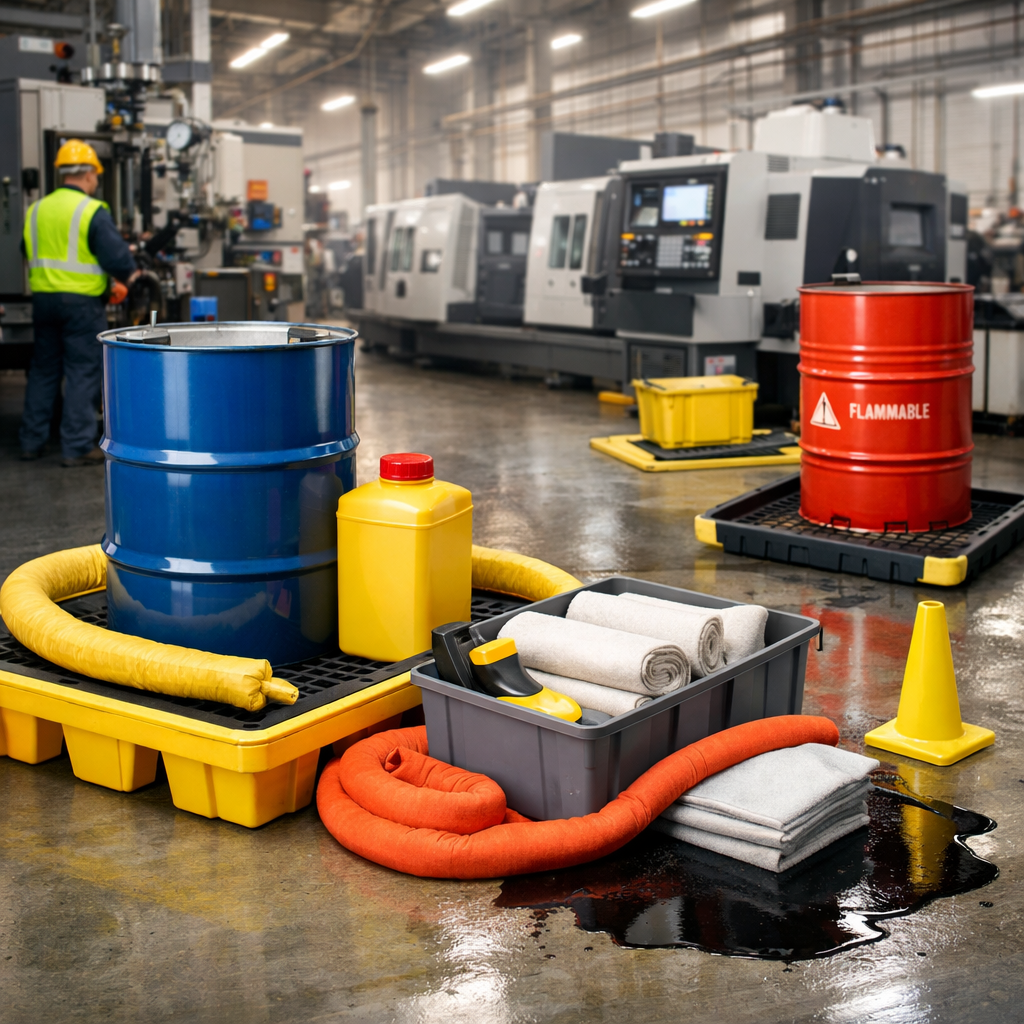
Engineering controls are often the most effective practical solution in factories. These measures physically contain or reduce the likelihood of a spill.
- Install secondary containment such as bunds, drip trays, and spill pallets
- Use automatic shut-off valves and overfill protection on tanks
- Fit hoses and couplings designed for the correct pressure and chemical compatibility
- Protect containers from vehicle impact with bollards or barriers
- Separate oil storage from drains, waterways, and ignition sources
- Use enclosed transfer systems and dedicated dispensing pumps
- Provide drain covers in vulnerable indoor and outdoor areas
A practical example is a maintenance workshop that stores 205-liter drums on spill pallets and uses drum pumps instead of manual pouring. This simple change reduces splash, overfilling, and strain injuries while improving housekeeping.
Administrative controls
Administrative controls support engineering measures with clear processes. Effective actions include standard operating procedures, permit controls for high-risk maintenance, pre-use inspections, spill response drills, and contractor induction requirements.
Routine inspections should check tanks, pipes, hoses, couplings, valves, and floor conditions. Any seepage around machines should be reported immediately, not left for the next shift. Labeling is also important so workers can identify the type of oil, storage limits, and emergency actions without confusion.
Training should cover both prevention and response. Workers need to know how to transfer oil safely, where spill kits are located, how to isolate a source, and when to escalate an incident. Supervisors should verify competence, especially for employees who unload tankers or perform maintenance.
PPE, spill response readiness, and compliance
PPE for oil handling and spill tasks
Personal protective equipment is the last line of defense, but it still plays an important role in oil spill prevention in factories. PPE should match the task, the oil type, and the exposure route.
Common PPE may include chemical-resistant gloves, safety boots with slip-resistant soles, coveralls, eye protection, and face shields during transfer or decanting. In some situations, workers may also need respiratory protection if heated oil, mist, or solvent-based products create inhalation risks.
PPE should never replace proper containment and safe systems of work. If a factory relies only on gloves and absorbent pads while leaks continue from aging equipment, the underlying hazard remains uncontrolled.
Spill response readiness
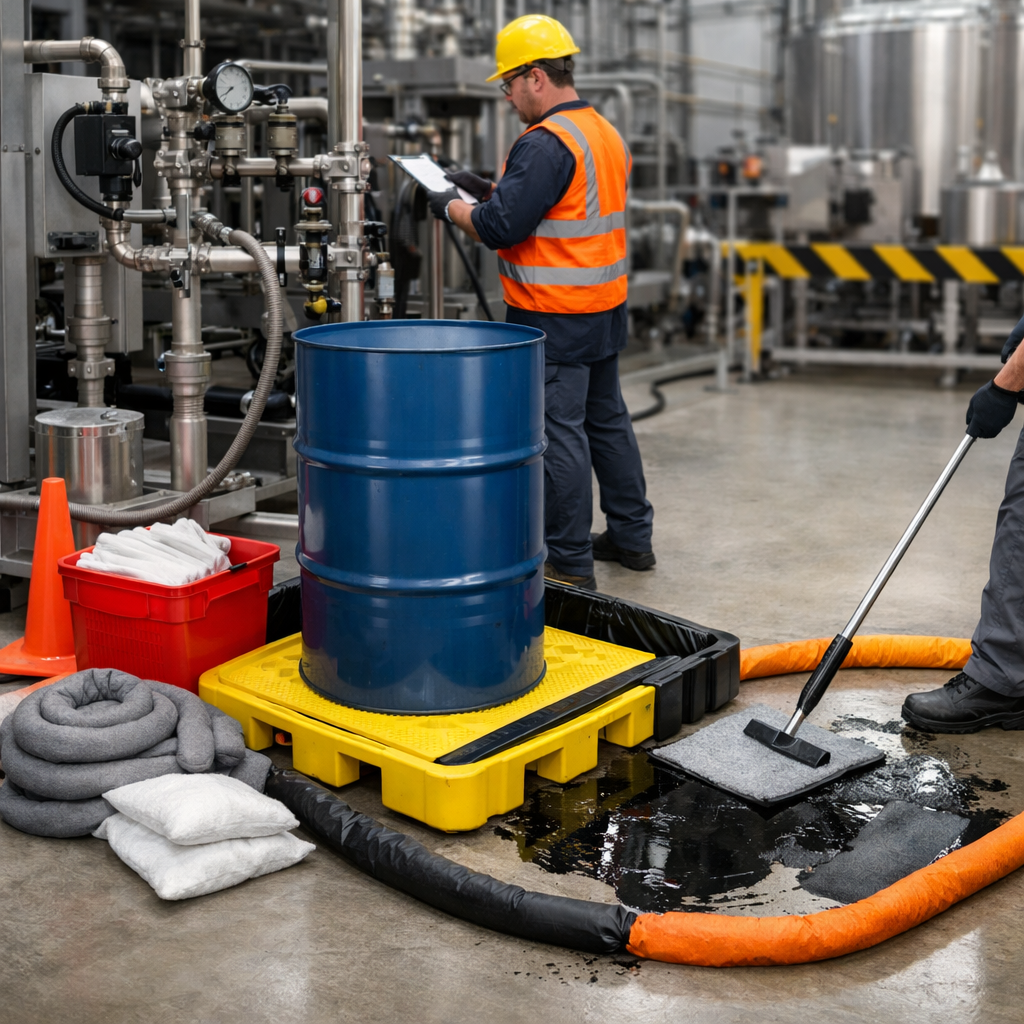
Prevention and response must work together. Even strong controls cannot guarantee zero incidents, so factories should maintain suitable spill kits, absorbents, drain blockers, disposal bags, and clearly defined response roles.
A simple and effective response process may include:
- Stop the source if safe to do so
- Isolate the area and control traffic
- Protect drains and sensitive areas
- Contain and absorb the spill
- Dispose of waste correctly
- Report, investigate, and fix the root cause
Practical drills are useful. For example, a factory can simulate a hydraulic hose failure beside a production line and test whether staff can isolate equipment, deploy absorbents, and prevent runoff within a few minutes.
Compliance and documentation
Compliance requirements vary by jurisdiction, but most factories must meet legal duties related to worker safety, hazardous substances, waste handling, and environmental protection. Reference points may include OSHA guidance, local environmental regulators, fire codes, and industry-specific standards.
Documentation should typically include risk assessments, storage inventories, safety data sheets, inspection records, maintenance logs, training records, and incident investigations. This information helps demonstrate due diligence and supports continuous improvement.
The table below outlines practical control areas often reviewed during audits and inspections.
| Control Area | What to Check | Why It Matters |
|---|---|---|
| Storage | Bunds, labels, drum condition, separation from drains | Reduces leak spread and improves emergency control |
| Transfer | Hoses, couplings, pumps, supervision, overfill controls | Prevents spills during filling and decanting |
| Equipment | Hydraulic lines, seals, tanks, preventive maintenance | Stops recurring leaks at the source |
| PPE | Gloves, boots, eye protection, task suitability | Protects workers from contact and slip hazards |
| Emergency readiness | Spill kits, drain covers, drills, reporting process | Improves response speed and limits impact |
| Training | Induction, refresher sessions, contractor awareness | Builds consistent safe behavior across the site |
Practical examples of oil spill prevention in factories
Consider a metal fabrication plant where cutting machines frequently drip lubricant onto walkways. Instead of repeatedly mopping the floor, the site installs drip trays, adjusts maintenance intervals, and redesigns the walkway with anti-slip matting and better housekeeping checks. The result is fewer slip hazards and less wasted oil.
In another example, a food processing factory stores waste oil drums outdoors. After a rain event nearly carries residue into a storm drain, the facility relocates the drums under cover, adds secondary containment, posts clear signage, and trains staff in drain protection. A low-cost change prevents a high-cost environmental event.
A third example involves a warehouse service bay where forklifts are topped up from small containers. Workers often overpour and leave oily rags nearby. The factory introduces closed dispensing units, metal waste containers with lids, and a simple checklist for end-of-shift inspection. This improves both fire safety and spill prevention.
These examples show that oil spill prevention in factories works best when controls are practical, visible, and matched to real tasks. The goal is not only to respond faster, but to make spills less likely in the first place.
In conclusion, oil spill prevention in factories requires a balanced OHSE approach that addresses risks, equipment, worker behavior, PPE, emergency readiness, and compliance. By applying the Hierarchy of Controls, maintaining good housekeeping, training workers properly, and reviewing incidents for root causes, factories can reduce injuries, protect the environment, and avoid costly disruption. Strong oil spill prevention in factories is ultimately a sign of a well-managed, safety-focused workplace.
No comments yet