
restaurant fire safety guidelines: Essential OHSE Practices for Safer Commercial Kitchens

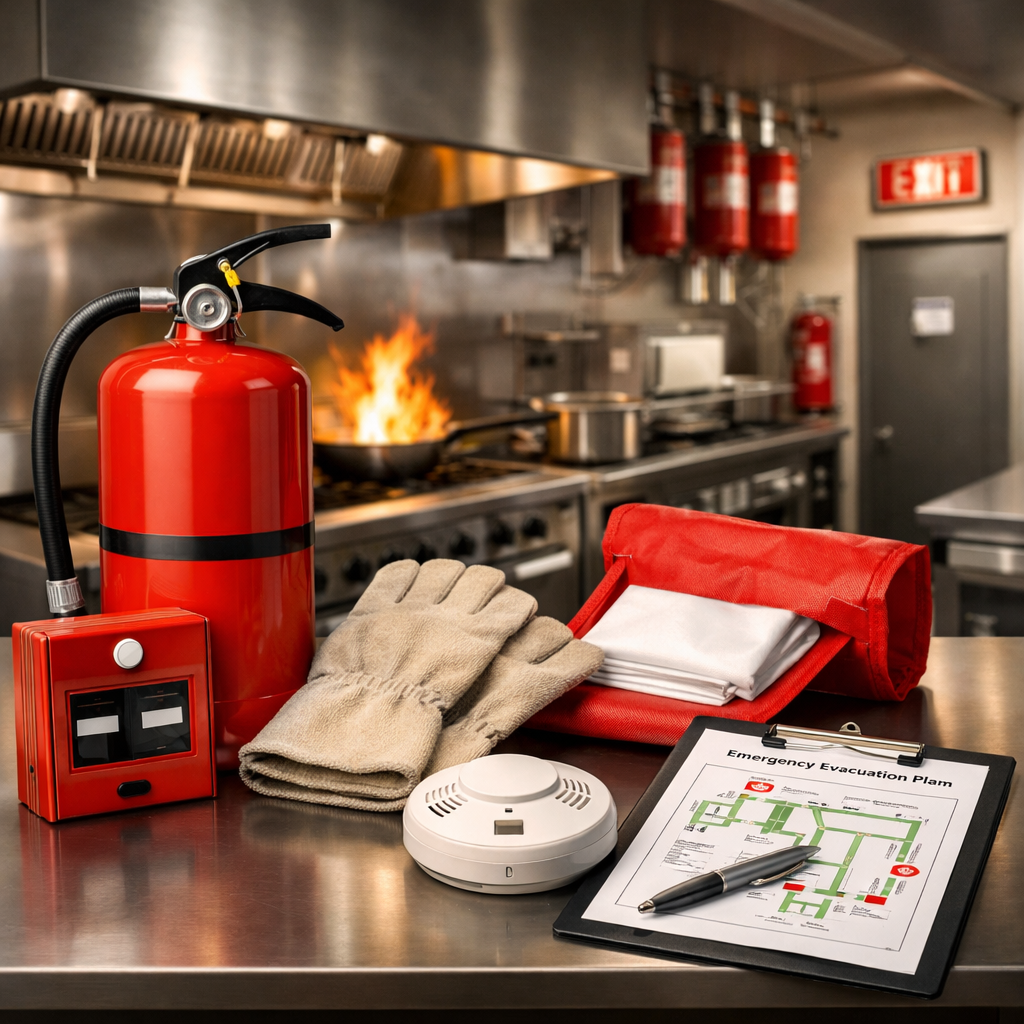
restaurant fire safety guidelines are a critical part of occupational health, safety, and environmental management in any food service business.
From fast-paced cafés to large hotel kitchens, fire risks are present every day through open flames, hot oils, electrical equipment, and cleaning chemicals.
Without clear procedures, training, and maintenance, a small ignition source can quickly become a serious incident that harms workers, customers, property, and business continuity.
Strong restaurant fire safety guidelines help employers reduce injuries, meet legal duties, and create a safer workplace culture.
They also support compliance with OHSE expectations by focusing on hazard identification, risk control, emergency response, and continuous improvement.
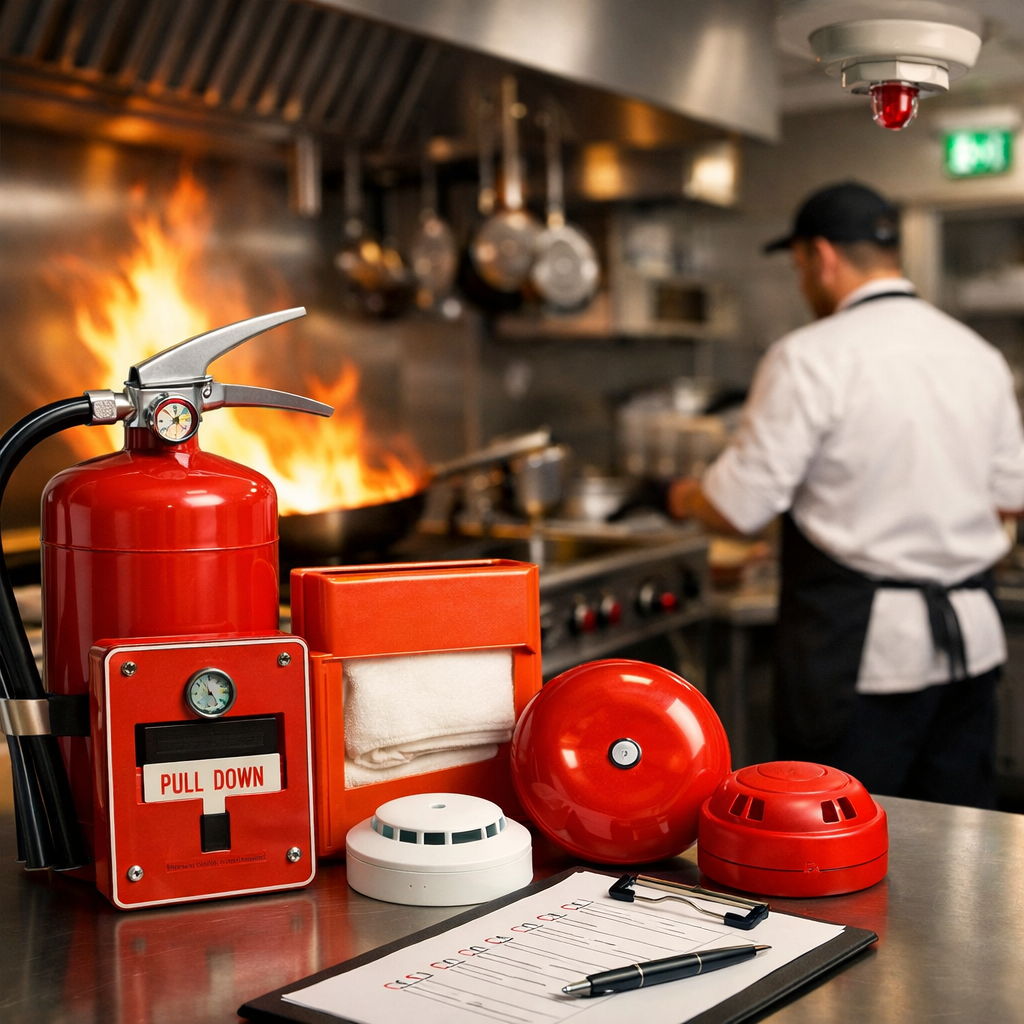
In practice, this means looking beyond the obvious kitchen flames and assessing the full fire picture across cooking lines, storage rooms, waste areas, and dining spaces.
Why restaurant fire safety guidelines matter in everyday operations
Commercial kitchens are one of the highest-risk environments for workplace fires because heat, fuel, and oxygen are constantly present.
Cooking oils can ignite, grease can build up in hoods and ducts, overloaded outlets can spark, and cardboard or packaging can feed a fire once it starts.
Restaurant managers should treat fire safety as both a life safety issue and a core operational risk.
Even a brief fire can cause burns, smoke inhalation, slips during evacuation, lost stock, structural damage, insurance claims, and extended closure.
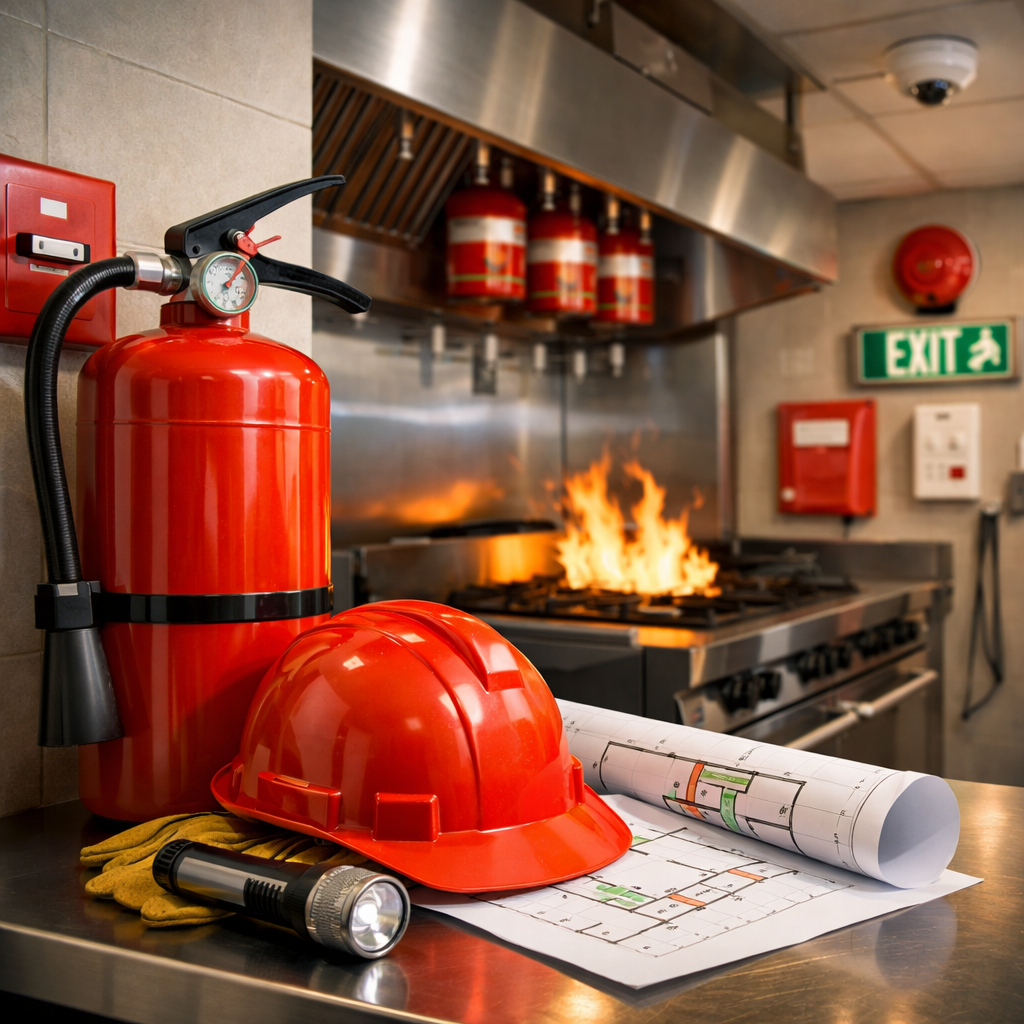
These outcomes affect workers directly and may also lead to regulatory investigations or enforcement action.
Guidance from organizations such as OSHA and CCOHS supports the need for training, housekeeping, equipment maintenance, and emergency preparedness in workplaces where fire hazards exist.
Restaurant owners can also strengthen their programs by reviewing local fire code requirements and their own workplace emergency planning procedures.
Common fire risks in restaurants
- Cooking oil and grease fires: Deep fryers, grills, and pans can ignite when overheated or poorly monitored.
- Grease accumulation: Hoods, filters, ducts, and vents can carry fire rapidly if not cleaned on schedule.
- Electrical hazards: Damaged cords, overloaded power boards, and faulty appliances can create ignition sources.
- Gas-related risks: Leaks, poor connections, or incorrect shutdown procedures can lead to fire or explosion.
- Combustible storage: Cardboard, paper products, linens, and chemicals stored near heat sources increase fire spread.
- Human factors: Rushing, poor supervision, lack of training, and failure to report defects often contribute to incidents.
Restaurant fire safety guidelines for prevention and hazard control
The best restaurant fire safety guidelines focus first on prevention.
In OHSE terms, this means applying the Hierarchy of Controls wherever possible rather than relying only on workers to react correctly in an emergency.
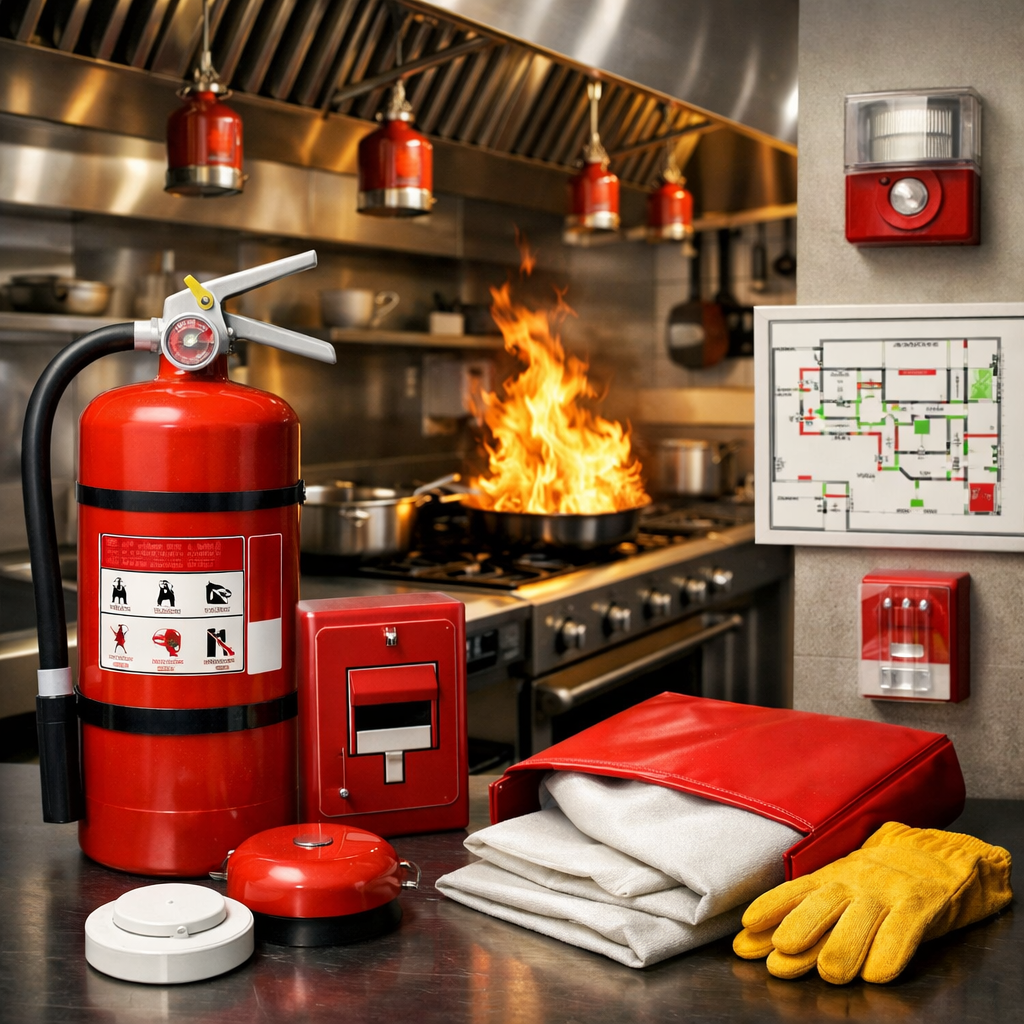
Elimination may involve removing unnecessary ignition sources from storage areas.
Substitution could include switching to safer cleaning products with lower flammability where appropriate.
Engineering controls include fire suppression systems, automatic shutoff valves, heat-resistant equipment design, and properly installed ventilation systems.
Administrative controls include inspections, permits for maintenance work, training, signage, supervision, and documented procedures.
PPE remains important, but it should be the final layer rather than the primary solution.
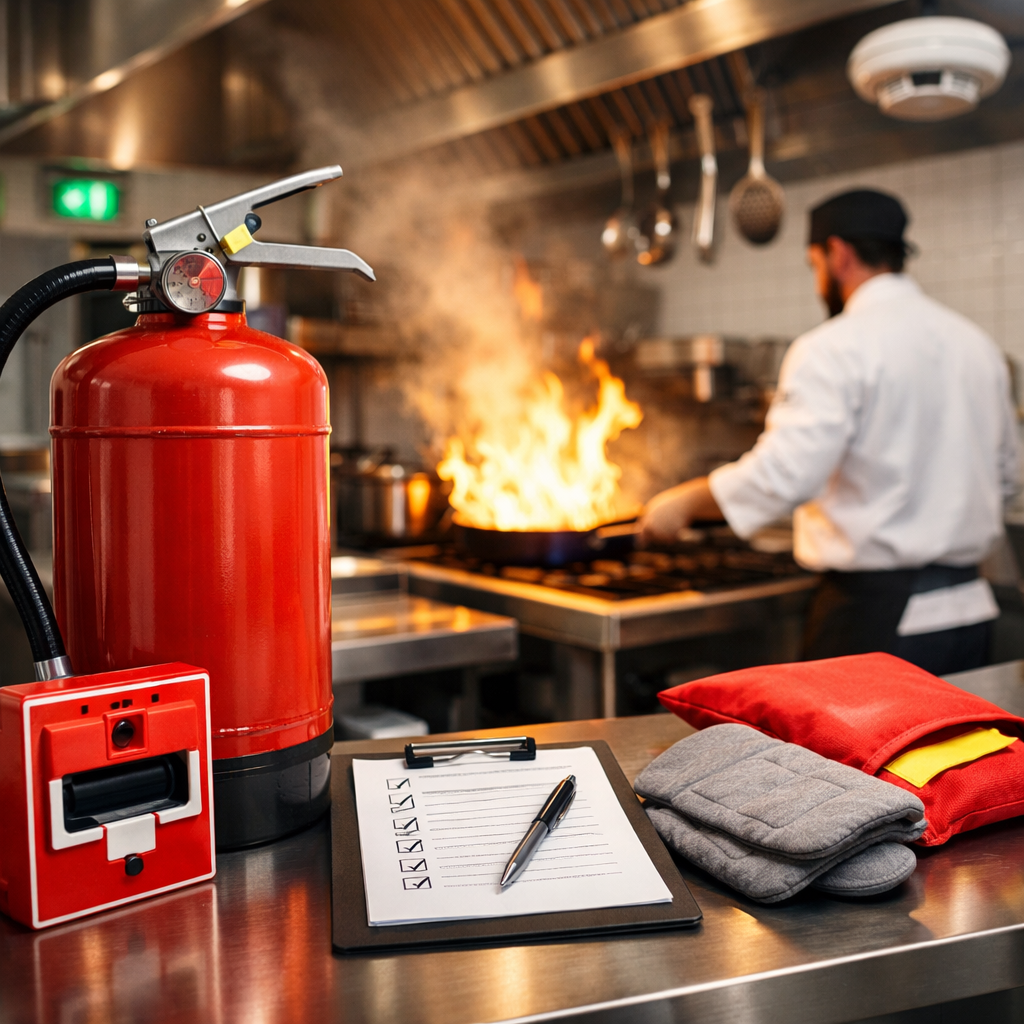
Practical prevention measures
A simple example is the fryer station.
If oil is filled above safe levels, left unattended, or heated with a faulty thermostat, the chance of ignition rises sharply.
Practical control measures include calibrating thermostats, keeping lids nearby if designed for the equipment, installing suppression systems, training workers never to use water on oil fires, and marking safe operating limits clearly.
Another common example is grease extraction.
If hood filters are not cleaned, grease vapors can build up and ignite above the cookline.
A realistic preventive measure is to assign cleaning frequency based on cooking volume, keep written records, and use qualified technicians for duct and suppression system servicing.
Electrical safety also deserves attention.
A blender, microwave, or refrigeration unit with a frayed cord may seem like a minor issue during a busy shift, but it can start a fire behind counters or in storage spaces.
Staff should be trained to tag faulty equipment out of service immediately and report it through a clear maintenance process.
Daily control checklist
- Inspect cooking areas before service begins.
- Keep combustibles away from stoves, ovens, and fryers.
- Clean grease from surfaces, filters, and splash zones.
- Check that extinguishers are accessible and in date.
- Confirm emergency exits are unlocked and unobstructed.
- Test staff knowledge on alarm and shutdown procedures.
- Shut off unused equipment after service.
Personal protective equipment and emergency response
PPE plays a supporting role within restaurant fire safety guidelines by reducing injury severity during normal work tasks and initial emergency actions.
Kitchen staff should wear clothing suitable for hot environments and resistant to splashes from oil or steam.
This may include heat-resistant gloves, aprons, long sleeves suitable for kitchen work, enclosed slip-resistant footwear, and eye protection when handling hot liquids or chemicals.
PPE selection should match the task and should never create new hazards such as loose sleeves catching on equipment or melting synthetic fabrics exposed to heat.
Employers should also ensure workers know where fire blankets, Class K fire extinguishers, alarms, and gas shutoff controls are located.
In many kitchens, the first few seconds of a fire determine whether the event remains contained or escalates into an evacuation.
Emergency response essentials
Workers need simple, repeated training on what to do if a fire starts.
That includes raising the alarm, calling emergency services, shutting off equipment if safe, using the correct extinguisher only if trained, and evacuating without delay when the fire is not immediately controllable.
For grease fires, water must never be used.
This is one of the most important restaurant fire safety guidelines because water can cause burning oil to explode outward and seriously injure nearby workers.
Restaurants should run short drills that reflect realistic conditions, such as a fryer flare-up during peak service or smoke in a storeroom near electrical panels.
These exercises help teams build confidence and improve communication under pressure.
| Hazard | Main Risk | Control Measure |
|---|---|---|
| Deep fryer overheating | Oil ignition and severe burns | Thermostat maintenance, supervision, Class K extinguisher, staff training |
| Grease in hood and duct | Rapid fire spread above cookline | Routine cleaning, inspections, suppression system servicing |
| Damaged electrical cord | Sparks and equipment fire | Remove from service, repair or replace, pre-use checks |
| Blocked fire exit | Delayed evacuation | Daily exit inspections and housekeeping controls |
Training, compliance, and continuous improvement
Effective restaurant fire safety guidelines must be supported by compliance systems, not just good intentions.
Employers should review local fire regulations, building codes, insurance conditions, and workplace safety duties to ensure all requirements are met.
This may include fire suppression inspections, extinguisher servicing, alarm testing, evacuation plans, electrical checks, and documentation of staff training.
Records matter because they show due diligence and help identify gaps before an incident occurs.
Resources from the NFPA are also useful for understanding kitchen fire protection practices and equipment standards.
A strong compliance approach should include induction training for new hires, refresher sessions for current staff, contractor controls for maintenance work, and clear responsibilities for supervisors.
Managers should also connect fire safety with broader restaurant safety training programs so workers understand that burns, slips, evacuations, and equipment hazards are closely linked.
Building a safer fire safety culture
Practical improvement often starts with observation.
If staff repeatedly place tea towels near burners, prop open rear exits with waste bins, or leave appliances running after cleaning, those behaviors should trigger corrective action and coaching.
Near-miss reporting is especially valuable.
For example, if a line cook notices smoke from an outlet but no fire develops, the event should still be reported, investigated, and tracked.
Small warning signs often come before serious incidents.
Supervisors can strengthen performance by using brief pre-shift safety talks, weekly inspections, and visible checklists in prep and cook areas.
When workers see that management responds quickly to defects and concerns, fire safety becomes a normal part of the job rather than an afterthought.
In the end, restaurant fire safety guidelines are most effective when they combine risk awareness, prevention, PPE, emergency readiness, and legal compliance in one practical system.
By controlling grease, heat, electricity, combustibles, and unsafe behavior, restaurants can protect workers and customers while keeping operations stable.
Well-implemented restaurant fire safety guidelines do more than satisfy OHSE expectations; they help create a workplace where safe service is built into every shift.
No comments yet