 Skip to content

Winter PPE mistakes are one of the most underestimated contributors to workplace injuries during cold weather operations. As temperatures drop, employers and workers often assume that simply adding more clothing or heavier gear is enough to stay safe.
In reality, improper use, selection, or management of winter personal protective equipment can significantly increase the risk of cold stress, slips, reduced visibility, musculoskeletal injuries, and even life-threatening conditions.
Winter introduces unique occupational health and safety challenges. Cold temperatures affect the human body, reduce dexterity, slow reaction times, and compromise judgment.
When PPE is misused or poorly planned, it becomes part of the hazard instead of the control. Understanding the most common winter PPE mistakes is essential for preventing injuries, maintaining productivity, and meeting OHSE obligations.
Below are 12 critical winter PPE mistakes that put workers at risk, along with practical insights to help employers and safety professionals strengthen their cold-weather protection strategies.
1. Relying on “One-Size-Fits-All” Winter PPE
One of the most common winter PPE mistakes is issuing standard cold-weather gear without considering individual worker needs.
Body size, job role, exposure duration, and physical demands all influence how effective PPE will be. A jacket that fits one worker well may restrict movement or fail to retain heat for another.
Ill-fitting PPE increases the likelihood of entanglement, reduced mobility, and fatigue. Gloves that are too bulky can reduce grip strength, while boots that are too loose increase slip and trip hazards.
Effective winter PPE programs account for proper sizing, task suitability, and individual comfort to ensure workers actually wear the equipment correctly throughout their shift.
2. Ignoring the Importance of Layering Systems
Many workers rely on a single heavy outer layer to stay warm, which is a major winter PPE mistake. Effective cold-weather protection depends on a proper layering system that includes moisture-wicking base layers, insulating mid-layers, and protective outer shells.
Without proper layering, sweat becomes trapped against the skin, increasing the risk of hypothermia when temperatures drop or wind increases.
Overheating followed by rapid cooling is a common pathway to cold stress. Training workers on how to layer correctly is just as important as issuing the PPE itself.
3. Using Non-Insulated or Improper Footwear
Foot injuries spike during winter, often due to inappropriate footwear. Wearing standard safety boots without insulation, slip-resistant soles, or waterproofing exposes workers to frostbite, cold stress, and fall hazards.
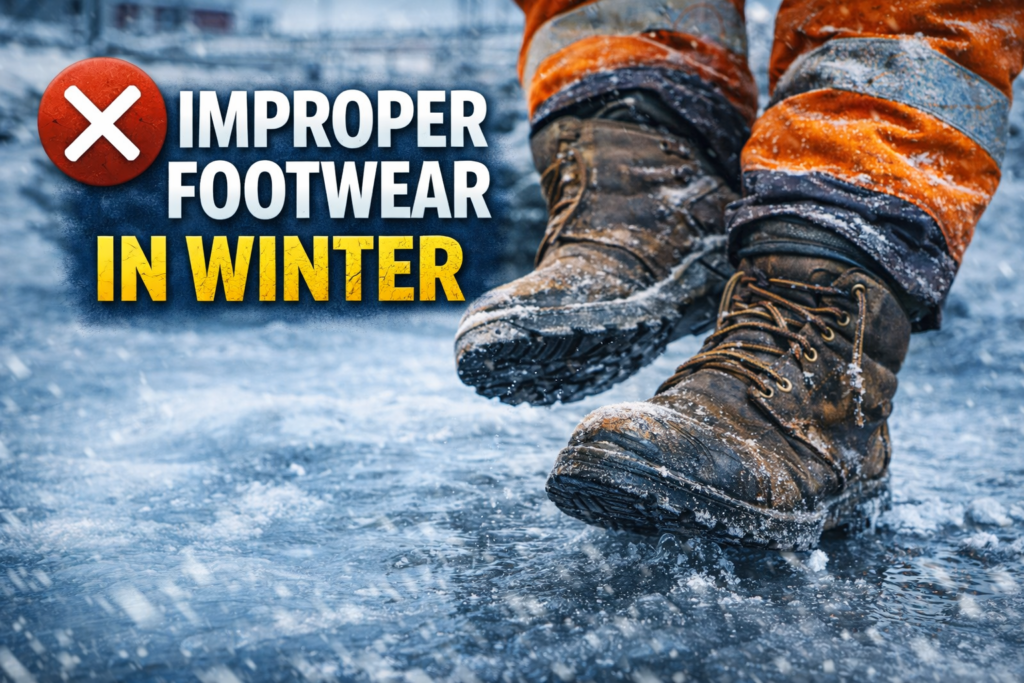
Cold feet reduce balance and reaction time, while wet boots accelerate heat loss. Employers sometimes overlook footwear upgrades for winter, assuming steel-toe protection alone is sufficient.
In reality, winter PPE must address thermal protection, traction, and moisture control to be effective.
4. Wearing Bulky Gloves That Reduce Dexterity
While keeping hands warm is critical, excessively bulky gloves are another winter PPE mistake. When workers lose dexterity, they are more likely to drop tools, mishandle equipment, or bypass glove use altogether to complete fine tasks.
This creates a dangerous trade-off between warmth and safety. Selecting task-appropriate insulated gloves that balance thermal protection with grip and finger movement is essential.
Workers should also have access to multiple glove options depending on task requirements and weather conditions.
5. Neglecting High-Visibility Winter PPE
Visibility risks increase dramatically in winter due to shorter daylight hours, snow glare, fog, and poor weather conditions. A common mistake is covering high-visibility vests with non-reflective winter jackets or hoodies.
When reflective elements are hidden, workers become less visible to vehicle operators and equipment drivers.
Winter PPE must integrate high-visibility features into jackets, coveralls, and rain gear so visibility is maintained even in extreme conditions.
6. Failing to Inspect Winter PPE Regularly
Winter PPE undergoes harsher wear than standard gear due to moisture, freezing temperatures, and repeated layering. Employers often fail to increase inspection frequency during winter months, allowing damaged or ineffective PPE to remain in use.
Cracked boot soles, compressed insulation, torn seams, and worn reflective strips compromise protection.
Regular inspections ensure PPE continues to perform as intended and helps prevent failures during critical moments.
7. Overlooking Head, Face, and Neck Protection
Heat loss from the head and neck can account for a significant portion of overall body heat loss, yet this area is often neglected. Relying solely on hard hats without insulated liners or face protection exposes workers to frostbite and cold stress.
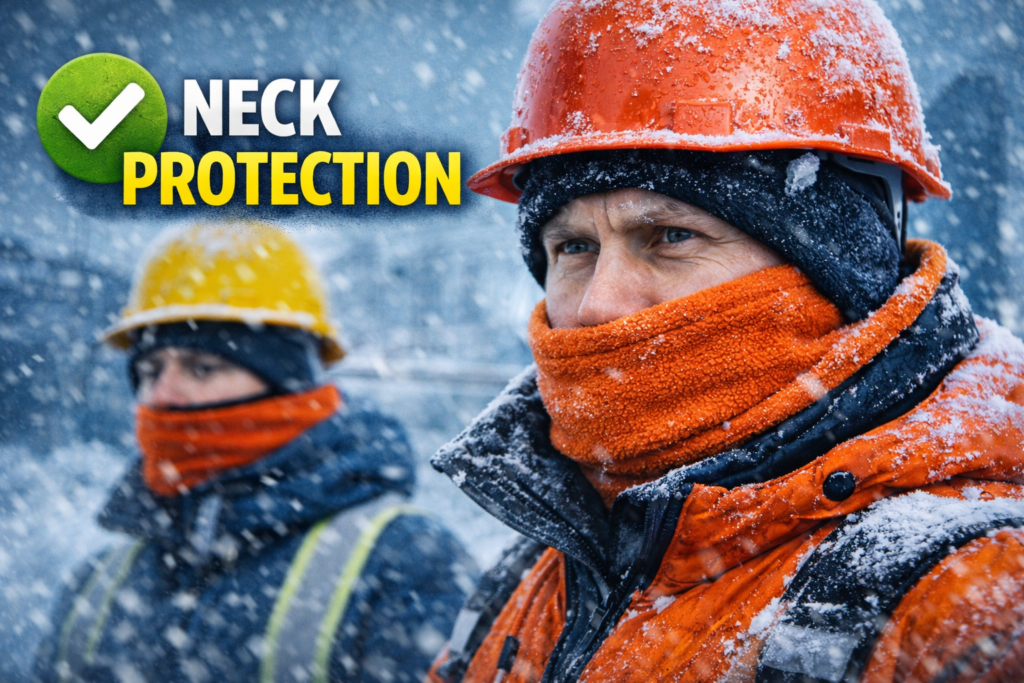
Balaclavas, thermal liners, and face shields compatible with existing PPE should be part of winter protection planning.
Failure to protect these areas increases discomfort, reduces concentration, and raises the likelihood of cold-related illness.
8. Wearing PPE That Restricts Movement
Winter PPE that is too stiff, heavy, or oversized can restrict natural movement. This increases the risk of slips, trips, and musculoskeletal injuries, particularly when walking on icy or uneven surfaces.
Restricted movement also affects emergency response capability. Workers must be able to move quickly and safely in cold environments.
Selecting flexible, ergonomically designed winter PPE reduces strain and improves overall safety performance.
9. Assuming PPE Alone Controls Cold Stress
A major winter PPE mistake is treating protective clothing as the only control for cold exposure. PPE is only one element of a comprehensive cold stress management program. Without administrative controls such as warm-up breaks, heated shelters, and task rotation, PPE effectiveness is limited.
Relying solely on PPE may give a false sense of security, leading to prolonged exposure and increased health risks.
Cold-weather safety requires a layered approach that combines PPE with proper planning and supervision.
10. Not Training Workers on Winter PPE Use
Even high-quality winter PPE fails if workers don’t understand how to use it properly. Common issues include wearing layers incorrectly, leaving zippers open, removing gloves for tasks, or failing to recognize when PPE is no longer effective.
Training should cover when to change layers, how to recognize cold stress symptoms, and how PPE performance changes in wet or windy conditions.
Education ensures PPE is used as intended and reduces unsafe improvisation.
11. Using Wet or Damaged PPE
Wet clothing loses its insulating properties rapidly, yet workers often continue wearing damp PPE due to limited replacements or lack of drying facilities. This dramatically increases the risk of hypothermia and frostbite.
Employers must provide spare PPE, drying areas, and clear guidance on replacing wet gear immediately. Allowing wet PPE to remain in use is a serious occupational health risk during winter operations.
12. Failing to Reassess PPE for Changing Conditions
Winter conditions are dynamic. Temperatures, wind chill, precipitation, and workload can change within hours. A common mistake is issuing winter PPE at the start of the season and never reassessing its adequacy.
Regular risk assessments ensure PPE remains suitable as conditions evolve.
Adjusting PPE requirements based on real-time weather and task changes demonstrates proactive OHSE leadership and significantly reduces injury risk.
Final Thoughts
Winter PPE mistakes may seem minor, but their consequences can be severe. From reduced dexterity and visibility to cold stress and serious injuries, improper winter PPE management directly impacts worker health and safety. Employers who treat winter PPE as a dynamic safety system—rather than a one-time issue—are far better positioned to protect their workforce.
By addressing these common mistakes, organizations can improve compliance, boost worker comfort, and significantly reduce winter-related incidents.
As winter conditions become more unpredictable, investing time in proper PPE selection, training, and monitoring is not just good practice—it’s a critical component of occupational health and safety.
When winter PPE is done right, it becomes a powerful barrier against risk rather than a hidden hazard.
No comments yet