


- Workplace Safety in Catering Services: Essential OHSE Practices for Safer Kitchens and Events
- Understanding the Main Risks in Workplace Safety in Catering Services
- Prevention Through Planning and the Hierarchy of Controls
- PPE and Safe Work Practices for Daily Catering Tasks
- Compliance, Training, and Building a Strong Safety Culture
Workplace Safety in Catering Services: Essential OHSE Practices for Safer Kitchens and Events


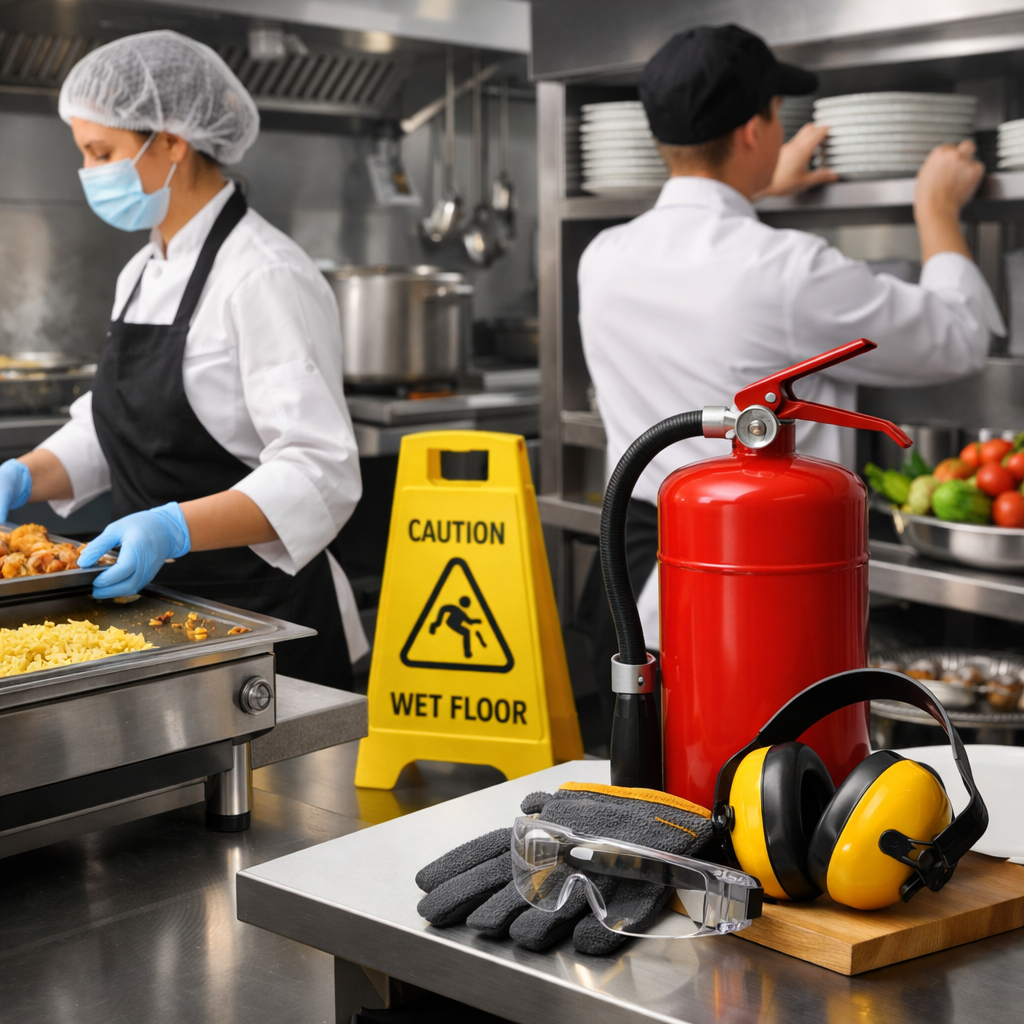
workplace safety in catering services is a critical part of running any successful food business. From commercial kitchens and mobile catering vans to banquet halls and corporate events, catering teams face daily hazards that can lead to injuries, illness, property damage, and legal penalties if not controlled properly.
A strong occupational health, safety, and environment approach helps employers protect staff, customers, contractors, and visitors while keeping operations efficient. Safe catering workplaces reduce lost time, lower compensation claims, improve morale, and support food quality at the same time.
Because catering work often involves fast-paced service, heat, sharp tools, lifting, cleaning chemicals, and crowded workspaces, safety cannot be treated as an afterthought. It must be built into planning, supervision, training, equipment selection, and everyday behavior.
This article explains the main risks, prevention methods, personal protective equipment, legal compliance, and practical examples that support better workplace safety in catering services. It also shows how the Hierarchy of Controls can be applied in real catering environments.
Understanding the Main Risks in Workplace Safety in Catering Services
The first step in improving workplace safety in catering services is identifying the hazards that workers face during food preparation, transport, setup, service, and cleanup. While risks vary by site, several issues appear consistently across the industry.
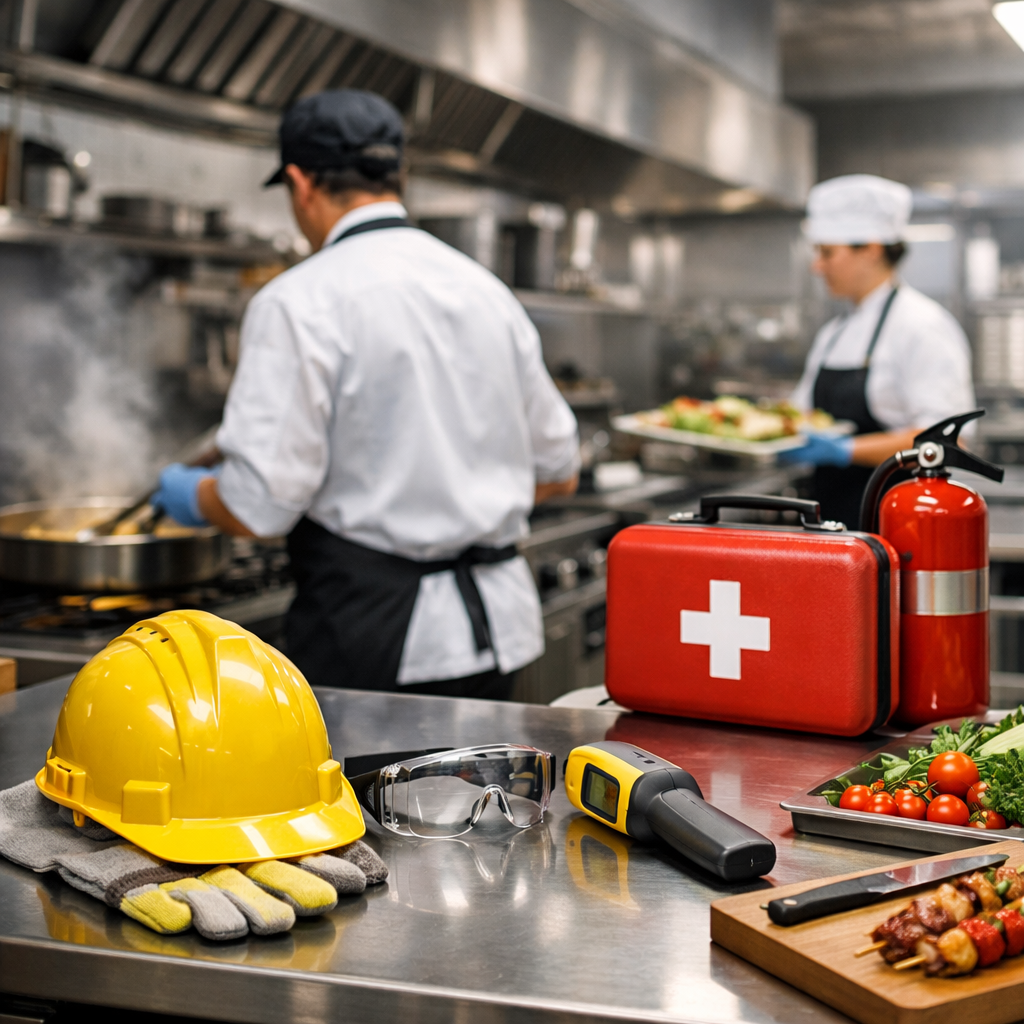
Common physical and operational hazards
- Slips, trips, and falls caused by wet floors, spilled food, loose mats, uneven surfaces, and cluttered walkways
- Cuts and lacerations from knives, slicers, graters, broken glass, and can openers
- Burns and scalds from ovens, stovetops, hot oil, steam, chafing dishes, and heated trays
- Manual handling injuries from lifting stock pots, food crates, gas cylinders, tables, and beverage containers
- Electrical hazards from damaged cords, overloaded circuits, and improper use of portable appliances
- Chemical exposure from detergents, degreasers, descalers, sanitizers, and pest control substances
- Fire risks linked to cooking equipment, flammable materials, grease buildup, and fuel sources
- Vehicle and transport risks during off-site delivery, loading, unloading, and event setup
There are also health-related risks that are sometimes less visible. Repetitive chopping, awkward postures, long hours on hard floors, and fatigue can contribute to musculoskeletal disorders over time. Stress, heat exposure, and time pressure may also reduce concentration and increase the likelihood of mistakes.
Food safety and worker safety frequently overlap. For example, poor housekeeping can create both contamination and slip hazards. In the same way, rushed knife work can harm an employee and compromise food quality. This is why workplace safety in catering services should be integrated with broader operational standards, not handled separately.
Prevention Through Planning and the Hierarchy of Controls
The most effective way to improve workplace safety in catering services is to control hazards at the source. The Hierarchy of Controls provides a practical framework: eliminate hazards where possible, substitute safer options, use engineering controls, apply administrative controls, and rely on PPE as the final layer.
Applying the Hierarchy of Controls in catering operations
Elimination means removing the hazard entirely. For example, storing frequently used supplies closer to work areas can eliminate unnecessary carrying and reduce manual handling injuries. Removing broken flooring or damaged equipment also eliminates hazards directly.
Substitution involves replacing a hazard with a safer alternative. A catering business may switch from a harsh chemical cleaner to a less hazardous product or replace heavy serving equipment with lighter models that are easier to handle safely.
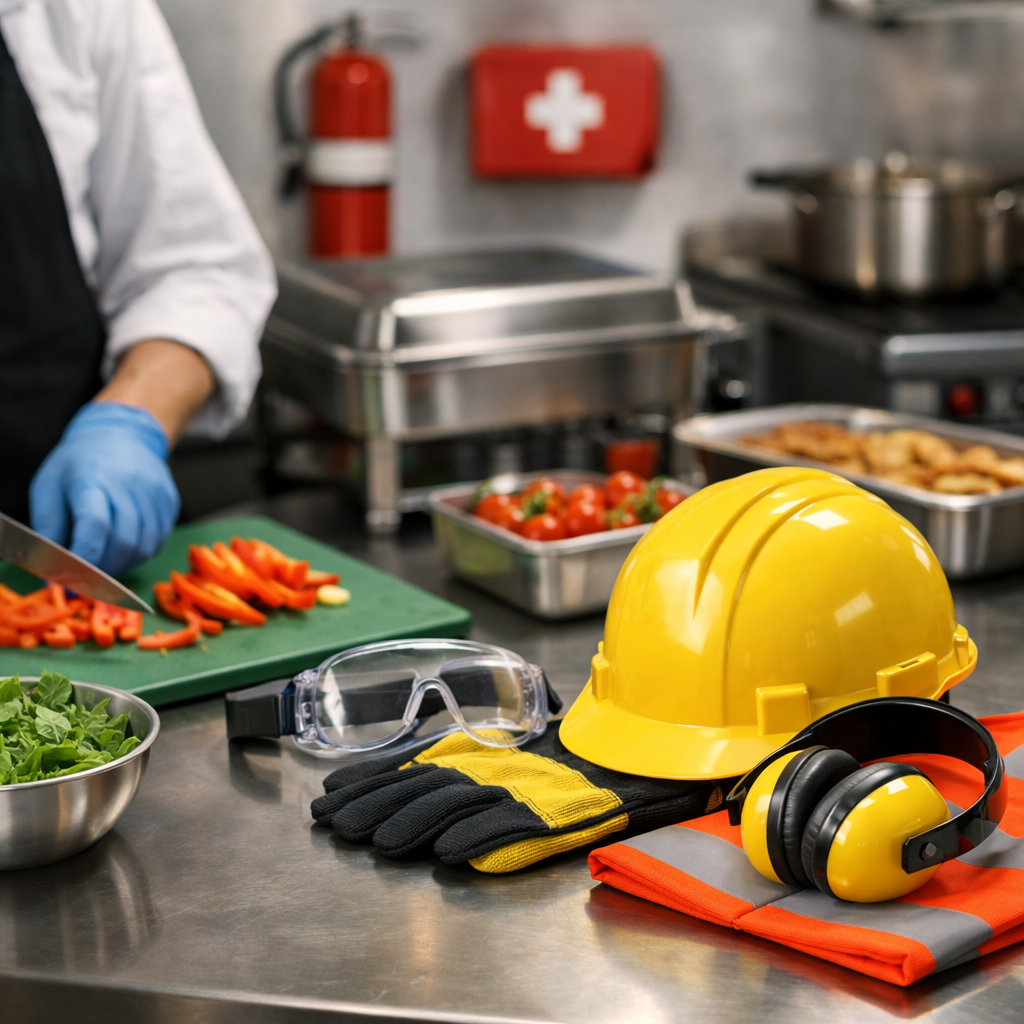
Engineering controls isolate workers from danger. Examples include slip-resistant flooring, machine guards on slicers, proper ventilation over cooking stations, temperature-controlled transport units, and trolleys for moving heavy loads. Mechanical aids are especially valuable for reducing strain injuries.
Administrative controls focus on procedures and supervision. These include safe work instructions, cleaning schedules, knife safety training, traffic flow plans for busy kitchens, fatigue management, and pre-event risk assessments. Clear labeling and chemical safety data access are also essential. Guidance from CCOHS and OSHA can help employers develop sound procedures.
Personal protective equipment is still important, but it should not be the only control. Gloves, aprons, footwear, and eye protection reduce exposure when other measures cannot fully remove the risk.
Practical examples of prevention
Consider a banquet team carrying hot soups from the kitchen to a service area. Instead of relying only on staff to “be careful,” a safer approach includes route checks, use of covered containers, heat-resistant gloves, anti-slip shoes, and enough staffing to prevent rushing.
In another example, a catering company that regularly sets up outdoor events may identify cable runs and portable generators as trip and electrical hazards. Controls may include cable covers, exclusion zones, waterproof connectors, and designated setup supervisors.
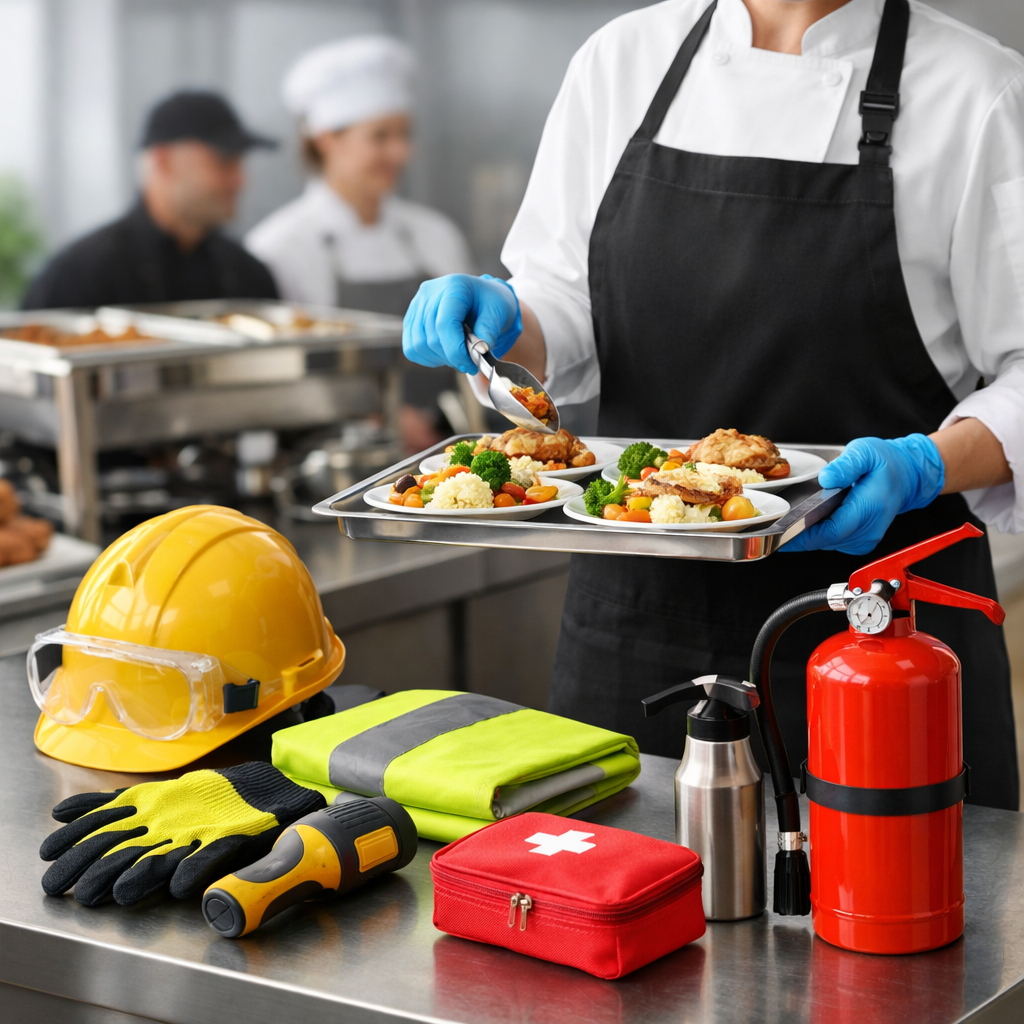
For more guidance on safe systems and inspections, many companies also maintain internal resources such as safety training programs and risk assessment checklists to standardize prevention across sites.
PPE and Safe Work Practices for Daily Catering Tasks
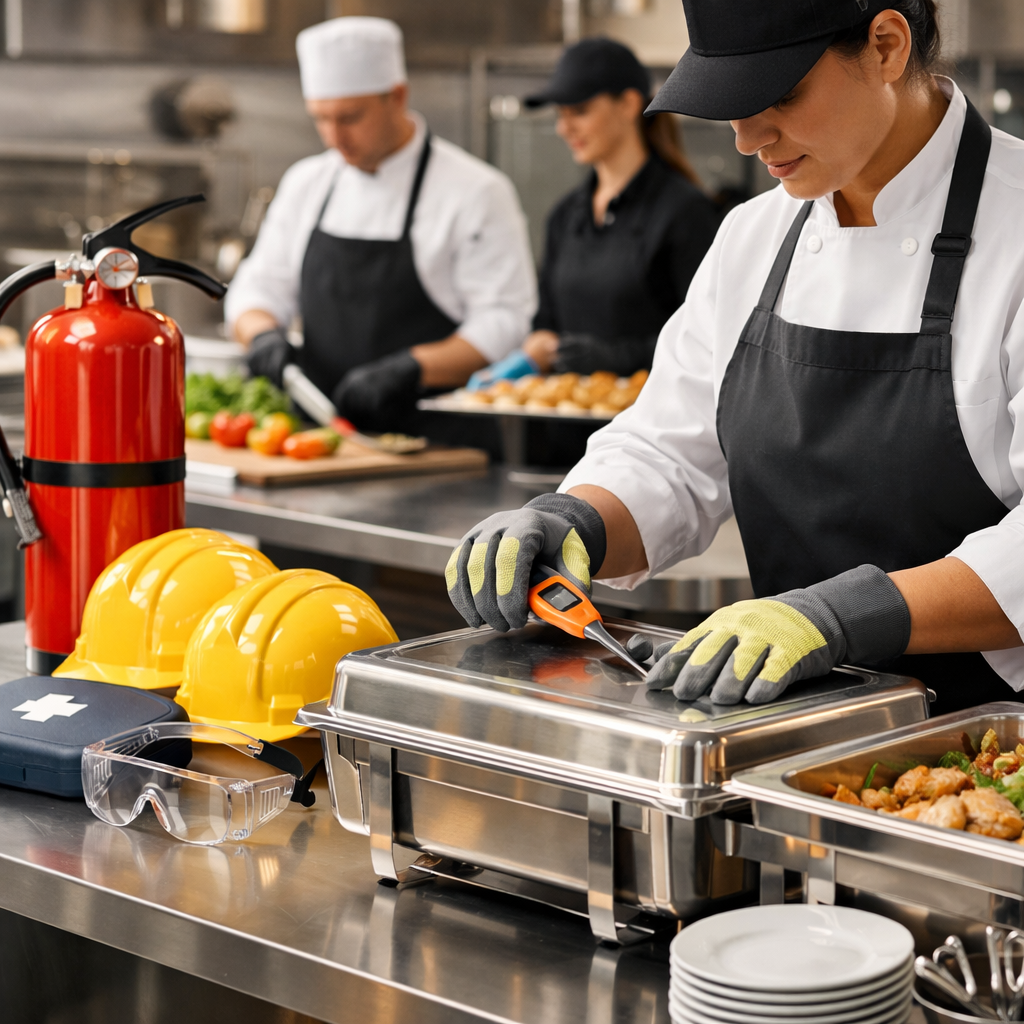
Personal protective equipment supports workplace safety in catering services when it matches the task and is used correctly. PPE should be comfortable, maintained, and replaced when damaged. Workers also need training on when PPE is required, how to wear it properly, and what its limits are.
Essential PPE in catering environments
| Task or Hazard | Recommended PPE | Safety Benefit |
|---|---|---|
| Wet or greasy floors | Slip-resistant safety footwear | Reduces slips and fall injuries |
| Handling hot trays, pans, or steam | Heat-resistant gloves and aprons | Helps prevent burns and scalds |
| Using chemicals for cleaning | Chemical-resistant gloves and eye protection | Limits skin and eye exposure |
| Knife preparation and slicing | Cut-resistant gloves where appropriate | Lowers risk of lacerations |
| Noisy equipment or large event setups | Hearing protection when required | Reduces noise exposure |
PPE works best when paired with safe habits. Staff should keep walkways clear, wipe spills immediately, store knives securely, and never bypass guards on equipment. Items should be lifted using proper technique, and heavier loads should be moved with carts or team lifting.
Workers should also be trained to recognize signs of stress, dehydration, or heat fatigue, especially during summer events or in poorly ventilated kitchens. Scheduled breaks, access to drinking water, and job rotation can make a meaningful difference.
Emergency preparedness is another daily safety need. Fire extinguishers, first aid kits, burn supplies, and emergency contacts should be easy to find. Staff should know evacuation routes and understand what to do in case of fire, injury, power failure, or chemical exposure. Resources from the NFPA can support fire prevention planning in food service settings.
Compliance, Training, and Building a Strong Safety Culture
Legal compliance is a major part of workplace safety in catering services. Employers generally have duties to provide a safe workplace, assess risks, maintain equipment, train employees, consult workers on hazards, and investigate incidents. Depending on the region, requirements may also cover hazardous products, first aid, fire safety, manual handling, and reporting obligations.
Compliance should not be reduced to paperwork. A policy only matters if it is understood and followed in practice. Supervisors need to monitor behavior, correct unsafe actions, and make sure staff have time and tools to work safely. New workers, temporary staff, and event-based crews need special attention because they may be unfamiliar with the site or equipment.
Key elements of an effective catering safety program
- Regular risk assessments for kitchens, storage areas, vehicles, and event venues
- Task-specific training for knives, hot equipment, chemicals, lifting, and electrical safety
- Routine inspections of floors, ventilation, guards, extinguishers, and portable appliances
- Incident reporting and investigation to identify root causes and prevent recurrence
- Consultation with workers so practical issues are reported early
- Contractor and vendor coordination for shared worksites and special events
Practical examples show how culture affects results. A catering company that starts each shift with a five-minute safety briefing can quickly flag issues such as a damaged trolley wheel or a high-risk service route. Another company may reduce injury rates simply by enforcing housekeeping checks every 30 minutes during peak service.
Training should be refreshed regularly, not just during onboarding. Refresher sessions help address complacency and changes in menus, venues, staff mix, or equipment. Records should be kept current, but the real goal is competence on the floor.
Strong leaders make safety visible. When managers wear the correct PPE, stop unsafe lifting, and prioritize maintenance, teams are more likely to follow. On the other hand, when speed is rewarded at the expense of safe practice, incidents become more likely.
In the end, workplace safety in catering services depends on consistent hazard control, practical training, proper PPE, and a workplace culture that values prevention. By identifying risks early, applying the Hierarchy of Controls, meeting OHSE obligations, and reinforcing safe daily habits, catering businesses can protect workers while delivering reliable service. Investing in workplace safety in catering services is not only a compliance measure; it is a smart operational decision that supports people, performance, and long-term business success.