 Skip to content

Workplace Stress and Burnout is no longer a “soft issue” or something only a few people experience. It affects every industry—healthcare, construction, logistics, retail, IT, and office environments—and it often shows up long before anyone calls it burnout.
The tricky part is that stress can look like dedication at first: longer hours, skipping breaks, pushing harder, and “just getting through” the day.
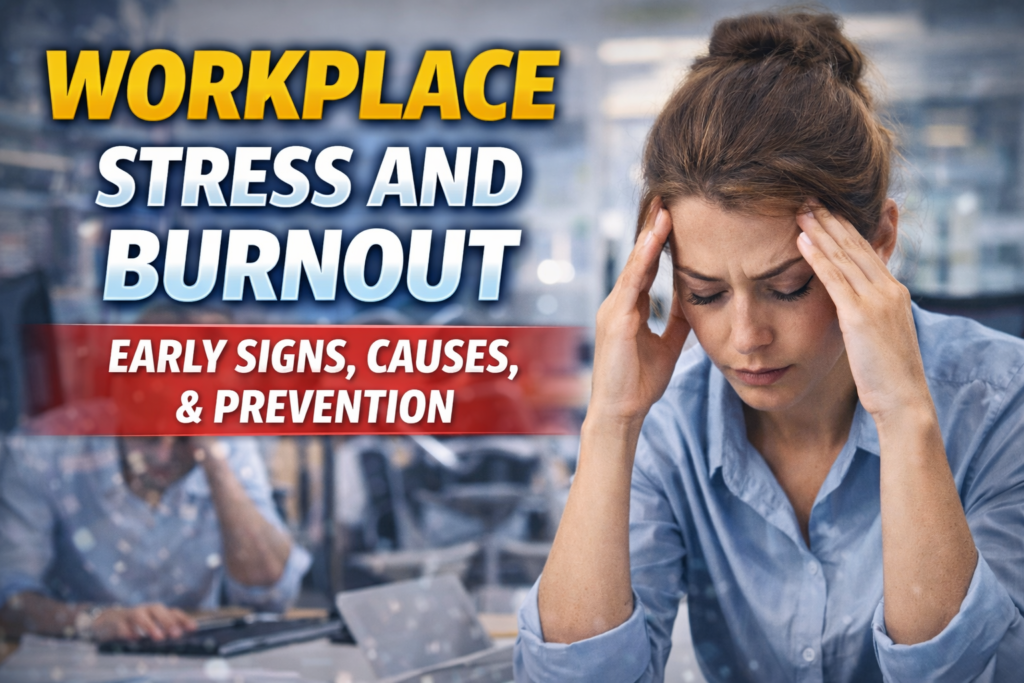
But when stress becomes constant, it starts to harm decision-making, attention, and behavior. That doesn’t only impact mental wellness—it increases the chance of mistakes, incidents, conflicts, absenteeism, and turnover.
In an OHSE lens, burnout is not just a personal problem. It is a workplace risk that can and should be prevented.
This article explains the early signs you can catch, the real causes behind stress overload, and practical prevention strategies that work in real workplaces.
- Understanding Workplace Stress and Burnout
- Early Signs of Workplace Stress and Burnout
- Key Causes Behind Workplace Stress and Burnout
- Why Stress Becomes a Safety Problem (Not Just a Wellness Issue)
- Prevention Strategies That Work for Employees
- Prevention Strategies That Work for Supervisors and Leaders
- How to Reduce Burnout by Fixing Work Design
- Quick Workplace Checklist to Spot and Stop Burnout
- Conclusion
Understanding Workplace Stress and Burnout
Workplace stress happens when job demands don’t match the time, tools, support, or control a worker has to meet those demands. The Canadian Centre for Occupational Health and Safety (CCOHS) explains that stress can occur when there’s a conflict between job demands and the level of control a worker has.
Burnout is often the next stage—when stress becomes chronic and the person feels emotionally drained, mentally detached, and less effective. The Canadian Psychological Association notes burnout is linked to ongoing workplace stress and appears in ICD-11, but it is not classified as a disease.
From a workplace perspective, the goal is not to eliminate all stress. Some pressure is normal. The goal is to prevent harmful, prolonged stress that becomes unsafe.
If you want a broader perspective on psychological hazards, your internal resource From Stress to Success: Managing Psychological Hazards is a strong companion piece.
Early Signs of Workplace Stress and Burnout
Many teams only notice burnout when someone breaks down or suddenly quits. The smarter approach is catching warning signs early—because early intervention is easier, faster, and far less costly.
Common early signs include changes in energy, attitude, and focus. A normally engaged worker may become irritable, quiet, or unusually negative. They might start missing deadlines, making more errors, or needing repeated reminders. You may also see reduced patience, low motivation, and more conflicts with coworkers.

Physical signs can also appear, such as headaches, sleep problems, muscle tension, stomach issues, and fatigue that doesn’t improve with rest. Workers might rely heavily on caffeine just to function, or they may feel “wired but tired” all day.
Here are workplace-visible warning signs supervisors should watch for:
- Increased mistakes or near-misses
- More sick days or frequent lateness
- Withdrawal from team communication
- Short temper, frustration, or emotional reactions
- Working through breaks and staying late regularly
If your workplace is already building awareness, your in-house content on Managing Workplace Stress can reinforce consistent messaging across departments.
Key Causes Behind Workplace Stress and Burnout
To reduce Workplace Stress and Burnout, we have to talk about root causes, not just coping tips. Many workplaces mistakenly treat stress as an individual weakness, when the real issue is job design, leadership systems, and workload planning.
One of the biggest drivers is workload overload. When staffing is tight, deadlines are aggressive, and roles keep expanding, workers spend every day in “catch-up mode.” Over time, that constant pressure turns into exhaustion and frustration.
Low control is another major factor. If workers have high responsibility but low decision-making power—no say in scheduling, methods, priorities, or staffing—it creates helplessness and stress. Add unclear roles and changing expectations, and people feel like they can never “win.”
Other common workplace stress drivers include:
- Conflicting priorities from different leaders
- Poor communication and last-minute changes
- Lack of support, training, or adequate tools
- Unfair treatment, favoritism, or toxic behavior
- Emotional demands (especially in healthcare and customer-facing work)
For healthcare environments, you may also want to reference Healthcare Worker Safety: Preventing Burnout and Violence, since burnout often overlaps with escalating conflict and fatigue-based errors.
Why Stress Becomes a Safety Problem (Not Just a Wellness Issue)
When stress builds up, performance changes. People rush, skip steps, stop asking questions, and take shortcuts. They may lose situational awareness, misread instructions, or forget basic tasks—especially during peak workload periods.

In safety-critical roles, chronic stress can increase risk in ways that are hard to measure until something goes wrong. For example, a distracted worker may miss a hazard, a nurse may make a documentation error, or a driver may take unnecessary risks because they feel behind schedule.
Stress also increases friction between people. This matters because conflict reduces teamwork, reduces reporting, and discourages speaking up. A workplace that feels tense or unsafe psychologically will usually have weaker hazard reporting and weaker safety communication overall.
Canada’s federal safety community has also highlighted stress as a serious health and safety hazard and encourages workplaces to take action to recognize and prevent it.
Prevention Strategies That Work for Employees
Personal strategies help, but they work best when combined with workplace supports. Employees should never be expected to “self-manage” a harmful environment alone. Still, there are strong actions workers can take to reduce harm early.
First, protect your recovery time. Burnout often grows when rest disappears. That means using breaks properly, avoiding constant overtime, and setting basic boundaries—like not responding to messages during off-hours unless required.
Second, use micro-recovery habits during the day. Even two minutes of stepping away, stretching, breathing slowly, or walking can reduce stress intensity. These small resets help you stay clearer and reduce mistakes.
Third, speak up early when warning signs appear. A simple check-in with a supervisor like “My workload is exceeding capacity” is far better than waiting until exhaustion hits. If you need structured support, consider using your organization’s Employee Assistance Program (EAP)—and if your workplace wants to build that culture, your internal resource The Role of EAPs in Workplace Mental Health is a practical reference.
CCOHS also recommends focusing on root causes and using supports like training and counselling services when needed.
Prevention Strategies That Work for Supervisors and Leaders
Leaders play the biggest role in preventing Workplace Stress and Burnout because leadership decisions shape workload, staffing, communication, and culture. The strongest prevention starts with how work is planned and supported.
A practical first step is “capacity planning.” Supervisors should regularly check what tasks are being added, what deadlines exist, and whether staffing realistically matches demand. If workload is high, leaders should actively remove tasks, delay non-urgent work, or bring in temporary support.
Next, improve clarity. Many workers burn out because they are constantly guessing priorities. Clear direction such as “These are the top 3 tasks for today” reduces stress instantly. It also reduces errors because workers stop bouncing between competing demands.
Leaders should also normalize breaks and safe pacing. If managers celebrate overwork, staff copy it. But if leaders protect breaks, encourage smart pacing, and praise consistent quality, workers feel safer to work sustainably.
Effective leadership actions include:
- Weekly workload check-ins (10 minutes is enough)
- Clear “top priority” communication
- Early conflict resolution and respectful behavior standards
- Training refreshers when errors rise
- Encouraging reporting without blame
For a deeper psychological safety angle, your article The Importance of Mental Health in the Workplace supports this prevention approach.
How to Reduce Burnout by Fixing Work Design
Real prevention means treating stress like any other hazard: identify it, assess it, control it, and review results. The best workplaces do not wait for crisis—they build stress controls into daily operations.
Start by identifying high-pressure tasks and peak demand periods. Look for repeated triggers: end-of-month rush, understaffed shifts, complex documentation loads, or constant interruptions. Then apply controls such as better staffing, improved scheduling, and realistic turnaround times.
Job rotation can also reduce strain. When one person does the hardest tasks every day, burnout risk climbs. Rotating duties (where possible) spreads load and helps recovery.
Ergonomics also plays a role. High stress + physical discomfort is a fast burnout accelerator. If your teams work at desks or do repetitive work, link mental health strategy with physical strain prevention through resources like Ergonomics for the Modern Worker.
Quick Workplace Checklist to Spot and Stop Burnout
A simple checklist can help workplaces act before stress becomes a serious health issue.
If you notice these patterns, it’s time to intervene:
- Overtime becoming “normal”
- More errors, rework, or near misses
- Increased complaints and conflicts
- Staff disengagement or turnover talk
- Low morale and poor communication
Strong immediate fixes include:
- Reset priorities and pause non-urgent tasks
- Add short staffed coverage during peak hours
- Reduce unnecessary meetings and interruptions
- Encourage breaks and enforce recovery time
- Promote EAP access and supportive check-ins
Even small changes, done consistently, can reverse the early stages of Workplace Stress and Burnout.
Conclusion
Workplace Stress and Burnout is preventable when workplaces treat it like a real operational risk—not a personal weakness. The early signs are visible long before crisis hits, and the most effective prevention comes from smart work planning, clear priorities, supportive leadership, and practical recovery habits.
When organizations improve workload balance and psychological safety, they also improve quality, retention, and incident prevention.
No comments yet