
Misty weather in the workplace is easy to underestimate because it does not look as dramatic as snow, lightning, or heavy rain. Yet low visibility, damp walking surfaces, glare, and changing outdoor conditions can quietly raise the risk of slips, trips, falls, vehicle incidents, and struck-by events.
Canadian safety guidance includes low visibility such as fog among extreme conditions employers should assess, and national preparedness guidance notes that fog is common in Canada and can seriously reduce visibility for travel.
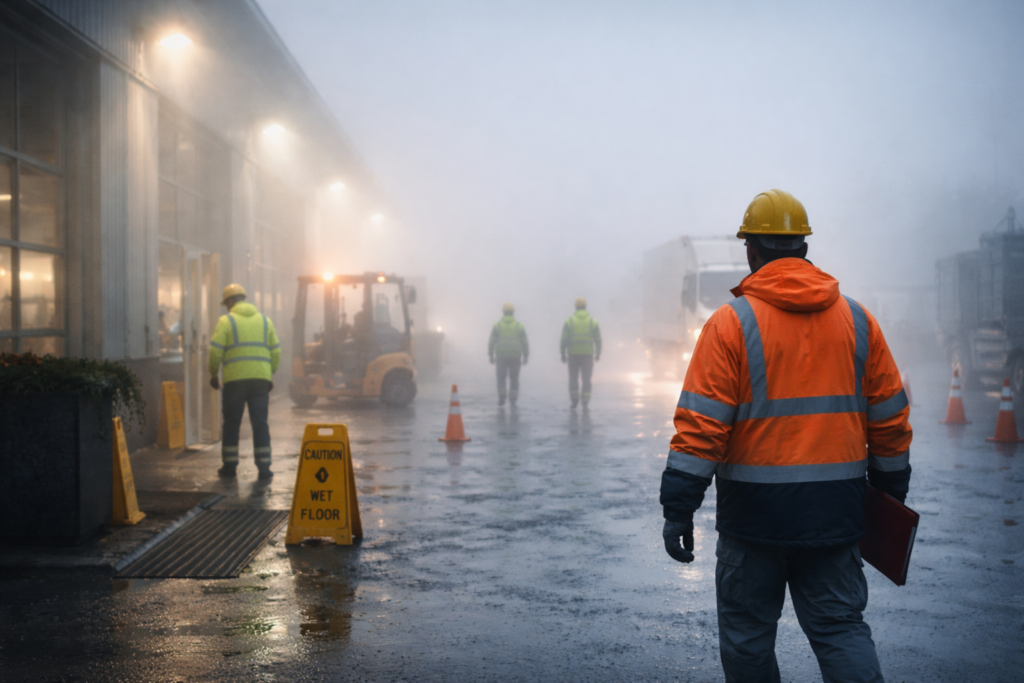
In many workplaces, mist creates a dangerous mix of “nothing seems wrong” and “everything is slightly harder.” Workers may still be expected to walk between buildings, unload deliveries, operate mobile equipment, inspect outdoor assets, or drive for work. The result is not always one major failure.
More often, it is a series of small misses: a wet entrance floor, a hidden curb, a reversing vehicle seen too late, or a worker whose high-visibility gear is dulled by poor contrast and glare. That is why misty weather in the workplace deserves a formal hazard assessment rather than casual attention.
- Why Misty Weather in the Workplace Is More Dangerous Than It Looks
- Misty Weather in the Workplace and Slip, Trip, and Fall Risks
- Vehicle and Mobile Equipment Hazards in Misty Weather in the Workplace
- Outdoor Tasks That Should Change During Misty Weather in the Workplace
- Practical Controls for Misty Weather in the Workplace
- Building a Strong Safety Culture Around Misty Weather in the Workplace
- Final Thoughts
Why Misty Weather in the Workplace Is More Dangerous Than It Looks
The first hidden hazard is reduced visual awareness. Mist can flatten depth perception, blur edges, and shorten reaction time. People often believe they can “still see enough,” but patchy fog and mist can change rapidly. Public safety guidance warns that fog conditions can shift quickly, and driving guidance consistently stresses reduced speed, extra caution, and avoiding high beams because reflected light can make visibility worse rather than better.
The second hidden hazard is overconfidence. Because mist is familiar, workers may not adjust their pace, route, or task plan. A forklift route stays the same. A courier walks the usual shortcut. A technician backs up a vehicle the way they always do.
But safety guidance on backing and workplace transport shows that when visibility is limited, site design, separation of pedestrians from vehicles, and the use of spotters or safer traffic flow become much more important.
Misty Weather in the Workplace and Slip, Trip, and Fall Risks
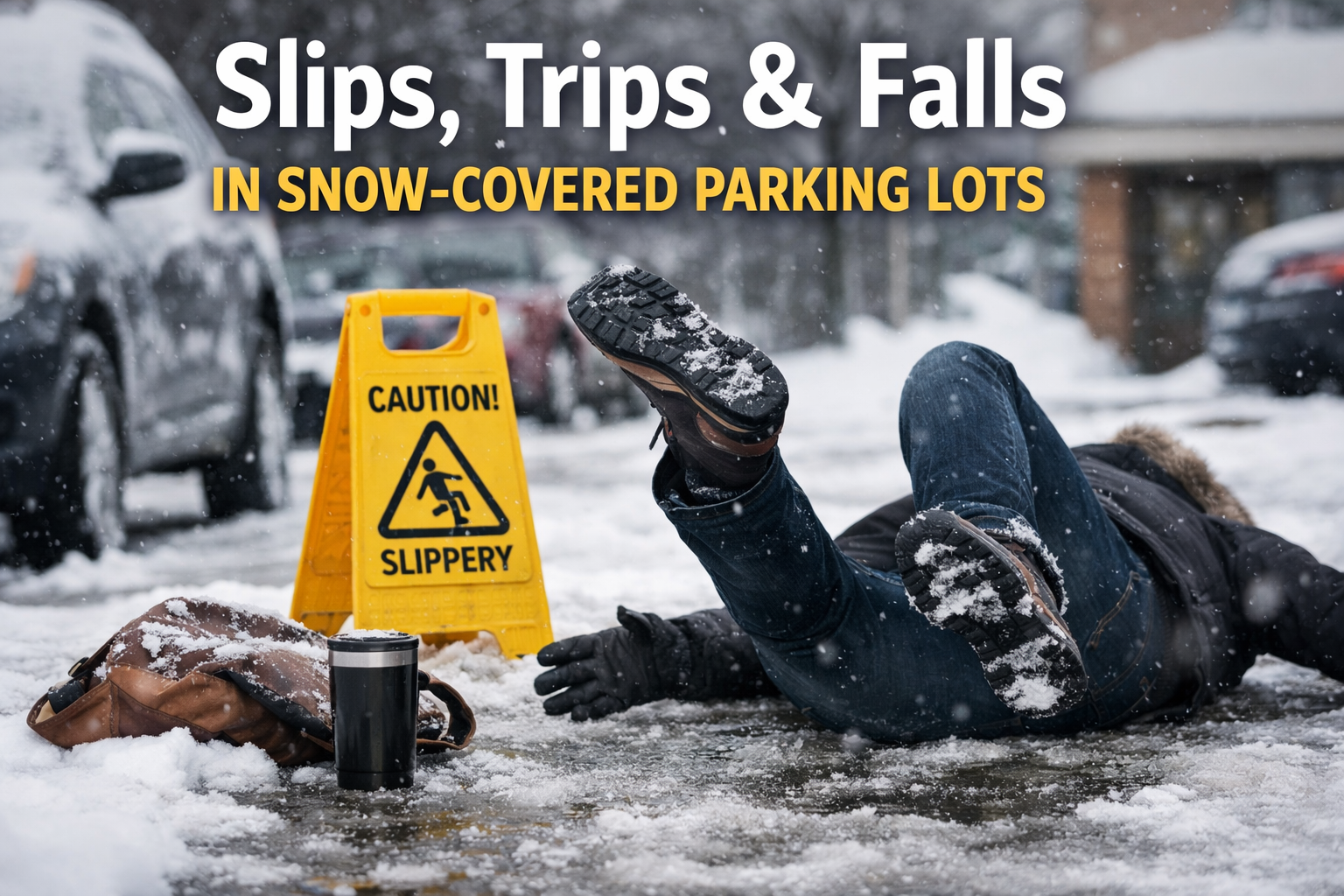
One of the most immediate dangers of misty weather in the workplace is the way moisture travels. It settles on ramps, stairs, loading docks, metal plates, painted lines, entrance mats, and tile floors just inside doors. Workers may not even notice the surface is becoming slick until traction is lost.

CCOHS emphasizes that good housekeeping is the most important foundational level of preventing slips and trips, including cleaning spills, marking wet areas, and keeping walking routes clear.
Misty mornings are especially risky at entrances and transition points. Boots bring in moisture, umbrellas drip, and polished indoor floors become unexpectedly slippery. In healthcare, warehousing, manufacturing, and facility operations, this can affect staff, patients, visitors, contractors, and delivery personnel.
Simple controls such as absorbent matting, frequent floor checks, prompt cleanup, anti-slip surfaces, and footwear with reliable traction are not minor details. They are some of the most effective low-cost controls available. CCOHS also highlights the value of non-slip mats, clutter-free walkways, and footwear with good traction.
This is also the right moment to strengthen related procedures already covered in your slip, trip, and fall prevention guide and your winter workplace safety checklist, because damp low-visibility conditions often expose weak housekeeping and inspection routines before full winter weather arrives.
Vehicle and Mobile Equipment Hazards in Misty Weather in the Workplace
Another major issue with misty weather in the workplace is moving vehicles. Delivery vans, maintenance carts, forklifts, loaders, and site trucks all become more dangerous when drivers cannot clearly judge distance or detect pedestrians early.
Backing incidents are a particular concern because a driver’s field of vision is already limited even in clear conditions. CCOHS states that the safest way to back up is to avoid needing to back up at all through better site planning and traffic flow.
Where backing cannot be avoided, employers should tighten controls during misty conditions. Separate pedestrians from traffic paths. Use designated walking routes and barricades where possible. Make sure spotters are trained and visible.
OSHA and CCOHS guidance both reinforce the need for clear communication, safer traffic layouts, and high-visibility clothing where workers are exposed to vehicle movement.
For road travel, the danger is just as serious. Canada’s preparedness guidance says fog is a major factor in an average of 53 fatal road accidents per year in Canada. Safe driving advice from Canadian and weather authorities recommends slowing down, using low-beam headlights, avoiding high beams, and pulling over safely if visibility becomes too poor to continue.
Outdoor Tasks That Should Change During Misty Weather in the Workplace
A hidden mistake in many organizations is treating mist as a comfort issue rather than an operational trigger. In reality, certain tasks should be modified, delayed, or suspended when visibility drops below a safe level.
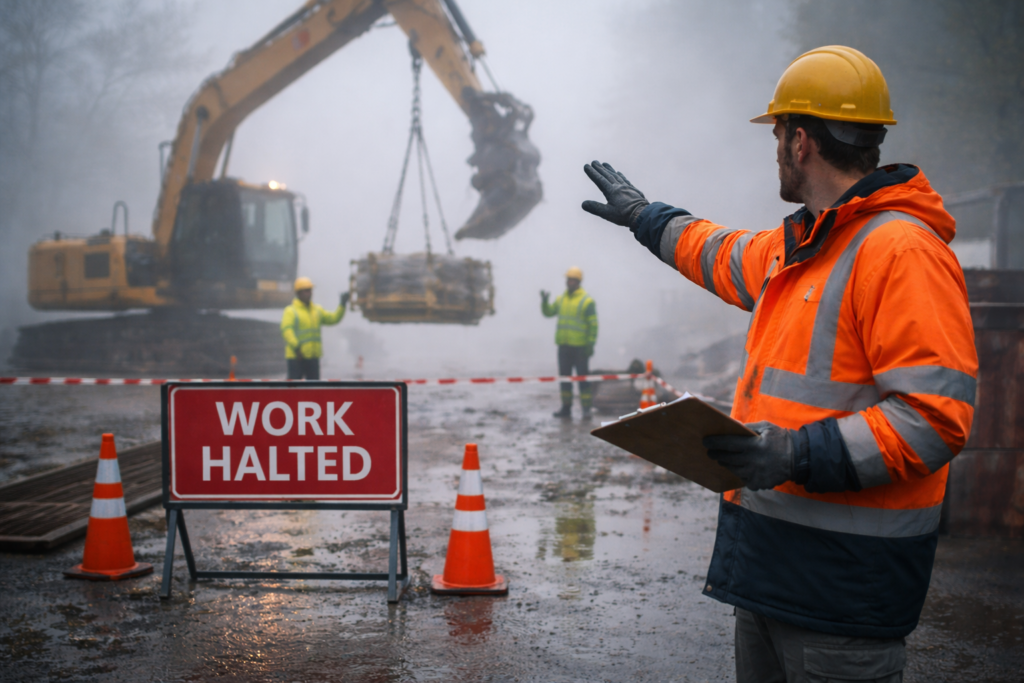
HSE guidance for quarry operations is very direct: visibility must be sufficient for tipping operations, and in poor visibility such as fog, tipping should be suspended. That principle applies broadly across outdoor work where clear lines of sight are essential.
The lesson is simple. If a task depends on seeing people, edges, signals, moving equipment, drop-offs, or traffic routes clearly, then visibility is a safety control, not just a weather condition. Employers should define visibility-related stop-work or change-work thresholds for tasks such as reversing, lifting, rooftop work, groundskeeping near traffic, site deliveries, and inspections around uneven terrain.
Practical Controls for Misty Weather in the Workplace
The best way to manage misty weather in the workplace is to use the hierarchy of controls rather than relying only on workers to “be careful.” CCOHS describes the hierarchy of controls as a step-by-step method that starts with the most effective controls first.
In practice, that means eliminating or reducing exposure where possible. Delay non-essential outdoor work. Reroute pedestrians away from vehicle zones. Increase lighting in exterior approaches and loading areas. Add anti-slip products on known wet surfaces. Improve drainage near entrances. Use barriers and signage to separate people from moving equipment.
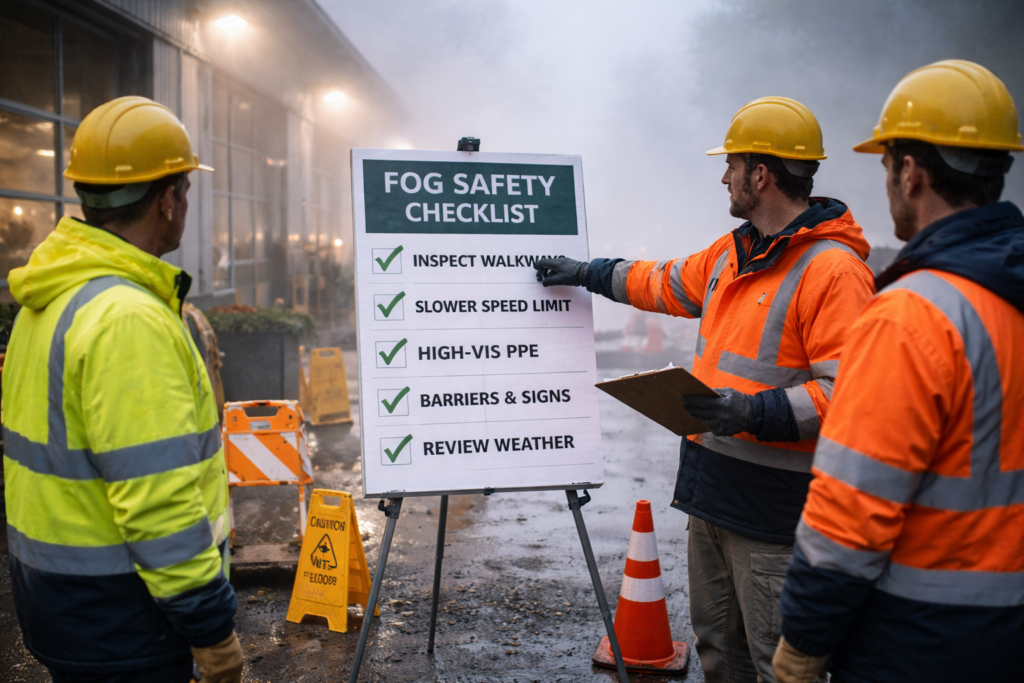
Then reinforce those measures with administrative controls such as weather-triggered inspections, slower site speed limits, toolbox talks, checklists for entrances and walkways, and supervisor authority to pause work when visibility falls.
PPE still matters, but it should support—not replace—better controls. High-visibility safety apparel improves how well workers are seen, especially in low-light conditions and around vehicles. However, visibility gear works best when combined with traffic separation, lighting, and clear procedures.
Research and guidance also show that lighting and warning beacons can behave differently in fog, sometimes creating glare or reducing how clearly hazards are seen, so lighting choices should be practical and tested in real conditions.
Building a Strong Safety Culture Around Misty Weather in the Workplace
A strong OH&S program does not wait for a serious incident before reacting. It teaches workers that ordinary weather can create extraordinary risk. Supervisors should encourage reporting of slick spots, poor lighting, hidden edges, blind reversing points, and routes that become unsafe in damp low-visibility conditions.
Near misses during misty mornings should be reviewed carefully because they often reveal control gaps before an injury occurs.
Training should also be specific. Instead of saying “use caution,” explain what changes in misty conditions: slower walking pace, wider vehicle spacing, no rushing across lots, earlier cleanup of entrance moisture, no shortcuts through poorly lit routes, and task-specific pause rules for low visibility. That kind of clarity turns awareness into action.
Final Thoughts
Misty weather in the workplace may look mild, but its hazards are real. It reduces visibility, increases slip risk, weakens depth perception, complicates vehicle movement, and creates false confidence in routine tasks.
The most effective response is a proactive one: assess the hazard, adjust the work, improve housekeeping, control traffic, strengthen visibility measures, and empower supervisors to pause unsafe tasks.
When organizations treat mist as a real operational hazard instead of a minor inconvenience, they prevent the kinds of incidents that workers often describe afterward as “something that happened so fast.” Smart planning, clear procedures, and practical controls can make all the difference in misty weather in the workplace.
No comments yet