
Risk Assessment Steps Every Employer Should Follow for a Safer Workplace

Risk assessment steps help employers identify hazards, reduce incidents, and create safer workplaces across every industry.
Whether you manage an office, a warehouse, or a construction site, a structured assessment process makes it easier to spot what could cause harm and decide how to control it before someone gets hurt.
A proper risk assessment is not just a paperwork exercise. It is a practical way to protect workers, contractors, visitors, and your business operations.
It also supports compliance with health and safety duties and shows that safety is being managed in a consistent, responsible way.
Why risk assessment steps matter in every workplace
The main purpose of risk assessment steps is to find hazards, evaluate the level of risk, and put effective controls in place.
Employers who follow a clear process are better able to prevent injuries, reduce downtime, and improve staff confidence.
For example, in an office, the risks may include poor workstation setup, trailing cables, or blocked emergency exits.
In a warehouse, common hazards include forklift traffic, manual handling, falling objects, and slips on loading bays.
On construction sites, risks are often more serious and can include working at height, moving equipment, noise, dust, and electrical hazards.
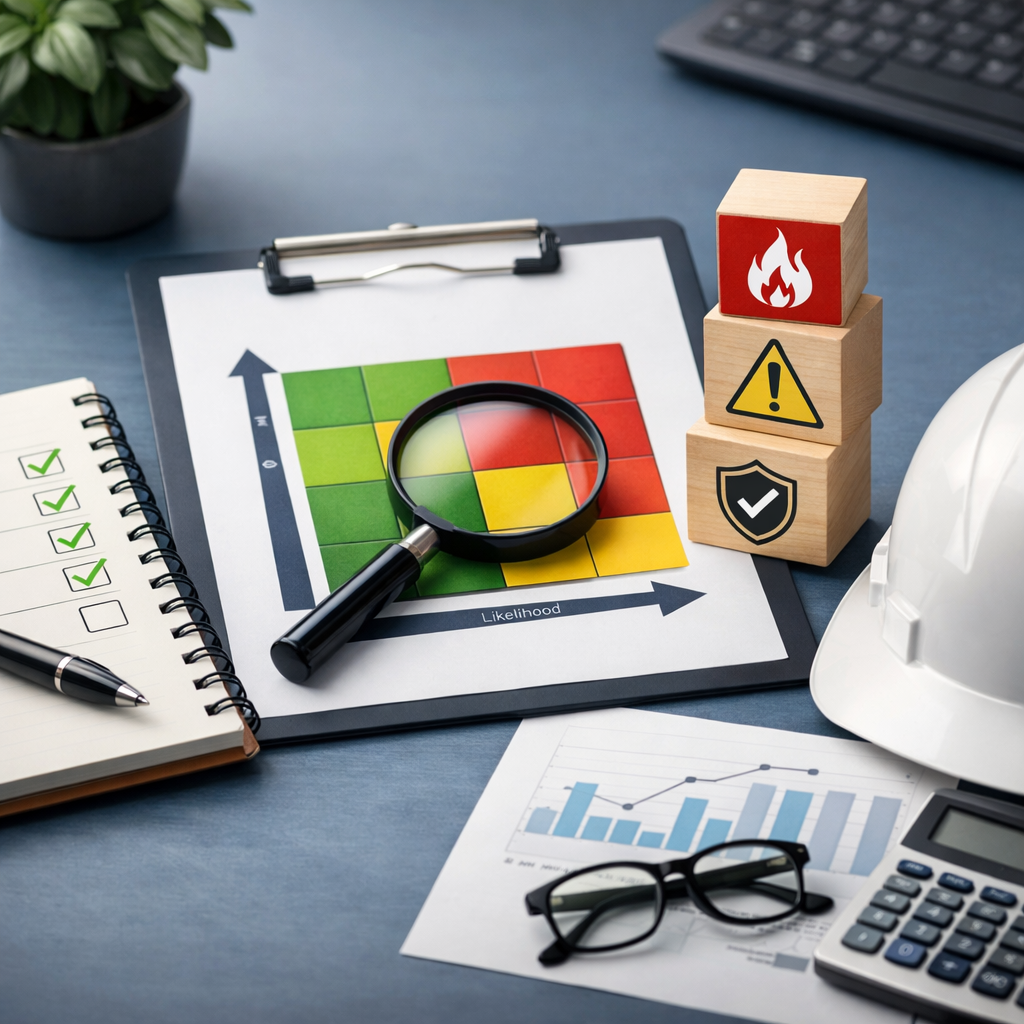
Guidance from organizations such as OSHA and CCOHS reinforces the need for employers to assess risks regularly and review controls as work changes.
If your business is building a broader safety system, it also helps to align risk assessments with your safety policy and incident reporting procedures.
Step 1 to Step 3: Identify hazards, decide who may be harmed, and evaluate the risks
Step 1: Identify the hazards
The first of the essential risk assessment steps is to look carefully at the workplace and identify anything with the potential to cause harm.
This includes physical hazards, chemical hazards, ergonomic issues, psychosocial risks, and environmental conditions.
- Office example: poorly adjusted chairs, screen glare, overloaded power boards, and stress from excessive workload.
- Warehouse example: pallet racking collapse, forklift blind spots, damaged floors, and repetitive lifting.
- Construction example: unprotected edges, silica dust, live services, and incomplete scaffolding.
Walkthrough inspections, staff consultation, maintenance records, and incident history can all help identify hazards accurately.
Do not rely only on management observations. Workers often know where the real risks are because they deal with them every day.
Step 2: Decide who might be harmed and how
Once hazards are identified, the next of the risk assessment steps is to determine who may be affected and in what way.
This should include employees, supervisors, cleaners, contractors, drivers, visitors, and even members of the public where relevant.
For instance, a wet warehouse floor may endanger pickers, forklift operators, and delivery drivers.
On a construction site, falling materials may affect not only workers below but also nearby pedestrians if the area is not secured.
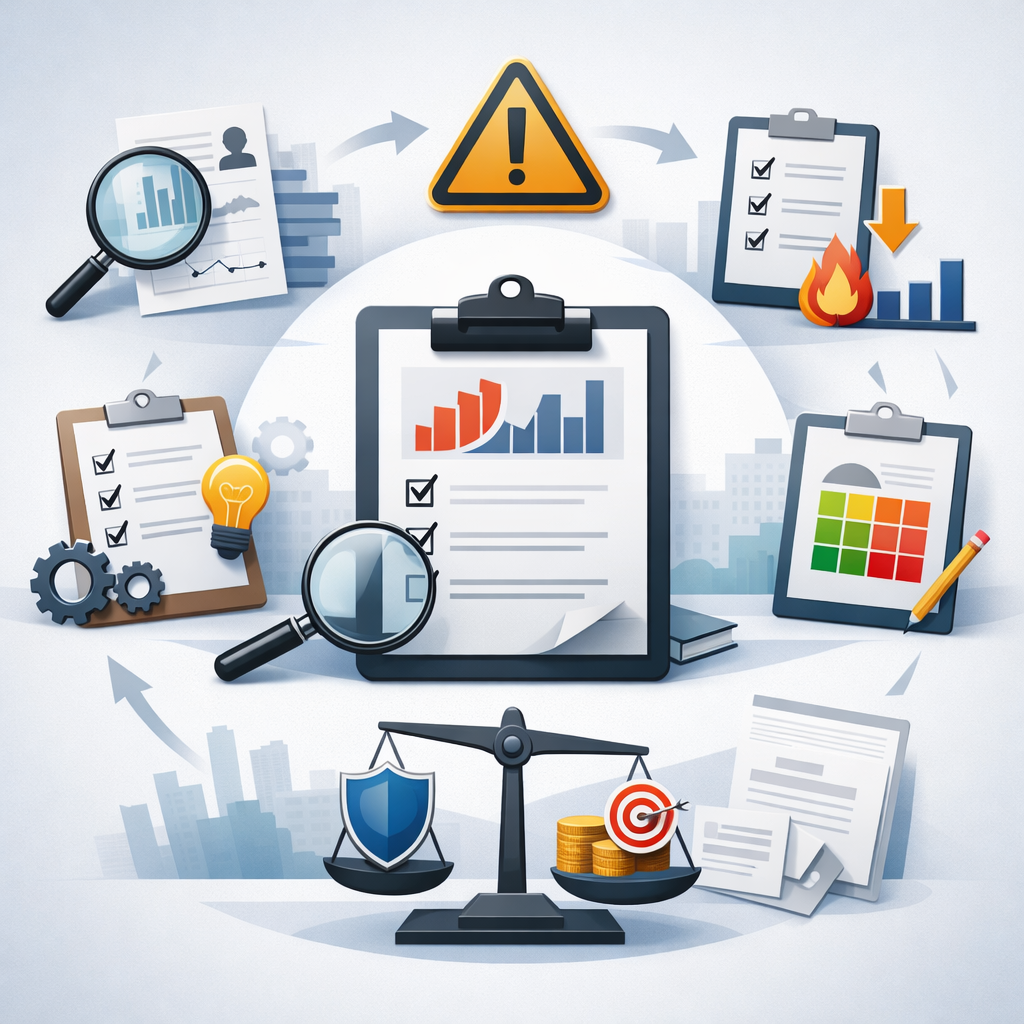
Think about vulnerable groups as well, such as new workers, young workers, pregnant employees, or people with limited mobility.
Step 3: Evaluate the risks and choose controls
After identifying hazards and exposed persons, employers must assess how likely harm is and how serious the outcome could be.
This helps prioritize action so that the highest risks are addressed first.
A practical approach is to rank each hazard as low, medium, or high based on likelihood and severity.
| Workplace | Hazard | Possible Harm | Example Control |
|---|---|---|---|
| Office | Trailing cable | Trips and falls | Cable management and better workstation layout |
| Warehouse | Forklift and pedestrian interaction | Collision injury | Segregated walkways and traffic rules |
| Construction | Work at height | Serious fall or fatality | Guardrails, platforms, fall protection, and supervision |
When selecting controls, apply the Hierarchy of Controls. This means starting with the most effective options rather than jumping straight to personal protective equipment.
- Elimination: remove the hazard completely.
- Substitution: replace it with something safer.
- Engineering controls: isolate people from the hazard.
- Administrative controls: change procedures, training, or scheduling.
- PPE: use protective equipment as the last line of defense.
For example, on a construction site, eliminating work at height by assembling components on the ground is better than relying only on a harness.
In a warehouse, separating forklifts and pedestrians with barriers is more reliable than simply telling workers to stay alert.
Step 4 and Step 5: Record findings, implement controls, and review the assessment
Step 4: Record findings and take action
One of the most overlooked risk assessment steps is documenting the findings clearly and turning them into action.
Your record should show the hazard, who could be harmed, the existing controls, any additional actions required, who is responsible, and the deadline for completion.
A short, practical record is often more useful than a long document no one reads.
For example, if an office assessment finds poor ergonomic setups, the action may be to provide adjustable chairs, monitor risers, and workstation training within 30 days.
If a warehouse inspection reveals damaged pallet racking, the action should include immediate isolation of the area, repair by a competent person, and inspection before reuse.
On a construction site, identifying an excavation hazard should trigger controls such as edge protection, permit systems, daily inspections, and emergency rescue planning.
It also helps to link assessments with your employee training program so workers understand the controls and their role in following them.
Step 5: Review and update regularly
Risk assessment steps do not end once the form is completed. Workplaces change, and assessments must be reviewed to stay relevant.
Review them after incidents, near misses, equipment changes, staffing changes, layout changes, or new tasks being introduced.
A warehouse that adds a second shift may face different fatigue and supervision risks than before.
An office that moves to hybrid work may need to consider home workstation safety and mental wellbeing.
A construction site changes constantly as new trades, plant, and structures are introduced, so reviews need to happen frequently.
Regular reviews also help confirm whether existing controls are working in practice or only on paper.
Best practices for applying risk assessment steps effectively
Employers get better results when risk assessment steps are built into day-to-day operations rather than treated as a one-time compliance task.
That means involving workers, training supervisors, and making sure corrective actions are actually completed.
- Consult workers: they often spot hazards before management does.
- Use real observations: watch tasks as they are actually performed.
- Prioritize high-risk work: focus first on activities with the greatest potential for serious harm.
- Assign responsibility: every action should have an owner and deadline.
- Verify controls: check that improvements are effective after implementation.
- Keep records accessible: supervisors and workers should be able to use them easily.
For many employers, the most effective approach is to combine formal assessments with toolbox talks, inspections, and routine safety discussions.
This keeps hazards visible and encourages continuous improvement instead of reactive decision-making.
You can also refer to guidance from HSE for practical examples of how risk assessment works in real workplaces.
Following these essential risk assessment steps gives employers a clear path to safer and more compliant workplaces.
By identifying hazards, understanding who may be harmed, evaluating risk properly, applying the Hierarchy of Controls, recording actions, and reviewing regularly, businesses can reduce incidents across offices, warehouses, and construction sites.
When risk assessment steps are practical, consistent, and supported by workers and supervisors, they become one of the strongest tools for preventing harm and improving workplace safety.
No comments yet