
Powerful Hazard Identification Techniques for Safer Workplaces

Hazard identification techniques are the foundation of any effective workplace safety program. Before an employer can reduce risk, prevent injuries, or improve compliance, the hazards must be found, understood, and controlled in a practical way.
From busy warehouses and construction sites to offices and healthcare facilities, every workplace has conditions that can cause harm. A wet floor, poor lifting practices, exposed wiring, excessive noise, chemical vapors, and even stress or fatigue can all become serious safety issues when they are missed or ignored.
Strong hazard identification does more than satisfy regulatory requirements. It helps teams make better decisions, prioritize controls, and build a culture where workers actively look for problems before incidents happen. Guidance from organizations such as OSHA and CCOHS consistently emphasizes early hazard recognition as a core part of occupational health and safety.
Why hazard identification techniques matter in every workplace
Hazards are not limited to obviously dangerous environments. In manufacturing, a machine guard may be missing. In an office, poor workstation design can lead to musculoskeletal strain. In retail, blocked exits and unstable shelving can create emergency and struck-by risks.
That is why hazard identification must be ongoing rather than a one-time checklist exercise. Workplaces change constantly. New equipment arrives, staffing shifts occur, production pressures increase, and routine tasks gradually drift from the original safe method.
Effective hazard identification techniques help organizations spot both immediate dangers and slow-building risks. They also improve communication between supervisors, safety representatives, and front-line workers who often notice warning signs first.
Common workplace hazard categories
- Physical hazards: slips, trips, falls, noise, heat, vibration, moving machinery
- Chemical hazards: solvents, dust, fumes, cleaning products, hazardous gases
- Biological hazards: bacteria, viruses, mold, bloodborne pathogens
- Ergonomic hazards: repetitive motion, awkward posture, heavy lifting, poor workstation layout
- Psychosocial hazards: fatigue, bullying, stress, excessive workload, violence
- Electrical and fire hazards: damaged cords, overloaded circuits, poor storage of flammables
Practical hazard identification techniques with real workplace examples
The most reliable safety programs use several methods together. No single tool will uncover every risk, so employers should combine inspections, worker input, task analysis, and incident review to create a full picture.
Workplace inspections and walk-throughs
Routine inspections are one of the most widely used hazard identification techniques. Supervisors and safety personnel walk the site, observe conditions, and document anything that could cause harm.
For example, in a warehouse, an inspection may reveal damaged pallet racking, poor housekeeping, and forklift routes that cross pedestrian walkways. Each issue may appear manageable on its own, but together they raise the chance of struck-by and fall incidents.
Inspections work best when they are scheduled, documented, and paired with corrective action. A hazard log should track what was found, who is responsible, and when the issue must be fixed. Many companies improve this process by using a simple safety inspection checklist that keeps reviews consistent across shifts and departments.
Job hazard analysis for task-level risks
A job hazard analysis, sometimes called JHA or JSA, breaks a task into steps and identifies what can go wrong at each stage. This is especially useful for non-routine work, higher-risk tasks, and jobs involving equipment, energy sources, or manual handling.
Consider a maintenance technician replacing a conveyor belt. The task may involve isolation of electrical power, removal of guarding, awkward lifting, and work near pinch points. By analyzing each step in advance, the employer can plan lockout/tagout, use lifting aids, assign competent workers, and restore guarding before startup.
This approach makes hazard identification techniques more specific and actionable. Instead of saying “maintenance is risky,” the analysis identifies exactly where the risks are and what controls are required.
Worker reporting and near-miss review
Workers are often the first to notice problems because they perform the job daily. Encourage them to report unsafe conditions, close calls, unusual equipment behavior, and process changes without fear of blame.
For instance, a nurse may report that a patient room layout makes safe lifting difficult. A delivery driver may mention that repeated reversing in a tight loading area creates blind-spot risks. These observations are valuable because they reveal hazards before an injury occurs.

Near-miss investigations are equally important. If a box falls from a high shelf but no one is hurt, that event still signals a hazard. Reviewing the causes may uncover poor stacking practices, overloaded storage, or lack of training.
The hazard identification process step by step
A structured process turns observations into prevention. While the details vary by industry, the core stages are similar across most workplaces.
1. Identify the hazard
Look for anything with the potential to cause harm. Observe routine and non-routine tasks, inspect equipment, review safety data sheets, and ask workers where they experience difficulty or uncertainty.
In a food processing plant, this could include slippery floors, unguarded slicers, chemical cleaning agents, and repetitive hand movements on a packing line.
2. Assess the risk
Once a hazard is identified, determine how likely harm is and how serious the outcome could be. A minor trip hazard in a low-traffic area may still need correction, but a missing guard on a high-speed machine requires urgent action.
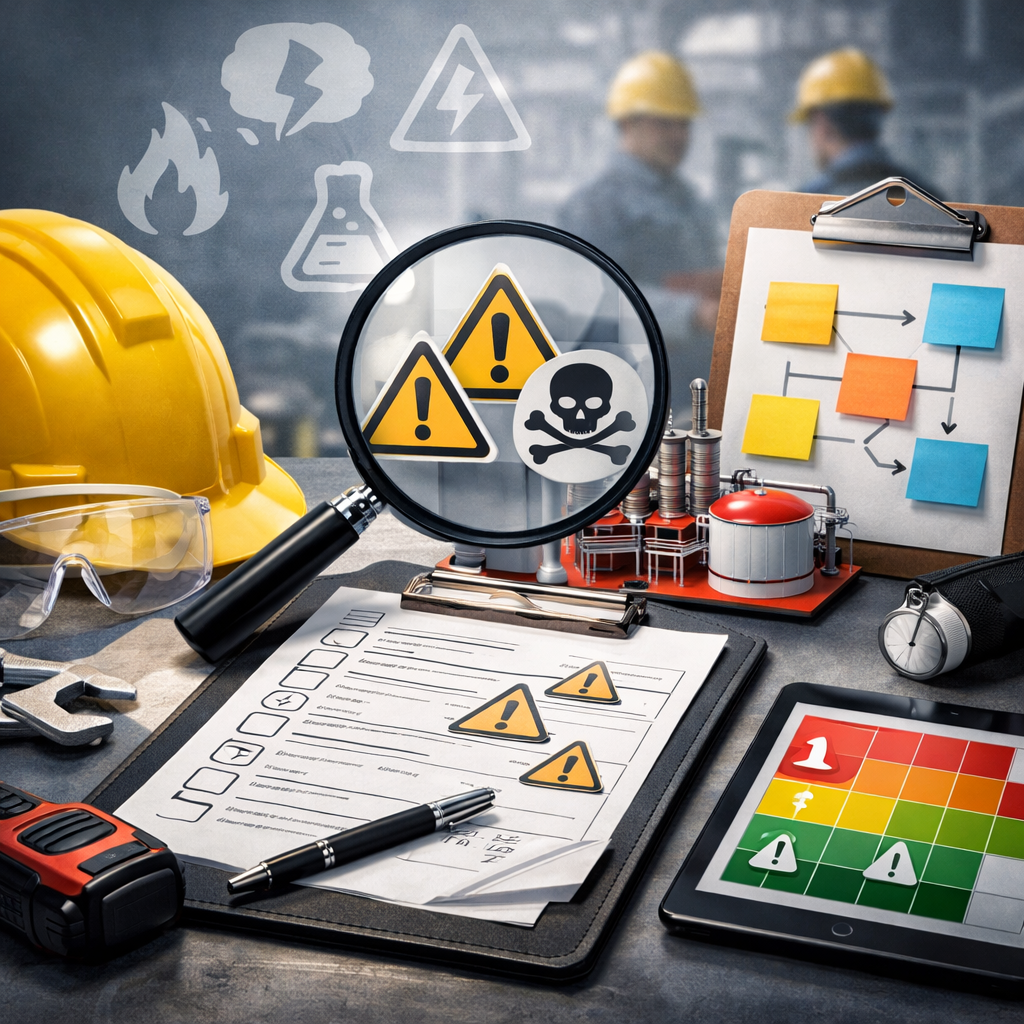
The table below shows a simple way to think about risk priority.
| Hazard | Example | Potential Harm | Priority |
|---|---|---|---|
| Wet floor | Spill near entrance | Slip and fall injury | Medium |
| Missing machine guard | Exposed rotating part | Crush or amputation injury | High |
| Poor lifting method | Manual box handling | Back strain | Medium |
| Chemical vapor exposure | Solvent use in enclosed area | Respiratory illness | High |
3. Apply controls using the Hierarchy of Controls
After assessing the risk, choose control measures in the correct order. The Hierarchy of Controls is widely accepted by safety professionals and promoted by NIOSH.
- Elimination: remove the hazard entirely
- Substitution: replace it with something safer
- Engineering controls: isolate people from the hazard
- Administrative controls: change procedures, scheduling, or training
- Personal protective equipment: use PPE as the last line of defense
For example, if workers are exposed to solvent fumes, elimination may involve changing the process. Substitution may mean using a less hazardous product. Engineering controls could include local exhaust ventilation. Administrative controls might limit exposure time, while PPE may include appropriate respirators and gloves.
4. Review and improve
Hazard identification is never finished. Controls must be checked to confirm they work in real conditions. Review incident reports, monitor trends, talk with workers, and update assessments when tasks, materials, or layouts change.
If you recently updated a procedure, connect it with related resources such as your workplace risk assessment guide so teams can easily follow the full process.
A practical checklist for stronger hazard identification techniques
One of the best ways to improve consistency is to use a straightforward checklist. It keeps inspections focused and reduces the chance of missing obvious issues during a busy shift.
Hazard identification checklist
- Are walkways, exits, and emergency routes clear and well marked?
- Are floors dry, even, and free of trip hazards?
- Are machines guarded and maintained properly?
- Are chemicals labeled, stored safely, and supported by current safety data sheets?
- Is ventilation adequate for dust, fumes, heat, or vapors?
- Are workers using tools and equipment as intended?
- Are manual handling tasks creating strain or awkward posture?
- Are noise, lighting, and temperature within safe and workable levels?
- Have workers reported any near misses, discomfort, or unsafe conditions recently?
- Are contractors and visitors protected from site-specific hazards?
- Have control measures been reviewed after changes in process, staffing, or equipment?
- Is training current for high-risk tasks such as lockout/tagout, confined space entry, or forklift operation?
This kind of checklist is especially useful for supervisors, safety committee members, and team leads. It turns broad safety goals into practical actions that can be repeated regularly.
Real progress happens when findings are followed by action. If an inspection identifies poor ladder use on a construction site, controls may include replacing damaged ladders, improving access equipment, retraining workers, and increasing supervision during elevated tasks.
Hazard identification techniques are most effective when they are simple enough to use regularly and thorough enough to uncover real risk. By combining inspections, job hazard analysis, worker reporting, and a structured risk review process, employers can prevent injuries before they happen. In any industry, strong hazard identification techniques support compliance, strengthen safety culture, and create safer workplaces for everyone.
No comments yet