
Practical multilingual safety training tips for diverse workforces

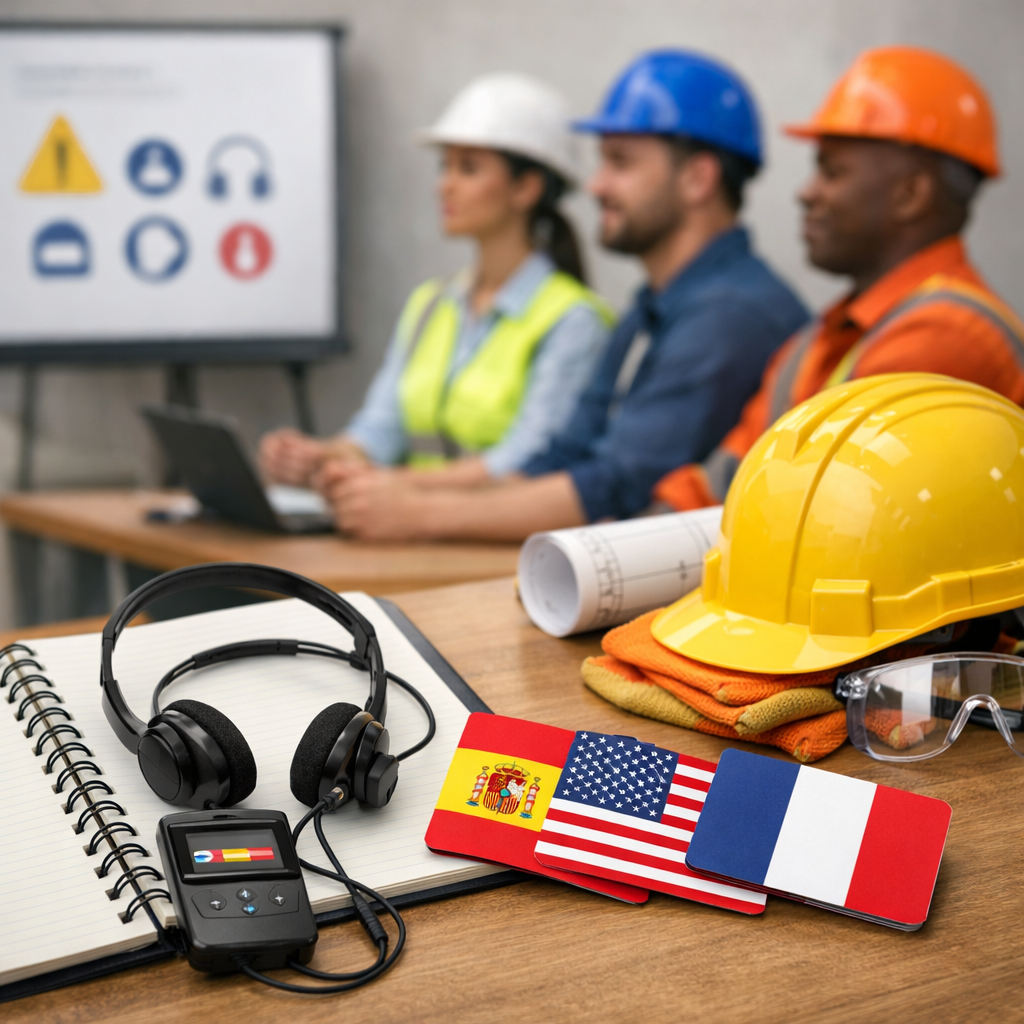
Multilingual safety training tips can make the difference between a workforce that simply attends training and one that truly understands how to work safely. In diverse workplaces, language barriers affect hazard recognition, emergency response, equipment use, and reporting, which means employers need training that is clear, practical, and easy to apply on the job.
Whether a business operates in construction, manufacturing, warehousing, healthcare, or food processing, workers often bring different first languages, literacy levels, and cultural expectations to the workplace.
When training is delivered in only one language, critical details can be missed, and that can increase the risk of injury, near misses, and non-compliance.
Effective safety communication is not just about translating a handbook.
It is about making sure every worker understands the hazard, the control measure, and the action they must take. Employers that invest in multilingual safety training often see stronger engagement, better reporting, and more consistent safe work practices across teams.
Why language barriers matter in workplace safety
Language barriers can create hidden safety risks, especially in fast-moving environments where workers must make quick decisions. If a worker misunderstands a machine guarding rule, lockout procedure, chemical label, or evacuation instruction, the result can be serious injury or worse.
This issue affects both new and experienced employees.
A skilled worker may know the job well but still struggle to understand site-specific terminology, policy updates, or emergency instructions if they are delivered in an unfamiliar language.
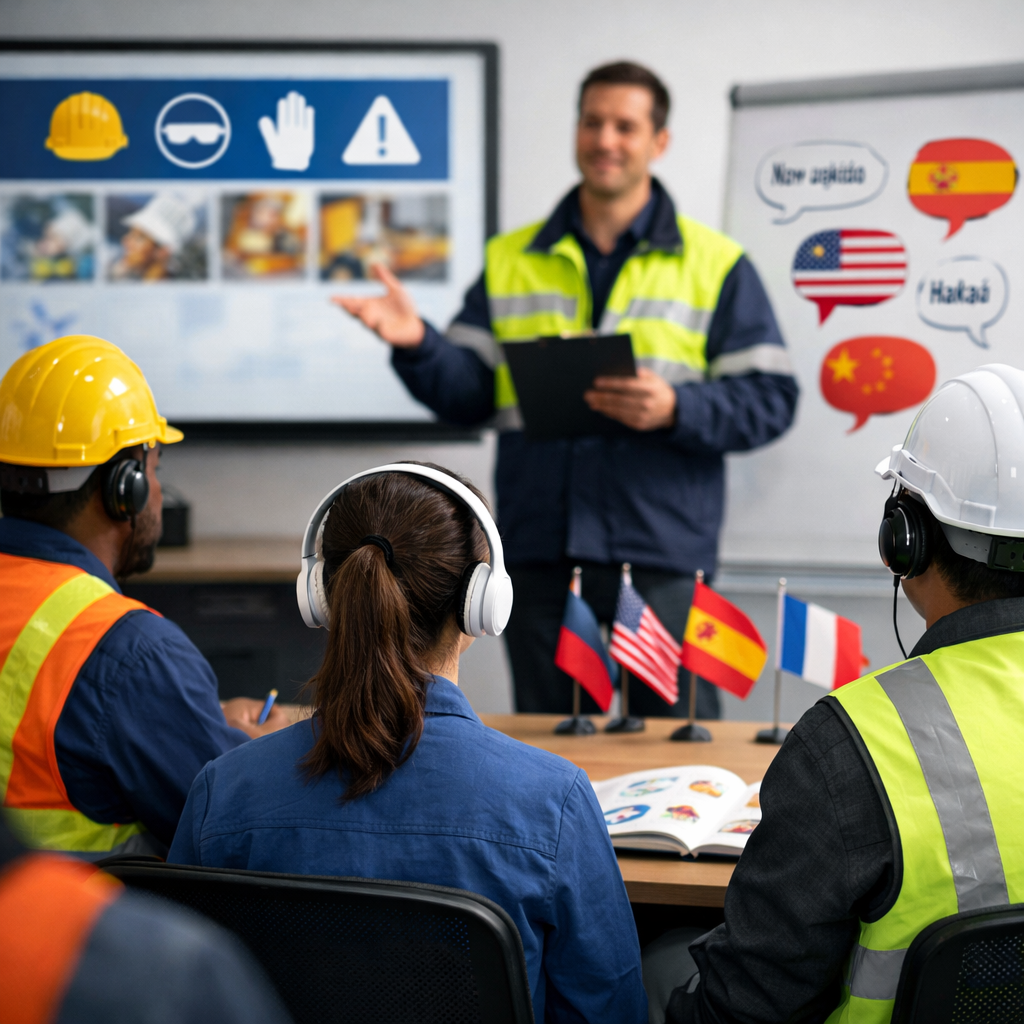
Common ways language barriers affect understanding
- Workers misinterpret verbal instructions during high-risk tasks.
- Written procedures are too complex or only available in one language.
- Safety signs use unclear terms, slang, or technical wording.
- Employees hesitate to ask questions because they feel embarrassed or rushed.
- Incident reporting drops because workers are unsure how to explain what happened.
These risks are especially important when training covers hazardous energy, mobile equipment, fall protection, confined spaces, or chemical handling. Guidance from organizations such as OSHA and CCOHS consistently supports the need for training that workers can understand.
That means employers should treat language accessibility as a core safety control, not an optional extra.
Multilingual safety training tips that improve comprehension
The best multilingual safety training tips focus on comprehension, not just delivery.
A translated slide deck is useful, but it is only one part of an effective system. Employers should build training around plain language, visual communication, practical demonstrations, and feedback.
Use plain language and consistent terminology
Start with simple wording in every language. Avoid jargon, long sentences, idioms, and culturally specific phrases that may not translate well.
For example, “isolate the power source before cleaning” is clearer than “ensure all relevant energy systems are rendered inoperative prior to maintenance activity.”
Consistency matters too. If one trainer says “forklift,” another says “powered industrial truck,” and the written procedure uses a different term, workers can become confused. Use one clear term and reinforce it in training materials, signage, and supervision.
Support words with visuals and demonstrations
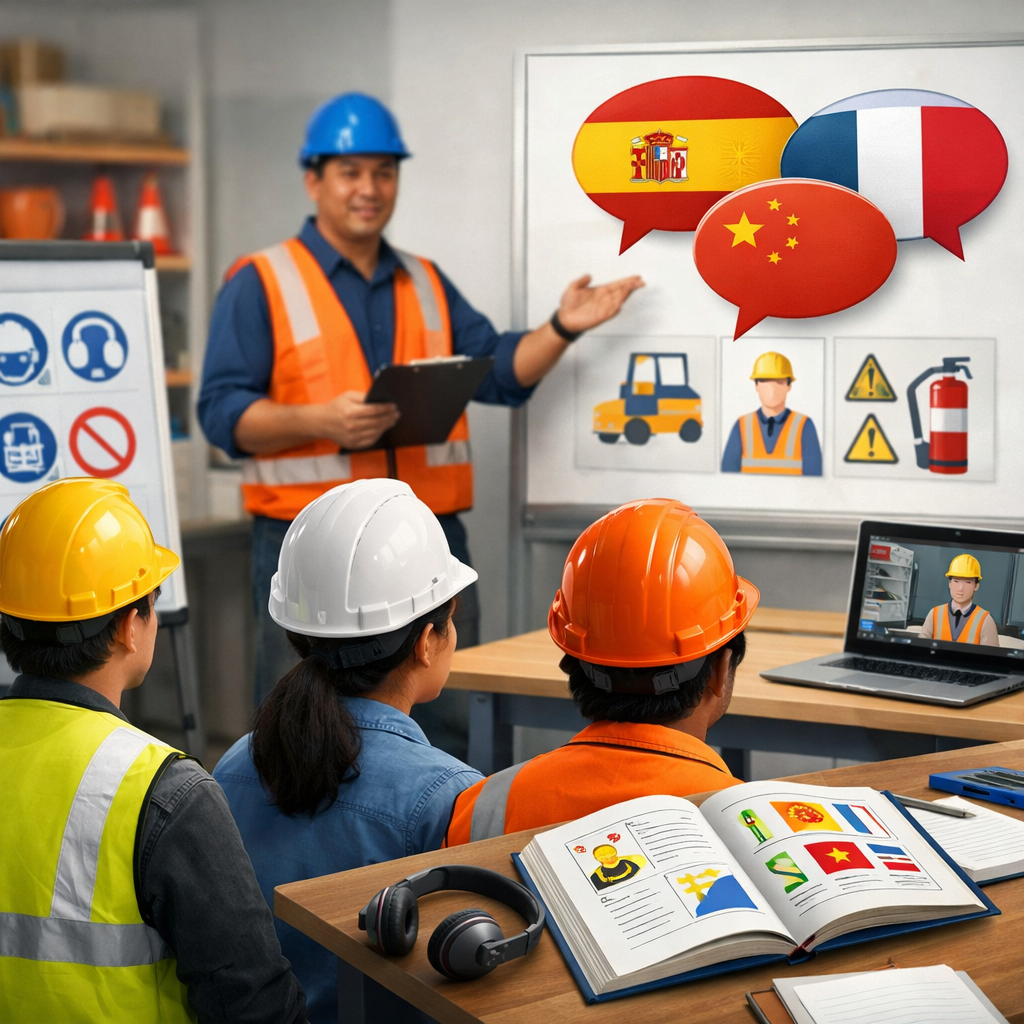
Pictures, icons, color coding, live demonstrations, and hands-on practice often improve retention more than text-heavy presentations.
Workers should be able to see what correct PPE use, safe lifting, emergency shutdown, or spill response looks like in their own work area.
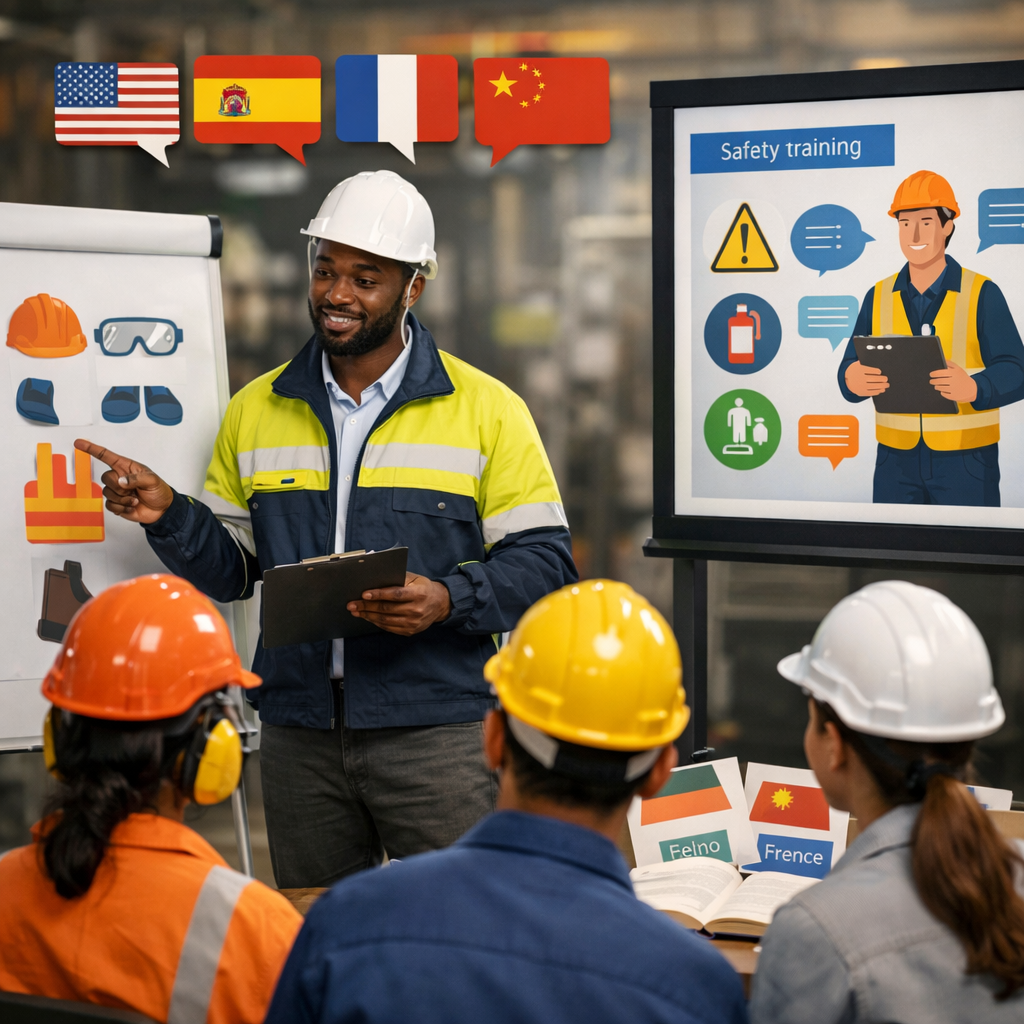
For many employers, some of the most effective multilingual safety training tips include visual SOPs, pictogram-based signage, and short bilingual toolbox talks.
You can also strengthen learning by linking training to safety signage best practices and employee onboarding checklists so that safety messages remain consistent from day one.
How employers can respond with practical controls
Employers should respond to language barriers the same way they respond to any other workplace hazard: assess the risk, identify controls, and verify that the controls work.
The Hierarchy of Controls is useful here because training is only one layer of protection.
Apply the Hierarchy of Controls to communication-related risk
| Control level | How it applies to multilingual safety |
|---|---|
| Elimination | Remove unnecessary hazards so workers rely less on complex instructions during dangerous tasks. |
| Substitution | Replace high-risk tools, chemicals, or processes with safer alternatives that reduce the chance of misunderstanding. |
| Engineering controls | Use machine guards, interlocks, alarms, and automatic shutoffs that protect workers regardless of language ability. |
| Administrative controls | Provide translated procedures, bilingual supervisors, visual work instructions, and multilingual safety training tips in routine operations. |
| PPE | Train workers in their preferred language on correct selection, fit, use, limitations, and maintenance of PPE. |
This approach keeps employers from relying too heavily on verbal instruction alone.
For example, if a worker must operate a dangerous machine, engineering controls and clear lockout points should support the training rather than expecting language-based instruction to do all the work.
Use qualified translators and bilingual safety leaders
Translation should be done by qualified professionals or competent bilingual personnel who understand workplace terminology. Literal translation can create errors, especially with technical safety terms.
It also helps to identify bilingual supervisors, lead hands, or peer mentors who can reinforce training during daily work.
These team members should not be treated as informal interpreters without support.
Give them approved terminology, current procedures, and time to answer questions properly. That makes training more accurate and more respectful.
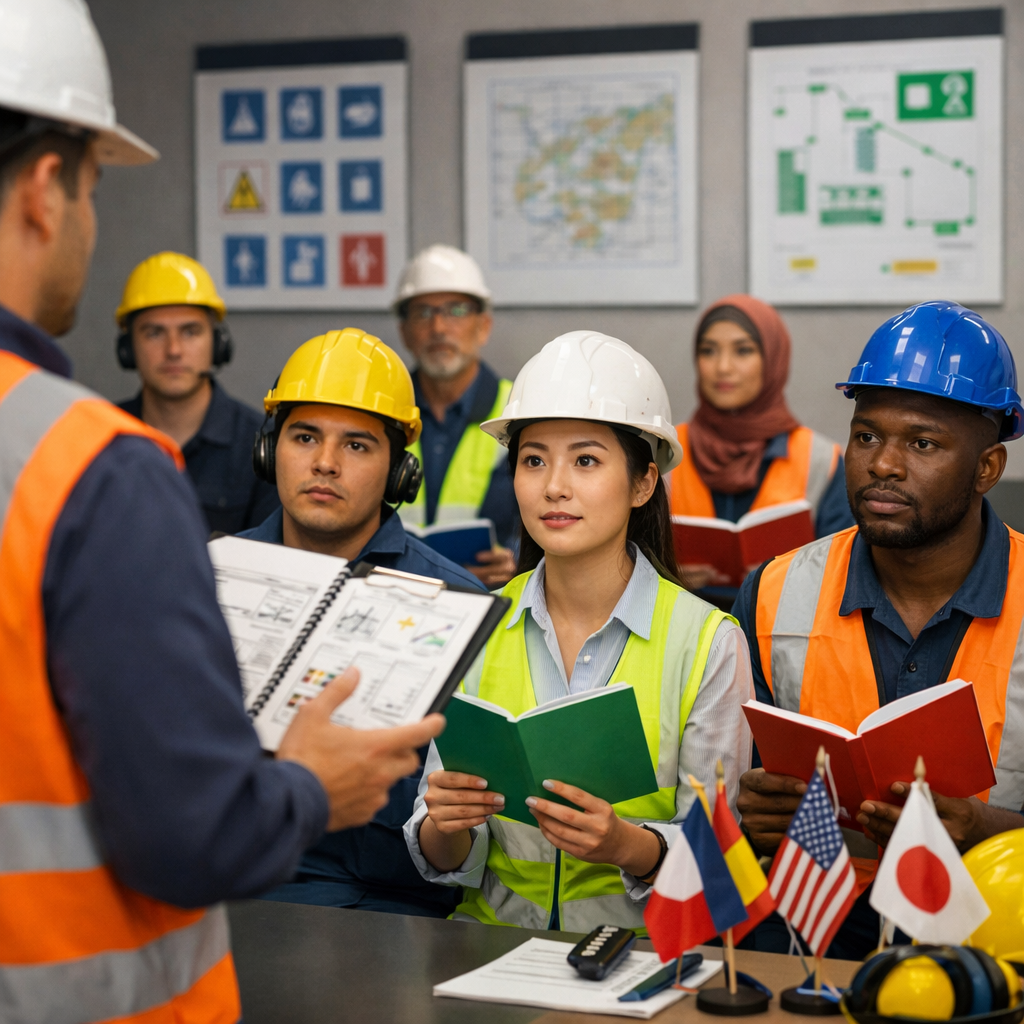
Build a training program workers can understand and use
Strong safety programs do more than present information once.
They check understanding, repeat key messages, and connect training to real tasks, real hazards, and real decisions workers face during a shift.
Check understanding instead of asking, “Do you get it?”
One of the most useful multilingual safety training tips is to verify understanding through action. Ask workers to demonstrate a pre-use inspection, show where emergency eyewash stations are located, or explain the steps for reporting a near miss in their own words.
This “teach-back” method often reveals gaps that would stay hidden in a standard classroom session.
Short quizzes can help, but practical demonstrations are usually better for high-risk tasks.
If the job involves respirators, hot work permits, ladder use, or chemical mixing, have workers perform the process under supervision before they begin working independently.
Create a culture where questions are safe
In some workplaces, employees avoid speaking up because they do not want to slow production or appear inexperienced. Employers can reduce this barrier by encouraging questions, pausing for clarification, and making it clear that asking for help is part of safe work.
Simple actions make a difference:
- Allow extra time during orientation and refresher training.
- Provide translated handouts and visual job aids workers can keep.
- Repeat critical instructions at the start of shifts and before non-routine tasks.
- Use multilingual incident reporting options where possible.
- Review near misses to see whether communication played a role.
It is also smart to update training after incidents, process changes, and new equipment installations.
If workers speak several languages, review whether every group received the same message with the same level of clarity.
Multilingual safety training tips are most effective when they become part of everyday operations rather than a one-time compliance exercise. Employers that respond to language barriers with plain language, visual tools, practical demonstrations, and layered controls create safer workplaces for everyone.
By following clear communication practices, checking comprehension, and using guidance from trusted sources such as OSHA and CCOHS, organizations can improve both compliance and real-world safety performance. In the end, the goal of multilingual safety training tips is simple: every worker should understand the hazards, know the controls, and go home safe.
No comments yet