
- Emergency Rescue in Mining Sites: Risks, Response, PPE, and Compliance
- Why Emergency Rescue in Mining Sites Requires Specialized Planning
- Prevention First: Applying Controls Before Rescue Is Needed
- Emergency Rescue in Mining Sites: PPE, Teams, and Practical Response
- Compliance, Training, and Continuous Improvement
Emergency Rescue in Mining Sites: Risks, Response, PPE, and Compliance

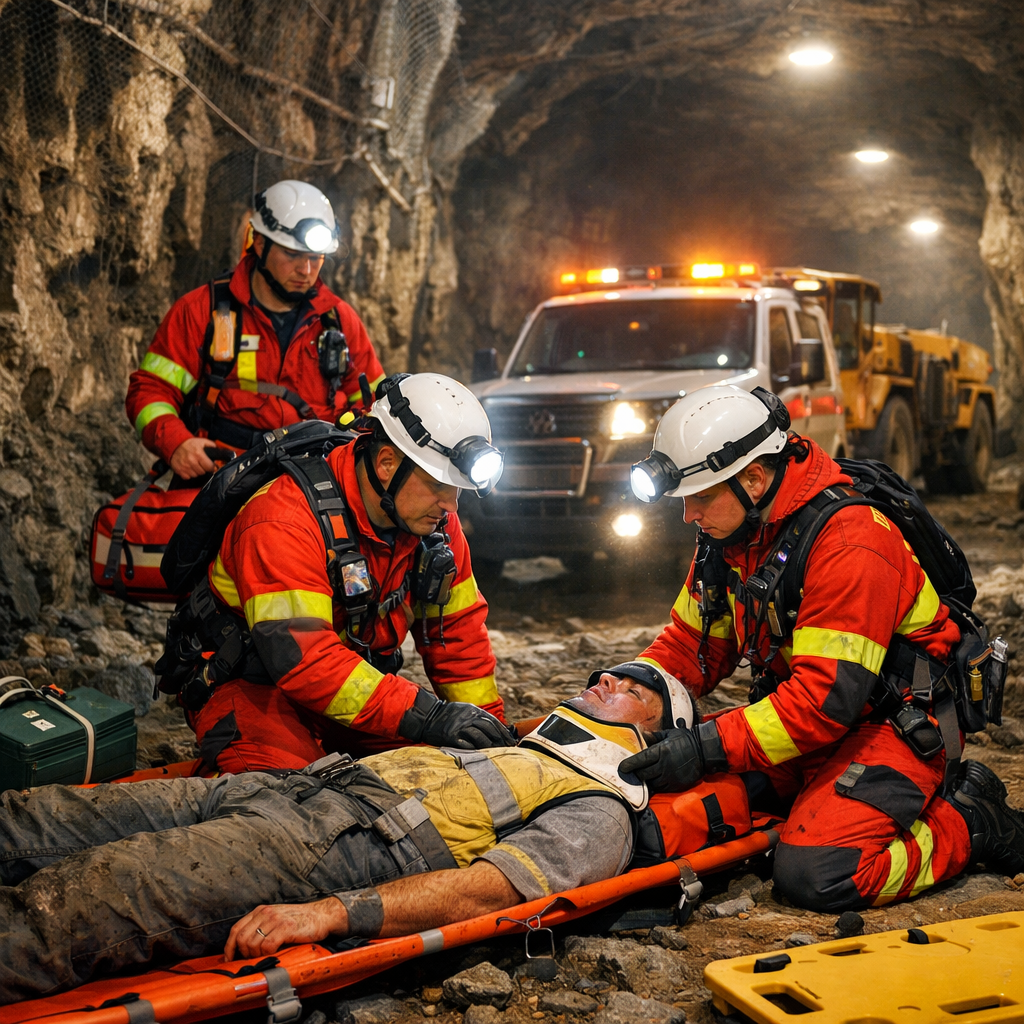
emergency rescue in mining sites is one of the most critical parts of occupational health, safety, and emergency preparedness in high-risk industries. When an incident happens underground or at a surface mine, response time, training, equipment, and coordination can mean the difference between a controlled event and a fatal outcome.
Mining environments present unique hazards, including ground collapse, fire, explosion, toxic gas exposure, flooding, mobile equipment incidents, and confined space emergencies. Because mines are often remote, complex, and physically demanding, rescue planning must go beyond basic first aid and include specialized systems, competent teams, and site-specific procedures.
An effective rescue framework protects workers, supports legal compliance, and strengthens business continuity. It also helps employers meet OHSE responsibilities by ensuring that foreseeable emergencies are identified, planned for, and managed using practical controls that match the realities of mining operations.
Why Emergency Rescue in Mining Sites Requires Specialized Planning
Unlike many workplaces, mining sites combine heavy machinery, unstable geology, limited visibility, airborne contaminants, and restricted access routes. These conditions can turn a minor incident into a complex rescue scenario very quickly.
For example, a haul truck collision at a surface mine may require vehicle stabilization, trauma care, fire suppression, and traffic isolation. An underground event may involve smoke, poor communication, limited ventilation, and long travel distances before responders can even reach the casualty.
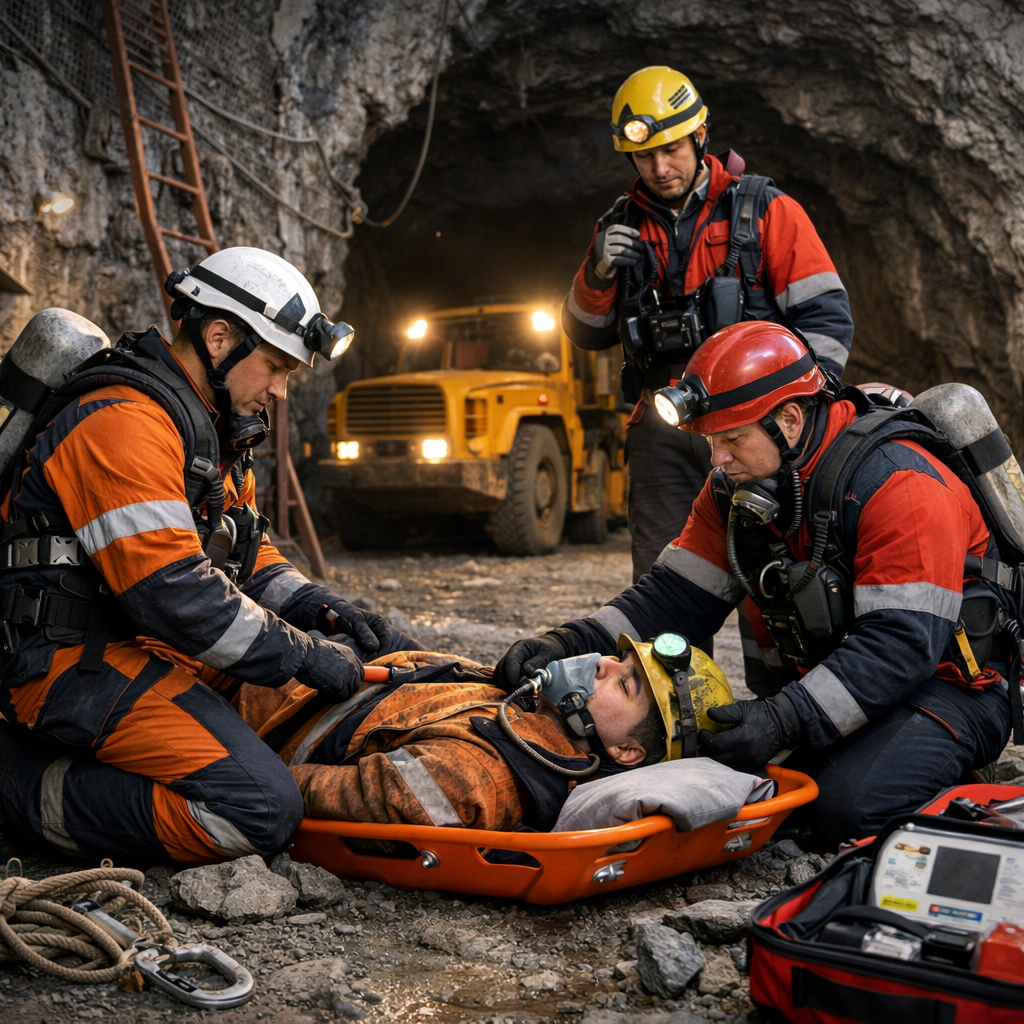
Common risks that trigger mine rescue operations
- Ground failure: rockfalls, wall collapse, roof instability, and cave-ins
- Fire and explosion: fuel ignition, electrical faults, methane ignition, blasting incidents
- Hazardous atmospheres: oxygen deficiency, carbon monoxide, hydrogen sulfide, diesel emissions, dust exposure
- Water-related emergencies: inrush, flooding, slurry release, entrapment
- Mobile equipment incidents: struck-by events, rollovers, crushing injuries, entanglement
- Confined space and access issues: shafts, raises, tanks, sumps, ore passes, and ventilation areas
- Medical emergencies: cardiac events, heat stress, traumatic injuries, fatigue-related collapse
These risks show why emergency rescue in mining sites cannot rely on generic emergency plans. Mine operators need detailed response maps, communication systems, rescue equipment caches, and drills tailored to each work area.
Guidance from organizations such as OSHA and CCOHS reinforces the need for hazard assessment, worker training, and emergency readiness in hazardous workplaces. Mining operations should also align procedures with local legislation and recognized industry standards.
Prevention First: Applying Controls Before Rescue Is Needed
The best rescue is the one that never becomes necessary. In OHSE practice, emergency rescue planning should sit alongside prevention, not replace it. Mining companies should use the Hierarchy of Controls to reduce the likelihood and severity of incidents before workers are exposed.
Using the Hierarchy of Controls in mining emergencies
| Control Level | Mining Example | Impact on Emergency Risk |
|---|---|---|
| Elimination | Remove entry into unstable areas through remote inspection technology | Prevents exposure to collapse hazards |
| Substitution | Use less hazardous materials or lower-emission equipment | Reduces toxic atmosphere risks |
| Engineering Controls | Ground support, gas detection, ventilation, guarding, fire suppression | Lowers likelihood of major incidents |
| Administrative Controls | Permits, exclusion zones, inspections, traffic rules, fatigue management | Improves work practices and response readiness |
| PPE | Respirators, helmets, cap lamps, gloves, rescue harnesses | Provides last-line protection |
Preventive measures should include routine geotechnical inspections, atmospheric monitoring, lockout procedures, emergency egress checks, and clear reporting of near misses. Regular maintenance of refuge chambers, alarms, radios, and breathing apparatus is just as important as maintaining production equipment.
Practical site controls can be strengthened through internal systems such as safety training programs and workplace risk assessments. These internal processes help ensure that rescue planning is backed by daily operational discipline.
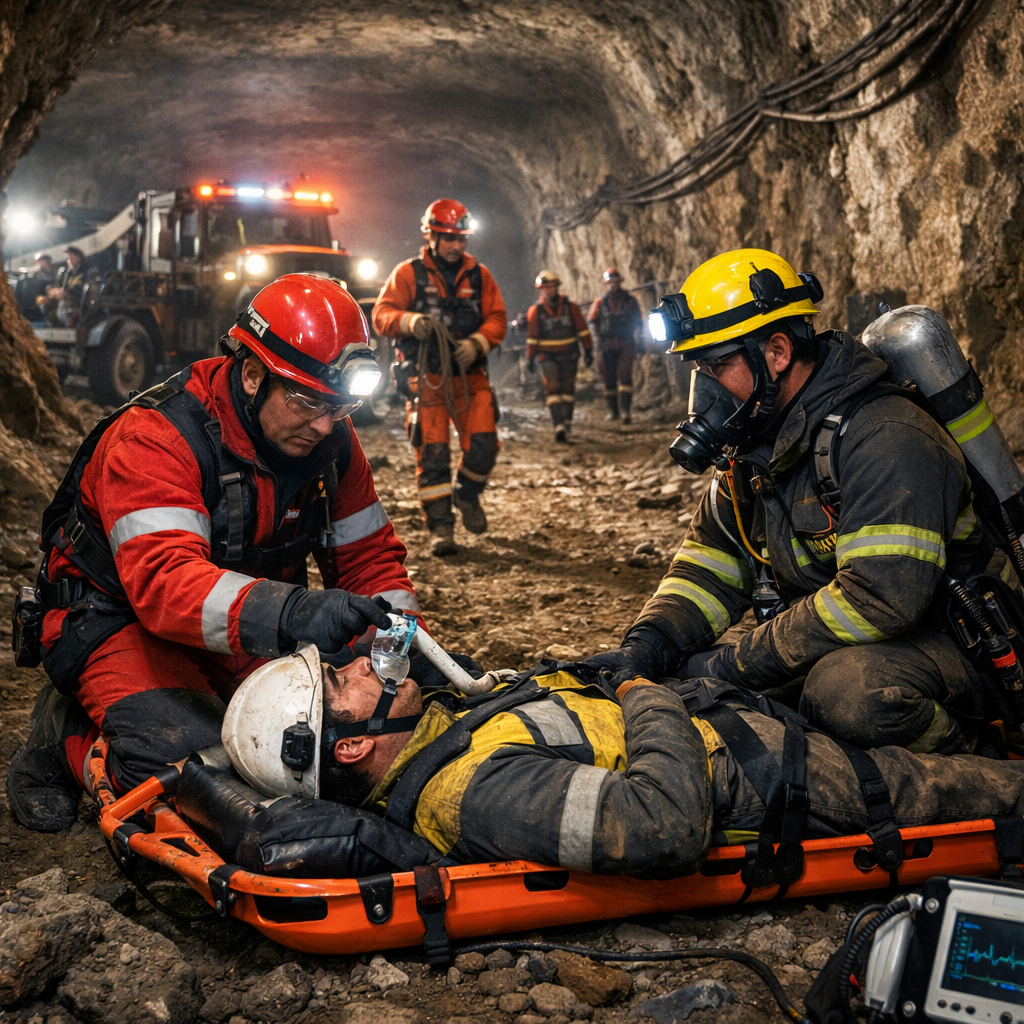
Emergency Rescue in Mining Sites: PPE, Teams, and Practical Response
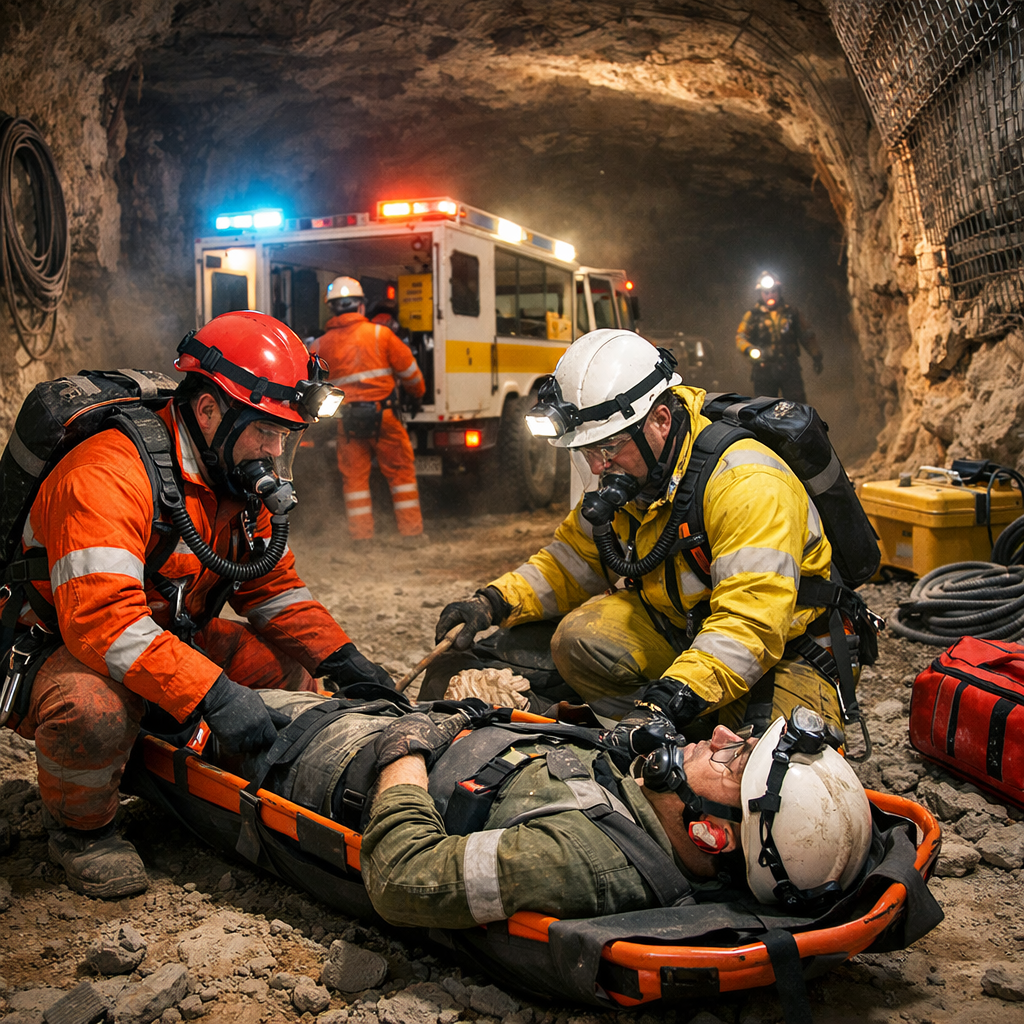
When an incident occurs, responders must act quickly without creating additional casualties. This is where trained rescue teams, fit-for-purpose PPE, and disciplined incident command become essential.
Essential PPE for mining rescue operations
PPE for mine rescue depends on the hazard, but some core items are commonly required. Equipment must be selected through hazard assessment, maintained properly, and tested during drills so responders can use it under pressure.
- Head protection: mining helmets with chin straps and impact protection
- Eye and face protection: goggles or face shields for dust, chemicals, and flying debris
- Respiratory protection: escape respirators, self-contained breathing apparatus, cartridge respirators where appropriate
- Protective clothing: flame-resistant clothing, high-visibility garments, chemical-resistant gear if needed
- Hand and foot protection: cut-resistant gloves, heat-resistant gloves, steel-toe boots with slip resistance
- Fall protection: harnesses, lifelines, retrieval systems for shafts and elevated work areas
- Communication and lighting: intrinsically safe radios, cap lamps, backup lighting
However, PPE alone is not enough. Effective emergency rescue in mining sites also depends on trained personnel who understand triage, atmospheric testing, confined space rescue, patient packaging, and safe extraction methods.
What a strong mine rescue system looks like
A practical mine rescue system usually includes an emergency response plan, designated rescue roles, trained first responders, on-site equipment, mutual aid contacts, and procedures for coordination with public emergency services. In remote locations, rescue capacity may need to be largely self-sufficient during the first critical hour.
For instance, if a worker is trapped after a small ground fall underground, the response may involve isolating the area, testing for gases, confirming ground stability, communicating with the trapped worker if possible, and using controlled extraction methods under supervision. Rushing in without atmospheric checks or ground control can turn one casualty into several.
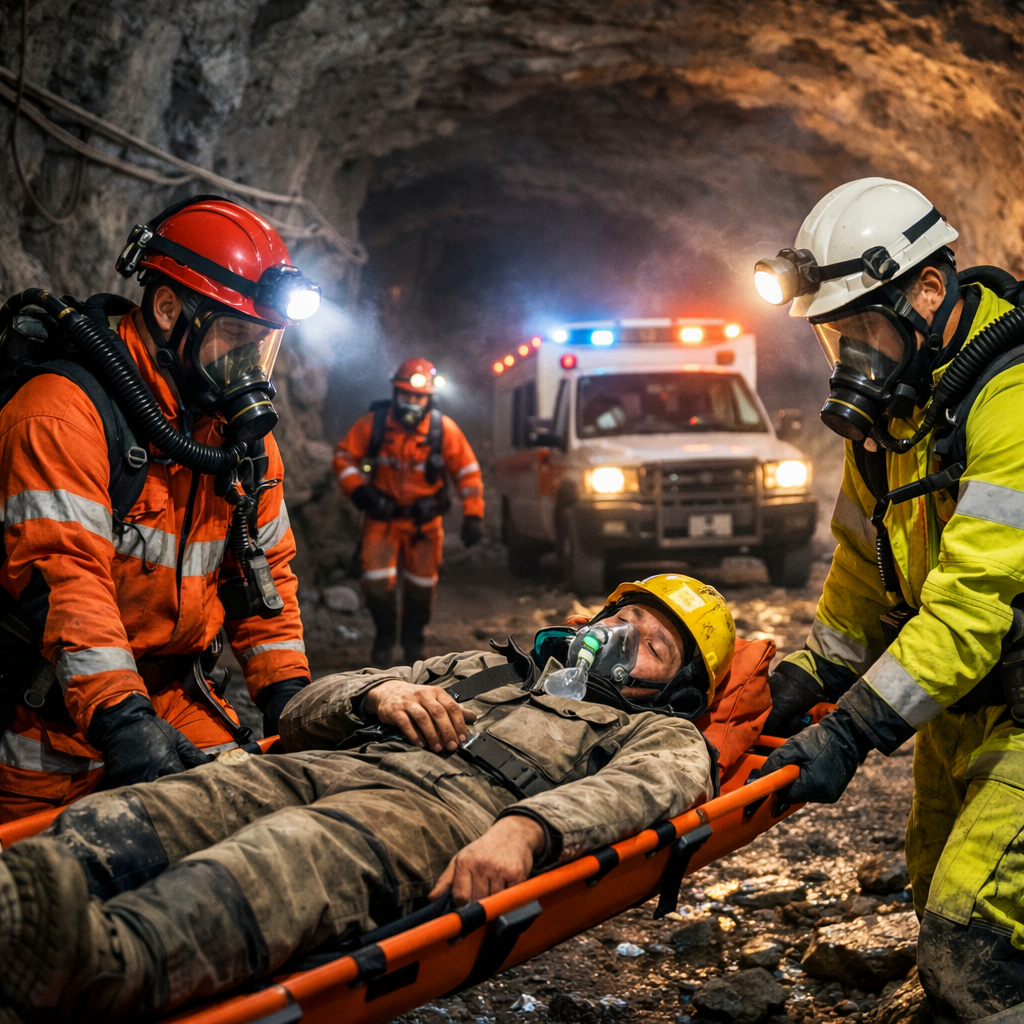
In another example, a conveyor entanglement at a processing area requires immediate shutdown, lockout verification, first aid, trauma management, and access control. Rescue teams must know how to protect the patient while preserving scene safety and supporting later investigation.
Compliance, Training, and Continuous Improvement
Legal compliance is a core part of emergency rescue in mining sites. Employers are generally required to identify foreseeable emergencies, provide adequate equipment, train workers, and maintain procedures for rescue and evacuation. Expectations may vary by jurisdiction, but the principle is consistent: a workplace with serious hazards must be prepared for serious incidents.
Operators should review applicable mining regulations, emergency response requirements, and guidance from agencies such as MSHA, OSHA, and CCOHS. Compliance should cover rescue capability, communication systems, first aid resources, emergency drills, contractor coordination, and incident reporting.
Key compliance and preparedness actions
- Conduct documented emergency risk assessments for surface and underground operations
- Develop site-specific rescue procedures for likely scenarios
- Train workers in alarms, escape routes, muster points, and first response actions
- Provide competent mine rescue personnel and refresher training
- Inspect and test PPE, breathing apparatus, stretchers, gas monitors, and communication tools
- Run drills that simulate realistic conditions, including night shift and remote-area incidents
- Review lessons learned after drills, near misses, and actual emergencies
Continuous improvement matters because mining risks change over time. New headings, deeper excavations, equipment upgrades, weather impacts, and contractor turnover can all affect rescue readiness. Plans should be reviewed whenever site conditions change, not only during annual audits.
In conclusion, emergency rescue in mining sites is far more than a written plan on a shelf. It is a living OHSE system built on hazard recognition, prevention, trained teams, proper PPE, legal compliance, and regular practice. When mining companies invest in realistic rescue planning and strong everyday controls, they improve worker protection, reduce response delays, and build a safer, more resilient operation.
No comments yet