
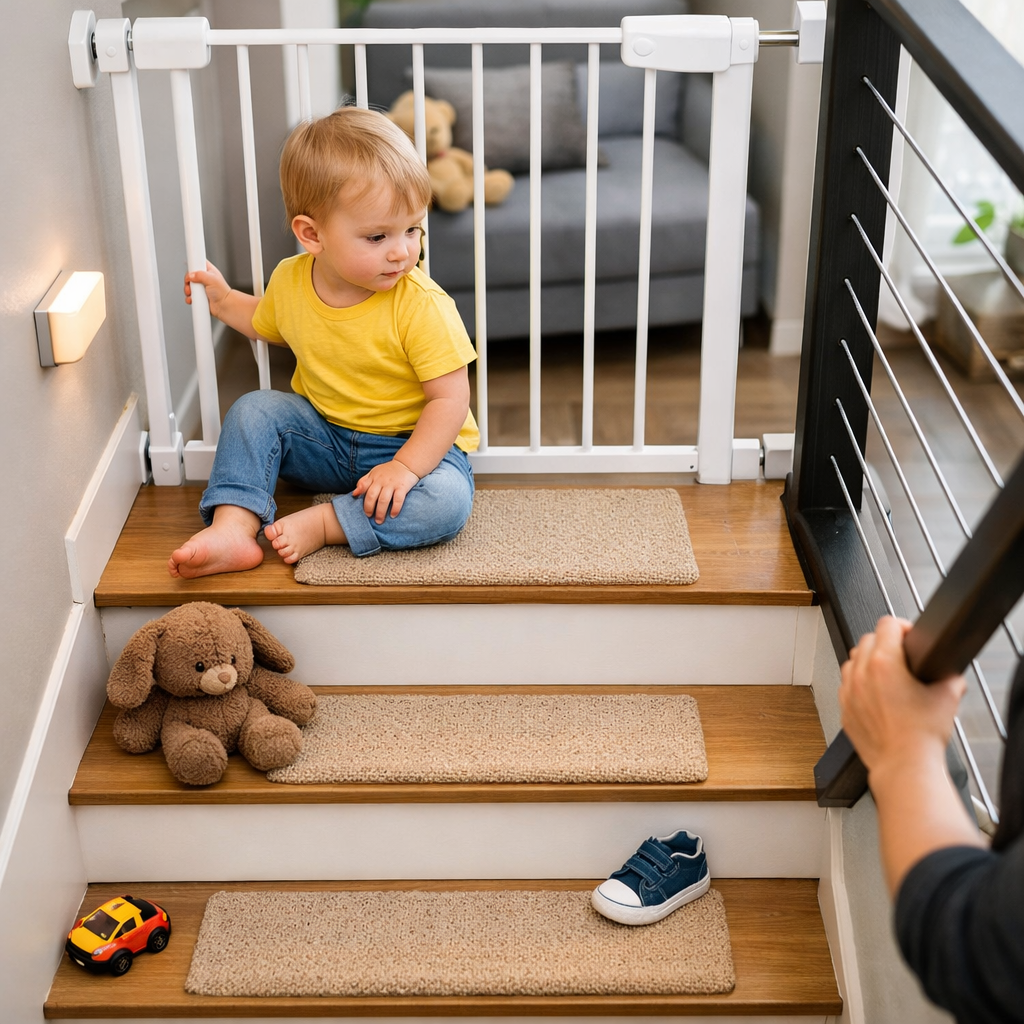

Stair safety for kids starts with understanding how quickly everyday steps can become a hazard for babies, toddlers, school-aged children, and even teens carrying bags or rushing through the house. In Canadian homes, schools, and shared buildings, stairs are part of daily life, so practical prevention matters more than fear. The goal is to make stairs predictable, well lit, easy to use, and properly supervised while children build safe habits over time.
Good stair safety combines physical safeguards, routine checks, and clear family rules. For younger children, that usually means secure gates and active supervision. For older children, it means reducing distractions, improving visibility, keeping steps clear, and teaching steady stair use. Families, schools, and childcare settings can also look to prevention guidance from organizations such as CCOHS, Ontario, and Parachute for general safety information that supports a safer environment.
Why stair safety for kids deserves early attention
Children use stairs differently at different ages. Infants may roll or be carried, toddlers explore before they understand risk, and older children often move too fast or become distracted by toys, screens, pets, or backpacks. A staircase that seems harmless to an adult can create fall, collision, or entrapment risks for a child.
In home and school safety planning, stairs should be treated like any other everyday hazard: identify risks, control what you can, and review conditions regularly. This follows a practical safety mindset similar to the hierarchy of controls. If a risk can be removed, remove it. If it cannot, use barriers, better design, lighting, maintenance, supervision, and rules to reduce the chance of injury.
Common stair hazards for children
- Missing, loose, or poorly fitted safety gates
- Dim lighting at the top or bottom of the stairs
- Toys, shoes, bags, cords, or laundry left on steps
- Slippery socks, smooth treads, or worn carpeting
- Open risers or wide gaps that create entrapment concerns
- Loose handrails or no handrail on one side
- Children being carried while the adult has an obstructed view
- Running, rough play, or using devices on the stairs
Essential gates for stair safety for kids
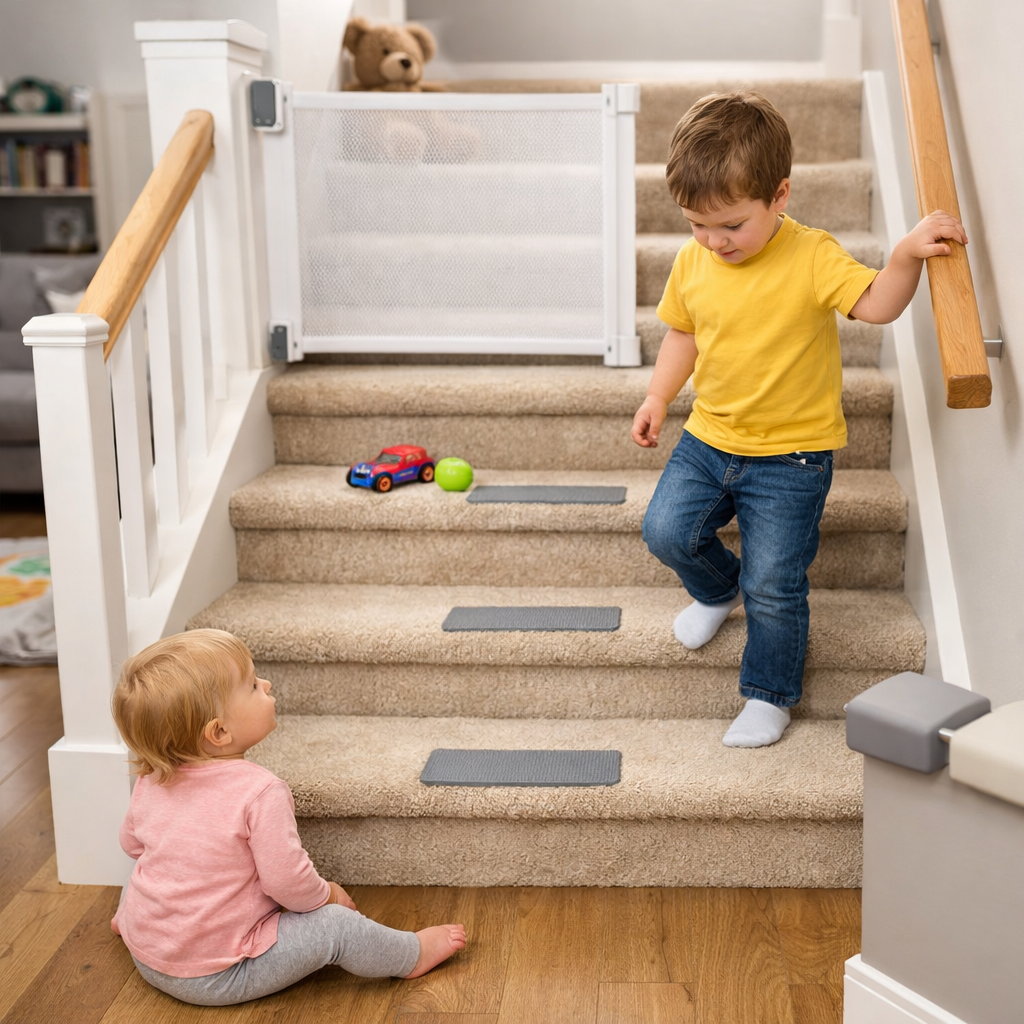
For babies and toddlers, gates are one of the most important controls. A gate helps limit access while a child is still learning balance, coordination, and boundaries. The safest choice for the top of a staircase is usually a hardware-mounted gate installed according to the manufacturer’s instructions. Pressure-mounted gates may be suitable in some flat locations, but they are generally not the best option at the top of stairs because they can shift or create a trip edge.
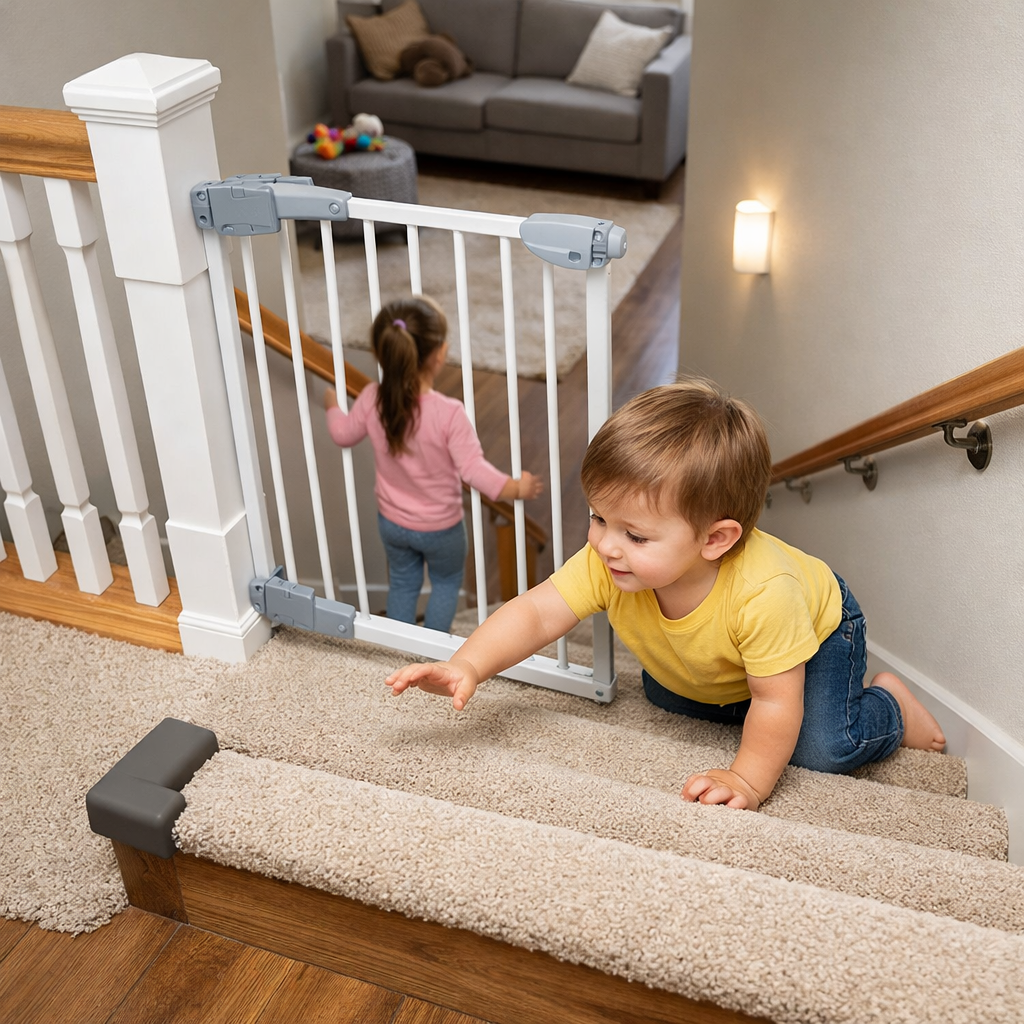
When choosing a gate, look for sturdy construction, a reliable latch, and a fit that does not leave hazardous gaps. Adults should be able to open the gate easily, but not in a way that encourages children to copy the motion too soon. Grandparents, older siblings, and caregivers should all know how the gate works and should close it every time.
Where to place stair gates
Install a proper gate at the top of the stairs and, where needed, another at the bottom to control unsupervised access. In split-level homes or homes with basement stairs, review every staircase separately. In childcare or school settings, access control may involve doors, supervision zones, or approved barriers instead of home-style gates, depending on the layout and local requirements.
Gate safety tips
- Use hardware-mounted gates at the top of stairs unless the manufacturer clearly allows another safe use
- Check fasteners, latches, and wall anchors regularly
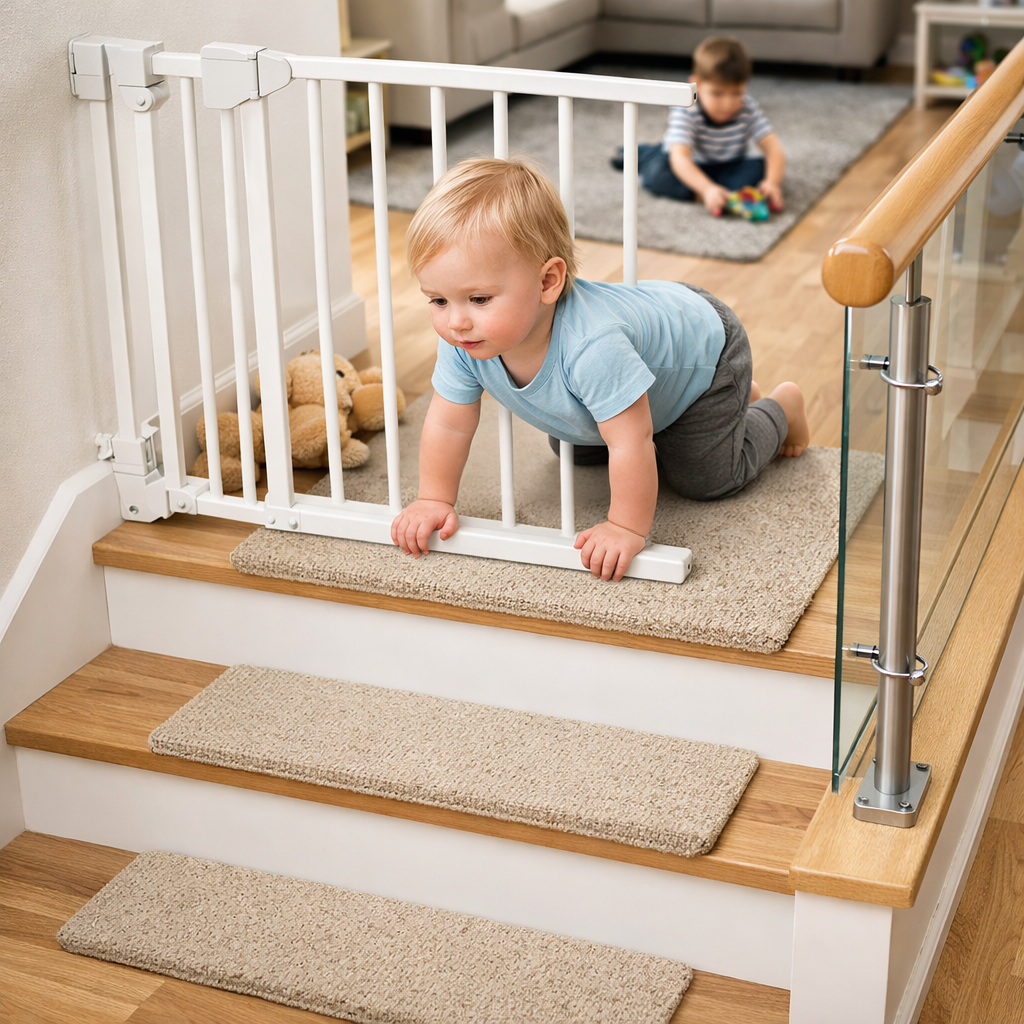
- Stop using a gate if a child can climb over it or if it becomes damaged
- Do not add makeshift extensions or repairs not approved by the manufacturer
- Keep nearby furniture away so children cannot climb up and over
If your household is reviewing broader home hazards, practical safety resources from OHSE.ca can support a prevention-first approach. Where staff training or orientation is relevant for schools, childcare, or youth workplaces, training resources can also help reinforce safe habits.
Lighting, visibility, and safer stair design
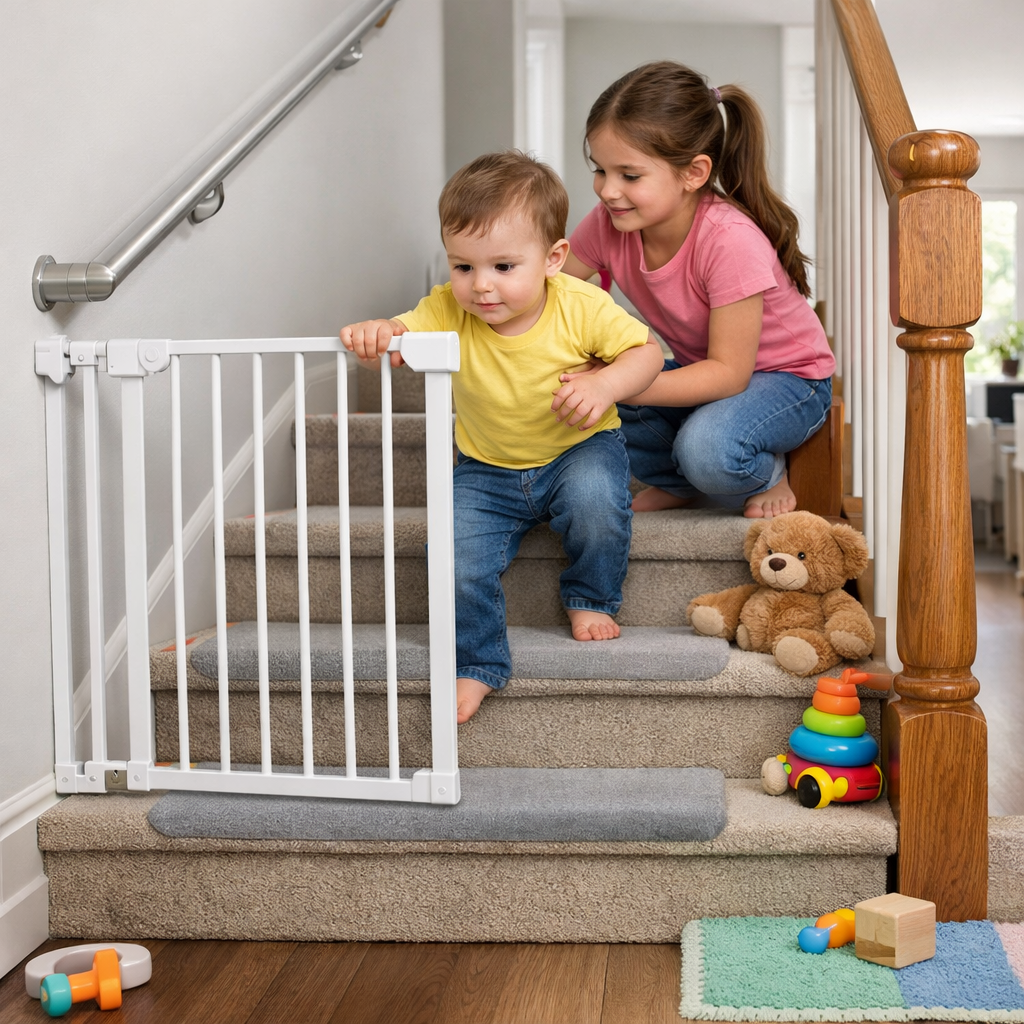
Stair safety for kids improves immediately when children can clearly see every step. Good lighting at both the top and bottom of the stairs reduces missteps, especially in early morning, evening, winter darkness, or during nighttime bathroom trips. Light switches should be easy to reach, and some families may prefer automatic or motion-activated lighting where appropriate.
Visibility also depends on contrast and clutter. Each step should be easy to distinguish. Avoid storing items on stairs, and keep landings clear. In schools or shared buildings, clear sightlines matter because children may be moving in groups, wearing boots, or carrying materials. Consistent housekeeping is one of the simplest and most effective controls.
Practical lighting and maintenance steps
- Replace burnt-out bulbs quickly
- Light the full stair path, not just one end
- Use night lights for routes children may use after dark
- Repair loose carpeting, cracked nosings, or uneven steps
- Make sure handrails are secure and easy to grip
- Wipe up wet spots promptly, especially near entry stairs in snow or rain
| Stair feature | Why it matters | Simple action |
|---|---|---|
| Top gate | Prevents unsupervised access | Use a hardware-mounted model and inspect it often |
| Lighting | Reduces missed steps and hesitation | Ensure bright light at both ends of the staircase |
| Handrail | Supports balance for children and adults | Tighten or repair if loose |
| Clear steps | Prevents trips and slips | Remove toys, shoes, and bags immediately |
| Surface grip | Helps prevent slipping | Address worn carpet or slippery finishes |
Fall prevention habits at home, school, and in shared spaces
Equipment matters, but daily habits are what keep controls working. Young children should be taught to hold the handrail when they are developmentally ready, take one step at a time, and avoid carrying large items that block their view. Adults should avoid carrying a child and multiple items together on the stairs whenever possible. If visibility is poor, make two trips.
For school-aged children, the focus shifts toward routine behaviour. No running, no pushing, no jumping from steps, and no phone use on stairs are simple rules that work. In schools, these same expectations support safer movement between classes, especially during wet weather when floors and boots may track in moisture.
Short actionable checklist for stair safety for kids
- Confirm gates are secure, properly installed, and latched
- Turn on stair lights before use, especially at night
- Keep every step and landing clear
- Check handrails and step surfaces monthly
- Teach children to slow down and use the handrail
- Review rules with babysitters, relatives, and older siblings
- Follow local school, building, manufacturer, or emergency guidance where applicable
Seasonal conditions matter in Ontario and across Canada. Entry stairs may become wet from snow, slush, or rain, and children may move from outdoor boots to indoor shoes in a hurry. Extra matting, prompt cleanup, and supervision during busy times can reduce preventable falls. In apartments, schools, and community buildings, report poor lighting, damaged handrails, or worn stair surfaces to building management right away.
Stair safety for kids is most effective when families and caregivers combine barriers, lighting, maintenance, and consistent routines. Gates help protect younger children, lighting improves visibility for everyone, and simple rules reduce risky behaviour as children grow. With calm supervision and regular checks, stairs can become a safer part of everyday life at home, at school, and in shared spaces. Keep reviewing your setup as children develop, and use trusted guidance from Canadian safety organizations when questions come up.
No comments yet