
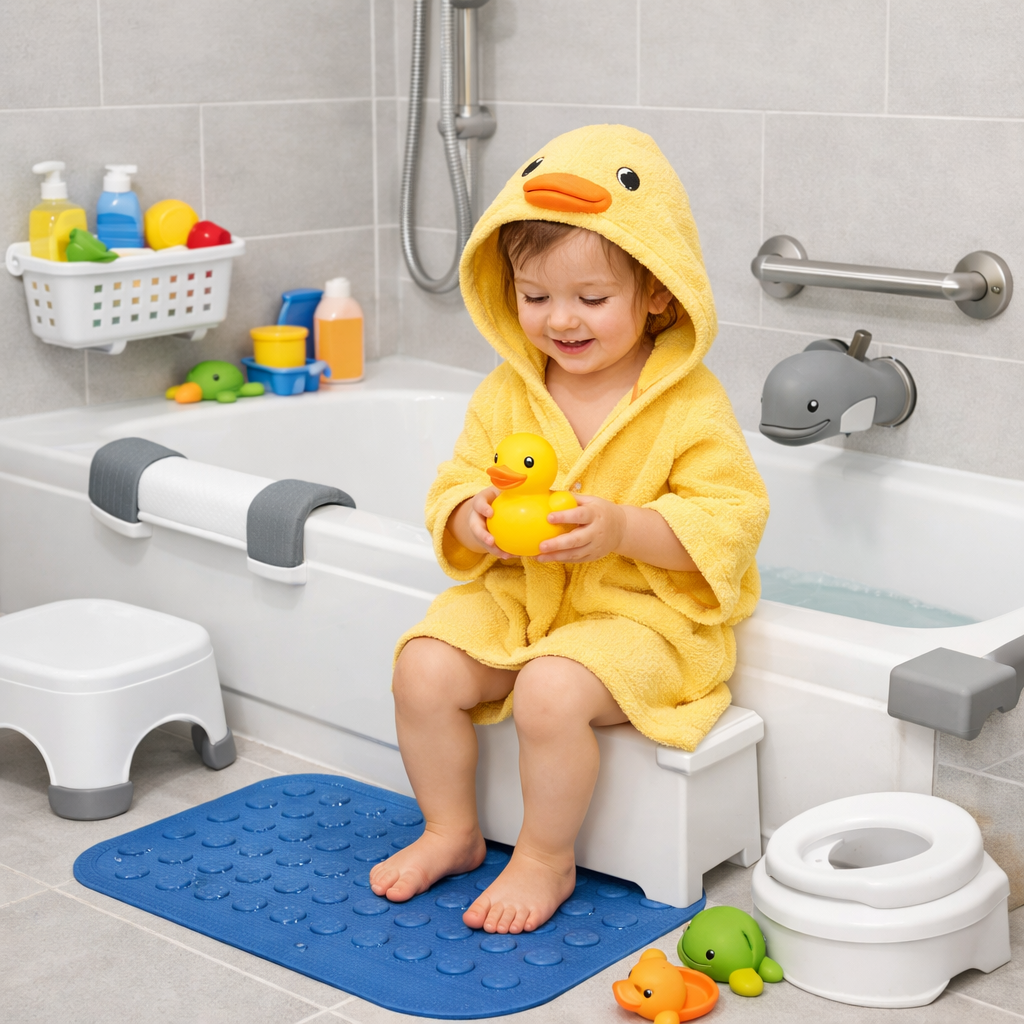

Bathroom safety for children starts with understanding how quickly everyday routines can turn risky. A wet floor, hot tap water, a full tub, or an unsecured cabinet can create a serious hazard in seconds, especially for infants, toddlers, and young school-aged children.
For Canadian families, schools, childcare settings, and even young workers who help supervise children, the bathroom should be treated as a high-attention area. Good prevention is practical: remove slip hazards, control water temperature, secure dangerous products, and make active supervision the standard. For more general prevention guidance, families can also explore resources at OHSE.ca.
Why bathroom safety for children matters every day
Bathrooms combine several hazards in one small space. Water makes hard surfaces slippery, tubs and sinks can fill quickly, and hot water can burn delicate skin faster than many people expect. Cleaning products, cosmetics, medicines, razors, and electrical devices may also be within reach if storage is poor.
In Ontario and across Canada, prevention-focused safety habits fit well with general home, school, and workplace health and safety thinking. A simple way to approach bathroom safety for children is to follow the same logic used in occupational health and safety: identify hazards, reduce exposure, and create consistent safe routines. Useful public information is available from CCOHS, Ontario.ca, and Parachute.
Children are at different levels of risk depending on age. Babies and toddlers need constant hands-on supervision near any water. Preschool and school-aged children may be more mobile and curious, which increases the chance of climbing, reaching, or turning taps by themselves. That means controls should match the child, not just the room.
Preventing slips and falls in bathroom safety for children
Control wet, smooth surfaces
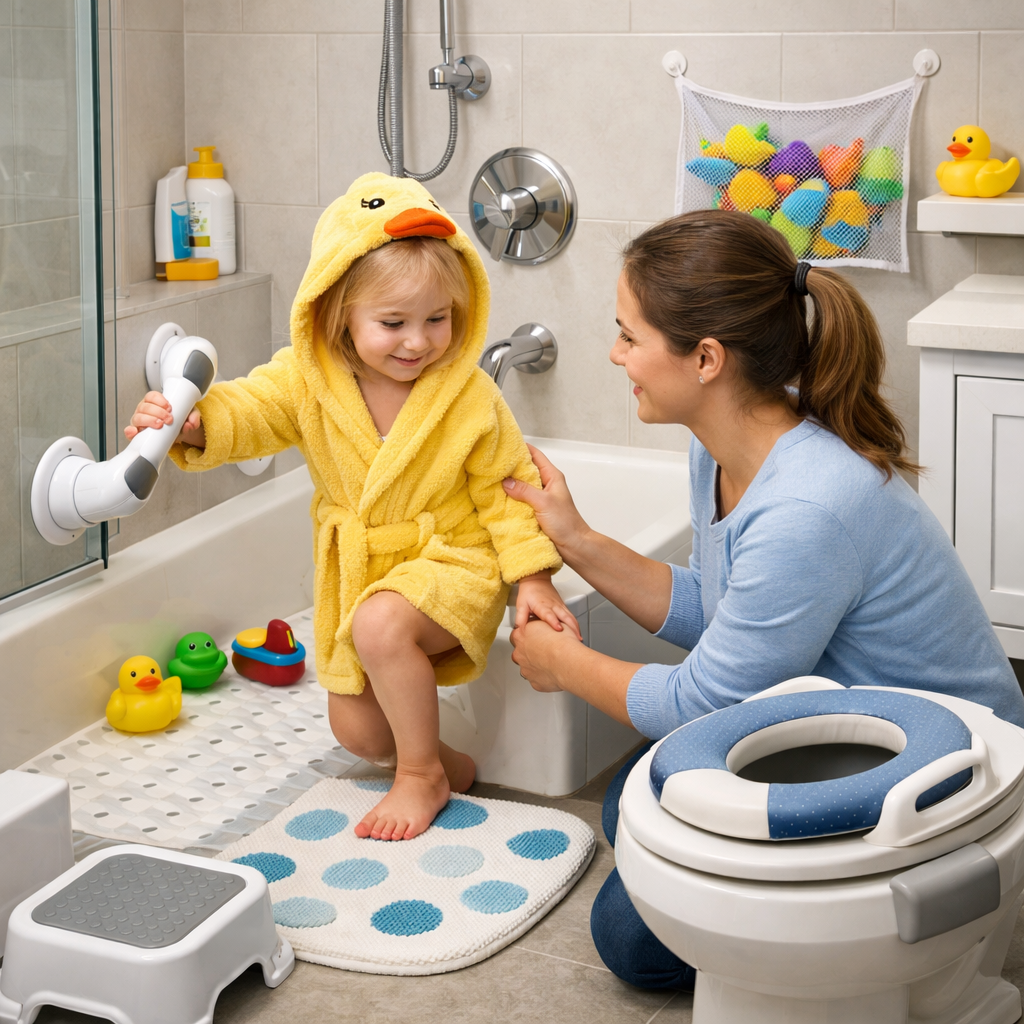
Slips are one of the most common bathroom hazards for children because tile, vinyl, and tub surfaces can become slick almost immediately. The most effective prevention step is to keep the area as dry as possible and reduce the chance of sudden movement on wet surfaces.
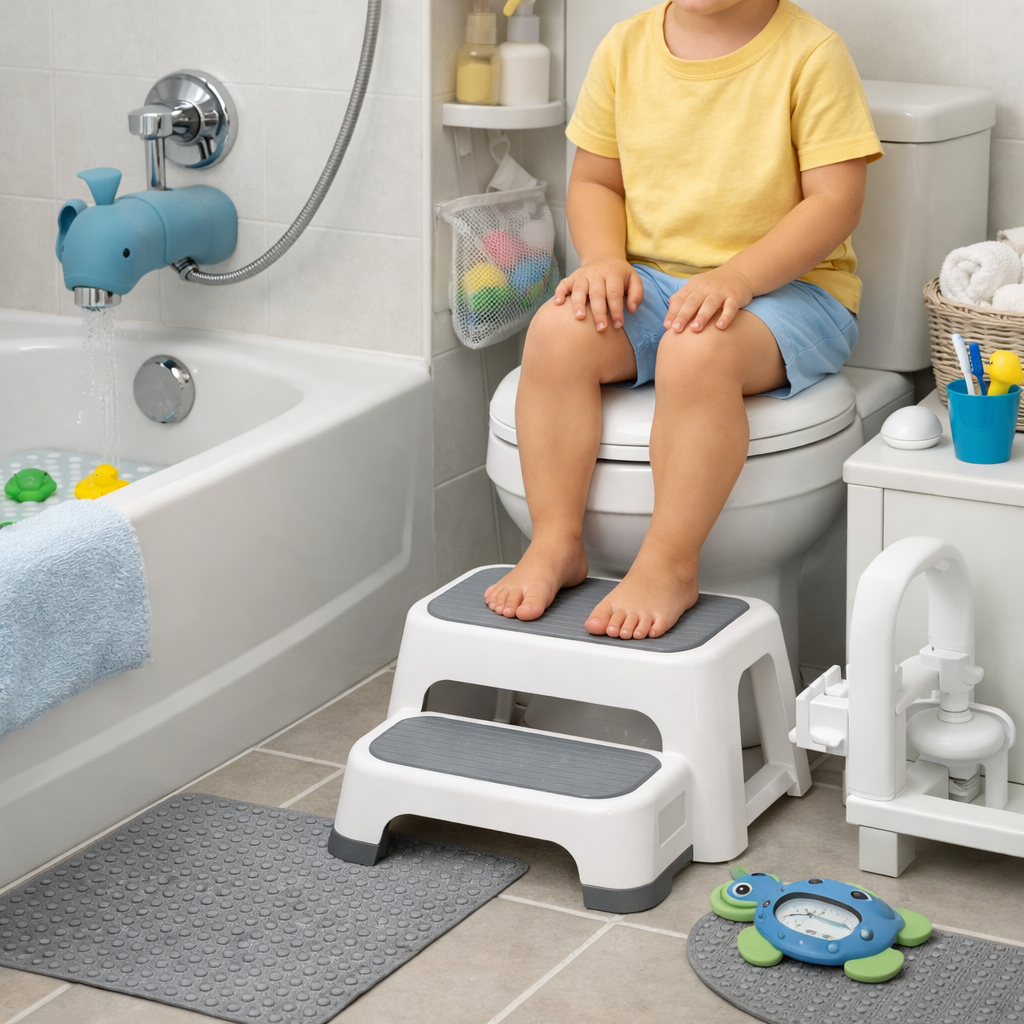
Use non-slip bath mats outside the tub and non-slip surfaces or decals inside the tub or shower where appropriate. Wipe up puddles promptly, and avoid leaving wet towels on the floor. If a child uses a step stool to reach the sink, choose one with a wide base and slip-resistant feet.
Supervise movement, not just bathing
Bathroom safety for children includes the minutes before and after a bath. Children often run in and out of the room, climb on counters, or lean on unstable fixtures while brushing teeth or washing hands. Encourage slow movement, keep floors clear, and store items children need at a reachable height so they are less tempted to climb.
In schools, daycares, camps, and community facilities, supervisors should also watch for shared-space risks such as water tracked across floors, crowding at sinks, and poorly placed mats. Good housekeeping is a practical control measure in any environment.
- Place a non-slip mat outside the tub or shower.
- Use a stable step stool with slip-resistant feet.
- Clean up water right away.
- Keep cords, towels, and bath toys off walking paths.
- Teach children not to run in the bathroom.
Preventing burns and hot water injuries
Check water temperature before contact
Hot water is a serious concern in bathroom safety for children because a child’s skin is more sensitive than an adult’s. Always test bath water before placing a child in the tub, and keep the water comfortably warm rather than hot. Start with cold water and add warm water gradually, mixing well before use.
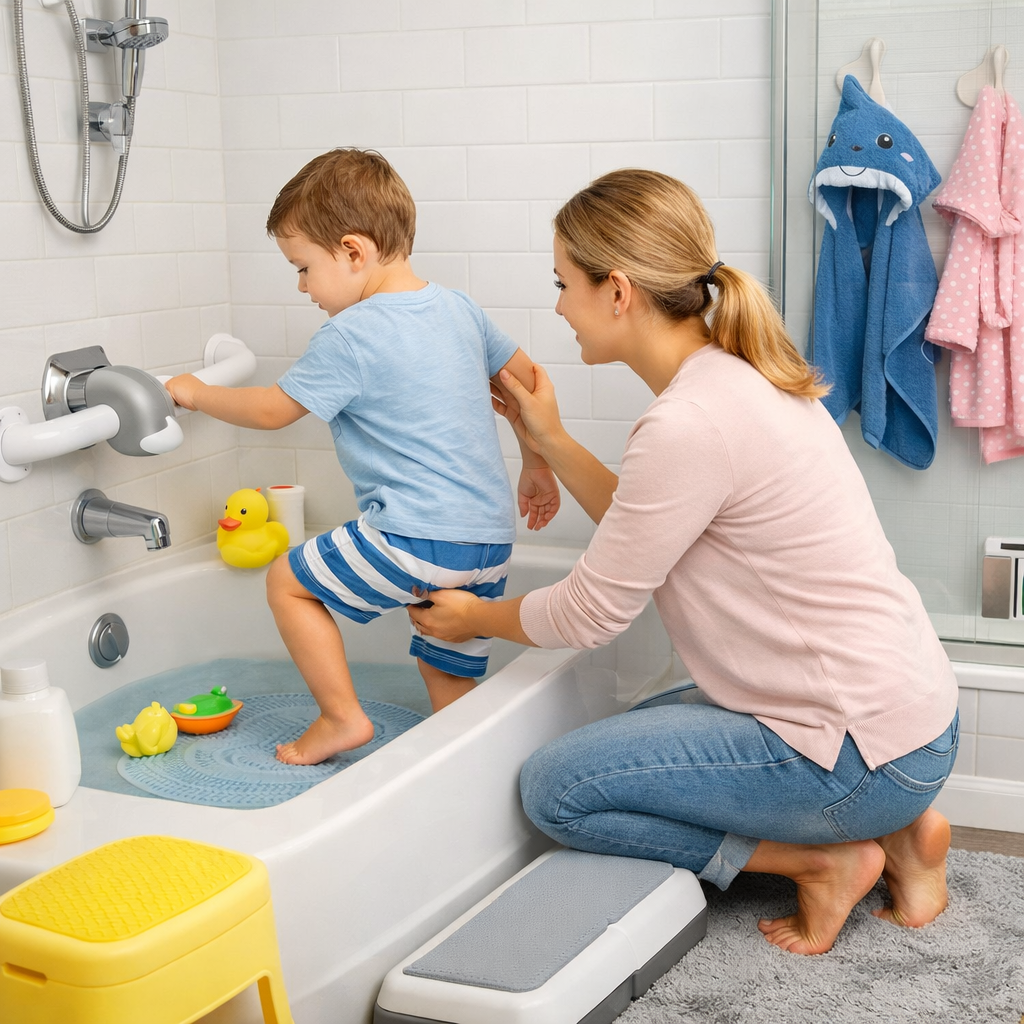
Children should not be left to adjust taps on their own. If your home has anti-scald devices or temperature-limiting fixtures, use them according to manufacturer instructions. Families in rental housing, schools, and childcare settings should follow local building, maintenance, and supervision guidance where applicable.
Reduce access to heat and hot surfaces
Burn prevention also includes common grooming tools and appliances. Hair straighteners, curling irons, portable heaters, and even hot faucet hardware should be kept out of reach and unplugged when not in use. Electrical items should be stored safely away from sinks and tubs to reduce both burn and shock risks.
If older children are learning personal care routines, teach them to ask for help before using any heated device. In workplaces where young workers clean washrooms or support child programs, employers should provide clear procedures, training, and supervision. Safety education can be supported through OHSE training resources when training is relevant.
| Hazard | Common Example | Practical Control |
|---|---|---|
| Slip | Wet floor after bath time | Use non-slip mats and wipe up water immediately |
| Burn | Hot bath water or hot tap | Test water first and supervise tap use |
| Water hazard | Child left alone in tub | Maintain constant active supervision |
| Poisoning or cuts | Cleaning products or razors within reach | Lock storage and keep dangerous items up high |
Managing water hazards and unsafe access
Never leave children alone near water
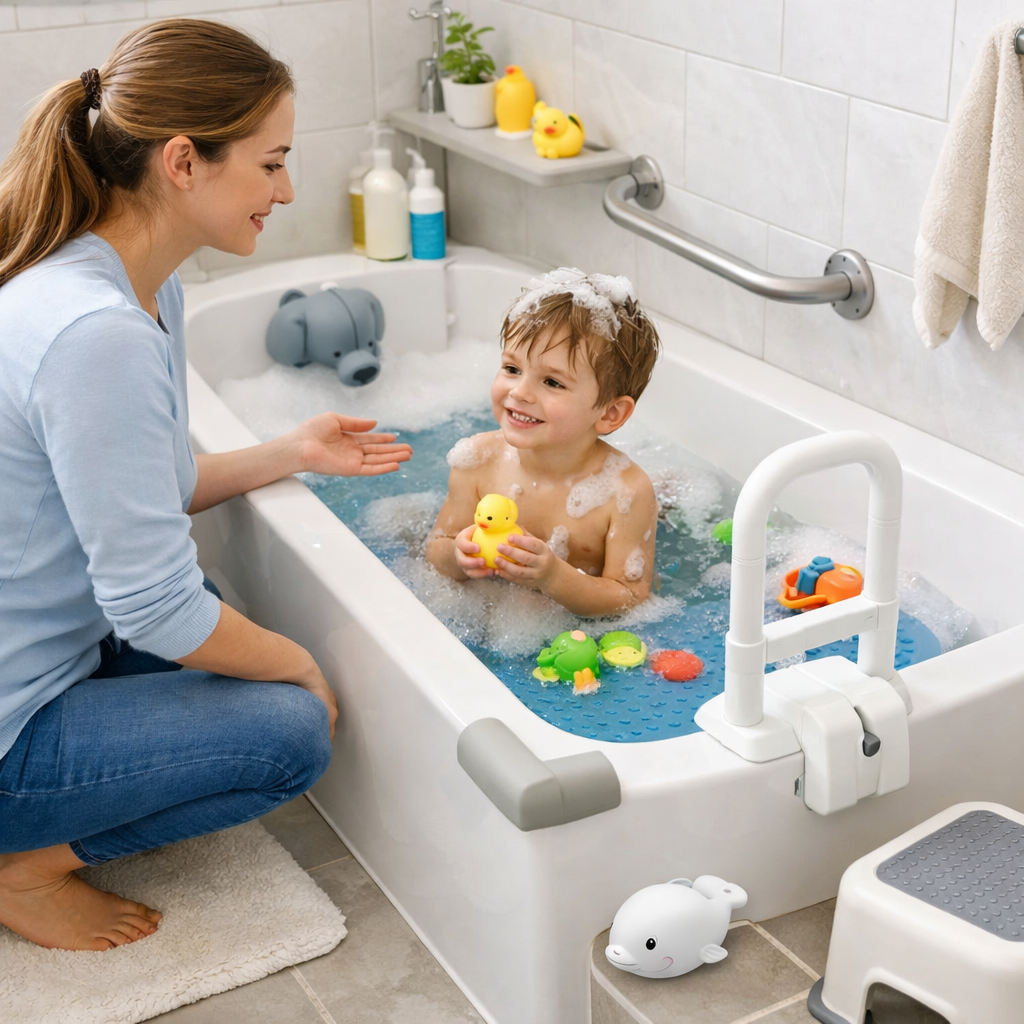
One of the most important rules in bathroom safety for children is simple: never leave a child alone in a bath, even briefly. Going to answer the door, grabbing a towel, or checking a phone can create a dangerous gap in supervision. Prepare everything you need before bath time so you can stay within arm’s reach from start to finish.
This applies not only to tubs, but also to buckets, filled sinks, and other standing water. After use, drain the tub promptly and empty containers right away. Keep toilet lids closed, and consider toilet lid locks if needed for younger children.
Secure products, tools, and cabinets
Bathroom safety for children is also about limiting access to harmful items. Medicines, mouthwash, cleaning products, nail tools, razors, and small batteries should be stored in locked cabinets or high storage areas. Child-resistant packaging helps, but it is not a substitute for secure storage.
A practical safety approach uses the hierarchy of controls where possible. Eliminate what you do not need in the bathroom. Substitute less hazardous products when appropriate. Use engineering controls such as locks, latches, and temperature-limiting fixtures. Add administrative controls through household rules and supervision. Personal habits matter too, such as unplugging appliances and returning products to safe storage immediately after use.
A simple bathroom safety for children checklist
Use this short checklist to review your bathroom setup at home, school, or in shared family spaces:
- Stay within arm’s reach of babies and toddlers during all bath time.
- Test water before a child touches it.
- Drain tubs, sinks, and buckets immediately after use.
- Place non-slip mats inside and outside wet areas.
- Use a sturdy step stool if needed.
- Store medicines, cleaners, razors, and sharp tools in locked or high cabinets.
- Unplug and cool hot styling tools before storing them.
- Keep electrical devices away from water.
- Close toilet lids and keep the floor dry.
- Teach children calm, consistent bathroom rules and review them often.
For schools, childcare providers, and employers, routine inspection is also important. Check mats, fixtures, water temperature controls, storage hardware, and housekeeping practices regularly. Follow site-specific policies, manufacturer directions, and local emergency guidance where applicable.
Bathroom safety for children works best when prevention becomes part of the daily routine rather than a one-time fix. By controlling slip risks, checking water temperature, securing dangerous products, and maintaining active supervision, families and caregivers can make the bathroom much safer without making it complicated. In homes, schools, and childcare settings across Canada, calm planning and consistent habits are the strongest tools for protecting children from slips, burns, and water hazards.
No comments yet