
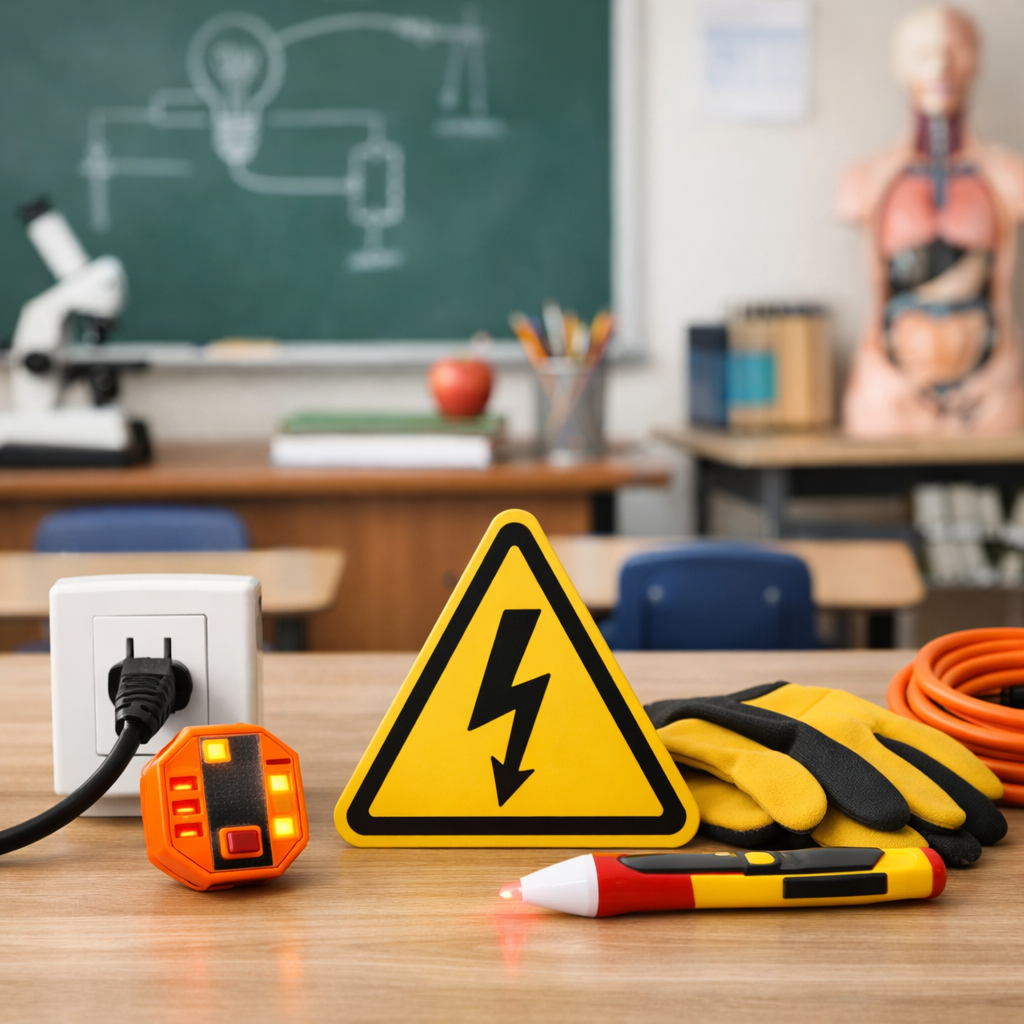

Classroom electrical safety starts with small habits that prevent big problems. In Canadian schools, electricity is part of everyday learning, from charging laptops and tablets to using projectors, science equipment, hot glue guns, and extension cords for special activities.
Most classroom electrical risks are preventable when students and teachers know what to look for, what to avoid, and when to report a concern. A practical approach matters most: keep equipment in good condition, use it as intended, and follow school rules, manufacturer instructions, and local emergency procedures where needed.
For schools, families, and educators, the goal is not fear. The goal is awareness. Good routines help reduce the chance of shock, burns, trips, overheating, or damage to school property. They also teach young people safe habits they can carry into part-time jobs, labs, workplaces, and home life.
Resources from CCOHS, Ontario, and Health Canada can support school safety programs. For practical workplace and school safety information, readers can also explore OHSE.ca.
Why classroom electrical safety matters every day
Electricity is easy to overlook because it is built into the classroom environment. Outlets are on the walls, cords run behind desks, and devices are used so often that they start to feel harmless. That familiarity can lead to unsafe shortcuts.
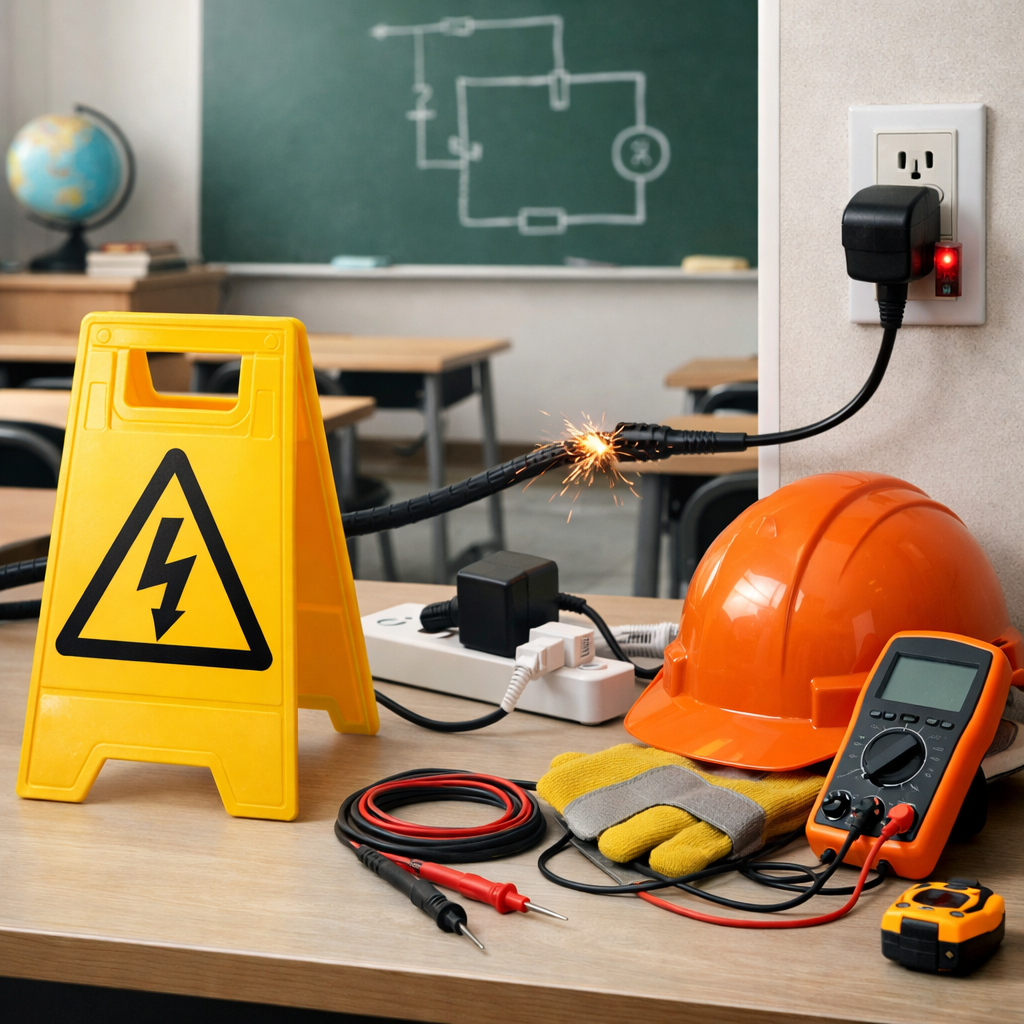
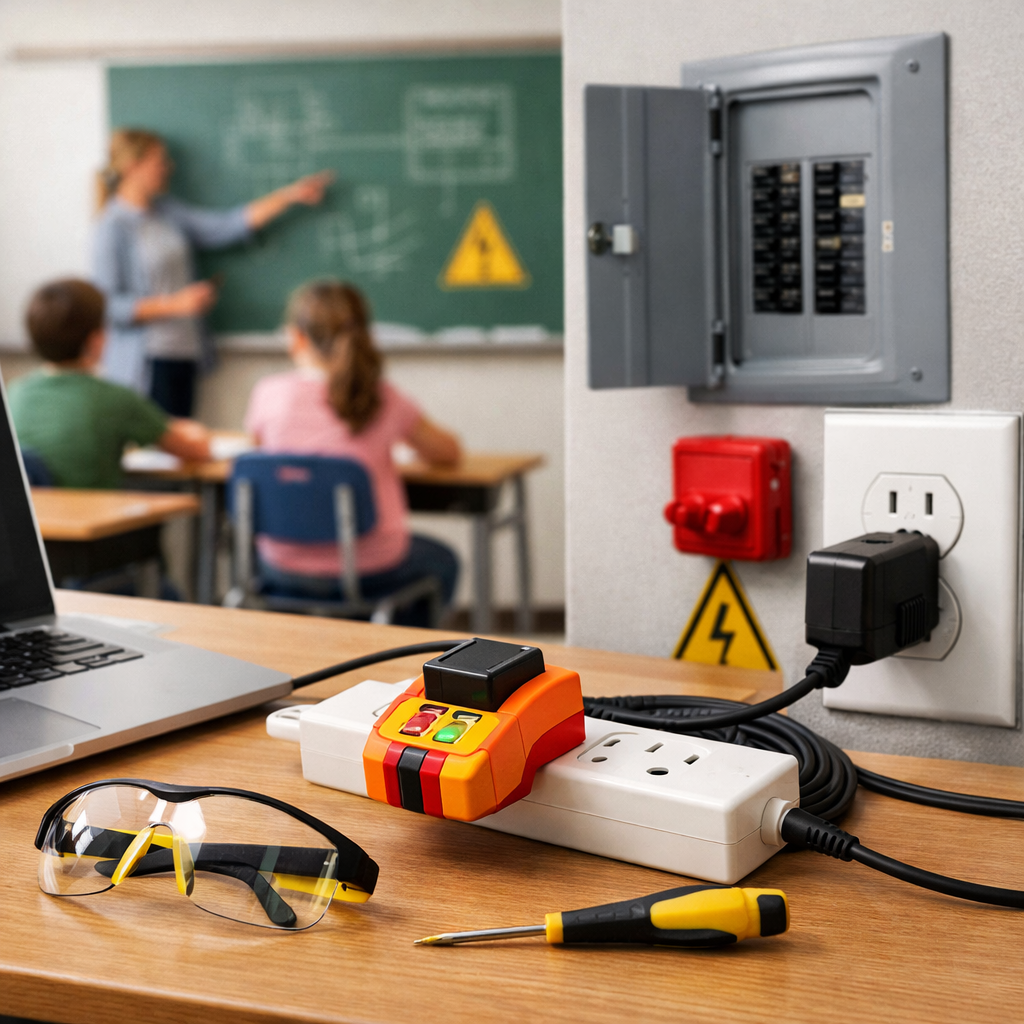
Common hazards include frayed cords, overloaded power bars, liquids near devices, damaged plugs, blocked ventilation, and cords stretched across walkways. In some classrooms, temporary setups for presentations, charging stations, or seasonal activities can create extra risk if they are not planned carefully.
Who is most at risk?
Anyone in the room can be affected by an electrical hazard, but younger students may be less likely to notice danger signs. Teachers, educational assistants, custodial workers, and tech staff may face additional exposure when moving equipment, plugging in multiple devices, or troubleshooting a problem.
Students with personal devices should also understand that school safety rules still apply. A damaged charger from home can become a classroom hazard very quickly.
Classroom electrical safety hazards students and teachers should spot early
The best prevention starts with noticing hazards before someone gets hurt. Teachers can build quick visual checks into the school day, and students can be encouraged to speak up instead of trying to fix a problem themselves.
Warning signs to report right away
- Cracked plugs, loose outlets, or scorched faceplates
- Frayed, pinched, tangled, or exposed cords
- Power bars that feel hot or are packed with too many devices
- Buzzing sounds, flickering equipment, or a burning smell
- Liquids near computers, chargers, or wall outlets
- Cords running under rugs, across aisles, or through doorways
- Devices with blocked air vents or signs of overheating
- Students using equipment without supervision when supervision is required
These signs do not always mean there will be an injury, but they do mean the risk is no longer under control. In a school setting, damaged or suspicious equipment should be taken out of use and reported according to school procedures.
Simple risk examples in real classrooms
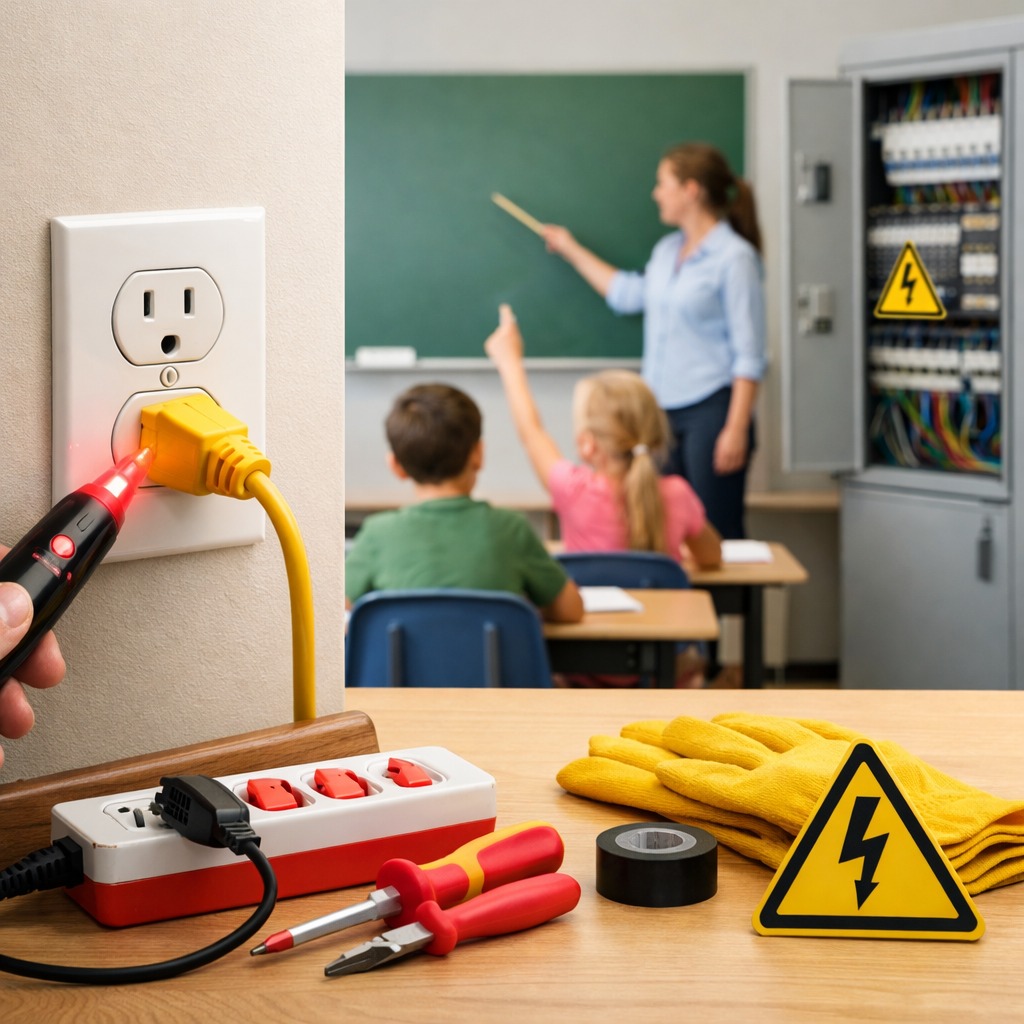
A laptop cart plugged into the wrong setup can strain an outlet. A fan or heater brought from home may not be approved for classroom use. A science demonstration with water near a power source can create obvious danger. Even something as ordinary as charging several tablets on one power bar can become unsafe if ventilation is poor or the equipment is damaged.
This is where classroom electrical safety connects directly to everyday decisions. Small setup choices make a real difference.
Smart classroom electrical safety rules for students and teachers
The most effective rules are easy to remember and easy to apply. Schools should adapt them to the age of students, the type of classroom, and any board-specific policies.
Practical rules for students
- Keep hands dry before touching plugs, cords, or devices.
- Never insert anything into an outlet.
- Do not use a charger, cord, or device that looks damaged.
- Ask a teacher before plugging in personal electrical items.
- Keep drinks away from computers, power bars, and charging stations.
- Do not yank cords from the wall; pull from the plug carefully if instructed to do so.
- Report sparks, heat, smoke, odours, or shocks immediately.
- Do not cover chargers or devices with clothing, paper, or bags.
Practical rules for teachers and staff
- Inspect classroom equipment regularly before use.
- Use school-approved devices, cords, and power bars only.
- Avoid daisy-chaining power bars or extension cords.
- Keep walkways clear and manage cords to reduce trip hazards.
- Unplug and isolate damaged equipment instead of attempting informal repairs.
- Follow manufacturer instructions for charging, storage, and ventilation.
- Supervise higher-risk activities involving heat tools, lab equipment, or temporary wiring.
- Know the school process for maintenance requests and emergency response.
Where training is part of staff onboarding or safety refreshers, schools may benefit from practical learning tools through OHSE training resources. For older students entering co-op placements, shops, or other work-related learning, these habits support broader occupational safety awareness.
Using the hierarchy of controls in schools
The hierarchy of controls is useful for classroom electrical safety because it focuses on preventing hazards at the source. Elimination might mean removing an unnecessary appliance from the room. Substitution could involve using safer, approved equipment. Engineering controls may include outlet covers, proper cable management, or dedicated charging carts. Administrative controls include rules, supervision, and inspections. Personal protective equipment is usually limited in a standard classroom, but may be relevant in specialized labs or technical programs.
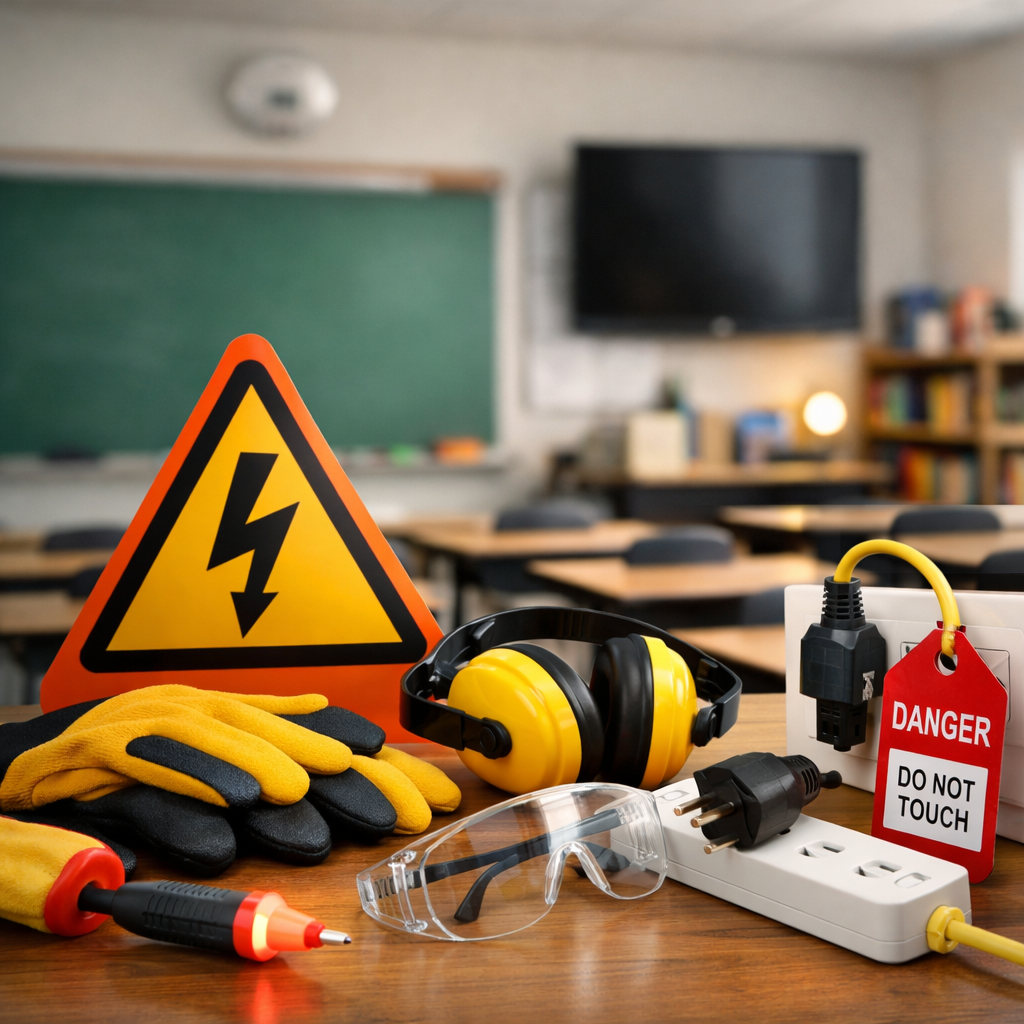
In simple terms, the safest fix is usually not “be careful.” The safest fix is changing the setup so the hazard is less likely to exist at all.
Classroom electrical safety checklist and response steps
A short checklist helps teachers and students turn safety into a routine. It can be reviewed at the start of the term, before special activities, or whenever devices are rearranged.
Quick actionable checklist
| Check | What to confirm |
|---|---|
| Outlets and plugs | No cracks, looseness, scorch marks, or damaged parts |
| Cords | No fraying, pinching, tangling, or tripping hazards |
| Power bars | Not overloaded, not linked together, and in good condition |
| Liquids | Kept away from devices, outlets, and charging areas |
| Ventilation | Chargers and devices have space and are not covered |
| Reporting | Students and staff know who to tell about a hazard |
What to do if something goes wrong
If a device sparks, smokes, overheats, or gives a shock, stop using it immediately and follow school procedures. Students should alert a teacher right away and move back from the area if needed. Staff should isolate the equipment if it is safe to do so and report it through the school’s maintenance or incident process.
No one should handle electrical equipment while standing in water or with wet hands. If there is an urgent situation, schools should follow local emergency guidance and internal response procedures. Do not try to diagnose an injury or perform repairs beyond your training and authority.
Classroom electrical safety is strongest when everyone shares responsibility. Students should know how to notice and report hazards. Teachers should model safe setup and supervision. Schools should support both with inspections, approved equipment, and clear reporting systems. When these layers work together, classrooms stay safer, learning continues with fewer disruptions, and young people build practical habits that protect them well beyond the school day.
No comments yet