
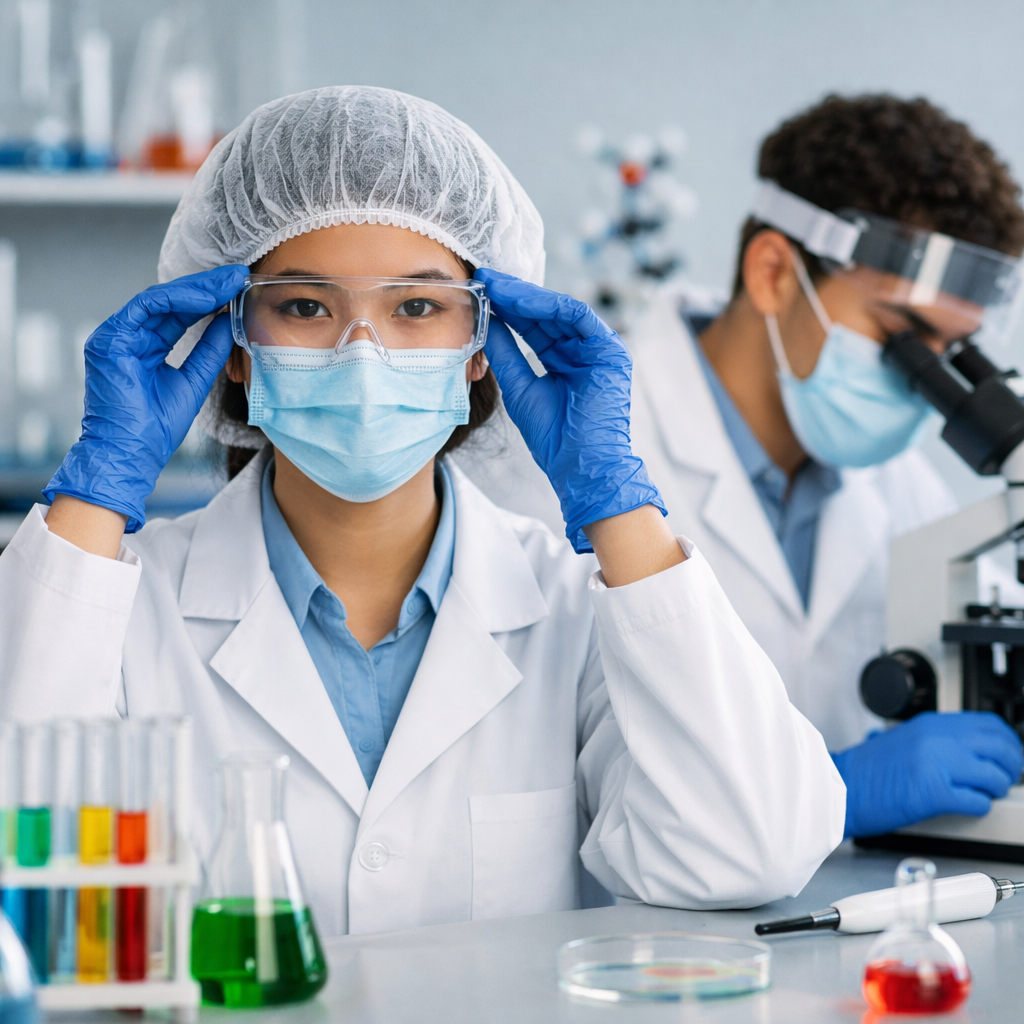

Science lab PPE for students is one of the simplest and most effective ways to reduce preventable injuries during school experiments, demonstrations, and hands-on learning. In Canadian classrooms, labs can involve heat, glassware, chemicals, biological materials, and sharp tools, so what students wear matters just as much as what they do.
Personal protective equipment, or PPE, is not a replacement for supervision, training, or safer lab design. It is the last line of defence when other controls cannot fully remove a hazard. That is why schools, families, and students should understand what PPE is needed, when to use it, and how to wear it properly. For broader school and workplace safety information, readers can also visit OHSE.ca.
Why science lab PPE for students matters in school settings
Science activities often look routine, but even simple tasks can create real risk. A boiling liquid can splash. A test tube can crack. A disinfectant or diluted chemical can irritate skin or eyes. Loose sleeves can catch a flame, and open-toe shoes leave feet exposed if something spills or drops.
In Ontario and across Canada, schools are expected to take reasonable steps to protect students and staff. Trusted safety guidance from organizations such as CCOHS supports a practical approach: identify hazards, control them at the source when possible, and use PPE where needed. In a school lab, that means matching protective equipment to the actual task rather than treating every experiment the same.
It also helps students build habits that carry into co-op placements, part-time work, trades training, healthcare, and post-secondary labs. Learning to tie back hair, protect the eyes, and check labels before starting is part of a strong safety culture.
What to wear: science lab PPE for students by body area
Eye and face protection
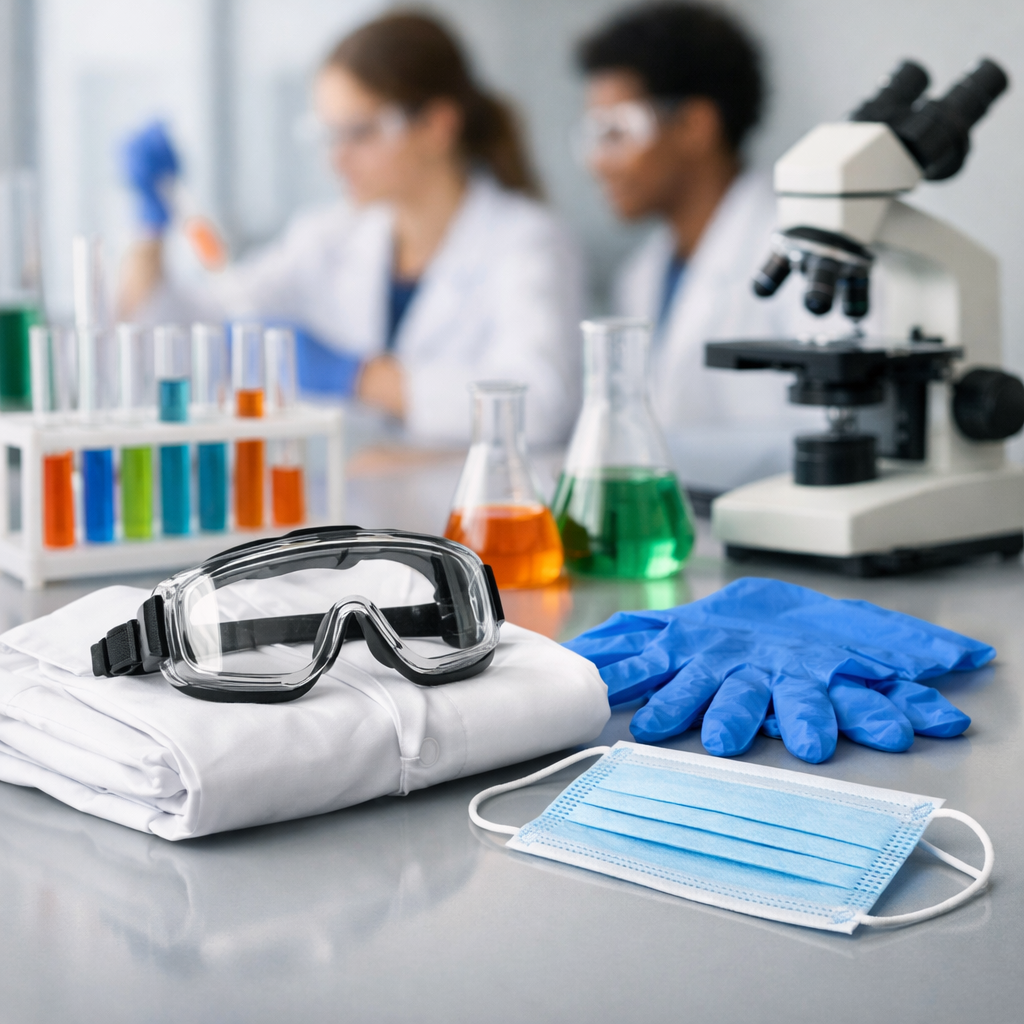
Safety eyewear is often the most important piece of science lab PPE for students. Regular prescription glasses are not the same as chemical splash goggles or impact-rated safety glasses. If there is any chance of splashing, flying particles, or broken glass, properly fitted eye protection should be worn from start to finish, not only during the “risky part.”
For higher-splash activities, teachers may require goggles that seal more closely to the face. Face protection can also be added for certain demonstrations, but students still need eye protection underneath when instructed by the school.
Body and clothing protection
A lab coat or apron helps protect clothing and skin from minor splashes and messes. Cotton or other less-melt-prone fabrics are often safer around heat sources than lightweight synthetic materials that can melt onto the skin. Students should avoid loose sleeves, dangling ties, scarves, and bulky outerwear at the bench.
Clothing should allow movement without creating a snag or spill hazard. Long pants are usually the safest choice in a lab. Shorts may leave skin exposed and are often unsuitable for activities involving chemicals, flames, or glassware.
Hands and feet protection
Gloves are useful, but only when they match the task. Not every lab needs gloves, and wearing the wrong type can create a false sense of security. Teachers should choose gloves based on the materials being used and the manufacturer instructions. Students should also learn that gloves must be removed carefully and should not touch phones, faces, or door handles if contaminated.
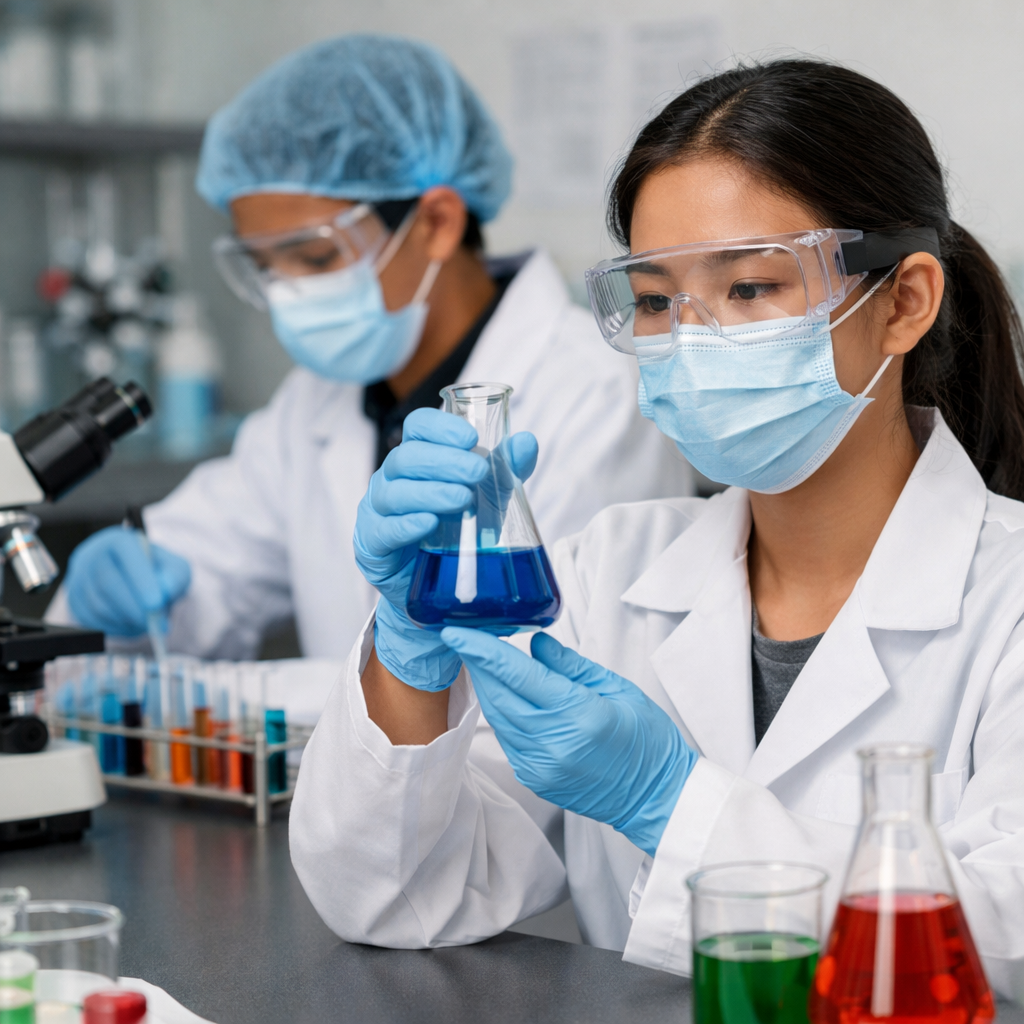
Closed-toe, closed-heel shoes are a basic requirement for most school labs. Sandals, slides, and shoes with open mesh offer poor protection against spills, dropped tools, and broken glass. Stable footwear with good grip also reduces slip risk.
| Lab hazard | Common PPE | Why it helps |
|---|---|---|
| Chemical splash | Goggles, lab coat or apron, suitable gloves | Protects eyes, skin, and clothing from contact |
| Heat or flame | Goggles, tied-back hair, fitted clothing, closed-toe shoes | Reduces burn risk and ignition hazards |
| Broken glass | Eye protection, closed-toe shoes | Helps prevent eye and foot injuries |
| Biological materials | Goggles if needed, coat, suitable gloves | Limits direct contact and contamination |
How schools should choose science lab PPE for students
The best PPE decisions start with the hierarchy of controls. Before reaching for gloves or goggles, the school should ask whether the activity can be made safer in another way. Can a less hazardous substance be used? Can the quantity be reduced? Can a shield, guard, or fume control be added? Can the procedure be changed to lower the chance of splashes or breakage?
Once those questions are answered, PPE becomes more effective because it supports a safer process rather than carrying the whole burden. This is especially important for younger students, who may still be developing coordination, hazard awareness, and confidence in following instructions.
In practical terms, schools should consider:
- the student’s age and maturity level
- the specific experiment or demonstration
- chemical labels and manufacturer directions
- fit, comfort, and size of PPE
- cleaning, storage, and replacement needs
- student training and teacher supervision
Ontario schools and educators may also review applicable health and safety information through Ontario.ca and general public health information from Health Canada. Where students are preparing for work placements or technical programs, extra safety learning through OHSE training can help reinforce safe habits.

Common mistakes students make with lab PPE
Wearing PPE too late or taking it off too early
One of the most common mistakes is waiting until the exciting part of the experiment begins. Science lab PPE for students should be on before materials are opened, burners are lit, or equipment is handled. It should stay on until cleanup is complete and the teacher says the activity is over.
Using PPE that does not fit
Goggles that slip down, gloves that are too large, and lab coats with sleeves that hang into the workspace can all increase risk. Proper fit matters because PPE only works well when it stays in place and does not interfere with safe movement.
Forgetting personal items and hygiene
Long hair should be tied back. Jewelry that dangles should be removed or secured. Food and drinks do not belong in the lab. Students should wash their hands after lab work, especially after removing gloves, even if no obvious spill occurred.
These habits may seem basic, but they prevent contamination and help students avoid touching the eyes, mouth, or face with residues on the hands.
A practical checklist for science lab PPE for students
Students, parents, and teachers can use this simple checklist before lab class:

- Wear closed-toe, closed-heel shoes.
- Choose clothing that covers legs and fits close enough to avoid snagging.
- Tie back long hair and secure loose accessories.
- Put on assigned eye protection before starting.
- Wear a lab coat or apron if the activity requires it.
- Use only the gloves selected for that task.
- Keep PPE on until cleanup and handwashing are complete.
- Report damaged goggles, torn gloves, spills, or breakage right away.
Parents can support these routines by helping students keep suitable shoes and clothing ready on lab days. Schools can support them by giving clear expectations in course outlines, signage, and pre-lab instructions.
Science lab PPE for students is not about making class feel intimidating. It is about making learning safer, more confident, and more professional. When students understand what to wear and why it matters, they are better prepared to focus on the experiment, protect themselves and others, and carry those habits into future labs and workplaces. Always follow local school rules, teacher instructions, product directions, and emergency procedures for the specific activity being done.
No comments yet