
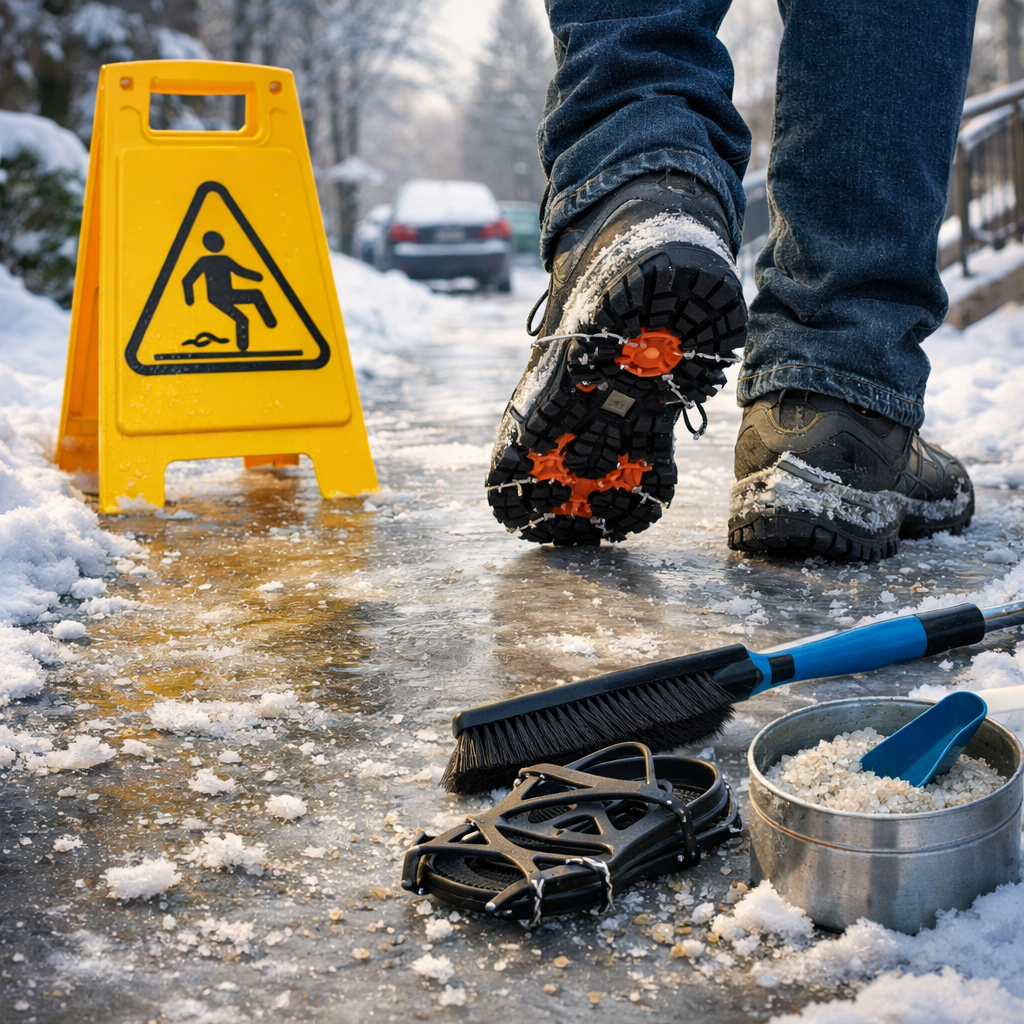

Icy sidewalk safety matters every winter in Canada, especially for students, parents, school staff, families, and young workers who walk outdoors in dark, cold, and changing conditions. A small patch of ice can turn a normal trip to school, work, or the store into a painful fall, so prevention needs to start before anyone steps outside.
The good news is that most winter slip-and-fall risks can be reduced with simple habits, better planning, and regular maintenance. Whether you are clearing a walkway at home, supervising a school entrance, or walking to a part-time job, practical steps can make sidewalks safer and easier to use.
Why icy sidewalk safety is a daily winter priority
Sidewalks become hazardous when snow melts and refreezes, when freezing rain creates a thin invisible layer of ice, or when packed snow is left in high-traffic areas. In Ontario and across Canada, these conditions can change quickly from morning to evening, especially around schools, transit stops, parking lots, and building entrances.
Young people may be at higher risk when they are rushing, carrying backpacks, looking at phones, or wearing shoes that are not designed for winter grip. Parents and supervisors should also remember that children may not always notice black ice, uneven snowbanks, or slippery curb edges.
For workplaces and schools, icy sidewalk safety is also an organizational issue. Property owners, employers, and administrators should look at walking surfaces as part of routine hazard control. Guidance from organizations such as CCOHS and the Government of Ontario can support safer winter practices, but local site rules and maintenance procedures still matter most day to day.
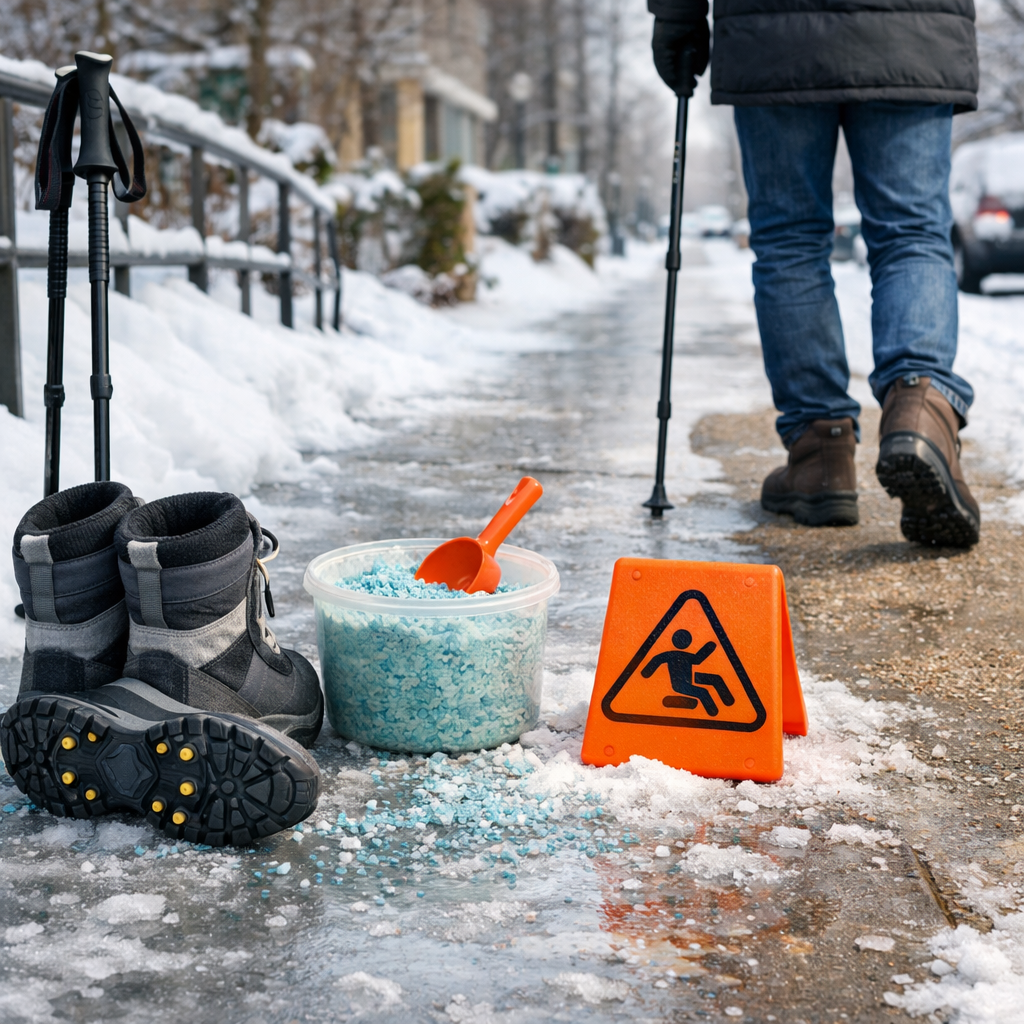
Proven icy sidewalk safety controls that work
A good approach is to think in layers, similar to the Hierarchy of Controls. You may not be able to remove winter weather, but you can reduce exposure to the hazard and make walking surfaces safer.
1. Remove snow and ice early
The safest sidewalk is the one cleared before snow becomes packed down. Shovel early, clear a wide walking path, and pay close attention to ramps, corners, stairs, and curb cuts. If ice has already formed, use an appropriate de-icing or traction product according to the manufacturer’s directions and local requirements.
For schools, apartment buildings, and workplaces, regular inspections are important during active weather and during freeze-thaw periods. A sidewalk that was safe at noon may become icy by late afternoon.
2. Improve traction and drainage
Some icy spots keep returning because water drains across the sidewalk and freezes again. Downspouts, sloped pavement, and shaded areas often cause repeat problems. If a location stays slippery, the long-term fix may be improving drainage, redirecting runoff, repairing uneven surfaces, or changing how snow is piled.
Traction materials can also help, especially in known trouble spots. Use them thoughtfully and maintain the area, because a product that works in one temperature range may be less effective in another.
3. Control how people move through the area
If one route is icy and another route is clear, guide people to the safer path. This can include opening a different entrance, marking a preferred walkway, or temporarily blocking off a dangerous section until it is treated. At schools and worksites, simple communication can prevent a lot of risky shortcuts.
4. Support safer walking behaviour
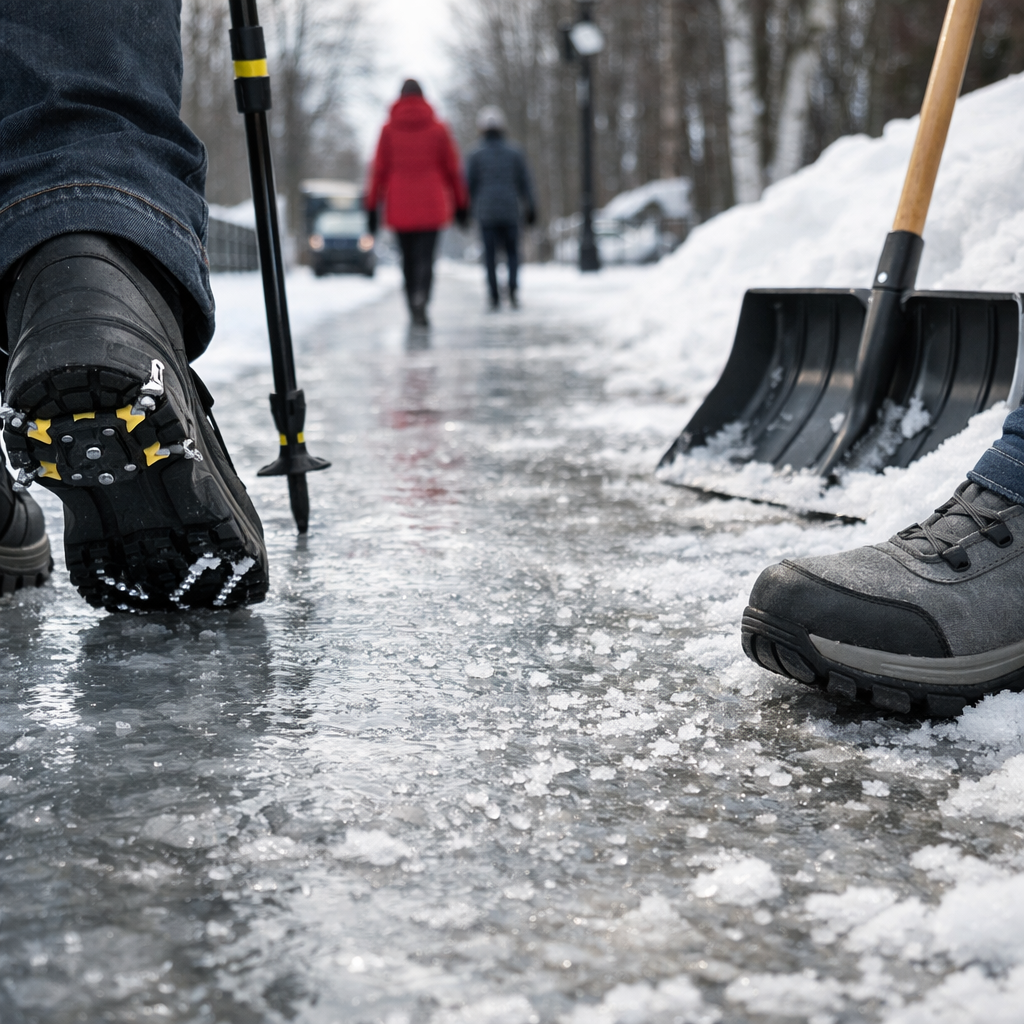
Footwear, pace, and awareness all affect icy sidewalk safety. Shoes or boots with tread generally provide better grip than smooth soles. Small steps, a slower pace, and free hands improve balance. Bags should be carried in a way that does not block vision or throw off posture.
Icy sidewalk safety tips for students, parents, and young workers
Personal choices do not replace proper maintenance, but they do reduce risk. These habits are especially helpful on school mornings, during commutes, and when arriving at entrances where snow gets tracked in and refreezes.
- Wear proper winter footwear: Choose boots or shoes with good tread and a secure fit.
- Leave early: Rushing increases the chance of slipping.
- Use handrails: Take them on steps and ramps whenever available.
- Keep your hands free: Avoid walking with both hands occupied.
- Look ahead for black ice: Be extra careful on shiny, shaded, or sloped areas.
- Step out of vehicles carefully: Parking areas and curb edges are often more slippery than sidewalks.
- Report hazards: Tell a parent, school staff member, supervisor, landlord, or property manager if a walkway is icy.
A short actionable checklist
- Check the route before leaving.
- Wear winter footwear with grip.
- Walk, do not run.
- Use cleared, well-lit paths.
- Avoid distractions like texting while walking.
- Report untreated ice right away.
Families can build these habits into their routine by checking conditions before school and reminding children to slow down near bus stops, crossings, and school entrances. Young workers should also follow workplace procedures and use any assigned winter access route instead of taking shortcuts across untreated areas.
School, home, and workplace responsibilities in Ontario and across Canada
Icy sidewalk safety works best when everyone understands their role. At home, families and property occupants should keep walkways clear and inspect them often. At schools, staff may need a clear reporting process for slippery entrances, portable access routes, and pickup areas. At workplaces, winter walkway inspections should be part of normal health and safety practice.
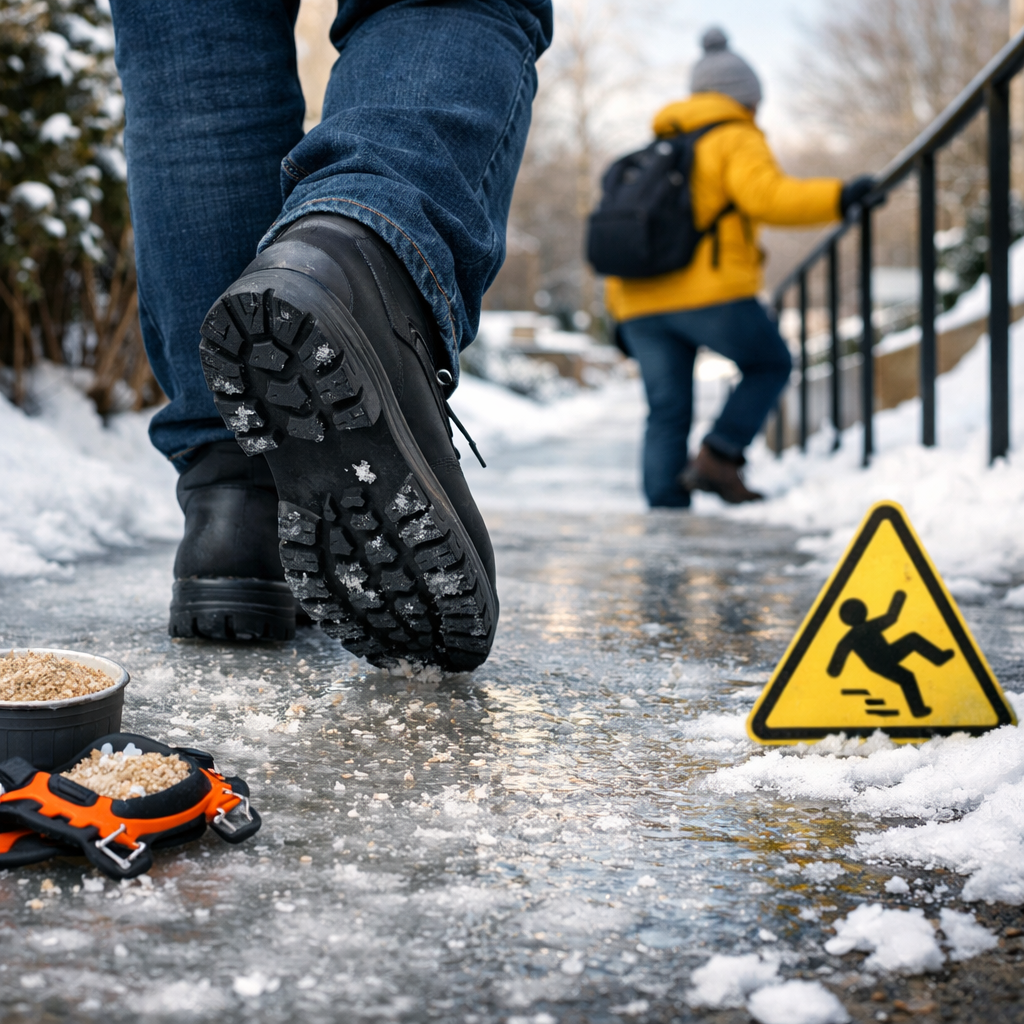
In many settings, responsibilities include monitoring weather, assigning snow and ice removal, documenting hazards, and checking that products and tools are used safely. Training can also help workers understand winter risks, safe shoveling limits, and reporting expectations. General safety learning resources are available through OHSE training, and broader safety information can be found at OHSE.ca.
Where children, teens, or new workers are involved, supervision and clear instructions matter. People who are unfamiliar with a site may not know which entrance is maintained first, where ice tends to form, or what to do if they spot a hazard. Local school policies, workplace procedures, and emergency guidance should always be followed.
| Area | Common Winter Risk | Practical Control |
|---|---|---|
| School entrance | Packed snow and tracked-in ice | Frequent clearing, mats indoors, regular checks |
| Residential sidewalk | Refreezing after partial melting | Early shoveling, de-icing, inspect at day’s end |
| Workplace walkway | Rushed foot traffic during shift changes | Marked safe routes, lighting, hazard reporting |
| Parking lot edge | Slush, uneven ice, hidden curb hazards | Slow movement, visible clearing, traction treatment |
What to do when conditions suddenly get worse
Winter conditions can change fast. If freezing rain starts, temperatures drop sharply, or a cleared path becomes slick again, stop assuming the route is still safe. Reassess before sending children outside, beginning a delivery, or opening a secondary entrance.
If you are responsible for a site, increase inspections and treat priority areas first: entrances, stairs, ramps, accessible routes, and main sidewalks. If a section cannot be made safe right away, restrict access and direct people elsewhere. If you are a walker, choose the best-maintained route, take smaller steps, and avoid carrying loads that affect balance or block your view.
After a fall, follow local school, workplace, or emergency procedures. Do not try to diagnose injuries on your own. Even a minor slip can lead to pain later, so it is important to report the incident and seek appropriate help according to site rules and medical guidance where needed. For broader public safety information, resources from Parachute and Health Canada may also be useful.
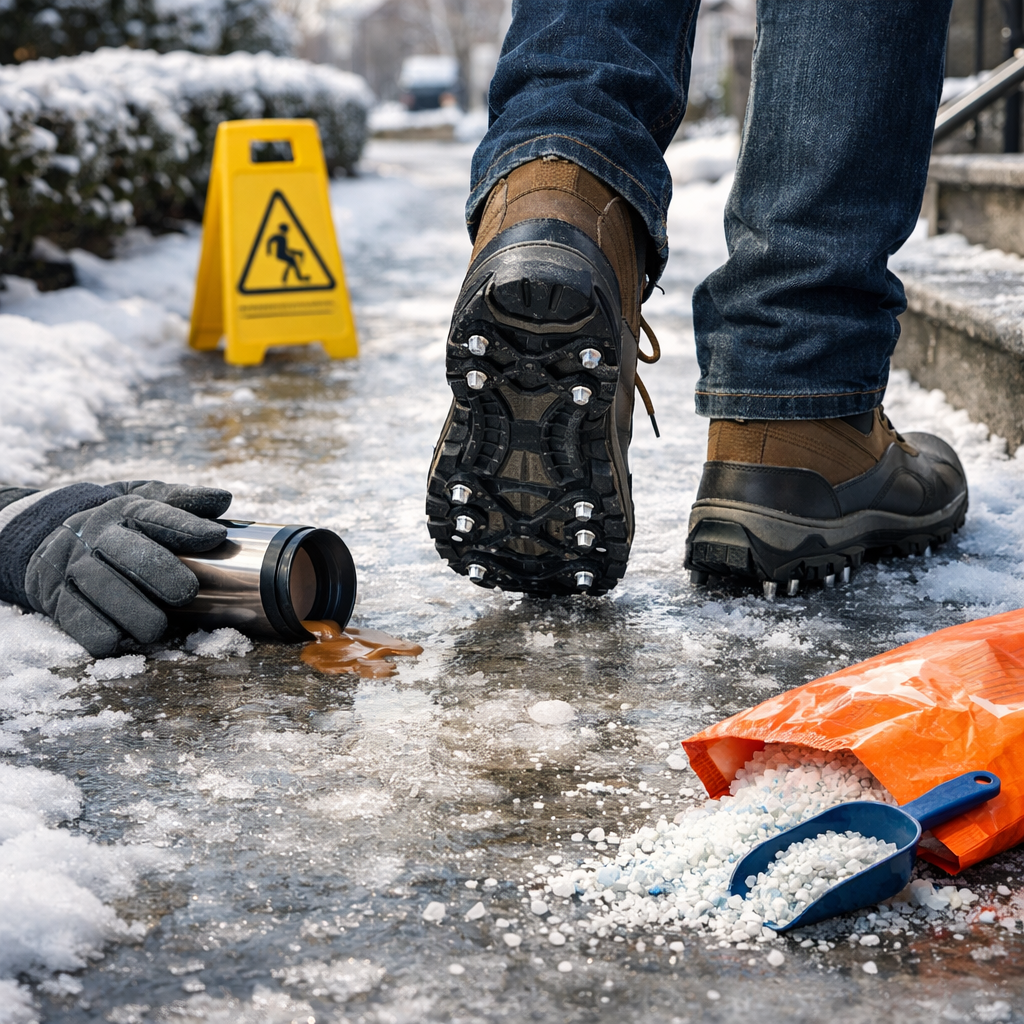
Icy sidewalk safety is not about fear; it is about routine prevention. When sidewalks are cleared early, hazards are reported quickly, and people use safer walking habits, winter travel becomes more manageable for families, students, schools, and young workers. Make icy sidewalk safety part of your cold-weather routine, and you can reduce winter slip-and-fall risks before they become serious problems.
No comments yet