
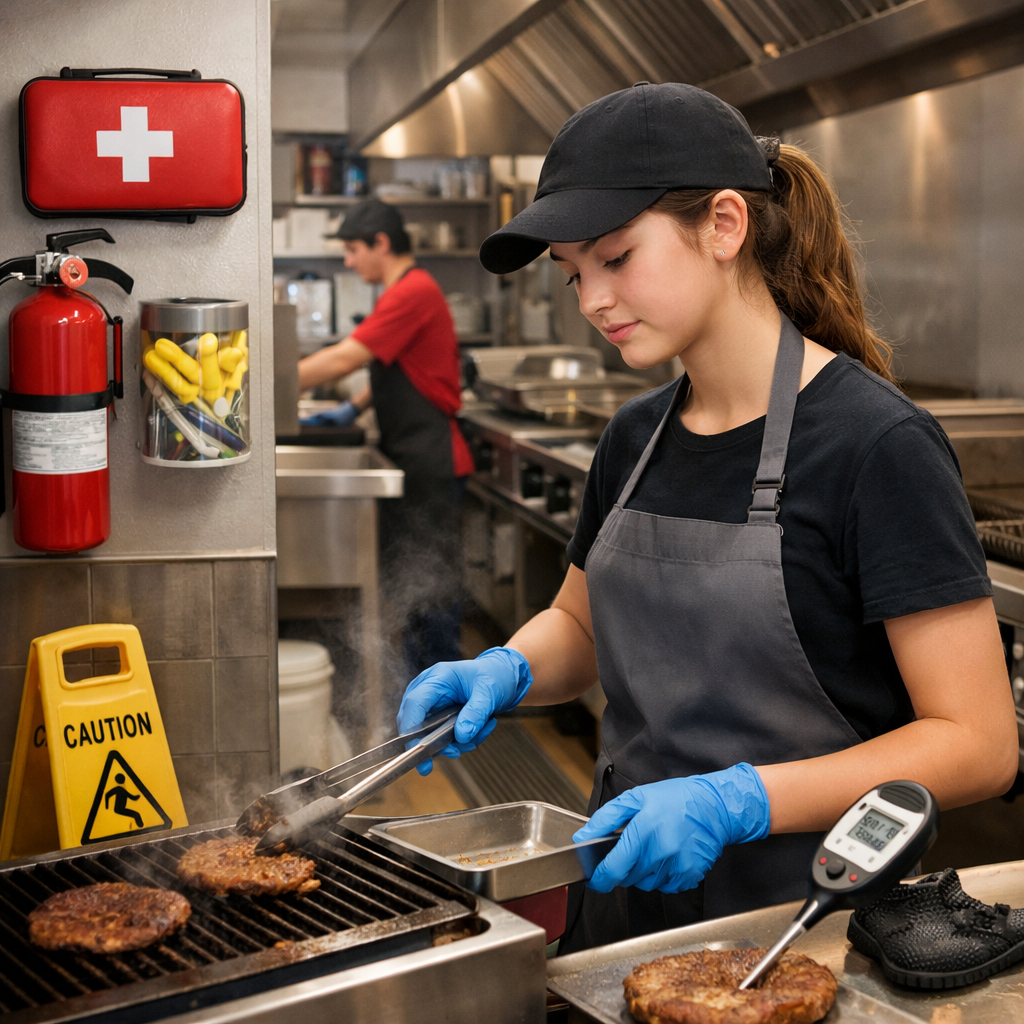

Restaurant safety for teen workers starts before the first order comes in. A first shift can feel exciting and fast, but restaurant work also includes real hazards such as hot surfaces, sharp tools, slippery floors, cleaning chemicals, and rushed lifting.
For teens in Ontario and across Canada, the safest start is a practical one: know the risks, ask questions early, and follow training every time. This guide is designed for young workers, parents, and schools who want a clear, prevention-focused overview of what to expect and how to stay safe on the job.
Restaurant safety for teen workers begins before the shift
Before stepping behind the counter or into the kitchen, teen workers should receive basic orientation. That includes learning who supervises them, what tasks they are expected to do, which jobs they should not do without training, and what to do if something goes wrong.
In a good workplace, safety is part of the first conversation, not an afterthought. A supervisor should explain safe procedures, show where supplies and exits are located, and confirm that the worker understands how to report hazards, injuries, spills, or harassment.
If training is incomplete, it is smart to pause and ask for help. New workers should never feel pressured to “just figure it out” around fryers, grills, slicers, knives, or chemical products. For general workplace safety guidance, young workers and families can review resources from CCOHS, Ontario, and practical employer training options at OHSE training.
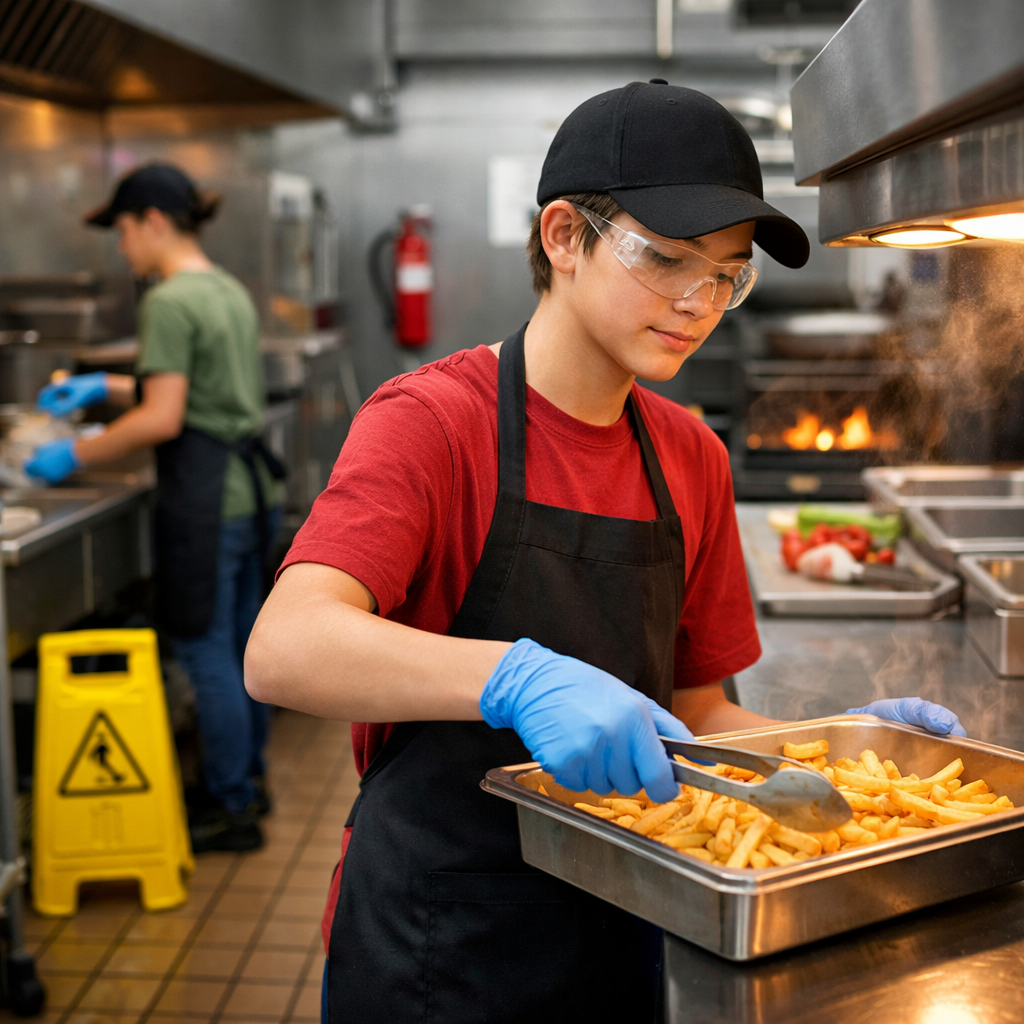
What to confirm on day one
- Who your supervisor is and how to reach them quickly
- Where first aid supplies, fire equipment, and exits are located
- Which tasks require direct supervision or special training
- How to report a spill, broken equipment, injury, or unsafe behaviour
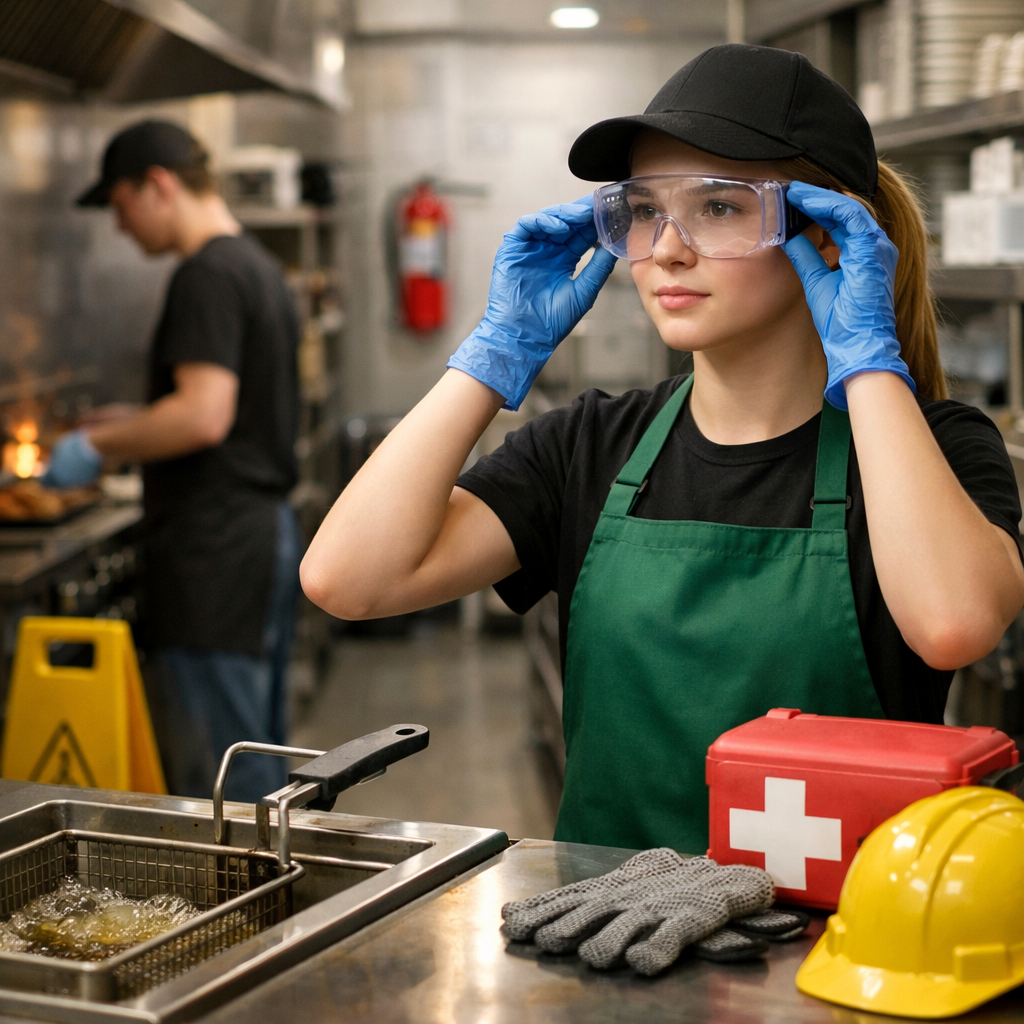
- What personal protective equipment is required for your role
- When to stop work and ask questions
Top hazards in restaurant safety for teen workers
Most restaurant injuries happen during routine tasks. The risk often comes from speed, distraction, crowding, or poor communication rather than unusual events. Teen workers are especially vulnerable when they are still learning the layout, equipment, and pace of service.
Common hazards include slips on wet floors, burns from steam or hot oil, cuts from knives or broken glass, strains from lifting stock, and skin or breathing irritation from cleaners. Busy kitchens also create noise, heat, and stress that can make mistakes more likely.
A simple way to think about prevention is the Hierarchy of Controls. First, remove or reduce the hazard where possible. Next, improve the setup or process, such as using floor mats, guards, or proper storage. Then use safe procedures, clear supervision, and training. Personal protective equipment matters too, but it should not be the only control.
Common tasks and safer controls
| Task | Main hazard | Safer approach |
|---|---|---|
| Mopping or carrying drinks | Slips and falls | Clean spills right away, use signs, wear slip-resistant footwear, keep walkways clear |
| Using ovens, grills, fryers | Burns and splashes | Get training first, use dry mitts or tools, move slowly, never overfill or rush |
| Food prep with knives | Cuts and punctures | Use the right knife, cut on stable boards, store blades safely, never catch a falling knife |
| Lifting boxes or buckets | Strains and sprains | Test the weight, keep loads close, ask for help, use carts when available |
| Cleaning with chemicals | Skin, eye, or breathing irritation | Read labels, never mix products, use gloves if required, ensure ventilation |
Smart first-shift habits that prevent injuries
Good habits matter as much as equipment. In restaurant safety for teen workers, small choices repeated every shift can prevent a lot of harm. That means wearing the right shoes, tying back long hair, avoiding horseplay, and keeping full attention on the task in front of you.
Communication is another major safety skill. If you are carrying hot food, say so clearly. If you are behind someone with a tray or pan, speak up. If a spill happens, do not walk past it. If a machine looks damaged, stop and tell a supervisor right away.
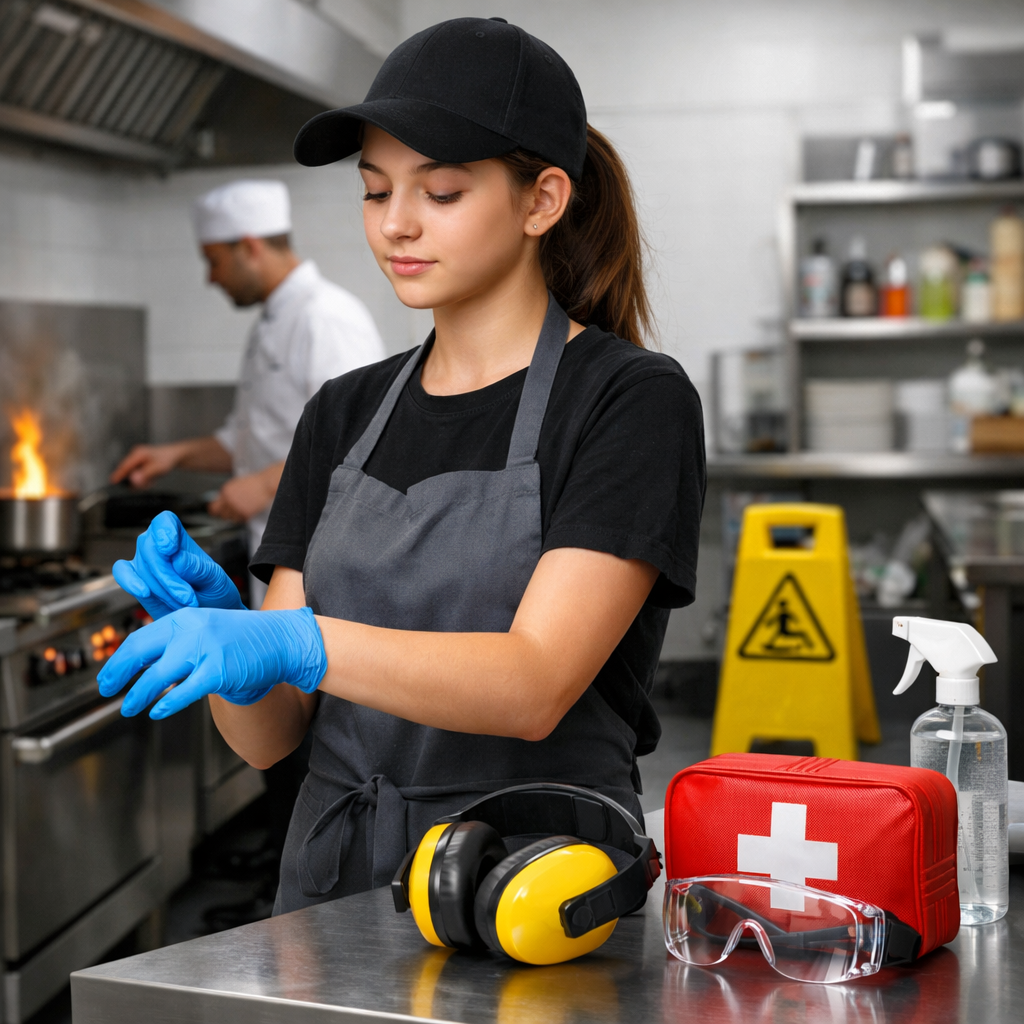
Teen workers should also know their limits. Fatigue, dehydration, and stress can affect focus. Ask for clarification when instructions are unclear, and do not use equipment you have not been shown how to use safely. If a manager asks you to do something that seems unsafe, respectfully pause and request training or supervision first. More workplace prevention guidance is available at OHSE.ca.
Short actionable checklist for a first shift
- Wear closed-toe, slip-resistant shoes
- Know the exits, first aid location, and supervisor name
- Keep phones away while working
- Use dry cloths or mitts around hot equipment
- Wipe up spills or report them immediately
- Lift smaller loads and ask for help with heavy items
- Read labels before using any cleaner
- Stop and ask if you are unsure
Rights, responsibilities, and when to speak up
Restaurant safety for teen workers is not only about being careful. It also depends on a workplace that provides instruction, supervision, and safe conditions. In Ontario, young workers and employers each have roles to play, and schools or families often help reinforce those expectations.
Teen workers should follow training, use equipment properly, report hazards promptly, and avoid unsafe shortcuts. Employers should provide information, supervision, and appropriate controls for the tasks assigned. Parents and educators can support teens by reviewing workplace expectations before the first shift and encouraging them to speak up early if something feels wrong.
It is especially important to report near misses, not just injuries. A tray dropped in a crowded aisle, a loose floor mat, or a cleaner stored in the wrong bottle can all become serious incidents later. Early reporting gives supervisors a chance to correct the problem before someone gets hurt.
If an incident does happen, follow workplace procedures, get help from a supervisor, and use first aid or emergency guidance provided on site. For broader health and injury-prevention information, readers may also find Health Canada and Parachute helpful.
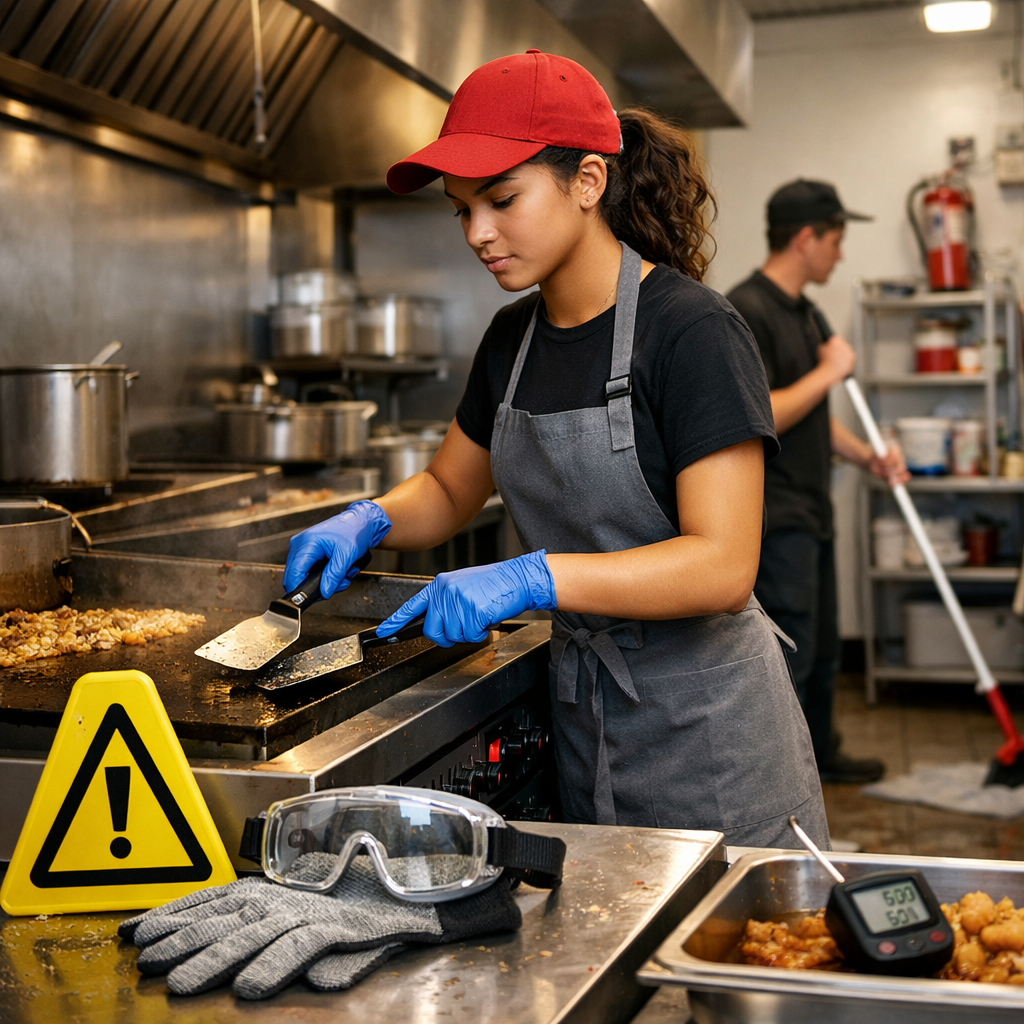
Restaurant safety for teen workers is really about preparation, communication, and confidence to pause when something is unclear. A first shift does not need to be perfect, but it should be supervised, well explained, and built around safe habits. When young workers understand the common risks and the practical controls that reduce them, they can learn faster, work more confidently, and return home safer after every shift.
No comments yet