
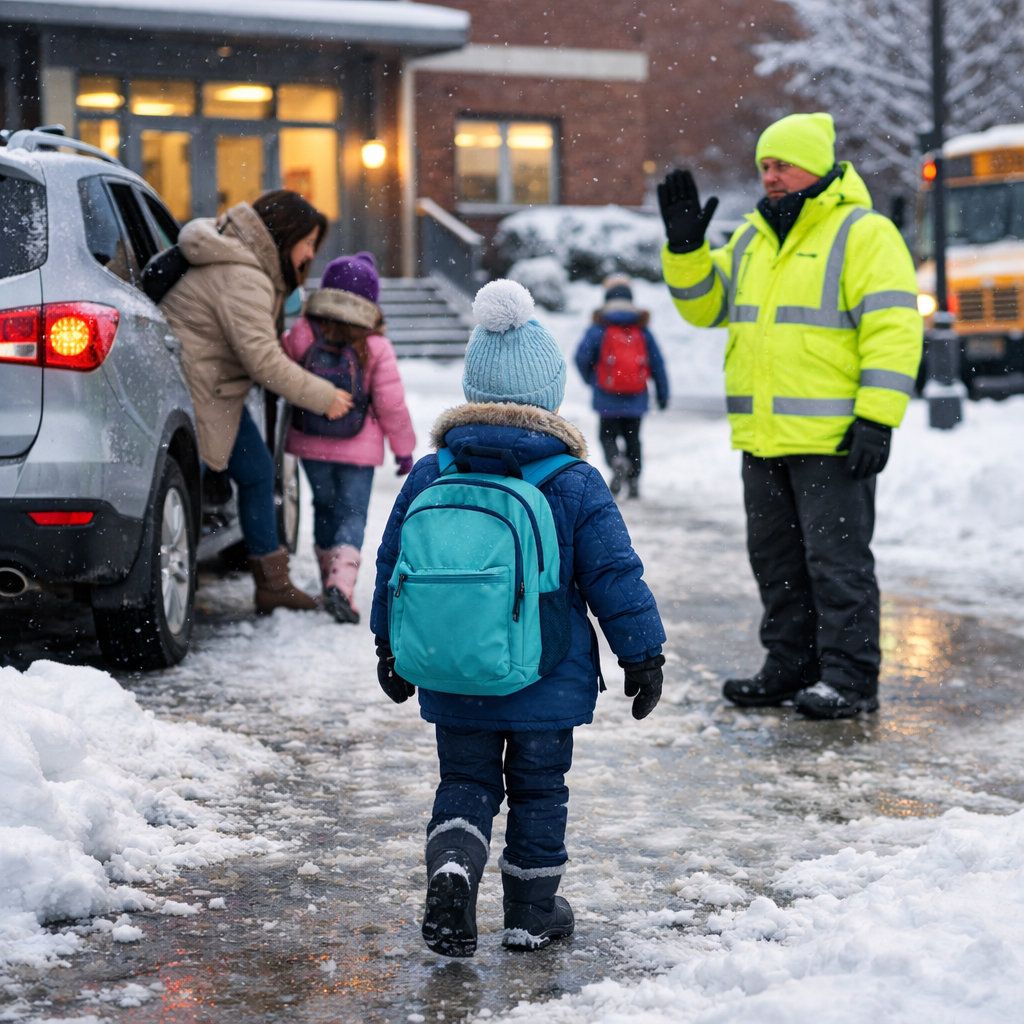

School drop-off winter safety matters most when snow, ice, darkness, and heavy traffic all meet at the curb. In Ontario and across Canada, winter school mornings can turn familiar routines into high-risk moments for children, parents, school staff, bus drivers, and crossing guards.
A safer drop-off starts with planning, slower speeds, clear communication, and attention to changing conditions. Whether you are driving, walking, supervising students, or managing a school entrance, practical prevention steps can reduce slips, traffic conflicts, blocked sightlines, and rushed decisions before they lead to injury.
This guide explains how to improve school drop-off winter safety with realistic steps for families and schools. It also highlights ways to apply basic hazard control principles so snowy school zones stay as predictable and safe as possible.
Why school drop-off winter safety needs extra attention
Winter changes how people move and how vehicles stop. Snowbanks can narrow lanes and sidewalks. Ice can make boots slide and increase braking distance. Frosted windows, blowing snow, and low morning light can reduce visibility for everyone.
Children are especially vulnerable in school zones because they may be shorter than snowbanks, harder to see between parked vehicles, and more likely to move unpredictably when they are excited, late, or distracted. A child stepping out from behind a snow pile or an idling SUV may not be visible to another driver until it is too late.
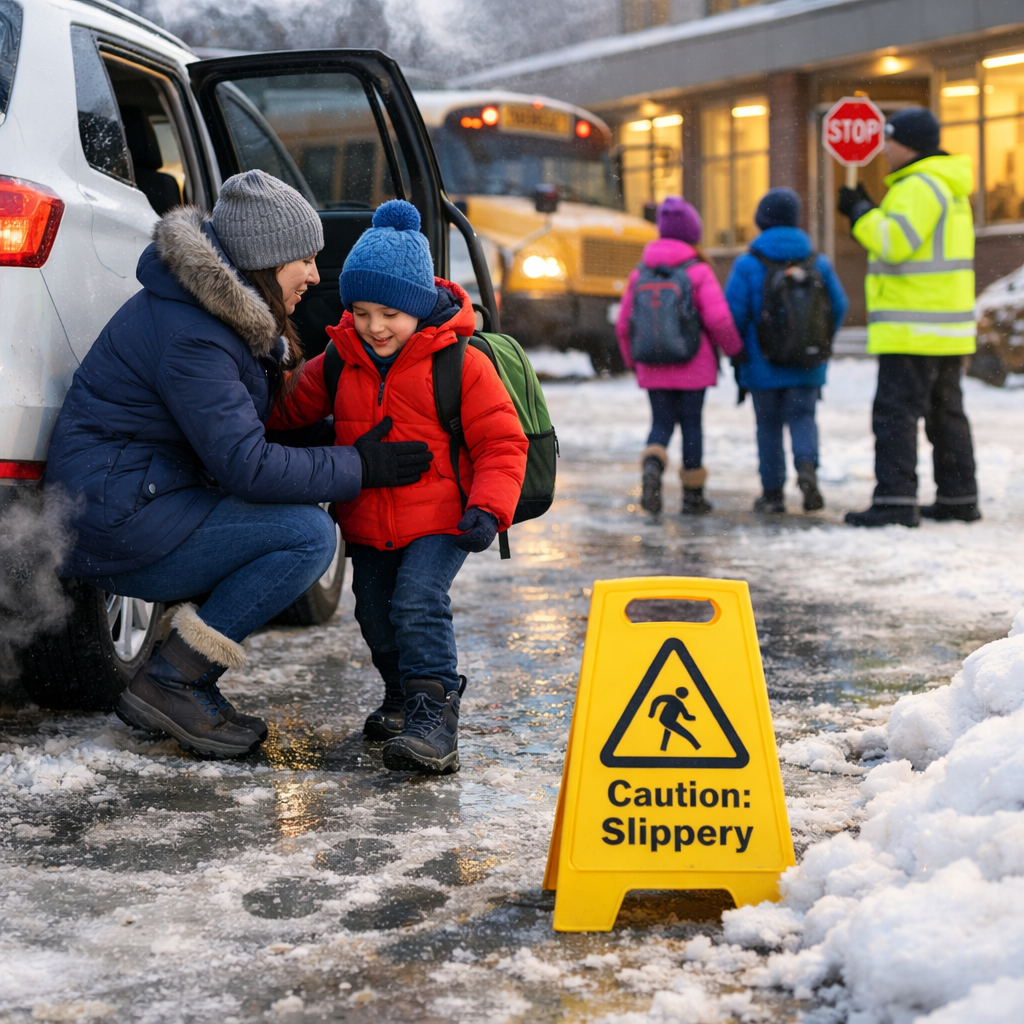
For schools and workplaces, this is also an occupational health and safety concern. Crossing guards, bus operators, maintenance workers, and staff supervising arrival areas face exposure to vehicle movement, cold surfaces, and slip hazards. Good safety planning helps protect both students and workers.
Trusted Canadian guidance from organizations such as CCOHS, the Government of Ontario, and Parachute supports prevention-focused habits like hazard awareness, safe walking surfaces, and safer road behaviour in winter conditions.
School drop-off winter safety hazards in snowy school zones
Common risks for drivers, walkers, and children
Most winter drop-off incidents happen when several small hazards combine. A rushed driver, a hidden curb, and a child carrying a bulky backpack can create a serious near miss even at low speed.
- Reduced traction: Snow, slush, black ice, and packed snow increase stopping distance and make turning less predictable.
- Poor visibility: Snowfall, fogged glass, darkness, and snowbanks can hide children, signs, and crossing points.
- Congestion: Double parking, U-turns, backing up, and stopping outside designated areas create conflict points.
- Slip and fall hazards: Icy sidewalks, uncleared steps, and slushy curbs can cause falls during entry and exit.
- Distraction: Phones, in-car conversations, navigation screens, and children unloading bags can pull attention away from the road.
- Cold-related stress: Hurrying to escape the cold often leads to unsafe choices by both adults and children.
Simple examples of how risks develop
A parent stops briefly where stopping is not allowed because the designated lane looks busy. Another vehicle tries to pass. A child opens the rear door into snow and steps directly into traffic. In another case, a student slips on an uncleared path and falls near moving vehicles while trying to regain balance.
These are practical reasons school drop-off winter safety depends on both site conditions and human behaviour. Snow removal, lane management, and family routines all matter together.
Practical school drop-off winter safety controls that work
Using the hierarchy of controls in a school setting
The hierarchy of controls is a useful way to think about prevention. While schools cannot eliminate winter, they can still reduce exposure to hazards in layers.
| Control level | School zone example | Why it helps |
|---|---|---|
| Elimination | Close unsafe cut-through areas or restrict vehicle access near main walkways | Removes conflict points between people and vehicles |
| Engineering controls | Snow clearing, sanding, barriers, lighting, marked walkways | Improves traction, visibility, and separation |
| Administrative controls | Staggered drop-off times, one-way traffic patterns, staff supervision | Reduces congestion and confusion |
| Personal protective measures | Winter boots with grip, bright clothing, cleared windows, winter-ready vehicles | Helps individuals manage remaining risk |
For parents and caregivers
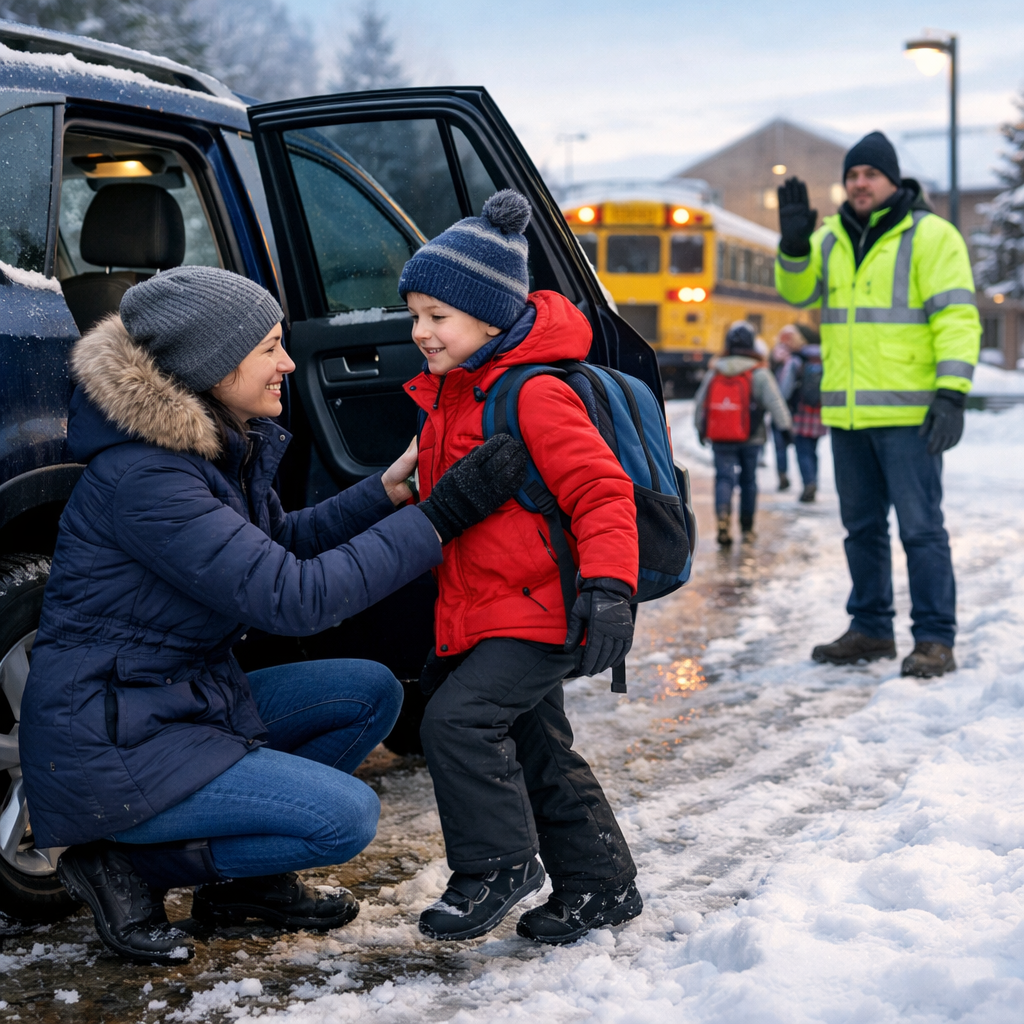
Parents can improve school drop-off winter safety by preparing before leaving home. Clear all windows, lights, mirrors, and the roof of your vehicle. Start early so you do not feel pressure to speed or stop in unsafe places.
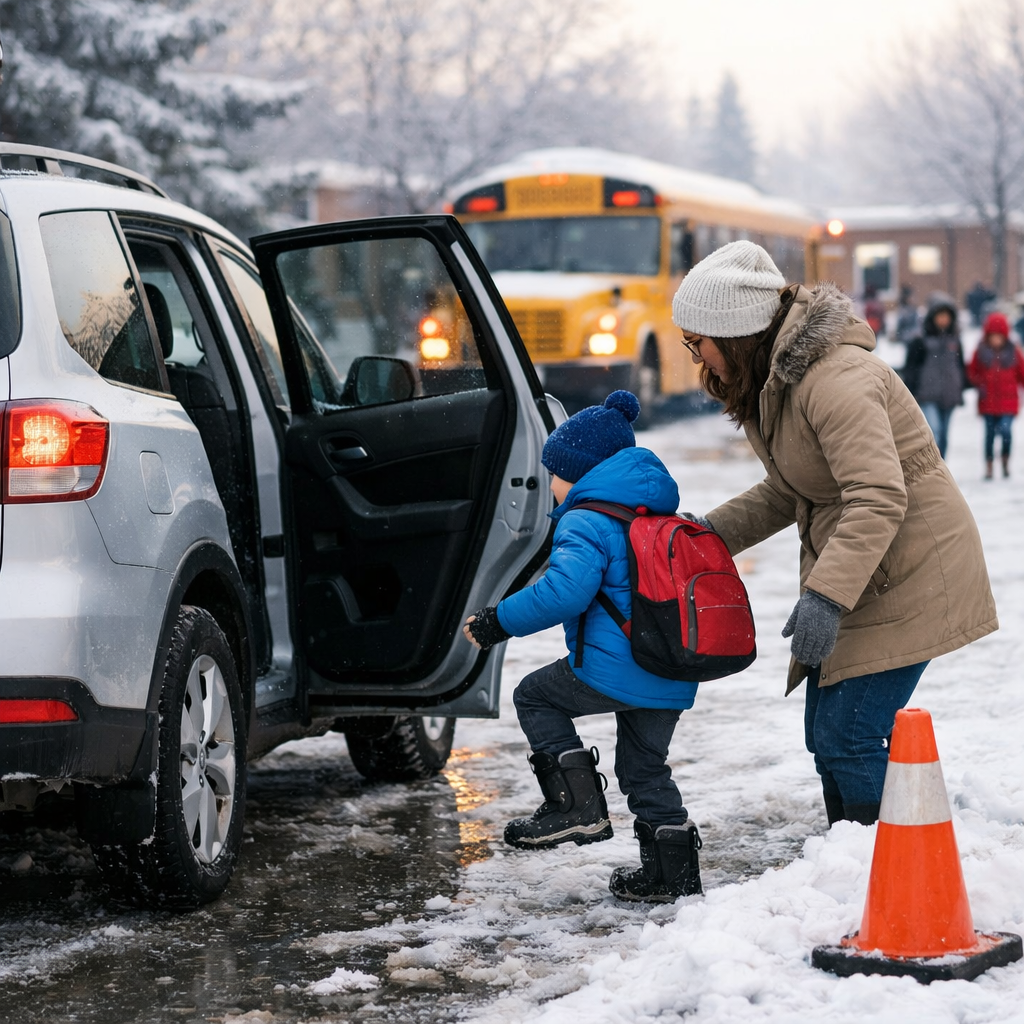
Use designated drop-off areas whenever possible. Have children exit on the curb side, not into traffic. Keep backpacks, lunches, and mittens ready before arrival so stops are brief and calm.
Children should be reminded to look for vehicles before opening doors, avoid walking between cars, and use marked crossings or supervised crossing points. If your child walks from a nearby parking area, choose the most direct cleared route, even if it takes a little longer.
If weather is severe, consider whether walking part of the route from a less congested spot could be safer than joining a crowded curb lane. The key is choosing a location that does not require crossing through moving traffic unexpectedly.
For schools and staff
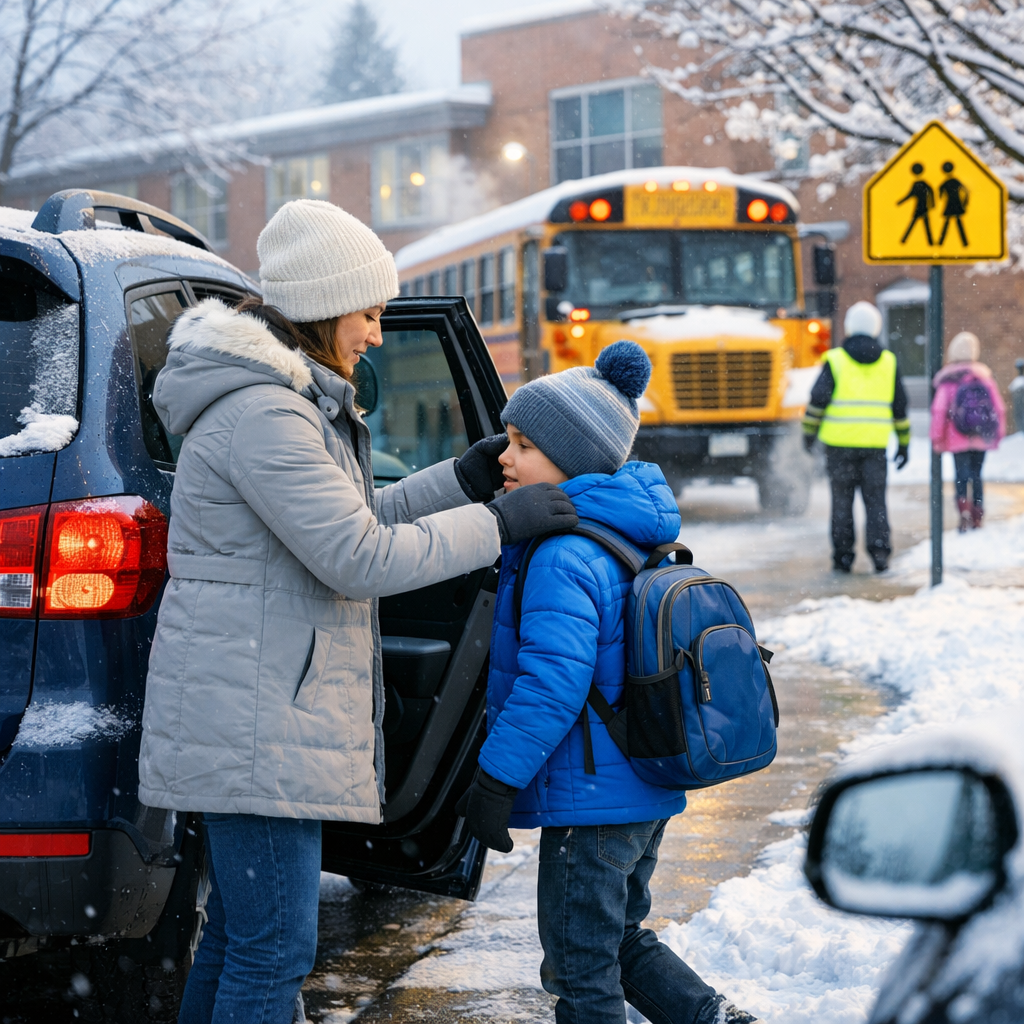
Schools can strengthen school drop-off winter safety by inspecting arrival areas early and often. Snow and ice should be removed from sidewalks, curb cuts, stairs, ramps, and bus loading areas. Snowbanks should not block sightlines at crossings, driveways, or corners.
Clear signs and consistent traffic patterns are essential. Families are more likely to follow rules when pick-up and drop-off procedures are simple, visible, and reinforced regularly. Staff supervision at known bottlenecks can reduce risky driving and support younger students who need help navigating slippery areas.
Where staff receive safety responsibilities, practical orientation or refresher learning can help. Schools and related workplaces may also benefit from broader safety education resources through training programs that support hazard awareness and prevention planning.
Smart winter routines for safer arrivals and departures
Short actionable checklist
- Leave extra travel time on snowy or icy mornings.
- Fully clear snow and frost from all vehicle windows, mirrors, lights, and roof.
- Slow down well before entering the school zone.
- Use only designated drop-off and pick-up areas.
- Avoid double parking, reversing when possible, and mid-block drop-offs.
- Make sure children exit on the curb side.
- Watch for hidden ice near curbs, steps, and painted surfaces.
- Dress children in bright winter clothing where practical.
- Teach children not to cross between parked vehicles or behind buses.
- Follow local school instructions and any direction from crossing guards or staff.
What children and teens should remember
Students should keep hoods, scarves, and headphones from blocking hearing and vision when walking near traffic. Teens who walk independently should be reminded that icy pavement changes stopping distance for cars, even when drivers appear to see them.
Young workers, such as student volunteers helping with school events or staff assisting outside, should wear appropriate winter footwear and follow site procedures. If surfaces look unsafe or visibility is poor, concerns should be reported right away so controls can be improved.
When conditions change quickly
Winter conditions can shift during the same morning. A route that was wet at 7:30 may be icy by 8:15. Snowplows can leave ridges at driveway entrances. Meltwater can refreeze around shaded sidewalks. Because of this, school drop-off winter safety depends on ongoing attention, not just one good decision at the start of the trip.
If conditions appear worse than expected, adjust. Slow down further, increase following distance, choose a less congested approach, or walk children from a safer nearby location. For schools, that may mean rechecking entrances, updating staff positions, or temporarily redirecting traffic flow.
Building a safer winter school zone culture
The most effective approach is consistency. When families know the routine, staff reinforce it, and the site is maintained for winter conditions, risky behaviour usually drops. Calm, predictable systems protect children better than last-minute reactions.
Schools can support this culture by sharing seasonal reminders before storms, reviewing arrival procedures with staff, and encouraging reporting of recurring hazards such as icy corners, blocked signage, or frequent illegal stopping. Parents can help by modelling patience and following the same rules every day, even when the lot is crowded.
School drop-off winter safety is not just about driving slower. It is about reducing hazards before they become incidents, from snow removal and visibility to supervision and safe child behaviour. In snowy school zones, a few practical steps taken consistently can make arrivals safer for students, families, and workers all winter long.
No comments yet