
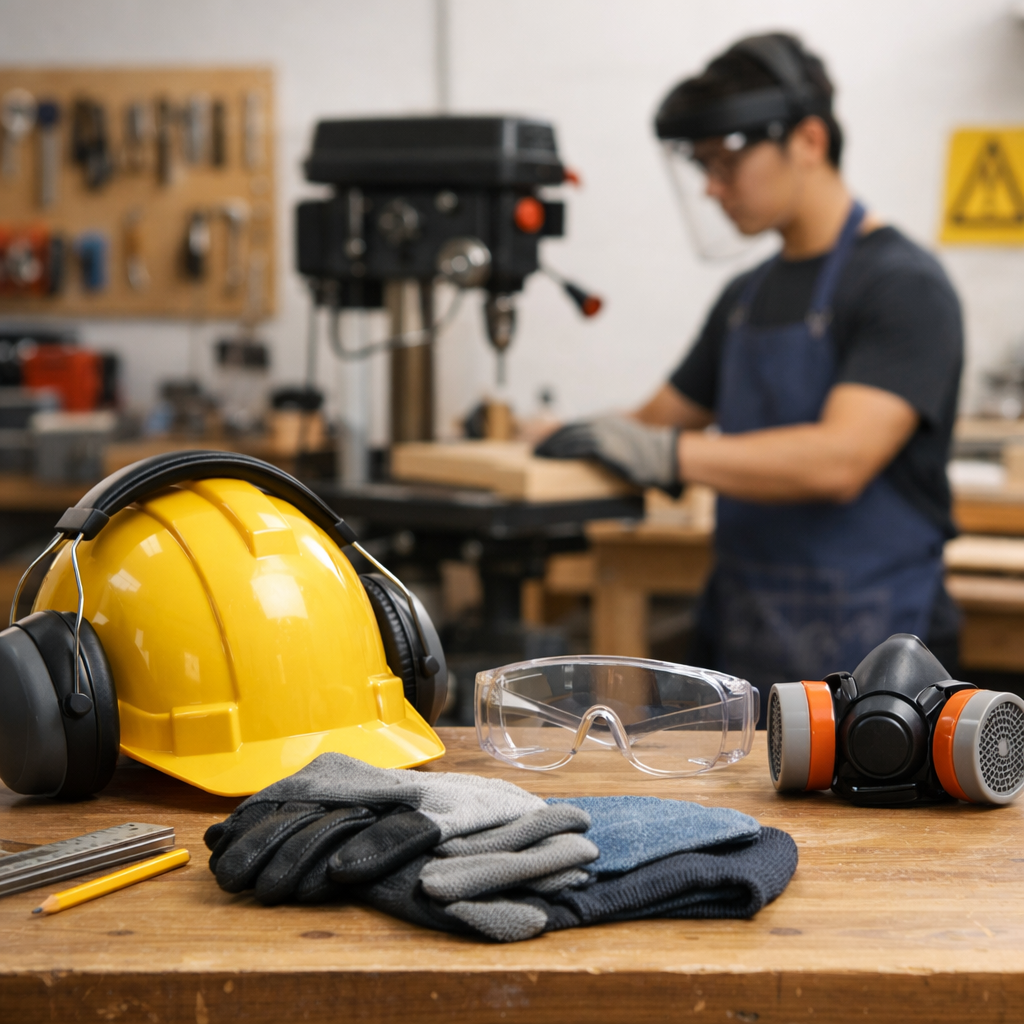

Shop class safety starts before any tool is plugged in, any machine is switched on, or any material is clamped to a bench.
For students in Canadian schools, a workshop can be one of the most practical and rewarding places to learn, but it also introduces real hazards that require attention, training, and consistent habits. Parents, teachers, and students all play a part in building safe routines that reduce the risk of cuts, eye injuries, burns, entanglement, slips, and exposure to dust or noise.
A good safety culture in shop class is not about fear. It is about preparation, clear rules, close supervision, and using the right protective equipment for the task.
Whether a student is learning woodworking, metalworking, automotive basics, or technology education, the same foundation applies: understand the hazard, follow instructions, and never rush. For more practical workplace and school safety guidance, readers can also explore OHSE.
Shop Class Safety Starts with Hazard Awareness
The first step in shop class safety is knowing what can go wrong. In a typical school shop, hazards often include rotating blades and bits, pinch points, flying chips, sharp edges, hot surfaces, sparks, chemicals, dust, and noise.
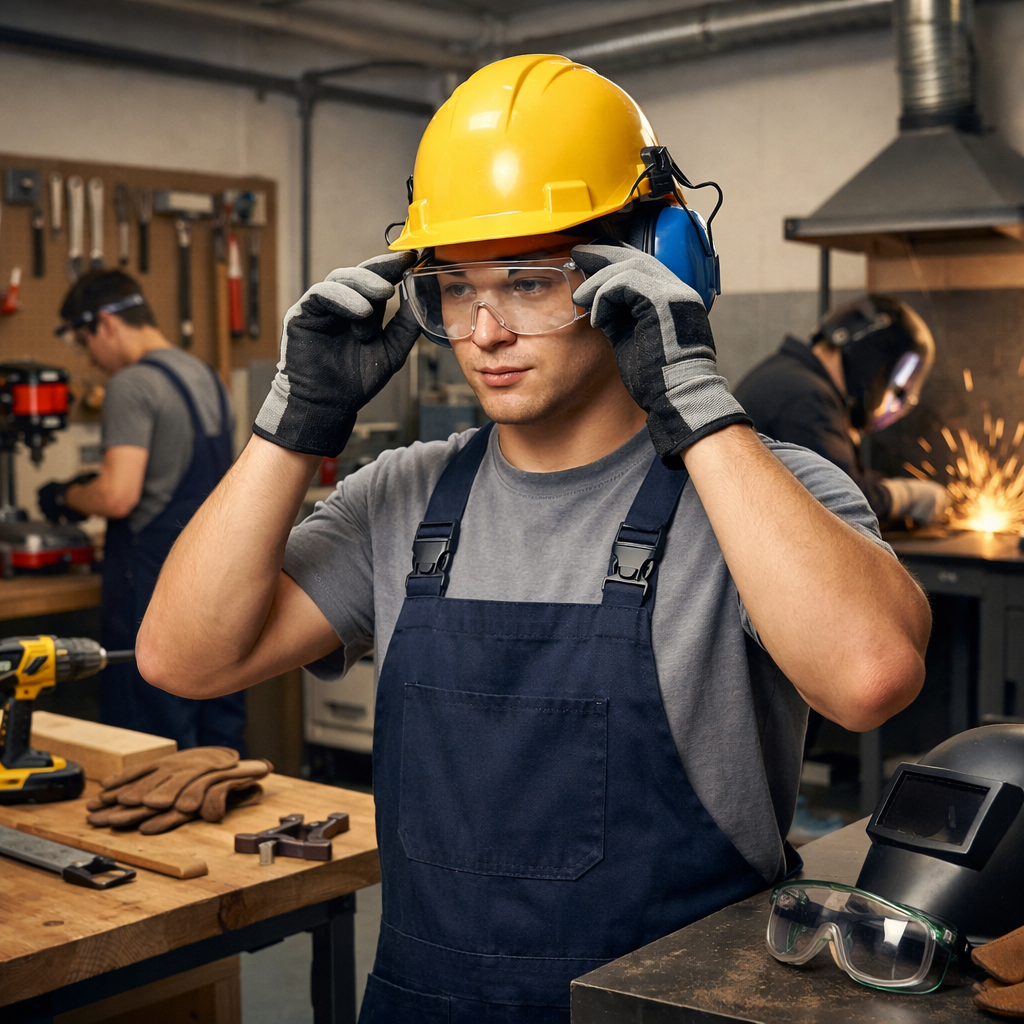
Students may also face less obvious risks such as loose clothing getting caught in equipment, distraction from classmates, poor housekeeping, or using the wrong tool for the job.
In Ontario and across Canada, schools and educators are expected to provide safe learning environments, instruction, and supervision that fit the age and experience of students. General guidance from the Canadian Centre for Occupational Health and Safety and government information from Ontario.ca can help families and schools understand broader health and safety expectations.
A simple way to teach students is to use the hierarchy of controls. First, remove the hazard where possible. If it cannot be removed, reduce exposure through safer equipment, guards, procedures, supervision, and training. Personal protective equipment, or PPE, is important, but it is the last layer, not the only layer.
- Elimination: Do not assign a higher-risk task if a safer learning method is available.
- Substitution: Use safer materials, lower-risk tools, or slower-speed equipment when suitable.
- Engineering controls: Machine guards, dust collection, emergency stops, and ventilation.
- Administrative controls: Rules, training, signage, supervision, and step-by-step procedures.
- PPE: Eye protection, hearing protection, protective footwear, and other task-specific gear.
Critical PPE for Shop Class Safety
PPE should match the job, fit properly, and be worn consistently. One of the most important shop class safety habits is putting on PPE before entering a work area, not after the machine has started.
Eye and face protection
Safety glasses are often the minimum requirement in a shop because sawdust, wood chips, metal fragments, and other debris can travel fast and unpredictably.
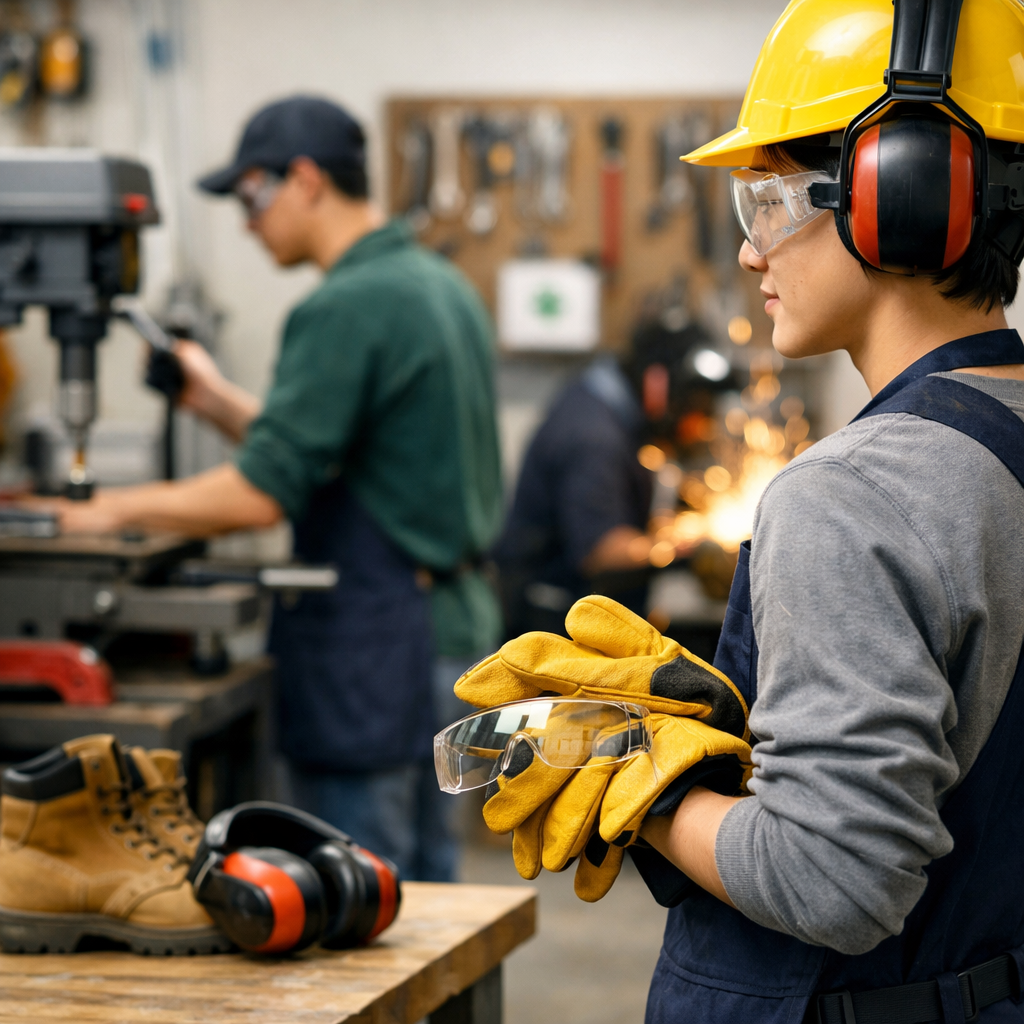
For some tasks, a face shield may be added, but it does not replace safety glasses unless the school’s procedure specifically allows it. Students should also know that regular prescription glasses are not the same as approved impact protection unless designed for that purpose.
Hearing protection
Many shop tools create noise that can be harmful over time. Earplugs or earmuffs may be required when using louder equipment or when multiple machines are running in the same room.
Students should be taught how to wear hearing protection correctly and when it must stay on.
Footwear and clothing
Closed-toe, sturdy shoes are a basic requirement in most shop spaces. Sandals and soft footwear do not offer enough protection from dropped tools, sharp debris, or hot material.
Clothing should be close-fitting but comfortable. Loose sleeves, hood strings, jewelry, ties, and dangling accessories can become entanglement hazards. Long hair should be tied back securely before machine work begins.
Gloves and respiratory protection
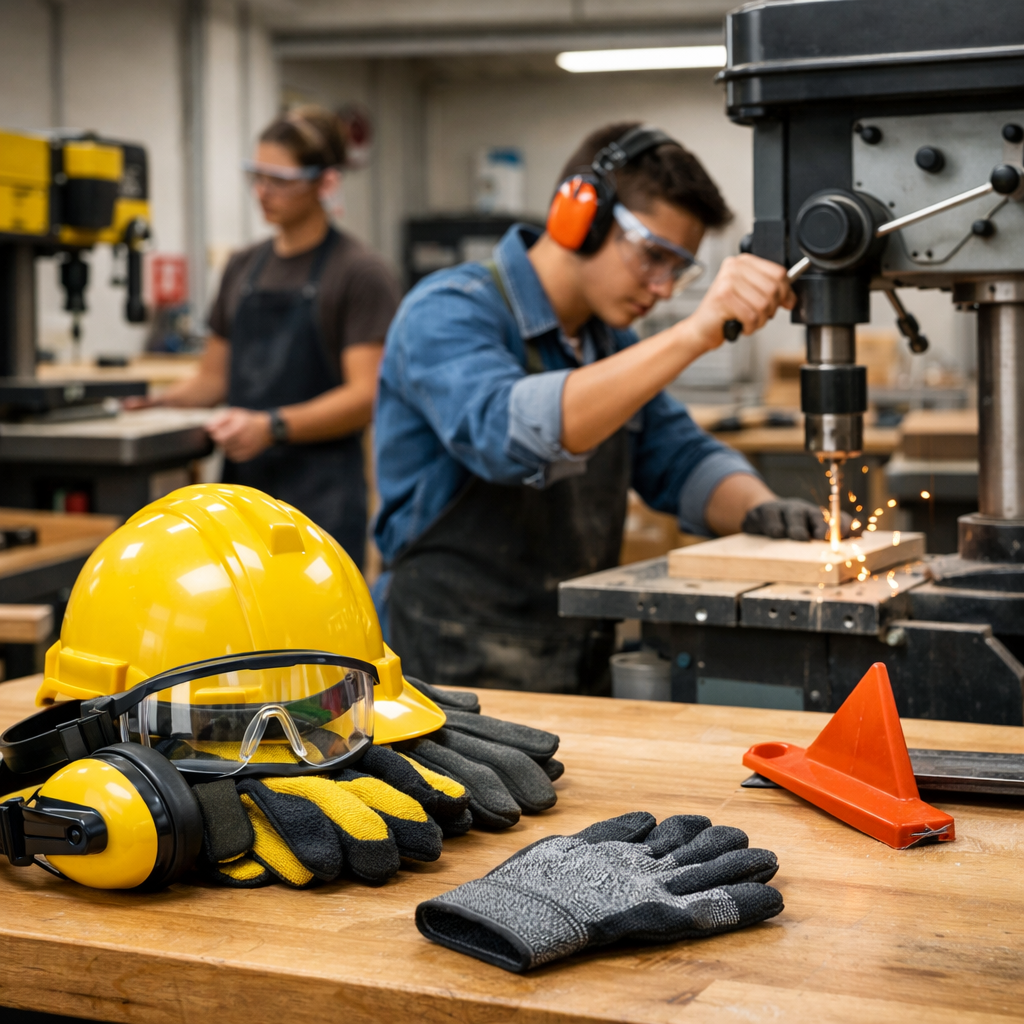
Gloves can help with handling rough material, sharp edges, or cleanup, but they are not safe around all rotating machinery. In many machine operations, gloves can increase entanglement risk, so students must follow the teacher’s instructions for each task.
Dust masks or respirators may be needed for certain dusty or fume-producing tasks, but students should only use them when the school has selected the right protection and provided instruction. Good ventilation and dust collection remain essential controls. Health-related information for Canadians is also available through Health Canada.
| Hazard | Common Control | Typical PPE |
|---|---|---|
| Flying chips or debris | Guards, clamps, safe positioning | Safety glasses |
| Loud equipment | Limit exposure, maintain machines | Earplugs or earmuffs |
| Dust or fine particles | Dust collection, ventilation, cleanup | Task-appropriate respiratory protection if required |
| Falling tools or sharp scrap | Housekeeping, storage, safe handling | Closed-toe sturdy footwear |
Machine-Safety Basics Every Student Should Know
When people think of shop class safety, they often think first about machines, and for good reason. Table saws, drill presses, band saws, sanders, grinders, lathes, and similar tools can cause serious injuries if used carelessly or without supervision.
Students should never operate equipment until they have been shown the correct procedure, demonstrated it safely, and received permission to continue.
Before using a machine
- Inspect the machine and work area for damage, missing guards, clutter, or trip hazards.
- Make sure the right tool, blade, bit, or attachment is installed for the material and task.
- Check that guards and safety devices are in place and working.
- Secure the workpiece when required using clamps, vises, guides, or fences.
- Remove distractions and wait until the instructor says it is safe to begin.
During operation
Students should keep hands a safe distance from blades, bits, and pinch points. They should maintain balanced footing and stand in a stable position, not directly in line with possible kickback where that hazard exists.
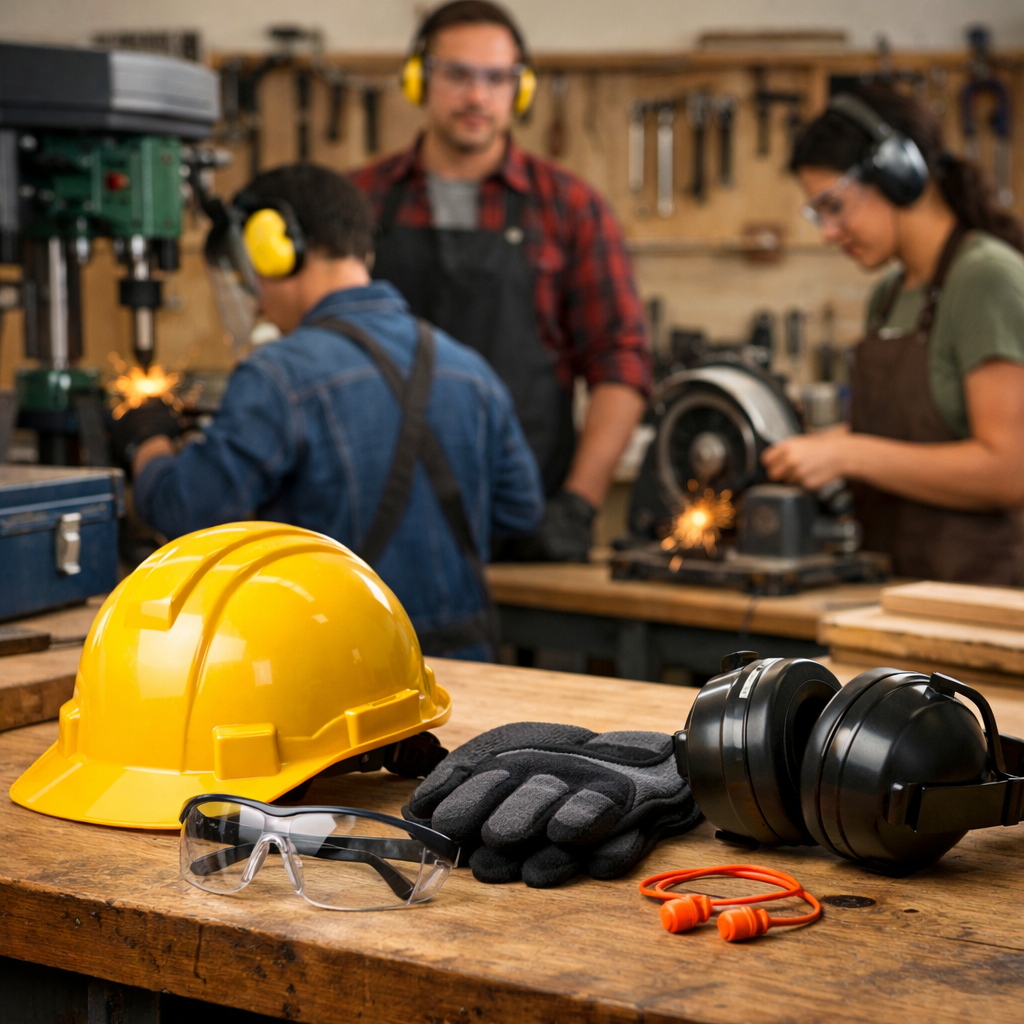
Only one operator should control a machine at a time unless the procedure specifically requires assistance and the teacher is supervising. Horseplay, rushing, and talking over active equipment can quickly turn a manageable task into an incident.
After the cut or task
Turn the machine off and wait for all moving parts to stop before reaching in, measuring work, clearing scraps, or making adjustments.
Power should be disconnected before changing blades, bits, or abrasive wheels, following school and manufacturer procedures. Students should also report unusual vibration, noise, jamming, or damaged parts immediately rather than trying to fix equipment on their own.
Safe Habits, Supervision, and a Practical Checklist
Strong shop class safety is built on routine. The safest students are not always the most experienced students. They are usually the ones who follow instructions every time, ask questions early, and stop when something does not feel right.
Teachers and schools should set clear expectations for training, class size, supervision, machine access, cleanup, and emergency response. Families can reinforce the same message at home by treating tools with respect and reminding young workers that safety rules matter even when a task seems simple.
For schools expanding practical skills or safety orientation, training resources such as OHSE training may be useful alongside school policies, manufacturer instructions, and local board requirements. Injury prevention resources from Parachute may also help support broader youth safety awareness.
Short shop class safety checklist for students
- Wear the required PPE before entering the work area.
- Tie back long hair and remove loose jewelry or clothing hazards.
- Use only the machine you have been trained and authorized to use.
- Check guards, cords, switches, and the surrounding area before starting.
- Keep the work area clean and the floor free of scraps and spills.
- Never bypass safety devices or distract someone using equipment.
- Turn power off before adjusting, cleaning, or changing accessories.
- Report damage, near misses, or unsafe conditions right away.
Shop class safety gives students more than rules to memorize. It teaches judgment, self-control, and respect for tools that can serve them well in school, at home, and later at work. With proper PPE, machine guarding, age-appropriate instruction, and steady supervision, students can build confidence while reducing avoidable risk. The goal of shop class safety is simple: learn practical skills in a way that protects everyone in the room. Always follow local school procedures, manufacturer instructions, workplace guidance, and emergency direction where applicable.
No comments yet