
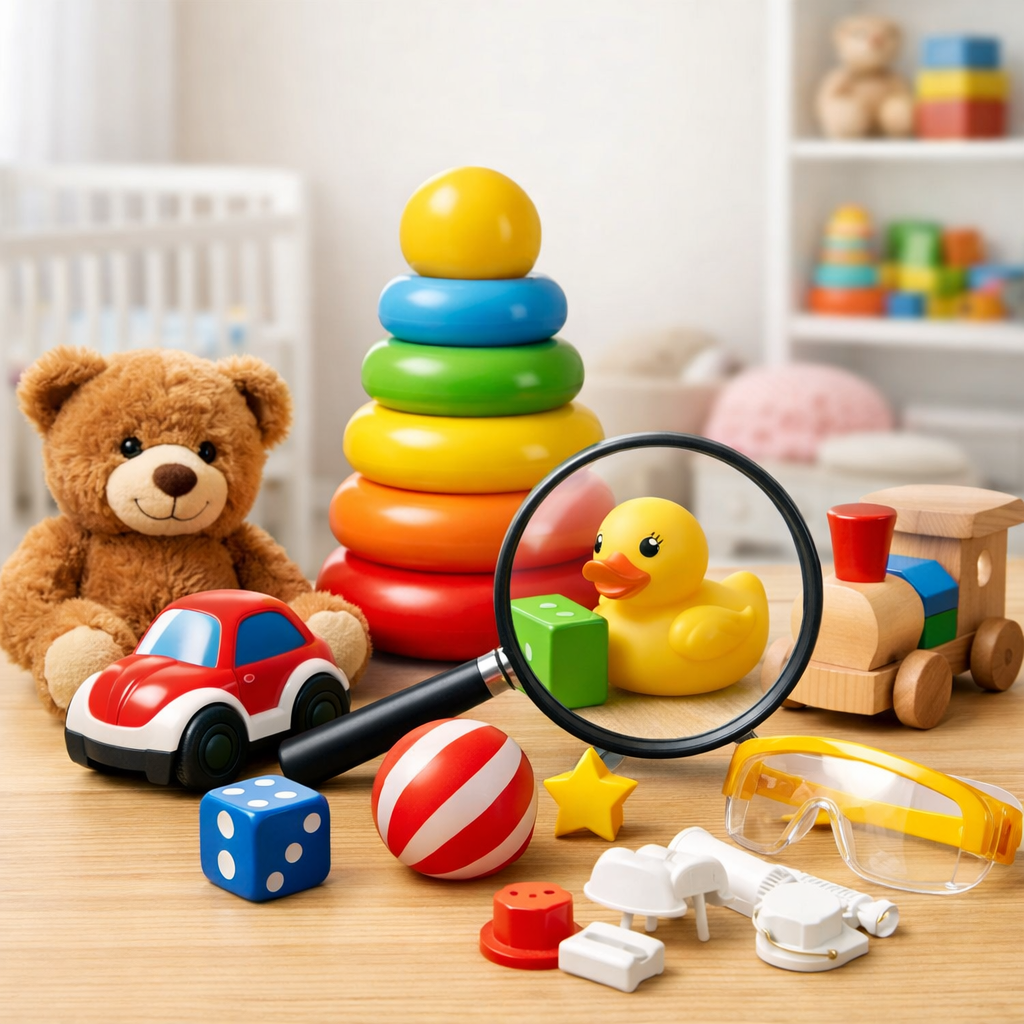

Toy safety for children starts long before playtime. It begins when a parent, caregiver, teacher, or school staff member checks whether a toy matches a child’s age, development, and environment.
In Canadian homes, classrooms, and child care settings, the safest toys are not just fun; they are also well made, appropriate for the child using them, and regularly inspected for wear. A practical routine can help families reduce choking hazards, sharp edges, loose parts, and other preventable risks. For broader prevention guidance, readers can also explore OHSE.ca and trusted public resources such as Health Canada, CCOHS, and Parachute.
Toy safety for children begins with age and developmental fit
Age labels are a useful starting point, but they are not the whole story. A toy marked for ages three and up may still be unsafe for a child who still mouths objects, plays roughly, or has younger siblings nearby.
When choosing toys, look at how the child actually plays. Some children pull toys apart, chew on parts, or carry items from one room to another. In these cases, the real hazard may come from access, not the product’s intended use.
What age guidance really means
Manufacturers often use age recommendations to reflect common safety concerns such as small parts, cords, batteries, magnets, or required coordination. Parents and schools should treat those labels as a minimum guide rather than a guarantee.
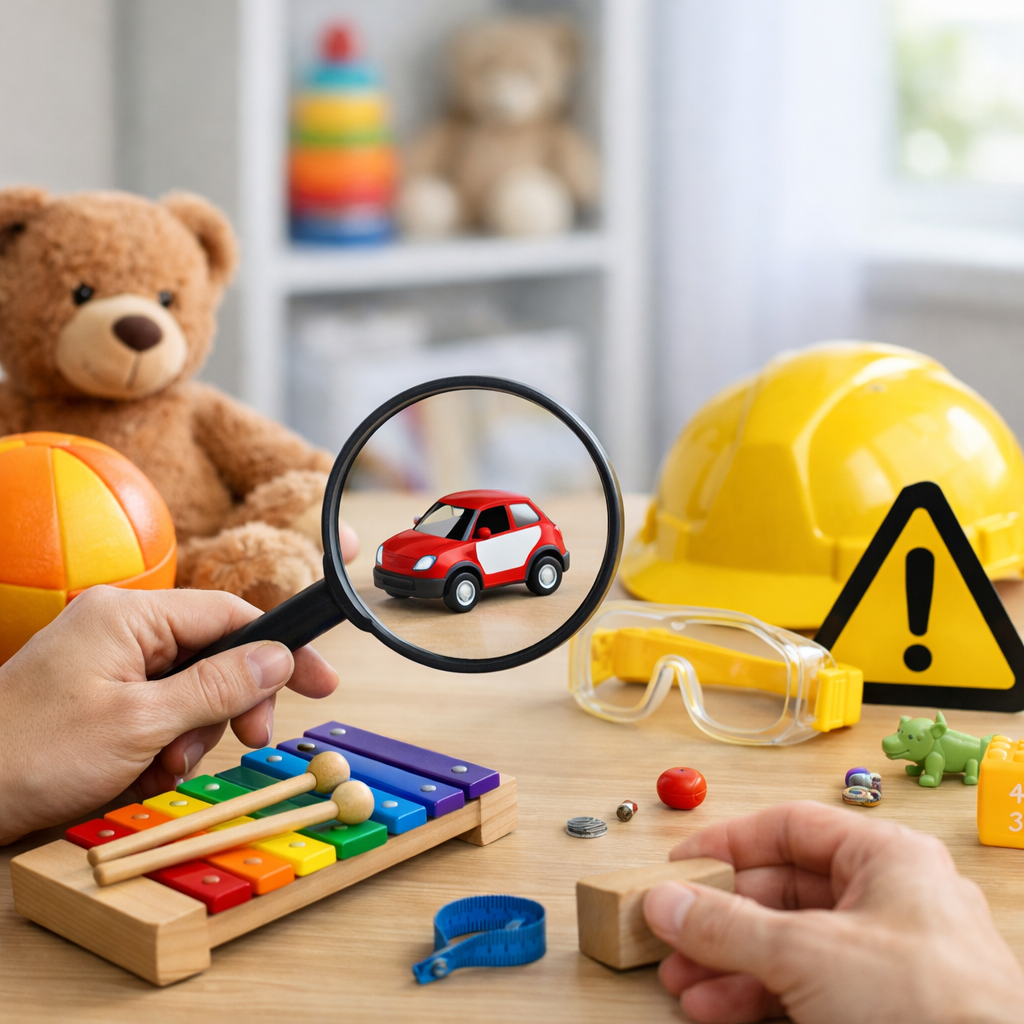
Ask practical questions before buying or allowing use:
- Could this toy break into smaller pieces during normal or rough play?
- Does the child still put objects in their mouth?
- Are there strings, straps, cords, or long attachments?
- Does the toy require balance, strength, or judgment the child does not yet have?
- Will an older child’s toy be accessible to younger siblings or classmates?
In Ontario schools, child care spaces, and family homes, this kind of simple hazard review reflects the same prevention mindset used in occupational health and safety: identify hazards early, control exposure, and review conditions regularly. That approach is central to safety training and awareness in many settings.
Toy safety for children and the most common choking risks
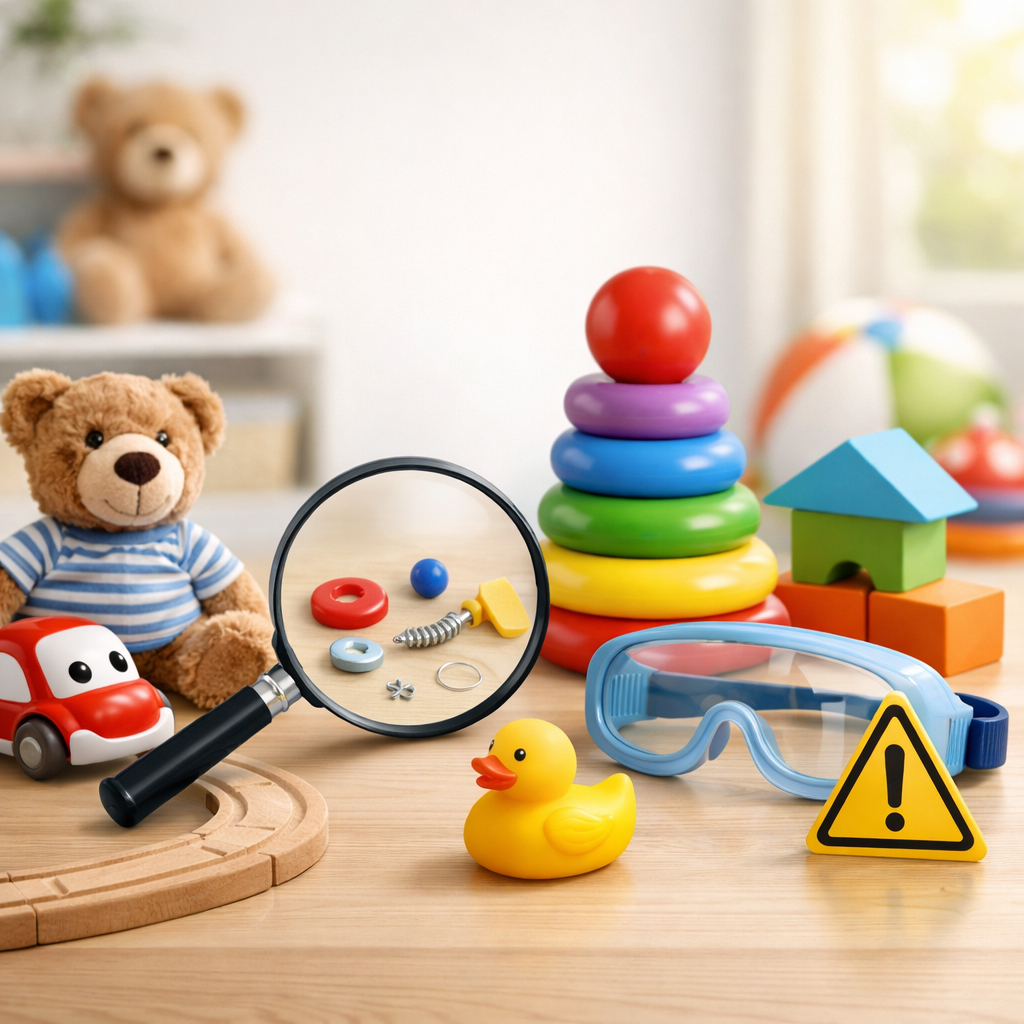
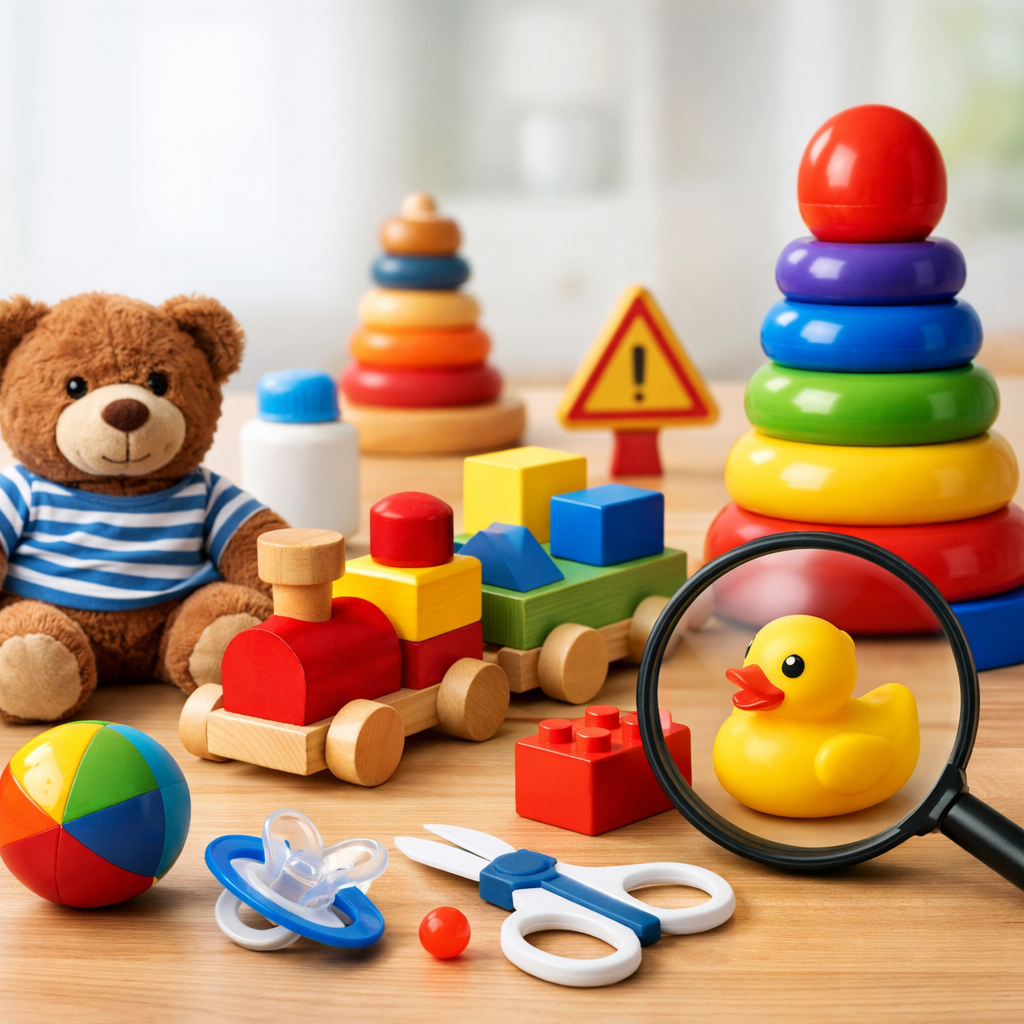
Choking is one of the most important concerns in toy safety for children, especially for babies, toddlers, and younger preschool-aged children. Small detachable parts, broken pieces, deflated balloons, toy food, beads, marbles, button batteries, and magnetic components all require careful attention.
A toy can become hazardous over time even if it seemed safe when new. Wheels can loosen, seams can split, stuffing can come out, and battery compartments can crack or open. Shared environments such as classrooms, waiting rooms, and after-school programs need extra vigilance because many hands use the same items.
High-risk items to watch closely
- Toys with small removable eyes, buttons, caps, or decorative parts
- Building sets with tiny pieces used near younger children
- Toys containing button batteries or strong magnets
- Latex balloons and balloon fragments
- Squeeze toys or plush items with weak seams
- Pull toys or crib toys with cords, loops, or long strings
If a toy includes batteries, the compartment should be secure and difficult for a child to open. If it includes magnets, use extra caution. Magnets and button batteries are not ordinary small parts hazards and should be taken seriously if missing from a toy. Follow manufacturer instructions and local emergency guidance if exposure is suspected.
For practical public safety information in Canada, Health Canada and Parachute are appropriate reference points, and Ontario families may also wish to review provincial guidance through Ontario.ca.
How to inspect toys at home, school, or child care
Regular inspection is one of the simplest ways to improve toy safety for children. A quick check before use can catch many hazards before they lead to injury.
Think of toy inspection the same way a workplace might inspect tools or equipment: before use, after damage, and at regular intervals. The goal is not perfection. The goal is consistency.
Practical toy inspection checklist
- Check for loose, broken, or missing parts.
- Feel for sharp edges, splinters, cracks, or exposed wires.
- Test wheels, handles, lids, and battery compartments.
- Look for torn seams, loose stuffing, or weakened fabric.
- Wash or clean toys according to manufacturer instructions.
- Separate toys by age group in mixed-age homes or classrooms.
- Remove damaged toys immediately until repaired or discarded.
Where possible, apply a simple hierarchy of controls. First, eliminate the hazard by removing unsafe toys. Next, substitute with safer age-appropriate versions. Then use administrative controls such as supervised play, toy rotation, storage rules, and cleaning schedules. Personal protective equipment is usually not the primary control for toys, which is why selection, maintenance, and supervision matter most.
Simple inspection table
| Toy type | What to inspect | Action if unsafe |
|---|---|---|
| Plush toys | Loose eyes, torn seams, exposed stuffing | Remove from use and repair or discard |
| Battery-operated toys | Secure compartment, no corrosion, no broken casing | Stop use until safely fixed |
| Building toys | Missing pieces, cracks, tiny parts in shared spaces | Sort by age and keep away from younger children |
| Ride-on or outdoor toys | Stability, handles, wheels, pinch points | Inspect before each use and store safely |
Storage, supervision, and safer play routines
Good storage is a major part of toy safety for children. Even a safe toy can become unsafe if it is left on stairs, mixed into the wrong bin, or used without supervision by a child who is too young for it.
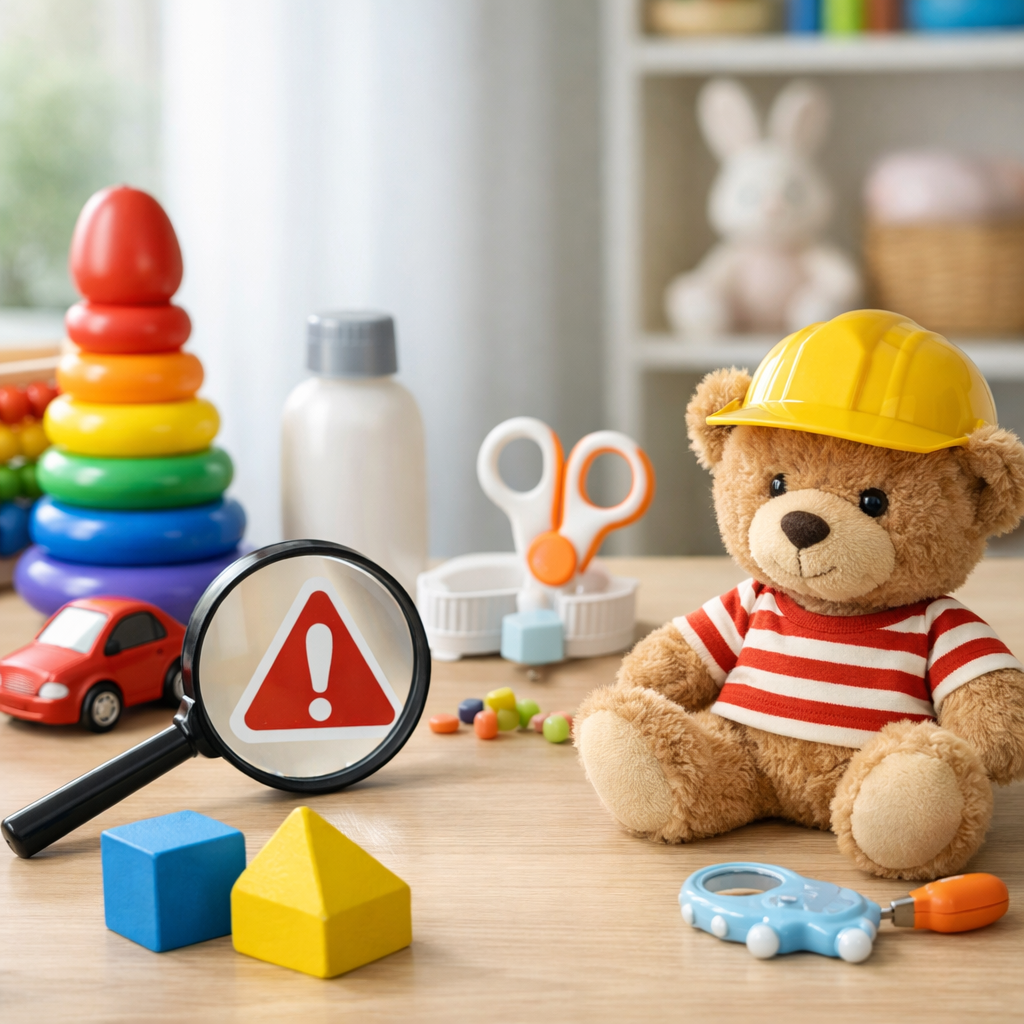
Store small-part toys in clearly marked containers and keep them out of reach of younger children. In schools or family settings with several age groups, separate play zones help reduce mix-ups. Teachers, students in placement settings, camp leaders, and young workers supporting child programs should know which toys belong to which age group and when direct supervision is needed.
Daily habits that make a difference
- Do a quick floor scan after playtime.
- Return small items to closed bins right away.
- Check gifts and hand-me-downs before allowing use.
- Review recalled or unsafe products through official channels when needed.
- Teach older children to keep advanced toys away from babies and toddlers.
Second-hand toys deserve special attention. Older items may not meet current safety expectations, may be missing warning labels, or may have hidden wear. Homemade toys and novelty items should be checked just as carefully as store-bought products.
Adults should also follow the toy manufacturer’s instructions for assembly, age use, cleaning, and storage. In schools, child care programs, and community spaces, local policies should guide selection and supervision. If an incident occurs, follow local school, workplace, manufacturer, or emergency procedures as applicable.
A calm, practical approach to toy safety for children
Toy safety for children does not require fear or constant alarm. It requires thoughtful buying, age-appropriate choices, routine inspection, safe storage, and active supervision.
For Canadian families, schools, and community programs, the best approach is practical prevention: choose toys that fit the child, remove hazards early, and build a simple inspection habit into everyday routines. By treating toys the way we treat any other item that children rely on for safe use, adults can create play spaces that support learning, fun, and confidence while reducing avoidable harm.
No comments yet