
hospital infection control safety: Practical OHSE Measures for Safer Patient Care


hospital infection control safety is one of the most important parts of occupational health, patient protection, and daily clinical operations.
In hospitals, infections can spread quickly when hazards are not identified early and control measures are not applied consistently. Workers, patients, contractors, visitors, and support staff all share the same environment, which makes infection prevention a whole-of-workplace responsibility.
From emergency departments and surgical units to laundry rooms and waste handling areas, exposure risks exist in nearly every part of a healthcare facility.
Effective infection control reduces illness, lowers absenteeism, supports legal compliance, and improves quality of care.
It also protects vulnerable patients whose immune systems may already be compromised.
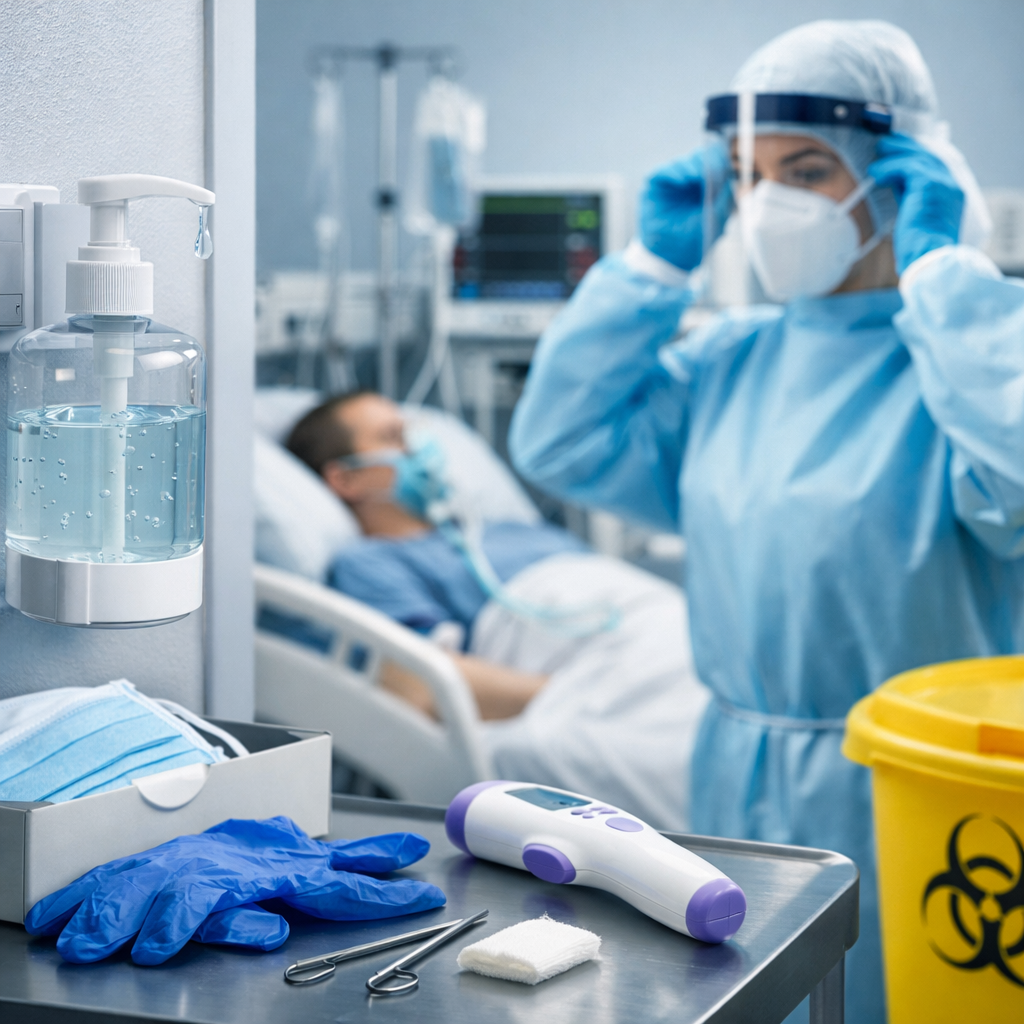
This article explains the main risks, practical prevention methods, PPE requirements, compliance duties, and workplace examples that strengthen hospital infection control safety in real healthcare settings.
Understanding hospital infection control safety risks in the workplace
Hospitals are complex workplaces where biological hazards can be present in air, blood, surfaces, equipment, waste, and human contact.
Common infectious agents include bacteria, viruses, fungi, and other microorganisms that may be transmitted through droplets, aerosols, direct contact, or contaminated sharps.
Common exposure sources
Healthcare workers may be exposed during patient care, specimen handling, cleaning, linen transport, waste disposal, or invasive procedures.
High-risk tasks often include suctioning, intubation, wound care, blood collection, and housekeeping in isolation rooms.
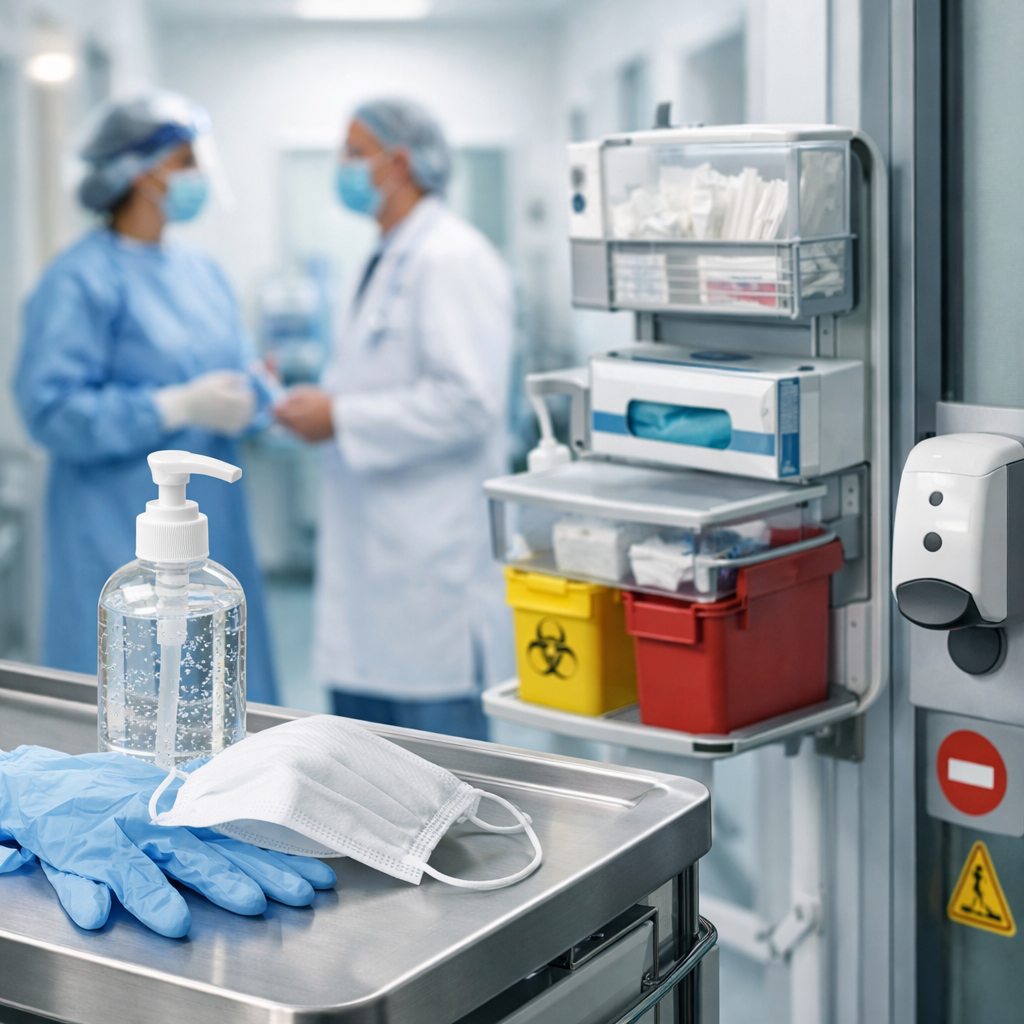
- Contact transmission: spread through hands, contaminated surfaces, equipment, or patient contact.
- Droplet transmission: spread through coughing, sneezing, or close-range procedures.
- Airborne transmission: spread through fine particles that remain suspended in the air.
- Sharps exposure: needlestick injuries and cuts from contaminated instruments.
- Environmental exposure: unsafe waste storage, poor cleaning, and contaminated laundry.
Risks increase when staffing is stretched, training is inconsistent, or workflows are poorly designed.
For example, a nurse moving quickly between patients without proper hand hygiene can unintentionally carry pathogens from one room to another.
Likewise, a cleaner using the wrong disinfectant contact time may leave viable organisms on high-touch surfaces such as bed rails, IV pumps, or door handles.
Some groups face greater vulnerability.
These include immunocompromised patients, new staff, agency workers unfamiliar with site procedures, and maintenance personnel entering clinical zones without understanding isolation precautions.

That is why risk assessments must include every role, not only frontline clinicians.
Prevention strategies that improve hospital infection control safety
The strongest infection prevention programs follow the Hierarchy of Controls, a core OHSE principle used across healthcare and other high-risk industries.
Rather than relying only on PPE, employers should build layered controls that reduce exposure at its source.
Applying the Hierarchy of Controls
| Control Level | Hospital Example | Benefit |
|---|---|---|
| Elimination | Restrict unnecessary exposure and separate infectious patients early | Removes or reduces contact with hazards |
| Substitution | Use safer devices such as needleless systems where possible | Lowers risk from hazardous tasks |
| Engineering Controls | Negative pressure rooms, sharps containers, ventilation systems, physical barriers | Isolates people from the hazard |
| Administrative Controls | Policies, training, hand hygiene protocols, staffing plans, signage, screening | Improves safe work practices |
| PPE | Gloves, gowns, masks, respirators, eye protection | Provides personal protection when exposure remains |
Hand hygiene remains the foundation of hospital infection control safety.
Alcohol-based hand rub and handwashing with soap and water must be performed at the right moments, especially before patient contact, after body fluid exposure risk, after touching patient surroundings, and after glove removal.
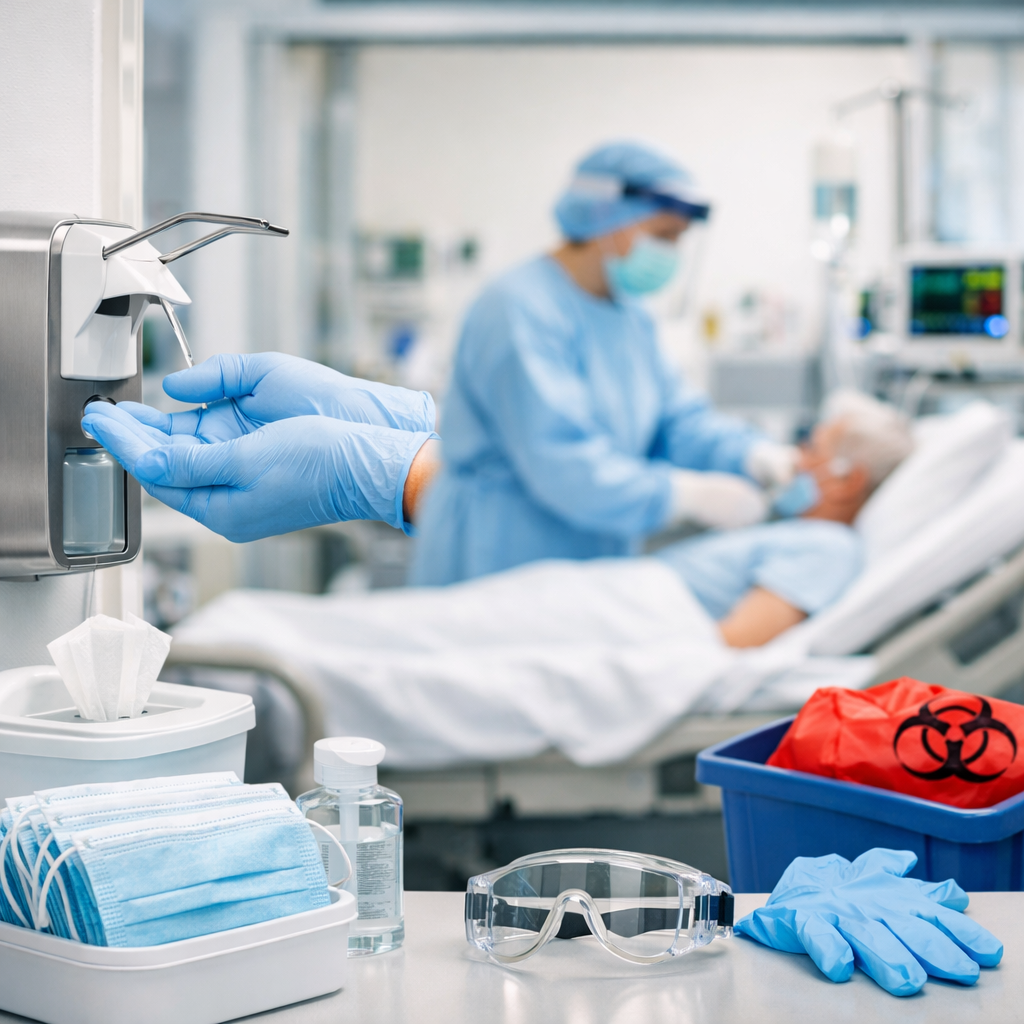
Environmental cleaning is another major safeguard.
Hospitals should use validated cleaning schedules, clear responsibility charts, and approved disinfectants for clinical surfaces and shared equipment.
High-touch points should be cleaned more frequently than low-touch areas.
Screening and isolation procedures also matter.
Patients with symptoms of infectious illness should be identified quickly, masked when appropriate, and placed in suitable rooms based on transmission risk.
Clear signage at room entrances helps staff and visitors follow correct precautions.
Useful guidance can be found through OSHA healthcare resources and the CCOHS, both of which support practical workplace health and safety controls.
Many organizations also support routine audits through internal programs such as safety audit checklists and incident reporting best practices.
PPE and safe work practices for hospital infection control safety
PPE is essential, but it should never be the only control in place.
In hospitals, PPE must match the task, the route of transmission, and the level of exposure anticipated.
Core PPE requirements
Typical PPE in healthcare includes gloves, fluid-resistant gowns, surgical masks, respirators, face shields, and goggles.
Selection depends on whether workers face splash risks, airborne hazards, contact with blood or body fluids, or prolonged close contact with infectious patients.
- Use gloves for contact with blood, body fluids, mucous membranes, or contaminated surfaces.
- Use gowns where clothing or skin may be exposed.
- Use surgical masks for droplet precautions and routine clinical protection where appropriate.
- Use respirators such as N95-type protection for airborne risks and aerosol-generating procedures.
- Use eye and face protection when splashes or sprays are possible.
Fit, training, and correct use are just as important as availability.
A respirator that has not been fit-tested may not protect the worker properly.
Gloves worn from one task to another can spread contamination rather than prevent it.
Improper doffing can expose the worker at the exact moment protection is being removed.
Practical examples from hospital settings
Consider a respiratory ward during influenza season.
If staff wear masks but neglect eye protection during close patient assessment, droplets may still reach mucous membranes.
Now consider a housekeeping worker entering an isolation room without understanding waste segregation requirements.
Even with gloves on, poor handling of linen bags or overfilled waste containers can lead to contamination.
Safe work practices strengthen PPE performance.
These include point-of-use sharps disposal, no recapping of needles, clear clean-to-dirty workflows, separation of sterile and contaminated equipment, and immediate response to spills.
Hospitals should also maintain vaccination programs for workers where relevant, including seasonal and role-specific immunization measures.
Compliance, training, and continuous improvement in hospital infection control safety
Strong hospital infection control safety programs depend on compliance, supervision, and continuous review.
Policies should align with applicable laws, public health directives, accreditation requirements, and recognized safety guidance.
What compliance looks like in practice
Compliance is more than having a manual on a shelf.
It means workers are trained on precautions, managers monitor performance, supplies are available, and incidents are investigated for root causes.
It also means exposure control plans are current and understood across departments.
Training should be role-specific.
Nurses, physicians, cleaners, laboratory staff, porters, and maintenance teams all face different hazards and therefore need targeted instruction.
Refresher sessions are especially important after outbreaks, process changes, new equipment introduction, or audit findings.
Hospitals should track meaningful indicators such as hand hygiene compliance, sharps injuries, environmental cleaning results, fit-testing completion, and staff exposure reports.
These measures help identify weak points before a serious event occurs.
For broader infection prevention guidance, many facilities also refer to the CDC infection control resources.
A practical example is a surgical unit that notices repeated contamination of medication carts.
An investigation may reveal that carts are being moved into patient rooms and then returned to common areas without disinfection.
The corrective action could include workflow redesign, staff retraining, clearer cleaning responsibility, and spot audits by supervisors.
Another example is an emergency department that experiences frequent PPE non-compliance during peak periods.
The real issue may not be worker resistance, but poor stock placement and delayed access during rapid admissions.
By relocating PPE stations and simplifying room entry instructions, the hospital can improve compliance immediately.
In conclusion, hospital infection control safety is a practical OHSE priority that protects both workers and patients every day.
When hospitals combine risk assessment, layered controls, proper PPE, staff training, and strong compliance systems, they reduce preventable infections and create safer care environments.
Real improvement comes from consistent routines, visible leadership, and learning from daily practice.
For any healthcare facility committed to safer outcomes, investing in hospital infection control safety is not optional—it is a core part of responsible hospital operations.
No comments yet