
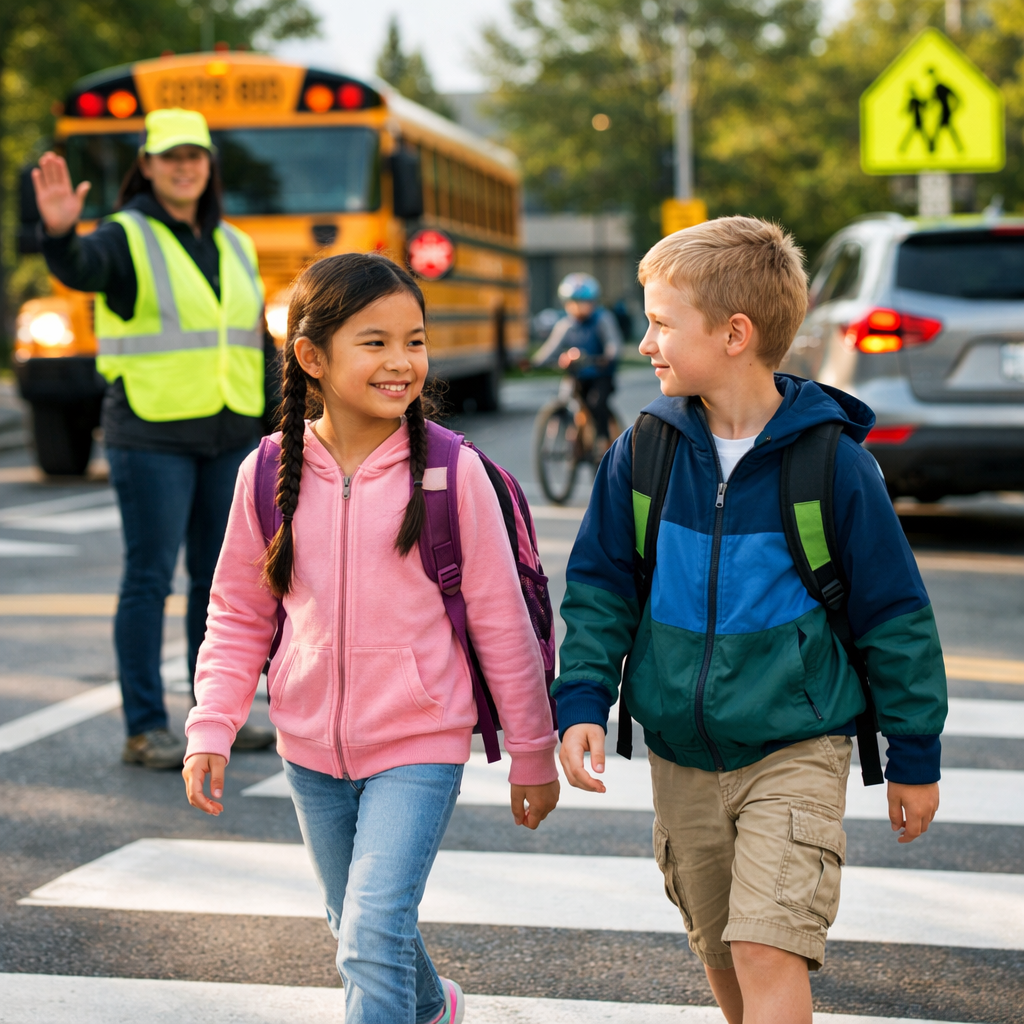

Walking to school safely starts with simple habits that help students notice hazards, make better decisions, and stay predictable around traffic. For Canadian families, walking can be a healthy and practical way to travel, but it also requires planning, supervision where needed, and clear pedestrian rules that children can remember and use every day.
Whether a student walks alone, with siblings, or as part of a small group, the goal is the same: arrive at school and return home without injury. Parents, caregivers, schools, and students all play a role in building safe routines. In Ontario and across Canada, the safest approach is calm, consistent, and prevention-focused.
Why walking to school safely matters
Students face different risks depending on their age, route, weather, and the time of day. Busy intersections, driveways, parked cars, snowbanks, reduced visibility, and distracted road users can all increase the chance of a close call.
Young children may have difficulty judging speed and distance. Older students may feel confident but still take risks such as crossing mid-block, wearing headphones too loudly, or looking at a phone while walking. That is why walking to school safely depends on both skill and routine.
Families can support safer walking by choosing a route with sidewalks, marked crossings, crossing guards where available, and fewer complex turns. Schools can reinforce the same expectations through reminders, arrival procedures, and age-appropriate safety education. For broader Canadian health and safety guidance, readers may find helpful general resources at CCOHS, Ontario.ca, and Parachute.
Walking to school safely: core pedestrian rules every student should know
Use sidewalks and safe crossings
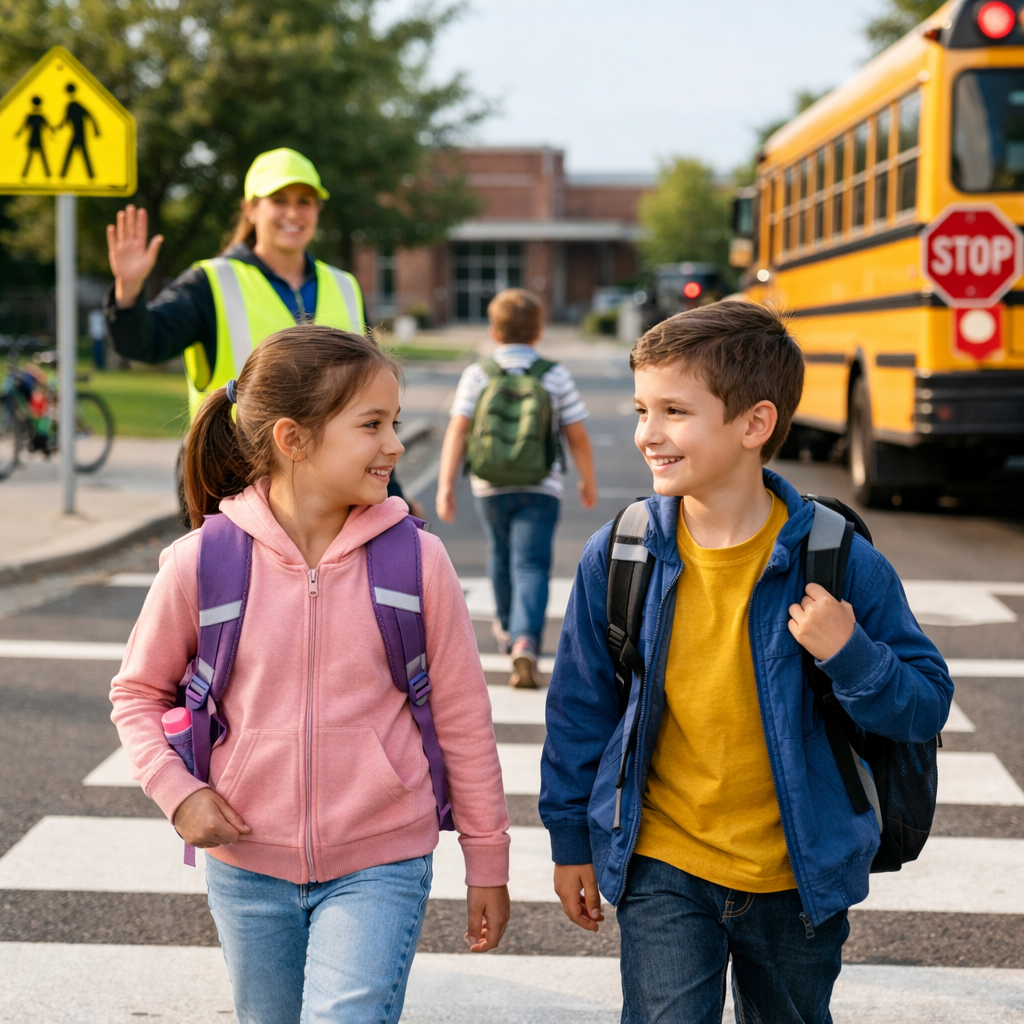
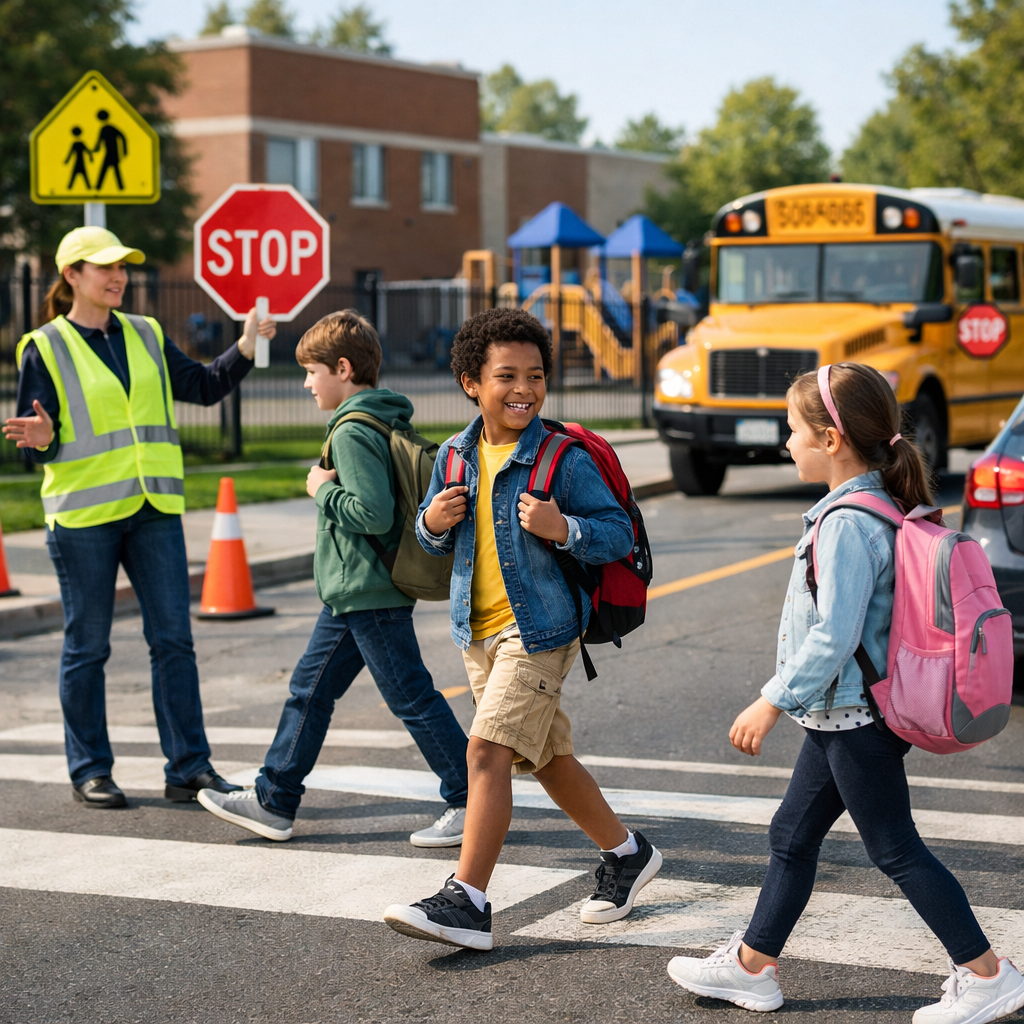
Students should use sidewalks whenever they are available. If there is no sidewalk, walk facing traffic and stay as far from the road as practical. Cross only at intersections, marked crosswalks, or where a crossing guard is present.
Before crossing, stop at the curb or edge, look left, right, and left again, and keep watching while crossing. Make eye contact with drivers when possible so students know they have been seen. Never assume a vehicle will stop just because a student is near a crosswalk.
Stay visible and stay alert
Being seen is a major part of walking to school safely. Bright clothing, reflective strips, and backpacks with reflective details can help in low light, rain, fog, or snow. In winter, bulky hoods and hats can block side vision, so students should pause and check carefully before stepping forward.
Students should keep their heads up and phones away while walking near roads. If listening to music, keep the volume low enough to hear traffic, bells, and warnings. Running suddenly into the street, weaving around parked cars, or joking with friends near the curb can turn an ordinary walk into a dangerous situation.
Watch for vehicles in places that feel safe
Some of the highest-risk points on a school route are not always the busiest roads. Driveways, laneways, parking lot entrances, school drop-off areas, and bus loading zones all require extra care. Drivers may be reversing, turning, or focused on other vehicles instead of pedestrians.
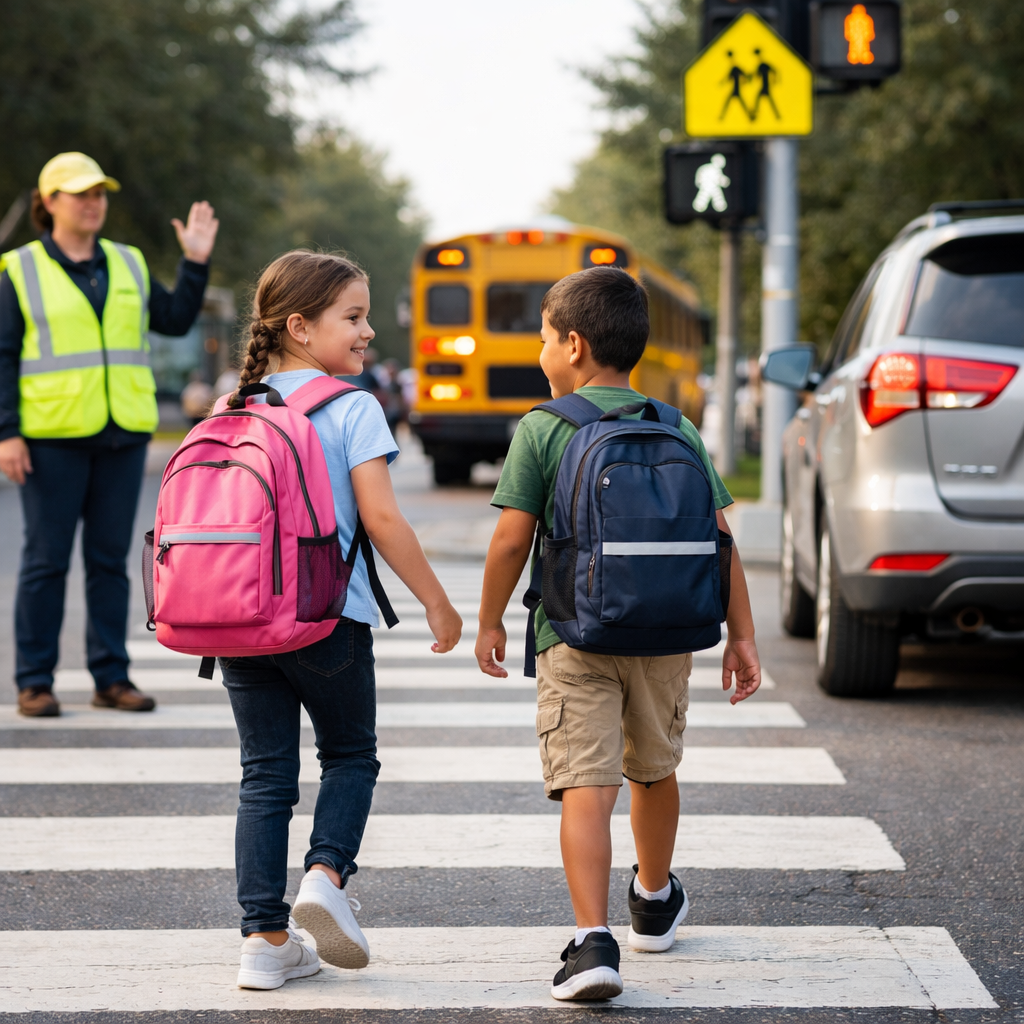
Students should never walk directly behind a vehicle that is backing up and should avoid squeezing between parked cars. At school property entrances, pause, scan, and continue only when the path is clearly safe.
Practical route planning for families and schools
Good planning makes walking to school safely easier. A route should be simple, repeatable, and suited to the student’s age and maturity. Younger children often need direct supervision or a walking group, while older students benefit from clear expectations and practice on the route before walking independently.
Parents and caregivers can walk the route with the student and identify decision points such as where to cross, where cars often turn, and where snow or ice may collect in winter. Schools can support this by reminding families about safe arrival areas and by reducing confusion between pedestrians, school buses, and private vehicles.
Short actionable checklist
- Choose the same safe route whenever possible.
- Use sidewalks and marked crossings.
- Stop, look left-right-left, and keep looking while crossing.
- Make eye contact with drivers before stepping out.
- Keep phones away and headphone volume low.
- Wear bright or reflective gear in poor visibility.
- Give driveways, parking lots, and school drop-off zones extra attention.
- Follow school rules, crossing guard directions, and local traffic controls.
Simple route hazards and safer responses
| Situation | Main Risk | Safer Response |
|---|---|---|
| Parked cars near a crossing | Blocked view of traffic | Move to a clear crossing point and look carefully before crossing |
| School drop-off zone | Sudden vehicle movement | Use designated walkways and avoid walking between vehicles |
| Winter snowbanks or ice | Slips and reduced visibility | Walk slowly, wear proper footwear, and choose cleared paths |
| Crossing with friends | Distraction and group pressure | Cross together only when everyone stops and checks traffic |
Seasonal and Ontario-specific considerations
In Ontario, walking conditions can change quickly through the school year. Rain can reduce driver visibility and increase stopping distance. Snow, slush, and ice can narrow sidewalks and make curbs harder to see. Darkness in the early morning or late afternoon also affects how visible students are.
For that reason, walking to school safely should include seasonal adjustments. Students may need extra time in winter so they are not tempted to rush. Waterproof footwear with grip, weather-appropriate clothing, and reflective accessories are practical controls that reduce risk without making the routine complicated.
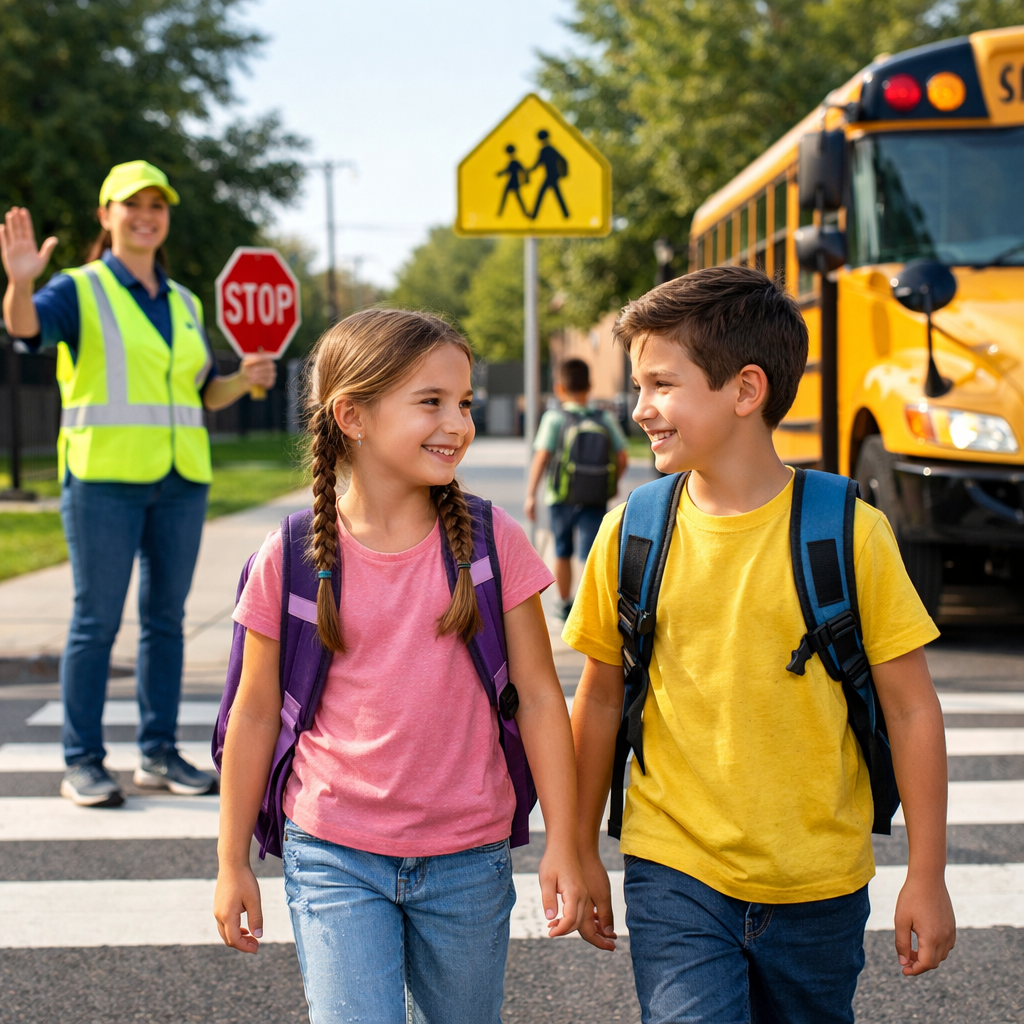
A useful safety mindset is similar to the Hierarchy of Controls used in health and safety. First, reduce exposure by choosing the safest route available. Next, use safer environments such as sidewalks, supervised crossings, and controlled school entry points. Then add personal protective steps such as visibility gear and weather-appropriate footwear. Training and reminders also matter. Families looking for broader workplace-style safety learning can explore OHSE training resources, and general safety information is available at OHSE.ca.
Building safe habits that last
Students learn best through repetition and example. When adults model safe pedestrian behaviour, children are more likely to copy it. That means waiting for the proper crossing point, following signals, staying off phones while crossing, and speaking calmly about why each step matters.
Schools can reinforce these habits by teaching students what to do in common situations: a car backing out of a driveway, a blocked sidewalk, a friend suggesting a shortcut, or a crowded arrival zone. Parents can ask short check-in questions after school, such as where the student crossed, whether anything unusual happened, and whether the route still feels safe.
It is also important to match expectations to age. Kindergarten and primary students usually need close supervision. Middle-grade students may manage short routes with practice. Teens still benefit from reminders because distraction and rushing remain common risk factors. If local school, municipal, or emergency guidance changes, families should follow that direction.
In the end, walking to school safely is about consistent choices: pick the safer route, stay visible, pay attention, and cross carefully every time. With practical planning and steady reinforcement from families and schools, students can build strong pedestrian habits that protect them now and support safer independence later.
No comments yet