
industrial ventilation safety: Protecting Workers, Controlling Hazards, and Meeting OHSE Standards

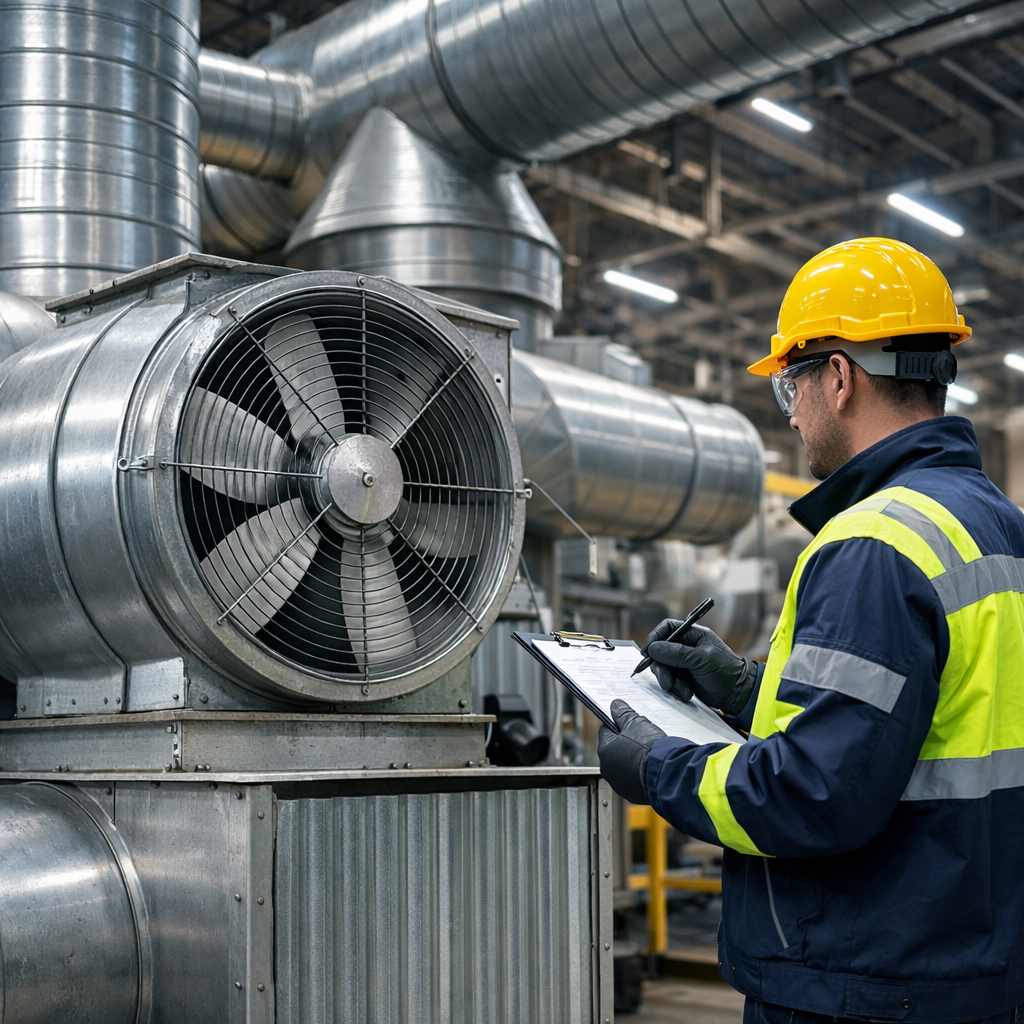
Industrial ventilation safety is a critical part of occupational health, safety, and environmental management in factories, warehouses, workshops, laboratories, and processing plants.
When ventilation systems are properly designed, maintained, and monitored, they help remove airborne contaminants, control temperature, reduce fire and explosion risks, and protect workers from long-term illness.
In many workplaces, poor air quality is not always obvious at first.
Dust, fumes, vapors, mists, and gases can build up slowly, creating serious health and safety hazards before anyone notices a problem.
That is why industrial ventilation safety must be treated as a core OHSE issue rather than a secondary maintenance task.
From welding bays to chemical mixing rooms, effective ventilation supports compliance, productivity, and worker well-being.
Why industrial ventilation safety matters in the workplace
Industrial environments often generate contaminants directly from production processes.
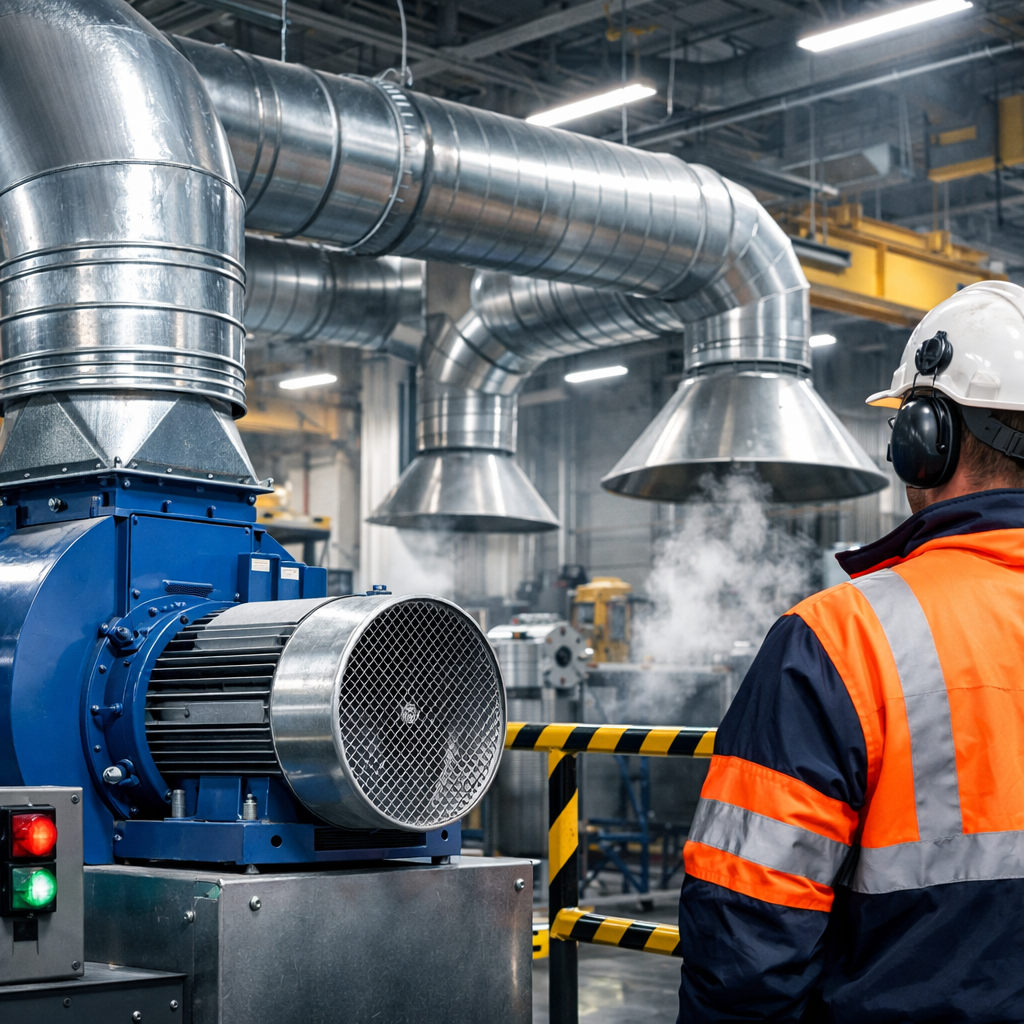
Cutting, grinding, painting, welding, solvent use, and material handling can all release harmful airborne substances into breathing zones.
Without proper control, workers may inhale materials that cause irritation, occupational asthma, chemical sensitization, chronic lung disease, or toxic exposure.
Some hazards are acute, such as dizziness, headaches, and unconsciousness caused by oxygen displacement or solvent vapors.
Others are chronic, including silica-related disease, metal fume exposure, or long-term damage from repeated inhalation of dust.
Industrial ventilation safety also matters because contaminated air can affect more than health alone.
Flammable vapors and combustible dust can create fire and explosion hazards if they are allowed to accumulate.
Excess heat and poor airflow may also increase fatigue, reduce concentration, and contribute to human error.
Guidance from organizations such as OSHA and CCOHS consistently emphasizes that ventilation should be part of an integrated hazard control strategy.
It is not just about moving air.
It is about controlling exposure at the source and keeping contaminants away from workers.
Common airborne hazards
- Dust from wood, silica, cement, grain, or powdered chemicals
- Welding fumes containing metal particles and gases
- Paint overspray and solvent vapors
- Oil mist from machining operations
- Acid fumes and corrosive vapors from chemical processes
- Exhaust gases from combustion equipment or vehicles
- Heat, humidity, and stagnant air in enclosed work areas
Key risks linked to poor industrial ventilation safety
Weak ventilation performance can expose workers to immediate and hidden dangers.
One common issue is relying on general airflow alone when a process actually requires local exhaust ventilation.
If contaminants are allowed to spread throughout a room before they are removed, workers far from the source may still be exposed.
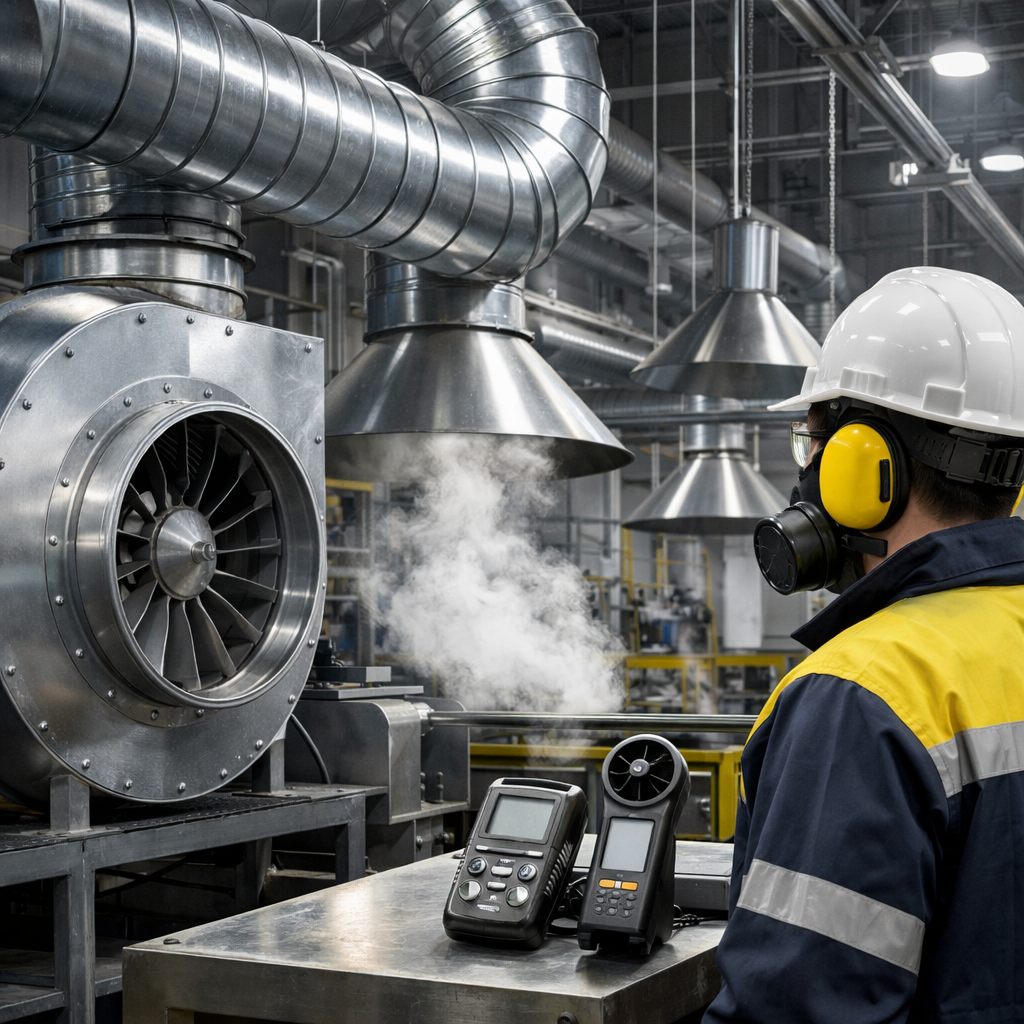
Another risk is poorly maintained ducting, filters, hoods, and fans.
Systems may appear to be running while delivering far less protection than intended.
Blocked filters, damaged seals, poor hood placement, or unbalanced airflow can make a ventilation system ineffective.
Noise can also become an issue if systems are modified without proper engineering review.
In some workplaces, industrial ventilation safety failures occur during changeovers, shutdowns, or temporary work.
For example, contractors performing confined-space cleaning, hot work, or coating application may create airborne hazards in areas not designed for those tasks.
A practical example is a fabrication shop where welding is performed away from extraction arms because workers find them inconvenient.
Even with a building exhaust system, welding fume may remain in the breathing zone and spread across adjacent workstations.
Another example is a packaging plant where fine dust settles on overhead surfaces because extraction points are too far from transfer areas.
That dust is both a respiratory hazard and a potential explosion risk.
Warning signs of ventilation problems
- Visible dust, haze, or lingering fumes
- Strong chemical odors during normal operations
- Frequent worker complaints of eye, nose, or throat irritation
- Condensation, excessive heat, or stuffy work areas
- Dust deposits on beams, equipment, or floors
- Inconsistent capture of fumes near hoods or booths
- Filter loading, leaks, or frequent unplanned maintenance
Prevention strategies and the Hierarchy of Controls
The strongest approach to industrial ventilation safety follows the Hierarchy of Controls.
This means employers should first eliminate hazards where possible, then substitute safer materials or processes, followed by engineering controls, administrative controls, and personal protective equipment.
Ventilation is an engineering control, and it is often one of the most effective measures for airborne hazards.
Applying the Hierarchy of Controls
| Control level | How it supports industrial ventilation safety | Workplace example |
|---|---|---|
| Elimination | Remove the source of airborne contamination | Outsource a dusty process or eliminate a solvent-based step |
| Substitution | Use less hazardous materials or methods | Switch from high-VOC coatings to lower-emission products |
| Engineering controls | Capture or dilute contaminants through ventilation | Install local exhaust hoods at welding stations |
| Administrative controls | Reduce exposure through procedures and scheduling | Limit time in high-exposure areas and inspect systems routinely |
| PPE | Protect workers when other controls are not enough | Use fit-tested respirators during maintenance or peak exposure tasks |
Prevention starts with a proper hazard assessment.
Employers should identify what contaminants are generated, where they are released, how workers are exposed, and whether existing controls actually work.
General ventilation can help with heat and background air quality, but high-risk tasks usually need local exhaust ventilation to capture contaminants at the source.
Hoods should be placed close enough to the emission point, airflow should be verified, and discharged air should be managed so it does not create secondary hazards.
Preventive maintenance is equally important.
Fans, belts, filters, dampers, sensors, and ducts should be inspected on a schedule, not only when problems appear.
Airflow testing, smoke testing, pressure checks, and exposure monitoring can confirm whether the system still meets design intent.
For related workplace control planning, teams often connect ventilation reviews with broader workplace risk assessment and confined space safety procedures.
PPE, compliance, and practical examples of industrial ventilation safety
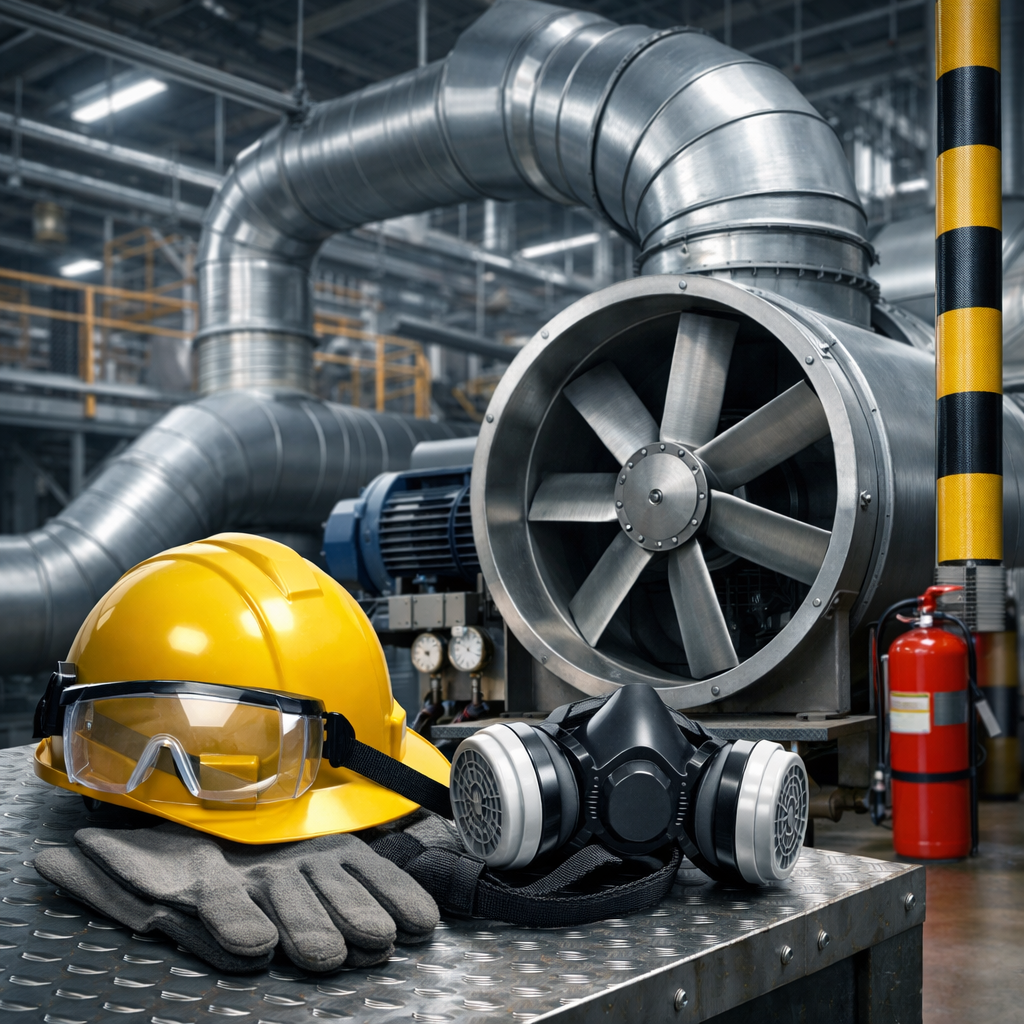
Although PPE is the last level in the Hierarchy of Controls, it still plays an important role in industrial ventilation safety.
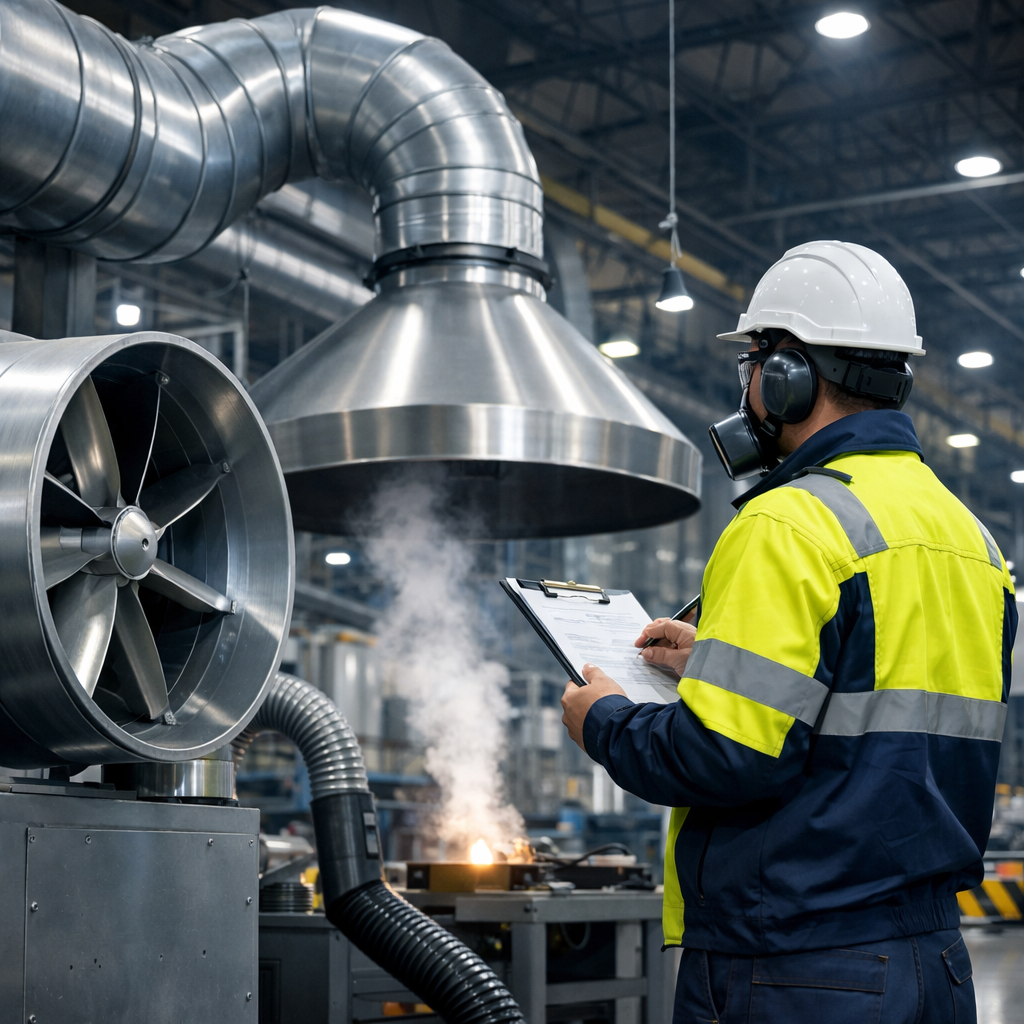
Respirators may be required during maintenance, emergencies, short-duration high-exposure tasks, or situations where engineering controls are being upgraded.
However, respirators should never be used as a substitute for a poorly designed ventilation system.
Where respiratory protection is required, employers should have a formal program covering selection, fit testing, maintenance, storage, medical considerations, and worker training.
Eye protection, gloves, hearing protection, and protective clothing may also be needed depending on the process and contaminant.
Compliance is another major part of the picture.
Requirements vary by jurisdiction, but employers are generally expected to assess exposure risks, control airborne hazards, maintain equipment, train workers, and document inspections and corrective actions.
Standards and guidance from ASHRAE, OSHA, and CCOHS can help organizations develop strong ventilation programs.
In regulated industries, exposure limits, combustible dust guidance, and process safety rules may also apply.
Worker involvement is essential for compliance in practice.
Operators are often the first to notice when capture arms are difficult to position, filters clog too quickly, or air movement changes after equipment relocation.
Encouraging reporting and responding quickly can prevent small issues from becoming major incidents.
Practical examples from real workplaces
In a metal fabrication plant, management reduced welding fume exposure by installing movable extraction arms at each bay, training welders on hood positioning, and checking airflow weekly.
Respirator use remained necessary for certain stainless steel tasks, but airborne exposure dropped significantly once source capture improved.
In a woodworking facility, recurring dust accumulation around saws and conveyors was addressed by redesigning duct branches, improving housekeeping, and isolating dust collectors from ignition sources.
This improved both respiratory protection and fire prevention.
In a chemical blending area, employees reported strong solvent odors despite ceiling exhaust fans.
An investigation showed that general ventilation was diluting vapors but not controlling them at the source.
After local exhaust was installed at drum filling points and transfer procedures were updated, odor complaints and measured exposure levels decreased.
Industrial ventilation safety is most effective when it is treated as a living OHSE system rather than a one-time installation.
Regular assessment, engineering review, maintenance, worker training, PPE management, and compliance checks all contribute to cleaner air and safer operations.
By understanding the risks, applying the Hierarchy of Controls, and learning from practical workplace examples, employers can strengthen industrial ventilation safety and better protect both people and production.
No comments yet