
Mental Health and Workplace Safety: Building Safer, Healthier Work Environments


Mental health and workplace safety are closely connected, and employers cannot treat them as separate issues. When workers are stressed, fatigued, anxious, isolated, or overwhelmed, the risk of mistakes, injuries, conflict, and poor decision-making increases across every industry.
In OHSE practice, psychological health is part of a safe system of work. A workplace may control physical hazards well, yet still expose workers to harmful levels of job strain, bullying, traumatic events, unrealistic workloads, or poor support. These psychosocial hazards can lead to mental injury, reduced concentration, and unsafe actions.
Organizations that take mental health seriously often see better reporting, stronger safety culture, fewer incidents, and improved retention. Guidance from bodies such as CCOHS and OSHA supports the idea that worker well-being and operational safety must be managed together, not in isolation.
Why Mental Health and Workplace Safety Matter in OHSE
Mental health and workplace safety affect performance at every level of an organization. A distracted forklift operator, an exhausted nurse, a distressed construction worker, or a call center employee facing constant verbal abuse may all face different hazards, but the safety impact is real in each case.
Psychological strain can impair memory, reaction time, judgment, communication, and hazard awareness. In high-risk settings, that can mean missed lockout steps, improper lifting, driving errors, medication mistakes, or failure to wear required protective equipment.
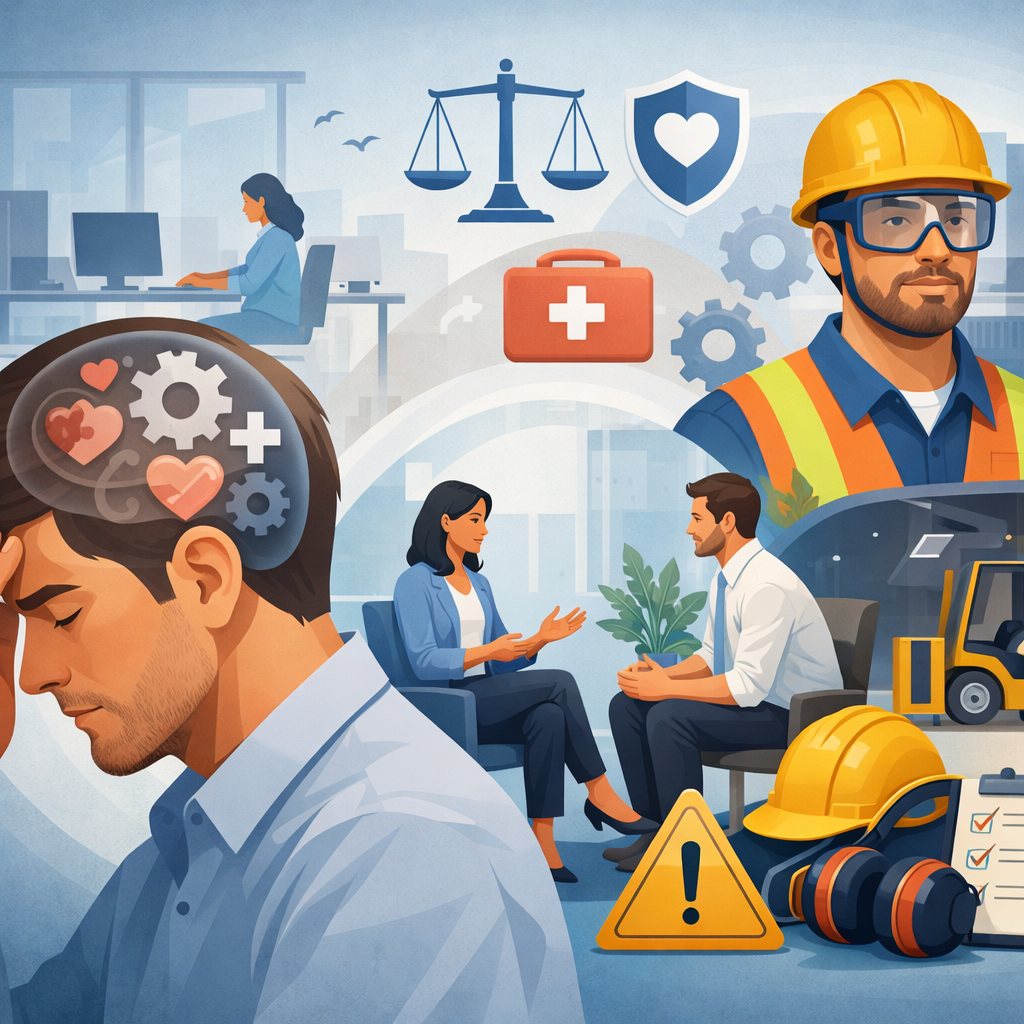
Common workplace factors that can harm mental health include excessive workload, low role clarity, poor supervision, harassment, violence, remote work isolation, lack of recovery time, and exposure to traumatic incidents. These issues may not leave visible injuries, but they can still create legal, operational, and human consequences.
A strong OHSE program recognizes both physical and psychosocial hazards. That means risk assessments should consider stressors that influence behavior, fatigue, and decision-making, just as they would consider noise, chemicals, or moving machinery. Employers can also support this approach through internal safety reporting pages such as safety reporting procedures and broader employee wellbeing resources.
Practical examples from real workplaces
- A warehouse worker under intense time pressure skips a pre-use inspection and causes a near miss with a pallet jack.
- A healthcare employee experiencing burnout makes a medication documentation error after repeated double shifts.
- An office worker dealing with bullying becomes withdrawn, stops reporting hazards, and develops anxiety-related absences.
- A field technician working alone in remote conditions faces isolation, fatigue, and delayed emergency response support.
Key Risks Linking Mental Health and Workplace Safety
To improve mental health and workplace safety, employers need to identify the main risks that connect psychological strain with physical harm. These risks may be direct, such as violence or trauma exposure, or indirect, such as fatigue leading to procedural failure.
Psychosocial and safety risks
- Fatigue: Long shifts, poor rostering, or insufficient rest can reduce alertness and increase incident rates.
- High workload and time pressure: Workers may rush tasks, ignore procedures, or avoid asking for help.
- Bullying, harassment, and discrimination: These create distress, distraction, and reduced confidence in reporting hazards.
- Exposure to trauma: First responders, healthcare staff, security teams, and social workers may face cumulative mental strain.
- Low job control: Workers with little influence over how work is done often report higher stress and lower engagement.
- Violence and aggression: Customer-facing workers may face verbal abuse or physical threats that harm both mental health and safety.
- Poor communication: Unclear instructions can increase stress while also creating immediate operational risks.
- Substance misuse related to stress: This may affect coordination, attendance, and safe work behavior.
The table below shows how common psychosocial hazards can affect safety outcomes.
| Psychosocial Hazard | Potential Mental Health Impact | Potential Safety Outcome |
|---|---|---|
| Excessive workload | Stress, anxiety, burnout | Rushing, errors, skipped controls |
| Poor shift scheduling | Fatigue, irritability, poor recovery | Reduced alertness, vehicle or machinery incidents |
| Bullying or harassment | Distress, depression, withdrawal | Low reporting, poor teamwork, distraction |
| Traumatic events | Acute stress, PTSD symptoms | Impaired concentration and slower reaction time |
| Remote or isolated work | Loneliness, stress, reduced support | Delayed response in emergencies, poor communication |
Prevention Strategies for Mental Health and Workplace Safety
Effective prevention starts with hazard identification, consultation, and leadership commitment. In OHSE, the best results come when mental health and workplace safety are built into existing systems such as risk assessments, incident investigations, training, supervision, and return-to-work planning.
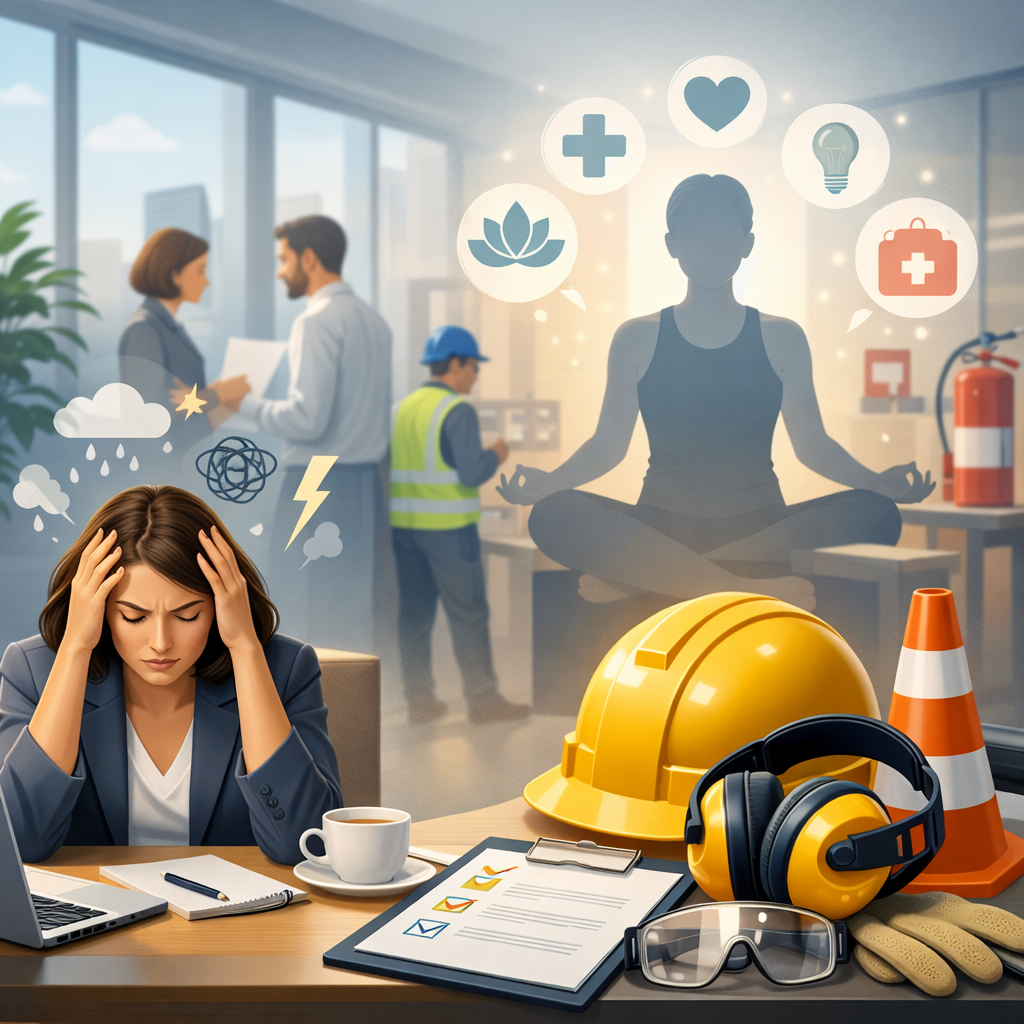
Apply the Hierarchy of Controls
The Hierarchy of Controls can also be used for psychosocial risk management. While not every mental health hazard can be eliminated completely, the framework helps employers choose stronger controls before relying only on individual coping strategies.
- Elimination: Remove unnecessary excessive overtime, unsafe staffing patterns, or clearly harmful work practices.
- Substitution: Replace highly stressful processes with better systems, such as fairer scheduling tools or quieter work methods.
- Engineering controls: Improve lighting, noise control, workspace layout, rest areas, and communication technology for remote workers.
- Administrative controls: Use clear roles, anti-bullying policies, supervisor training, critical incident support, job rotation, and realistic workloads.
- PPE: In some settings, personal protective equipment supports psychological as well as physical safety, especially where exposure to violence, trauma, or hazardous environments is likely.
The role of PPE in psychological safety
PPE is not a complete solution to psychosocial risk, but it still matters. In healthcare, security, emergency response, laboratories, and construction, appropriate PPE can reduce fear and improve confidence during hazardous tasks. Examples include respiratory protection, hearing protection, body protection, gloves, and eye protection where the threat of injury contributes to stress.
For lone workers or field staff, communication devices, duress alarms, and high-visibility gear can also support a stronger sense of security. However, PPE should always sit alongside better planning, staffing, training, and supervision rather than replacing them.
Practical prevention measures employers can use
- Train supervisors to recognize early signs of distress, fatigue, and behavioral change.
- Review workloads, staffing levels, and shift patterns regularly.
- Establish respectful workplace and anti-harassment procedures.
- Encourage confidential reporting of psychosocial hazards and near misses.
- Provide critical incident debriefing and access to mental health support services.
- Include psychosocial factors in toolbox talks and safety meetings.
- Monitor absenteeism, turnover, incident trends, and worker feedback for warning signs.
Compliance, Consultation, and a Safer Safety Culture
Compliance is an important part of managing mental health and workplace safety. Legal duties vary by jurisdiction, but employers generally must provide a safe workplace, assess hazards, control risks, train workers, and respond to incidents appropriately. Increasingly, this includes psychosocial hazards such as bullying, violence, fatigue, and chronic work-related stress.
Organizations should review applicable occupational health and safety laws, workers’ compensation requirements, and human rights obligations. Standards and guidance from regulators and professional bodies can help employers strengthen policies, risk assessment methods, and response procedures. Useful references include the CCOHS psychosocial hazards resources and OSHA materials on workplace stress, violence, and prevention programs.
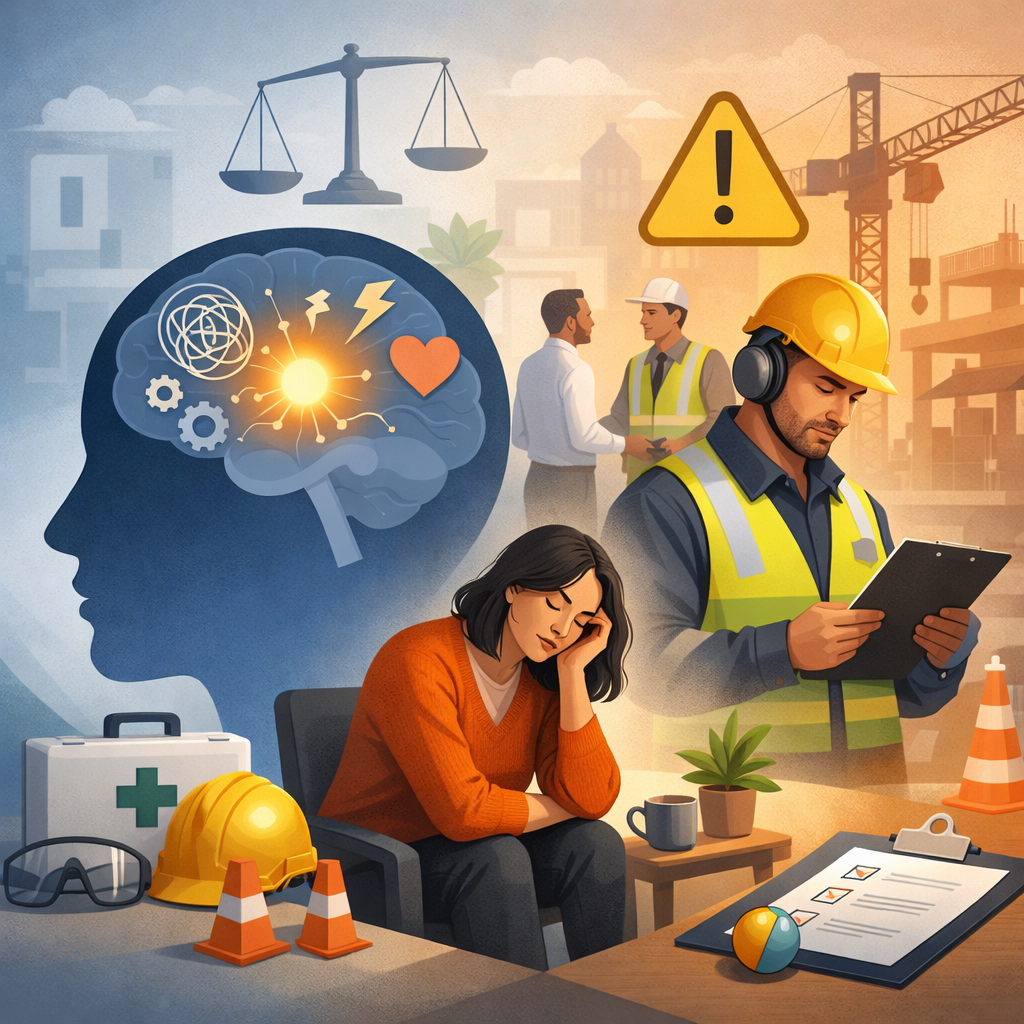
Consultation is equally important. Workers often know where pressure points exist, whether that involves unrealistic deadlines, unsafe staffing, difficult clients, or a supervisor who discourages reporting. Joint health and safety committees, surveys, one-on-one check-ins, and incident reviews can uncover patterns before they become serious injuries or claims.
A positive safety culture supports open communication, fair treatment, early intervention, and continuous improvement. When leaders model respectful behavior, respond to concerns promptly, and treat psychological health as a legitimate OHSE issue, workers are more likely to speak up and follow safety procedures.
Mental health and workplace safety should be seen as a shared responsibility built into everyday operations. By identifying psychosocial hazards, applying the Hierarchy of Controls, using PPE where appropriate, meeting compliance duties, and learning from practical workplace examples, employers can create environments that are not only legally safer but also healthier, more productive, and more resilient for everyone.

No comments yet