
office electrical safety awareness: Essential Steps to Prevent Workplace Hazards
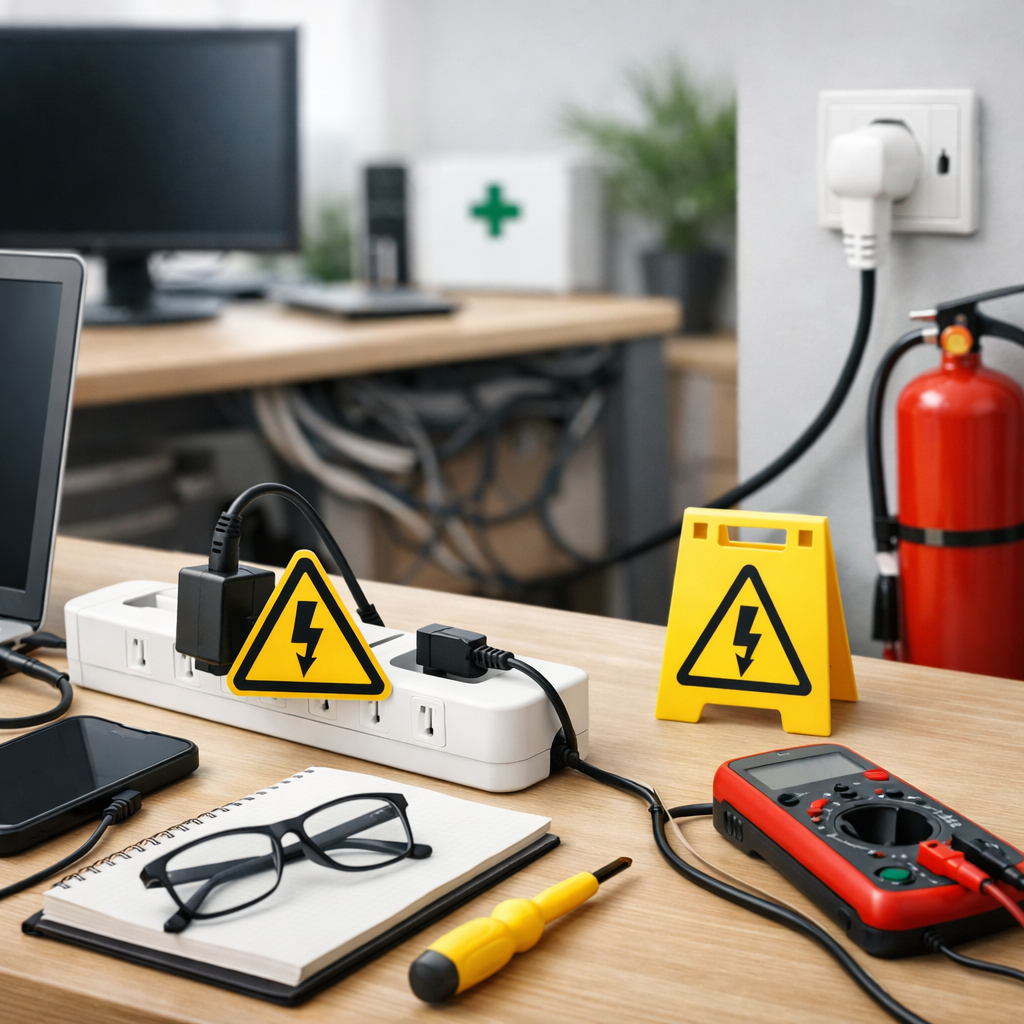

office electrical safety awareness is a critical part of maintaining a healthy, productive, and legally compliant workplace.
Even in low-risk office environments, electrical hazards can cause shocks, burns, fires, equipment damage, and serious business disruption.
Because offices rely heavily on computers, printers, power boards, chargers, kitchen appliances, and air-conditioning systems, the risk is often underestimated.
Many workers assume electrical incidents only happen on construction sites or in industrial settings, but overloaded circuits, damaged cords, and unsafe use of portable devices are common office issues.
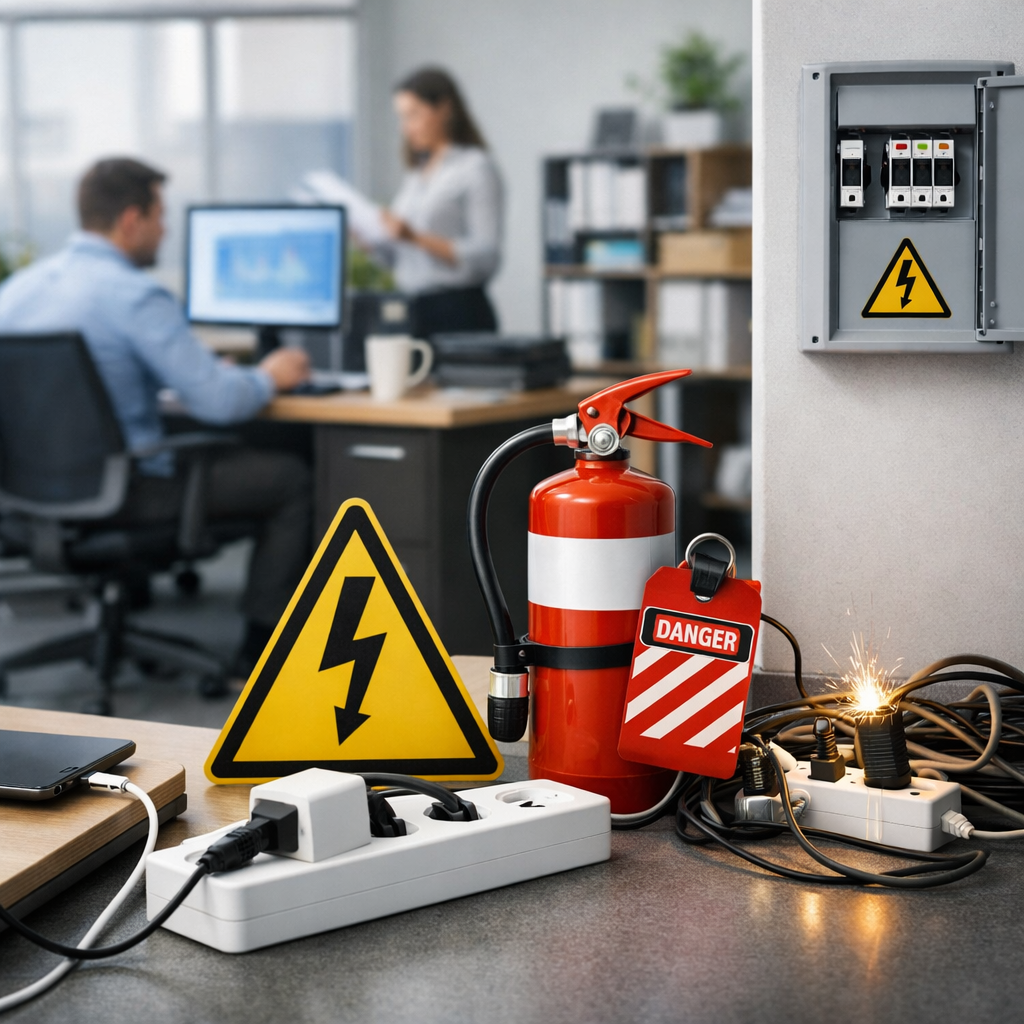
Building strong awareness helps employers and workers identify hazards early, apply practical controls, and meet occupational health, safety, and environmental expectations.
This article explains the main risks, prevention measures, personal protective equipment, compliance duties, and practical examples that support safer offices every day.
- Why office electrical safety awareness matters in every workplace
- Office electrical safety awareness and the hierarchy of controls
- Prevention measures that strengthen office electrical safety awareness
- PPE, training, and compliance for office electrical safety awareness
- Building a safer culture through office electrical safety awareness
Why office electrical safety awareness matters in every workplace
Office settings may appear safe, but electricity remains one of the most serious hidden hazards in administrative work areas.
A single faulty extension lead or poorly maintained appliance can create consequences that affect employees, visitors, contractors, and the wider business.
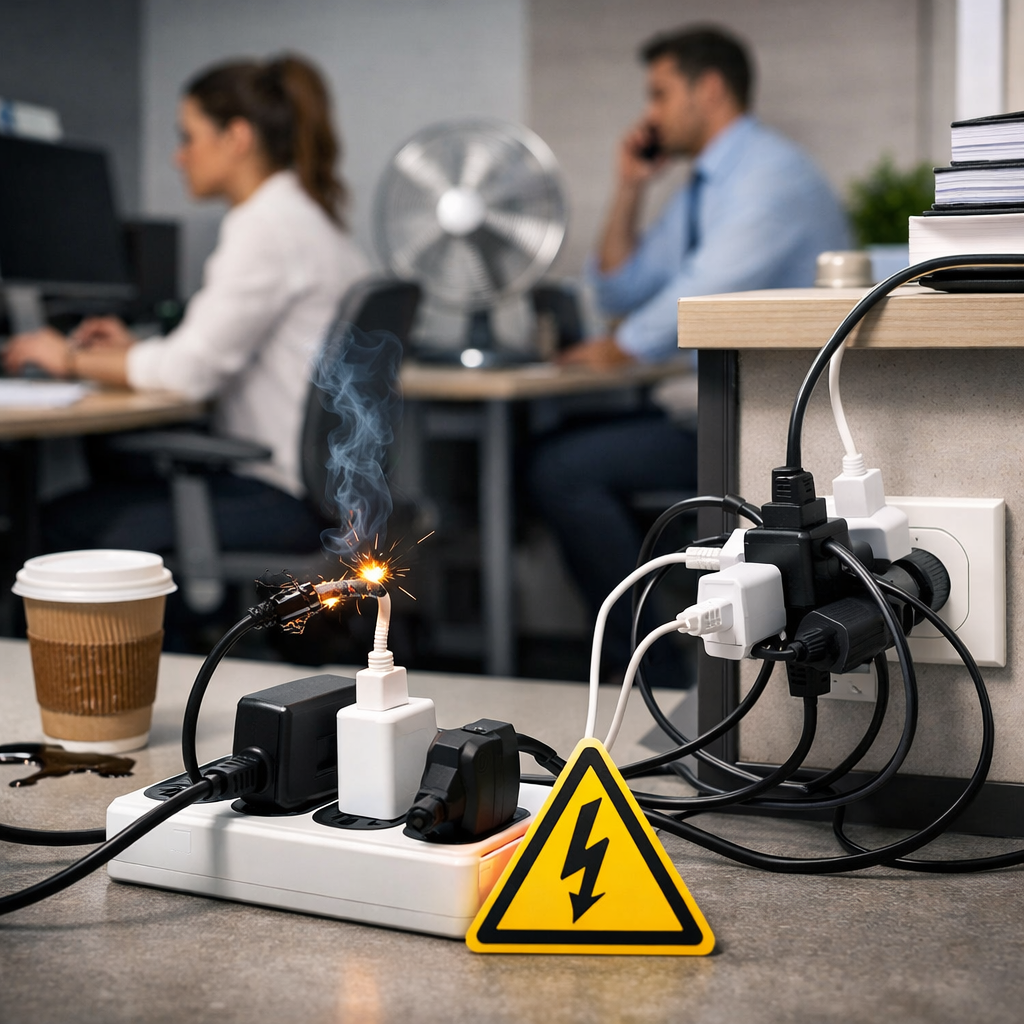
Electrical incidents in offices typically involve contact with exposed wiring, overloaded power outlets, water near electrical devices, defective equipment, or poor housekeeping around cables.
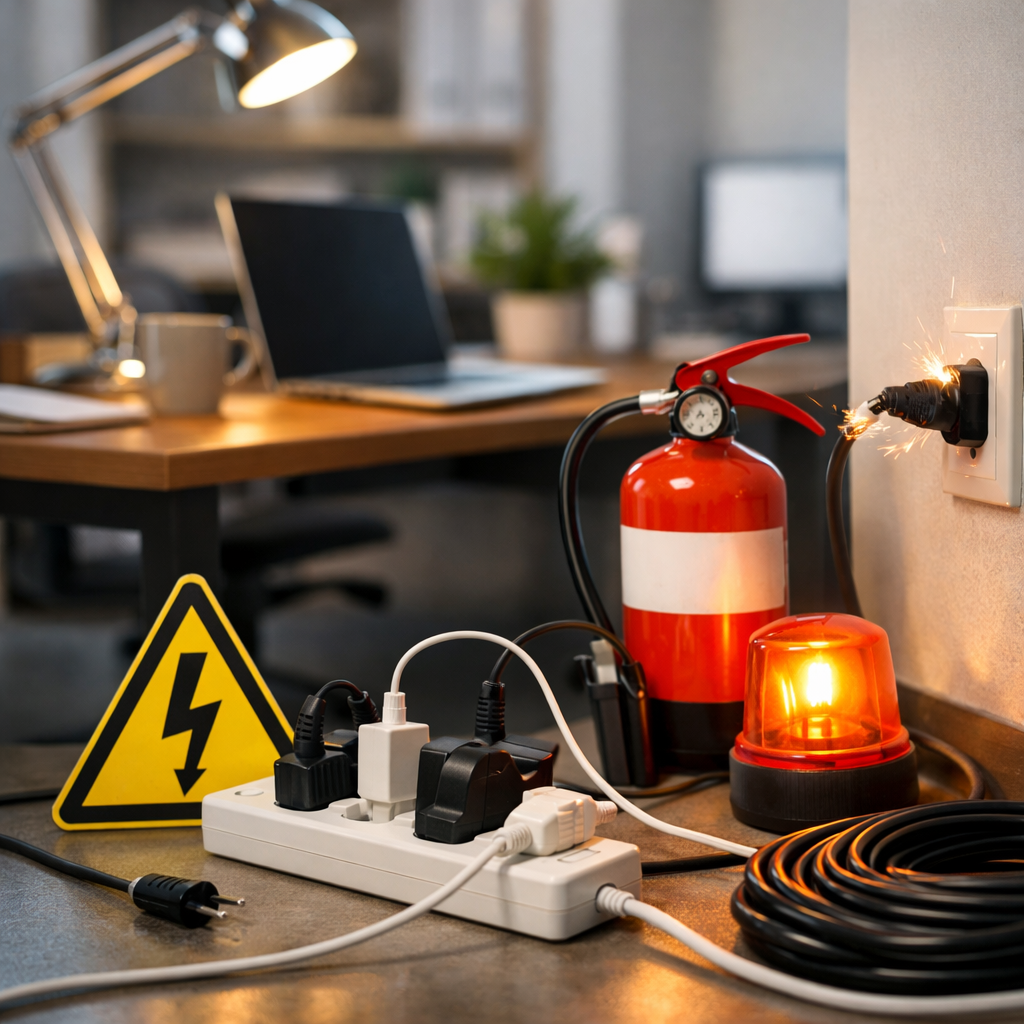
These hazards may lead to electric shock, thermal burns, arc-related injuries, trips and falls, and electrical fires.
In some cases, the harm is immediate. In others, the issue builds over time until a failure occurs during normal use.
Common office electrical risks
- Frayed or damaged power cords on monitors, laptops, kettles, and printers
- Overloaded power boards and double adapters
- Portable heaters placed too close to paper, furniture, or curtains
- Electrical equipment used near sinks, kitchens, or wet cleaning areas
- Cables running across walkways, under chairs, or through doorways
- Unapproved personal appliances brought from home
- Lack of inspection, testing, or maintenance of portable electrical equipment
- Improper use of extension leads as permanent wiring
Real workplace relevance is easy to see.
For example, a receptionist may plug a fan, phone charger, label printer, and heater into one power board during summer or winter peaks.
That arrangement may seem harmless, but it can overload the circuit and increase fire risk.
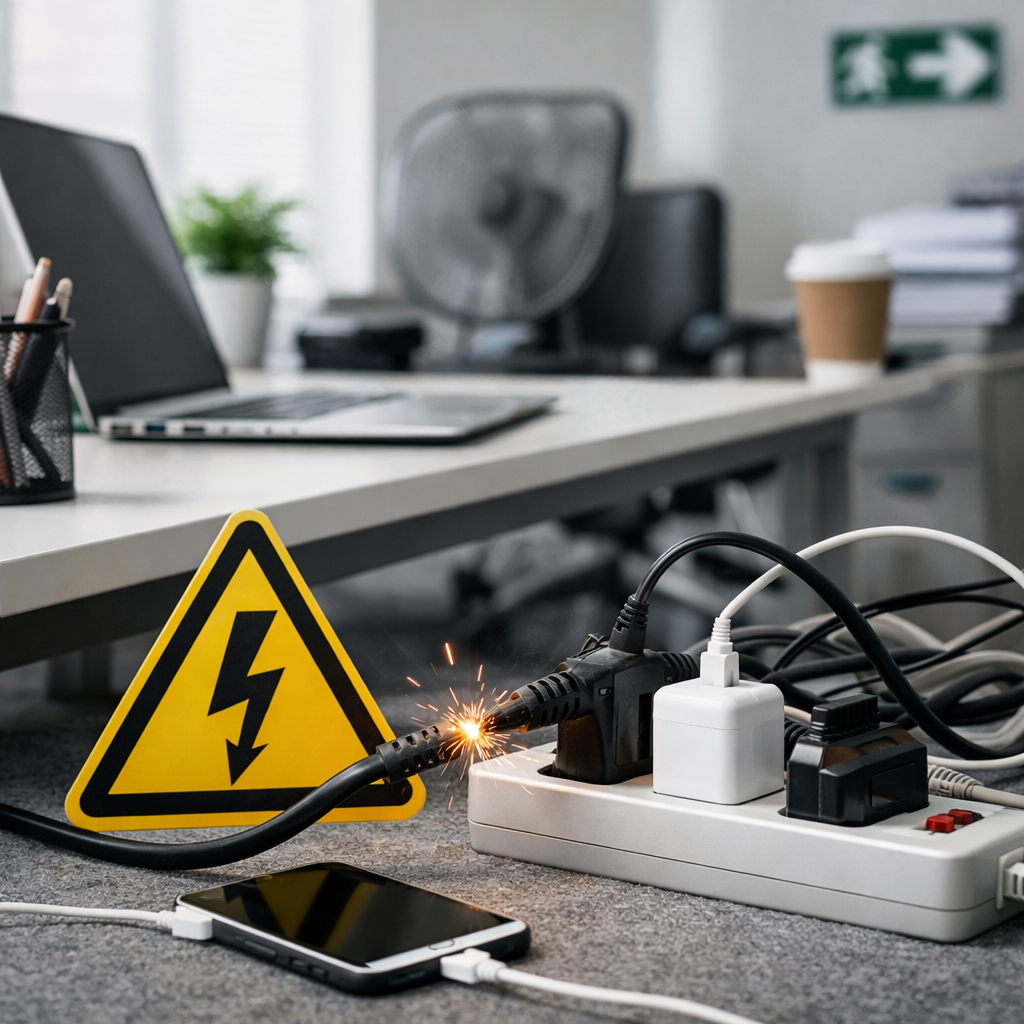
Similarly, a cleaner using water around photocopiers and under-desk cables may be exposed to shock hazards if equipment is not isolated or cords are damaged.
Office electrical safety awareness and the hierarchy of controls
A strong office electrical safety awareness program should follow the Hierarchy of Controls, which is widely recognized in occupational health and safety practice.
This approach helps workplaces manage risks systematically instead of relying only on worker caution.
Applying the Hierarchy of Controls in the office
| Control Level | Office Example | Safety Benefit |
|---|---|---|
| Elimination | Remove unused appliances and redundant extension leads | Reduces unnecessary exposure to electrical hazards |
| Substitution | Replace damaged or older equipment with safer modern devices | Lowers likelihood of failure or overheating |
| Engineering Controls | Install residual current devices, cable trays, and adequate wall outlets | Provides built-in protection against faults and poor cable management |
| Administrative Controls | Inspection schedules, safe work procedures, reporting systems, and training | Improves hazard identification and safe behavior |
| PPE | Insulated gloves or eye protection for authorized maintenance staff | Adds limited protection during specific tasks |
Elimination and substitution are especially useful in offices because many hazards come from unnecessary devices, damaged leads, or informal setups created over time.
Engineering controls, such as surge-protected power boards, RCD protection, and well-designed workstation layouts, can significantly reduce reliance on worker memory alone.
Administrative controls are also essential.
These include induction training, routine checks, maintenance logs, contractor management, emergency response procedures, and clear reporting pathways for faults.
For broader workplace guidance, employers often refer to resources from CCOHS and OSHA.
These organizations provide practical information on electrical hazards, inspection expectations, and safe work practices that apply across many office environments.
Prevention measures that strengthen office electrical safety awareness
Preventing office electrical incidents depends on routine action, not just policy documents.
Workers need to know what safe equipment use looks like in daily tasks, and managers need systems that support quick correction of hazards.
Practical prevention measures
- Inspect cords, plugs, and outlets regularly for wear, heat damage, or exposed wiring
- Report and remove faulty equipment from service immediately
- Avoid daisy-chaining power boards or using multiple double adapters
- Use extension leads only as temporary solutions
- Keep liquids away from computers, chargers, and shared electrical equipment
- Ensure ventilation around printers, servers, and power supplies
- Do not place cords under carpets where heat and damage may go unnoticed
- Use competent licensed electricians for repairs and installations
- Label isolation points where relevant
- Train workers to disconnect equipment safely before cleaning or relocating it
A practical example involves a meeting room where staff frequently connect laptops, projectors, and charging devices.
If only one wall outlet is available, employees may rely on stacked adapters and trailing leads.
A better control would be installing additional outlets and using approved power management units mounted away from walkways.
This reduces both electrical and trip hazards at the same time.
Another example is the office kitchen.
Toasters, microwaves, kettles, and coffee machines draw significant power and are used near water.
Regular inspection, separation from sinks, and clear rules about not using damaged appliances can prevent common incidents.
Many businesses also include electrical hazard checks in routine workplace safety inspections and broader office risk assessment processes.
That helps embed office electrical safety awareness into normal operations rather than treating it as a one-time campaign.
PPE, training, and compliance for office electrical safety awareness
In most office environments, PPE is not the primary control for day-to-day electrical safety.
However, it still has a role in specific situations, especially for maintenance personnel, cleaners, facilities workers, or contractors performing higher-risk tasks.
PPE considerations
Appropriate PPE may include insulated gloves, safety glasses, non-conductive footwear, or arc-rated clothing, depending on the task and the level of risk.
For example, an office administrator should not attempt to repair a damaged outlet using basic gloves.
That job belongs to a qualified person using proper isolation procedures, tools, and protective equipment.
This highlights an important OHSE principle: PPE is the last line of defense, not a substitute for removing the hazard.
Training and worker awareness
Training should cover simple, practical topics that apply directly to office work.
- How to identify damaged electrical equipment
- When to stop using an appliance and report it
- Safe use of power boards and chargers
- Why personal heaters and non-approved appliances can be risky
- Emergency response steps for electric shock or electrical fire
- The importance of not attempting unauthorized repairs
Short refresher sessions can be more effective than long technical briefings.
Visual reminders near kitchens, printer stations, and shared work areas also help reinforce safe habits.
Compliance responsibilities
Employers have a duty to provide a safe work environment, safe systems of work, suitable equipment, and adequate information, instruction, and supervision.
Compliance requirements vary by jurisdiction, but generally include hazard identification, risk assessment, maintenance of electrical equipment, incident reporting, and contractor control.
Where applicable, portable appliance testing, residual current device checks, and documented inspections may form part of the compliance framework.
Businesses should also review manufacturer instructions, landlord responsibilities, and local electrical codes.
The NFPA also provides widely recognized fire and electrical safety information relevant to office settings.
Importantly, compliance should not be treated as paperwork alone.
Real compliance means unsafe equipment is actually removed, reported hazards are fixed quickly, and employees understand how to work safely with everyday electrical devices.
Building a safer culture through office electrical safety awareness
The strongest results come when office electrical safety awareness becomes part of workplace culture.
That means employees feel responsible for reporting hazards, supervisors respond promptly, and safety checks are built into routine office management.
A good culture does not wait for an incident before taking action.
It notices the warm outlet, the cracked charger, the overloaded kitchen socket, or the extension lead across a walkway and fixes the problem early.
Small actions can prevent major injuries and costly downtime.
Employers should encourage regular inspections, practical training, clear procedures, and consultation with workers about recurring electrical issues.
They should also ensure maintenance and repair work is completed only by qualified professionals.
When offices combine hazard awareness, prevention, appropriate PPE, and legal compliance, they significantly reduce the risk of shock, fire, and equipment failure.
In the end, office electrical safety awareness is not just about meeting OHSE obligations.
It is about protecting people, keeping operations running, and creating a workplace where safety is part of everyday decision-making.
No comments yet