
Pedestrian Safety Controls Around Mobile Equipment: Critical Measures to Reduce Line-of-Fire Risks

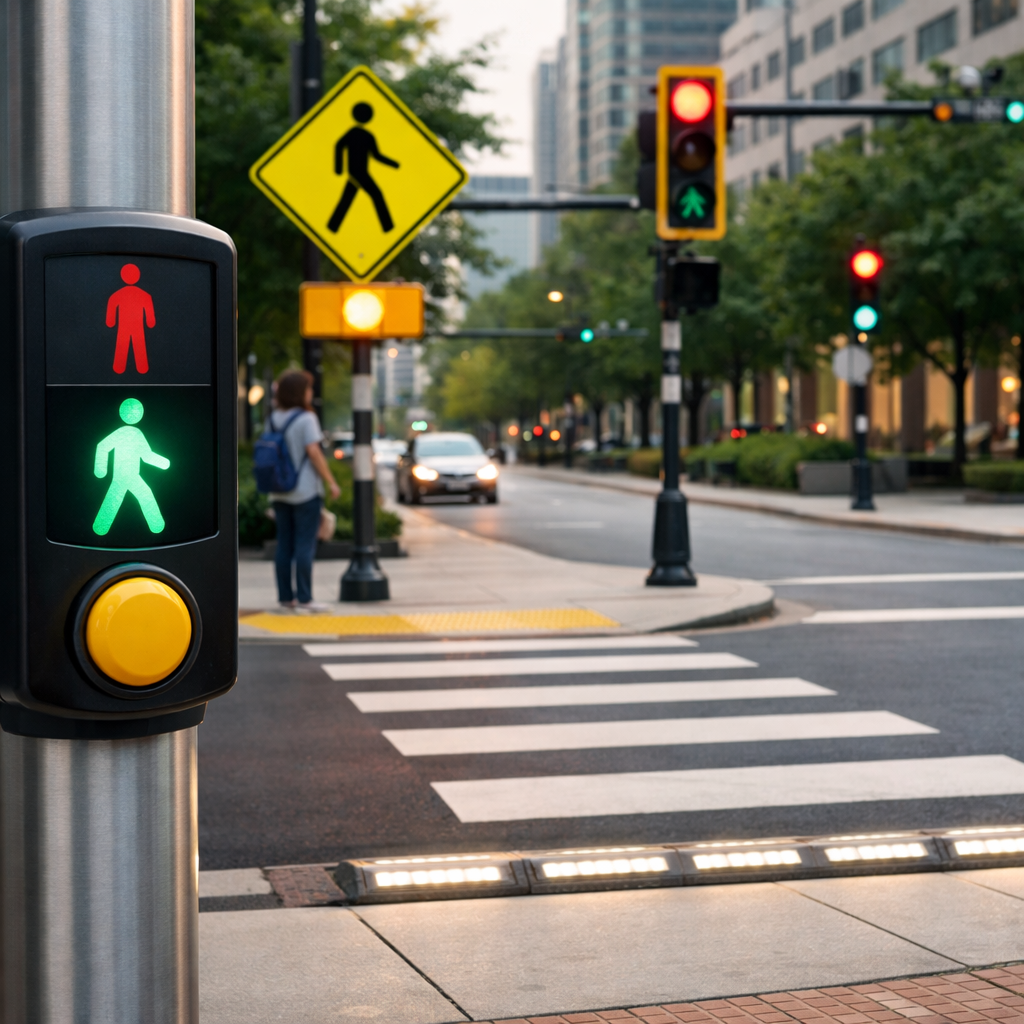
Pedestrian safety controls are essential in any workplace where forklifts, loaders, telehandlers, trucks, or other mobile equipment operate near people.
When workers and machines share the same space, the risk of struck-by incidents, crushing injuries, and other line-of-fire events rises quickly.
Facilities that want to reduce serious harm must focus on one core goal: separating people from equipment wherever possible.
That means going beyond warning signs and high-visibility clothing.
Effective pedestrian safety controls combine layout design, traffic management, visibility improvements, operating rules, and supervision to create a safer system of work.
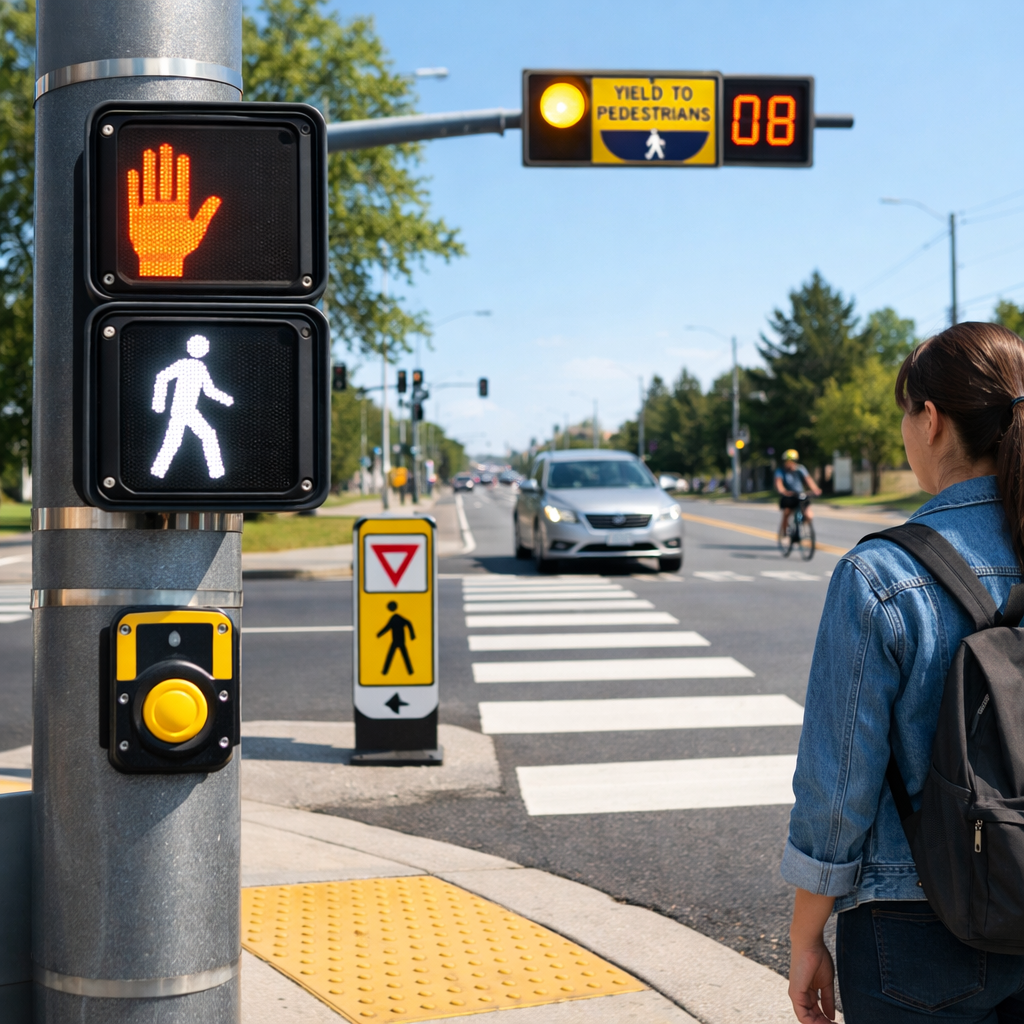
Guidance from organizations such as OSHA and CCOHS consistently supports this approach, especially in workplaces with frequent reversing, blind corners, tight aisles, and mixed traffic.
- Why pedestrian safety controls matter around mobile equipment
- Pedestrian safety controls that physically separate people from equipment
- Engineering and visibility controls for line-of-fire hazards
- Administrative pedestrian safety controls that strengthen the system
- Building a stronger pedestrian safety controls program in your facility
Why pedestrian safety controls matter around mobile equipment
Mobile equipment incidents are often severe because of vehicle weight, limited stopping distance, and operator blind spots.
In many cases, the worker on foot is in the line of fire without realizing it until it is too late.
A line-of-fire hazard exists when a person can be struck, pinned, crushed, or caught between equipment and a fixed object.
Common examples include a pedestrian walking behind a reversing forklift, a spotter standing too close to a loader, or a worker crossing an active haul route near a blind intersection.
These incidents rarely come down to one mistake alone.
They usually reflect gaps in pedestrian safety controls such as poor site design, inconsistent travel routes, weak communication, or overreliance on human attention.
That is why facilities should apply the Hierarchy of Controls when managing vehicle-pedestrian interaction.
Elimination and engineering controls should come first, followed by administrative controls and personal protective equipment.
If a worker does not need to be in an active equipment zone, the best control is to remove that exposure entirely.
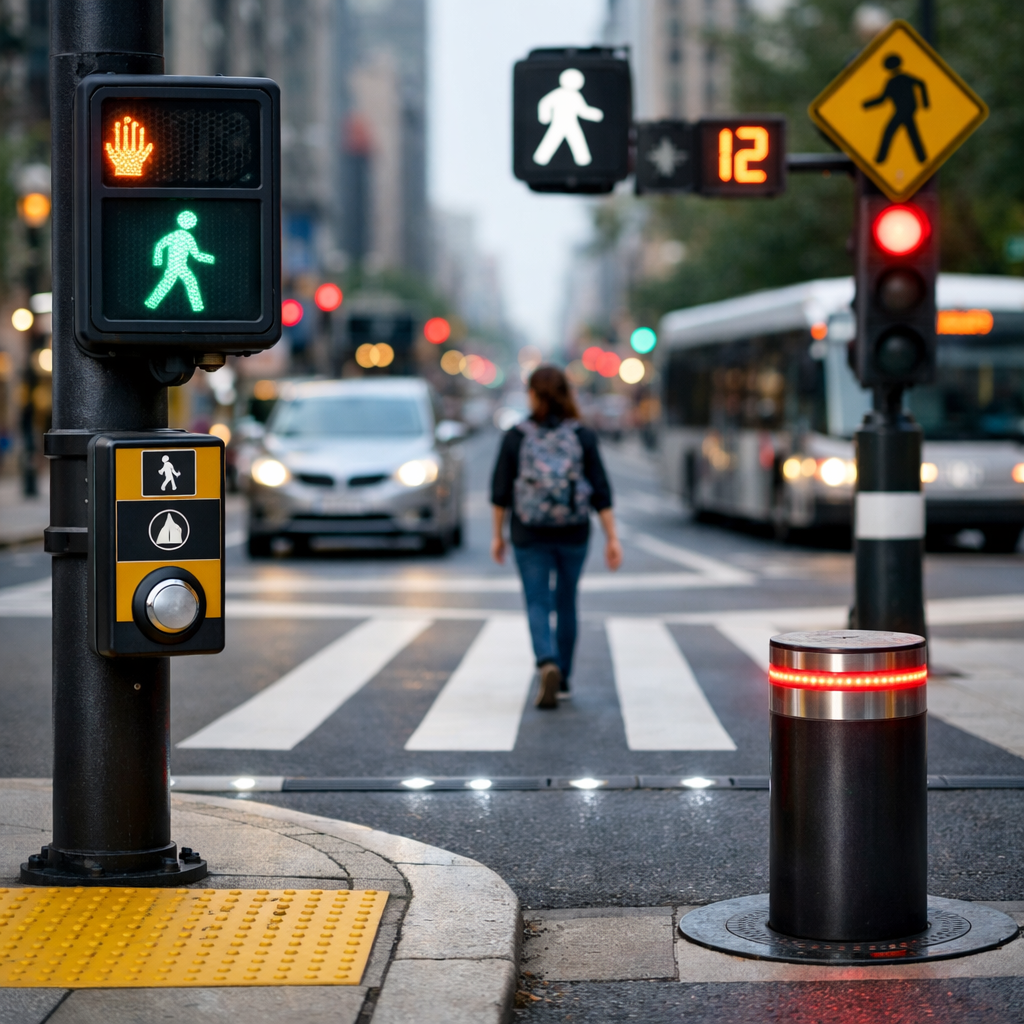
You can explore related risk reduction strategies in our line-of-fire safety basics and forklift pedestrian management resources.
Pedestrian safety controls that physically separate people from equipment
Start with layout and traffic design
The most effective pedestrian safety controls create physical separation.
When facilities redesign movement patterns so people and equipment do not mix, the risk drops significantly.
This may involve dedicated pedestrian walkways, fixed guardrails, fenced corridors, overhead walkways, restricted crossing points, and one-way traffic systems.
In warehouses, for example, marked aisles alone are often not enough.
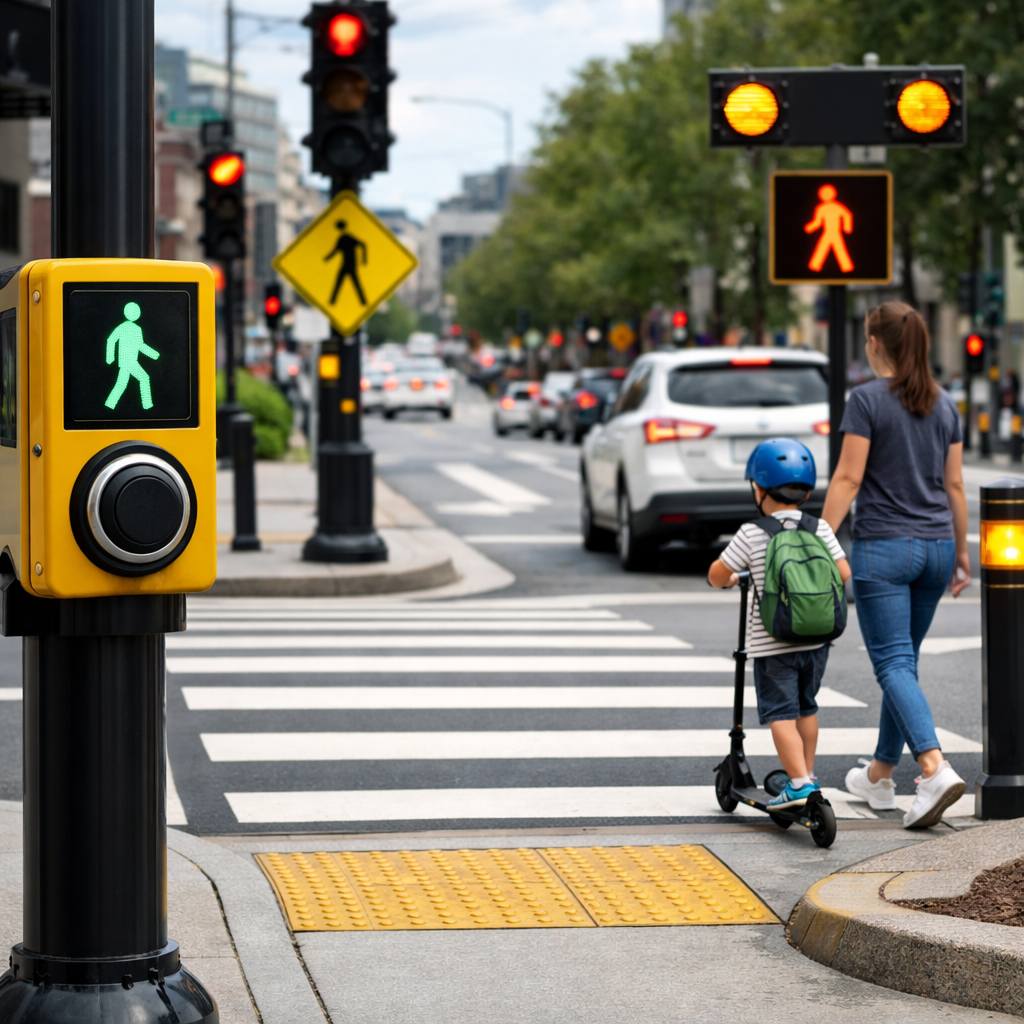
If forklifts can still enter the same space as pedestrians, the control is partly visual but not truly protective.
Installing barriers at picking zones, battery charging areas, time clocks, and doorways can prevent workers from stepping directly into traffic.
In yards, plants, and distribution centers, physical separation may include curbing, bollards, jersey barriers, swing gates, and clearly segregated staging areas.
Where possible, break rooms, offices, and maintenance access points should be located away from primary equipment routes.
Examples of separation-focused controls
- Barrier-protected walkways between production areas and exits
- Designated pedestrian crossings with gates, lights, or stop controls
- One-way equipment routes to reduce reversing and crossing conflicts
- Exclusion zones around loading, unloading, and lifting operations
- Remote check-in stations for drivers and contractors outside active travel lanes
- Separate entrances for foot traffic and vehicle traffic
These pedestrian safety controls are especially important in line-of-fire areas where workers may become trapped between a vehicle and a dock edge, wall, rack, or another piece of equipment.
The stronger the separation, the less the system depends on perfect human behavior.
Engineering and visibility controls for line-of-fire hazards
Reduce blind spots and unexpected movement
Even with good separation, some shared-space exposure may remain.
That is where engineering-based pedestrian safety controls help reduce the chance of contact.
Examples include proximity detection systems, reversing cameras, blue warning lights, motion alarms, convex mirrors at intersections, improved lighting, and speed-limiting technology.
However, these tools should support separation, not replace it.
A camera does not eliminate a blind spot the way a no-pedestrian zone does.
An alarm may warn someone, but it does not stop a machine from entering a congested area.
Facilities should also look at equipment selection.
Choosing machines with better operator visibility, automatic braking features, or reduced tail swing can lower line-of-fire risk.
Routine maintenance matters too.
Faulty horns, broken lights, dirty mirrors, and damaged camera systems can undermine otherwise solid pedestrian safety controls.
| Hazard Area | Common Risk | Preferred Control |
|---|---|---|
| Blind corners | Pedestrian struck by turning equipment | Barrier separation, mirrors, stop controls, reduced speed |
| Loading docks | Worker pinned between truck and structure | Exclusion zones, dock barriers, controlled access |
| Warehouse aisles | Forklift and pedestrian sharing aisle space | Dedicated walkways and restricted forklift-pedestrian overlap |
| Outdoor yards | Reversing vehicle contact | One-way routes, spotter rules, separated walk paths |
For more practical guidance on controlling struck-by hazards, the OSHA warehousing guidance and CCOHS materials on workplace traffic management are useful references.
Administrative pedestrian safety controls that strengthen the system
Rules, training, and supervision still matter
Administrative pedestrian safety controls are not the strongest layer, but they are still necessary.
Once physical and engineering measures are in place, facilities need clear site rules that define who can go where, when crossings are allowed, how spotters are used, and what to do during loading or reversing tasks.
Traffic management plans should map vehicle routes, pedestrian paths, speed limits, no-go zones, and right-of-way expectations.
Contractors and visitors should receive the same level of orientation as regular employees.
This is a common gap in busy facilities, especially when temporary drivers or third-party workers enter the site.
Training should focus on actual exposure, not generic awareness.
Workers need to understand line-of-fire risks, blind zones, equipment turning radius, stopping distance, and the danger of assuming an operator has seen them.
Operators should be trained to stop work if pedestrians enter exclusion zones or if visibility is compromised.
Supervisors play a key role by verifying that pedestrian safety controls are followed in the field, not just written into a procedure.
Useful administrative measures include:
- Pedestrian route maps posted at entrances and high-traffic areas
- Restricted access permits for active equipment zones
- Spotter protocols with defined positioning and communication rules
- Scheduled movement windows to separate deliveries from foot traffic
- Incident and near-miss reviews focused on exposure points and layout issues
- Routine audits of barriers, signage, crossings, and operator compliance
PPE such as high-visibility clothing can support these controls, but it should never be treated as the main defense.
A visible worker can still be struck if the layout puts them in the path of moving equipment.
Building a stronger pedestrian safety controls program in your facility
Assess exposure and improve continuously
The best pedestrian safety controls are built around real site conditions.
Start by identifying where people and equipment interact, where line-of-fire hazards exist, and where workers could be pinned or struck.
Walk the site during normal operations, shift changes, deliveries, maintenance work, and peak traffic periods.
Look for informal shortcuts, faded markings, blocked walkways, poor lighting, and recurring congestion.
Then prioritize changes that create separation first.
Can pedestrians be rerouted? Can crossings be reduced? Can reversing be eliminated through one-way flow? Can access be automated or moved outside the equipment zone?
These questions often reveal practical improvements that are more effective than adding another sign or reminder.
Facilities should also review incident data, near misses, telematics, and employee feedback.
Workers usually know where the real conflicts happen.
If people regularly step into travel lanes to reach tools, punch clocks, washrooms, or staging areas, the design is creating exposure.
Pedestrian safety controls should be reviewed whenever operations change, new equipment is introduced, production increases, or traffic patterns shift.
What worked in a small warehouse may fail in a high-volume distribution center or a mixed-use industrial yard.
In the end, controlling line-of-fire risk around mobile equipment is about designing work so people are not placed in harm’s way.
Strong pedestrian safety controls use separation as the foundation, supported by engineering tools, clear procedures, and consistent supervision.
When facilities treat vehicle-pedestrian interaction as a critical risk, they can prevent serious injuries and build a safer, more reliable workplace.
No comments yet