
Rebar Handling Safety Procedures: Essential Steps to Reduce Injury Risks on Site
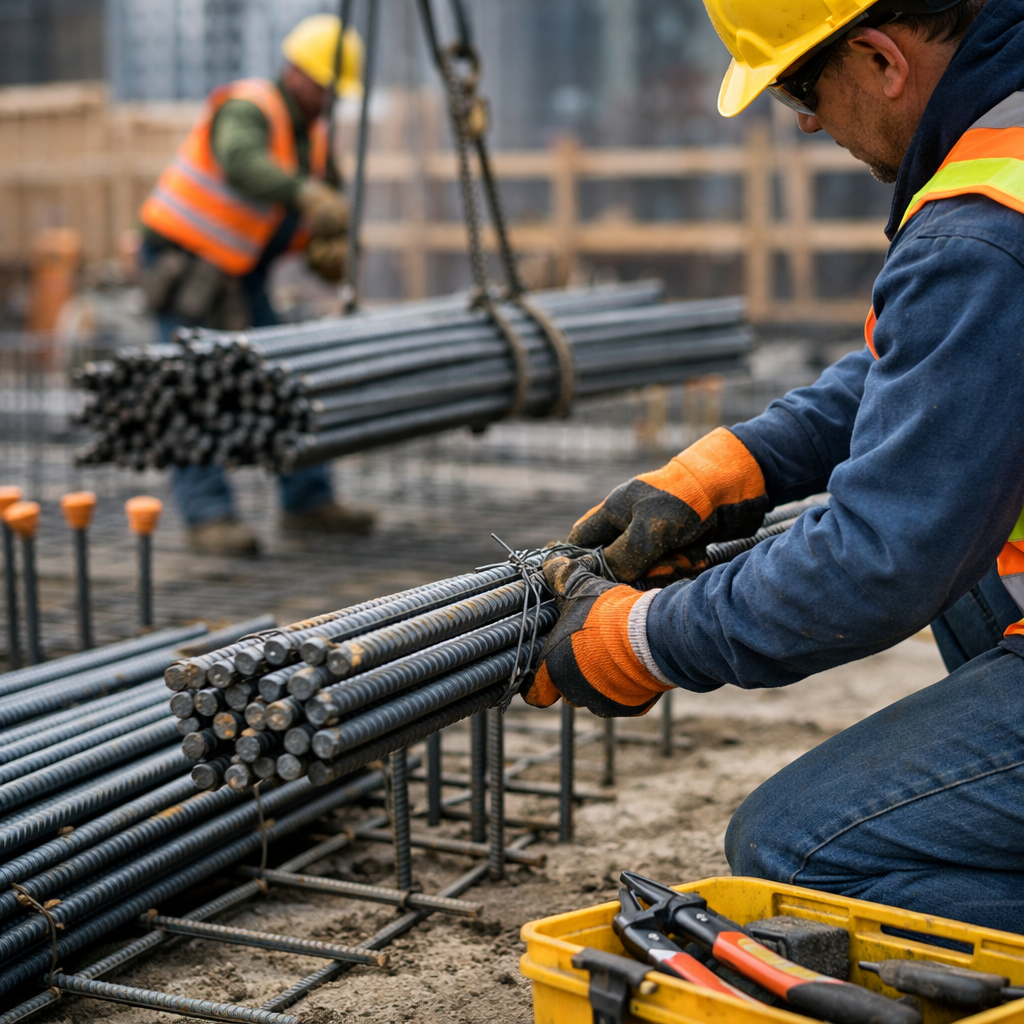

rebar handling safety procedures are a critical part of occupational health, safety, and environmental performance on construction sites, fabrication yards, and storage areas.
Because reinforcing steel is heavy, awkward, sharp, and often moved in busy work zones, poor handling practices can quickly lead to cuts, strains, crush injuries, impalement hazards, and struck-by incidents.
A strong safety approach does more than prevent injuries. It also supports productivity, reduces damage to materials, improves compliance, and creates a more organized work environment.
Whether workers are unloading bundles, tying reinforcement, cutting stock, or placing bars for concrete work, every step should follow clear procedures.
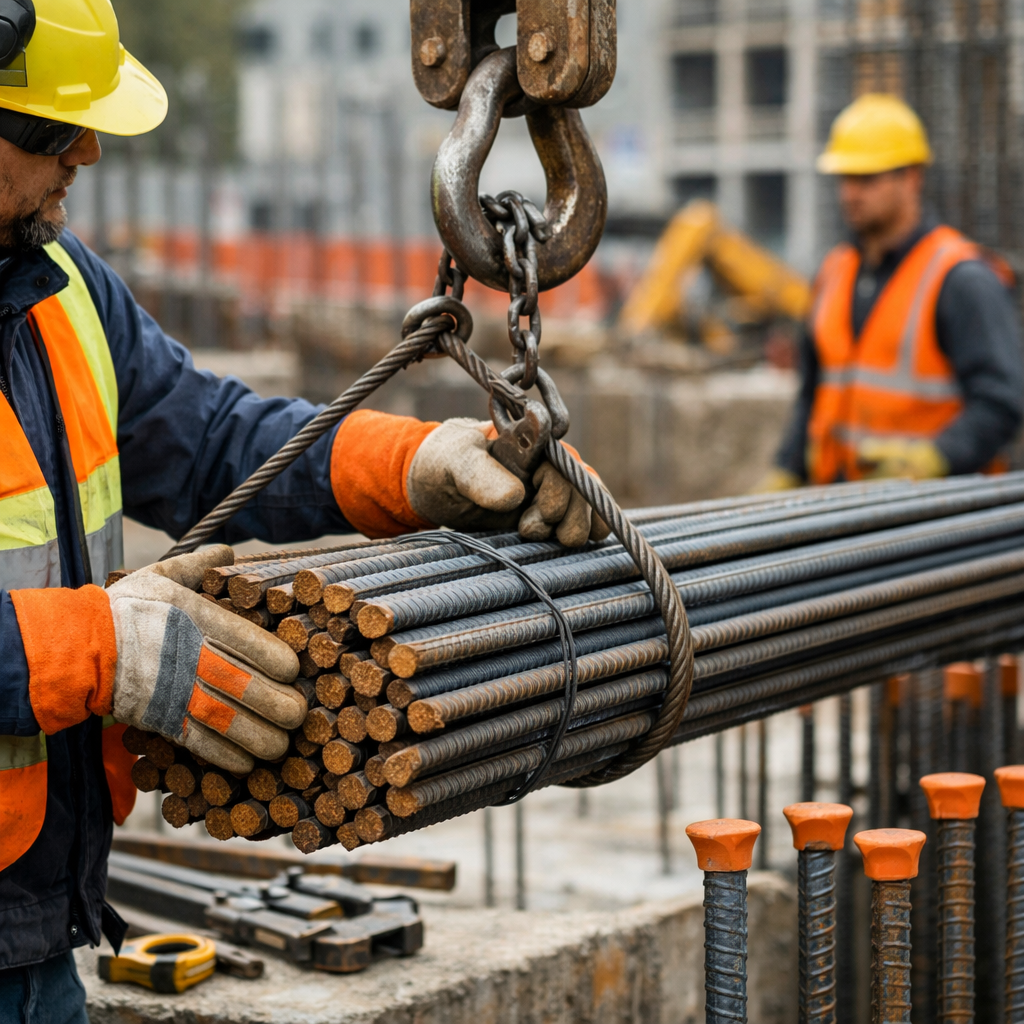
This article explains practical rebar handling safety procedures, including common risks, preventive controls, required personal protective equipment, regulatory expectations, and examples that apply to real workplaces.
Why Rebar Handling Safety Procedures Matter in Daily Operations
Reinforcing bar presents multiple hazards at once.
It can be slippery when wet, difficult to grip, unstable when stacked, and dangerous when protruding from slabs, walls, or footings.
Even a routine manual lift can turn into a musculoskeletal injury if the bar is too long, too heavy, or improperly balanced.
In many incidents, workers are injured not because the task is unusual, but because familiar tasks are done too quickly or without planning.
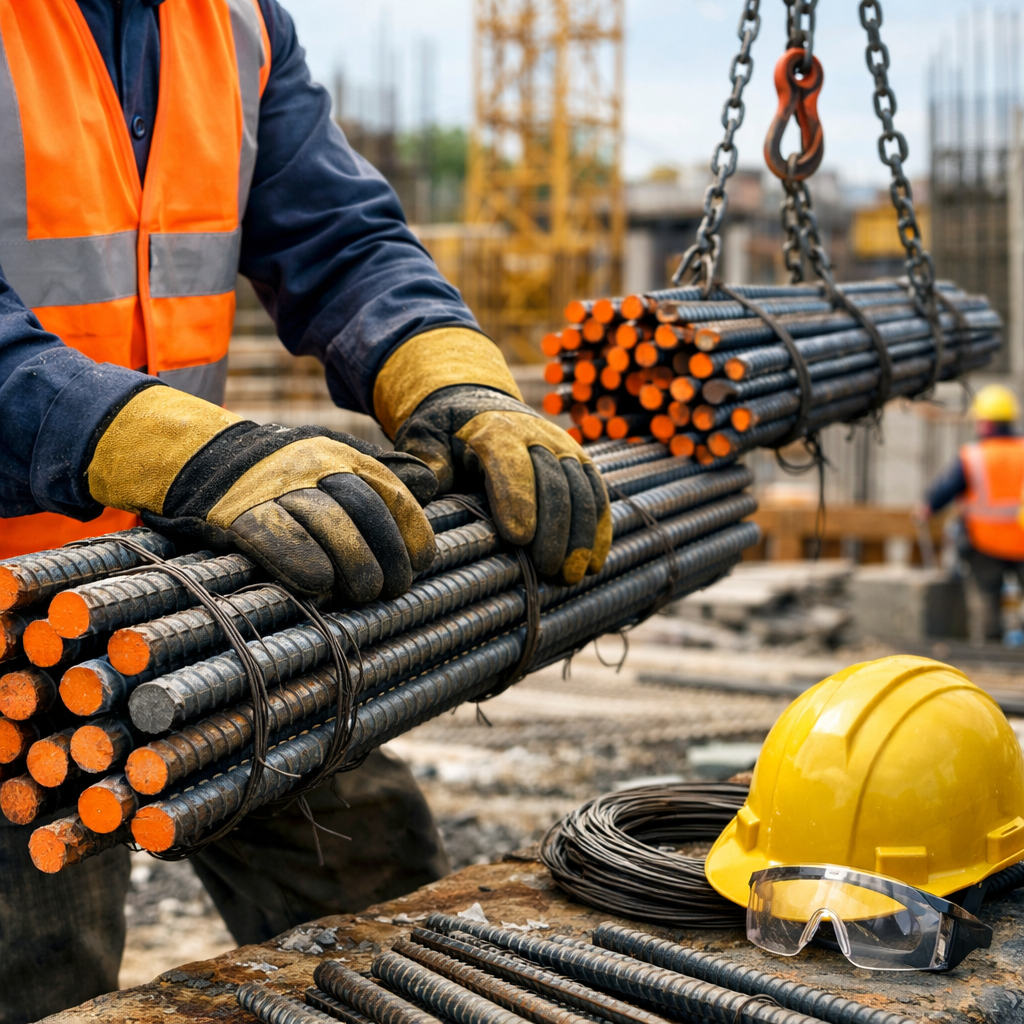
That is why rebar handling safety procedures should be built into pre-job planning, toolbox talks, site orientation, and supervision.
Typical hazards include:
- Manual handling injuries such as back strain, shoulder strain, and sprains from lifting or carrying rebar
- Lacerations and punctures from sharp ends, burrs, cut wire, and exposed tie points
- Struck-by hazards when bundles shift during lifting, unloading, or storage
- Crush injuries to hands and feet from dropped bars or unstable stacks
- Impalement risks from uncapped vertical rebar
- Slips, trips, and falls caused by loose stock, offcuts, tie wire, and congested work areas
- Equipment interaction hazards involving forklifts, cranes, rigging gear, and suspended loads
According to guidance from OSHA and information available through CCOHS, controlling material handling hazards requires both physical safeguards and safe work procedures.
On rebar-intensive sites, that means planning how bars will be delivered, stored, moved, placed, and capped before work starts.
Risk Assessment and Prevention Using the Hierarchy of Controls
Effective rebar handling safety procedures begin with hazard assessment.
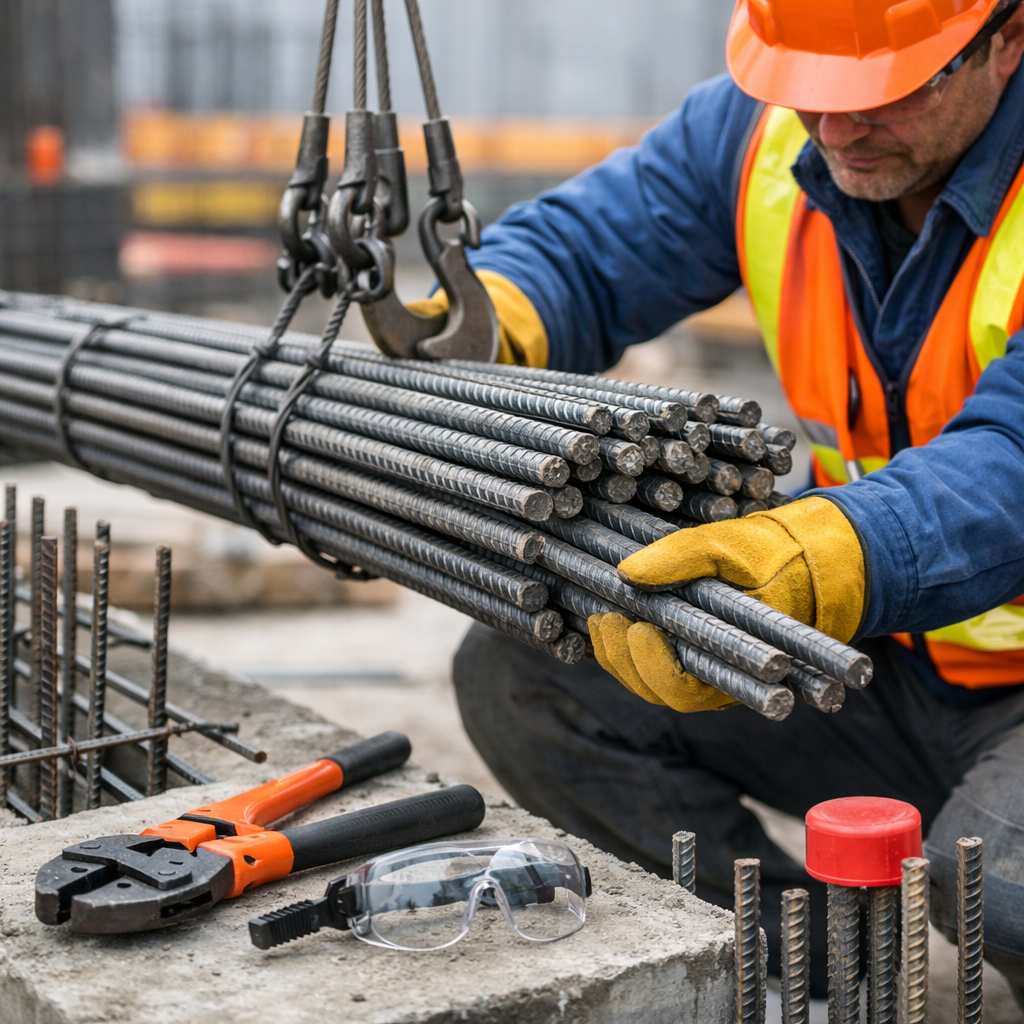
Before workers touch the material, supervisors should consider the size and weight of the bars, delivery routes, storage conditions, weather, nearby trades, and the lifting equipment required.
The best control strategy follows the Hierarchy of Controls, starting with higher-level measures before relying only on PPE.
Applying the hierarchy to rebar work
- Elimination: Remove unnecessary handling steps by arranging delivery closer to the point of use.
- Substitution: Use preassembled cages or prefabricated sections where practical to reduce repetitive handling.
- Engineering controls: Use proper storage racks, bundle restraints, rebar caps, lifting frames, tag lines, and mechanical lifting aids.
- Administrative controls: Implement lift plans, exclusion zones, team lifting rules, housekeeping standards, and worker training.
- PPE: Require gloves, hard hats, boots, eye protection, and other site-specific protection.
A simple prevention plan can significantly reduce incidents.
For example, if a crew receives long lengths of steel near an excavation, engineering controls such as designated laydown areas and physical barriers can prevent bars from rolling into access paths.
Administrative controls such as a banksman, delivery scheduling, and communication with crane operators can further lower risk.
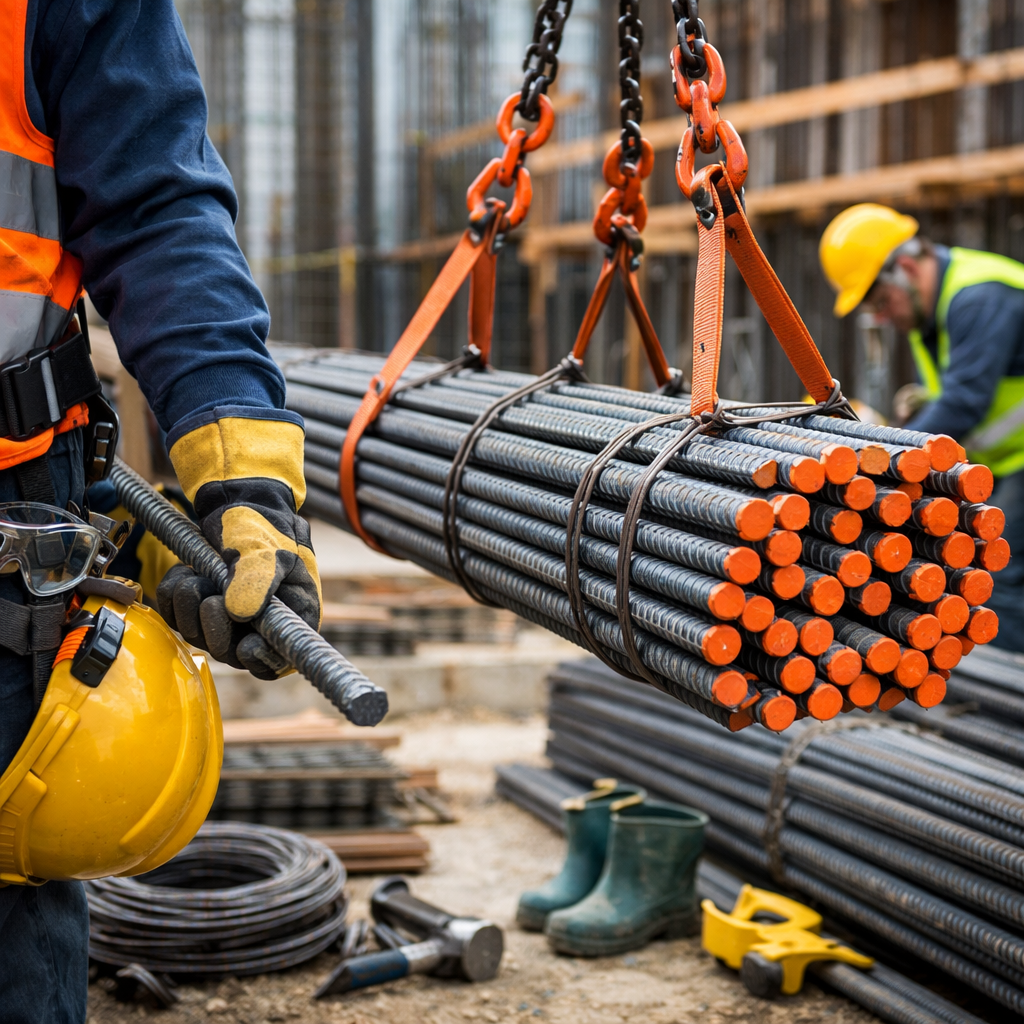
Practical examples are often the most effective way to reinforce safe behavior.
If two workers are carrying a long bar through a narrow access route, they should first check for trip hazards, confirm a clear travel path, coordinate verbal signals, and keep hands away from pinch points when setting the bar down.
If bundles are being unloaded by crane, no worker should stand beneath the load or place hands between the bundle and a fixed surface.
These are simple actions, but they are central to reliable rebar handling safety procedures.
PPE and Safe Work Practices for Rebar Handling Safety Procedures
Personal protective equipment is the last line of defense, but it remains essential in rebar operations.
Workers handling reinforcing steel should wear PPE suited to cutting hazards, impact hazards, and site conditions.
Recommended PPE for rebar tasks
| Task or Hazard | Recommended PPE | Purpose |
|---|---|---|
| General handling and carrying | Cut-resistant gloves, hard hat, safety boots | Protects hands, head, and feet from sharp edges and dropped bars |
| Cutting or grinding rebar | Safety glasses, face shield, hearing protection | Reduces risk from flying particles and noise |
| Working around suspended loads | High-visibility clothing, hard hat, boots | Improves visibility and impact protection |
| Wet, muddy, or uneven terrain | Slip-resistant boots | Helps prevent slips and loss of footing |
PPE alone will not prevent incidents if workers use poor lifting methods or work in disorganized areas.
Safe work practices must support the equipment being worn.
Key practices include:
- Inspect rebar bundles, tie wires, slings, hooks, and lifting devices before use
- Keep access routes and laydown areas clear of scrap, wire, and offcuts
- Use team lifting or mechanical aids for long, heavy, or awkward bars
- Cap exposed vertical rebar with approved protective caps
- Never throw rebar from heights or drop it into work zones below
- Secure stored bundles to prevent rolling or collapse
- Maintain safe distances from energized lines during crane or boom operations
On many projects, a short pre-task checklist helps crews stay focused.
Our construction site housekeeping checklist and manual material handling safety tips pages are useful internal references that support these daily controls.
Storage, Movement, and Site Controls
Storage and movement are where many rebar incidents begin.
If bundles are stacked on uneven ground, stored too high, or placed where vehicles and pedestrians mix, the chance of collapse or struck-by injury increases.
Rebar handling safety procedures should therefore define exactly how steel is received, stacked, accessed, and transported.
Storage rules that improve safety
Rebar should be stored on stable dunnage or racks to keep it off the ground and easier to inspect.
Bundles should be secured against rolling, and stack heights should match the site plan and manufacturer or supplier guidance.
Different sizes and lengths should be separated and labeled to reduce unnecessary sorting by hand.
Vertical protrusions must be capped wherever there is a risk of contact or fall onto exposed ends.
Movement and lifting controls
Mechanical handling should be used whenever reasonably practicable.
Forklifts, cranes, and purpose-designed lifting attachments reduce manual strain, but only when operated by trained and authorized workers.
Loads should be balanced, properly slung, and controlled with tag lines where needed.
Travel paths should be barricaded or otherwise controlled so workers do not enter lifting zones.
A common practical example involves unloading a truck delivering mixed bar lengths.
Instead of having laborers drag bars from the trailer by hand, a safer process is to isolate the unloading area, inspect the rigging, lift matched bundles mechanically, and place them directly into designated laydown zones by size.
This reduces handling frequency, lowers strain risk, and helps prevent pinch-point injuries.
Additional guidance on material handling and construction hazards can also be reviewed through NIOSH construction safety resources.
Training, Compliance, and Continuous Improvement
Training is what turns written rules into consistent field performance.
Workers should be trained not only on how to lift and carry rebar, but also on site traffic management, exclusion zones, impalement protection, rigging basics, and incident reporting.
Supervisors should verify competency, especially where cranes, forklifts, cutting tools, and elevated work are involved.
Compliance matters because rebar work intersects several OHSE duties, including hazard identification, worker instruction, PPE use, equipment inspection, and fall or impalement protection.
Applicable requirements vary by jurisdiction, but employers are generally expected to provide a safe system of work, maintain equipment, and control known hazards.
OSHA standards are often referenced on U.S. projects, while Canadian employers may look to CCOHS guidance and local regulatory requirements for safe practices.
To improve performance over time, review near misses, inspect storage areas, and update procedures after changes in layout, deliveries, or crew composition.
A short weekly inspection focused on protruding bars, damaged caps, unstable stacks, and housekeeping can identify risks before an injury occurs.
In conclusion, rebar handling safety procedures are most effective when they combine risk assessment, higher-level controls, proper PPE, worker training, and strong supervision.
From unloading and storage to tying and placement, every phase of the job benefits from planning and discipline.
When rebar handling safety procedures are clearly communicated and consistently enforced, employers protect workers, improve compliance, and create safer, more efficient construction sites.
No comments yet