
Silica Dust Control Measures for Construction Tasks: Practical Steps That Protect Workers

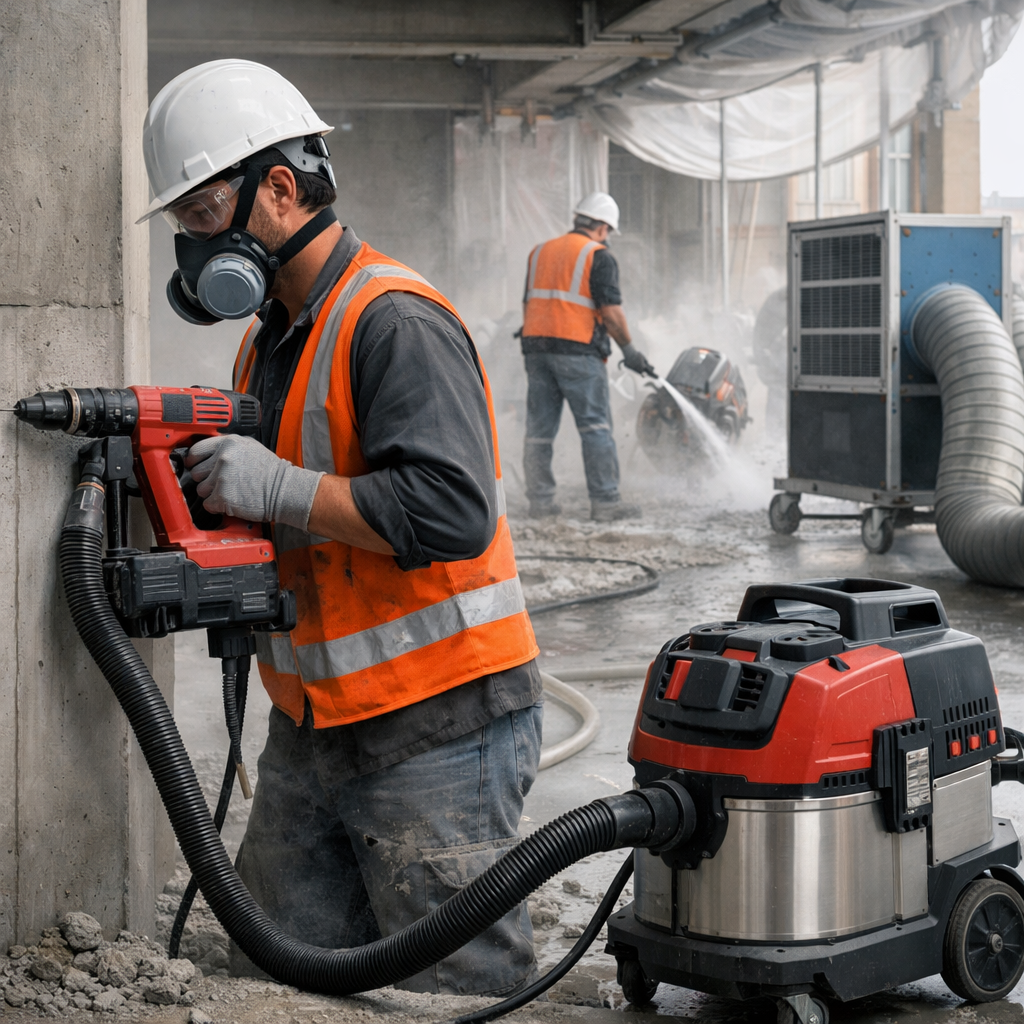
Silica dust control measures are essential on construction sites where workers cut, drill, grind, or clean materials such as concrete, brick, stone, and mortar.
When these materials are disturbed, they can release respirable crystalline silica, a fine dust that can travel deep into the lungs and cause serious illness over time.
Construction employers and supervisors need a clear plan to reduce exposure during routine tasks, especially high-dust activities like concrete cutting and drilling. Effective controls do more than support compliance. They help prevent silicosis, chronic obstructive pulmonary disease, lung cancer, and other long-term health problems recognized by organizations such as OSHA and the CCOHS.
This article explains the most important silica dust control measures for construction tasks, with a focus on cutting, drilling, cleanup, and respiratory protection. It also shows how to apply the hierarchy of controls so safety measures are practical, effective, and easier to maintain on real jobsites.
Why silica dust control measures matter on construction sites
Silica is a natural component of many construction materials. The danger is not usually the solid material itself, but the airborne dust created when workers saw concrete slabs, core drill walls, chase masonry, or sweep dried debris.
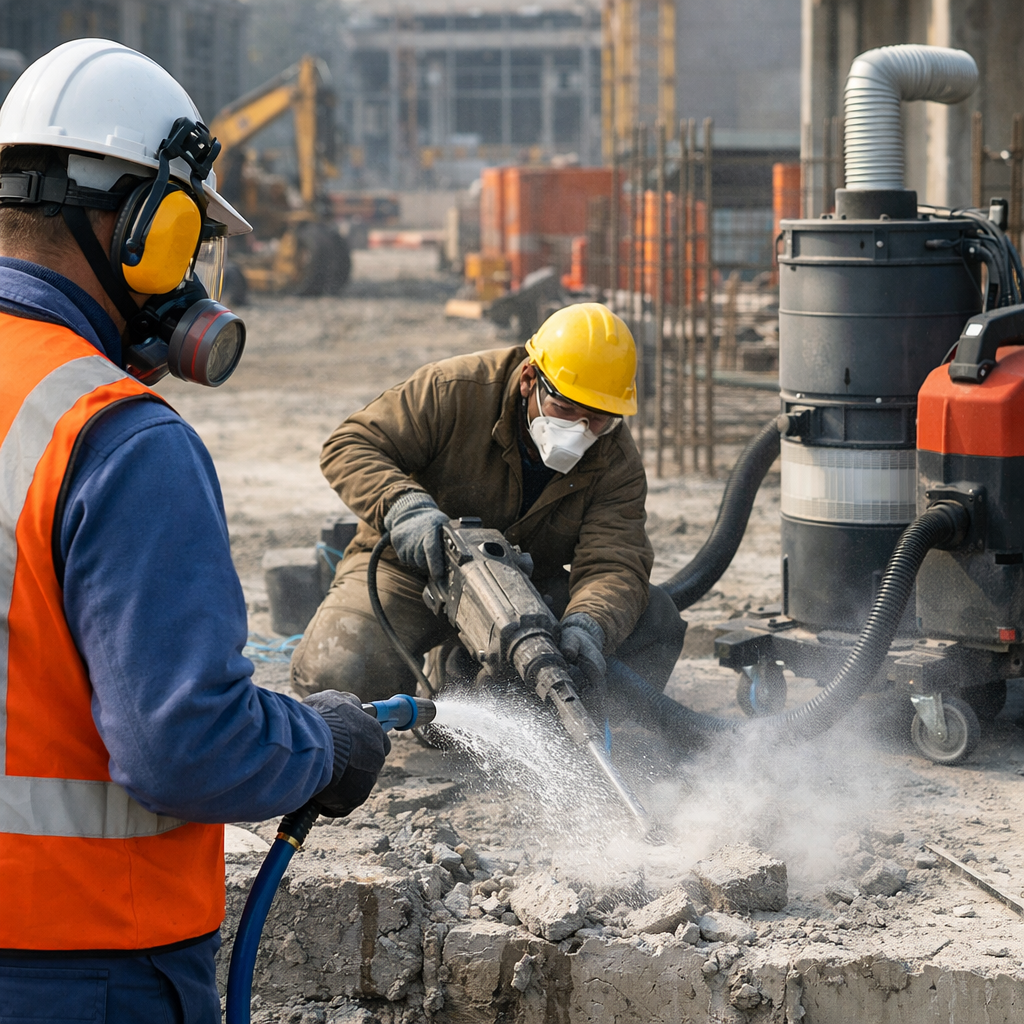
Because respirable silica particles are extremely small, workers may not realize how much they are inhaling. Dust clouds that seem minor can still create exposure levels above legal limits, especially in enclosed or poorly ventilated areas.
The best silica dust control measures follow the hierarchy of controls. That means controlling the hazard at its source before relying only on personal protective equipment.
- Elimination or substitution: Use materials or methods that reduce dust where possible.
- Engineering controls: Apply water suppression, local exhaust ventilation, and dust collection systems.
- Administrative controls: Restrict access, schedule dusty work, train workers, and inspect tools and controls.
- Personal protective equipment: Use respirators when residual exposure remains.
For many companies, the biggest improvement comes from combining tool-mounted controls with strong work procedures. A quick review of workplace risk assessments and construction safety training basics can also help teams identify where silica exposure is most likely.
Silica dust control measures for cutting tasks
Cutting concrete, block, pavers, tile, and stone is one of the most common sources of silica exposure. Saws can release large amounts of dust in seconds, particularly during dry cutting.
The most effective silica dust control measures for cutting tasks usually involve wet methods or on-tool extraction systems designed for the specific equipment being used.

Use wet cutting whenever feasible
Wet cutting systems suppress dust at the point of generation by feeding water to the blade. This keeps fine particles from becoming airborne and is often the preferred control for outdoor and heavy-duty work.
To make wet cutting effective, the water flow needs to be consistent and directed properly. A weak trickle or clogged line can give crews a false sense of protection while dust continues to escape.
Workers should also manage slurry safely. If slurry dries on the ground and later gets swept or driven over, it can become an airborne silica hazard again.
Use saws with local exhaust ventilation
Where wet methods are not practical, saws with shrouds connected to HEPA-filtered dust extractors can significantly reduce airborne dust. This approach is especially useful indoors, on finished sites, or where water would create slip, electrical, or contamination hazards.
The vacuum must match the tool and maintain sufficient airflow. Hoses, seals, and filters should be inspected before use, and dust containers should be emptied using low-dust procedures.
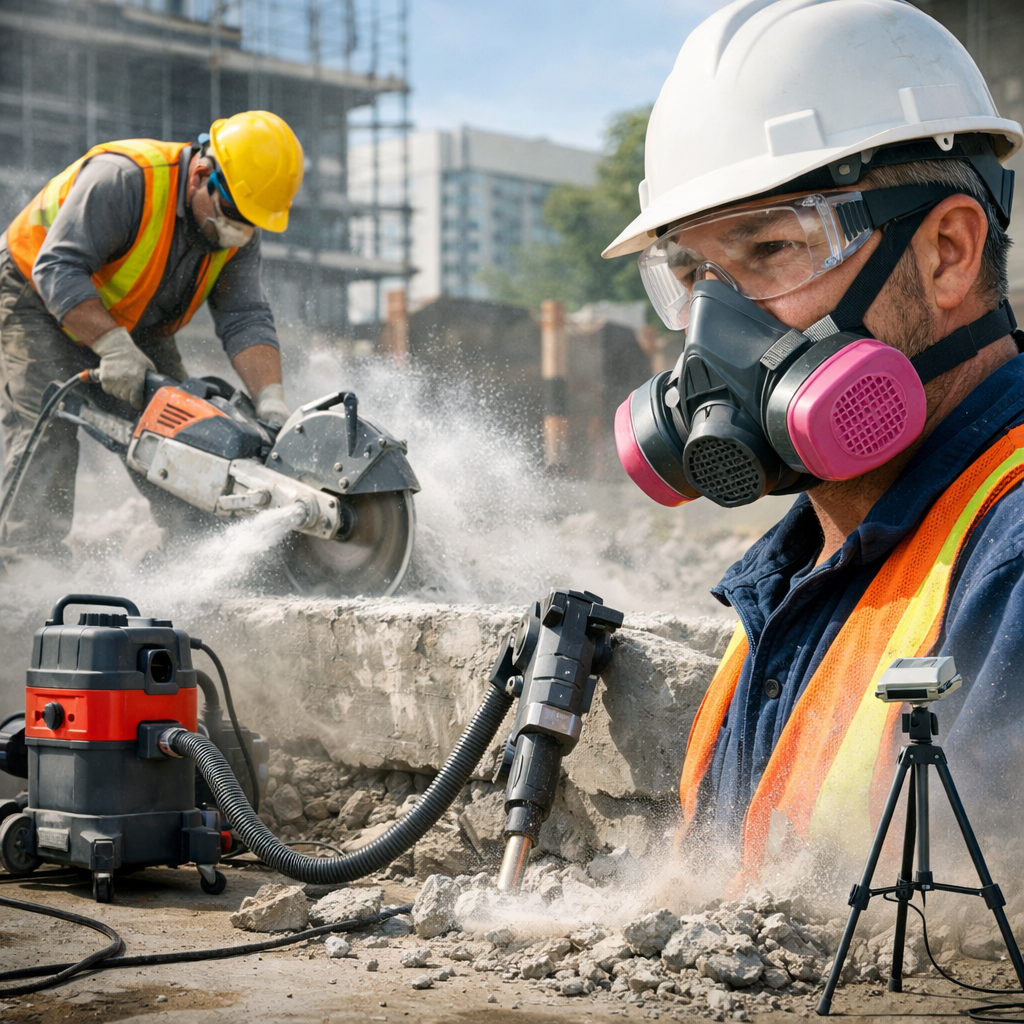
Dry cutting without a properly functioning dust collection system should be avoided whenever possible.
Set up cutting areas to limit exposure
Even good equipment can be less effective if the task is poorly organized. Isolate cutting zones, keep other trades away, and position workers upwind when outdoors.
Inside buildings, improve air movement where possible and avoid performing high-dust cutting near occupied work areas. Administrative planning is a simple but often overlooked part of silica dust control measures.
Silica dust control measures for drilling and coring
Drilling into concrete and masonry can release concentrated dust directly into the worker’s breathing zone. This is especially true for overhead drilling, anchor installation, and repeated holes in enclosed spaces.
Reliable silica dust control measures for drilling include integrated dust extraction, dust collection attachments, and, in some cases, wet coring systems.
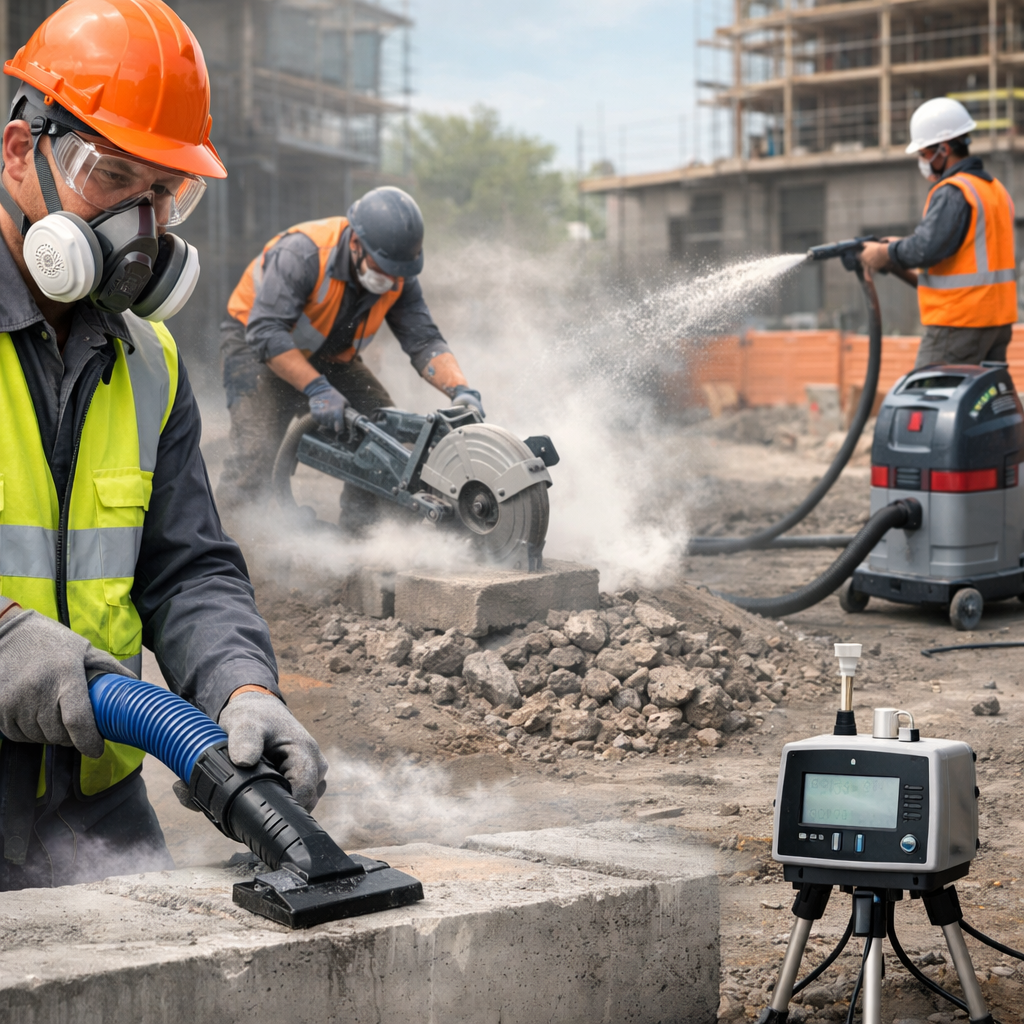
Use drill shrouds and HEPA vacuums
Hammer drills and rotary hammers should be fitted with manufacturer-approved shrouds or hollow drill bits connected to a HEPA vacuum system. These controls capture dust as it is created instead of allowing it to spread across the work area.
This is one of the most practical silica dust control measures because it protects the operator and reduces contamination for nearby trades.
Apply wet methods for coring tasks
For larger diameter holes and core drilling, wet methods are often highly effective. Water cools the bit and suppresses dust, though crews still need to contain slurry and protect surrounding surfaces.
Before drilling begins, confirm that power cords, water supply lines, and vacuum equipment will not create trip hazards or interfere with safe positioning.
Check equipment and worker technique
Dust controls only work when they are used correctly. Workers should keep shrouds flush to the surface, avoid removing guards, and make sure the vacuum is running before drilling starts.
Supervisors should watch for common failures such as overfilled vacuums, blocked filters, damaged hoses, or workers bypassing controls to save time. These small issues can quickly make silica dust control measures ineffective.
| Construction Task | Main Silica Risk | Recommended Control |
|---|---|---|
| Concrete cutting | High airborne dust at blade | Wet cutting or shrouded saw with HEPA extraction |
| Masonry drilling | Dust in breathing zone | Drill shroud or hollow bit with HEPA vacuum |
| Core drilling | Fine dust and slurry residue | Wet coring with slurry containment |
| Site cleanup | Dust re-suspension | HEPA vacuuming or wet cleanup |
Silica dust control measures for cleanup and housekeeping
Cleanup is often where exposure control breaks down. A task may be completed with good dust suppression, only for settled silica dust to become airborne again during housekeeping.
That is why cleanup procedures are a core part of silica dust control measures, not an afterthought.
Avoid dry sweeping and compressed air
Dry sweeping can launch fine silica particles back into the air, exposing not only the cleaner but everyone nearby. Compressed air can be even worse because it spreads contamination across a larger area.
Many regulations and guidance documents restrict these practices unless there is no feasible alternative and additional controls are in place. In most construction settings, safer methods are available.
Use HEPA vacuuming or wet cleanup
HEPA-filtered vacuums are one of the best options for collecting settled silica dust from floors, ledges, equipment, and enclosed workspaces. Wet sweeping or wet wiping may also be appropriate, provided wastewater and sludge are handled properly.
Good housekeeping should be scheduled throughout the shift, not just at the end of the day. Frequent cleanup prevents dust from accumulating and being disturbed by foot traffic, carts, or vehicles.
Handle waste carefully
Collected dust, debris, and slurry should be placed in suitable containers or bags and sealed where necessary. Workers emptying vacuums or disposing of waste may still be exposed if materials are dumped carelessly.
Containment, labeling where required, and clear disposal procedures help maintain effective silica dust control measures across the whole jobsite.
Respiratory protection and program essentials
Even strong engineering controls may not eliminate all exposure. Some tasks, short-duration work, emergency activities, and confined spaces may still require respiratory protection as part of the overall control plan.
Respirators should never be the only defense when better silica dust control measures are feasible, but they remain an important layer of protection for many construction crews.
Select the right respirator for the task
The type of respirator should match the exposure level, task duration, and site conditions. Disposable filtering facepiece respirators may be suitable for some lower-exposure situations, while half-mask elastomeric respirators with appropriate filters may be needed for more demanding work.
Selection should be based on applicable regulations, exposure assessments, and manufacturer guidance. Employers can also refer to NIOSH respirator resources for practical information.
Support respirators with a proper program
Respiratory protection only works when the program is managed correctly. That includes medical evaluation where required, fit testing, user training, cleaning, storage, and regular inspection.
Workers should understand seal checks, facial hair limitations, cartridge or filter replacement, and when to leave an area if dust controls fail. Supervisors should also know that discomfort, poor fit, and communication problems can lead to inconsistent use.
Train, monitor, and improve controls
The strongest silica dust control measures are supported by routine observation and continuous improvement. Train workers to recognize dust-generating tasks, use controls correctly, and report damaged equipment immediately.
Exposure monitoring, air sampling where needed, and periodic reviews of work practices can show whether current controls are doing the job. If dust remains visible or workers report symptoms, reassess the task and strengthen controls at the source.
In the end, effective silica dust control measures for construction tasks depend on planning, proper equipment, disciplined cleanup, and respiratory protection used within a full safety program. By focusing on cutting, drilling, housekeeping, and respirator use, construction teams can reduce exposure substantially and create healthier, more compliant jobsites.
No comments yet