
truck loading weight distribution safety: Preventing Rollovers, Injuries, and Costly Compliance Failures
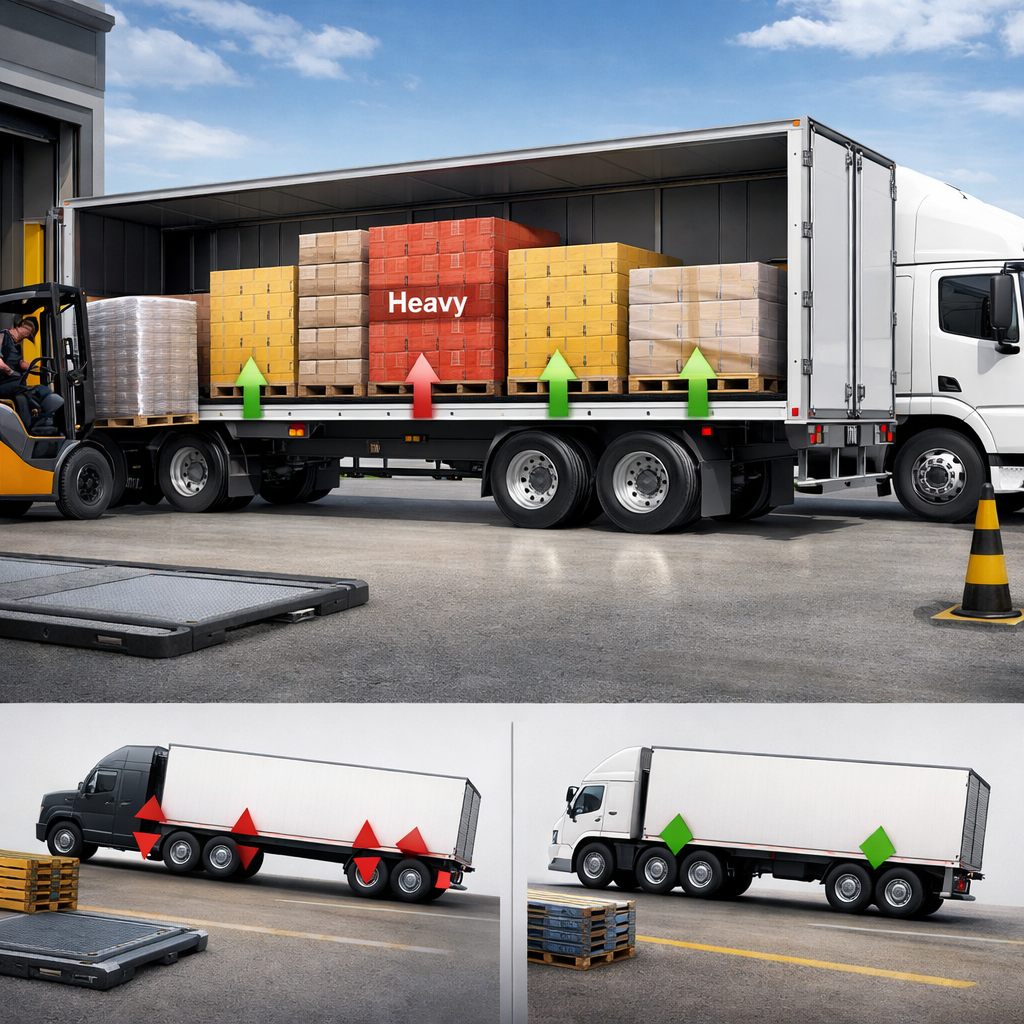

truck loading weight distribution safety is a critical OHSE issue that affects drivers, warehouse teams, forklift operators, transport managers, and everyone sharing the road.
When cargo is loaded unevenly, unsecured, or placed without regard to axle limits and vehicle stability, the result can be trailer rollovers, brake failure, steering problems, falling loads, and serious workplace injuries.
Safe loading is not just about fitting freight into a trailer. It is about controlling load placement, gross vehicle mass, axle weights, center of gravity, restraint methods, and communication between dispatch, loaders, and drivers.
It is also a legal duty under workplace health and safety and transport regulations. Guidance from organizations such as OSHA and CCOHS supports the need for planned loading, worker training, hazard assessment, and proper equipment use.
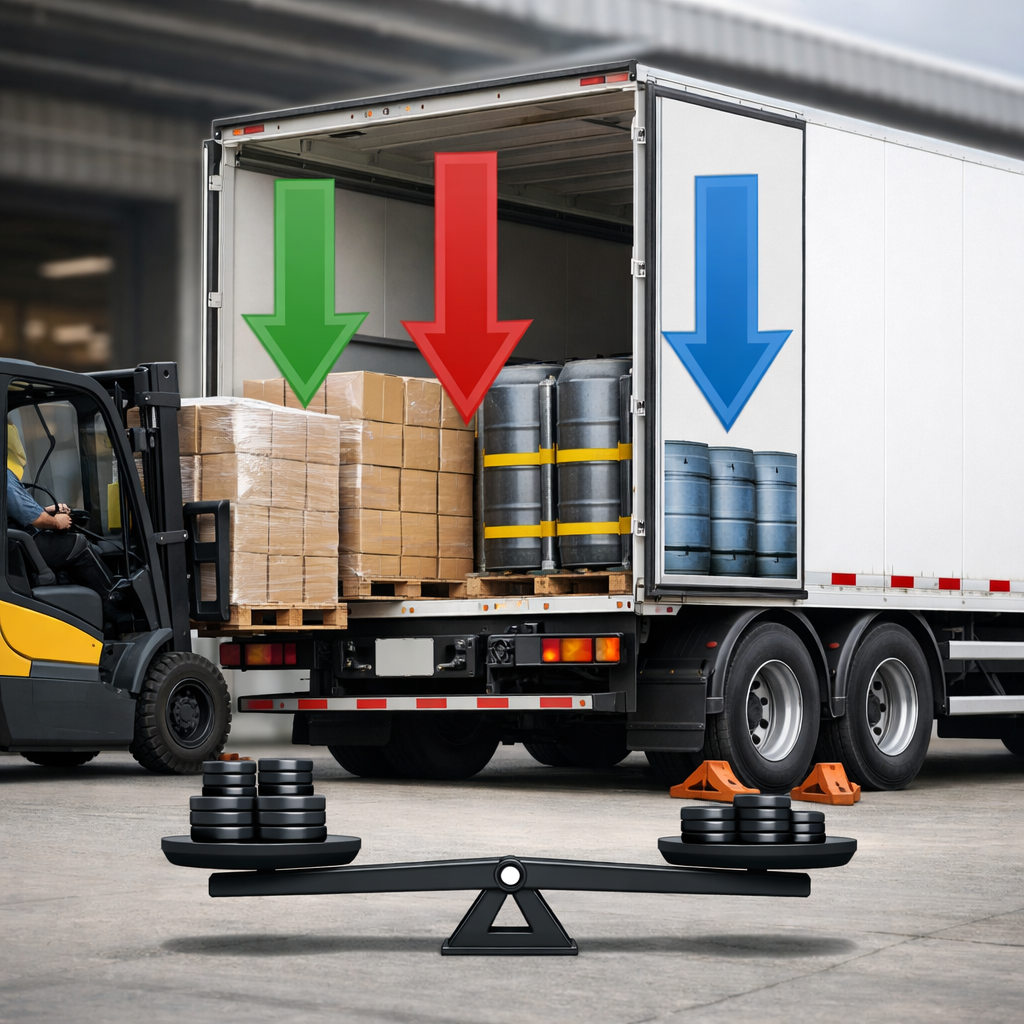
In practical terms, truck loading weight distribution safety helps businesses reduce incidents, protect loads, avoid fines, and keep deliveries moving efficiently. It also supports broader safety systems such as pre-start inspections, traffic management plans, and driver fatigue controls. If your site already uses a workplace safety checklist or a warehouse risk assessment, loading safety should be built into both.
Why truck loading weight distribution safety matters in daily operations
Poor weight distribution changes how a truck behaves on the road and during loading or unloading.
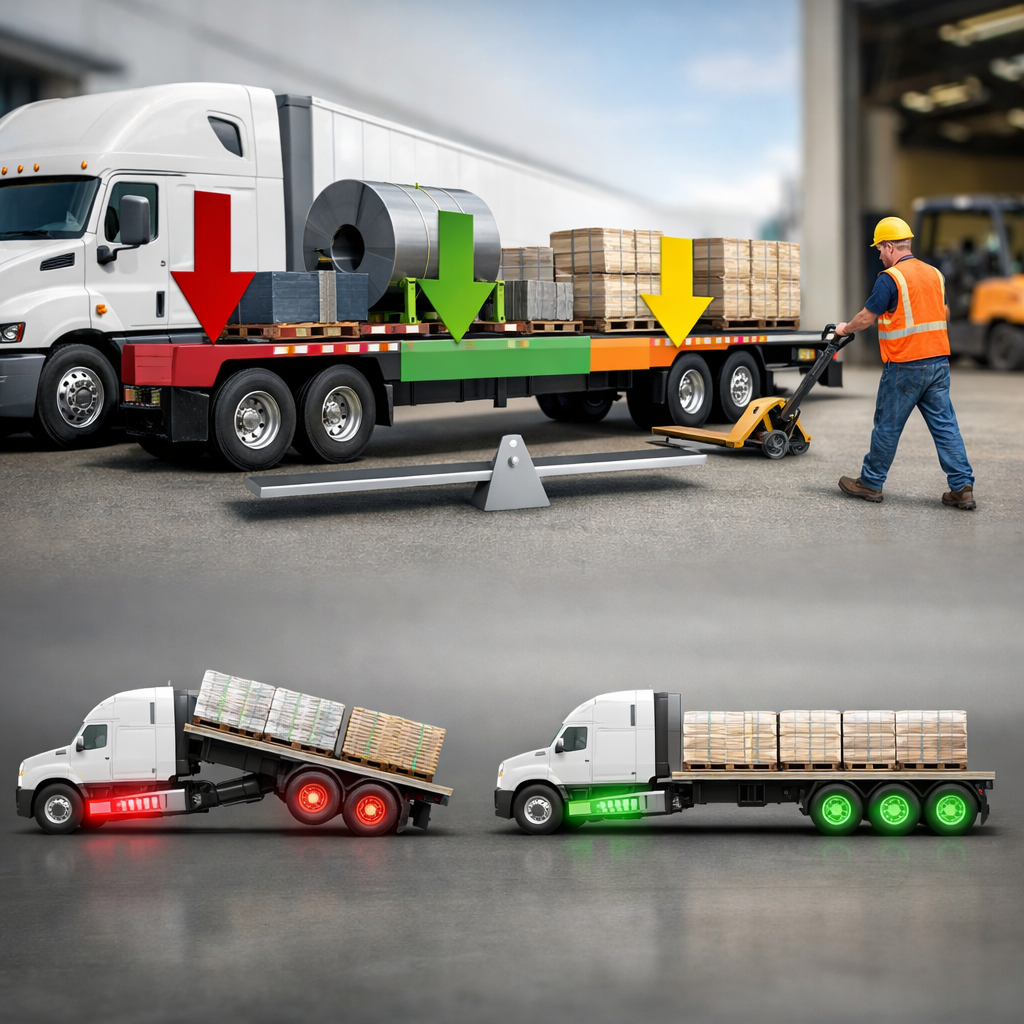
Too much weight at the front axle can affect steering response, while too much weight at the rear can reduce traction on steering wheels and increase stopping distance. If cargo sits too high or shifts in transit, the center of gravity rises and rollover risk increases, especially on corners, ramps, and uneven ground.
These risks are not limited to highways. They also appear in yards, docks, farms, construction sites, and warehouses where trucks are loaded by forklifts or pallet jacks. Workers can be struck by falling items, crushed by shifting freight, or injured when trying to manually reposition unstable loads.
Common risks linked to poor load distribution
- Vehicle rollover during cornering or lane changes
- Loss of steering control or reduced braking efficiency
- Axle overloads leading to tire, suspension, or brake damage
- Load shift during transit, braking, or unloading
- Falling objects injuring workers at docks or delivery points
- Trailer instability during forklift entry and exit
- Non-compliance with road transport and workplace safety laws
A simple example is a flatbed loaded with heavy steel coils concentrated on one side. Even if the total weight is legal, the uneven side loading can destabilize the vehicle in turns and place extreme stress on tie-down points.
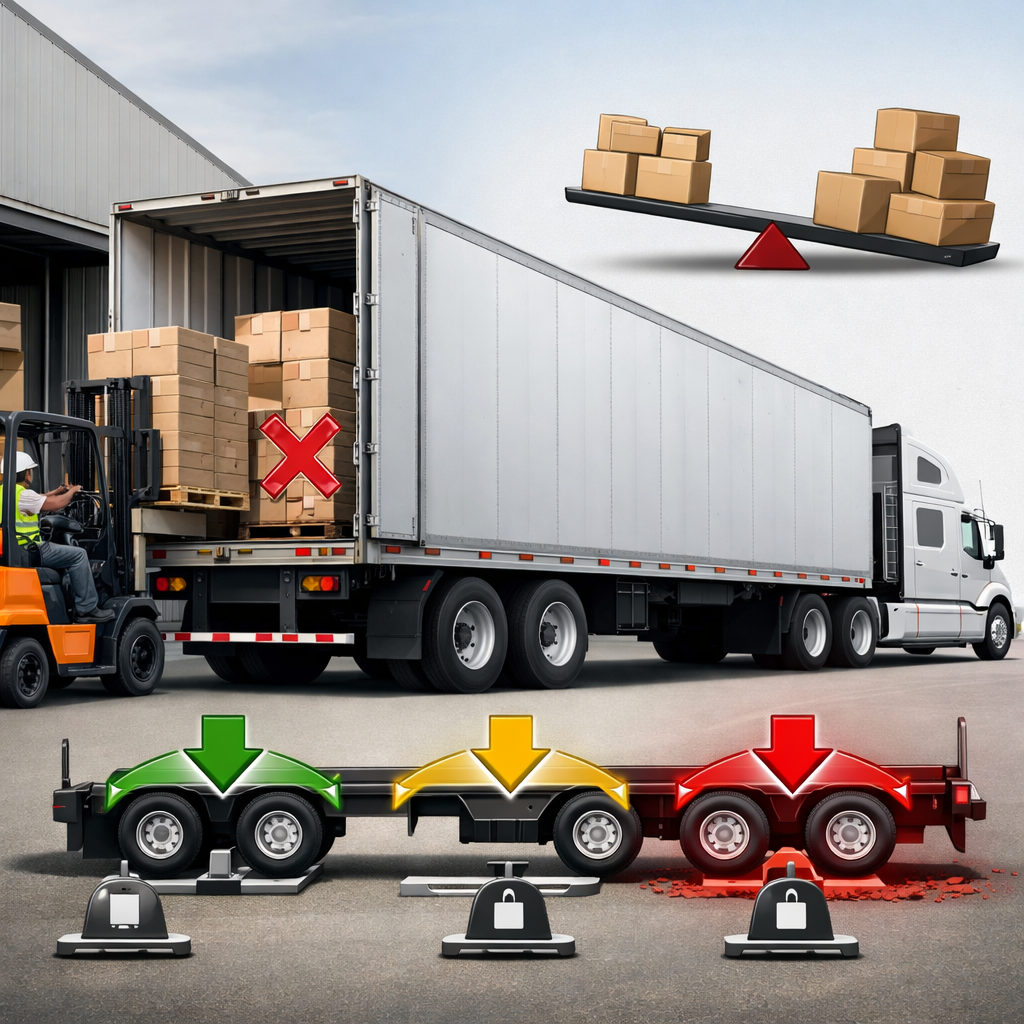
Another example is a box trailer where pallets are stacked high at the rear to save time. That arrangement may overload the rear axle group and create dangerous sway at highway speed.
Key principles of truck loading weight distribution safety
Good loading starts before the first pallet moves.
The load plan should consider the vehicle type, deck length, axle spacing, freight dimensions, weight of each item, unloading sequence, and restraint requirements. Drivers and loading teams need a shared understanding of where the weight should go and what the final configuration should look like.
Core loading principles
- Keep the load within legal gross vehicle and axle limits
- Distribute weight evenly from side to side
- Position heavier items low to reduce the center of gravity
- Place heavy freight over or between axle groups as appropriate
- Prevent gaps that allow movement during braking or turns
- Use rated restraints, blocking, bracing, or dunnage as needed
- Match loading order to delivery order where possible
Load restraint is closely tied to truck loading weight distribution safety. A balanced load that is poorly restrained can still shift and create a serious hazard.
For practical restraint guidance, many operators refer to national load restraint guides as well as industry-specific standards. OSHA materials on material handling and vehicle safety are also useful for site procedures and training expectations.
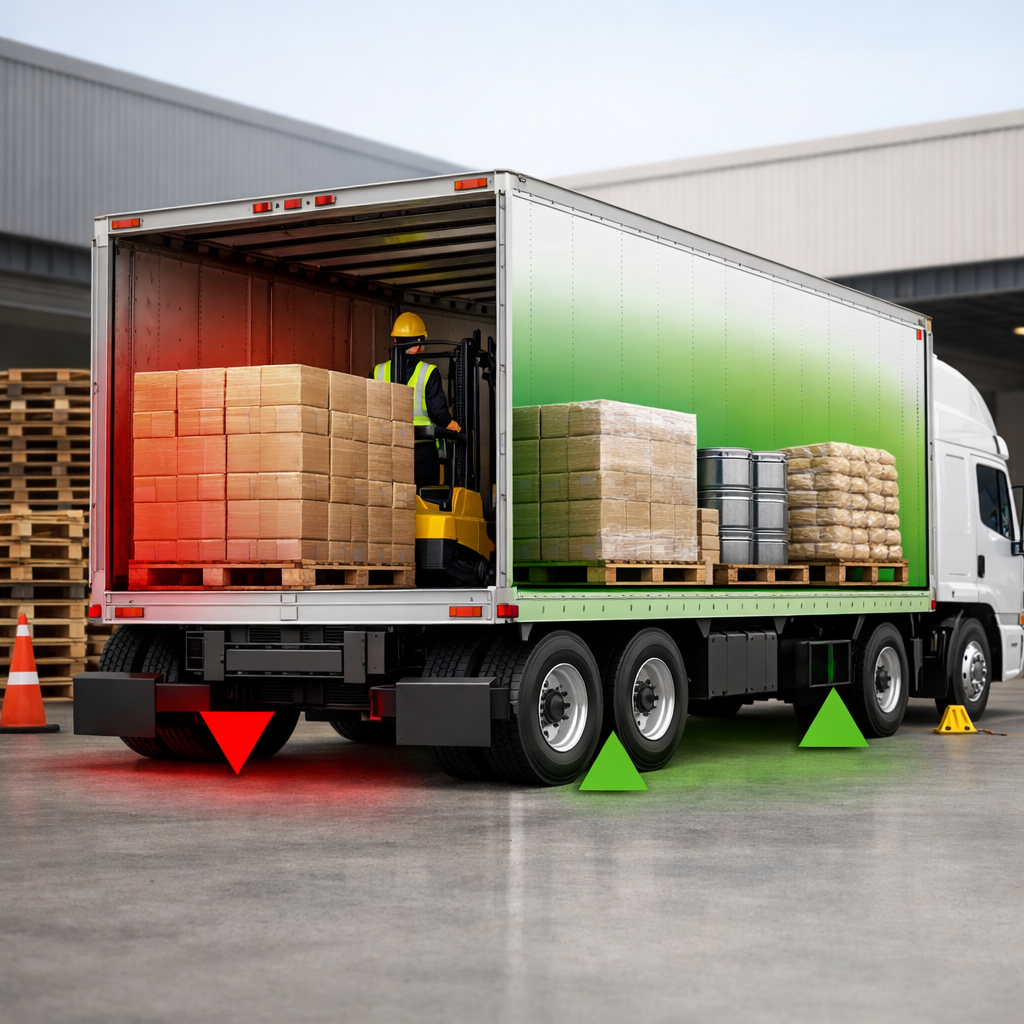
Simple load placement guide
| Loading factor | Unsafe practice | Safer practice |
|---|---|---|
| Side-to-side balance | Heavy items loaded on one side only | Distribute heavy items evenly across the deck or floor |
| Center of gravity | Heavy freight stacked high | Place heavier items low and stable |
| Axle loading | Weight concentrated at the rear | Position cargo to meet axle group limits |
| Load shift prevention | Loose pallets with open gaps | Use restraints, blocking, and close stacking where suitable |
| Unloading sequence | Freight placed without delivery planning | Plan load order to avoid risky repositioning later |
OHSE risks, PPE, and prevention measures for truck loading weight distribution safety
Truck loading weight distribution safety depends on both engineering and human controls.
Under the Hierarchy of Controls, the most effective approach is to eliminate or reduce the hazard through planning, equipment selection, and physical controls before relying on worker behavior alone.
Applying the Hierarchy of Controls
Elimination: Remove unnecessary manual handling by using pre-planned pallet configurations, pre-slung loads, or supplier packaging that supports stable transport.
Substitution: Use more stable packaging systems, slip-resistant pallets, or vehicles better suited to the load profile.
Engineering controls: Install dock locks, trailer supports, load-rated anchor points, anti-slip mats, weigh systems, and barriers separating pedestrians from loading plant.
Administrative controls: Develop loading procedures, axle weight checks, exclusion zones, traffic management rules, spotter protocols, and competency-based training.
PPE: Provide PPE as the last line of defense, not the primary control.
Recommended PPE for loading tasks
- High-visibility clothing for yard and dock visibility
- Safety boots with toe protection and slip-resistant soles
- Gloves suitable for load handling and restraint equipment
- Hard hats where overhead loading hazards exist
- Safety glasses when there is risk from straps, debris, or shifting materials
- Hearing protection in high-noise loading zones
PPE does not stop a truck from rolling over or a trailer from becoming unstable, but it can reduce injury severity during normal handling tasks and unexpected events.
Prevention also requires equipment checks. Forklifts should be operated within rated capacity, trailer floors should be inspected for damage, and load restraints should be checked for wear, cuts, missing tags, or deformation. A damaged strap or anchor point can fail under dynamic force even when the load looks secure at the dock.
Communication matters just as much. Drivers should confirm load weight, load position, route constraints, and any special handling issues before departure.
Warehouse teams should know whether the cargo is fragile, top-heavy, hazardous, or likely to move. Sites that manage multiple carriers often improve truck loading weight distribution safety by using standard loading diagrams and sign-off forms.
Compliance, inspections, and practical examples from the workplace
Compliance is a major part of truck loading weight distribution safety because transport incidents often trigger investigations from both road authorities and workplace regulators.
Employers must provide safe systems of work, training, supervision, and suitable equipment. Drivers also have responsibilities to inspect vehicles, confirm that loads are secure, and refuse unsafe departures where necessary.
What inspectors and auditors usually expect
- Documented loading and load restraint procedures
- Evidence of worker training and competency assessment
- Vehicle and trailer inspection records
- Load weight information and axle compliance checks
- Incident reporting and corrective action processes
- PPE availability and enforcement
- Traffic management and pedestrian separation controls
OSHA guidance on powered industrial trucks and material handling can support internal procedures, while CCOHS resources help employers strengthen training and hazard controls in Canadian workplaces. In many industries, regulator expectations also align with due diligence principles: if a risk is known, reasonable controls should be in place and actively monitored.
Practical workplace examples
Example 1: Palletized retail freight. A distribution center noticed frequent trailer sway complaints from drivers. Investigation found that heavy beverage pallets were loaded high and toward the rear to speed unloading. The site redesigned the load plan so dense pallets were placed lower and closer to axle centers, with lighter goods above and around them. Driver feedback improved immediately, and axle overload breaches dropped.
Example 2: Construction materials on a flatbed. Bundled timber and steel were being loaded without consistent dunnage placement. During one delivery, the load shifted under braking and damaged restraints. The contractor introduced a standard loading template, mandatory restraint inspection, and supervisor sign-off for mixed loads. This improved truck loading weight distribution safety and reduced rework at delivery points.
Example 3: Warehouse loading dock operations. A forklift entered a trailer that was not adequately supported at the dock, causing trailer movement and instability. The business installed dock locking systems, required wheel chocks where needed, and added a red-green light communication system. This addressed both load distribution issues and vehicle movement hazards during loading.
Regular audits are essential. Businesses should review near misses, weighbridge data, damaged freight reports, and driver complaints for patterns that point to poor loading practices. Corrective actions should then be tracked to completion.
In conclusion, truck loading weight distribution safety is far more than a transport detail. It is a core OHSE responsibility that protects workers, drivers, the public, and the business itself.
By identifying risks early, applying the Hierarchy of Controls, using suitable PPE, following compliance requirements, and learning from practical workplace examples, employers can significantly reduce rollover risk, load shift incidents, and manual handling injuries.
The most effective programs combine planning, training, supervision, inspection, and clear communication. When truck loading weight distribution safety becomes part of everyday operations rather than a last-minute check, safer journeys and safer workplaces follow.
No comments yet