
Ventilation System Checks: Practical Steps to Improve Indoor Air Quality
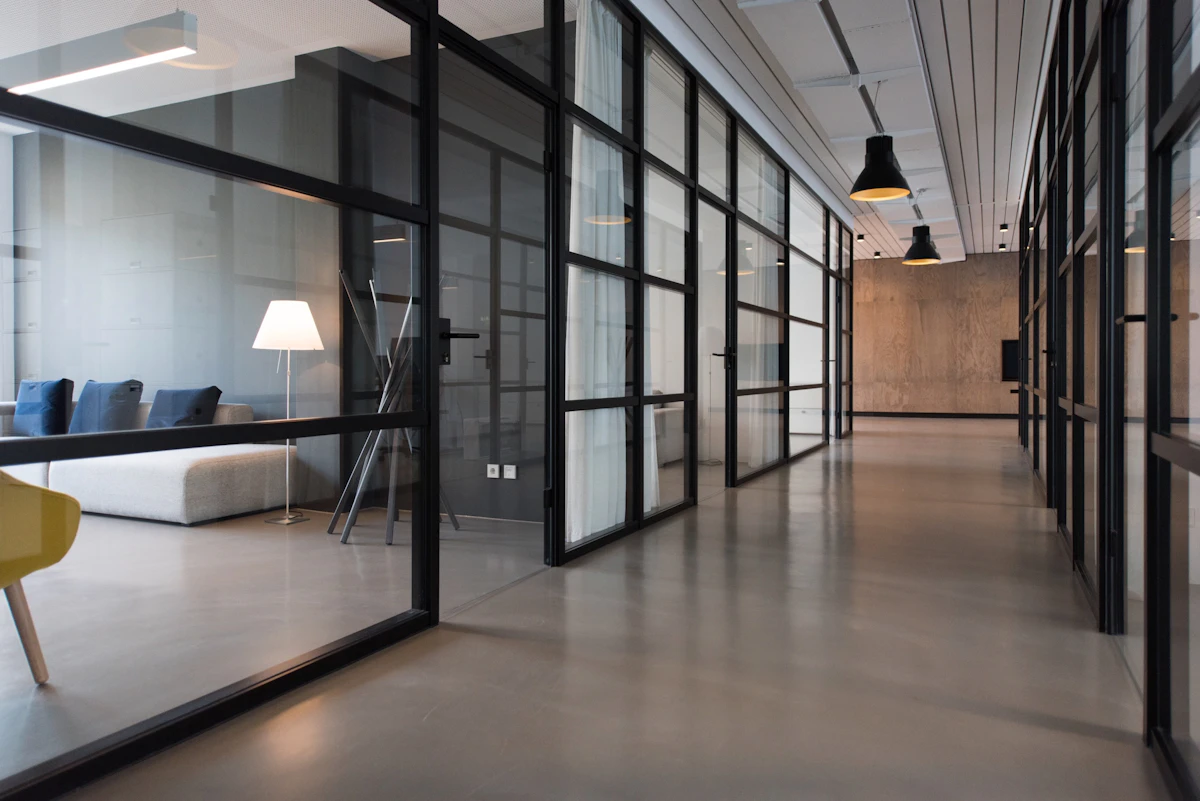
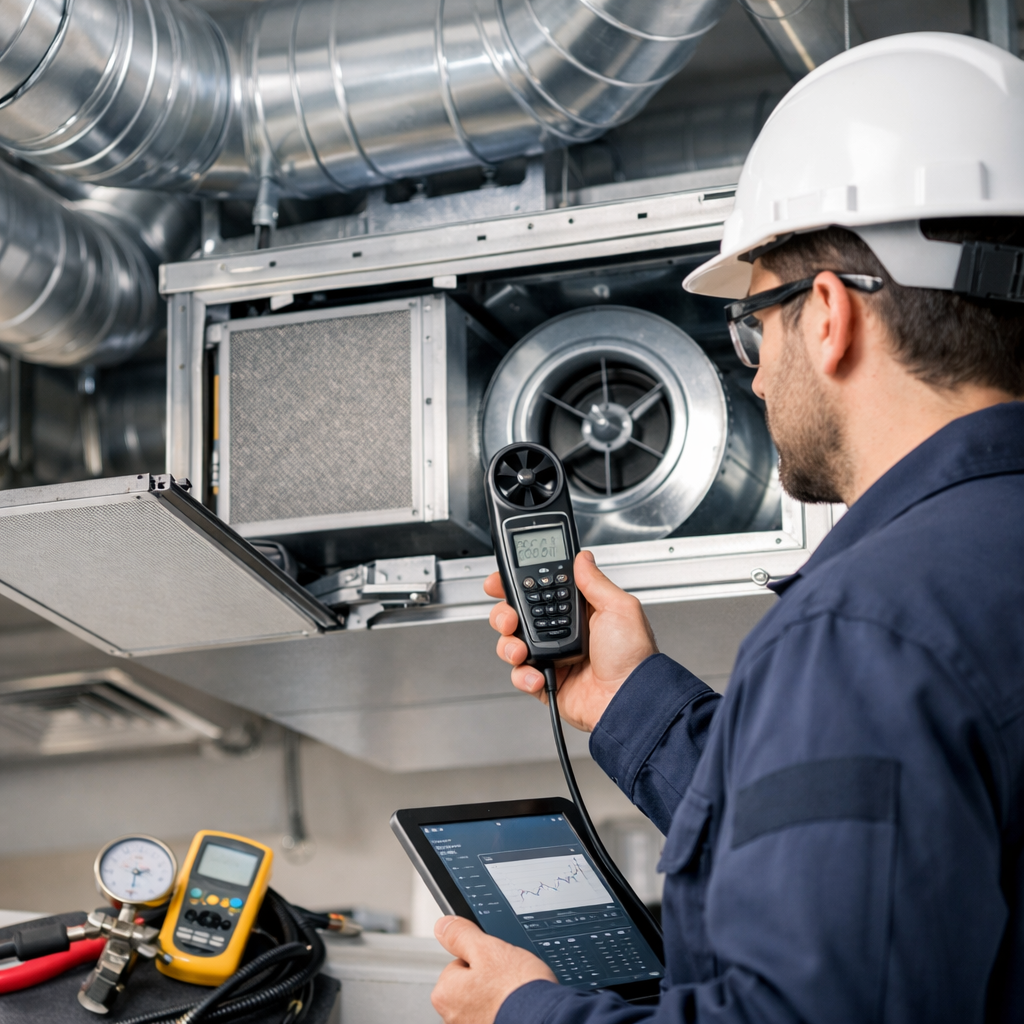
Ventilation system checks are one of the most practical ways to improve indoor air quality, support comfort, and reduce day-to-day exposure to airborne contaminants.
In offices, schools, clinics, warehouses, and shared commercial spaces, a ventilation system does far more than move air. It helps control temperature, humidity, odors, dust, and the buildup of indoor pollutants that can affect workers, visitors, and building performance.
When airflow is poor or maintenance is delayed, people often notice the signs quickly. Rooms may feel stuffy, hot and cold spots may appear, and complaints about headaches, fatigue, or lingering smells can become more frequent.
That is why regular inspections matter. Practical ventilation system checks can help building managers spot issues early, protect occupant health, support regulatory compliance, and avoid expensive breakdowns later.
- Why ventilation system checks matter for comfort, exposure reduction, and maintenance
- Core ventilation system checks every facility should carry out
- How ventilation system checks support workplace health and safety
- Simple schedule for ventilation system checks and common warning signs
- Making ventilation system checks part of a stronger indoor air quality plan
Why ventilation system checks matter for comfort, exposure reduction, and maintenance
Indoor air quality is closely tied to how well a ventilation system brings in outdoor air, filters contaminants, and distributes conditioned air across a building. Even a well-designed system can underperform if filters are clogged, dampers are stuck, fans are worn, or air pathways are blocked.
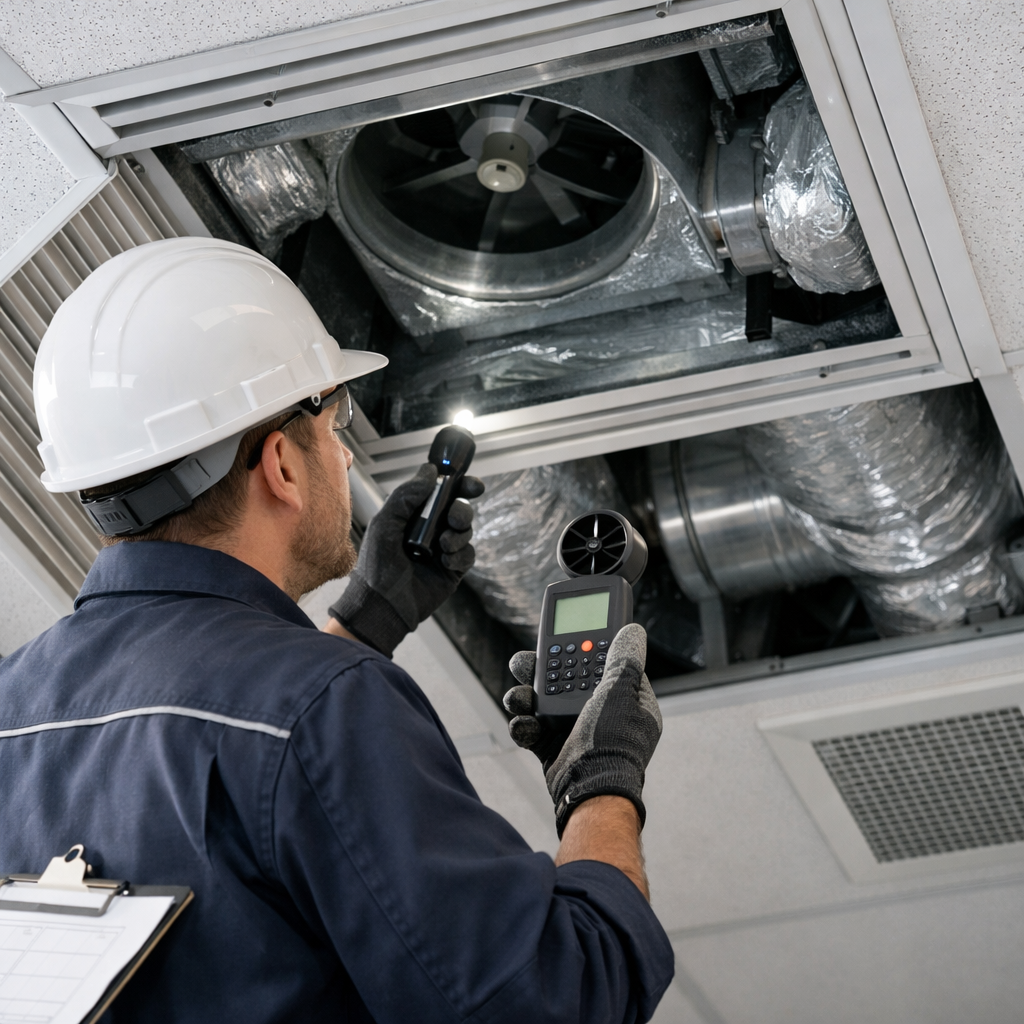
From a comfort perspective, proper ventilation helps maintain stable temperatures and reduce excess humidity. This can prevent rooms from feeling stale or damp and can limit issues such as condensation, mold growth, and uneven airflow.
From an exposure reduction standpoint, ventilation system checks help identify conditions that may increase contact with dust, fumes, cleaning chemical vapors, carbon dioxide, or other airborne irritants. Ventilation is also an important engineering control within the Hierarchy of Controls, especially when elimination or substitution is not fully possible in a workplace.
Maintenance is the third key benefit. A neglected system typically works harder, uses more energy, and wears out faster. Routine checks can extend equipment life, improve reliability, and reduce emergency service calls.
Organizations such as CCOHS and OSHA both emphasize the importance of ventilation in creating healthier indoor environments. In practical terms, this means inspections should be part of a broader indoor air quality and preventive maintenance program rather than a one-time task.
Core ventilation system checks every facility should carry out
Air filters, intake points, and airflow paths
Start with the basics. Filters should be inspected on a set schedule and replaced when loaded, damaged, or no longer performing to specification. Dirty filters restrict airflow and can reduce both comfort and filtration efficiency.
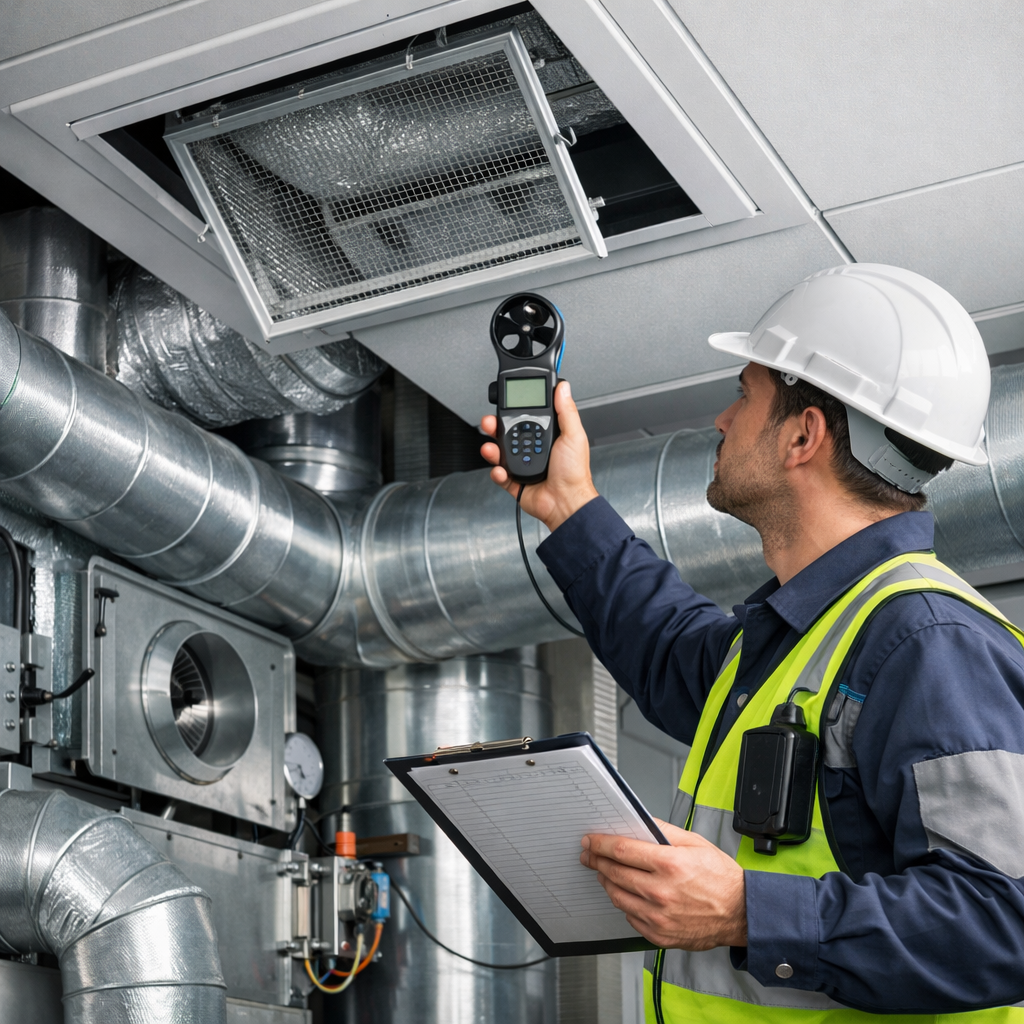
Outdoor air intakes should also be checked for debris, standing water, bird nesting, blocked grilles, or nearby contamination sources such as idling vehicles. If the intake is compromised, pollutants may be drawn into the building before they ever reach the occupied space.
Inside the building, supply and return vents should remain open and unobstructed. Furniture, storage, and temporary partitions can interfere with air distribution and create dead zones where stale air builds up.
Fans, belts, dampers, and controls
Mechanical components often reveal the first signs of trouble. Listen for unusual fan noise, check belts for wear and tension, and confirm that motors are operating as intended.
Dampers should open and close correctly so the system can balance outdoor and return air. If dampers stick or controls fail, ventilation rates may drop without being obvious to occupants until comfort complaints begin.
Control settings deserve close attention as well. Schedules, setpoints, and sensors should reflect actual building use. A system programmed for low occupancy may not provide enough fresh air during busy periods, meetings, or production peaks.
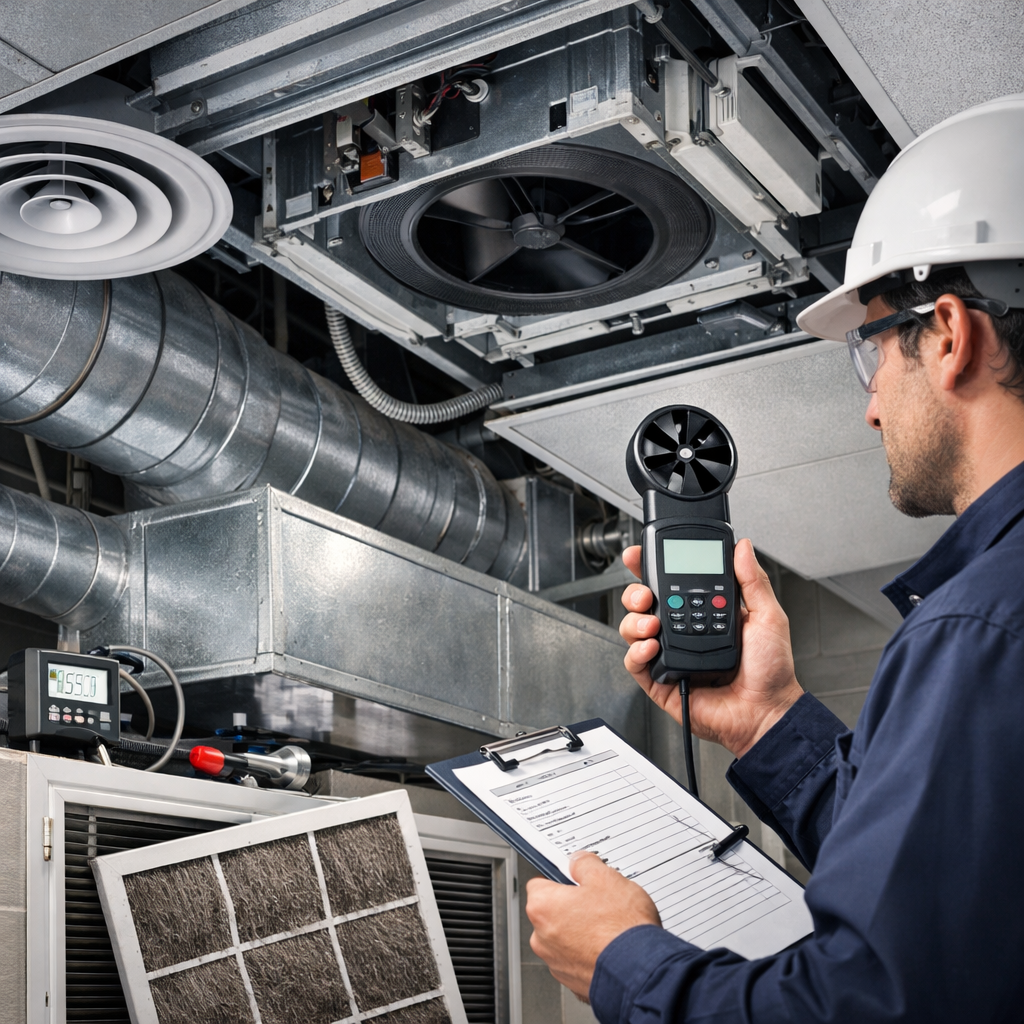
Practical inspection points to include
- Check filter condition and replacement dates.
- Inspect outdoor air intakes for dirt, obstructions, and moisture issues.
- Confirm supply and return vents are clean and not blocked.
- Review fan operation, belts, bearings, and unusual vibration.
- Test dampers, actuators, and control responses.
- Look for signs of water leaks, mold, or condensate drain problems.
- Verify thermostats, humidity sensors, and building automation settings.
- Document complaints from occupants and compare them with inspection findings.
How ventilation system checks support workplace health and safety
In real workplaces, ventilation problems rarely stay isolated to equipment rooms. They show up where people work. An office may experience drowsiness and poor concentration in crowded meeting rooms. A retail space may struggle with odors and uneven temperatures near entrances. A workshop may allow dust or process fumes to drift beyond the point of generation if general ventilation or local exhaust is not functioning well.
This is where practical inspections connect directly to occupational health and safety. If a building houses printing, cleaning, maintenance, laboratory, or light manufacturing activities, airborne contaminants may need tighter control. In these cases, general HVAC performance and local exhaust ventilation should both be assessed.
Using the Hierarchy of Controls, ventilation sits under engineering controls. It should support, not replace, safer product selection, process isolation, and sound work practices. For example, substituting a lower-emission chemical can reduce the overall burden on ventilation, while source capture can prevent contaminants from spreading through a room.
Workplaces should also have a clear reporting process for IAQ concerns. Staff should know how to report odors, stuffiness, visible dust, or persistent discomfort. Those reports can guide targeted ventilation system checks and help maintenance teams identify recurring patterns by location or time of day.
For practical guidance on building operations and healthy indoor spaces, many facility teams also refer to EPA indoor air quality resources. Internally, it also helps to connect inspections with your own preventive maintenance checklist and workplace air quality policy.
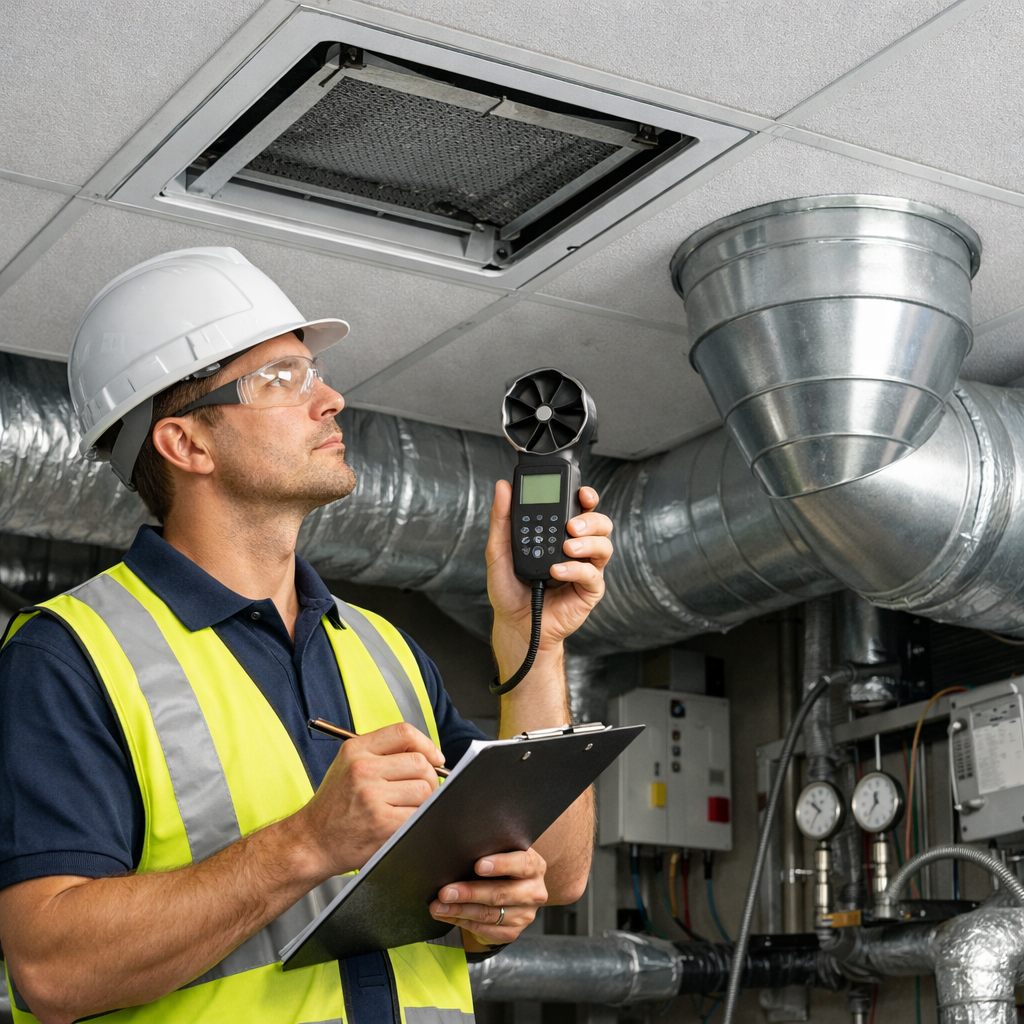
Simple schedule for ventilation system checks and common warning signs
A strong inspection program is easier to manage when responsibilities and timing are clear. Some items need a quick visual review every week, while others may require monthly, seasonal, or annual testing by qualified personnel.
The right frequency depends on occupancy levels, building age, outdoor conditions, and the nature of indoor activities. High-use buildings or sites with dust, moisture, or process emissions often need more frequent reviews.
| Check Item | Suggested Frequency | Why It Matters |
|---|---|---|
| Supply and return vent inspection | Weekly to monthly | Helps identify blockages, dirt buildup, and poor airflow distribution |
| Filter inspection | Monthly | Supports airflow, filtration efficiency, and equipment protection |
| Outdoor air intake check | Monthly | Prevents debris, moisture, and contaminants from entering the system |
| Fan, belt, and damper inspection | Quarterly | Detects wear, control failure, and ventilation imbalance |
| Sensor and control verification | Quarterly to seasonal | Keeps ventilation aligned with occupancy and operating conditions |
| Full HVAC performance review | Annually | Supports long-term indoor air quality, efficiency, and maintenance planning |
Warning signs that should trigger immediate follow-up
Not every issue can wait for the next scheduled inspection. Some signs point to an urgent need for corrective action, especially when they affect comfort or indicate elevated exposure risk.
- Persistent stuffy air or elevated carbon dioxide readings in occupied rooms
- Repeated complaints about headaches, eye irritation, or fatigue in the same area
- Visible mold, damp surfaces, or musty odors near vents or ceiling spaces
- Unusual dust accumulation despite regular cleaning
- Uneven temperatures, weak airflow, or rooms that never seem to ventilate properly
- Loud fan noise, vibration, or evidence of failing components
When these conditions appear, document them, inspect the affected zone, and confirm whether the issue is mechanical, operational, or related to building use. In some cases, airflow testing, balancing, or a more detailed indoor air quality assessment may be needed.
Making ventilation system checks part of a stronger indoor air quality plan
The most effective approach is to treat inspections as part of an ongoing building health strategy. That means keeping maintenance records, tracking occupant concerns, reviewing trends, and ensuring contractors and internal teams work from the same standards.
It also means looking beyond the HVAC unit itself. Housekeeping, moisture control, occupancy patterns, renovation activity, and product selection all affect indoor air quality. A clean system will still struggle if the building has chronic water intrusion or if vents are routinely blocked by storage.
For building owners and facility managers, the value is practical and measurable. Better air distribution improves comfort. Cleaner, well-maintained systems help reduce exposure to common indoor contaminants. Early repairs lower the chance of costly failures and can improve energy performance at the same time.
In the long run, ventilation system checks are not just a maintenance task. They are a direct investment in healthier indoor spaces, safer workplaces, and more reliable building operations. By making ventilation system checks routine, facilities can support comfort, exposure reduction, and preventive maintenance in a way that benefits everyone inside the building.
No comments yet