
Workplace Housekeeping Standards That Prevent Everyday Incidents

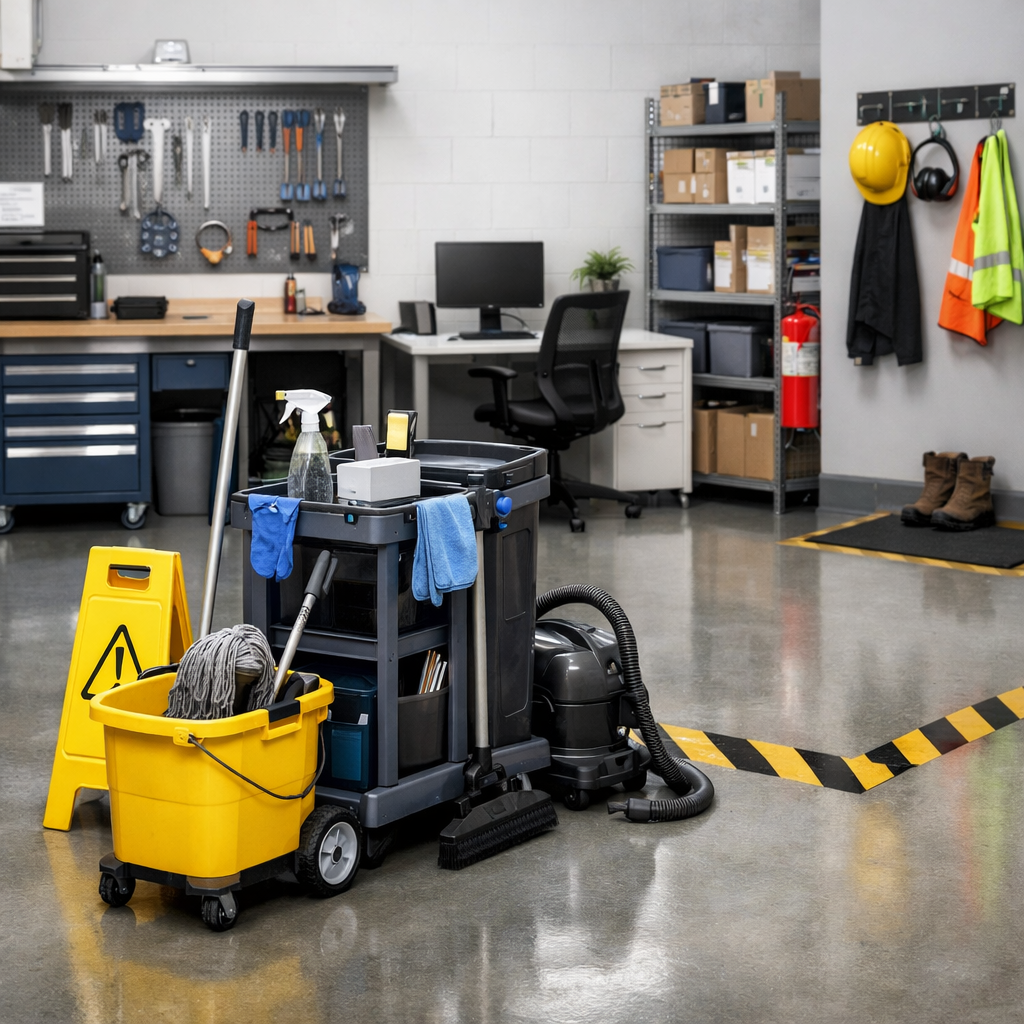
Workplace housekeeping standards are one of the most practical ways to prevent everyday incidents before they grow into injuries, downtime, or property damage.
Across offices, warehouses, factories, construction sites, laboratories, and retail spaces, good housekeeping supports safer movement, cleaner work areas, and better control of routine hazards.
It is easy to think of housekeeping as basic tidying, but in occupational health and safety, it is a foundational control.
It reduces slip, trip, and fall risks, helps prevent fires, keeps exits clear, supports infection control, protects equipment, and makes hazards easier to see and correct.
That is why organizations such as OSHA and CCOHS consistently reinforce housekeeping as part of a strong safety system.
- Why workplace housekeeping standards are a foundational control
- Common incidents reduced by workplace housekeeping standards
- Core workplace housekeeping standards every site should apply
- How to implement workplace housekeeping standards effectively
- Creating a culture where housekeeping prevents everyday incidents
Why workplace housekeeping standards are a foundational control
Workplace housekeeping standards matter because they work across nearly every industry and task.
Unlike specialized controls that apply only to one machine, process, or material, housekeeping affects the entire work environment every day.
A cluttered aisle can cause a sprain in a warehouse, a blocked emergency exit can slow evacuation in an office, and poor waste storage can increase fire risk in a workshop.
These are different settings, but the same housekeeping principle applies: remove unnecessary materials, keep areas organized, and maintain safe access.
Housekeeping also aligns well with the Hierarchy of Controls.
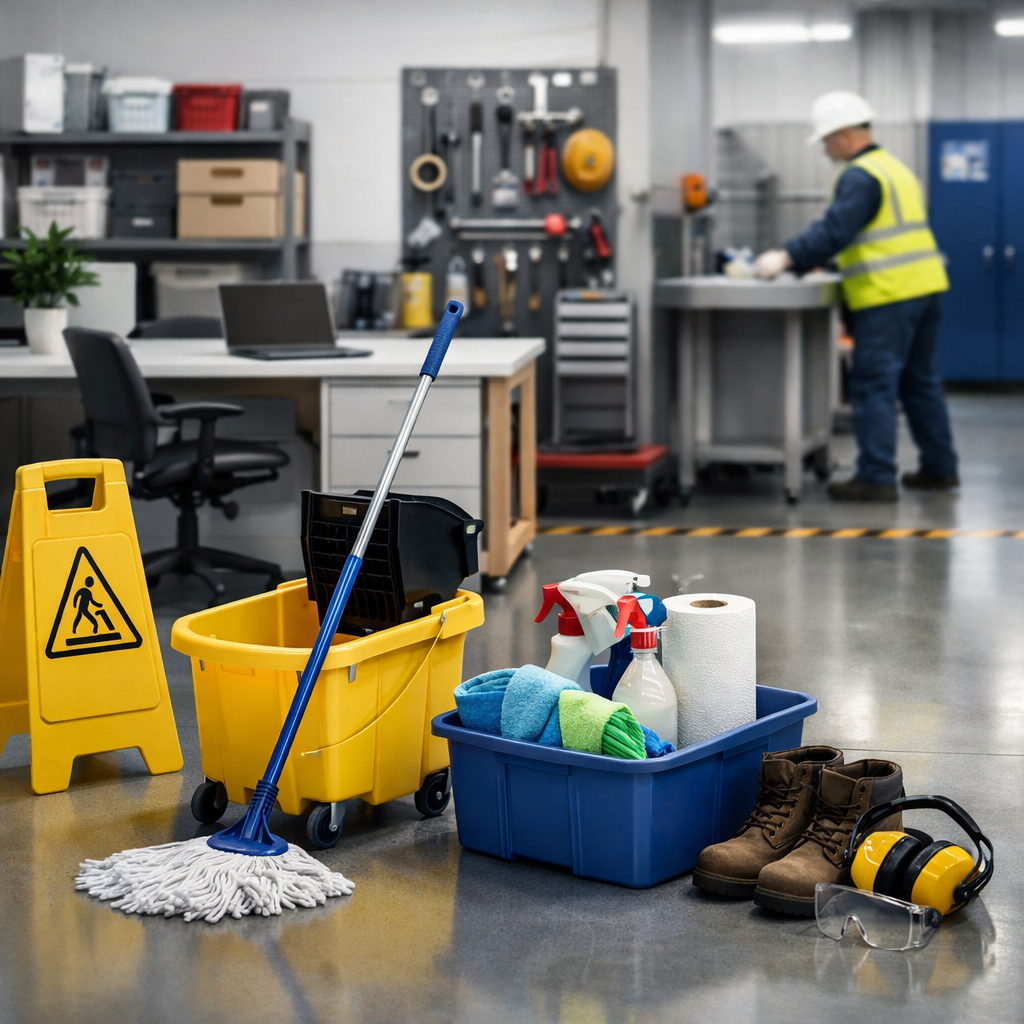
For example, cleaning a spill quickly is an administrative and maintenance action, but redesigning storage so leaks do not reach walking surfaces moves closer to engineering control.
Eliminating excess combustible waste removes fuel from a potential fire altogether.
In that sense, effective housekeeping is not just cleaning after the fact. It includes planning the workspace to prevent mess, congestion, contamination, and unsafe conditions from developing in the first place.
It also improves visibility of other hazards.
When floors, benches, and access routes are clear, workers can more easily identify damaged cords, leaking containers, loose materials, or missing guards.
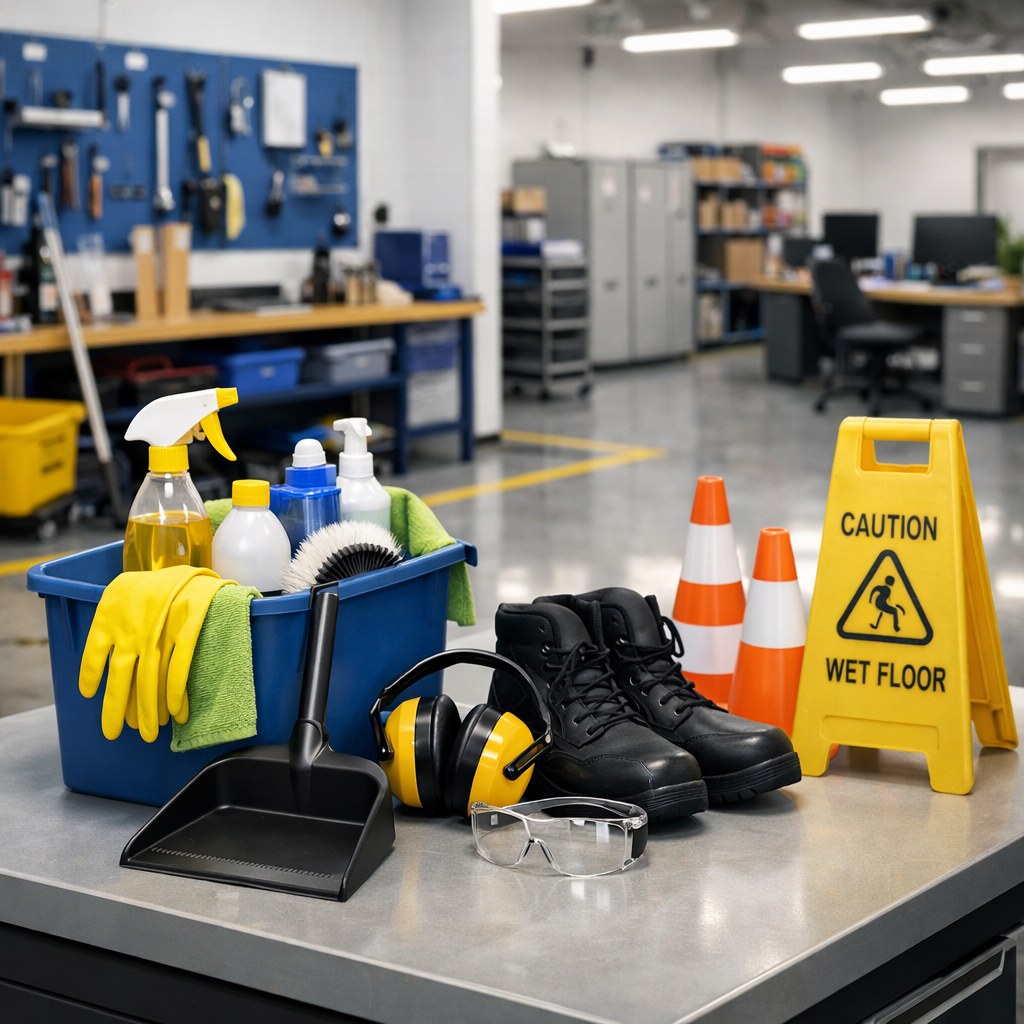
That makes inspection and corrective action faster and more reliable.
Common incidents reduced by workplace housekeeping standards
Slips, trips, and falls
The most common everyday incidents are often the simplest.
Wet floors, trailing cables, uneven stacks, loose packaging, and items left in walkways can all lead to falls.
Consistent workplace housekeeping standards require spills to be reported and cleaned promptly, cables to be managed, and aisles to remain unobstructed.
Fire and emergency access issues
Waste, cardboard, oily rags, dust, and poor storage can all increase fire load.
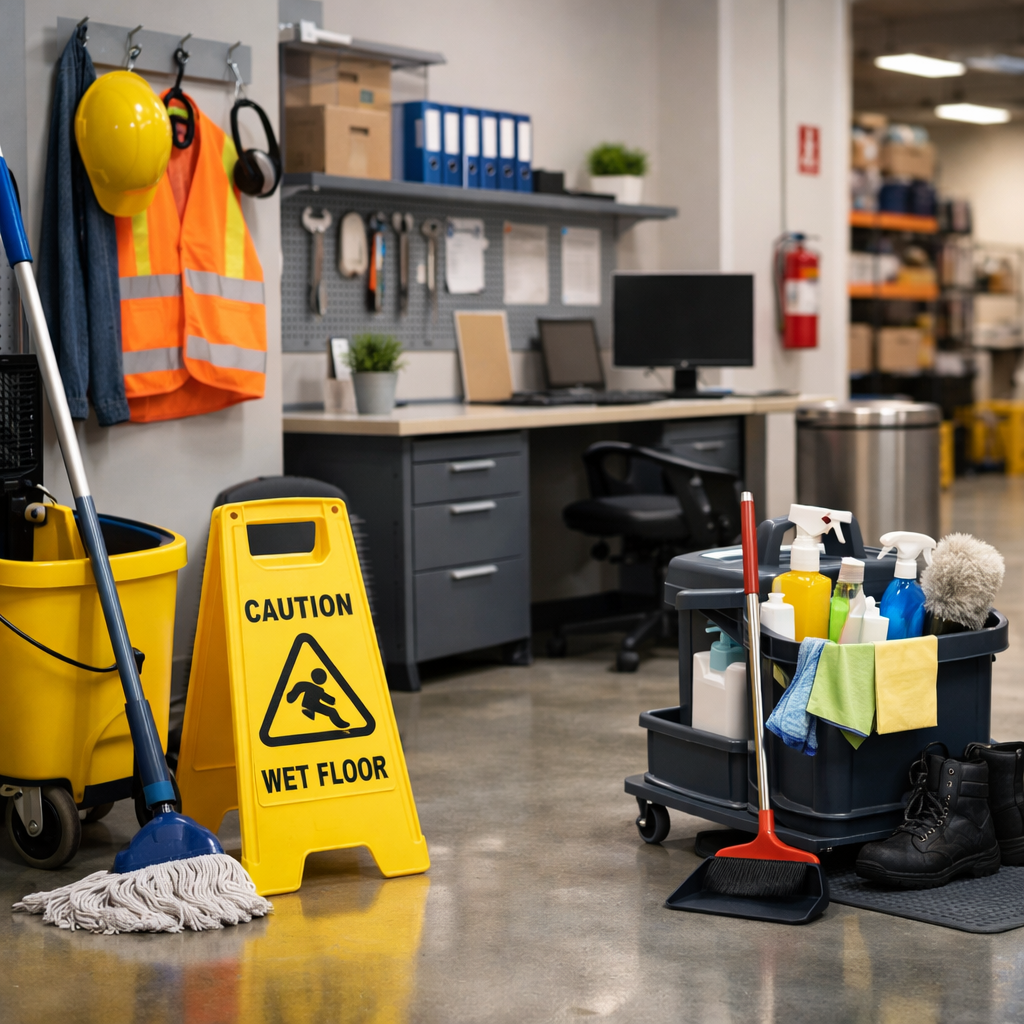
If extinguishers, alarm pull stations, electrical panels, or emergency exits are blocked, a minor incident can escalate quickly.
Housekeeping controls help keep ignition sources separated from combustibles and ensure emergency equipment stays accessible.
Struck-by, caught-in, and manual handling incidents
Improperly stacked materials can fall.
Tools stored in unstable positions can shift.
Workers may also lift awkwardly when storage areas are overcrowded or disorganized.
Good housekeeping improves layout, storage height, labeling, and access, reducing unnecessary handling and the chance of dropped objects.
Health, hygiene, and contamination concerns
In healthcare, food processing, laboratories, and shared office spaces, housekeeping supports hygiene as much as safety.
Dust buildup, unmanaged waste, and poor cleaning routines can contribute to respiratory irritation, contamination, pest issues, and illness transmission.
For more practical safety guidance, many employers also build housekeeping checks into routine inspections and safety training programs.
Core workplace housekeeping standards every site should apply
The best workplace housekeeping standards are clear, consistent, and easy to verify.
They should define what “good” looks like for floors, storage, waste, access routes, tools, chemicals, and shared spaces.
They should also assign responsibility so housekeeping does not become everyone’s job in theory but no one’s job in practice.
- Keep walkways and exits clear: Maintain unobstructed aisles, stairways, doorways, and emergency routes at all times.
- Clean spills immediately: Use the right absorbents, barriers, and reporting process for water, oil, chemicals, or other substances.
- Store materials safely: Stack securely, observe load limits, and keep heavy or frequently used items within safe reach zones.
- Control waste continuously: Empty bins before overflow, separate hazardous waste where required, and remove combustible debris regularly.
- Manage cords, hoses, and tools: Prevent trailing items across walking paths and return equipment to designated storage after use.
- Maintain cleaning schedules: Routine cleaning should cover floors, work surfaces, washrooms, break rooms, and overlooked high-dust areas.
- Inspect and correct: Include housekeeping in daily checks, supervisor walkarounds, and formal safety inspections.
These standards are stronger when supported by visual controls.
Floor markings, shadow boards, waste labels, storage limits, and cleaning checklists make expectations easier to understand and maintain.
They also help new workers and contractors adapt quickly to site rules.
| Area | Common Hazard | Housekeeping Standard |
|---|---|---|
| Walkways | Trips and blocked access | Keep aisles clear, mark routes, remove obstacles immediately |
| Storage zones | Falling materials and poor lifting posture | Stack securely, label locations, store heavy items at safe heights |
| Waste areas | Fire load and contamination | Use suitable bins, segregate waste, remove overflow promptly |
| Workstations | Cuts, clutter, and lost tools | Return tools after use, keep surfaces clean, maintain order |
How to implement workplace housekeeping standards effectively
Assign ownership and build routines
Workplace housekeeping standards are most effective when expectations are built into normal work, not treated as an occasional cleanup event.
Start by assigning area ownership.
Each department, shift, or team should know what spaces they are responsible for and what standards must be met by the end of a task or shift.
Short, frequent checks usually work better than large periodic cleanups.
A five-minute end-of-shift reset can prevent hazards from carrying into the next day.
Use risk-based priorities
Not all housekeeping issues have the same level of risk.
Focus first on conditions that can cause immediate harm, such as spills, blocked exits, unstable stacks, exposed sharps, combustible waste near ignition sources, or chemicals stored incorrectly.
Then address efficiency and appearance issues that may still affect safe work.
This approach helps teams apply housekeeping as a real safety control rather than a cosmetic exercise.
Train workers to see housekeeping as hazard control
Training should explain why standards matter, not just what to clean.
Workers are more likely to follow procedures when they understand the connection between clutter and incidents.
Use practical examples from the site: a near miss caused by shrink wrap in an aisle, a leaking drum found early because the storage area was orderly, or an evacuation route kept clear during an alarm.
Supervisors should reinforce the message through inspections, coaching, and prompt correction of unsafe conditions.
Many companies also include housekeeping findings in incident reviews and workplace risk assessments.
Measure, review, and improve
To sustain results, inspect regularly and track what you find.
Recurring issues often point to deeper problems such as insufficient storage, poor layout, inadequate waste collection, rushed production, or unclear accountability.
Reviewing trends can show whether improvements are needed in engineering, scheduling, staffing, or procurement.
Useful reference material on maintaining safe and sanitary work areas is also available through the OSHA general industry standards.
Creating a culture where housekeeping prevents everyday incidents
Strong housekeeping culture does not come from posters alone.
It comes from leadership attention, practical systems, and daily habits that make safe conditions easier to maintain than unsafe ones.
When managers respond quickly to reported hazards, provide the right bins and storage, and allow time for cleanup within normal work, workers see that housekeeping is part of the job, not an extra burden.
That culture matters because many serious incidents begin with ordinary conditions that were ignored: a spill left for later, packaging left in a walkway, dust allowed to accumulate, or materials stacked without thought for stability.
By treating workplace housekeeping standards as a foundational control, organizations reduce everyday incidents, improve efficiency, and create workplaces that are safer for everyone who enters them.
In the end, workplace housekeeping standards are not about appearances alone.
They are a practical, proven way to control risk across industries, support compliance, and stop small hazards from becoming serious events.
No comments yet