
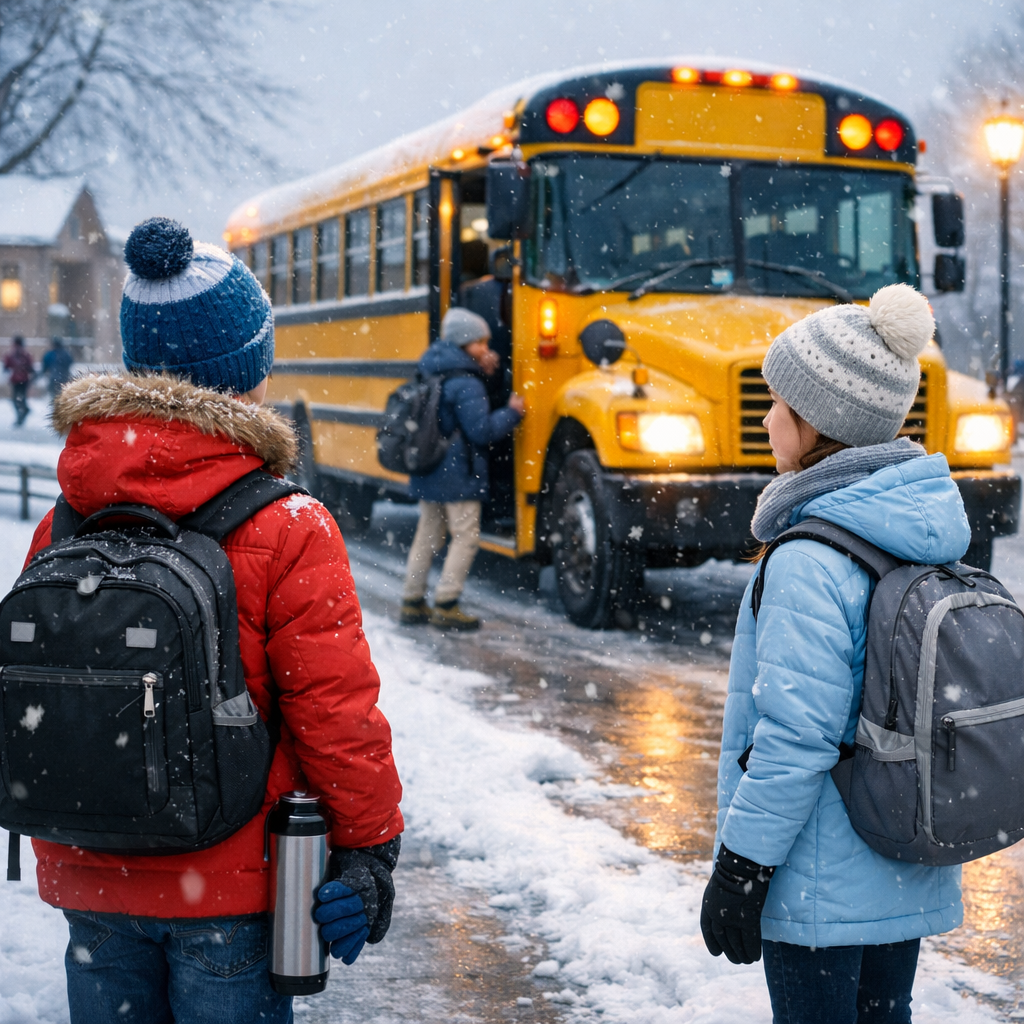

Winter safety for students matters long before the first bell rings. In Canada, cold weather school days can bring icy sidewalks, reduced visibility, wet clothing, delayed transportation, and extra risks during drop-off, recess, field trips, and after-school travel.
A practical plan helps students, parents, and schools reduce preventable injuries and stay focused on learning. Whether a child walks to school, rides the bus, or commutes as a teen or young worker, a few simple routines can improve comfort, visibility, and decision-making in winter conditions.
This guide offers a calm, prevention-focused checklist for families and schools in Ontario and across Canada. It covers clothing, travel, school-day hazards, and steps to take when conditions change quickly, while encouraging readers to follow local school policies and emergency guidance where applicable.
Winter safety for students starts before leaving home
The safest winter school day begins with preparation. Students should check the weather, dress in layers, and leave enough time to travel slowly and safely. Rushing increases the chance of slips, missed bus steps, and unsafe road crossings.
Dress for warmth, dryness, and visibility
Layers work better than one heavy item because they help manage both cold outdoor air and warm indoor classrooms. Waterproof outerwear, insulated gloves or mittens, a hat, and proper winter boots are especially important on snowy or wet days.
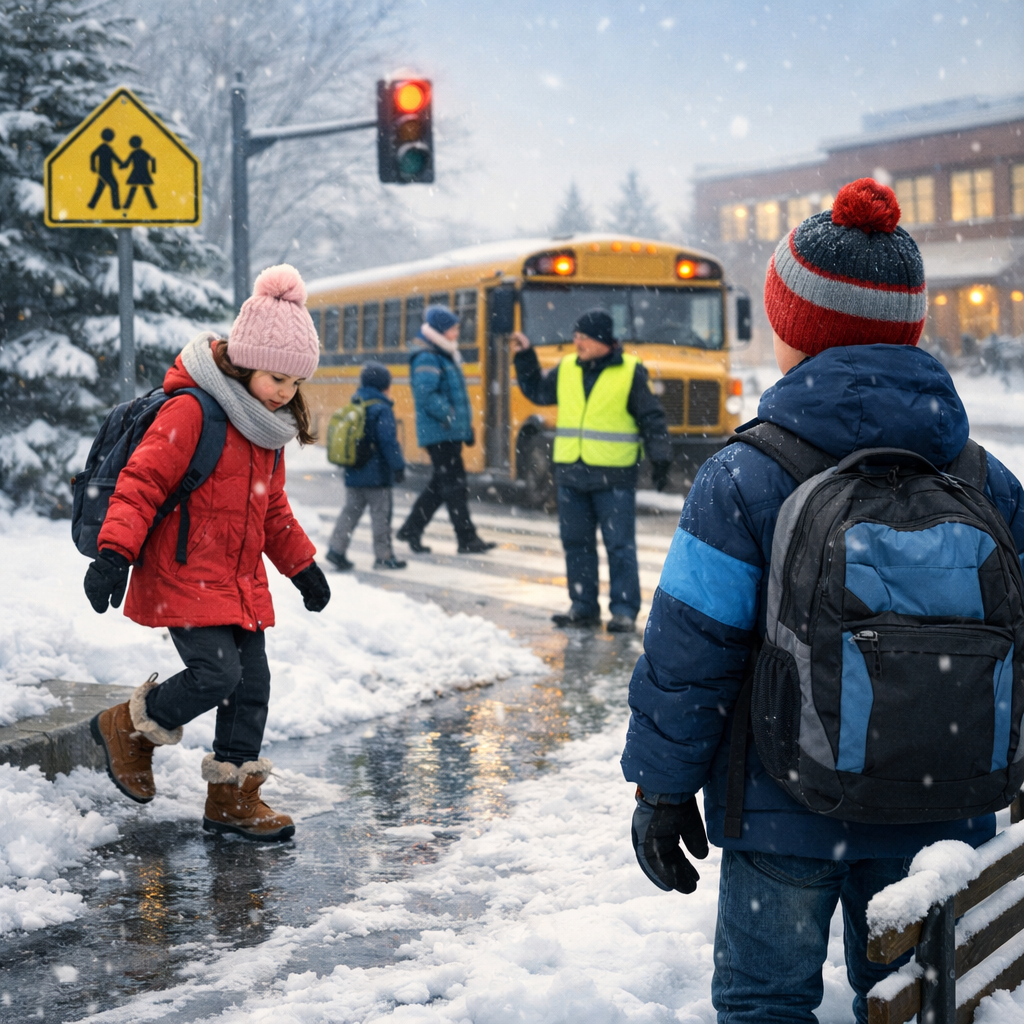
- Base layer: keeps skin drier and more comfortable.
- Middle layer: adds warmth, such as fleece or a sweater.
- Outer layer: protects against wind, snow, and freezing rain.
- Footwear: winter boots with good traction and dry socks.
- Visibility items: bright colours or reflective details on coats and backpacks.
Students should avoid wearing shoes with poor grip on icy surfaces. If indoor shoes are needed, they can be packed separately so boots remain available for outdoor travel and recess.
Pack a simple cold-weather school bag
A small amount of planning can prevent discomfort and distractions later in the day. Younger students may need help checking their bag each morning, while older students can build the habit themselves.
- Extra mittens or gloves if one pair becomes wet
- A hat or neck warmer
- A reusable water bottle
- Indoor shoes if required by the school
- Any school-approved medication or health items, as directed
Parents and caregivers should label winter gear clearly. Lost hats and gloves are common during busy winter months, and missing gear can quickly become a comfort and safety issue.
Winter safety for students during travel to and from school
Travel time creates many of the most common winter hazards. Snowbanks can block sightlines, sidewalks may be uneven or icy, and drivers may need more time to stop. Students should be reminded that familiar routes can still become hazardous after a storm or overnight freeze.
Walking safely in winter conditions
Students walking to school should use cleared paths whenever possible and take shorter, careful steps on slippery surfaces. Hands should stay free for balance, which means backpacks should be worn properly rather than carrying several loose items.
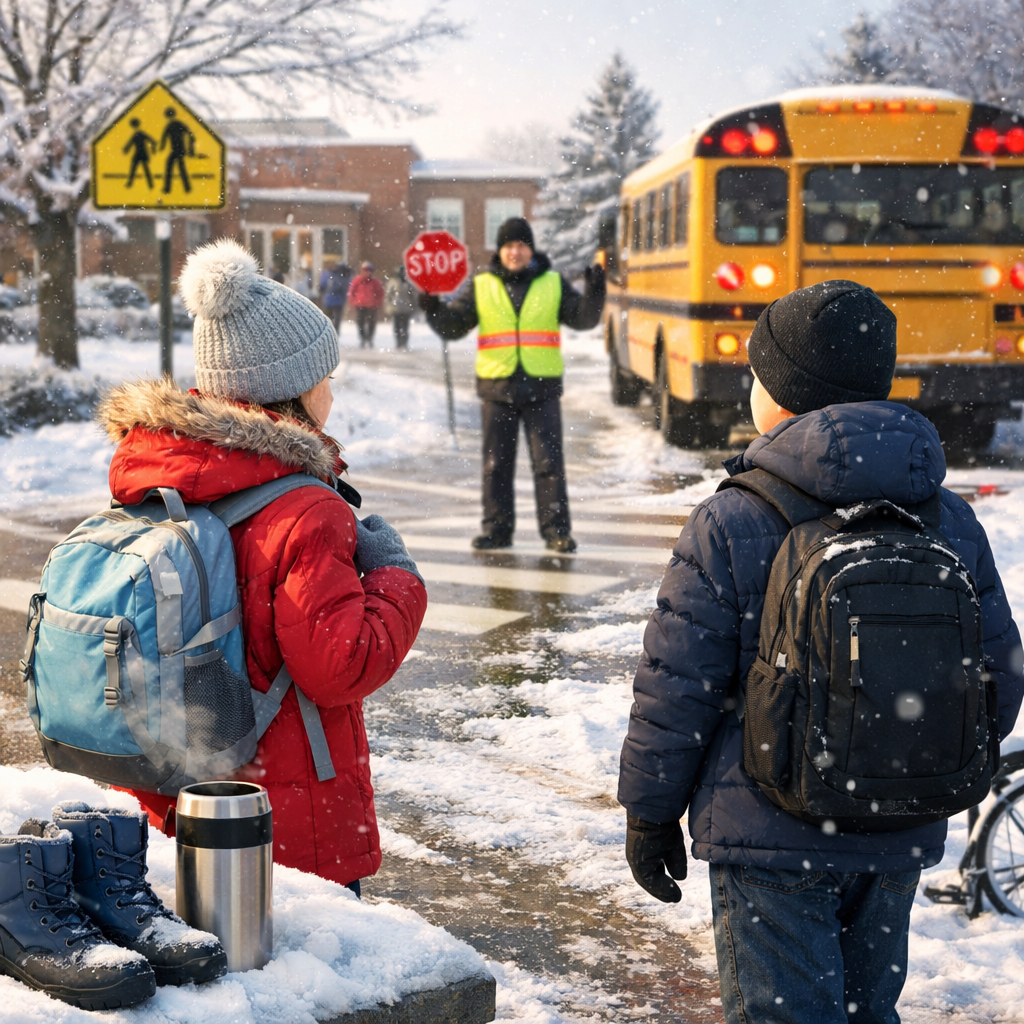
Crossing streets requires extra care in winter. Snowbanks can reduce visibility for both pedestrians and drivers, so students should stop, look carefully, and make sure vehicles are fully stopped before crossing. Dark mornings and afternoons also make reflective clothing more valuable.
Bus, car, and teen driver precautions
Bus riders should stand back from the curb, avoid pushing near bus doors, and watch for slippery steps when boarding or exiting. If a student drops something near the bus, they should tell the driver rather than reaching close to the wheels or undercarriage.
During family drop-off, children should exit on the safe side where possible and avoid walking between moving vehicles. Schools can support winter safety for students by keeping pick-up and drop-off rules clear and reminding families not to stop in unsafe areas.
Older students who drive should allow more travel time, clear snow and ice fully from windows, mirrors, lights, and roofs, and adjust speed for conditions. Young workers travelling to co-op placements or part-time jobs should apply the same winter travel habits and follow workplace procedures. For broader workplace and seasonal prevention information, students and families can explore OHSE and training resources at OHSE training.
| Situation | Main Risk | Safer Action |
|---|---|---|
| Walking on icy sidewalks | Slips and falls | Wear boots with traction and take short, careful steps |
| Crossing near snowbanks | Poor visibility | Cross only where sightlines are clear and vehicles have stopped |
| Boarding the bus | Slipping on steps | Use handrails and avoid rushing |
| Family drop-off zone | Vehicle movement around students | Use designated areas and unload carefully |
Winter safety for students at school, outdoors, and in activities
School staff and families both play a role in helping students recognize hazards after they arrive. Entrances may be wet, playgrounds may be partially icy, and sports areas can become more dangerous when conditions change during the day.
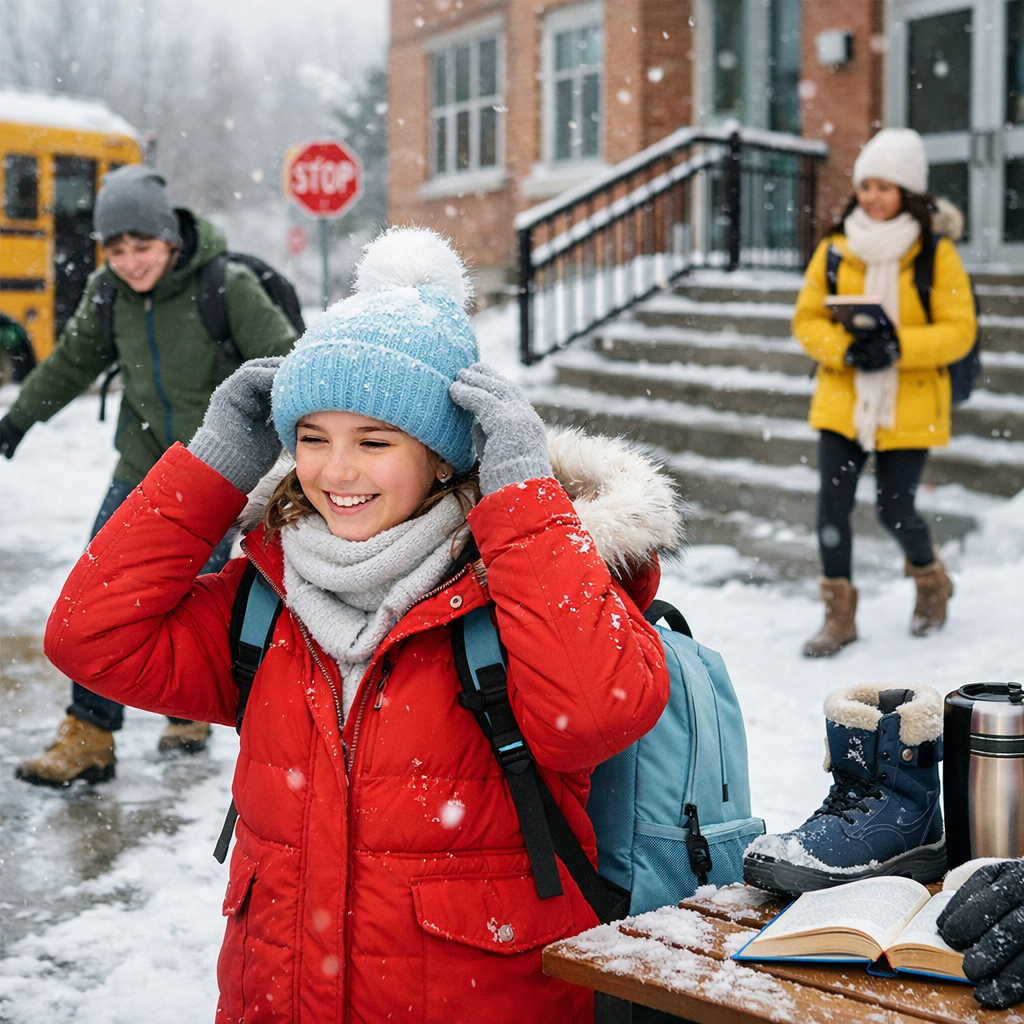
Indoor hazards after snow and slush
Winter safety does not stop at the school door. Melted snow on floors creates slip hazards in entrances, hallways, and washrooms. Students should wipe boots carefully, walk instead of run indoors, and store wet items in designated spaces where possible.
Schools can reduce risk by maintaining mats, marking wet areas, and keeping walkways clear. This reflects the same prevention thinking used in occupational health and safety: identify the hazard, control exposure, and reinforce safe behaviour.
Outdoor play, sports, and field trips
Students should follow school rules about cold-weather recess, outdoor sports, and winter excursions. Wet clothing should be changed when possible, and students should tell a teacher or supervisor if they feel too cold, numb, or unsafe.
Activities such as running on ice, climbing snow piles near parking lots, or throwing icy objects can quickly lead to injury. For schools, a practical approach is to assess the activity, inspect the area, and modify or delay plans when conditions are poor.
Canadian families and educators can find general health and safety guidance from trusted public sources such as CCOHS, Ontario.ca, and Parachute. Local school board rules and site-specific supervision procedures should always come first.
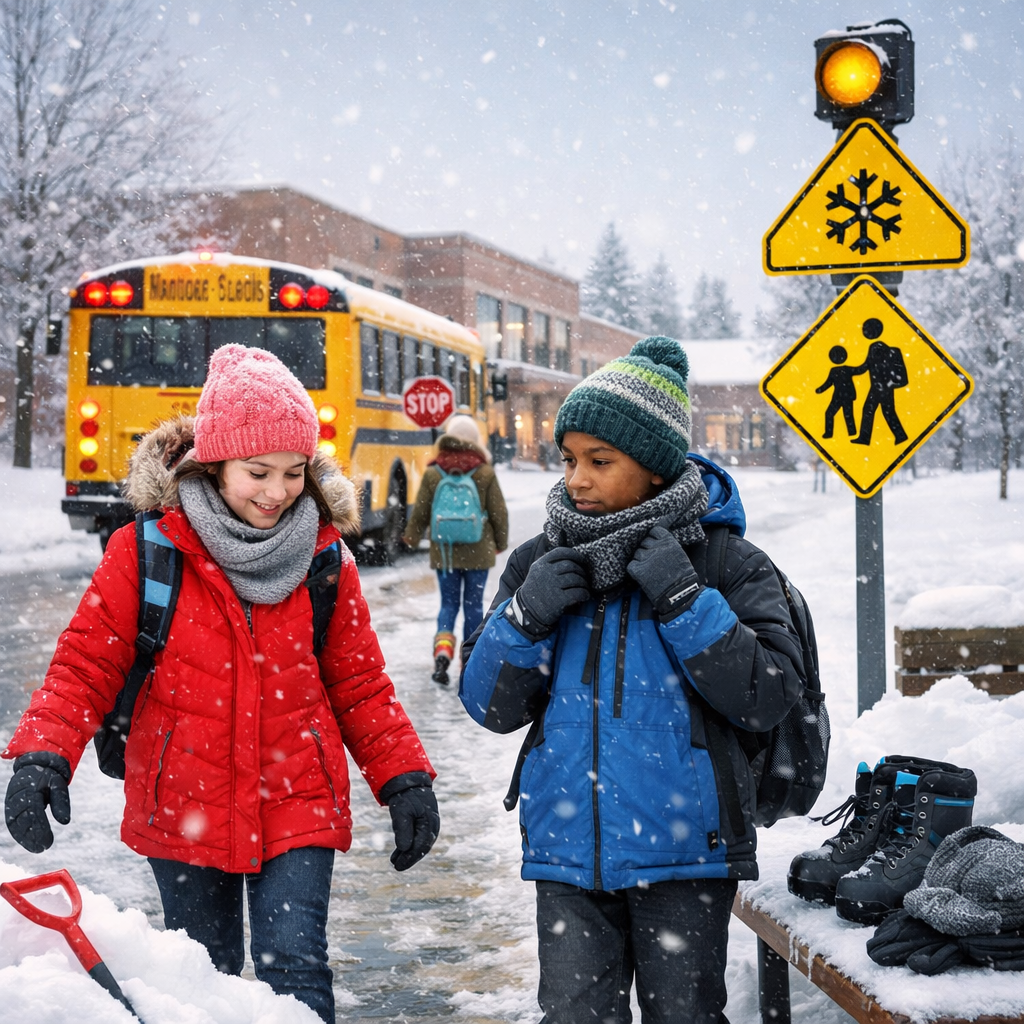
Essential checklist for winter safety for students
A short checklist makes daily decisions easier, especially on busy mornings. It can be posted near the door, saved on a phone, or reviewed with children before winter weather becomes severe.
Quick daily checklist
- Check the forecast and school transportation updates.
- Dress in warm layers with a waterproof outer layer.
- Wear a hat, gloves or mittens, and winter boots with traction.
- Choose bright or reflective outerwear for dark mornings and afternoons.
- Pack extra dry items if clothing may get wet.
- Leave early enough to avoid rushing.
- Use cleared walkways and watch for black ice.
- Follow bus, drop-off, and crossing safety rules.
- Tell a teacher, parent, or supervisor about unsafe conditions.
- Follow local school, workplace, manufacturer, and emergency guidance where applicable.
For schools, the same checklist can be expanded into operational steps such as checking entrances, salting priority routes, supervising busy areas, and communicating weather-related changes to families. Teen students in placements or jobs can also apply a simple hierarchy of controls mindset: avoid unnecessary exposure, use safer routes, wear proper protective clothing, and follow supervision and site procedures.
Winter safety for students is ultimately about preparation, visibility, traction, patience, and clear communication. When families and schools work together, students are better equipped to travel safely, stay warm, avoid slips and falls, and make smart choices throughout the day. Keep the checklist simple, review it often, and make winter safety for students part of the regular cold-weather routine all season long.
No comments yet