
Chemical Spill Response Steps for Safer Workplaces: A Practical Guide

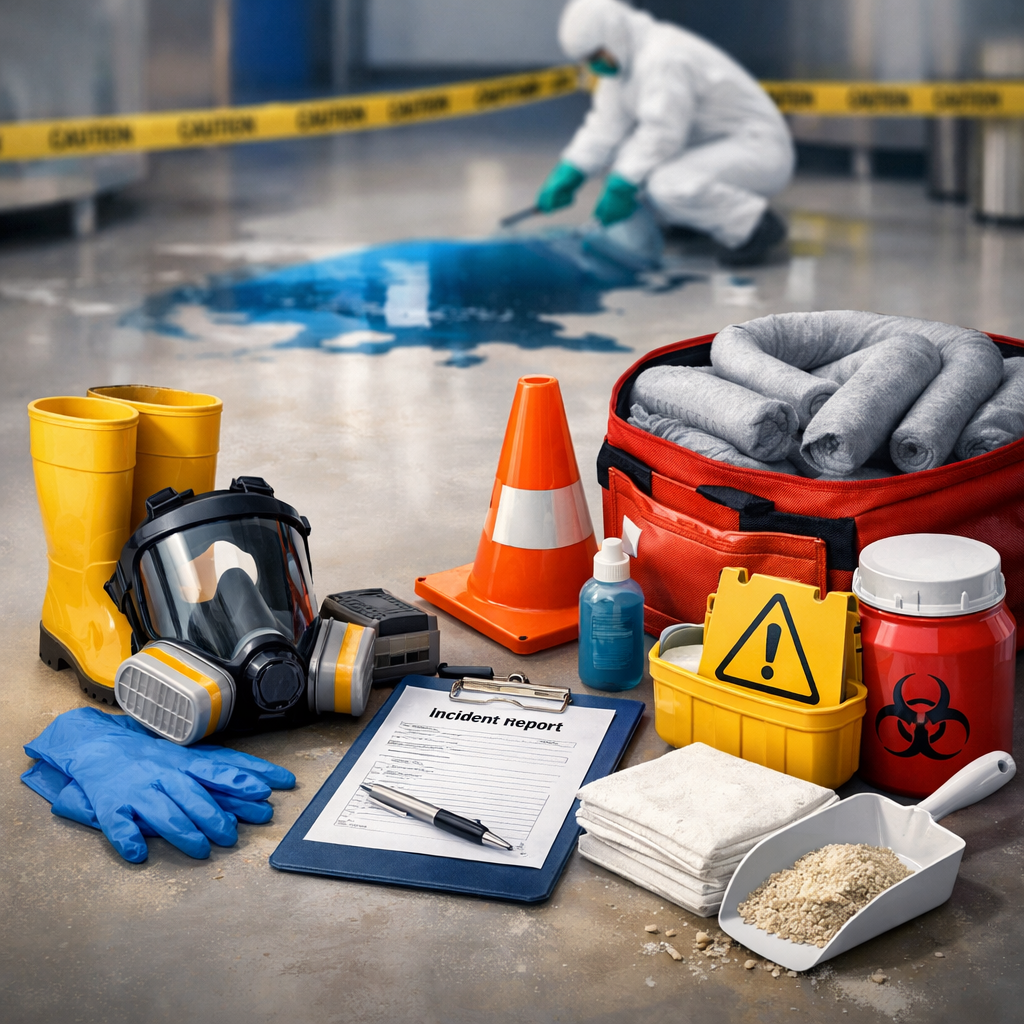
Chemical spill response steps are essential for protecting workers, reducing environmental harm, and keeping operations under control when hazardous materials are released. In warehouses, laboratories, manufacturing plants, maintenance shops, and healthcare settings, even a small spill can create serious risks if the response is delayed or poorly managed.
A strong response program does more than tell people what to do after a spill happens. It helps employers plan ahead, assign responsibilities, train workers, and apply practical controls that reduce the chance of injury, fire, toxic exposure, and regulatory problems. Guidance from organizations such as OSHA and CCOHS supports a structured, workplace-specific approach that combines prevention, emergency action, and continuous improvement.
Why chemical spill response steps matter in every workplace
Chemical spills can escalate quickly. A leaking drum of solvent may create flammable vapors, a splash of corrosive liquid can burn skin and eyes, and a powdered chemical can become an inhalation hazard if it is disturbed. Without clear chemical spill response steps, workers may react impulsively, use the wrong absorbent, or attempt cleanup without the right personal protective equipment.
The impact goes beyond the immediate scene. Spills can contaminate drains, damage equipment, interrupt production, and expose nearby contractors or visitors. In some cases, a spill that appears minor at first can trigger an evacuation or require external emergency services. That is why every workplace handling hazardous substances should have a documented plan linked to its hazard assessments, Safety Data Sheets, and emergency procedures.
The best programs also reflect the hierarchy of controls. Elimination and substitution can reduce the need to handle high-risk chemicals in the first place. Engineering controls such as secondary containment, closed transfer systems, ventilation, and spill pallets can limit release and exposure. Administrative controls, including labeling, storage rules, inspections, and reporting procedures, support safer work. PPE remains important, but it should never be the only line of defense.
Spill response planning before an incident occurs
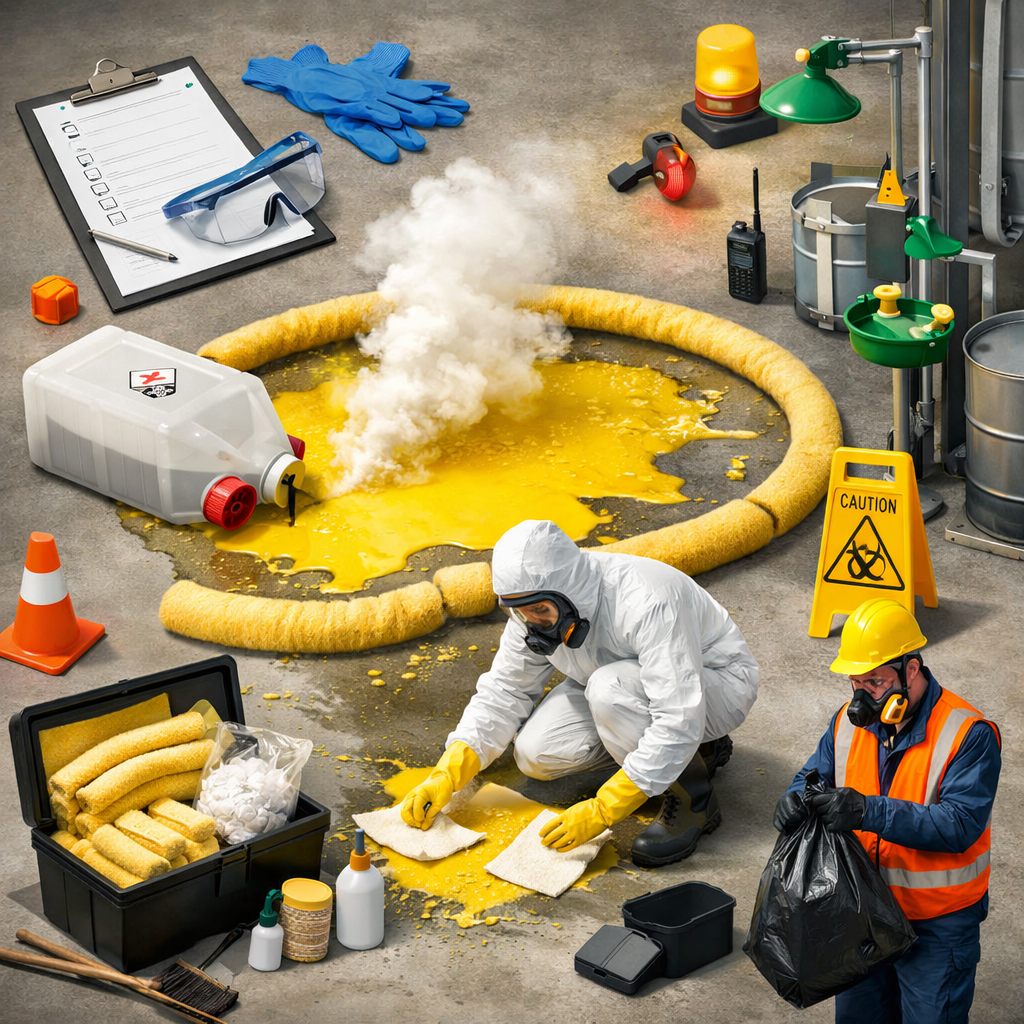
Effective chemical spill response steps begin long before an emergency. Planning should identify what chemicals are on site, where they are stored, what hazards they present, and what type of response is appropriate for each material. A small battery acid spill in a maintenance room will require a different approach than a chlorine release or a solvent spill near ignition sources.
Build a workplace-specific spill response plan
A written plan should define spill classifications, response thresholds, notification requirements, evacuation triggers, cleanup methods, and disposal procedures. It should also clarify when employees may handle a spill internally and when a specialized hazardous materials team or fire department must take over. If the workplace has multiple buildings or departments, the plan should address each area’s unique risks.
Good plans usually include maps showing emergency equipment, spill kits, eyewash stations, showers, ventilation shutoffs, exits, and assembly points. Employers should also make sure Safety Data Sheets are current and easy to access. For broader emergency preparedness, it helps to connect spill planning with related procedures such as emergency response planning and hazardous materials handling.
Assign roles and resources clearly
Confusion during an incident wastes time. Supervisors, response team members, first aid attendants, and general workers need clearly assigned duties. Everyone should know who raises the alarm, who isolates the area, who contacts emergency services, and who determines whether cleanup can proceed safely.
- Workers should recognize spill hazards, report incidents immediately, and avoid unsafe cleanup attempts.
- Supervisors should assess the situation, activate the plan, and control access to the area.
- Trained responders should select the right cleanup method, PPE, and disposal process.
- Management should provide equipment, training, and post-incident review.
Spill kits should match the chemicals on site. Universal absorbents may be useful for some liquids, but corrosives, oils, solvents, and mercury may require specialized materials. Kits should be inspected regularly so absorbents, neutralizers, disposal bags, PPE, and tools are available when needed.
Emergency chemical spill response steps during an incident
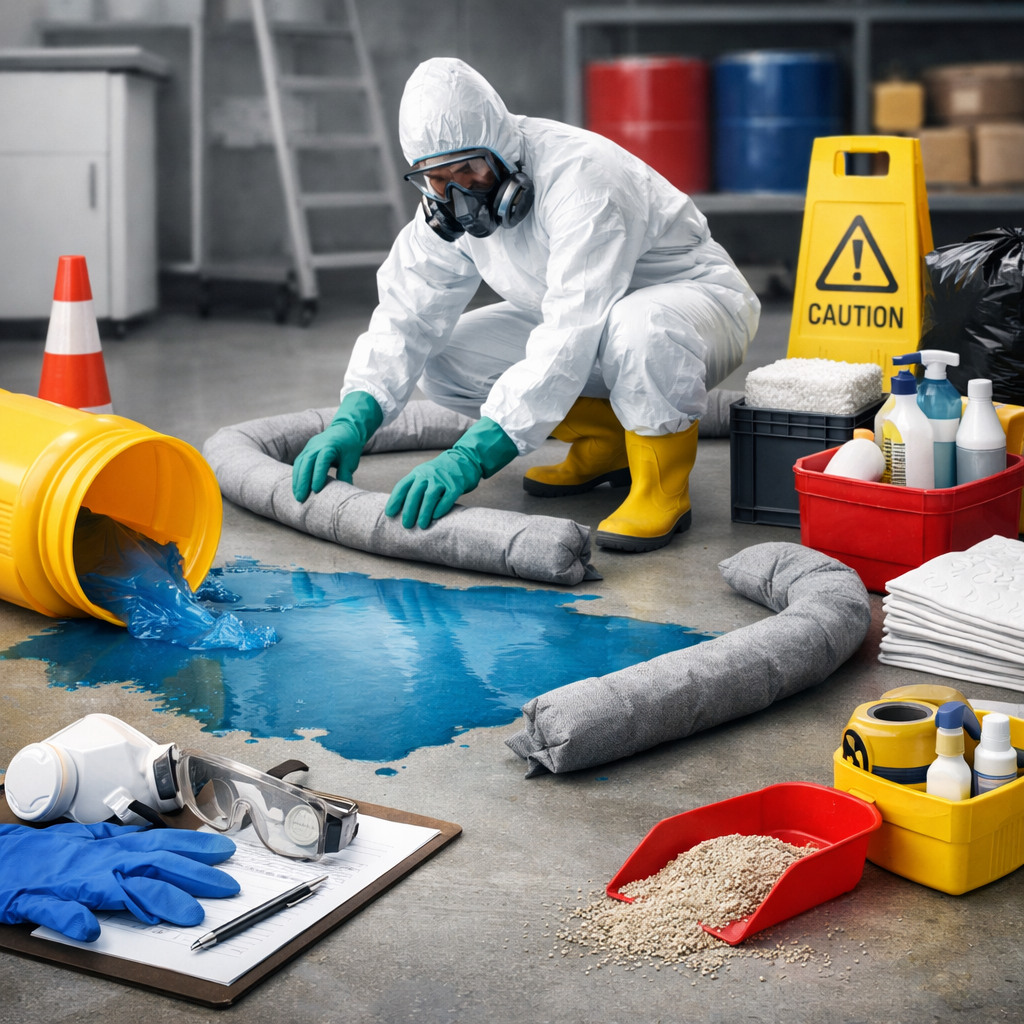
When a spill happens, the first priority is life safety. Workers should not rush into cleanup mode before they understand the hazards. The right response depends on the chemical, the amount released, the potential for fire or toxic exposure, and whether anyone has been injured or contaminated.
Follow immediate action priorities
Most workplaces benefit from a simple sequence that can be remembered under stress. These chemical spill response steps help reduce harm in the first few minutes:
- Stop and assess the substance, quantity, location, and immediate dangers.
- Alert others and notify the supervisor or emergency contact.
- Protect people by evacuating or isolating the area as needed.
- Identify the chemical using labels and the Safety Data Sheet.
- Control the source only if it is safe to do so, such as uprighting a container or closing a valve.
- Contain the spill with compatible absorbents, socks, or barriers to keep it from spreading.
- Clean up and dispose of waste according to site procedures and regulatory requirements.
- Report and review the incident to prevent recurrence.
If a worker is splashed or exposed, decontamination and first aid must happen immediately. Eyewash stations and emergency showers should be used in line with the SDS instructions, and medical attention should be arranged when required. If the spilled substance is flammable, ignition sources should be controlled right away, and unprotected personnel should stay clear.
Know when not to attempt cleanup
Not every spill should be handled by on-site staff. Large releases, unknown substances, airborne toxic hazards, highly reactive chemicals, and spills that enter drains or confined spaces may require external responders. OSHA’s Hazardous Waste Operations and Emergency Response information at OSHA HAZWOPER is a useful reference for understanding higher-risk response situations.
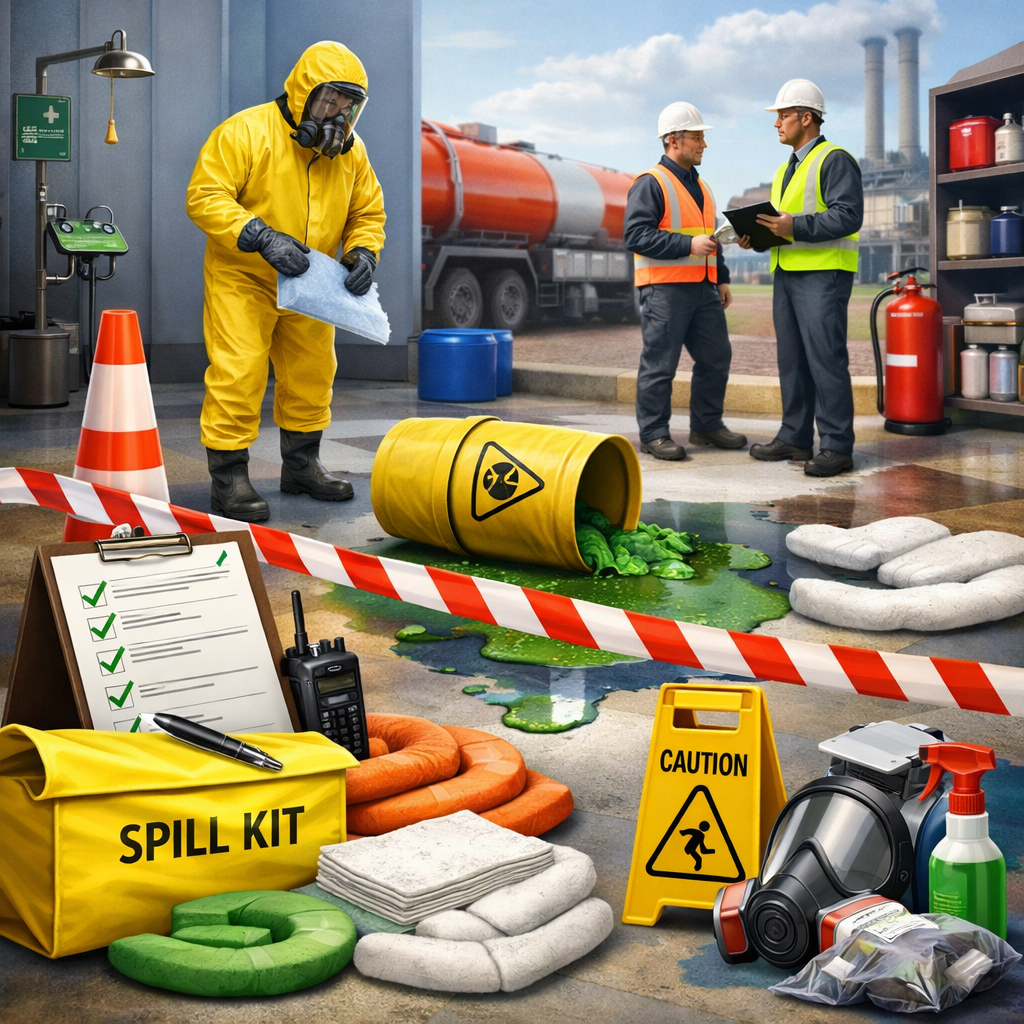
The table below shows a simple way to separate minor and major spill decision-making. Each workplace should customize these criteria.
| Spill Type | Typical Characteristics | Recommended Response |
|---|---|---|
| Minor spill | Known substance, small volume, low airborne risk, trained staff available, proper kit on hand | Isolate area, use site chemical spill response steps, clean up with correct PPE and materials |
| Major spill | Unknown chemical, large volume, fire risk, toxic vapor, injuries, drain entry, or uncontrolled release | Evacuate, secure area, call emergency services or specialized responders, do not attempt routine cleanup |
Training responsibilities and safe work culture
Even the best written plan will fail if workers do not understand it. Training is one of the most important parts of reliable chemical spill response steps. Employees need more than a quick orientation. They should receive instruction that is specific to their tasks, the chemicals they use, and the level of response expected from them.
General workers should be trained to recognize hazards, raise alarms, read labels, locate spill kits, and avoid entering situations beyond their competence. Employees expected to perform cleanup need deeper training on PPE selection, spill containment, decontamination, waste handling, and incident reporting. Supervisors should be trained to assess scenes, coordinate emergency actions, and make sound decisions about evacuation and external support.
Refresher training and drills are just as important as initial instruction. Practical exercises help reveal whether workers can find the right equipment, follow reporting lines, and use cleanup materials correctly under pressure. Drill results should be documented and reviewed so procedures can be improved. Employers should also ensure contractors and temporary workers understand site-specific requirements before beginning work.
A positive safety culture supports better outcomes. Workers should feel comfortable reporting leaking containers, damaged storage areas, missing labels, and near misses without fear of blame. Routine inspections, housekeeping, and preventive maintenance reduce the chance of spills in the first place. Over time, these actions strengthen both compliance and day-to-day safety performance.
After-action review, reporting, and long-term prevention
The final stage of effective chemical spill response steps happens after the visible cleanup is complete. Waste must be packaged, labeled, and disposed of according to legal and environmental requirements. Contaminated tools or reusable PPE may need decontamination, and damaged containers or equipment should be removed from service until the cause of the failure is understood.
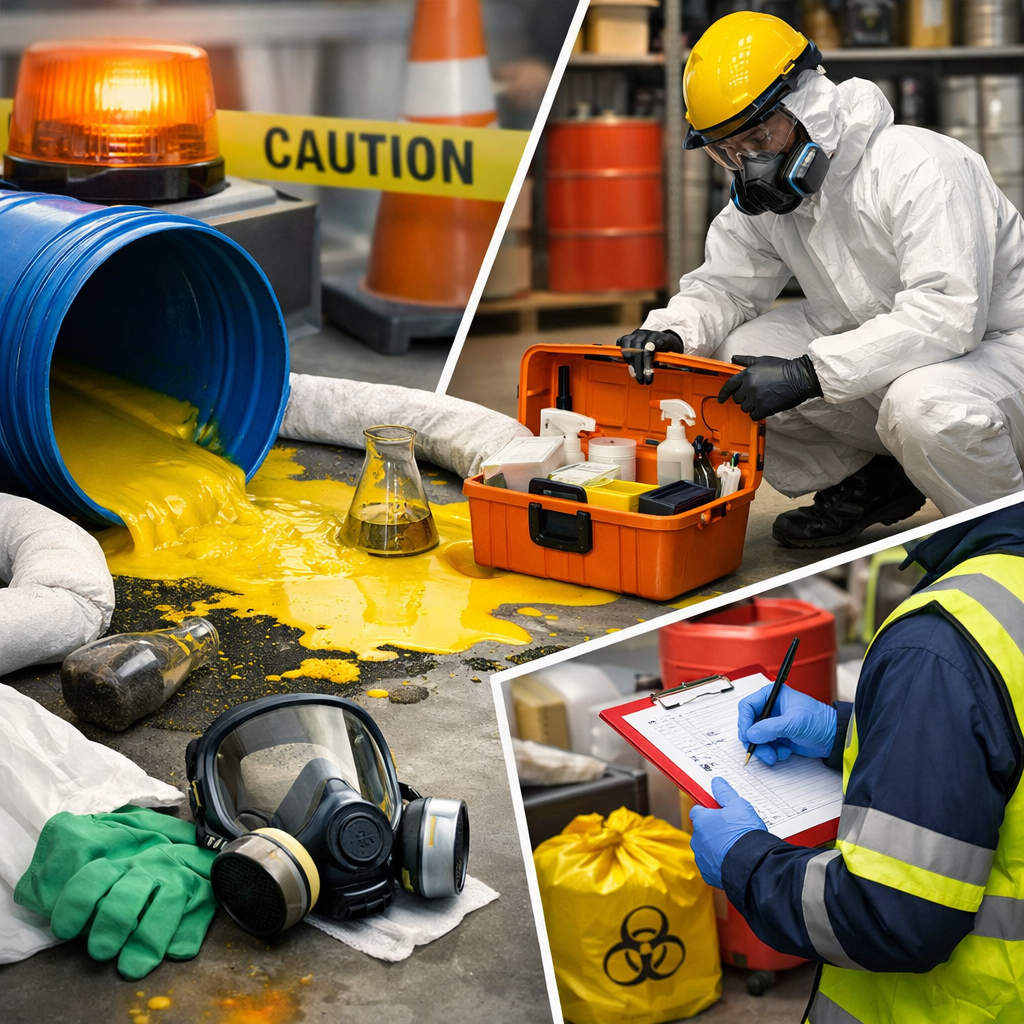
Incident reporting should capture what was spilled, where it happened, who was involved, what controls were used, and whether exposures or injuries occurred. A thorough review should then identify root causes such as poor storage, incompatible materials, inadequate training, weak supervision, or missing engineering controls. Corrective actions might include replacing containers, improving ventilation, changing transfer methods, updating signage, or substituting a less hazardous product.
Workplaces that treat spills as learning opportunities tend to become safer over time. By combining planning, fast emergency action, clear responsibilities, and ongoing training, employers can reduce injuries and keep disruptions to a minimum. In practical terms, strong chemical spill response steps protect people first, support legal compliance, and help build safer workplaces that are ready for the unexpected.
No comments yet